QueenslandEnvironmental
Protection Act 1994EnvironmentalProtection(WasteManagement)Regulation2000Current as at 21 May 2014Reprint noteThis is the last
reprint before repeal. Repealed on 29 August 2014 by 2014SL No.
198 s 19.
Information about this reprintThis
reprint shows the legislation current as at the date on the cover
and is authorised bythe Parliamentary Counsel.AnewreprintofthelegislationwillbepreparedbytheOfficeoftheQueenslandParliamentary
Counsel when any change to the legislation takes effect. This
change maybe because a provision of the original
legislation, or an amendment to it, commences orbecause a particular provision of the
legislation expires or is repealed.When a new reprint
is prepared, this reprint will become a historical reprint. Also,
if it isnecessary to replace this reprint before a
new reprint is prepared, for example, to includeamendments with a retrospective commencement,
an appropriate note would be includedonthecoverofthereplacementreprintandonthecopyofthisreprintatwww.legislation.qld.gov.au.The
endnotes to this reprint contain detailed information about the
legislation and reprint.For example—•The
table of reprints endnote lists any previous reprints and, for this reprint, givesdetails of any discretionary editorial powers under theReprints Act 1992used by theOffice of the Queensland Parliamentary Counsel in preparing it.•Thelistoflegislationendnotegiveshistoricalinformationabouttheoriginallegislationandthelegislationwhichamendedit.Italsogivesdetailsofuncommencedamendmentstothislegislation.Forinformationaboutpossibleamendments to the
legislation by Bills introduced in Parliament, see the
QueenslandLegislationCurrentAnnotationsatwww.legislation.qld.gov.au/Leg_Info/information.htm.•The
list of annotations endnote gives historical information at section
level.All Queensland reprints are dated and
authorised by the Parliamentary Counsel. Theprevious numbering
system and distinctions between printed and electronic reprints
arenot continued.
Environmental Protection (Waste Management)
Regulation 2000Part 1 Preliminary[s 1]Environmental Protection (Waste
Management)Regulation 2000[as amended by
all amendments that commenced on or before 21 May 2014]Part
1Preliminary1Short
titleThis regulation may be cited as theEnvironmental Protection(Waste
Management) Regulation 2000.2Commencement(1)Part
4, division 3, subdivision 1 commences on 1 July 2001.(2)Section 64 commences on 1 January
2002.(3)Section 65 commences on 1 January
2008.(4)Section 69 commences on 1 July
2001.(5)The remaining provisions of this
regulation commence on 1July 2000.3DefinitionsThe dictionary
in schedule 9 defines particular words used inthis
regulation.4Object of this regulationTheobjectofthisregulationistoprotecttheenvironmentby—(a)minimisingtheimpactofwasteontheenvironmentincluding, in
particular, the impact of waste so far as itdirectly affects
human health; andCurrent as at 21 May 2014Page
7
Environmental Protection (Waste Management)
Regulation 2000Part 2A Waste management in local government
areas[s 5](b)establishinganintegratedframeworkforminimisingand managing
waste under the principles of ecologicallysustainable
development.5Application in relation to sewerage
and stormwaterdrainageThis regulation
does not apply to the release of a contaminantto any of the
following—(a)a sewerage system or stormwater
installation within themeaningsgivenbythePlumbingandDrainageAct2002,
schedule;(b)alocalgovernment’sstormwaterdrainage,withinthemeaninggivenbytheLocalGovernmentAct1993,schedule.Part 2AWaste management in localgovernment areasDivision 1Preliminary10AReferences to local governmentIn
this part, a reference to a local government in the context
ofdealing with waste produced at premises, is
a reference to thelocal government for the local government
area in which thepremises is situated.10BMeaning ofserviced
premisesPremisesinalocalgovernmentareaareservicedpremisesif—(a)thepremisesareinanareadesignatedbythelocalgovernmentasanareainrelationtowhichthelocalPage 8Current as at 21 May 2014
Environmental Protection (Waste Management)
Regulation 2000Part 2A Waste management in local government
areas[s 10C]government has
arranged for removal of general wastefrom premises in
the area; or(b)the local government has required the
owner or occupierof the premises to arrange for removal of
general wastefrom the premises.Division 2General wasteSubdivision
1Storage of general waste10COwner
or occupier of premises to supply wastecontainers(1)The owner or occupier of premises in a
local government areamust—(a)subjecttosubsection(2),supplyenoughstandardgeneral waste
containers at the premises to contain thegeneral waste
produced at the premises; or(b)ifrequiredbythelocalgovernment,supplyatthepremises, enough
waste containers, other than standardgeneralwastecontainers,tocontainthegeneralwasteproduced at the premises.Maximum penalty—40 penalty units.(2)Thelocalgovernmentmaysupplytopremisesinthelocalgovernment’sareathenumberofstandardgeneralwastecontainers it
reasonably considers is required at the premisesunder subsection (1)(a).(3)Ifalocalgovernmentsuppliesastandardgeneralwastecontainertopremisesundersubsection(2),thereasonablecost of
supplying the container is a debt payable by the owneror
occupier of the premises to the local government.(4)However, subsection (3) does not
prevent a local governmentfrom supplying a standard general
waste container to premiseswithout cost to
the owner or occupier of the premises.Current as at 21
May 2014Page 9
Environmental Protection (Waste Management)
Regulation 2000Part 2A Waste management in local government
areas[s 10D]10DRequirements for storing general waste in
wastecontainers(1)The
occupier of premises must—(a)store general
waste at the premises in a standard generalwaste container
or, if required by the local government,another type of
waste container; and(b)keep each waste
container at the premises clean and ingood repair;
and(c)ensurethateachwastecontaineratthepremisesissecurely covered, except when the waste is
being placedin, or removed from, the container.Maximum penalty—40 penalty units.(2)A person must not—(a)place any of the following in a waste
container—(i)a liquid, semi-liquid or moist
substance, unless thesubstanceissecurelywrappedorcontainedtoprevent the substance leaking from the
wrapper orcontainer;(ii)material that is smouldering or
aflame;(iii)matter or a
thing that is alive; or(b)remove or
disturb the cover of a waste container, exceptwhen placing
waste in the container; or(c)useordamageawastecontainersothatitisnotweatherprooforserviceableorcannotbesecurelycovered;
or(d)disturborotherwiseinterferewiththecontentsofawaste container.Maximum
penalty—40 penalty units.(3)The occupier of
the premises must not allow a person to placea thing in a
waste container at the premises in contravention ofsubsection (2)(a).Maximum
penalty—40 penalty units.Page 10Current as at 21
May 2014
Environmental Protection (Waste Management)
Regulation 2000Part 2A Waste management in local government
areas[s 10E](4)It
is a defence in a proceeding against a person for an offenceunder subsection (3) for the person to prove
the contraventionwas due to causes over which the person had
no control.10EGeneral requirements for keeping waste
containersat serviced premises(1)Subject to subsection (2), the occupier of
serviced premisesmust ensure that a waste container supplied
for the premises iskept—(a)if
the local government requires the container to be keptat a
particular place at the premises, at the place; or(b)otherwise, at ground level close to
the rear alignment ofa building at the premises.Maximum penalty—40 penalty units.(2)Subsection (1) does not prevent the
occupier of the premisesfromplacingawastecontainerinaplace(adesignatedlocation)outsidethepremisesforthecollectionofgeneralwaste from the
container, if—(a)the local government has arranged to
collect waste fromthe container at the designated location;
and(b)the container is in the designated
location for no longerthan—(i)the
period, if any, allowed under a local law of thelocal government; or(ii)isotherwisereasonablyappropriatebeforeandafter the collection.Example of a designated location outside
premises—the kerb adjacent to the
premises(3)Ifalocalgovernmenthasarrangedforthecollectionofgeneral waste from a waste container at
premises, the occupierof the premises must ensure there is
unobstructed access to thecontainer for removal of the
waste.Maximum penalty for subsection (3)—40
penalty units.Current as at 21 May 2014Page
11
Environmental Protection (Waste Management)
Regulation 2000Part 2A Waste management in local government
areas[s 10F]10FOther
requirements for storing general waste atparticular
serviced premises(1)This section applies to any of the
following persons (each aprescribed person) for serviced
premises, other than a singledetached
dwelling—(a)the owner or occupier of the
premises;(b)theregisteredoperatorforachapter4activitycarriedout
at the premises;(c)the environmental authority holder for
a mining activityor petroleum activity carried out at the
premises.(2)Theprescribedpersonmust,ifrequiredbythelocalgovernment,
ensure each of the following is supplied at thepremises—(a)either—(i)an
elevated stand at alevelrequiredby
thelocalgovernment for
holding all waste containers at thepremises;
or(ii)an imperviously
paved area, drained as required bythe local
government, upon which can be stood allwaste containers
at the premises;(b)a suitable hose cock and hose in the
vicinity of the standor paved area;(c)asuitableenclosurefortheareawherethewastecontainers are
kept.Maximum penalty—40 penalty units.Subdivision 2Removal of
general waste10HLocal government may give notice about
removal ofgeneral waste(1)This
section applies to a local government that has arrangedfor
the removal of general waste produced at a premises.Page
12Current as at 21 May 2014
Environmental Protection (Waste Management)
Regulation 2000Part 2A Waste management in local government
areas[s 10I]Note—Alocalgovernmentmaydecidethefrequencyofgeneralwastecollection in designated areas under
theWaste Reduction and RecyclingRegulation 2011, section
7.(2)The local government may give the
occupier of the premises anotice stating—(a)the
days on which the waste is to be collected; and(b)where the waste container is to be placed
for collectionof the waste (thedesignated
location); and(c)the
time by which the waste container is to be placed inthe
designated location for collection of the waste.10IDepositing or disposal of general
waste from premisesother than serviced premises(1)Thissectionappliesifgeneralwasteisproducedatapremises, other than serviced
premises.(2)The local government may—(a)give a written approval to the owner
or occupier of thepremises for depositing or disposing of the
waste; and(b)imposeconditionsontheapproval,including,forexample, conditions about—(i)the place for depositing or disposing
of the waste;or(ii)the method of
depositing or disposing of the waste.(3)A
person must not deposit or dispose of the waste unless theperson deposits or disposes of the
waste—(a)at a waste facility in accordance with
part 3; or(b)in accordance with—(i)an approval under subsection (2) for
disposal of thewaste; and(ii)if
the approval has been given on conditions, theconditions of
the approval.Current as at 21 May 2014Page
13
Environmental Protection (Waste Management)
Regulation 2000Part 2A Waste management in local government
areas[s 10J]Maximum penalty
for subsection (3)—40 penalty units.Division 3Storage and treatment of industrialwaste10JRequirements for storing industrial
waste(1)The occupier of premises where there
is industrial waste must,if required by the local
government—(a)supplyatthepremisesthenumberofindustrialwastecontainers required by the local government
for storingthe waste at the premises safely,
efficiently and withoutcausing a nuisance; and(b)keep the waste containers at the
particular place at thepremises required by the local
government; and(c)keep each waste container clean and in
good repair.Maximum penalty—40 penalty units.(2)If the occupier does not supply at the
premises the number ofindustrial waste containers required
by the local governmentforsubsection(1)(a),thelocalgovernmentmaysupplyindustrial waste
containers at the premises.(3)If a
local government supplies a waste container to premisesundersubsection(2),thereasonablecostofsupplyingthecontainer is a debt payable by the occupier
of the premises tothe local government.(4)In
this section—industrial waste container,
required by a local government,meansawastecontainerofatypeapprovedbythelocalgovernment for
storing industrial waste at premises within thelocal
government’s area.10KRequirement to treat industrial waste
for disposalThe occupier of premises where there is
industrial waste must,ifrequiredbythelocalgovernment,treatthewastetoaPage 14Current as at 21
May 2014
Environmental Protection (Waste Management)
Regulation 2000Part 2A Waste management in local government
areas[s 10P]standard
approved by the local government for disposal of thewaste at a waste facility.Maximum penalty—40 penalty units.Division 5Compliance
notices10PAuthorised person may give notice to
comply(1)If an authorised person believes on
reasonable grounds that aperson(anaffectedperson)hascontravenedthispart,theauthorisedpersonmaygivetheaffectedpersonawrittennotice under
subsection (2).(2)The notice must state—(a)the act or omission comprising the
contravention; and(b)theactiontheaffectedpersonmusttaketorectifythealleged contravention; and(c)thedaybywhichtheaffectedpersonmusttaketheaction.(3)Thestateddaymustbeatleast28daysafterthenoticeisgiven.(4)If
the affected person is given a notice under subsection (1),the
person must comply with the notice unless the person hasa
reasonable excuse for not complying with it.Maximum
penalty—10 penalty units.(5)If a person is
given a notice under subsection (1) in relation toanallegedcontraventionofthispart,thepersoncanbeprosecuted for the contravention only
if the person does notcomply with the notice.(6)However, this section does not require
an authorised person togive a person a notice under
subsection (1) before the personmay be
prosecuted for a contravention of this part.Current as at 21
May 2014Page 15
Environmental Protection (Waste Management)
Regulation 2000Part 3 Waste receival and disposal[s
12]Part 3Waste receival
and disposal12Unlawful disposal of waste at waste
facility(1)Apersonmustnotdepositthefollowingwasteatawastefacility—(a)liquid or semiliquid waste;(b)hot ash;(c)material that is smouldering or
aflame;(d)material that can spontaneously
combust;(e)material containing a substance that
may be harmful topersonsorpropertybecause,ifitreactswithairorwater, it may produce toxic gases or
become corrosiveor explosive;(f)an
explosive;(g)ammunition,otherthanammunitionthatnolongercontainsexplosives,pyrotechnicsorpropellantsapartfromtraceresiduesthatarenolongercapableofsupporting combustion or an explosive
reaction.Maximum penalty—20 penalty units.(2)Subsection(1)doesnotapplytowastedepositedwiththeconsent of—(a)the
person who—(i)is the registered operator for the
facility; or(ii)holds an
environmental authority for the facility; or(b)the
person in charge of the facility.13Restrictions on burning waste at waste
facilityA person must not set fire to, or burn,
waste at a waste facilityother than—(a)under an environmental authority; orPage
16Current as at 21 May 2014
Environmental Protection (Waste Management)
Regulation 2000Part 3 Waste receival and disposal[s
14](b)underadevelopmentconditionofadevelopmentapproval;
or(c)under a standard environmental
condition of a code ofenvironmental compliance for a chapter
4 activity; or(d)under theFire and
Emergency Services Act 1990.Maximum penalty—20 penalty units.14Restrictions on use of waste
facility(1)A person must not, without the consent
of a waste facility’sowner or operator—(a)enter the facility other than to deposit
waste; or(b)remain on the facility after
depositing waste; or(c)interferewithwasteat,orremovewastefrom,thefacility.Maximum
penalty—10 penalty units.(2)Subsection (1)
does not apply to—(a)the facility’s owner or operator;
or(b)an authorised person.15Waste transporter to comply with
directions and giveinformation(1)Thissectionappliestoapersonwhotransportswastetoawaste
facility.(2)The person must—(a)complywithallrelevantandreasonabledirectionscontainedinanysigndisplayedatthefacilitybythefacility’s owner or operator;
and(b)dealwiththewasteinaccordancewithreasonableinstructions
given by the person in charge of the facility;andCurrent as at 21 May 2014Page
17
Environmental Protection (Waste Management)
Regulation 2000Part 4 Waste tracking[s 16](c)ifaskedbythefacility’sowneroroperator—giveinformation to
the owner or operator about the type andamount of waste
being delivered.Maximum penalty—10 penalty units.Part
4Waste trackingDivision 1Preliminary16Object of pt 4(1)Thispartconcernsthetransportationofcertainregulatedwaste.(2)The
object of this part is to ensure the administering authorityhastheinformationitneedstomanagetheenvironmentalrisks from the
waste.(3)Toachievetheobject,thispartprovidesforthepersonsinvolved in the transportation to—(a)keep records; and(b)passoninformationtootherpersonsinvolvedinthetransportation; and(c)give information to the administering
authority.17Waste transportation to which this
part applies(1)This part applies to the
transportation of regulated waste of atype stated in
schedule 1 (trackable waste).(2)However, this part does not apply
to—(a)the non-commercial transportation of
less than 250kg oftrackable waste; or(b)the
transportation of trackable waste in a pipeline; orPage
18Current as at 21 May 2014
Environmental Protection (Waste Management)
Regulation 2000Part 4 Waste tracking[s 18](c)thetransportationoftrackablewasteunderanexemptiongivenbytheadministeringauthorityundersection 39;
or(d)the transportation of trackable waste
in a container if—(i)the amount of trackable waste is not
more than 5%of the capacity of the container; and(ii)the container is
being transported to a place to berefilledwiththesamesubstanceasthewaste,without undergoing a process before the
refilling;or(e)the
transportation of power station fly ash to a place foruse—(i)asarawmaterialintheproductionofcement,concrete or
plastic; or(ii)in the
construction of a road; or(iii)inthetreatmentofwasteinawaythatinvolvescombining the
waste with the ash; or(f)thetransportationoftrackablewastetoaregisteredlaboratory for
analysis; or(g)the transportation of trackable waste
to a place for use asstock food; or(h)the
transportation of trackable waste to a farm for use asa
soil conditioner or fertiliser.18Waste
handlers(1)If there is a transportation of waste
to which this part applies,the following
persons are the waste handlers for the waste—(a)theperson(thegenerator)fromwhomthetrackablewaste is
transported (whether the person generated thewaste or
received it from someone else);(b)the
person (thetransporter) who transports
the waste;(c)theperson(thereceiver)towhomthewasteistransported.Current as at 21
May 2014Page 19
Environmental Protection (Waste Management)
Regulation 2000Part 4 Waste tracking[s 19](2)If a person acts in more than 1 of the
capacities mentioned insubsection (1), the person must comply
with this part for eachof the capacities.Example—Apersongeneratesaloadoftrackablewasteandtransportsittosomeone else for treatment. The first
person must comply with this part,in relation to
the load, as both the generator and transporter of the
waste.Division 2Prescribed
matters for giving ofinformation19Prescribed informationFor this part,
theprescribed informationthat a waste
handlermust record, or give to the administering
authority or anotherwaste handler, is the relevant
information stated in schedule 2.20Prescribed way of giving informationFor
this part, theprescribed wayof giving
information aboutwaste to the administering authority
is—(a)giving the information in the
prescribed form; or(b)giving the information in another way
the administeringexecutive has approved under section
37.Editor’s note—Fortheprescribedformforgivingtheinformation,seesection36(Giving information to administering
authority in prescribed form).21Prescribed time for giving
informationFor this part, theprescribed
timefor giving information aboutwaste to the administering authority
is—(a)iftheinformationisgivenintheprescribedform—7days; orPage 20Current as at 21 May 2014
Environmental Protection (Waste Management)
Regulation 2000Part 4 Waste tracking[s 22](b)iftheinformationisgiveninanotherwayapprovedunder section
37—the time stated as the prescribed timeunder the
approval.Division 3Obligations of
waste handlersSubdivision 1Transportation
within Queensland22Application of subdiv 1ThissubdivisionappliestothetransportationoftrackablewastefromageneratorinQueenslandtoareceiverinQueensland.23Responsibilities of generator(1)Whenthegeneratorgivesthewastetothetransporter,thegenerator must—(a)record the prescribed information about the
waste; and(b)give to the transporter the prescribed
information aboutthe waste.Maximum
penalty—20 penalty units.(2)The generator
must give the prescribed information about thewaste to the
administering authority in the prescribed way andwithintheprescribedtimeaftergivingthewastetothetransporter.Maximum
penalty—20 penalty units.(3)The generator
must keep the record mentioned in subsection(1)(a) for at
least 5 years.Maximum penalty—20 penalty units.Current as at 21 May 2014Page
21
Environmental Protection (Waste Management)
Regulation 2000Part 4 Waste tracking[s 24]24Responsibilities of transporter(1)Whiletransportingthewaste inQueensland,thetransportermustcarryadocumentcontainingtheinformationreceivedfrom
the generator under section 23.Maximum
penalty—20 penalty units.(2)Whenthetransportergivesthewastetothereceiver,thetransporter must—(a)record the prescribed information about the
waste; and(b)give to the receiver the prescribed
information about thewaste.Maximum
penalty—20 penalty units.(3)As soon as
practicable after becoming aware of a discrepancyin
information received from the generator under section 23,the
transporter must give written notice of the discrepancy tothe
administering authority.Maximum penalty—20 penalty
units.(4)The transporter must keep the record
mentioned in subsection(2)(a) for at least 5 years.Maximum penalty—20 penalty units.25Responsibilities of receiver(1)Whenthetransportergivesthewastetothereceiver,thereceivermustrecordtheprescribedinformationaboutthewaste.Maximum
penalty—20 penalty units.(2)The receiver
must give the prescribed information about thewaste to the
administering authority in the prescribed way andwithin the prescribed time after receiving
the waste from thetransporter.Maximum
penalty—20 penalty units.(3)As soon as
practicable after becoming aware of a discrepancyin
the information received from the transporter under sectionPage
22Current as at 21 May 2014
Environmental Protection (Waste Management)
Regulation 2000Part 4 Waste tracking[s 26]24,
the receiver must give written notice of the discrepancy tothe
administering authority.Maximum penalty—20 penalty
units.(4)The receiver must keep the record
mentioned in subsection (1)for at least 5
years.Maximum penalty—20 penalty units.26Responsibilities of waste handler
acting in more than 1capacity(1)If a
person is both the generator and the transporter—(a)section 23(1)(b) does not apply;
and(b)section23otherwiseappliesasifareferencetothegeneratorgivingthewastetothetransporterwereareference to the person starting the
transportation; and(c)section 24(1) applies as if a
reference to the informationreceivedfromthegeneratorwereareferencetotheinformation recorded by the person;
and(d)section 24(3) does not apply.(2)If a person is both the transporter
and the receiver—(a)section 24(2)(b) does not apply;
and(b)section 25(3) does not apply;
and(c)sections 24 and 25 otherwise apply as
if a reference tothe transporter giving the waste to the
receiver were areference to the person completing the
transportation.Subdivision 2Transportation
into Queensland27Application of subdiv 2ThissubdivisionappliestothetransportationoftrackablewastefromageneratoroutsideQueenslandtoareceiverinQueensland.Current as at 21
May 2014Page 23
Environmental Protection (Waste Management)
Regulation 2000Part 4 Waste tracking[s 28]28Responsibilities of transporter(1)The transporter must not transport the
waste into Queenslandunless the administering authority has
assigned a consignmentnumber to the load being
transported.Editor’s note—Seesection38(ConsignmentnumbersforwastetransportedintoQueensland).Maximum
penalty—20 penalty units.(2)Before
transporting the waste into Queensland, the transportermustobtainfromthegeneratortheinformationaboutthewasteprescribedforsection23(1)(b),otherthanaloadnumber.(3)Whiletransportingthewaste inQueensland,thetransportermust carry a
document—(a)stating the consignment number
assigned to the load bythe administering authority;
and(b)containing the information mentioned
in subsection (2).Maximum penalty—20 penalty units.(4)Whenthetransportergivesthewastetothereceiver,thetransporter must—(a)record the prescribed information about the
waste; and(b)give to the receiver the prescribed
information about thewaste.Maximum
penalty—20 penalty units.(5)As soon as
practicable after becoming aware of a discrepancyin
information obtained under subsection (2), the transportermustgivewrittennoticeofthediscrepancytotheadministering authority.Maximum penalty—20 penalty units.(6)The transporter must keep the record
mentioned in subsection(4)(a) for at least 5 years.Maximum penalty—20 penalty units.Page
24Current as at 21 May 2014
Environmental Protection (Waste Management)
Regulation 2000Part 4 Waste tracking[s 29]29Responsibilities of receiver(1)Whenthetransportergivesthewastetothereceiver,thereceivermustrecordtheprescribedinformationaboutthewaste.Maximum
penalty—20 penalty units.(2)The receiver
must give the prescribed information about thewaste to the
administering authority in the prescribed way andwithin the prescribed time after receiving
the waste from thetransporter.Maximum
penalty—20 penalty units.(3)As soon as
practicable after becoming aware of a discrepancyin
the information received from the transporter under section28,
the receiver must give written notice of the discrepancy tothe
administering authority.Maximum penalty—20 penalty
units.(4)The receiver must keep the record
mentioned in subsection (1)for at least 5
years.Maximum penalty—20 penalty units.30Responsibilities of waste handler
acting in more than 1capacityIf a person is
both the transporter and the receiver—(a)section 28(4)(b) does not apply; and(b)section 29(3) does not apply;
and(c)sections 28 and 29 otherwise apply as
if a reference tothe transporter giving the waste to the
receiver were areference to the person completing the
transportation.Current as at 21 May 2014Page
25
Environmental Protection (Waste Management)
Regulation 2000Part 4 Waste tracking[s 31]Subdivision 3Transportation
out of Queensland31Application of subdiv 3ThissubdivisionappliestothetransportationoftrackablewastefromageneratorinQueenslandtoareceiveroutsideQueensland.32Responsibilities of generator(1)Whenthegeneratorgivesthewastetothetransporter,thegenerator must—(a)record the prescribed information about the
waste; and(b)give to the transporter the prescribed
information aboutthe waste.Maximum
penalty—20 penalty units.(2)The generator
must give the prescribed information about thewaste to the
administering authority in the prescribed way andwithintheprescribedtimeaftergivingthewastetothetransporter.Maximum
penalty—20 penalty units.(3)The generator
must keep the record mentioned in subsection(1)(a) for at
least 5 years.Maximum penalty—20 penalty units.33Responsibilities of transporter(1)Whiletransportingthewaste inQueensland,thetransportermustcarryadocumentcontainingtheinformationreceivedfrom
the generator under section 32.Maximum
penalty—20 penalty units.(2)As soon as
practicable after becoming aware of a discrepancyin
information received from the generator under section 32,Page
26Current as at 21 May 2014
Environmental Protection (Waste Management)
Regulation 2000Part 4 Waste tracking[s 34]the
transporter must give written notice of the discrepancy tothe
administering authority.Maximum penalty—20 penalty
units.34Responsibilities of waste handler
acting in more than 1capacityIf a person is
both the generator and the transporter—(a)section 32(1)(b) does not apply; and(b)section32otherwiseappliesasifareferencetothegeneratorgivingthewastetothetransporterwereareference to the person starting the
transportation; and(c)section 33(1) applies as if a
reference to the informationreceivedfromthegeneratorwereareferencetotheinformation recorded by the person;
and(d)section 33(2) does not apply.Division 4Miscellaneous35Application of provisions to agents(1)This section applies if—(a)a waste handler is required by a
provision of division 3(thewaste tracking
provision) to do something; and(b)thewastehandlerentersawrittenagreementwithanother person
(theagent) to do the
thing for the wastehandler; and(c)theagreementstatesthattheagentisawareofsubsection (3).(2)It
is a defence to a charge of contravening the waste trackingprovision for the waste handler to
show—(a)the waste handler entered the
agreement with the agent;andCurrent as at 21
May 2014Page 27
Environmental Protection (Waste Management)
Regulation 2000Part 4 Waste tracking[s 36](b)the contravention was directly caused
by a failure of theagenttodosomethingincompliancewiththeagreement.(3)Thewastetrackingprovisionappliestotheagent,totheextent the agent
has agreed to do something required by theprovision,asifareferenceintheprovisiontothewastehandler were a reference to the
agent.36Giving information to administering
authority inprescribed form(1)Thechiefexecutivemustprepareforms(theprescribedforms)foruseingivinginformationtotheadministeringauthority under
division 3.(2)Eachformmustbemarkedwithadifferentnumber(consistingofnumbers,lettersorboth)foruseasaloadnumber.(3)Thechiefexecutivemustmaketheformsavailable,freeofcharge or on payment of a reasonable
fee, at the department’shead office.(4)If a
person obtains a prescribed form from the chief executiveand
uses it to give information to the administering authorityunder division 3 about the transportation of
trackable waste,the number marked on the form under
subsection (2) is theload number for the waste.37Approval of ways of giving information
to administeringauthority(1)Apersonmayapplytotheadministeringexecutiveforapprovalofaparticularwayofgivinginformationtotheadministering authority under division
3.(2)The applicant must—(a)givetheadministeringexecutivetheinformationtheexecutive reasonably requires to decide the
application;andPage 28Current as at 21
May 2014
Environmental Protection (Waste Management)
Regulation 2000Part 4 Waste tracking[s 37](b)pay,withinthetimerequiredbytheexecutive,thereasonablefeerequiredbytheexecutiveforassessingthe
application.(3)Iftheapplicantdoesnotcomplywithsubsection(2),theapplication lapses.(4)Theadministeringexecutivemayapprovethewayiftheexecutive is satisfied—(a)it
is a reliable, effective, timely and efficient way for theinformation to be given to the administering
authority;and(b)the information
will be secure while it is being given;and(c)the information will be given in a
form that enables theauthoritytoaccess,recordandotherwisedealwithit;and(d)itincludesasystemforassigningauniqueandappropriate load number (consisting of
numbers, lettersorboth)toeachtransportationofwasteforwhichinformation is
given; and(e)itwouldotherwisebeanappropriatewayfortheinformation to
be given.Example—Theadministeringexecutivemayapproveasystemunderwhichaperson transmits information from the
person’s database direct to theadministeringauthorityinaparticularelectronicform.Underthesystem, the information given about the
transportation of a load includesa load number
consisting of the first 3 letters of the transporter’s name,the
date and the number of the load being transported on that
day.(5)The approval may be given on
reasonable conditions.(6)Theapprovalmuststatetheprescribedtimeforgivingtheinformation in that way.Editor’s
note—See section 21 (Prescribed time for
giving information).(7)If the
administering executive has not decided the applicationby
the due day, the application is taken to have been refused.Current as at 21 May 2014Page
29
Environmental Protection (Waste Management)
Regulation 2000Part 4 Waste tracking[s 38](8)Toremovedoubt,itisdeclaredthattheadministeringexecutive may
approve, under this section, a way of givinginformation,
even though no one has applied for the approval.(9)In this section—due day,
for deciding an application, means—(a)thesixtiethdayaftertheapplicationismade,notincludingadaytheadministeringexecutiveasksforinformation under subsection (2)(a), a day
the applicantgivestherequestedinformation,andanydaysinbetween; or(b)anylaterdayagreedonbytheexecutiveandtheapplicant.38Consignment numbers for waste transported
intoQueensland(1)Apersonmayapplytotheadministeringexecutiveforaconsignmentnumberforaloadoftrackablewastetobetransported into
Queensland from another State.(2)The
application must be in the approved form.(3)The
applicant must give to the administering executive any ofthe
following information that the executive requests—(a)informationmentionedinschedule2,section1,aboutthe load;(b)informationtheexecutivereasonablyneedstomakeadecision on the application under subsection
(4).(4)The administering executive must grant
the application if theexecutive is satisfied—(a)theintendedtransporterholds,orisactingunder,therequiredauthorityfortransportingthewastetotheintended receiver; and(b)theintendedreceiverholds,orisactingunder,therequiredauthorityforcarryingouttheintendedtreatment.Page 30Current as at 21 May 2014
Environmental Protection (Waste Management)
Regulation 2000Part 4 Waste tracking[s 39](5)Iftheadministeringexecutivegrantstheapplication,theexecutive must assign a consignment number
to the load andgivewrittennoticeoftheconsignmentnumbertotheapplicant.(6)If
the administering executive has not decided the applicationbythedueday,theexecutiveistakentohaverefusedtheapplication.(7)In
this section—due day, for deciding
an application, means—(a)the tenth
business day after the application is made, notincludingadaytheadministeringexecutiveasksforinformationundersubsection (3),adaytheapplicantgivestherequestedinformation,andanydaysinbetween; or(b)any
later day agreed on by the administering executiveand
the applicant.intended treatment, for trackable
waste to be transported intoQueensland,meansthewaythatthewasteistobetreated,disposed of, stored or otherwise dealt with
by the receiver.39Exemptions(1)A
person may apply for an exemption for the transportation ofparticular trackable waste.Editor’s note—This
part does not apply to the transportation of trackable waste
underan exemption granted under this section. See
section 17(2)(c) (Wastetransportation to which this part
applies).(2)Thepersonmustgivetheadministeringauthoritytheinformation it reasonably requires to
decide the application.(3)The
administering authority may grant the application if it issatisfiedthewastedoesnotshowanyenvironmentallysignificant
characteristics.Current as at 21 May 2014Page
31
Environmental Protection (Waste Management)
Regulation 2000Part 4 Waste tracking[s 40]Example—A
person operates a food processing facility. Waste from the
facilityincludes filter cake (a trackable waste),
which the person sends away fordisposal at the
end of each week. The filter cake derives only from thewashing of vegetables and consists almost
entirely of sand and dirt.Analysisofthefiltercakeestablishesthatitdoesnotshowanyenvironmentally
significant characteristics.The administering
authority decides to give the person an exemption forthe
transportation of each of these weekly loads. The exemption is
givenon conditions about the process that
generates the filter cake, to ensure itwill not show any
environmentally significant characteristics.(4)An
exemption may be given on reasonable conditions.(5)If the administering authority has not
decided the applicationby the due day, it is taken to have
refused the application.(6)In this
section—due day, for deciding
an application, means—(a)thethirtiethdayaftertheapplicationismade,notincludingadaytheadministeringauthorityasksforinformationitreasonablyrequirestodecidetheapplication,adaytheapplicantgivestherequestedinformation, and
any days in between; or(b)any later day
agreed on by the administering authorityand the
applicant.40EmergenciesIf a person is
charged with an offence against a provision ofthis part, it is
a defence to the charge for the person to provethe act or
omission constituting the failure to comply with theprovision—(a)was
carried out, or happened, in the exercise of a powerunder chapter 9, part 4 of the Act;
or(b)wascarriedout,orhappened,underanemergencydirection;
or(c)was reasonably necessary because of an
emergency.Page 32Current as at 21
May 2014
Environmental Protection (Waste Management)
Regulation 2000Part 5 Management of clinical and related
wastes[s 41]41Trackable waste to be given only to licensed
transporter(1)Ageneratoroftrackablewastemustnotgivethewastetoanotherpersontotransportitcommercially,orinaloadofmore than 250kg, in a vehicle unless
the other person holds, orisactingunder,therequiredauthorityfortransportingthewaste in the vehicle.Maximum
penalty—165 penalty units.(2)Itisadefencetoachargeundersubsection(1)forthedefendanttoproveheorshehadreasonablegroundsforbelieving the other person had the
required authority.42Generator identification numberOnapplicationbyapersonintheapprovedform,theadministeringexecutivemustassignthepersonageneratoridentification
number.Editor’s note—Thegeneratoridentificationnumberismentionedintheprescribedinformation for a
generator under schedule 2 (Prescribed informationfor
waste tracking).Part 5Management of
clinical andrelated wastesDivision 2Managing clinical and related waste46Segregation of waste(1)A person who operates premises at
which clinical or relatedwaste is generated must ensure the
waste is segregated into—(a)the following
categories of clinical waste—(i)animal waste;Current as at 21
May 2014Page 33
Environmental Protection (Waste Management)
Regulation 2000Part 5 Management of clinical and related
wastes[s 47](ii)discarded sharps;(iii)human tissue waste;(iv)laboratory and associated waste directly
resultingfrom the processing of specimens; and(b)the following categories of related
waste—(i)chemical waste;(ii)cytotoxic waste;(iii)human body parts;(iv)pharmaceutical waste;(v)radioactive waste; and(c)general waste.Maximum
penalty—20 penalty units.(2)Itisadefencetoachargeundersubsection(1)forthedefendant to
prove that the waste will be given, for treatmentor
disposal, to a person who is authorised, under any of thefollowing, to receive waste that is not
segregated in the wayrequired under subsection (1)—(a)an environmental authority;(b)a development condition of a
development approval;(c)astandardenvironmentalconditionofacodeofenvironmental compliance for a chapter
4 activity.47Design requirements for waste
containersA person who operates premises at which
clinical or relatedwaste is generated must ensure all bags and
other containersused at the establishment for the
collection, storage, transportordisposalofclinicalandrelatedwastementionedinschedule 4 comply with the requirements in
the schedule.Maximum penalty—20 penalty units.Page
34Current as at 21 May 2014
Environmental Protection (Waste Management)
Regulation 2000Part 5 Management of clinical and related
wastes[s 48]48Sending waste to waste disposal or treatment
facility(1)A person who operates premises at
which clinical or relatedwaste is generated must not give the
waste to someone else fortransporting,storage,treatmentordisposalwhoisnottheholder of, or a person acting under, the
required authority fortransporting, storing, treating or
disposing of the waste.Maximum penalty—165 penalty
units.(2)Itisadefencetoachargeundersubsection(1)forthedefendanttoproveheorshehadreasonablegroundsforbelieving the other person had the
required authority.49Disposal of sharps(1)Subsection (2) applies to a person
who—(a)discards,atdomesticpremises,ahypodermicneedlethat
has been in contact with human or animal tissue orbody
fluids; or(b)discards,ataplaceotherthandomesticpremises,ahypodermic needle; or(c)discards, at premises at which skin
penetration practicesare carried out under theHealth Regulation 1996, part15,
a sharp; or(d)discards,atpremisesatwhichhigherriskpersonalappearanceservicesarecarriedoutunderthePublicHealth(InfectionControlforPersonalAppearanceServices) Act
2003, a sharp.(2)The
person must—(a)placetheneedleorsharpinarigid-walled,punctureresistant container; and(b)seal
or securely close the container.Maximum
penalty—20 penalty units.(3)Subsection (4)
applies to a person who discards a needle orother sharp at
premises at which clinical or related waste isgenerated.Current as at 21
May 2014Page 35
Environmental Protection (Waste Management)
Regulation 2000Part 5 Management of clinical and related
wastes[s 50](4)The
person must place the needle or other sharp in a containerthat
complies with—(a)the‘Australian/NewZealandStandardforReusableContainersfortheCollectionofSharpItemsUsedinHumanandAnimalMedicalApplications:AS/NZ4261-1994’
published by Standards Australia; or(b)the‘AustralianStandardforNon-ReusableContainersfortheCollectionofSharpMedicalItemsUsedinHealthCareAreas:AS4031-1992’publishedbyStandards Australia.Maximum penalty—40 penalty units.(5)Also,apersonwhodiscardsaneedleorothersharpundersubsection (2)
or (4) must ensure it is not accessible to anotherperson.Maximum
penalty—40 penalty units.50Storage area for
clinical or related wasteA person who operates premises at
which clinical or relatedwaste is generated—(a)must set aside an area for storing the
waste that is notaccessible to animals or persons, other than
persons whoare authorised by the person operating the
premises toenter the area; and(b)mustnotstorethewasteanywhereotherthananareamentioned in
paragraph (a).Maximum penalty—20 penalty units.51Storage of clinical or related
wasteA person who operates premises at which
clinical or relatedwaste is generated and stored must ensure
the waste does notcreate an environmental nuisance after it is
generated.Maximum penalty—40 penalty units.Page
36Current as at 21 May 2014
Environmental Protection (Waste Management)
Regulation 2000Part 6 Management of polychlorinated
biphenyls (PCBS)[s 52]52Treatment and disposal of clinical or
related wasteA person who operates premises at which
clinical or relatedwasteisgeneratedmustensurethewasteistreatedanddisposed of in accordance with schedule
5.Maximum penalty—165 penalty units.53Prohibition on use of waste chutes for
movement ofclinical or related wasteApersonmustnotuseawastechuteatpremisesatwhichclinical or
related waste is generated to move the waste.Maximum
penalty—20 penalty units.Part 6Management of
polychlorinatedbiphenyls (PCBS)Division 1Preliminary54Definitions for pt 6In this
part—concentratedsee section
55.diluentmeansamatrixwithinwhichPCBsaredistributedsuch as, for
example, oil, soil or concrete, but does not includethe
casing or other solid surrounding the matrix.licensed
disposal facilitymeans—(a)afacilityinQueenslandauthorised,underanyofthefollowing, to be used for disposing of PCB
waste—(i)adevelopmentconditionofadevelopmentapproval;Current as at 21 May 2014Page
37
Environmental Protection (Waste Management)
Regulation 2000Part 6 Management of polychlorinated biphenyls
(PCBS)[s 55](ii)astandardenvironmentalconditionofacodeofenvironmental compliance for a chapter
4 activity;(iii)an environmental
authority; or(b)a facility in another State authorised
to be used under alicence, approval or other authority, given
under a law ofthat State, to dispose of PCB waste.licensed treatment facilitymeans—(a)afacilityinQueenslandauthorised,underanyofthefollowing, to be used for treating PCB
waste—(i)adevelopmentconditionofadevelopmentapproval;(ii)astandardenvironmentalconditionofacodeofenvironmental compliance for a chapter
4 activity;(iii)an environmental
authority; or(b)a facility in another State authorised
to be used under alicence, approval or other authority, given
under a law ofthat State, to treat PCB material.non-scheduledsee section
55.PCBmeans a polychlorinated
biphenyl.PCB-freesee section
56.PCB materialmeans—(a)PCBs that are not in a diluent;
or(b)PCBs in a diluent in a concentration
of at least 2mg/kg.PCB wastemeans waste that
is PCB material.scheduledsee section
55.55Types of PCB material(1)This part applies to PCB material
according to the amount andconcentration of
PCBs in it.(2)PCB material is either scheduled or
non-scheduled.Page 38Current as at 21
May 2014
Environmental Protection (Waste Management)
Regulation 2000Part 6 Management of polychlorinated
biphenyls (PCBS)[s 56](3)PCB
material isscheduledif—(a)theconcentrationofPCBsinthematerialisatleast50mg/kg;
and(b)the material contains at least 50g of
PCBs.(4)PCB material isconcentratedif—(a)theconcentrationofPCBsinthematerialisatleast100000mg/kg;
and(b)the material contains at least 50g of
PCBs.56Deciding if material or equipment is
PCB-free(1)For this part—(a)material isPCB-freeif
it is not PCB material; and(b)equipment isPCB-freeif—(i)thereisnoPCBmaterialintheequipmentotherthan
on the surface area of the PCB contaminatedmetal in the
equipment; and(ii)the PCB
contaminated metal in the equipment doesnot have a
coverage of PCBs on its surface area ofmore than
1mg/m2, as decided under the
guidelinesprepared and made available under subsection
(2).(2)The chief executive must—(a)prepare guidelines for deciding the
coverage of PCBs onthe surface area of PCB contaminated metal;
and(b)ensure copies of the guidelines are
available on request,free of charge or on payment of a
reasonable fee, at thedepartment’s head office.(3)In this section—PCBcontaminatedmetal,inequipment,meansmetalthatnormallycomesintocontactwithPCBmaterialwhentheequipment is used.Current as at 21
May 2014Page 39
Environmental Protection (Waste Management)
Regulation 2000Part 6 Management of polychlorinated biphenyls
(PCBS)[s 57]Division 2Treatment of PCB material57Treatment of PCB material only at
licensed facilities(1)A person must not dilute, disaggregate
or treat PCB materialinanyotherwayat
aplaceotherthanalicensedtreatmentfacility.Maximum
penalty—165 penalty units.(2)For this
section, a person does nottreatPCB material if
theperson merely—(a)removes PCB material from equipment;
or(b)refillsequipmentcontainingPCBmaterialforthepurpose of the continued operation of
the equipment.Division 3Disposal of PCB
waste58Scheduled PCB waste must be sent for
treatment(1)A person who generates scheduled PCB
waste must give thewaste to a licensed treatment facility, for
treatment, within 1year after the waste is generated.Maximum penalty—40 penalty units.(2)It is a defence to a charge of an
offence against subsection (1)for a person to
show the person has a reasonable excuse fornot
complying.Example—It is
a reasonable excuse that there is no licensed treatment facility
towhich the waste can be given within 1 year
after it is generated.(3)IfapersonwhogeneratesscheduledPCBwastedoesnotcomplywithsubsection(1)becausethepersonhasareasonableexcuse,thepersonmustgivethewastetoalicensedtreatmentfacility,fortreatment,assoonaspracticable.Maximum
penalty—40 penalty units.Page 40Current as at 21
May 2014
Environmental Protection (Waste Management)
Regulation 2000Part 6 Management of polychlorinated
biphenyls (PCBS)[s 59]59Disposal of PCB waste to a landfillA
person must not dispose of scheduled PCB waste or liquidPCB
waste to a landfill.Maximum penalty—165 penalty
units.Division 4Duties of
occupier of place withscheduled PCB material60ApplicationThisdivisionappliestoapersonwhooccupiesaplaceatwhichthereisanamountofscheduledPCBmaterialcontaining more
than 10kg of PCBs.61Notice to administering
authority(1)The person must give a notice to the
administering authority,within3monthsafterthisdivisionstartstoapplytotheperson, stating—(a)the
person’s name and address; and(b)the
date of the notice; and(c)the prescribed
information about the material.Maximum
penalty—10 penalty units.(2)If there is a
change in any of the prescribed information statedin a
notice given by a person under this section, the personmust
give a further notice to the administering authority, notlater than 3 months after the change,
stating—(a)the person’s name and address;
and(b)the date of the notice; and(c)the day the change happened;
and(d)the particulars of the change.Maximum penalty—10 penalty units.Current as at 21 May 2014Page
41
Environmental Protection (Waste Management)
Regulation 2000Part 6 Management of polychlorinated biphenyls
(PCBS)[s 62](3)In
this section—prescribed information, about the
scheduled PCB material ata place, means—(a)the
amount of the material; and(b)the
amount and concentration of PCBs in the material;and(c)where the
material is located at the place.62Emergency plan(1)The
person must prepare an emergency plan, within 90 daysafter this division starts to apply to the
person, and must keepthe plan up to date.Maximum penalty—5 penalty units.(2)In this section—emergency
plan, for a place, means a plan that
addresses—(a)monitoring and recording—(i)the amount of scheduled PCB material
at the place;and(ii)where the
material is located; and(iii)access to the
material; and(b)the following issues concerning
relevant incidents at theplace—(i)minimising the risks of an incident;(ii)timely and
effective containment of an incident;(iii)timely and effective clean-up and repairs
after anincident;(iv)managingwastegeneratedbytheclean-uporrepairs.relevant
incident, at a place, means a fire at the place or a
spillorotheraccidentinvolvingscheduledPCBmaterialattheplace.Page 42Current as at 21 May 2014
Division 5Environmental
Protection (Waste Management) Regulation 2000Part 6 Management
of polychlorinated biphenyls (PCBS)[s 63]Equipment containing PCB material63Chief executive must prepare
guidelines for identifyingprohibited equipmentAssoonaspracticableafterthecommencementofthissection, the
chief executive must—(a)prepareguidelinesforidentifyingequipmentthatcontains
concentrated PCB material or other scheduledPCB material;
and(b)publicisetheguidelinestoentitiesthechiefexecutiveconsidersappropriateincluding,forexample,entitieswho
may, in the course of a business, use or otherwisedeal
with equipment containing PCB material.64Use
of equipment containing concentrated PCB material(1)ApersonmustnotuseequipmentcontainingconcentratedPCBmaterialifthepersonknows,oroughtreasonablytoknow, that the equipment contains
concentrated PCB material.Maximum penalty—40 penalty
units.(2)Subsection (1) does not apply if there
is a current exemptionfor the equipment given under this
section.(3)Onapplication,theadministeringauthoritymayexemptequipmentfromtheapplicationofsubsection(1)andmayextend an
exemption for 1 or more further periods.(4)However, an exemption may not be given or
extended so thatitoperatesforatimeendingmorethan3yearsafterthecommencement of this section.(5)The administering authority may give
or extend an exemptionfor equipment only if it is satisfied
the equipment is not—(a)near a food
processing facility, animal feedlot, school orhospital;
orCurrent as at 21 May 2014Page
43
Environmental Protection (Waste Management)
Regulation 2000Part 6 Management of polychlorinated biphenyls
(PCBS)[s 65](b)inapotablesurfaceorundergroundwatercatchmentarea,aquaticspawningareaorendangeredwildlifehabitat; or(c)at
another place requiring higher than usual protectionagainstenvironmentalharmfromaspillorotheraccident
involving concentrated PCB material.(6)An
exemption may be given on reasonable conditions.(7)Anapplicantforanexemptionmustgivetheadministeringauthority the
information it reasonably requires to decide theapplication.(8)If
the administering authority has not decided the applicationby
the due day, it is taken to have refused the application.(9)In this section—due day,
for deciding an application, means—(a)thesixtiethdayaftertheapplicationismade,notincludingadaytheadministeringauthorityasksforinformationundersubsection (7),adaytheapplicantgivestherequestedinformation,andanydaysinbetween; or(b)any
later day agreed on by the administering authorityand
the applicant.65Use of equipment containing scheduled
PCB materialA person must not use equipment containing
scheduled PCBmaterial, other than concentrated PCB
material if the personknows,oroughtreasonablytoknow,thattheequipmentcontains
scheduled PCB material.Maximum penalty—40 penalty
units.66Dealing with equipment that is no
longer used(1)ThissectionappliestotheownerofequipmentcontainingPCB
material.Page 44Current as at 21
May 2014
Environmental Protection (Waste Management)
Regulation 2000Part 6 Management of polychlorinated
biphenyls (PCBS)[s 66](2)Notlaterthan1yearaftertheequipmentispermanentlyremoved from
operational use, the owner must deal with theequipment as
follows—(a)iftheequipmentcontainsconcentratedPCBmaterial,theownermustgivetheequipmenttoalicensedtreatmentfacilityfortreatmentsotheequipmentbecomes
PCB-free;(b)if the equipment contains scheduled
PCB material thatis not concentrated PCB material, the owner
must—(i)treattheequipmentsotheequipmentbecomesPCB-free; or(ii)give
the equipment to a licensed treatment facilityfor treatment so
the equipment becomes PCB-free;(c)if
the equipment contains non-scheduled PCB material,the
owner must—(i)treattheequipmentsotheequipmentbecomesPCB-free; or(ii)give
the equipment to a licensed treatment facilityfor treatment so
the equipment becomes PCB-free;or(iii)give the
equipment to a licensed disposal facility.Maximum
penalty—40 penalty units.(3)It is a defence
to a charge of an offence against subsection (2)for
the owner to show the owner has a reasonable excuse fornot
complying.(4)If the owner does not comply with
subsection (2) because theowner has a reasonable excuse, the
owner must deal with theequipment in the way required by
subsection (2) as soon aspracticable.Maximum
penalty—40 penalty units.Current as at 21 May 2014Page
45
Environmental Protection (Waste Management)
Regulation 2000Part 7 Miscellaneous[s 68]Part
7MiscellaneousDivision 1Other offences68Requirements for transporting wasteA
person who transports waste in a vehicle must ensure thewasteisloadedinawaythatpreventsitsreleasefromthevehicle into the environment.Maximum penalty—20 penalty units.Division 2Devolution of
powers68ADevolution—waste managementThe
administration and enforcement of part 2A is devolved toeach
local government for its local government area.68AADevolution—waste receival and
disposalThe administration and enforcement of part
3, to the extent itrelatestoawastefacilityowned,operatedorotherwisecontrolledbyalocalgovernment,isdevolvedtothatlocalgovernment.Division 3Review of decisions and appeal68CReview and appeal decisionsChapter11,part3oftheActappliestothefollowingdecisionsasifthedecisionwereadecisionmentionedinschedule 2, part 2 of the Act—(a)the following decisions of the
administering executive—Page 46Current as at 21
May 2014
Environmental Protection (Waste Management)
Regulation 2000Part 7 Miscellaneous[s 68D](i)adecision,undersection37,torefuseawayofgiving information;(ii)adecision,undersection38,torefuseanapplicationforaconsignmentnumberforthetransportation
of trackable waste;(b)the following decisions of the
administering authority—(i)adecision,undersection39,torefuseanapplication for an exemption for the
transportationof particular trackable waste;(ii)adecision,undersection64,torefuseanapplicationforanexemptionfortheuseofequipment containing concentrated PCB
material.68DDissatisfied personsFor
section 68C, the dissatisfied person is—(a)for
a decision mentioned in section 68C(a) and (b)(i) to(b)(ii)—the applicant; and(b)foradecisionmentionedinsection68C(b)(iii)—theperson to whom
the request is given; and(c)foradecisionmentionedinsection68C(b)(iv)—theperson whose
claim is refused.Division 4Registers68FOther registers(1)The
administering executive must keep a register of approvals,undersection37,ofawayofgivinginformationtotheadministering authority.(2)Theadministeringauthoritymustkeeparegisterofthefollowing—(a)an
exemption granted under section 39 or 64;(b)information notified under section
61.Current as at 21 May 2014Page
47
Environmental Protection (Waste Management)
Regulation 2000Part 8 Transitional provisions[s
69]Part 8Transitional
provisions69Transitional—definitiontrackable wastefor
intrastatetransportation(1)Thissectionappliesinrelationtopart4,division3,subdivision 1 (theintrastate
transport provisions).(2)Despite schedule 1, in the intrastate
transport provisions—trackable wastedoes not include
waste of any the followingtypes—•clinical and related waste (R100)•grease trap waste (K110)•liquid food processing waste
(K200)•mineral oils (J100)•oilandwatermixturesoremulsions,orhydrocarbonsand water
mixtures or emulsions (J120)•pharmaceuticals, drugs and medicines
(R120)•sewagesludgeandresidues,includingnightsoilandseptic tank sludge (K130)•tyres (T140).(3)This
section applies only until 30 June 2002.71Transitional—waste equipment(1)This section applies if—(a)immediately before the commencement of
this section, aperson mentioned in section 67 held an
approval undertheEnvironmentalProtection(Interim)WasteRegulation
1996for waste equipment used by the
personin carrying out the activity or performing
the works; and(b)afterthecommencement,designrulesarestatedinschedule 8 for the equipment.Page
48Current as at 21 May 2014
Environmental Protection (Waste Management)
Regulation 2000Part 8 Transitional provisions[s
72](2)The waste equipment is taken to be
equipment that complieswith the design rules.72Transitional—scheduled PCB waste in
storage(1)This section applies to a person who,
on the commencementof section 58, is storing scheduled PCB
waste.(2)Section 58 applies to the person as if
the person generated thewaste on the day section 58
commenced.73Transitional—dealing with equipment
that is no longerused(1)This
section applies to a person who, on the commencementof
section 66, owns equipment that—(a)contains PCB material; and(b)has been permanently removed from
operational use.(2)Section66appliestothepersonasiftheequipmentwaspermanently removed from operational
use on the day section66 commenced.Current as at 21
May 2014Page 49
Environmental Protection (Waste Management)
Regulation 2000Part 8 Transitional provisions[s
73]Schedule 1Trackable
wastesection 17 and dictionary, definitionwaste codeExplanatory notes
to sch 11Asubstanceistrackablewasteifitisregulatedwasteofatypementioned in this schedule.2If a substance falls under more than 1
item in this list, and the codeforoneoftheitemsismarkedwithanasterisk,thecodeforthesubstance is the code marked with an
asterisk.Type of wasteWaste
codeacidic solutions and acids in solid form. . .
. . . . . . . . . . . . . .B100animal effluent and residues, including
abattoir effluent andpoultry and fish processing
wastes. . . . . . . . . . . . . . . . . . .
.K100antimony and
antimony compounds . . . . . . . . . . . . . . . . . . .D170arsenic and
arsenic compounds . . . . . . . . . . . . . . . . . . . . . .
.D130asbestos . . . .
. . . . . . . . . . . . . . . . . . . . . . . . . . . . . . . . . .
. . .N220barium compounds,
other than barium sulphate . . . . . . . . . .D290basic
(alkaline) solutions and bases (alkalis) in solid form . .C100beryllium and
beryllium compounds . . . . . . . . . . . . . . . . . . .D160boron compounds.
. . . . . . . . . . . . . . . . . . . . . . . . . . . . . . . .
.D310cadmium and
cadmium compounds. . . . . . . . . . . . . . . . . . .D150chemical waste
arising from a research and development orteaching
activity, including new or unidentified material andmaterial whose effects on human health or the
environmentare not known. . . . . . . .
. . . . . . . . . . . . . . . . . . . . . . . . . . . .T100Page 50Current as at 21 May 2014
Environmental Protection (Waste Management)
Regulation 2000Schedule 2Schedule 2Prescribed information forwaste trackingsection 191Generator(1)This
section states the prescribed information for sections 23and
32 of the regulation.(2)Thegeneratormustgivethefollowinginformationtothetransporter—•the
generator’s—•name, address, local government area
and contactdetails; or•generator identification number•the name, address and contact details
of the person towhom the waste is to be transported•thedayandtimethegeneratorgivesthewastetothetransporter for transporting•the load number•foraloadofwastetransportedtoareceiveroutsideQueensland—the consignment number for the
load•if the waste is dangerous goods—the
type and numberof containers in which the waste is
contained•the following details of the
waste—•the type of waste•theamount,expressedasastatednumberofkilograms or litres•its
physical nature (solid, liquid, paste or gas)•its
waste code•if the waste is dangerous
goods—•its UN numberCurrent as at 21
May 2014Page 55
Environmental Protection (Waste Management)
Regulation 2000Schedule 2•its
packing group designator•its dangerous
goods class and any subsidiaryrisk•the waste origin code for the activity
that generated thewaste.(3)The
generator must record, and must give to the administeringauthority, the following information—•the information mentioned in
subsection (2)•the transporter’s name, address and
contact details•thetransporter’senvironmentalauthoritynumberorregistration certificate number•ifthevehicleusedtotransportthewasteisamotorvehicle—its
registration number.2Transporter(1)This
section states the prescribed information for sections 24and
28 of the regulation.(2)Thetransportermustgivethefollowinginformationtothereceiver—•the
information mentioned in section 1(2) received fromthe
generator•for a load of waste transported from a
generator outsideQueensland—the consignment number for the
load•the transporter’s name, address and
contact details•thetransporter’senvironmentalauthoritynumberorregistration certificate number•ifthevehicleusedtotransportthewasteisamotorvehicle—its
registration number•anyjurisdiction,otherthanQueensland,inwhichthewaste has been transported•the day and time the transporter gives
the waste to thereceiver.Page 56Current as at 21 May 2014
Environmental Protection (Waste Management)
Regulation 2000Schedule 2(3)The
transporter must record the following information—•the information mentioned in
subsection (2)•the receiver’s name, address and
contact details•thereceiver’senvironmentalauthoritynumberorregistration certificate number.3Receiver(1)This
section states the prescribed information for sections 25and
29 of the regulation.(2)The receiver
must record the following information—•the
information mentioned in section 2(2) received fromthe
transporter•theamountofwastereceived,expressedasastatednumber of
kilograms or litres•whether the waste is received for
recycling, conversionto energy, another type of treatment,
storage or disposal•thedisposalortreatmentcodefortheoperationforwhich the waste is being
received.(3)Thereceivermustgivethefollowinginformationtotheadministering authority—•the information mentioned in
subsection (2)•the receiver’s name, address and
contact details•thereceiver’senvironmentalauthoritynumberorregistration certificate number.Current as at 21 May 2014Page
57
Environmental Protection (Waste Management)
Regulation 2000Schedule 3Schedule 3National environmentprotection
(movement ofcontrolled waste betweenStates and
Territories)measure, schedule A, list 2schedule 9, definitionenvironmentally
significant characteristicSchedule AList 2:
Characteristics ofcontrolled wastesDangerousUN
CodeGoodsClass (UNClass)1H1ExplosiveAn explosive
substance or waste is a solid or liquidsubstanceorwaste(ormixtureofsubstancesorwastes)whichisinitselfcapablebychemicalreaction of
producing gas at such a temperature andpressure and at
such a speed as to cause damage tothe
surroundings.Page 58Current as at 21
May 2014
Environmental Protection (Waste Management)
Regulation 2000Schedule 3DangerousUN
CodeGoodsClass (UNClass)3H3Flammable LiquidsThewordflammablehasthesamemeaningasinflammable.Flammableliquidsareliquids,ormixturesofliquids,orliquidscontainingsolidsinsolutionorsuspension(forexample,paints,varnishes, lacquers, etc., but not including
substancesorwastesotherwiseclassifiedonaccountoftheirdangerous
characteristics) which give off flammablevapour at
temperatures of not more than 60.5 degreesCelsius,closed-cuptest,ornotmorethan65.6degrees Celsius, open-cup test. (Since the
results ofopen-cup tests and of closed-cup tests are
not strictlycomparable and even individual results by
the sametest are often variable, regulations varying
from theabovefigurestomakeallowancesforsuchdifferenceswouldbewithinthespiritofthedefinition.)4.1H4.1Flammable
solidsSolids or waste solids, other than those
classified asexplosives,whichunderconditionsencounteredintransportarereadilycombustible,ormaycauseorcontribute to fire through friction.4.2H4.2SubstancesorwastesliabletospontaneouscombustionSubstances or
wastes which are liable to spontaneousheatingundernormalconditionsencounteredintransport,ortoheatingupincontactwithair,andbeing then liable to catch fire.Current as at 21 May 2014Page
59
Environmental Protection (Waste Management)
Regulation 2000Schedule 3DangerousUN
CodeGoodsClass (UNClass)4.3H4.3Substancesorwasteswhich,incontactwithwater,emit flammable
gasesSubstancesorwasteswhich,byinteractionwithwater, are liable to become spontaneously
flammableortogiveoffflammablegasesindangerousquantities.5.1H5.1OxidisingSubstances or wastes which, while in
themselves notnecessarilycombustible,may,generally byyieldingoxygen,causeorcontributeto,thecombustionofother materials.5.2H5.2Organic
peroxidesOrganicsubstancesorwasteswhichcontainthebivalent-O-structurearethermallyunstablesubstanceswhichmayundergoexothermicself-accelerating decomposition.6.1H6.1Poisonous
(acute)Substances or wastes liable either to cause
death orserious injury or to harm human health if
swallowedor inhaled or by skin contact.6.2H6.2Infectious
substancesSubstancesorwastescontainingviablemicro-organisms or their toxins which are
known orsuspected to cause disease in animals or
humans.8H8CorrosivesSubstances or
wastes which, by chemical action, willcauseseveredamagewhenincontactwithlivingtissue,orinthecaseofleakage,willmateriallydamage, or even
destroy, other goods or the means oftransport; they
may also cause other hazards.Page 60Current as at 21 May 2014
Environmental Protection (Waste Management)
Regulation 2000Schedule 3DangerousUN
CodeGoodsClass (UNClass)9H10Liberation of toxic gases in contact
with air or waterSubstances or wastes which, by liberation
with air orwater, are liable to give off toxic gases in
dangerousquantities.9H11Toxic (delayed or chronic)Substancesorwasteswhich,iftheyareinhaledoringestedoriftheypenetratetheskin,mayinvolvedelayed or
chronic effects, including carcinogenicity.9H12EcotoxicSubstancesorwasteswhichifreleasedpresentormay present immediate or delayed
adverse impacts tothe environment by means of bioaccumulation
and/ortoxic effects upon biotic systems.9H13Capable of
yielding another material which possessesH1-H12Capablebyanymeans,afterdisposal,ofyieldinganother
material, eg., leachate, which possesses anyof the
characteristics listed above.Other
ReasonsPotentialtohaveasignificantadverseimpactonambient air quality.Potentialtohaveasignificantadverseimpactonambient marine, estuarine or freshwater
quality.Editor’s note—UN
Class and Code relates to the hazard classification system included
in the UnitedNations Recommendations on the Transport of
Dangerous Goods as used in Australia.Current as at 21
May 2014Page 61
Environmental Protection (Waste Management)
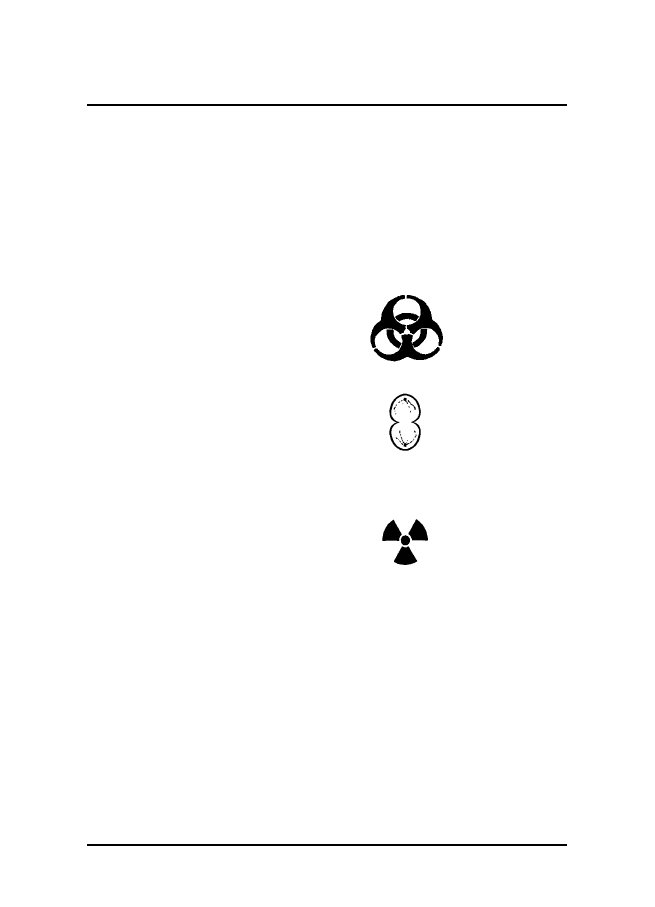
Regulation 2000Schedule 4Schedule 4Design requirements for wastecontainerssection 47WasteContainerSymbol colourclinicalyellowblackSymbolIdentificationclinical
wastecytotoxicpurplewhitegeneral—radio-activered—blackcytotoxicwaste-incinerateat 1100ºC—general wasteradioactivewastePage
62Current as at 21 May 2014
Environmental Protection (Waste Management)
Regulation 2000Schedule 5Schedule 5Treatment and disposal ofclinical and related wastesection 52Waste typeTreatment and disposal processIncineration Auto-ChemicalChemicalMicrowave
Compaction Landfillclavingdisinfectiondisinfection
andandusingusingshreddingshredding
Hypochlorite Peroxide,andLime andshreddingshreddingchemicalyes (iflicensed)nonononononocytotoxicyesnonononononohuman body parts yesnonoyesnononopharmaceuticalyesnonononononoradioactivenononononononotreated clinical—————yesyesuntreated clinicalyesyesyesyesyesyes (otherno (otherthan
animalthan in acarcasses and
scheduledsharps)area)Current as at 21 May 2014Page
63
Part
2Environmental Protection (Waste Management)
Regulation 2000Schedule 6Treatment
codesThefollowingwaysofdealingwithwastemayallowthepossibilityofresource recovery, recycling, reclamation,
direct re-use or an alternative useof the
waste.Treatment codeusing waste as a
fuel, other than by direct incineration.R1recycling or reclaiming a substance, other
than asubstance mentioned in items R6 to R8, if it
is—•an organic substance used as a solvent
. . . . . . .R2•an organic
substance not used as a solvent . . . .R3•a metal or metal compound other than a
drum .R4•an inorganic
substance other than a metal ormetal
compound. . . . . . . . . . . . . . . . . . . . . .
. .R5recycling or reclaiming—•an acid or base. . . . . . . . . . . .
. . . . . . . . . . . . . .R6•a component used for pollution
abatement . . . .R7•a component from
a catalyst . . . . . . . . . . . . . . .R8refining used oil or otherwise using
previously used oilR9usingaresidualtrackablewasteobtainedfromtreatment in
another way mentioned in this part . . . . . .R11storagebeforetreatmentinanotherwaymentionedinthis
part. . . . . . . . . . . . . . . . . . . . . .
. . . . . . . . . . . . . . .R13recycling, reconditioning or laundering of
drums . . . . .R14Current as at 21 May 2014Page
65
Environmental Protection (Waste Management)
Regulation 2000Schedule 7Schedule 7Waste origin codes for wastetrackingschedule 9,
definitionwaste origin codeNote—ThisscheduleisderivedfromtheAustralianandNewZealandStandard
Industrial Classification 1993, Australian Catalogue No.
1292.0,published by the Australian Bureau of
Statistics.AAgriculture, forestry and
fishingAgriculture011horticulture and fruit growing012grain, sheep and beef cattle
farming013dairy cattle farming014poultry farming015other livestock farming016other crop growingServices to
agriculture, hunting and trapping021services to agriculture022hunting and trappingForestry and
logging030forestry and loggingCommercial fishing041marine fishing042aquaculturePage 66Current as at 21 May 2014
Environmental Protection (Waste Management)
Regulation 2000Schedule 7BMiningCoal
mining110coal miningOil and gas
extraction120oil and gas extractionMetal
ore mining131metal ore miningOther
mining141construction material mining142other miningServices to
mining151exploration152other mining servicesCManufacturingFood, beverage
and tobacco manufacturing211meat and meat
product manufacturing212dairy product
manufacturing213fruit and vegetable processing214oil and fat manufacturing215flour mill and cereal food
manufacturing216bakery product manufacturing217other food manufacturingCurrent as at 21 May 2014Page
67
Environmental Protection (Waste Management)
Regulation 2000Schedule 7218beverage and malt manufacturing219tobacco product manufacturingTextile, clothing, footwear and leather
manufacturing221textile fibre, yarn and woven fabric
manufacturing222textile product manufacturing223knitting mills224clothing manufacturing225footwear manufacturing226leather and leather product
manufacturingWood and paper product manufacturing231log sawmilling and timber
dressing232other wood product
manufacturing233paper and paper product
manufacturingPrinting, publishing and recorded
media241printing and services to
printing242publishing243recorded media manufacturing and
publishingPetroleum, coal, chemical and associated
product manufacturing251petroleum
refining252petroleumandcoalproductmanufacturingnototherwisementioned in
this schedule253basic chemical manufacturing254other chemical product
manufacturing255rubber product manufacturing256plastic product manufacturingPage
68Current as at 21 May 2014
Environmental Protection (Waste Management)
Regulation 2000Schedule 7Non-metallic
mineral product manufacturing261glass and glass product manufacturing262ceramic product manufacturing263cement, lime, plaster and concrete
product manufacturing264non-metallicmineralproductmanufacturingnototherwisementioned in
this scheduleMetal product manufacturing271iron and steel manufacturing272basic non-ferrous metal
manufacturing273non-ferrous basic metal product
manufacturing274structural metal product
manufacturing275sheet metal product
manufacturing276fabricated metal product
manufacturingMachinery and equipment manufacturing281motor vehicle and part
manufacturing282other transport equipment
manufacturing283photographic and scientific equipment
manufacturing284electronic equipment
manufacturing285electrical equipment and appliance
manufacturing286industrial machinery and equipment
manufacturingOther manufacturing291prefabricated building manufacturing292furniture manufacturing294other manufacturingCurrent as at 21 May 2014Page
69
Environmental Protection (Waste Management)
Regulation 2000Schedule 7DElectricity, gas and water supplyElectricity and gas supply361electricity supply362gas
supplyWater supply, sewerage and drainage
services370water supply, sewerage and drainage
servicesEConstructionGeneral
construction411building construction412non-building constructionConstruction trade services421site preparation services422building structure services423installation trade services424building completion services425other construction servicesFWholesale tradeBasic material
wholesaling451farm produce wholesaling452mineral, metal and chemical
wholesaling453builders’ supplies wholesalingPage
70Current as at 21 May 2014
Environmental Protection (Waste Management)
Regulation 2000Schedule 7Machinery and
motor vehicle wholesaling461machinery and
equipment wholesaling462motor vehicle
wholesalingPersonal and household good
wholesaling471food, drink and tobacco
wholesaling472textile, clothing and footwear
wholesaling473household good wholesaling479other wholesalingGRetail tradeFood
retailing511supermarket and grocery stores512specialised food retailingPersonal and household good retailing521department stores522clothing and soft good retailing523furniture, houseware and appliance
retailing524recreational good retailing525other personal and household good
retailing526household equipment repair
servicesMotor vehicle retailing and services531motor vehicle retailing532motor vehicle servicesCurrent as at 21 May 2014Page
71
Environmental Protection (Waste Management)
Regulation 2000Schedule 7HAccommodation, cafes andrestaurantsAccommodation,
cafes and restaurants571accommodation572pubs, taverns and bars573cafes and restaurants574clubs (hospitality)ITransport and storageRoad
transport611road freight transport612road passenger transportRail
transport620rail transportWater
transport630water transportAir and space
transport640air and space transportOther
transport650other transportServices to
transport661services to road transport662services to water transportPage
72Current as at 21 May 2014
Environmental Protection (Waste Management)
Regulation 2000Schedule 7663services to air transport664other services to transportStorage670storageJCommunication servicesCommunication
services711postal and courier services712telecommunication servicesKFinance and insuranceFinance731732733734central bankdeposit taking
financiersother financiersfinancial asset
investorsInsurance741life
insurance and superannuation funds742other insuranceServices to
finance and insurance751services to
finance and investment752services to
insuranceCurrent as at 21 May 2014Page
73
Environmental Protection (Waste Management)
Regulation 2000Schedule 7LProperty and business servicesProperty services771property operators and developers772real estate agents773non-financial asset investors774machinery and equipment hiring and
leasingBusiness services781scientific research782technical services783computer services784legal and accounting services785marketing and business management
services786other business servicesMGovernment administration anddefenceGovernment
administration811government administration812justice813foreign government representationDefence820defencePage 74Current as at 21 May 2014
Environmental Protection (Waste Management)
Regulation 2000Schedule 7NEducationEducation841preschool education842school education843post
school education844other educationOHealth and community servicesHealth services861hospitals and nursing homes862medical and dental services863other health services864veterinary servicesCommunity services871child care services872community care servicesPCultural and recreational servicesMotion picture, radio and television
services911film and video services912radio and television servicesLibraries, museums and the arts921libraries922museumsCurrent as at 21
May 2014Page 75
Environmental Protection (Waste Management)
Regulation 2000Schedule 7923parks and gardens924arts925services to the artsSport and
recreation931sport932gambling services933other recreation servicesQPersonal and other servicesPersonal services951personal and household goods hiring952other personal servicesOther
services961religious organisations962interest groups963public order and safety servicesPrivate households employing staff970private households employing
staffPage 76Current as at 21
May 2014
Environmental Protection (Waste Management)
Regulation 2000Schedule 9Schedule 9Dictionarysection 3ADG
codemeans the seventh edition of the Australian
CodefortheTransportofDangerousGoodsbyRoadandRail,prepared by the
National Road Transport Commission.animalwastemeansanydiscardedmaterials,includingcarcasses,bodyparts,bloodorbedding,originatingfromanimals contaminated with an agent
infectious to humans orfromanimalsinoculatedduringresearch,productionofbiologicals or pharmaceutical testing with
infectious agents.blood bankmeans premises
or a vehicle for receiving blooddonations.chemicalwastemeanswastegeneratedfromtheuseofchemicalsinmedical,dental,veterinaryandlaboratoryprocedures,including,forexample,mercury,formalinandgluteraldehyde.clinicalwastemeanswastethathasthepotentialtocausedisease,
including, for example, the following—(a)animal waste;(b)discarded sharps;(c)human tissue waste;(d)laboratory waste.commerciallymeans carried
out for fee or reward.commercialpremisesmeansanyofthefollowingtypesofpremises—(a)a
hotel, motel, caravan park, cafe, food store or canteen;(b)anassemblybuilding,institutionalbuilding,kindergarten,childmindingcentre,schoolorotherbuilding used
for education;(c)premises where a sport or game is
ordinarily played inpublic;Current as at 21
May 2014Page 77
Environmental Protection (Waste Management)
Regulation 2000Schedule 9Page 78(d)an exhibition ground, show ground or
racecourse;(e)anoffice,shoporotherpremiseswherebusinessorwork, other than a manufacturing
process, is carried out.commercialwastemeanswaste,otherthangreenwaste,recyclable waste, interceptor waste or waste
discharged to asewer, produced as a result of the ordinary
use or occupationof commercial premises.consignment
numbermeans—(a)for
a load of waste transported from a generator outsideQueensland—thenumberassignedtotheloadundersection 38; or(b)foraloadofwastetransportedtoareceiveroutsideQueensland—anynumberassignedasaconsignmentnumberfortheloadunderanequivalentlawofthejurisdiction.cytotoxicdrugmeansadrugknowntohavecarcinogenic,mutagenic or
teratogenic potential.cytotoxicwastemeanswastethatiscontaminatedbyacytotoxic drug.dangerous
goodsmeans a substance listed in the ADG
codeas dangerous goods.dangerousgoodsclass,fortrackablewaste,meansthedangerous goods class applying to the
waste under the ADGcode.disposalcode,forawayofdisposingofwaste,meanstherelevant code stated in schedule
6.domesticclean-upwastemeansnon-putrescible,dryandinoffensive waste, other than green
waste or recyclable waste,produced as a result of a clean-up of
domestic premises.domesticpremisesmeansanyofthefollowingtypesofpremises—(a)a
single unit private dwelling;(b)premises containing 2 or more separate
flats, apartmentsor other dwelling units;Current as at 21
May 2014
Environmental Protection (Waste Management)
Regulation 2000Schedule 9(c)a
boarding house, hostel, lodging house or guest house.domesticwastemeanswaste,otherthandomesticclean-upwaste,greenwaste,recyclablewaste,interceptorwasteorwastedischargedtoasewer,producedasaresultoftheordinary use or
occupation of domestic premises.endangeredwildlifehasthemeaninggivenbytheNatureConservation Act
1992, schedule.environmentallysignificantcharacteristicmeansacharacteristic mentioned in the NEPM,
schedule A, list 2, acopy of which is set out in schedule
3.free-flowing, for blood,
blood products or human body fluids,means blood,
blood products or body fluids that is flowing,dripping,
oozing, liquid or able to be squeezed from material.general wastemeans—(a)generally, waste other than regulated
waste; or(b)for part 2A, any of the
following—(i)commercial waste;(ii)domestic waste;(iii)recyclable waste.generator, of
trackable waste, see section 18.generatoridentificationnumber,ofaperson,meansthenumber assigned to the person under
section 42.greenwastemeansgrasscuttings,trees,bushes,shrubs,loppings of trees, bushes or shrubs, or
similar matter producedas a result of the ordinary use or
occupation of premises.hospitalhas the meaning
given by theHospitalandHealthBoards Act
2011, schedule 2 and includes a dental hospital
orhospice.humanbodypartsmeansrecognisableorgans,bonesandgross body parts but does not include teeth,
gums, hair, nailsor bone fragments.human tissue
wastemeans the following—Current as at 21
May 2014Page 79
Environmental Protection (Waste Management)
Regulation 2000Schedule 9Page 80(a)tissue, blood, blood products and
other body fluids thatare removed from a person during
surgery, an autopsy oranother medical procedure;(b)tissue, blood, blood products and
other body fluids thatare removed from a person during
post-operative care ortreatment;(c)specimensoftissue,blood,bloodproductsandotherbody fluids and
containers in which the specimens arekept;(d)discardedmaterialsaturatedwith,orcontainingfree-flowing
blood and other body fluids.industrial
wastemeans—(a)interceptor waste; or(b)waste other than the following—(i)commercial waste;(ii)domestic clean-up waste;(iii)domestic waste;(iv)green waste;(v)recyclable interceptor waste;(vi)recyclable
waste;(vii) waste discharged to a sewer.infectiousagentmeansanorganism,includingamicro-organismorworm,thatcausesdiseaseoranotheradverse health
impact in humans.interceptormeans a device
used to intercept a substance insewage, waste
water or trade waste and prevent its dischargeinto a sewer,
septic tank, waste water disposal system or othertreatment device.Examples of
interceptors—•neutralisinginterceptorsforneutralisingacidicandalkalinesubstances•grease interceptors for collecting and
solidifying fat, grease andsimilar matterCurrent as at 21
May 2014
Environmental Protection (Waste Management)
Regulation 2000Schedule 9•oil
interceptors for collecting oil and petroleum products•siltinterceptorsforcollectingsoil,sand,gravelandothersedimentary
solidsinterceptorwastemeansmatter,otherthanrecyclableinterceptor
waste, intercepted by, and held in, an interceptor.laboratory, for part 5,
means a building, or part of a building,usedorintendedtobeusedforscientificworkthatmaygenerate clinical waste.laboratory
wastemeans a specimen or culture discarded in
thecourse of dental, medical or veterinary
practice or research,includingmaterialthatis,orhasbeencontaminatedby,geneticallymanipulatedmaterialorimportedbiologicalmaterial.licensed, for schedule
5, means the person who operates thepremises holds,
or is acting under, the required authority forthe
activity.loadnumber,forthetransportationofaloadoftrackablewaste,
means—(a)ifthegeneratorgivestheadministeringauthorityinformationaboutthetransportationintheprescribedform—theloadnumbermarkedontheformbytheadministering authority; or(b)ifthegeneratorgivestheadministeringauthorityinformation about the transportation in
another way theadministeringexecutivehasapprovedundersection37—the load
number assigned under the approved way.local
government, for part 2A, see section 10A.log10kill=4means a 4 decade reduction or a 0.0001
survivalprobability in a microbial
population.log10kill=6means a 6 decade reduction or a 0.000001
survivalprobability in a microbial
population.manufacturing processmeans a
handicraft or other processrelating to
adapting, altering, assembling, cleaning, finishing,making,ornamenting,preparing,renovating,repairing,Current as at 21
May 2014Page 81
Environmental Protection (Waste Management)
Regulation 2000Schedule 9Page 82washing,orwreckinggoodsfortrade,saleorgainorotherwise in connection with a
business.multi-servicemedicalclinicmeansamedicalcentrethatprovides
specialist procedures including radiology, pathologyor
surgical procedures.NEPMmeanstheNationalEnvironmentProtection(MovementofControlledWastebetweenStatesandTerritories)MeasuremadebytheNationalEnvironmentProtectionCouncil,on26June1998,undertheNationalEnvironment
Protection Council Act 1994(Cwlth).nightsoilincludes—(a)human faecal material; and(b)human urine; and(c)materialmixedwithhumanfaecalmaterialorurine,including, for
example, toilet paper.non-infectious, for waste,
means the waste—(a)has a log10kill
= 4 for bacterial spores; and(b)has
a log10kill = 6 for vegetative
bacteria.packinggroupdesignator,fortrackablewaste,meansthepackinggroupdesignatorapplyingtothewasteundertheADG
code.pharmaceuticalproductmeansarestricteddrugundertheHealth (Drugs and Poisons) Regulation
1996.pharmaceutical wastemeans waste arising from—(a)pharmaceuticalproductsthathavepassedtheirrecommended shelf life; and(b)pharmaceuticalproductsdiscardedduetooff-specificationbatchesorcontaminatedpackaging;and(c)pharmaceuticalproductsreturnedbypatientsordiscarded by the public; and(d)pharmaceuticalproductsnolongerrequiredbythepublic;
andCurrent as at 21 May 2014
Environmental Protection (Waste Management)
Regulation 2000Schedule 9(e)wastegeneratedduringthemanufactureofpharmaceutical products.premisesincludesdomestic,governmentandcommercialpremises.prescribed form, for part 4,
see section 36.prescribed information, for part 4,
see section 19.prescribedtime,forgivinginformationunderpart4,seesection 21.prescribedway,forgivinginformationunderpart4,seesection 20.radioactivesubstanceseeRadiationSafetyAct1999,schedule 2.radioactivewastemeanswastethatiscontaminatedwitharadioactive substance.receiver, of trackable
waste, see section 18.recyclableinterceptorwastemeansmatterthatis,orisintended to be,
removed from a grease interceptor and takenelsewhere for
processing into a non-toxic, non-hazardous andusable substance
for sale.recyclable waste, for a local
government’s area, means cleanand inoffensive
waste that is declared by the local governmentto be recyclable
waste for the area.Examples of waste that may be declared to be
recyclable waste—glass bottles, newspaper, cardboard,
steel and aluminium cans and greenwasteregisteredlaboratorymeansalaboratoryaccreditedbytheNational Association of Testing
Authorities.registrationnumber,ofamotorvehicle,meansitsregistrationnumberundertheTransportOperations(RoadUse
Management—Vehicle Registration) Regulation 2010.regulated wastemeans regulated
waste within the meaning oftheWaste Reduction and Recycling Act
2011.Current as at 21 May 2014Page
83
Environmental Protection (Waste Management)
Regulation 2000Schedule 9Page 84related wastemeans waste that
constitutes, or is contaminatedwith,chemicals,cytotoxicdrugs,humanbodyparts,pharmaceutical products or radioactive
substances.requiredauthority,foranenvironmentallyrelevantactivity,meansanyofthefollowingrequiredundertheActfortheactivity—(a)for
a chapter 4 activity—(i)a registration
certificate; and(ii)iftheactivityisnotsubjecttoacodeofenvironmentalcompliance—adevelopmentapproval;(b)foraminingorpetroleumactivity—anenvironmentalauthority.scheduled
areameans a local government area mentioned
intheEnvironmental Protection Regulation
2008, schedule 4.serviced
premisessee section 10B.sharpmeansanobjectordevicehavingsharppoints,protuberances or cutting edges that are
capable of causing apenetrating injury to humans.standard general waste containermeans a container of a typeapproved by a local government for storing
domestic waste,commercial waste or recyclable waste at
premises in the localgovernment’s area.subsidiary
risk, for trackable waste, means the subsidiary
riskapplying to the waste under the ADG
code.tissuedoesnotincludehumanbodyparts,teeth,hair,nail,gums and
bone.trackable wastesee section
17.transporter, of trackable
waste, see section 18.treatmentcode,forawayoftreatingwaste,meanstherelevant code stated in schedule
6.UN number, for trackable
waste, means the United Nationsnumber applying
to the waste under the ADG code.Current as at 21
May 2014
Environmental Protection (Waste Management)
Regulation 2000Schedule 9veterinary
hospitalhas the meaning given by theVeterinarySurgeons Act
1936.wastecode,fortrackablewaste,meanstherelevantcodestated in schedule 1.wastefacility,forparts2Aand3,meansafacilityfortherecycling,reprocessing,treatment,storage,incineration,conversion to
energy or disposal of waste.waste
handlermeans a generator, transporter or receiver
oftrackable waste.wasteorigincode,foranactivity,meansthecodefortheactivity stated in schedule 7.Current as at 21 May 2014Page
85
Environmental Protection (Waste Management)
Regulation 2000EndnotesEndnotes1Index to endnotesPage2Key . . . . . . . . . . . . . . . . .
. . . . . . . . . . . . . . . . . . . . . . . . . . . . . . . . . .
. . . . . . . . . . .863Table of reprints
. . . . . . . . . . . . . . . . . . . . . . . . . . . . . . . . . .
. . . . . . . . . . . . . . . . . .864List
of legislation . . . . . . . . . . . . . . . . . . . . . . . . . .
. . . . . . . . . . . . . . . . . . . . . . . . .885List of annotations . . . . . . . . .
. . . . . . . . . . . . . . . . . . . . . . . . . . . . . . . . . .
. . . . . . .902KeyKey to
abbreviations in list of legislation and annotationsKeyAIAamdamdtchdefdivexpgazhdginslapnotfdnumo in
comorigpparaprecpresprevExplanation=Acts
Interpretation Act 1954=amended=amendment=chapter=definition=division=expires/expired=gazette=heading=inserted=lapsed=notified=numbered=order in council=omitted=original=page=paragraph=preceding=present=previousKey(prev)procprovptpubdR[X]RArelocrenumrep(retro)rvsschsdivSIASIRSLsubunnumExplanation=previously=proclamation=provision=part=published=Reprint No. [X]=Reprints Act 1992=relocated=renumbered=repealed=retrospectively=revised version=section=schedule=subdivision=Statutory Instruments Act 1992=Statutory Instruments Regulation
2012=subordinate legislation=substituted=unnumbered3Table of reprintsA new reprint of
the legislation is prepared by the Office of the Queensland
ParliamentaryCounsel each time a change to the legislation
takes effect.The notes column for this reprint gives
details of any discretionary editorial powers undertheReprints Act 1992used by the
Office of the Queensland Parliamentary Counsel inpreparing it. Section 5(c) and (d) of the Act
are not mentioned as they contain mandatoryPage 86Current as at 21 May 2014
Environmental Protection (Waste Management)
Regulation 2000Endnotesrequirementsthatallamendmentsbeincludedandallnecessaryconsequentialamendments be
incorporated, whether of punctuation, numbering or another kind.
Furtherdetails of the use of any discretionary
editorial power noted in the table can be obtained bycontacting the Office of the Queensland
Parliamentary Counsel by telephone on 30039601 or email
legislation.queries@oqpc.qld.gov.au.From29January2013,allQueenslandreprintsaredatedandauthorisedbytheParliamentary Counsel. The previous
numbering system and distinctions between printedand
electronic reprints is not continued with the relevant details for
historical reprintsincluded in this table.ReprintNo.11A1B1CAmendments
tonone2000 SL No. 3202000 SL No.
3512000 SL No. 351Effective1
July 20008 December 20001 January
20011 January 2002Reprint
date27 July 200014 December
20002 January 200115 January
2002ReprintNo.1D2Amendments
included2002 SL No. 2951994 Act No. 62
(amd2000 Act No. 64)Effective8
November 20028 November 20022A2B2C33A
rv3B rv3C rv3D rv4
rv4A4B4C4D4E4F4G2003 Act No. 812004 SL No.
2092005 SL No. 138—2007
SL No. 217—2008 SL No. 132008 SL No.
3702008 SL No. 427—2009
Act No. 132010 SL No. 1522010 SL No.
1912010 SL No. 363—2011
Act No. 312011 SL No. 2312012 SL No.
901 July 20044 October
200425 June 200525 June
200531 August 20071 January
200811 February 20081 January
20091 January 20091 July
200925 June 20101 September
201010 December 20101 September
20111 December 20111 July
2012NotesThis reprint
wasprepared to updatereferences to
theEnvironmentalProtection Act
1994.R2C withdrawn, see R3s 65
commencedR3D rv withdrawn, seeR4 rvRevision notice issuedfor R4provs
exp 31 August2011Current as
at20 September 201321 May 2014Amendments included2013 SL No.
1822014 Act No. 17NotesCurrent as at 21 May 2014Page
87
Environmental Protection (Waste Management)
Regulation 2000Endnotes4List
of legislationRegulatory impact statementsFor
subordinate legislation that has a regulatory impact statement,
specific reference to the statementis included in
this list.Explanatory notesAll subordinate
legislation made on or after 1 January 2011 has an explanatory
note. For subordinatelegislation made before 1 January 2011
that has an explanatory note, specific reference to the note
isincluded in this list.Environmental
Protection (Waste Management) Regulation 2000 SL No. 178made
by the Governor in Council on 29 June 2000notfd gaz 30 June
2000 pp 736–48ss 1–2 commenced on date of
notificationpt 4 div 3 sdiv 1 commenced 1 July 2001 (see
s 2(1))s 64 commenced 1 January 2002 (see s
2(2))s 65 commenced 1 January 2008 (see s
2(3))s 69 commenced 1 July 2001 (see s
2(4))remaining provisions commenced 1 July 2000
(see s 2(5))exp 31 August 2014 (see SIA s 56A(2) and SIR
s 3 sch 2 pt 2)Notes—(1)The expiry date
may have changed since this reprint was published. Seethe
latest reprint of the SIR for any change.(2)A
regulatory impact statement and explanatory note were
prepared.amending legislation—Environmental
Protection Act 1994 No. 62 ss 1–2, 616(2) (this Act is amended,
seeamending legislation below)date
of assent 1 December 1994ss 1–2 commenced on date of
assentremaining provision commenced 1 January
2001amending legislation—Environmental
Protection and Other Legislation Amendment Act 2000 No.64 s
52 (amends 1994 No. 62 above)date of assent 24
November 2000ss 1–2 commenced on date of assentremaining provision commenced 1 January
2001EnvironmentalProtection(WasteManagement)AmendmentRegulation(No.1)2000 SL No. 320notfd gaz 8
December 2000 pp 1374–7commenced on date of
notificationEnvironmental Protection and Other
Legislation Amendment Regulation (No. 1)2000 SL No. 351
pts 1, 3notfd gaz 15 December 2000 pp 1478–83ss
1–2 commenced on date of notificationPage 88Current as at 21 May 2014
Environmental Protection (Waste Management)
Regulation 2000Endnotesremaining
provisions commenced 1 January 2001 (see s 2)Note—An
explanatory note was prepared.EnvironmentalProtection(WasteManagement)AmendmentRegulation(No.1)2002 SL No. 295notfd gaz 8
November 2002 pp 857–8commenced on date of
notificationPublic Health (Infection Control for Personal
Appearance Services) Act 2003 No. 81ss 1–2, 162 sch
1date of assent 6 November 2003ss
1–2 commenced on date of assentremaining
provisions commenced 1 July 2004 (2003 SL No. 351)Environmental Protection Legislation
Amendment Regulation (No. 1) 2004 SL No.209 pts 1,
4notfd gaz 1 October 2004 pp 393–5ss
1–2 commenced on date of notificationremaining
provisions commenced 4 October 2004 (see s 2)Nature
Conservation and Other Legislation Amendment Regulation (No. 2)
2005 SLNo. 138 pts 1, 2notfd gaz 24 June
2005 pp 639–45ss 1–2 commenced on date of
notificationremaining provisions commenced 25 June 2005
(see s 2)Environmental Protection Legislation
Amendment and Repeal Regulation (No. 1)2007 SL No. 217
pts 1, 3notfd gaz 31 August 2007 pp 2326–7commenced on date of notificationEnvironmental Protection and Other
Legislation Amendment Regulation (No. 1)2008 SL No. 13
pts 1, 3notfd gaz 1 February 2008 pp 465–7ss
1–2 commenced on date of notificationremaining
provisions commenced 11 February 2008 (see s 2)Environmental
Protection Regulation 2008 SL No. 370 ss 1–2, 160 sch 11notfd
gaz 7 November 2008 pp 1319–21ss 1–2 commenced
on date of notificationremaining provisions commenced 1
January 2009 (see s 2)Note—A regulatory impact statement and
explanatory note were prepared.Transport
Operations (Road Use Management—Dangerous Goods) Regulation
2008SL No. 427 ss 1–2, 253 sch 3notfd
gaz 12 December 2008 pp 2044–53ss 1–2 commenced
on date of notificationremaining provisions commenced 1
January 2009 (see s 2)Right to Information Act 2009 No. 13 ss
1–2, 213 sch 5date of assent 12 June 2009ss
1–2 commenced on date of assentCurrent as at 21
May 2014Page 89
Environmental Protection (Waste Management)
Regulation 2000Endnotesremaining
provisions commenced 1 July 2009 (2009 SL No. 132)EnvironmentalProtection(WasteManagement)AmendmentRegulation(No.1)2010 SL No. 152notfd gaz 25 June
2010 pp 823–30commenced on date of notificationTransport Operations (Road Use
Management—Vehicle Registration) Regulation2010 SL No. 191
ss 1–2, 133 sch 7notfd gaz 23 July 2010 pp 1196–9ss
1–2 commenced on date of notificationremaining
provisions commenced 1 September 2010 (see s 2)Environmental
Protection Legislation Amendment Regulation (No. 1) 2010 SL
No.363 s 1, pt 3notfd gaz 10
December 2010 pp 1082–6commenced on date of
notificationWaste Reduction and Recycling Act 2011 No. 31
ss 1–2(1), ch 16 pt 3date of assent 28 October 2011ss
1–2 commenced on date of assentremaining
provisions commenced 1 December 2011 (see s 2(1))Waste
Reduction and Recycling Regulation 2011 SL No. 231 ss 1–2(1)(c), 49
sch 9 pt2notfd gaz 18 November 2011 pp
547–8ss 1–2 commenced on date of
notificationremaining provisions commenced 1 December
2011 (see s 2(1)(c))Health and Hospitals Network and Other
Legislation Amendment Regulation (No. 1)2012 SL No. 90
ss 1–2, 41 schnotfd gaz 29 June 2012 pp 704–10ss
1–2 commenced on date of notificationremaining
provisions commenced 1 July 2012 (see s 2)Waste Reduction
and Recycling and Other Legislation Amendment Regulation
(No.1) 2013 SL No. 182 pts 1, 3notfd
gaz 20 September 2013 pp 101–3commenced on date
of notificationPublic Safety Business Agency Act 2014 No. 17
ss 1, 184 sch 1 pt 2date of assent 21 May 2014commenced on date of assent5List of annotationsApplication in relation to sewerage and
stormwater drainages 5amd 2005 SL No. 138 s 4PART
2—LITTER AND RELATED MATTERSpt 2 (ss
6–10)om 2008 SL No. 13 s 6Page 90Current as at 21 May 2014
Environmental Protection (Waste Management)
Regulation 2000EndnotesPART 2A—WASTE
MANAGEMENT IN LOCAL GOVERNMENT AREASpt hdgins
2007 SL No. 217 s 16Division 1—Preliminarydiv 1
(ss 10A–10B)ins 2007 SL No. 217 s 16Division
2—General wastediv hdgins 2007 SL No.
217 s 16Subdivision 1—Storage of general wastesdiv
hdgins 2007 SL No. 217 s 16Owner or occupier
of premises to supply waste containerss 10Cins
2007 SL No. 217 s 16Requirements for storing general waste
in waste containerss 10Dins 2007 SL No. 217 s 16General requirements for keeping waste
containers at serviced premisess 10Eins
2007 SL No. 217 s 16amd 2011 SL No. 231 s 49 sch 9 pt 2Other
requirements for storing general waste at particular serviced
premisess 10Fins 2007 SL No. 217 s 16Subdivision 2—Removal of general wastesdiv
hdgins 2007 SL No. 217 s 16Requirements for
removal of general wastes 10Gins 2007 SL No.
217 s 16amd 2011 SL No. 231 s 49 sch 9 pt 2om
2013 SL No. 182 s 11Local government may give notice about
removal of general wastes 10Hins 2007 SL No.
217 s 16amd 2013 SL No. 182 s 12Depositing or
disposal of general waste from premises other than serviced
premisess 10Iins 2007 SL No. 217 s 16amd
2011 SL No. 231 s 49 sch 9 pt 2Division
3—Storage and treatment of industrial wastediv 3 (ss
10J–10K)ins 2007 SL No. 217 s 16Division
4—Storage and disposal of nightsoildiv hdgins
2007 SL No. 217 s 16om 2013 SL No. 182 s 13Nightsoil to be
stored in a sanitary conveniences 10Lins
2007 SL No. 217 s 16om 2013 SL No. 182 s 13Cesspits etc. not
to be constructed or used at particular premisess
10Mins 2007 SL No. 217 s 16om 2013 SL No.
182 s 13Current as at 21 May 2014Page
91
Environmental Protection (Waste Management)
Regulation 2000EndnotesRequirements for
placing, constructing or altering a prescribed sanitary
conveniences 10Nins 2007 SL No. 217 s 16om
2013 SL No. 182 s 13Disposal of nightsoil from premises not
otherwise serviceds 10Oins 2007 SL No. 217 s 16amd
2011 SL No. 231 s 49 sch 9 pt 2om 2013 SL No.
182 s 13Division 5—Compliance noticesdiv 5
(s 10P)ins 2007 SL No. 217 s 16Definition for pt
3s 11amd 2000 SL No. 320 s 3om
2007 SL No. 217 s 17Unlawful disposal of waste at waste
facilitys 12amd 2004 SL No. 209 s 37Restrictions on burning waste at waste
facilitys 13amd 2002 SL No. 295 s 2 sch; 2004 SL
No. 209 s 38; 2014 Act No. 17 sch 1 pt2Approval of ways of giving information to
administering authoritys 37amd 2000 SL No.
351 s 50; 2002 SL No. 295 s 2 schConsignment
numbers for waste transported into Queenslands 38amd
2000 SL No. 351 s 50; 2002 SL No. 295 ss 3, 2 sch; 2004 SL No. 209
s39Exemptionss 39amd
2000 SL No. 351 s 50; 2002 SL No. 295 s 2 schEmergenciess 40amd
1994 Act No. 62 s 616(2) (amd 2000 Act No. 64 s 52); 2004 SL No.
209s 40Trackable waste
to be given only to licensed transporters 41amd
2004 SL No. 209 s 41PART 5—MANAGEMENT OF CLINICAL AND
RELATED WASTESDivision 1—Clinical and related waste
management plansdiv hdgom 2011 Act No.
31 s 314Clinical and related waste management plan
requireds 43om 2011 Act No. 31 s 314Contents of plans 44amd
2011 SL No. 231 s 49 sch 9 pt 2om 2011 Act No.
31 s 314Requirement for plan to be maintaineds
45om 2011 Act No. 31 s 314Page 92Current as at 21 May 2014
Environmental Protection (Waste Management)
Regulation 2000EndnotesSegregation of
wastes 46amd 2004 SL No. 209 s 42Sending waste to waste disposal or treatment
facilitys 48amd 2004 SL No. 209 s 43Disposal of sharpss 49amd
2003 No. 81 s 162 sch 1Storage of clinical or related
wastes 51amd 2000 SL No. 320 s 4; 2000 SL No.
351 s 50sub 2002 SL No. 295 s 4Definitions for
pt 6s 54deflicensed
disposal facilityamd 2004 SL No. 209 s 44(1)deflicensed treatment facilityamd
2004 SL No. 209 s 44(2)Notice to administering
authoritys 61amd 2002 SL No. 295 s 2 schUse
of equipment containing concentrated PCB materials
64amd 2000 SL No. 351 s 50; 2002 SL No. 295 s
2 schPART 6A—APPROVAL OF RESOURCE FOR BENEFICIAL
USEpt hdgins 2002 SL No.
295 s 5om 2011 Act No. 31 s 315Division
1—Preliminarydiv hdgom 2011 Act No.
31 s 315Definitions for pt 6As 66Ains
2002 SL No. 295 s 5om 2011 Act No. 31 s 315Division
2—Application for approvaldiv hdgins 2002 SL No.
295 s 5om 2011 Act No. 31 s 315Application for
approval of a resource or stated type of resource—Act, s 13s 66Bins
2002 SL No. 295 s 5om 2011 Act No. 31 s 315Administering
authority may require additional informations 66Cins
2002 SL No. 295 s 5om 2011 Act No. 31 s 315Division
3—Deciding applicationdiv hdgins 2002 SL No.
295 s 5om 2011 Act No. 31 s 315Deciding
applications 66Dins 2002 SL No. 295 s 5om
2011 Act No. 31 s 315Current as at 21 May 2014Page
93
Environmental Protection (Waste Management)
Regulation 2000EndnotesCriteria for
decisions 66Eins 2002 SL No. 295 s 5om
2011 Act No. 31 s 315Grant of approvals 66Fins
2002 SL No. 295 s 5om 2011 Act No. 31 s 315Refusal of
approvals 66Gins 2002 SL No. 295 s 5om
2011 Act No. 31 s 315Division 4—Amendment, cancellation or
suspension of particular approvalsdiv hdgins
2002 SL No. 295 s 5om 2011 Act No. 31 s 315Transfer of
benefit of approvals 66Hins 2002 SL No. 295 s 5om
2011 Act No. 31 s 315Amendment of approvals
66Iins 2002 SL No. 295 s 5om 2011 Act No.
31 s 315Cancellation or suspension of an
approvals 66Jins 2002 SL No. 295 s 5om
2011 Act No. 31 s 315Procedure for amendment, cancellation,
or suspension of approvals 66Kins 2002 SL No.
295 s 5amd 2004 SL No. s 45om 2011 Act No.
31 s 315Division 5—Conditions of approvalsdiv
hdgins 2002 SL No. 295 s 5om 2011 Act No.
31 s 315Application of div 5s 66Lins
2002 SL No. 295 s 5om 2011 Act No. 31 s 315Conditions of
approvalss 66Mins 2002 SL No. 295 s 5om
2011 Act No. 31 s 315Failure to comply with condition of
approvals 66Nins 2002 SL No. 295 s 5om
2011 Act No. 31 s 315PART 6B—USED PACKAGING MATERIALSpt
hdg(prev 1998 SL No. 29 pt 3B hdg) ins 2000 SL
No. 162 s 6renum and reloc 2007 SL No. 217 s 12exp
31 August 2011 (see s 66Z)Page 94Current as at 21
May 2014
Environmental Protection (Waste Management)
Regulation 2000EndnotesDivision
1—Preliminarydiv hdg(prev 1998 SL No.
29 pt 3B div 1 hdg) ins 2000 SL No. 162 s 6renum and reloc
2007 SL No. 217 s 12exp 31 August 2011 (see s 66Z)Subdivision 1—Generalsdiv hdg(prev
1998 SL No. 29 pt 3B div 1 sdiv 1 hdg) ins 2000 SL No. 162 s
6renum and reloc 2007 SL No. 217 s 12exp
31 August 2011 (see s 66Z)Purpose of pt 6Bprov hdgamd
2007 SL No. 217 s 3s 66O(prev 1998 SL No. 29 s 38W) ins 2000
SL No. 162 s 6amd 2005 SL No. 322 s 3renum and reloc
2007 SL No. 217 s 12exp 31 August 2011 (see s 66Z)Subdivision 2—Interpretationsdiv
hdg(prev 1998 SL No. 29 pt 3B div 1 sdiv 2 hdg)
renum and reloc 2007 SL No.217 s 12exp 31 August
2011 (see s 66Z)Definitions for pt 6Bprov hdgamd
2007 SL No. 217 s 4(1)s 66P(prev 1998 SL No.
29 s 38X) ins 2000 SL No. 162 s 6renum and reloc
2007 SL No. 217 s 12exp 31 August 2011 (see s 66Z)defbrand ownersub 2005 SL No.
322 s 4(1)–(2)reloc 2007 SL No. 217 s 12defconsumer packagingreloc 2007 SL No.
217 s 12defconsumer packaging materialsub
2005 SL No. 322 s 4(1)–(2)amd 2007 SL No. 217 s 4(4)reloc
2007 SL No. 217 s 12defcovenantsub 2005 SL No.
322 s 4(1)–(2)amd 2007 SL No. 217 s 4(5)reloc
2007 SL No. 217 s 12amd 2010 SL No. 152 s 3defin-store packagingreloc 2007 SL No.
217 s 12defkerbside recycling collectionsub
2005 SL No. 322 s 4(1)–(2)reloc 2007 SL No. 217 s 12deflandfillreloc 2007 SL No.
217 s 12defowner’s packagingamd 2007 SL No.
217 s 4(6)reloc 2007 SL No. 217 s 12defplastic bagsins 2005 SL No.
322 s 4(2)reloc 2007 SL No. 217 s 12defrecyclereloc 2007 SL No.
217 s 12defregisteredreloc 2007 SL No.
217 s 12defsellins 2007 SL No.
217 s 4(3)reloc 2007 SL No. 217 s 12Current as at 21 May 2014Page
95
Environmental Protection (Waste Management)
Regulation 2000EndnotesGenerals
66Q(prev 1998 SL No. 29 s 38Y) ins 2000 SL No.
162 s 6amd 2005 SL No. 322 s 5; 2007 SL No. 217 s
5renum and reloc 2007 SL No. 217 s 12exp
31 August 2011 (see s 66Z)Division 2—Responsibilities of
particular brand ownersdiv hdg(prev 1998 SL No.
29 pt 3B div 2 hdg) ins 2000 SL No. 162 s 6sub 2005 SL No.
322 s 6renum and reloc 2007 SL No. 217 s 12exp
31 August 2011 (see s 66Z)Subdivision 1—Applicationsdiv
hdg(prev 1998 SL No. 29 pt 3B div 2 sdiv 1 hdg)
ins 2000 SL No. 162 s 6renum and reloc 2007 SL No. 217 s
12exp 31 August 2011 (see s 66Z)Application of div 2s 66R(prev
1998 SL No. 29 s 38Z) ins 2000 SL No. 162 s 6amd 2005 SL No.
322 s 7; 2007 SL No. 217 s 6renum and reloc
2007 SL No. 217 s 12exp 31 August 2011 (see s 66Z)Subdivision 2—Action plans and record
keepingdiv hdg(prev 1998 SL No.
29 pt 3B div 2 sdiv 2 hdg) ins 2000 SL No. 162 s 6renum
and reloc 2007 SL No. 217 s 12exp 31 August
2011 (see s 66Z)Action planss 66S(prev
1998 SL No. 29 s 38ZA) ins 2000 SL No. 162 s 6amd 2005 SL No.
322 s 8; 2007 SL No. 217 s 7renum and reloc
2007 SL No. 217 s 12exp 31 August 2011 (see s 66Z)Brand
owner to keep informations 66T(prev 1998 SL No.
29 s 38ZB) ins 2000 SL No. 162 s 6amd 2005 SL No.
322 s 9renum and reloc 2007 SL No. 217 s 12exp
31 August 2011 (see s 66Z)Claiming exemption on ground of
commercial confidentialitys 66U(prev 1998 SL No.
29 s 38ZC) ins 2000 SL No. 162 s 6amd 2000 SL No.
351 s 18; 2007 SL No. 217 s 8renum and reloc
2007 SL No. 217 s 12exp 31 August 2011 (see s 66Z)Deciding claim for exemption on ground of
commercial confidentialitys 66V(prev 1998 SL No.
29 s 38ZD) ins 2000 SL No. 162 s 6amd 2000 SL No.
351 s 19; 2007 SL No. 217 s 9renum and reloc
2007 SL No. 217 s 12amd 2009 Act No. 13 s 213 sch 5exp
31 August 2011 (see s 66Z)Page 96Current as at 21
May 2014
Environmental Protection (Waste Management)
Regulation 2000EndnotesSubdivision
3—Compliance noticessdiv hdg(prev 1998 SL No.
29 pt 3B div 2 sdiv 3 hdg) ins 2000 SL No. 162 s 6renum
and reloc 2007 SL No. 217 s 12exp 31 August
2011 (see s 66Z)Authorised person may give notice to
complys 66W(prev 1998 SL No. 29 s 38ZE) ins 2000
SL No. 162 s 6amd 2005 SL No. 322 s 10; 2007 SL No. 217 s
10renum and reloc 2007 SL No. 217 s 12exp
31 August 2011 (see s 66Z)Division 3—Operators of kerbside
recycling collection services to give information tochief executivediv hdg(prev
1998 SL No. 29 pt 3B div 3 hdg) ins 2000 SL No. 162 s 6renum
and reloc 2007 SL No. 217 s 12exp 31 August
2011 (see s 66Z)Local governmentss 66X(prev
1998 SL No. 29 s 38ZF) ins 2000 SL No. 162 s 6renum and reloc
2007 SL No. 217 s 12exp 31 August 2011 (see s 66Z)Other
operatorss 66Y(prev 1998 SL No. 29 s 38ZG) ins 2000
SL No. 162 s 6amd 2007 SL No. 217 s 11renum and reloc
2007 SL No. 217 s 12exp 31 August 2011 (see s 66Z)Division 4—Expirydiv hdg(prev
1998 SL No. 29 pt 3B div 4 hdg) ins 2000 SL No. 162 s 6renum
and reloc 2007 SL No. 217 s 12exp 31 August
2011 (see s 66Z)Expiry of pt 6Bprov hdgamd
2007 SL No. 217 s 3s 66Z(prev 1998 SL No. 29 s 38ZH) ins 2000
SL No. 162 s 6amd 2004 SL No. 204 s 4; 2005 SL No. 162 s
3; 2005 SL No. 322 s 11renum and reloc 2007 SL No. 217 s
12amd 2010 SL No. 152 s 4exp 31 August
2011 (see s 66Z)PART 7—MISCELLANEOUSDivision 1—Other
offencesdiv hdgins 2000 SL No.
320 s 5Prohibition on use of non-complying waste
equipments 67amd 1994 Act No. 62 s 616(2) (amd 2000
Act No. 64 s 52); 2004 SL No. s 46;2011 SL No. 231 s
49 sch 9 pt 2om 2013 SL No. 182 s 14Division
2—Devolution of powersdiv hdgins 2000 SL No.
320 s 6Current as at 21 May 2014Page
97
Environmental Protection (Waste Management)
Regulation 2000EndnotesDevolution—waste
managements 68Ains 2007 SL No. 217 s 19Devolution—waste receival and disposals
68AA(prev s 68A) ins 2000 SL No. 320 s 6renum
2007 SL No. 217 s 18Devolution—non–complying waste
equipments 68Bins 2000 SL No. 320 s 6om
2011 SL No. 231 s 49 sch 9 pt 2Division 3—Review
of decisions and appealdiv hdgins 2002 SL No.
295 s 6Review and appeal decisionss
68Cins 2002 SL No. 295 s 6amd 2007 SL No.
217 s 20; 2010 SL No. 363 s 17; 2011 SL No. 231 s 49 sch9 pt
2Dissatisfied personss 68Dins
2002 SL No. 295 s 6amd 2007 SL No. 217 s 21; 2011 SL No. 231 s
49 sch 9 pt 2Division 4—Registersdiv hdgins
2002 SL No. 295 s 6Register of approvals of a resource or type
of resources 68Eins 2002 SL No. 295 s 6om
2011 SL No. 231 s 49 sch 9 pt 2Other
registerss 68Fins 2002 SL No. 295 s 6PART
8—TRANSITIONAL PROVISIONSTransitional—clinical and related waste
management planss 70om 2011 SL No. 231 s 49 sch 9 pt
2PART 9—AMENDMENT OF ENVIRONMENTAL PROTECTION
REGULATION1998pt 9 (ss
74–81)om R1 (see RA ss 7(1)(k) and 40)PART10—AMENDMENTOFENVIRONMENTALPROTECTION(INTERIMWASTE) REGULATION 1996pt 10 (ss
82–90)om R1 (see RA ss 7(1)(k) and 40)PART
11—AMENDMENT OF JUSTICES REGULATION 1993pt 11 (ss
91–92)om R1 (see RA ss 7(1)(k) and 40)PART
12—AMENDMENT OF STANDARD SEWERAGE LAWpt 12 (ss
93–95)om R1 (see RA ss 7(1)(k) and 40)SCHEDULE 1—TRACKABLE WASTEamd
2011 SL No. 231 s 49 sch 9 pt 2Page 98Current as at 21 May 2014
Environmental Protection (Waste Management)
Regulation 2000EndnotesSCHEDULE
2—PRESCRIBED INFORMATION FOR WASTE TRACKINGGenerators
1amd 2004 SL No. 209 s 47(1)Transporters 2amd
2004 SL No. 209 s 47Receivers 3amd
2004 SL No. 209 s 47(2)SCHEDULE 3—NATIONAL ENVIRONMENT
PROTECTION (MOVEMENT OFCONTROLLEDWASTEBETWEENSTATESANDTERRITORIES)MEASURE,
SCHEDULE A, LIST 2sch hdgamd 2002 SL No.
295 s 2 schSCHEDULE 7—WASTE ORIGIN CODES FOR WASTE
TRACKINGamd 2010 SL No. 363 s 18SCHEDULE 8—DESIGN
RULESsch hdgamd 2007 SL No.
217 s 22sch 8om 2013 SL No. 182 s 15SCHEDULE8A—REQUIREMENTSSANITARY
CONVENIENCESins 2007 SL No. 217 s 23om 2013 SL No.
182 s 15FORPARTICULARPRESCRIBEDSCHEDULE
9—DICTIONARYdefADG codeamd 2008 SL No.
427 s 253 sch 3defapproved waste removal entityins
2007 SL No. 217 s 24(2)om 2011 SL No. 231 s 49 sch 9 pt
2defcesspitins 2007 SL No.
217 s 24(2)om 2013 SL No. 182 s 16defchemical toiletom 2013 SL No.
182 s 16defclosetins 2007 SL No.
217 s 24(2)om 2013 SL No. 182 s 16defcommercial premisesins 2007 SL No.
217 s 24(2)defcommercial wasteins 2007 SL No.
217 s 24(2)defcomposting toiletom 2013 SL No.
182 s 16defdomestic clean-up wasteins
2007 SL No. 217 s 24(2)defdomestic
premisesins 2007 SL No. 217 s 24(2)defdomestic wasteins 2007 SL No.
217 s 24(2)defendangered wildlifeamd
2005 SL No. 138 s 5defgeneral wastesub 2007 SL No.
217 s 24(1)–(2)defgreen wasteins 2007 SL No.
217 s 24(2)defhospitalamd 2012 SL No.
90 s 41 schdefincinerating toiletom
2013 SL No. 182 s 16defindustrial wasteins 2007 SL No.
217 s 24(2)definterceptorins 2007 SL No.
217 s 24(2)definterceptor wasteins 2007 SL No.
217 s 24(2)deflicensedins 2004 SL No.
209 s 48Current as at 21 May 2014Page
99