Transport Operations (Road Use Management—Road Rules) Regulation 1999
Transport Operations (Road Use Management—Road Rules)
Regulation 1999
QueenslandTransport
Operations (Road Use Management) Act 1995TransportOperations(RoadUseManagement—RoadRules)Regulation1999Reprinted as in force on 1 January
2009Reprint No. 4DThis reprint is
prepared bythe Office of the Queensland Parliamentary
CounselWarning—This reprint is not an authorised
copyNOT FURTHER AMENDEDLAST REPRINT
BEFORE REPEALSee 2009 SL No. 194 s 354
Information about this reprintThis
regulation is reprinted as at 1 January 2009. The reprint shows the
law as amended byall amendments that commenced on or before
that day (Reprints Act 1992 s 5(c)).The reprint
includes a reference to the law by which each amendment was
made—see listof legislation and list of annotations in
endnotes. Also see list of legislation for anyuncommenced
amendments.This page is specific to this reprint. See
previous reprints for information about earlierchanges made under
the Reprints Act 1992. A table of reprints is included in the
endnotes.Also see endnotes for information
about—•when provisions commenced•editorial changes made in earlier
reprints.SpellingThe spelling of
certain words or phrases may be inconsistent in this reprint or
with otherreprints because of changes made in various
editions of the Macquarie Dictionary (forexample, in the
dictionary, ‘lodgement’ has replaced ‘lodgment’). Variations of
spellingwill be updated in the next authorised
reprint.Dates shown on reprintsReprints dated at
last amendmentAllreprintsproducedonorafter1July2002,authorised (that is, hard copy) and
unauthorised (that is, electronic), are dated as at the lastdate
of amendment. Previously reprints were dated as at the date of
publication. If anauthorised reprint is dated earlier than an
unauthorised version published before 1 July2002,itmeansthelegislationwasnotfurtheramendedandthereprintdateisthecommencement of the last amendment.If the
date of an authorised reprint is the same as the date shown for an
unauthorisedversion previously published, it merely means
that the unauthorised version was publishedbeforetheauthorisedversion.Also,anyrevisededitionofthepreviouslypublishedunauthorised
version will have the same date as that version.Replacement reprint dateIf the date of an
authorised reprint is the same as the dateshown on another
authorised reprint it means that one is the replacement of the
other.
2Transport Operations (Road Use
Management—RoadRules) Regulation 19992122232424A25Part 4Division 126272829Division 230313233Division 3343536Division 4373839404142Division 543Part
5Division 1444546Speed limit
where a speed limit sign applies . . . . . . . . . . . . . . .
.Speed limit in a speed limited area . . . .
. . . . . . . . . . . . . . . . . . .Speed limit in a
school zone. . . . . . . . . . . . . . . . . . . . . . . . . . . .
.Speed limit in a shared zone . . . . . . . .
. . . . . . . . . . . . . . . . . . . .Speed limit for
certain vehicles. . . . . . . . . . . . . . . . . . . . . . . . . .
.Speed limit elsewhere
. . . . . . . . . . . . . . . . . . . . . . . . . . . . . . . . .Making
turnsLeft turns at intersectionsDivision does
not apply
to certain
turns .
. . . . . . . . . . . . . . . . . . .Starting
a left
turn from
a road
(except
a multi-lane road) . . . . . .Starting
a left
turn from
a multi-lane road. . . . . . . . . . . . . . . . . . .Making
a left
turn as
indicated by
a road
marking .
. . . . . . . . . . .Right
turns (except hook turns) at intersectionsDivision does
not apply
to certain
turns .
. . . . . . . . . . . . . . . . . . .Starting
a right
turn from
a road
(except
a multi-lane road) . . . . .Starting a right turn from a multi-lane road. . . . . . . . . . . . . . . . . .Making
a right
turn .
. . . . . . . . . . . . . . . . . . . . . . . . . . . . . . . . . . .Hook
turns at
intersectionsMaking a hook turn at a hook turn only sign . . . . . . . . . . . . . . . .Optional hook turn by a bicycle rider
. . . . . . . . . . . . . . . . . . . . . .Bicycle rider making a hook turn contrary
to no
hook turn
bybicycles sign .
. . . . . . . . . . . . . . . . . . . . . . . . . . . . . . . . . .
. . . . . .U-turnsBeginning a
U–turn. . . . . . . . . . . . . . . . . . . . . . . . . . . . . . .
. . . . .Giving way when making a U–turn . . . . . .
. . . . . . . . . . . . . . . . . .Making a U–turn
contrary to a no U–turn sign . . . . . . . . . . . . . . .Making a U–turn at an intersection
with traffic
lights .
. . . . . . . . .Making
a U–turn at an intersection
without traffic lights
. . . . . . . .Starting a U–turn at an intersection
. . . . . . . . . . . . . . . . . . . . . . .Turns
into or
from road-related areas or adjacent landStarting and making turns into or from road-related areas oradjacent land . . . . . . . . . . . . . . .
. . . . . . . . . . . . . . . . . . . . . . . . .Change of direction and stop signalsChange of direction signalsDivision does not apply to entering or
leaving a roundabout . . . .What is changing
direction . . . . . . . . . . . . . . . . . . . . . . . . . . . . .
.Giving a left change of direction signal.
. . . . . . . . . . . . . . . . . . . .212223242525262627303031323435363839393940404041424244
3Transport Operations (Road Use
Management—RoadRules) Regulation 19994748495051Division 252535455Part
6Division 1565758596061Division 262636465Division 366Part
7Division 1676869How to give a
left change of direction signal . . . . . . . . . . . . . . .
.Giving a right change of direction signal .
. . . . . . . . . . . . . . . . . .How to give a
right change of direction signal . . . . . . . . . . . . . .
.How to give a right change of direction
signal by giving a handsignal. . . . . . . .
. . . . . . . . . . . . . . . . . . . . . . . . . . . . . . . . . .
.When use of direction indicator lights
permitted. . . . . . . . . . . . . .Stop
signalsDivision does not apply to bicycle riders or
certain tram drivers .Giving a stop signal . . . . . . . . .
. . . . . . . . . . . . . . . . . . . . . . . . . .How to give a stop signal . . . . . . . . . . . . . . . . . . . . . . . . . . . . . . .How to give a stop signal by giving a hand signal . . . . . . . . . . . .Traffic lights and twin red lightsObeying
traffic lightsStopping
on a red traffic light or arrow . . . . . . . . . . . . . . . . . . . . .Stopping for a yellow traffic
light or
arrow. .
. . . . . . . . . . . . . . . . .Exceptions
to stopping
for a
red or
yellow traffic light. . . . . . . . .Proceeding
through a
red traffic
light .
. . . . . . . . . . . . . . . . . . . . .Proceeding
through a
red traffic
arrow .
. . . . . . . . . . . . . . . . . . . .Proceeding
when traffic
lights or
arrows at
an intersectionchange to red or
yellow . . . . . . . . . . . . . . . . . . . . . . . . . . . . . .
. .Giving way at traffic lightsGiving way when turning at intersection with
traffic lights . . . . . .Giving way at an intersection with
traffic lights not operating oronly partly operating . . . . . . . . . . . . . . . . . . . . . . . . . . . . . . . . . . .Giving way at a flashing yellow traffic
arrow at
an intersection. .
.Giving way at a
marked foot crossing (except at an intersection)with a flashing yellow traffic
light .
. . . . . . . . . . . . . . . . . . . . . . . .Twin red lights (except at level crossings)Stopping for twin red lights (except at level crossings)
. . . . . . . . .Giving wayGiving way at a
stop sign, stop line, give way sign or giveway line applying to the driverStopping and giving way at a stop sign or
stop line at anintersection
without traffic lights
. . . . . . . . . . . . . . . . . . . . . . . . . .Stopping and giving way at a stop sign or stop line at otherplaces........................................Giving
way at
a give
way sign
or give
way line
at an
intersection,other than a roundabout . . . . . . . . . . . . . . . . . . . . . . . . . . . . . . . .4545464647474848484952535354545556575858596162
4Transport Operations (Road Use
Management—RoadRules) Regulation 199969A7071Division 27273Division 37475Division 47677787979ADivision 580818283Division 684858687Part
8Division 188899091Two
or more drivers facing various signs or lines at anintersection....................................Giving way at a give way sign at a bridge or
length of narrowroad.........................................Giving way at a give way sign or give way
line at other places. . .Giving way at an intersection without
traffic lights or a stopsign,
stop line,
give way
sign or
give way
lineGiving way at an intersection (except a T-intersection orroundabout). . . . . . . . . . . . . . . . . . . . . . . . . . . . . . . . . . . . . .Giving way at a T-intersection. .
. . . . . . . . . . . . . . . . . . . . . . . . . .Entering or leaving road-related areas and adjacent landGiving way when entering a road from a road-related area oradjacent
land .
. . . . . . . . . . . . . . . . . . . . . . . . . . . . . . . . . . . . . . .Giving
way when
entering a
road-related
area or
adjacent landfrom
a road
. . . . . . . . . . . . . . . . . . . . . . . . . . . . . . . . . . . . . . . . . .Keeping clear of and giving way to particular vehiclesKeeping clear
of trams
travelling in
tram lanes
etc. .
. . . . . . . . . .Giving way to buses . . . . . . . . . . . . . . . . . . . . . . . . . . . . . . . . . . .Keeping clear of police and emergency
vehicles . . . . . . . . . . . . .Giving way to police and emergency
vehicles .
. . . . . . . . . . . . . .Giving way to escorted vehicles
. . . . . . . . . . . . . . . . . . . . . . . . . .Crossings
and shared
zonesStopping at a children’s crossing . . . . . . . . . . . . . . . . . . . . . . . . .Giving
way at
a pedestrian
crossing. .
. . . . . . . . . . . . . . . . . . . . .Overtaking
or passing
a vehicle
at a children’s crossing orpedestrian crossing . . . . . . . . . . . .
. . . . . . . . . . . . . . . . . . . . . . .Giving way to
pedestrians in a shared zone. . . . . . . . . . . . . . . .
.Other give way rulesGiving way when
driving through a break in a dividing strip. . . . .Giving way on a painted island. . . . . . .
. . . . . . . . . . . . . . . . . . . .Giving way in median turning bays.
. . . . . . . . . . . . . . . . . . . . . . .Giving
way when
moving from
a side
or shoulder
of the
road ora median strip parking area . . . . .
. . . . . . . . . . . . . . . . . . . . . . . .Traffic signs
and road markingsTraffic signs and road markings at
intersectionsLeft turn signs. . . . . . . . . . . . . . .
. . . . . . . . . . . . . . . . . . . . . . . . .Right turn signs . . . . . . . . . . . . . .
. . . . . . . . . . . . . . . . . . . . . . . .No turns signs . . . . . . . . . . . . . . . . . . . . . . . . . . . . . . . . . . . . . . .No left turn and no right turn signs . . . . . . . . . . . . . . . . . . . . . . . .646465667175767778797980808284848586878889899090
5Transport Operations (Road Use
Management—RoadRules) Regulation 199992Division 293949596979899100101Division 3102103104105106107108Part 9109110111112113114115116117118119Traffic lane arrows . . . . . . . . .
. . . . . . . . . . . . . . . . . . . . . . . . . . .Traffic signs and road markings
generallyNo overtaking or passing signs . . . . . . .
. . . . . . . . . . . . . . . . . . .No overtaking on
bridge signs . . . . . . . . . . . . . . . . . . . . . . . . . .
.Emergency stopping lane only signs . . . . .
. . . . . . . . . . . . . . . . .Keep clear markings. . . . . . . . . . . . . . . . . . . . . . . . . . . . . . . . . . .Road
access signs
. . . . . . . . . . . . . . . . . . . . . . . . . . . . . . . . . . . .One-way signs . . . . . . . . . . . . . . . . . . . . . . . . . . . . . . . . . . . . . . .Keep
left and
keep right
signs .
. . . . . . . . . . . . . . . . . . . . . . . . . .No entry signs . . . . . . . . . . . . . . . . . . . . . . . . . . . . . . . . . . . . . . .Hand-held stop signs . . . . . . . . . . . . . . . . . . . . . . . . . . . . . . . . . .Signs for trucks, buses and other large vehiclesClearance and
low clearance
signs .
. . . . . . . . . . . . . . . . . . . . . .Load limit signs. . . . . . . . . . . . . . . . . . . . . . . . . . . . . . . . . . . . . . .No trucks signs.
. . . . . . . . . . . . . . . . . . . . . . . . . . . . . . . . . . . . . .Trucks must enter signs . . . . . . . . . . . . . . . . . . . . . . . . . . . . . . . .No
buses signs
. .
. .
. .
. .
. .
. .
. .
. .
. .
. .
. .
. .
. .
. .
. .
. .
. .
. .
. .
.Buses must enter signs
. .
. .
. .
. .
. .
. .
. .
. .
. .
. .
. .
. .
. .
. .
. .
. .Trucks and buses low gear signs . . . . . . . . . . . . . . . . . . . . . . . . .RoundaboutsWhat is a roundabout
. .
. .
. .
. .
. .
. .
. .
. .
. .
. .
. .
. .
. .
. .
. .
. .
. .Meaning of halfway around a roundabout .
. .
. .
. .
. .
. .
. .
. .
. .
.Entering a roundabout from
a multi-lane road or a road with 2or
more lines of traffic travelling in the same direction . . . . . .
. . .Giving a left change of direction signal
when entering aroundabout.....................................Giving
a right
change of
direction signal when
entering aroundabout. . . . . . . . . . . . . . . . . . . . . . . . . . . . . . . . . . . . . .Giving way when entering or
driving in
a roundabout .
. .
. .
. .
. .Driving in a roundabout to
the left
of the
central traffic island
. .
.Obeying traffic
lane arrows
when driving in or leaving aroundabout.....................................Giving
a change
of direction signal
when changing markedlanes
or lines
of traffic
in a
roundabout . . . . . . . . . . . . . . . . . . . .Giving a left change of direction signal
when leaving aroundabout....................................Giving way by the rider of a bicycle or animal to a vehicleleaving a roundabout
. .
. .
. .
. .
. .
. .
. .
. .
. .
. .
. .
. .
. .
. .
. .
. .
. .919293939495969797989899100102102103103104105105111111111112112113113113
6Transport Operations (Road Use
Management—RoadRules) Regulation 1999Part 10120121122123124Part 11Division 1125126127128128ADivision 2129130131132133134135136137138139Division 3140141142143144145Division 4146Level crossingsWhat is a level
crossing . . . . . . . . . . . . . . . . . . . . . . . . . . . . .
. . .Stopping and giving way at a stop sign at a
level crossing. . . . . .Giving way at a give way sign or give
way line at a level crossingEntering a level
crossing when a train or tram is approachingetc.. .
. . . . . . . . . . . . . . . . . . . . . . . . . . . . . . . . . .
. . . . .Leaving a level crossing . . . . . . . . . .
. . . . . . . . . . . . . . . . . . . . . .Keeping left,
overtaking and other driving rulesGeneralUnreasonably obstructing drivers or
pedestrians . . . . . . . . . . . . .Keeping a safe distance
behind vehicles . . . . . . . . . . . . . . . . . . .Keeping a minimum distance between
long vehicles . . . . . . . . . .Entering
blocked intersections .
. .
. .
. .
. .
. .
. .
. .
. .
. .
. .
. .
. .
. .Entering
blocked crossing . . . . . . . . . . . . . . . . . . . . . . . . . . . . . .Keeping
to the
leftKeeping to the far left side of a road. . . . . . . . . . . . . . . . . . . . . . .Keeping
to the
left on
a multi-lane road . . . . . . . . . . . . . . . . . . . .Keeping
to the
left of
oncoming vehicles . . . . . . . . . . . . . . . . . . .Keeping to the left of the centre of a road or the dividing
line .
. .Exceptions
to keeping
to the
left of
the centre
of a
road .
. .
. .
. .Exceptions
to keeping
to the
left of
a dividing
line .
. .
. .
. .
. .
. .
.Keeping to the left of a median strip
. .
. .
. .
. .
. .
. .
. .
. .
. .
. .
. .
.Driving on a one-way service
road .
. .
. .
. .
. .
. .
. .
. .
. .
. .
. .
. .
.Section number
not used
. .
. .
. .
. .
. .
. .
. .
. .
. .
. .
. .
. .
. .
. .
. .
.Keeping off
a painted
island .
. .
. .
. .
. .
. .
. .
. .
. .
. .
. .
. .
. .
. .
. .Exceptions
for avoiding obstructions on
a road
. .
. .
. .
. .
. .
. .
. .OvertakingNo overtaking
unless safe
to do
so .
. .
. .
. .
. .
. .
. .
. .
. .
. .
. .
. .No overtaking etc.
to the
left of
a vehicle
. .
. .
. .
. .
. .
. .
. .
. .
. .
.No overtaking
to the
right of
a vehicle
turning right etc. . . . . . . . .Passing or overtaking
a vehicle
displaying a do not overtaketurning vehicle sign. . . . . . . . . . . .
. . . . . . . . . . . . . . . . . . . . . . . .Keeping a safe
distance when overtaking . . . . . . . . . . . . . . . . . .Driver being overtaken not to increase speed
. . . . . . . . . . . . . . .Driving in
marked lanes or lines of trafficDriving within a
single marked lane or line of traffic . . . . . . . . . . .114114115115116116117117118118118119120121123123125126127127127128129129130131131131
7Transport Operations (Road Use
Management—RoadRules) Regulation 1999147148149150151Division 5152Division 6153154155156157158159Division 7160161162163164Part 12Division 1164A165166Division 2167168169Division 3170171Moving from 1
marked lane to another marked lane across acontinuous line
separating the lanes . . . . . . . . . . . . . . . . . . . . .
.Giving way when moving from 1 marked lane or
line of traffic toanother marked lane or line of traffic . . .
. . . . . . . . . . . . . . . . . . .Giving way when
lines of traffic merge into a single line of trafficDriving on or across a continuous white edge
line . . . . . . . . . . . .Riding a motorbike or
bicycle alongside more
than 1
other rider
.Obeying overhead
lane control devices applying to markedlanesComplying with overhead lane control
devices. . . . . . . . . . . . . .Driving in marked lanes designated for
special purposesBicycle lanes . . . . . . . . . . . . . . .
. . . . . . . . . . . . . . . . . . . . . . . . .Bus
lanes . . . . . . . . . . . . . . . . . . . . . . . . . . . . . . .
. . . . . . . . . . . .Tram
lanes .
. .
. .
. .
. .
. .
. .
. .
. .
. .
. .
. .
. .
. .
. .
. .
. .
. .
. .
. .
. .
.Transit lanes
. .
. .
. .
. .
. .
. .
. .
. .
. .
. .
. .
. .
. .
. .
. .
. .
. .
. .
. .
. .
.Truck lanes
. .
. .
. .
. .
. .
. .
. .
. .
. .
. .
. .
. .
. .
. .
. .
. .
. .
. .
. .
. .
. .Exceptions
to driving
in special
purpose lanes etc. . . . . . . . . . . .Marked
lanes required to
be used
by particular kinds
of vehiclesPassing trams
and safety
zonesPassing or overtaking a
tram that
is not
at or
near the
left sideof the road . . . . . . . . . . . . .
. . . . . . . . . . . . . . . . . . . . . . . . . . . . .Passing or overtaking a tram at or near the
left side of a road. . .Driving past a safety zone . . . . . .
. . . . . . . . . . . . . . . . . . . . . . . .Driving past the
rear of a stopped tram at a tram stop . . . . . . . . .Stopping beside a stopped tram at a tram
stop . . . . . . . . . . . . . .Restrictions on
stopping and parkingGeneralMinor traffic offences
. .
. .
. .
. .
. .
. .
. .
. .
. .
. .
. .
. .
. .
. .
. .
. .
. .Stopping
in an
emergency etc. or to comply with anotherprovision......................................Application of part to bicycles. . . . . . .
. . . . . . . . . . . . . . . . . . . . .No stopping and
parking signs and road markingsNo stopping
signs. . . . . . . . . . . . . . . . . . . . . . . . . . . . . . .
. . . . . .No parking signs. . . . . . . . . . . . . .
. . . . . . . . . . . . . . . . . . . . . . . .No stopping
on a
road with
a yellow
edge line
. .
. .
. .
. .
. .
. .
. .
.Stopping at
intersections and crossingsStopping in
or near
an intersection. .
. .
. .
. .
. .
. .
. .
. .
. .
. .
. .
. .Stopping
on or
near a
children’s
crossing .
. .
. .
. .
. .
. .
. .
. .
. .
.132133134135136137138139140141142143144145146146147148149149150150150151151153
8Transport Operations (Road Use
Management—RoadRules) Regulation 1999172173174175Division 4176177178Division 5179180181182183184185186Division 6187188189190191192193194195196197198199200201Stopping on or near a pedestrian crossing
(except at anintersection). . . . . . . .
. . . . . . . . . . . . . . . . . . . . . . . . . . . . . .Stopping on or near a marked foot crossing
(except at anintersection). . . . . . . .
. . . . . . . . . . . . . . . . . . . . . . . . . . . . . .
.Stopping at or near bicycle crossing lights
(except at anintersection). . . . . . . .
. . . . . . . . . . . . . . . . . . . . . . . . . . . . . .Stopping
on or
near a
level crossing . . . . . . . . . . . . . . . . . . . . . .Stopping
on clearways and
freeways and in emergencystopping lanesStopping
on a
clearway .
. .
. .
. .
. .
. .
. .
. .
. .
. .
. .
. .
. .
. .
. .
. .
.Stopping on
a freeway
. .
. .
. .
. .
. .
. .
. .
. .
. .
. .
. .
. .
. .
. .
. .
. .
.Stopping in an
emergency stopping lane . . . . . . . . . . . . . . . . . .
.Stopping in zones for particular
vehiclesStopping
in a
loading zone . . . . . . . . . . . . . . . . . . . . . . . . . . . . . .Stopping
in a
truck zone
. .
. .
. .
. .
. .
. .
. .
. .
. .
. .
. .
. .
. .
. .
. .
. .Stopping
in a
works zone
. .
. .
. .
. .
. .
. .
. .
. .
. .
. .
. .
. .
. .
. .
. .
.Stopping in
a taxi
zone .
. .
. .
. .
. .
. .
. .
. .
. .
. .
. .
. .
. .
. .
. .
. .
. .Stopping
in a
bus zone
. .
. .
. .
. .
. .
. .
. .
. .
. .
. .
. .
. .
. .
. .
. .
. .
.Section number
not used
. .
. .
. .
. .
. .
. .
. .
. .
. .
. .
. .
. .
. .
. .
. .
.Stopping in
a permit
zone. .
. .
. .
. .
. .
. .
. .
. .
. .
. .
. .
. .
. .
. .
. .
.Stopping in
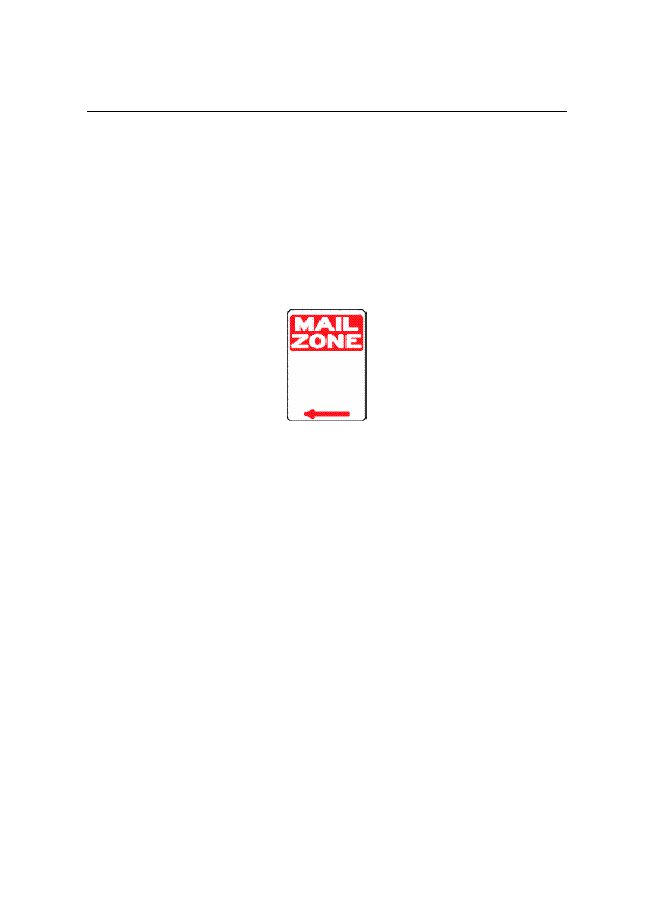
a mail
zone .
. .
. .
. .
. .
. .
. .
. .
. .
. .
. .
. .
. .
. .
. .
. .
.Other places
where stopping is
restrictedStopping in
bus lane,
tram lane,
transit lane, truck
lane or
ontram tracks . .
. . . . . . . . . . . . . . . . . . . . . . . . . . . . . . . . . .
. . . . . .Stopping in a shared zone . . . . . . . . .
. . . . . . . . . . . . . . . . . . . . .Double parking .
. . . . . . . . . . . . . . . . . . . . . . . . . . . . . . . . . .
. . . .Stopping in or near a safety zone. . . . . .
. . . . . . . . . . . . . . . . . . .Stopping near an
obstruction . . . . . . . . . . . . . . . . . . . . . . . . . . .
.Stopping
on a
bridge or
in a
tunnel etc.
. .
. .
. .
. .
. .
. .
. .
. .
. .
. .Stopping
on a
crest or
curve outside a built-up area . . . . . . . . . .Stopping
near a
fire hydrant etc.
. .
. .
. .
. .
. .
. .
. .
. .
. .
. .
. .
. .
.Stopping at
or near
a bus
stop .
. .
. .
. .
. .
. .
. .
. .
. .
. .
. .
. .
. .
. .Stopping
at or
near a
tram stop
. .
. .
. .
. .
. .
. .
. .
. .
. .
. .
. .
. .
. .Stopping
on a
path, dividing strip
or nature
strip .
. .
. .
. .
. .
. .
. .Obstructing
access to
and from
a footpath,
driveway etc. . . . . . .Stopping
near a
postbox. .
. .
. .
. .
. .
. .
. .
. .
. .
. .
. .
. .
. .
. .
. .
. .Stopping
on roads—heavy
and long
vehicles .
. .
. .
. .
. .
. .
. .
. .Stopping
on a
road with
bicycle parking sign
. .
. .
. .
. .
. .
. .
. .
. .154155156157158159160160162162163163164164165165165166167168168169170171171172172173174174
9Transport Operations (Road Use
Management—RoadRules) Regulation 1999202203203ADivision 7204205206207Division 8208209Division 9210Division 10211212213213APart
13Division 1214215216217218219220221222222AStopping on a road with motorbike parking
sign . . . . . . . . . . . . .Stopping in a
parking area for people with disabilities . . . . . . . . .Stopping in a slip lane . . . . . . . . . .
. . . . . . . . . . . . . . . . . . . . . . .Permissive
parking signs and parking feesMeaning of
particular information on or with permissive parkingsigns..........................................Parking for longer than indicated . . . . .
. . . . . . . . . . . . . . . . . . . .Time extension
for people with disabilities . . . . . . . . . . . . . . . . .
.Section number not used . . . . . . . . . .
. . . . . . . . . . . . . . . . . . . . .Parallel
parkingParallel
parking on
a road
(except
in a
median strip parkingarea).........................................Parallel parking in a median strip parking
area . . . . . . . . . . . . . .Angle
parkingAngle parking . . . . . . . . . . . . . . .
. . . . . . . . . . . . . . . . . . . . . . . . .Other parking related rulesParking in parking bays . . . . . . . . . . . . . . . . . . . . . . . . . . . . . . . .Entering
and leaving
a median
strip parking area
. .
. .
. .
. .
. .
. .Making a motor vehicle secure.
. .
. .
. .
. .
. .
. .
. .
. .
. .
. .
. .
. .
. .Evidentiary
provision .
. .
. .
. .
. .
. .
. .
. .
. .
. .
. .
. .
. .
. .
. .
. .
. .
.Lights and warning devicesLights on vehicles (except bicycles,
animals andanimal-drawn vehicles)Division does not apply to riders of
bicycles, animals oranimal-drawn
vehicles .
. .
. .
. .
. .
. .
. .
. .
. .
. .
. .
. .
. .
. .
. .
. .
. .Using lights when
driving at
night in
hazardous weatherconditions......................................Towing a vehicle at night or in hazardous weather
conditions . . .Using
rear fog
lights .
. .
. .
. .
. .
. .
. .
. .
. .
. .
. .
. .
. .
. .
. .
. .
. .
. .Using headlights on
high-beam
. .
. .
. .
. .
. .
. .
. .
. .
. .
. .
. .
. .
. .Lights not to be used to dazzle other road
users . . . . . . . . . . . . .Using lights
on vehicles
that are
stopped .
. .
. .
. .
. .
. .
. .
. .
. .
. .Using hazard warning
lights .
. .
. .
. .
. .
. .
. .
. .
. .
. .
. .
. .
. .
. .
. .School bus not to be driven without
warning lights and warningsigns........................................Use
of warning lights—picking up or setting down schoolchildren.....................................175175177177180180180181183184189190191192192193193195195196196197198198
10Transport Operations (Road Use
Management—RoadRules) Regulation 1999Division 2223Division 3224225Division 4226227Division 5227A227BPart 14Division 1228229230231232233234235236237238239Division 2240240A241242243Lights on animal-drawn vehiclesUsing lights when riding an animal-drawn
vehicle at night or inhazardous weather conditions . . . . .
. . . . . . . . . . . . . . . . . . . . . .Horns and radar
detectorsUsing horns and similar warning devices . .
. . . . . . . . . . . . . . . . .Using radar
detectors and similar devices . . . . . . . . . . . . . . . . .
.Portable warning triangles for heavy
vehiclesHeavy vehicles to
be equipped
with portable warning
triangles .
.Using portable
warning triangles .
. .
. .
. .
. .
. .
. .
. .
. .
. .
. .
. .
. .Signs for oversize
vehiclesDo not overtake turning
vehicle signs for long vehicles
. .
. .
. .
. .Warning sign not to be displayed if
not required by
law .
. .
. .
. .
.Rules for pedestriansGeneralNo pedestrian
signs .
. .
. .
. .
. .
. .
. .
. .
. .
. .
. .
. .
. .
. .
. .
. .
. .
. .Pedestrians
on a
road with
a road
access sign
. .
. .
. .
. .
. .
. .
. .Crossing
a road—general
. .
. .
. .
. .
. .
. .
. .
. .
. .
. .
. .
. .
. .
. .
. .Crossing
a road
at pedestrian lights.
. .
. .
. .
. .
. .
. .
. .
. .
. .
. .
. .Crossing
a road
at traffic
lights .
. .
. .
. .
. .
. .
. .
. .
. .
. .
. .
. .
. .
. .Crossing
a road
to or
from a
tram .
. .
. .
. .
. .
. .
. .
. .
. .
. .
. .
. .
.Crossing a road on or near a crossing for pedestrians
. .
. .
. .
. .Crossing
a level
crossing .
. .
. .
. .
. .
. .
. .
. .
. .
. .
. .
. .
. .
. .
. .
. .Pedestrians
not to
cause a
traffic hazard or obstruction .
. .
. .
. .Getting on or into a moving vehicle
. .
. .
. .
. .
. .
. .
. .
. .
. .
. .
. .
.Pedestrians travelling along
a road
(except
in or
on a
wheeledrecreational
device or toy) . . . . . . . . . . . . . . . . . . . . . . . . . .
. . . .Pedestrians on a bicycle path or separated
footpath . . . . . . . . . .Rules for
persons travelling in or on wheeled recreationaldevices and wheeled
toysWheeled recreational devices and
toys not
to be
used oncertain
roads. . . . . . . . . . . . . . . . . . . . . . . . . . . . . . . . . . . . . . .Powered
wheeled recreational devices . . . . . . . . . . . . . . . . . . . .Travelling
in or
on a
wheeled recreational device
or toy
on aroad.......................................Travelling
in or
on a
wheeled recreational device
or toy
on afootpath
or shared
path .
. .
. .
. .
. .
. .
. .
. .
. .
. .
. .
. .
. .
. .
. .
. .
.Travelling on
rollerblades etc. on a bicycle path or separatedfootpath. . . . . . . . . . . . . . . . . . . . . . . . . . . . . . . . . . . . . . . . .199199200200200201201202202203204205206206207208209210210213213214214216
11Transport Operations (Road Use
Management—RoadRules) Regulation 1999244Part
15245246247248249250251252253254255256257258259260261262Part
16263264265266267268269270271272Part 17Division 1273274275Wheeled recreational devices or wheeled toys
being towed etc. .Additional rules for bicycle ridersRiding a bicycle . . . . . . . . . . . . . .
. . . . . . . . . . . . . . . . . . . . . . . .Carrying people
on a bicycle . . . . . . . . . . . . . . . . . . . . . . . . . . .
.Riding in a bicycle lane on a road . . . . .
. . . . . . . . . . . . . . . . . . .No riding across a road on a crossing . . . . . . . . . . . . . . . . . . . . .Riding
on a
separated footpath . . . . . . . . . . . . . . . . . . . . . . . . . .Riding
on a
footpath or
shared path
. .
. .
. .
. .
. .
. .
. .
. .
. .
. .
. .
.Riding to the left of oncoming
bicycle riders on a path. . . . . . . . .No bicycles signs
and markings . . . . . . . . . . . . . . . . . . . . . . . . . .Bicycle
riders not
to cause
a traffic
hazard. .
. .
. .
. .
. .
. .
. .
. .
. .Bicycles
being towed
etc. .
. .
. .
. .
. .
. .
. .
. .
. .
. .
. .
. .
. .
. .
. .
. .Riding too close to the rear of a motor vehicle . . . . . . . . . . . . . . .Bicycle helmets . . . . . . . . . . . . . . . . . . . . . . . . . . . . . . . . . . . . . .Riding
with a
person on
a bicycle
trailer .
. .
. .
. .
. .
. .
. .
. .
. .
. .
.Equipment on
a bicycle
. .
. .
. .
. .
. .
. .
. .
. .
. .
. .
. .
. .
. .
. .
. .
. .Riding at night . . . . . . . . . . . . . . . . . . . . . . . . . . . . . . . . . . . . . . .Stopping
for a
red bicycle
crossing light . . . . . . . . . . . . . . . . . . . .Stopping
for a
yellow bicycle crossing
light .
. .
. .
. .
. .
. .
. .
. .
. .Proceeding
when bicycle crossing
lights change to yellow or redRules
for persons
travelling in or on vehiclesApplication
of part
to persons
in or
on trams
. .
. .
. .
. .
. .
. .
. .
. .Wearing of seatbelts
by drivers
. .
. .
. .
. .
. .
. .
. .
. .
. .
. .
. .
. .
. .Wearing of seatbelts
by passengers 16
years old,
or older
. .
. .
.Wearing of seatbelts by
passengers under 16 years old . . . . . . .Exemptions
from wearing seatbelts
. .
. .
. .
. .
. .
. .
. .
. .
. .
. .
. .
.How persons
must travel
in or
on a
motor vehicle . . . . . . . . . . . .Opening
doors and
getting out
of a
vehicle etc. . . . . . . . . . . . . . .Wearing
motorbike helmets . . . . . . . . . . . . . . . . . . . . . . . . . . . . .Riding on motorbikes
. .
. .
. .
. .
. .
. .
. .
. .
. .
. .
. .
. .
. .
. .
. .
. .
. .Interfering
with the
driver’s
control of
the vehicle
etc..
. .
. .
. .
. .
.Additional rules
for drivers
and riders
of particular vehiclesTramsDivision
also applies to public buses
travelling along tram tracksStopping
for a
red T
light .
. .
. .
. .
. .
. .
. .
. .
. .
. .
. .
. .
. .
. .
. .
. .Stopping
for a
yellow T
light .
. .
. .
. .
. .
. .
. .
. .
. .
. .
. .
. .
. .
. .
. .216217217217218218218219219220220221221221222222222223224224225225226226228229229230231231231232
12Transport Operations (Road Use
Management—RoadRules) Regulation 1999276277278279Division 2280281282283284285286Part
18Division 1287288289290291292293293A293B294295296297298299300300A300B300CException to stopping for a red or yellow T
light . . . . . . . . . . . . . .Proceeding after
stopping for a red or yellow T light . . . . . . . . . .Proceeding when a red traffic light and a
white T light or whitetraffic arrow is showing . . . . . . .
. . . . . . . . . . . . . . . . . . . . . . . . . .Proceeding when a white T light or white
traffic arrow is nolonger showing . . . . . . . . . . . . . . .
. . . . . . . . . . . . . . . . . . . . . . . .Buses and taxisDivision
does not
apply to
buses travelling along
tram tracks
. .
.Stopping for
a red
B light
. .
. .
. .
. .
. .
. .
. .
. .
. .
. .
. .
. .
. .
. .
. .
.Stopping for a
yellow B light . . . . . . . . . . . . . . . . . . . . . . . . . .
. . .Exception
to stopping
for a
red or
yellow B
light. .
. .
. .
. .
. .
. .
. .Proceeding
after stopping for
a red
or yellow
B light
. .
. .
. .
. .
. .Proceeding
when a
red traffic
light and
a white
B light
or whitetraffic arrow is showing . . . . . . .
. . . . . . . . . . . . . . . . . . . . . . . . . .Proceeding when a white B light or white
traffic arrow is nolonger showing . . . . . . . . . . . . . . . . . . . . . . . . . . . . . . . . . . . . . . .Miscellaneous
road rulesMiscellaneous rules
for driversDuties of a driver involved in
a crash
. .
. .
. .
. .
. .
. .
. .
. .
. .
. .
. .Driving on a path . . . . . . . . . . . . .
. . . . . . . . . . . . . . . . . . . . . . . .Driving on a nature strip . . . . . . . . . . . . . . . . . . . . . . . . . . . . . . . .Driving
on a
traffic island . . . . . . . . . . . . . . . . . . . . . . . . . . . . . . .Making unnecessary noise
or smoke
. .
. .
. .
. .
. .
. .
. .
. .
. .
. .
. .Insecure
or overhanging load
. .
. .
. .
. .
. .
. .
. .
. .
. .
. .
. .
. .
. .
. .Removing
fallen etc.
things from
the road
. .
. .
. .
. .
. .
. .
. .
. .
. .Oil and grease . . . . . . . . . . . . . . . . . . . . . . . . . . . . . . . . . . . . . . .Restriction on
driving or
stopping vehicle on road . . . . . . . . . . . .Keeping
control of
a vehicle
being towed
. .
. .
. .
. .
. .
. .
. .
. .
. .
.Motor vehicle
towing another vehicle
with a
towline .
. .
. .
. .
. .
. .Driving a vehicle in reverse . . . . . . . . . . . . . . . . . . . . . . . . . . . . .Driver
to have
proper control of a vehicle etc. . . . . . . . . . . . . . . .Driving with a person in a trailer . . . . . . . . . . . . . . . . . . . . . . . . . .Television
receivers and visual display units
in motor
vehicles .
.Use of mobile phones.
. .
. .
. .
. .
. .
. .
. .
. .
. .
. .
. .
. .
. .
. .
. .
. .
.Drinking liquor
while driving . . . . . . . . . . . . . . . . . . . . . . . . . . . . .Brisbane
CBD driving
restrictions . . . . . . . . . . . . . . . . . . . . . . . .Limitation
on use
of wheeled
recreational device or wheeled toy232232233233234234235235235235236237238239240240241242242243243244245245246246246247247248
13Transport Operations (Road Use
Management—RoadRules) Regulation 1999Division 2301301A301B302303303ADivision 2A303BDivision 3304Division 4304APart
19305306307308309310311312313313APart 20Division 1314315316317318319320Rules for people in charge of
animalsLeading an animal . . . . . . . . . . . . .
. . . . . . . . . . . . . . . . . . . . . . .Harnessing an
animal drawing a vehicle . . . . . . . . . . . . . . . . . .
.Riding an animal on a road related area when
possible. . . . . . .Rider of an
animal on a footpath or nature strip to give way topedestrians. . . . . . . . . . . . . . . . .
. . . . . . . . . . . . . . . . . . . . . . . . .Riding an animal alongside more than 1 other
rider. . . . . . . . . . .Giving way to restive horses. . . . .
. . . . . . . . . . . . . . . . . . . . . . . .Rules for people
in charge of animal drawn vehiclesBrakes . . . . .
. . . . . . . . . . . . . . . . . . . . . . . . . . . . . . . . . .
. . . . . .Obeying directionsDirection by
police officer or traffic controller
. .
. .
. .
. .
. .
. .
. .
. .PushcartsUsing pushcarts at
night. .
. .
. .
. .
. .
. .
. .
. .
. .
. .
. .
. .
. .
. .
. .
. .ExemptionsExemption for
drivers of
police vehicles . . . . . . . . . . . . . . . . . . . .Exemptions
for drivers
of emergency vehicles
. .
. .
. .
. .
. .
. .
. .
.Stopping and
parking exemption for
police and
emergencyvehicles........................................Exemption for police officers and emergency
workers on foot . . .Exemptions for drivers of trams etc. .
. . . . . . . . . . . . . . . . . . . . . .Exemption for
road workers etc. . . . . . . . . . . . . . . . . . . . . . . . . .
.Exemption for oversize vehicles . . . . . .
. . . . . . . . . . . . . . . . . . . .Exemption for
tow truck
drivers .
. .
. .
. .
. .
. .
. .
. .
. .
. .
. .
. .
. .
.Exemption for
postal vehicles . . . . . . . . . . . . . . . . . . . . . . . . . . . .Exemption
for garbage
truck drivers etc.
. .
. .
. .
. .
. .
. .
. .
. .
. .
.Traffic control
devices and
traffic-related itemsGeneralDiagrams of
traffic control devices,
traffic-related items
andsymbols........................................Legal effect of traffic control devices . .
. . . . . . . . . . . . . . . . . . . .When do traffic
control devices comply substantially with thisregulation. . . . . . . . . . . . . . . . . . . . . . . . . . . . . . . . . . . . . . . . . .Information
on or
with traffic control
devices .
. .
. .
. .
. .
. .
. .
. .
.Limited effect
of certain
traffic control devices
. .
. .
. .
. .
. .
. .
. .
.Legal effect of
traffic-related items mentioned in this regulation .When
do traffic-related items comply substantially with thisregulation. . . . . . . . . . . . . . . . . . . . . . . . . . . . . . . . . . . . . . . . .248249249249250250251251252252253253253254254256258259259260261261264264265266
14Transport Operations (Road Use
Management—RoadRules) Regulation 1999321322323Division 2324325326327328329330331332333334335336Division 3337338339340341342343344345346Meaning of information on or with traffic
control devices andtraffic-related items . . . . . . . . . . .
. . . . . . . . . . . . . . . . . . . . . . . . .Reference to traffic control devices and
traffic-related items ona road etc. . . . . . . . . . . . . .
. . . . . . . . . . . . . . . . . . . . . . . . . . . . .References to lights that are traffic
signals. . . . . . . . . . . . . . . . . .Application of
traffic control devices to lengths of roadsand areasPurpose of division
. .
. .
. .
. .
. .
. .
. .
. .
. .
. .
. .
. .
. .
. .
. .
. .
. .
. .References
to traffic
control devices—application
to lengths
ofroad and areas . . . . . . . . . . . . . . . . . . . . . . . . . . . . . . . . . . . . . . .When do traffic control devices
apply to
a length
of road
orarea—the basic rules
. .
. .
. .
. .
. .
. .
. .
. .
. .
. .
. .
. .
. .
. .
. .
. .
. .Length of road to which a traffic sign (except a parking controlsign) applies
. .
. .
. .
. .
. .
. .
. .
. .
. .
. .
. .
. .
. .
. .
. .
. .
. .
. .
. .
. .
.References to
a traffic
control device applying
to a
length ofroad........................................Traffic
control devices applying
to a
marked lane. . . . . . . . . . . . .Traffic
control devices applying
to a
slip lane
. .
. .
. .
. .
. .
. .
. .
. .Traffic control devices
applying to
an intersection .
. .
. .
. .
. .
. .
.Parking control
signs applying to a length of road . . . . . . . . . . . .Parking control signs
applying to
a length
of road
in an
area towhich another parking control sign
applies etc. . . . . . . . . . . . . . .How parking
control signs apply to a length of road. . . . . . . . . . .Traffic control devices applying to an area
. . . . . . . . . . . . . . . . . .How separated
footpath signs and separated footpath roadmarkings apply
. .
. .
. .
. .
. .
. .
. .
. .
. .
. .
. .
. .
. .
. .
. .
. .
. .
. .
. .
.Application of
traffic control devices
to personsPurpose of
division . . . . . . . . . . . . . . . . . . . . . . . . . . . . .
. . . . . . .References to traffic control
devices—application to persons . . .When do traffic
control devices apply to a person—the basicrules..........................................Traffic control devices (except road
markings and parkingcontrol
signs). . . . . . . . . . . . . . . . . . . . . . . . . . . . . . . . . . . . . . .Road
markings .
. .
. .
. .
. .
. .
. .
. .
. .
. .
. .
. .
. .
. .
. .
. .
. .
. .
. .
. .Traffic signs (except parking
control signs) applying
to a
lengthof road. . . . . . . . . . . . . . . . . . . . . . . . . . . . . . . . . . . . . . . . . . .Traffic signs (except parking
control signs) applying
to an
area .
.Traffic control
devices applying to
a driver
in a
marked lane
. .
. .Traffic control devices applying to a driver
in a slip lane. . . . . . . .Parking control
signs . . . . . . . . . . . . . . . . . . . . . . . . . . . . . . .
. . .266267268269269269270270270271271271272273274276276277277277278278279279279279
s
117Transport Operations (Road Use
Management—RoadRules) Regulation 1999s4Transport Operations (Road UseManagement—Road Rules) Regulation 1999[as
amended by all amendments that commenced on or before 1 January
2009]Part 1IntroductoryDivision 1General1Short
titleThisregulationmaybecitedastheTransportOperations(Road Use
Management—Road Rules) Regulation 1999or asthe
Queensland Road Rules.2CommencementThis regulation
commences on 1 December 1999.3ObjectTheobjectofthisregulationistoprovideroadrulesinQueenslandthataresubstantiallyuniformwithroadruleselsewhere in Australia.Division 2Some
features of this regulation4DefinitionsThe dictionary in
schedule 6 defines particular words used inthis
regulation.
s
518s 11Transport
Operations (Road Use Management—RoadRules) Regulation
19995Compliance with Australian
StandardsIf this regulation requires a person to fit
or use a thing thatcomplieswithanAustralianStandard,thepersoncomplieswith
the requirement if, when the thing was manufactured, thething
complied with a relevant Australian Standard.6ExamplesA diagram under a
provision is an example for the provision.7–10Section numbers not used1Part
2Application of this regulationDivision 1Roads and
road-related areas11Regulation applies to vehicles and
road users on roadsand road-related areas(1)Thisregulationappliestovehiclesandroadusersonroadsand road-related
areas.(2)Areferenceinthisregulation(exceptinthisdivision)toaroadincludesareferencetoaroad-relatedarea,unlessotherwise
expressly stated in this regulation.Examples for
subsection (2)—1A reference in
section 146 (which deals with driving within a singlemarked lane or line of traffic) to the road
includes a reference to theroad-related area of the road.1This regulation is based on the
Australian Road Rules. Some provisions of theAustralian Road
Rules contain provisions that are not relevant to the operation
ofthis regulation. To maximise uniformity
between this regulation and the AustralianRoad Rules, the
numbers of some sections that are not relevant have not been
usedin the numbering of this regulation, unless
required for provisions particular to theState.
s
1219Transport Operations (Road Use
Management—RoadRules) Regulation 1999s 132A reference in section 200(1) (which
deals with certain heavy orlong vehicles stopping on roads) to a
length of road includes areference to the road-related area of
the length of road.3A reference in section 31 (which deals
with starting a right turnfrom a road, except a multi-lane road)
to a road does not include areferencetoaroad-relatedarea,becauseofthedefinitioninsubsection (5) of that section.12Section number not used13What is aroad-related
area(1)Aroad-related
areais any of the following—(a)an
area that divides a road;(b)a footpath or
nature strip adjacent to a road;(c)an
area that is not a road and that is open to the publicand
designated for use by cyclists or animals;(d)an
area that is not a road and that is open to, or used by,the
public for parking vehicles.(2)However, unless the contrary intention
appears, a reference inthisregulation(exceptthisdivision)toaroad-relatedareaincludes a reference to—(a)any
shoulder of a road; or(b)any other area
that is a footpath or nature strip as definedin the
dictionary.(3)In this section—shoulderof a
road—(a)includes any part of the road that is
not designed to beused by motor vehicles in travelling along
the road; and(b)includes—(i)for a
kerbed road—any part of the kerb; and(ii)for a
sealed road—any unsealed part of the road,and any sealed
part of the road outside an edge lineon the road;
but(c)does not include a bicycle path,
footpath or shared path.
s
1420Transport Operations (Road Use
Management—RoadRules) Regulation 1999s 17Division 2Road users and
vehicles14Road usersAroad
useris a driver, rider, passenger or
pedestrian.15What is avehicleAvehicleincludes—(a)a motor vehicle, trailer and tram;
and(b)a bicycle; and(c)ananimal-drawnvehicle,andananimalthatisbeingridden or drawing a vehicle; and(d)a combination; and(e)a
motorised wheelchair that can travel at over 10km/h(on
level ground);but does not include another kind of
wheelchair, a train, or awheeled recreational device or wheeled
toy.16Who is adriver(1)Adriveristhepersonwhoisdrivingavehicle(exceptamotorbike,bicycle,poweredwheeledrecreationaldevice,animal or animal-drawn vehicle).(2)However,adriverdoesnotincludeapersonpushingamotorised wheelchair.17Who is arider(1)Arideristhepersonwhoisridingamotorbike,bicycle,poweredwheeledrecreationaldevice,animaloranimal-drawn vehicle.(2)Ariderdoes not
include—(a)a passenger; or(b)a
person walking beside and pushing a bicycle.
s
1821Transport Operations (Road Use
Management—RoadRules) Regulation 1999s 2118Who is apedestrianApedestrianincludes—(a)apersondrivingamotorisedwheelchairthancannottravel at over 10km/h (on level ground);
and(b)a person in a non-motorised
wheelchair; and(c)apersonpushingamotorisedornon-motorisedwheelchair;
and(d)apersoninoronawheeledrecreationaldeviceorwheeled toy.19References to driver includes rider
etc.Unlessotherwiseexpresslystatedinthisregulation,areference in this regulation (except in this
division) to adriverincludesareferencetoarider,andareferenceinthisregulation(exceptinthisdivision)todrivingincludesareference to riding.Part
3Speed limits20Obeying the speed limitAdrivermustnotdriveataspeedoverthespeedlimitapplying to the driver for the length of
road where the driver isdriving.2Maximum penalty—40 penalty units.21Speed limit where a speed limit sign
applies(1)The speed limit applying to a driver
for a length of road towhich a speed limit sign applies is
the number of kilometres2See also the
Criminal Code, section 328A (Dangerous operation of a vehicle)
andthe Act, sections 83 (Careless driving of
motor vehicles) and 84 (Dangerous drivingof vehicles
(other than motor vehicles) etc.).
s
2222Transport Operations (Road Use
Management—RoadRules) Regulation 1999s 22per
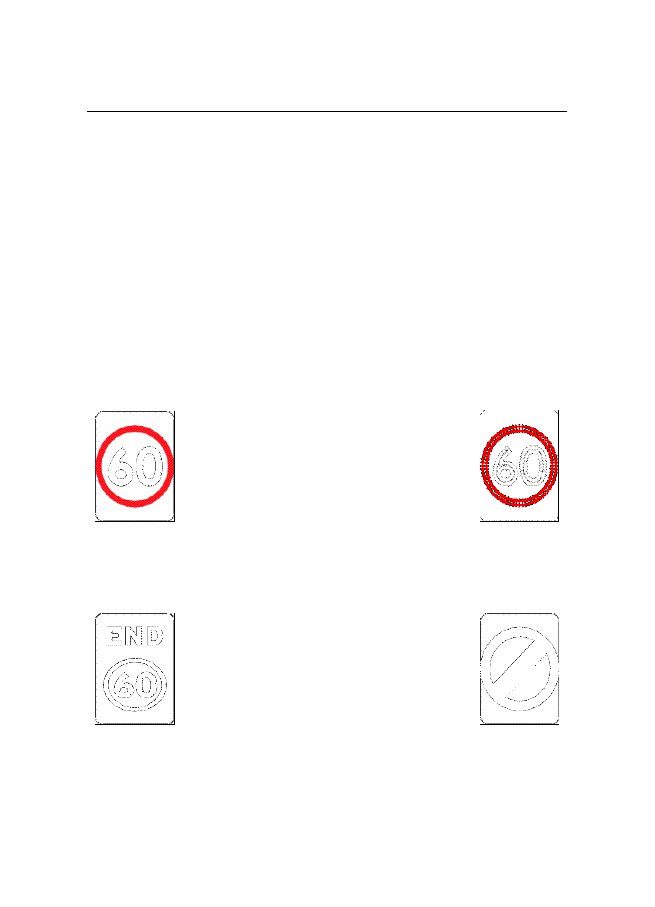
hour indicated by the number on the sign.(2)Aspeedlimitsignonaroadappliestothelengthofroadbeginningatthesignandendingatthenearestofthefollowing—(a)a
speed limit sign on the road with a different number onthe
sign;(b)an end speed limit sign or speed
derestriction sign on theroad;(c)if
the road ends at a T–intersection or dead end—the endof
the road.Examples—Speed
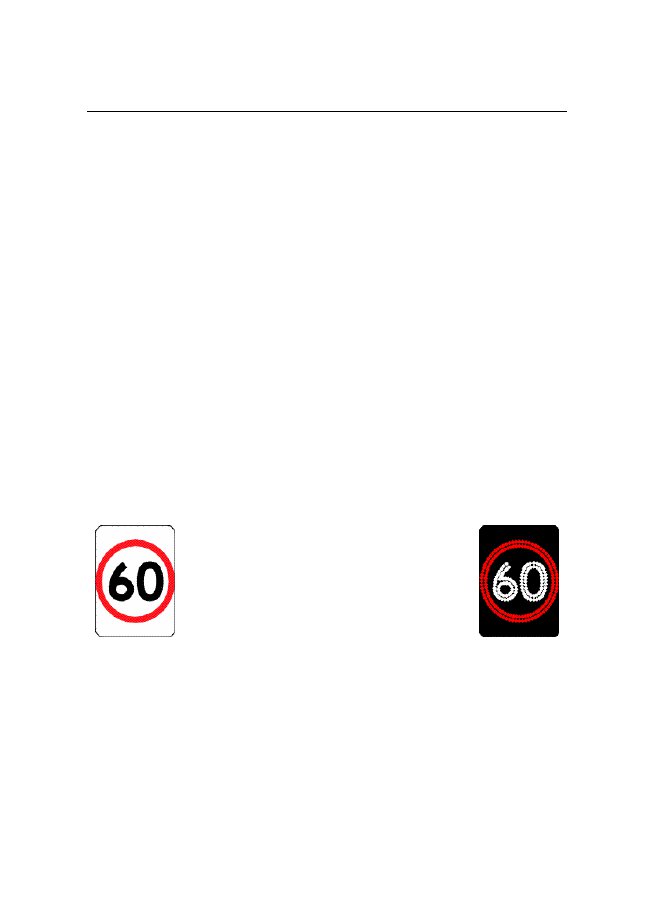
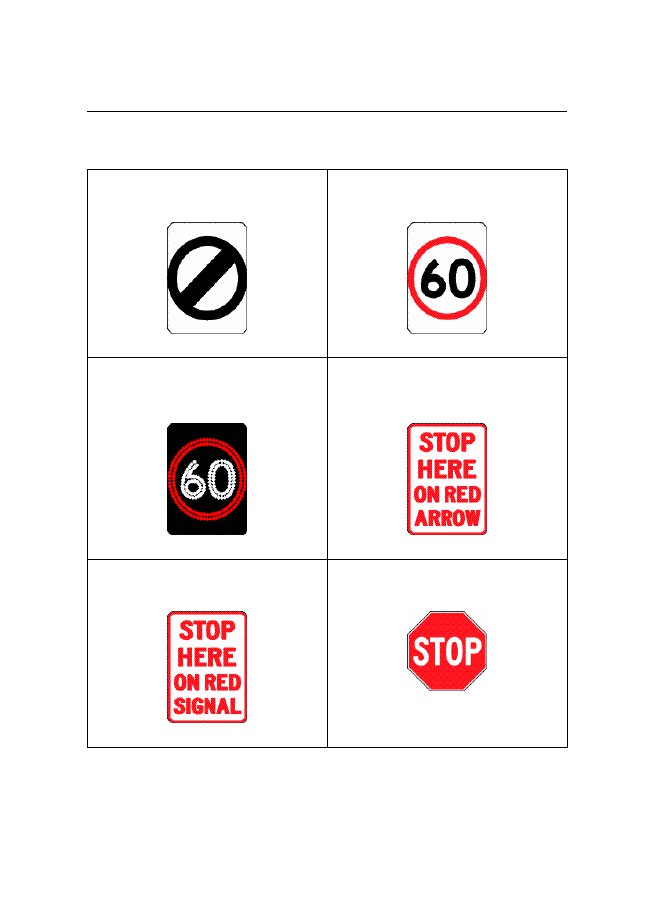
limit sign (Standard sign)Other signsSpeed limit sign
(Variable illuminatedmessage sign)End speed limit
signSpeed derestriction sign22Speed
limit in a speed limited area(1)The
speed limit applying to a driver for any length of road in aspeedlimitedareaisthenumberofkilometresperhourindicated by the number on the area
speed limit sign on a road
s
2323Transport Operations (Road Use
Management—RoadRules) Regulation 1999s 23into
the area, unless another speed limit applies to the driverfor
the length of road under another section of this part.Example of another speed limit—Although an area speed limit sign on a road
into a speed limited areamay indicate a speed limit of 60km/h,
a particular length of road in thearea may have a
school zone sign indicating a 40km/h speed limit forthat
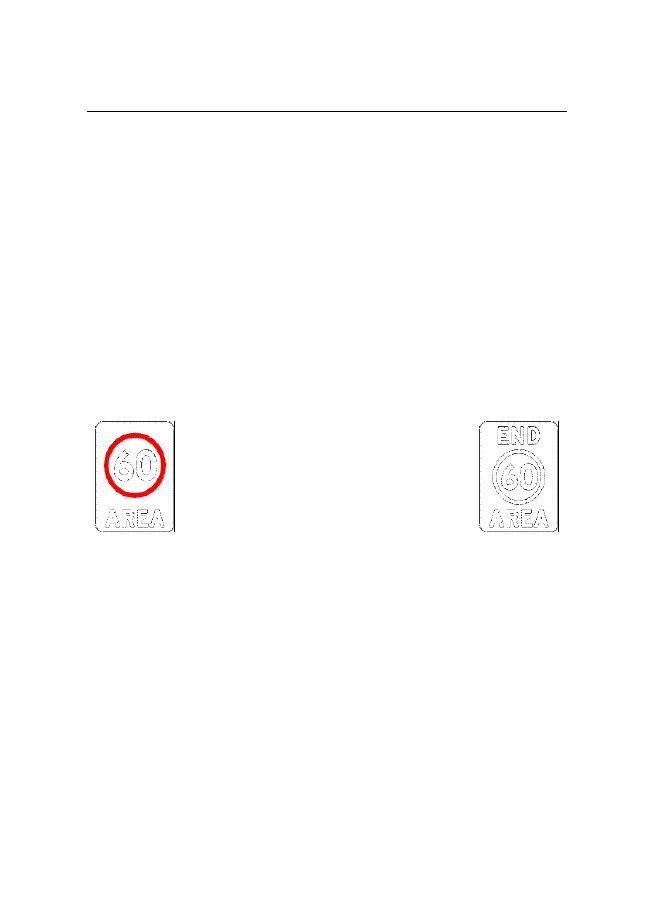
length of road.(2)Aspeed limited
areais the network of roads in an area
with—(a)anareaspeedlimitsignoneachroadintothearea,indicating the
same number; and(b)an end area speed limit sign on each
road out of the area.Examples—Area
speed limit signEnd area speed limit sign23Speed limit in a school zone(1)The speed limit applying to a driver
for any length of road in aschool zone is the number of
kilometres per hour indicated bythe number on the
school zone sign on a road, or the road, intothe zone.(2)Aschool
zoneis—(a)ifthereisaschoolzonesignandanendschoolzonesign,
or a speed limit sign with a different number on thesign,
on a road—that length of road; or(b)if
there is a school zone sign on a road that ends in adead
end and there is no sign mentioned in paragraph(a),onthelengthofroadbeginningatthesignandending at the dead end—that length of
road; or
s
2424Transport Operations (Road Use
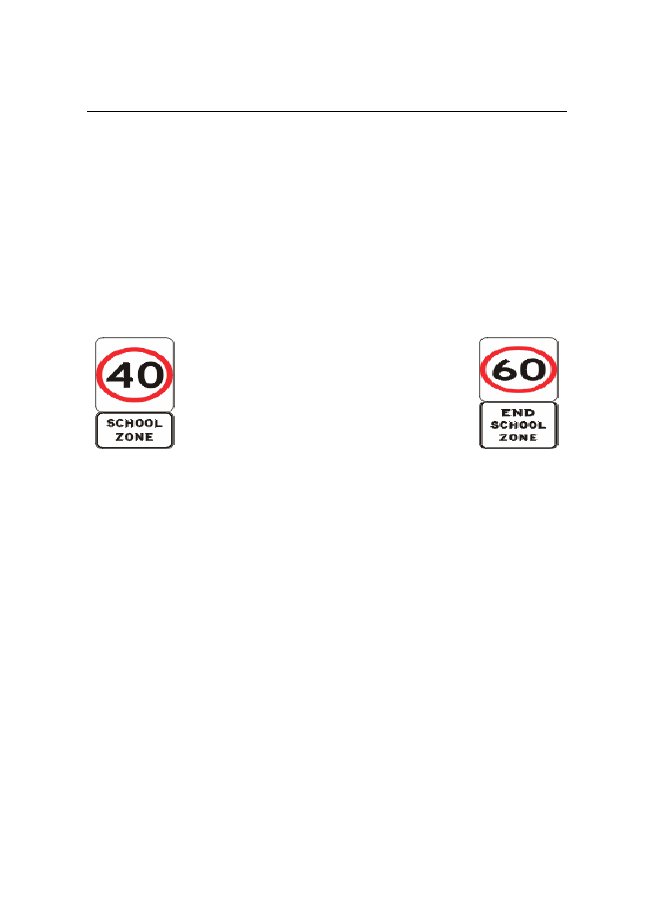
Management—RoadRules) Regulation 1999s 24(c)inanyothercase—thenetworkofroadsinanareawith—(i)aschoolzonesignoneachroadintothearea,indicating the
same number; and(ii)anendschoolzonesign,oraspeedlimitsignindicating a different number, on each
road out ofthe area.Examples—School zone signEnd school zone
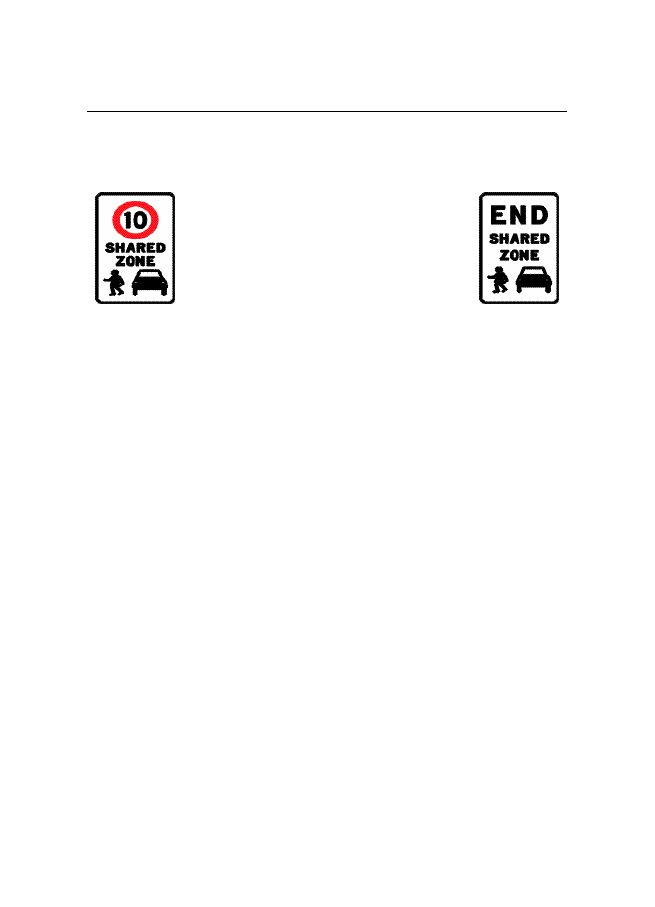
sign24Speed limit in a shared zone(1)The speed limit applying to a driver
for any length of road in ashared zone is the number of
kilometres per hour indicated bythe number on the
shared zone sign on a road into the zone.(2)Ashared zoneis the network of
roads in an area with—(a)a shared zone
sign on each road into the area, indicatingthe same number;
and(b)an end shared zone sign on each road
out of the area.
s
24A25Transport Operations (Road Use
Management—RoadRules) Regulation 1999Examples—s 25Shared zone
signEnd shared zone sign24ASpeed
limit for certain vehicles(1)This section
applies to a driver despite a higher speed limitthat
would otherwise apply to the driver under this part.(2)The speed limit applying to the
following drivers for a lengthof road where the
driver is driving is—(a)foradriverdrivingatractortowingasugarcanetrailer—50km/h;(b)for a
driver driving an oversize vehicle, that is requiredto
travel with a pilot or escort vehicle—80km/h;(c)for a
driver driving a road train—90km/h;(d)for a
driver driving a bus with a GVM over 5t, or anothervehicle with a GVM over 12t—100km/h.(3)In this section—sugar cane
trailerhas the meaning given in the Standards
andSafety Regulation.25Speed
limit elsewhere(1)If a speed limit sign does not apply
to a length of road and thelength of road is not in a speed
limited area, school zone orshared zone, the
speed limit applying to a driver for the lengthof road is the
default speed limit.(2)Thedefault speed
limitapplying to a driver for a length ofroad
is—
s
2626Transport Operations (Road Use
Management—RoadRules) Regulation 1999s 27(a)for a road in a built-up area—50km/h;
or(b)for a road that is not in a built-up
area—100km/h.Part 4Making
turnsDivision 1Left turns at
intersections26Division does not apply to certain
turns(1)This division does not apply
to—(a)a driver turning—(i)fromaroadintoaroad-relatedareaoradjacentland; or(ii)from a road-related area into a road;
or(b)a driver entering or leaving a
roundabout.(1A)Subsection (1)(a) is subject to
section 43(1).(2)In this section—roaddoes
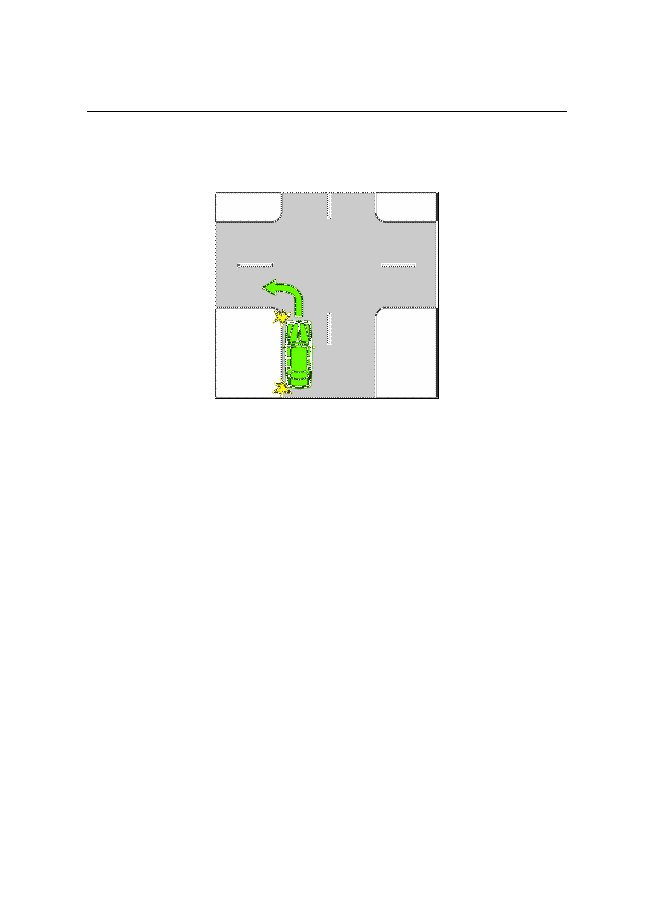
not include a road-related area.27Starting a left turn from a road (except a
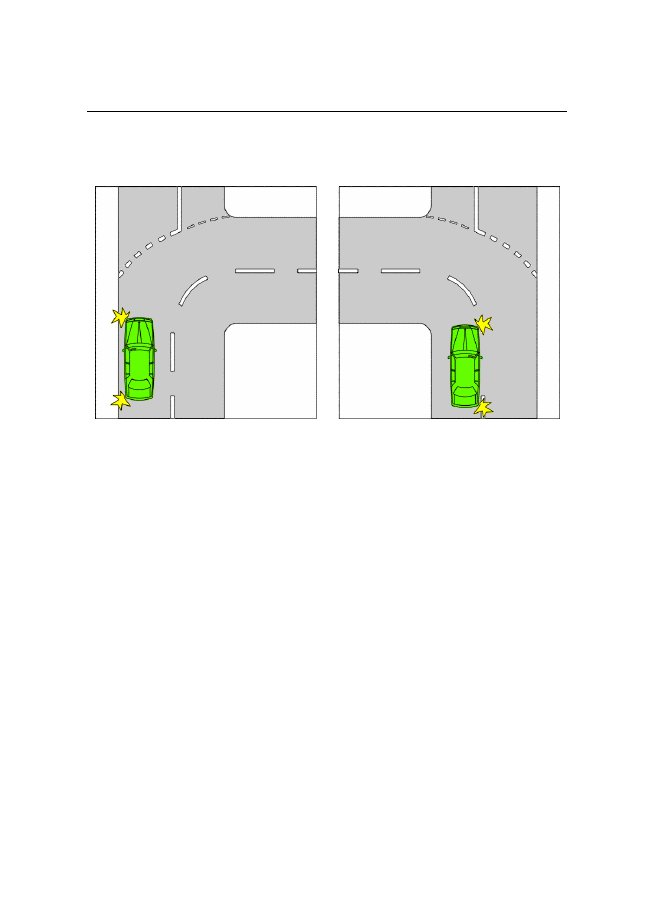
multi-lane road)(1)A driver turning left at an
intersection from a road (except amulti-laneroad)mustapproachandentertheintersectionfrom as near as
practicable to the far left side of the road.Maximum
penalty—20 penalty units.(2)In this
section—roaddoes not include a road-related
area.
s
2827Transport Operations (Road Use
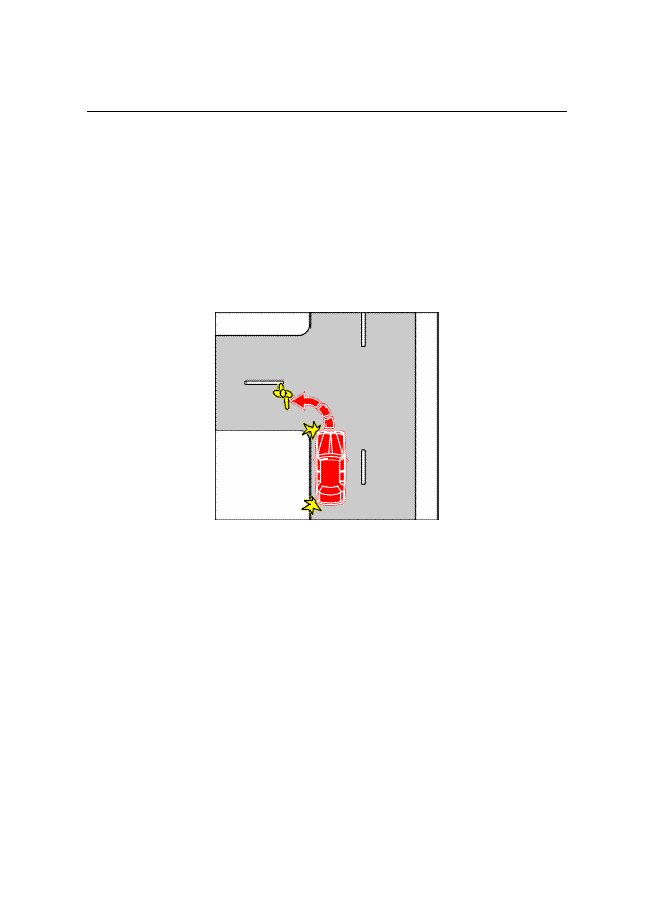
Management—RoadRules) Regulation 1999s 28Example—Starting a left turn from a road (except a
multi-lane road)28Starting a left turn from a multi-lane
road(1)A driver turning left at an
intersection from a multi-lane roadmust approach and
enter the intersection from within the leftlane
unless—(a)the driver is required or permitted to
approach and enterthe intersection from within another marked
lane undersection 88(1), 92 or 159; or(b)the driver is turning, at B lights or
a white traffic arrow,in accordance with part 17, division
2; or(c)subsection (2) applies to the
driver.Maximum penalty—20 penalty
units.
s
2828Transport Operations (Road Use
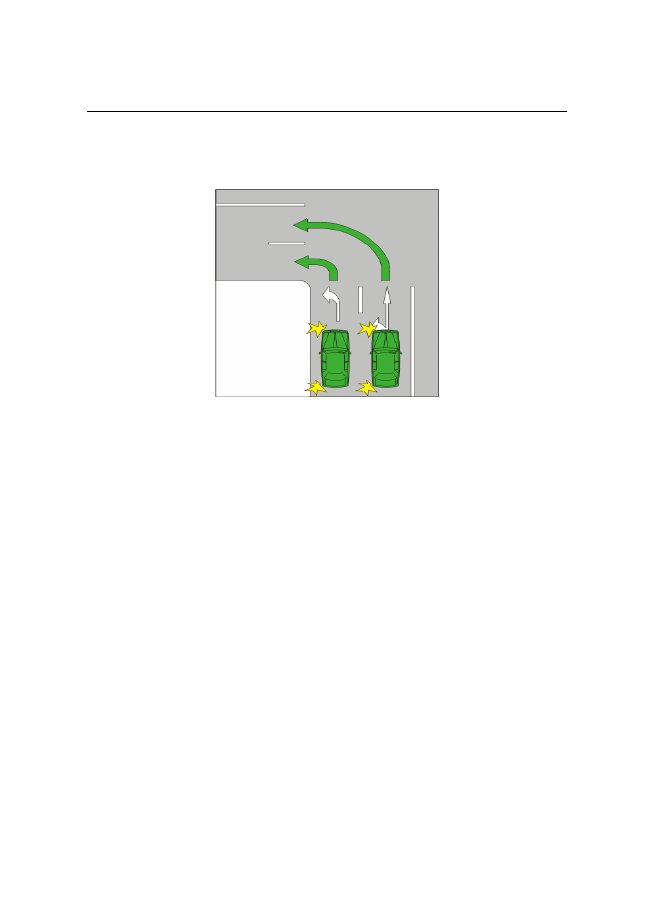
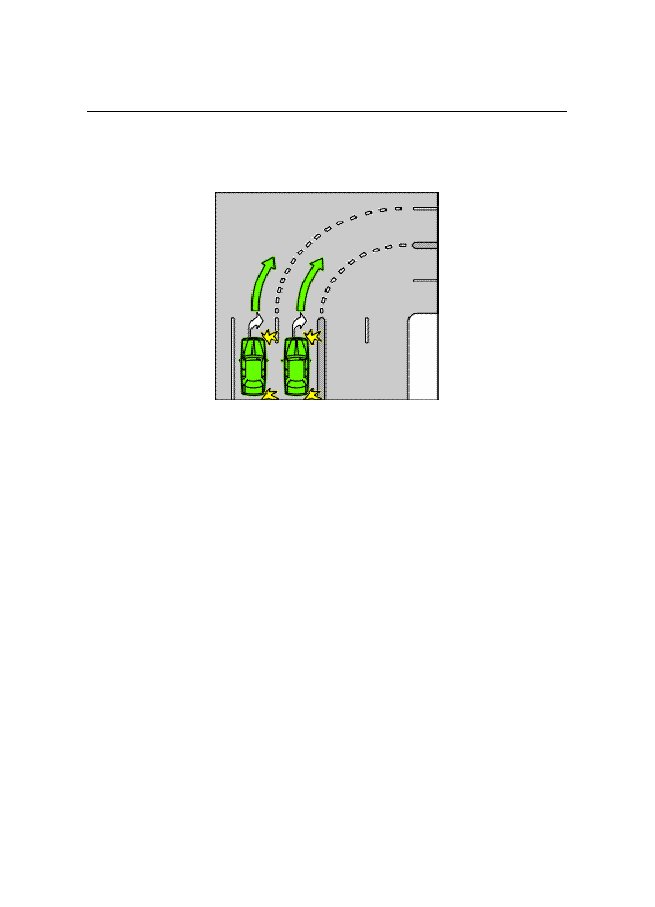
Management—RoadRules) Regulation 1999s 28Example for subsection (1)(a)—Starting a left turn on a multi-lane
road with traffic lane arrows as required orpermitted under
section 92(2)Adrivermayapproachandentertheintersectionfromthemarked lane next to the left lane as
well as, or instead of, theleft lane if—(a)the
driver’s vehicle, together with any load or projection,is
7.5m long, or longer; and(b)thevehicledisplaysadonotovertaketurningvehiclesign; and(c)any part of the vehicle is within 50m
of the nearest pointof the intersection; and(d)it is
not practicable for the driver to turn left from withinthe
left lane; and(e)the driver can safely occupy the next
marked lane andcan safely turn left at the intersection by
occupying thenext marked lane, or both
lanes.
s
2829Transport Operations (Road Use
Management—RoadRules) Regulation 1999s 28Example—Long
vehicle turning left from the left lane and next marked lane(3)In this section—left lanemeans—(a)the
marked lane nearest to the far left side of the road; or(b)if there is an obstruction (for
example, a parked car orroadworks)inthatmarkedlane—themarkedlanenearest to that marked lane that is not
obstructed.marked lane, for a driver,
does not include a special purposelane in which the
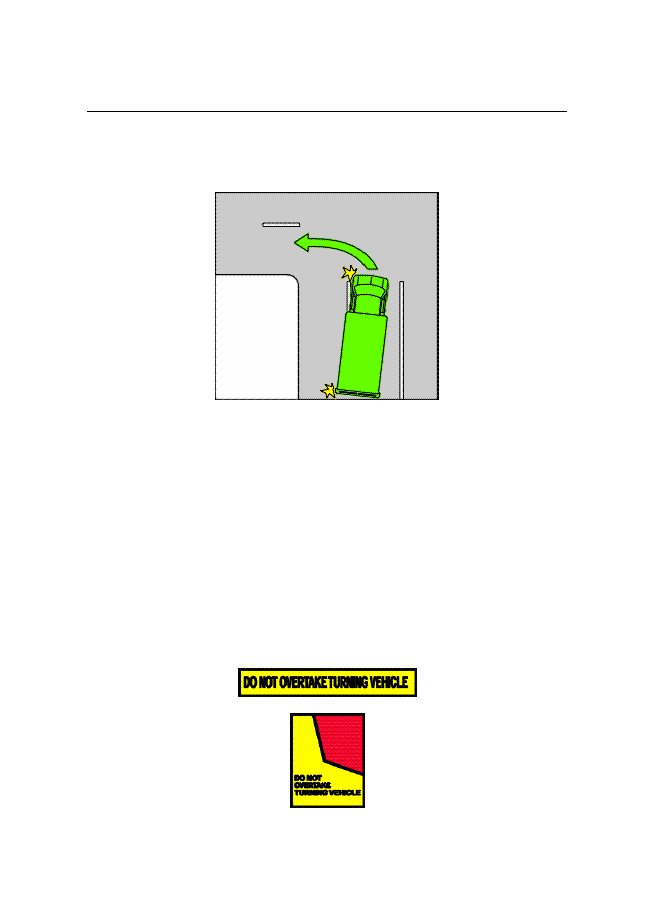
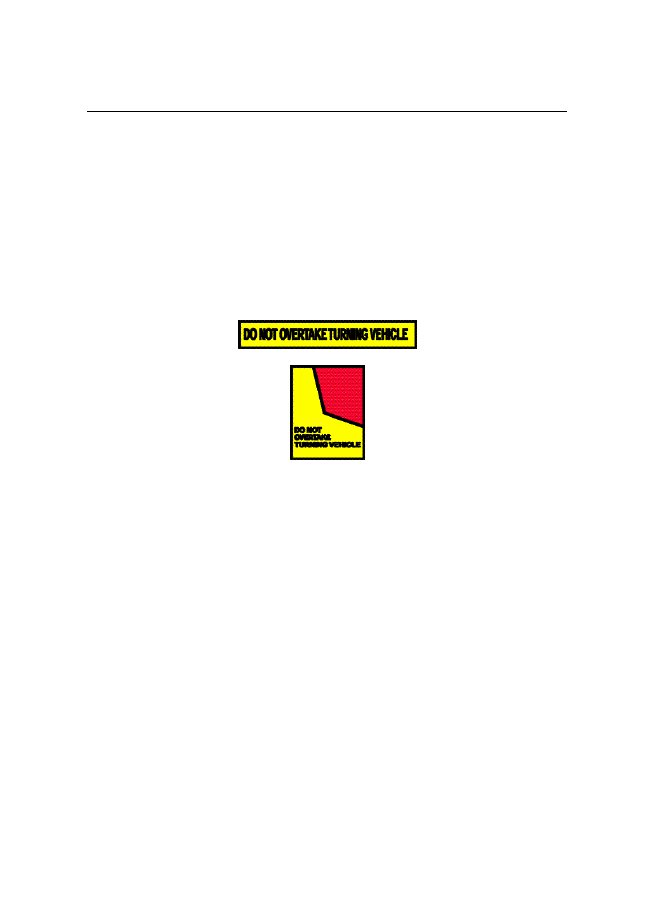
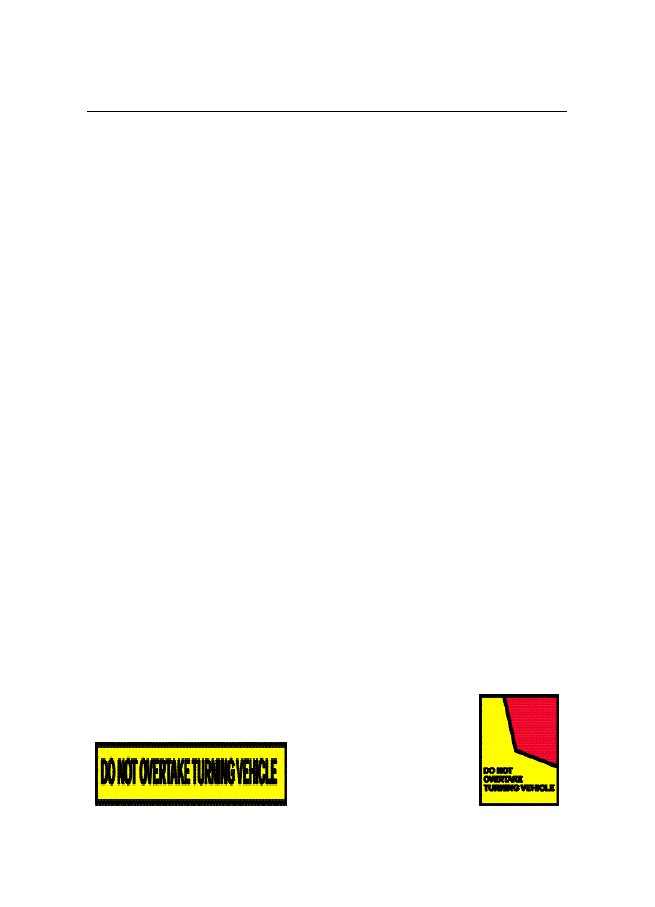
driver is not permitted to drive.Examples of do
not overtake turning vehicle signs—
s
2930Transport Operations (Road Use
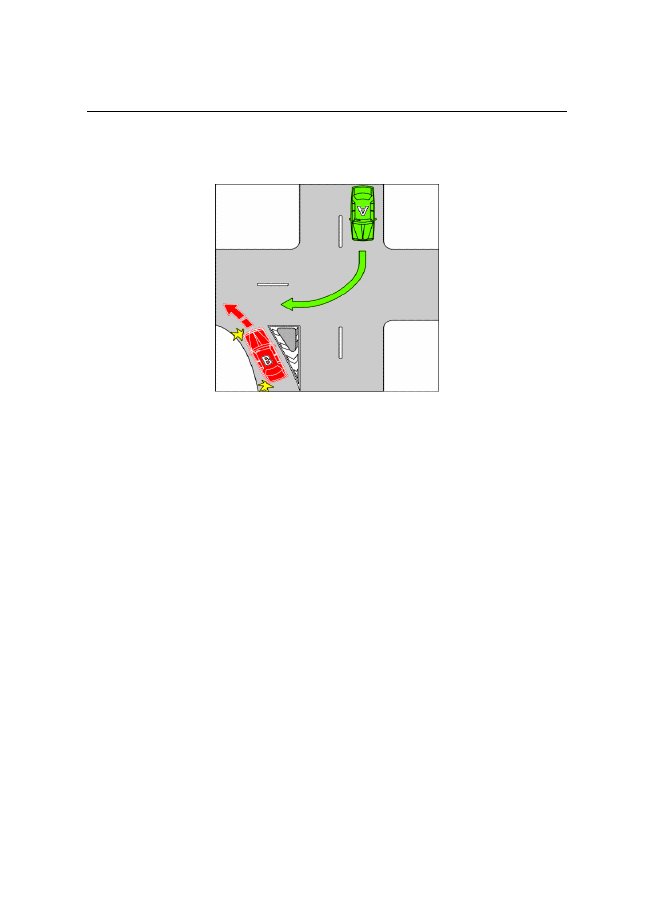
Management—RoadRules) Regulation 1999s 3029Making a left turn as indicated by a
road markingIf a driver is turning left at an
intersection and there is a roadmarking
indicating how the turn is required to be made, thedriver must make the turn as indicated by
the road markingunless the driver is turning, at B lights or
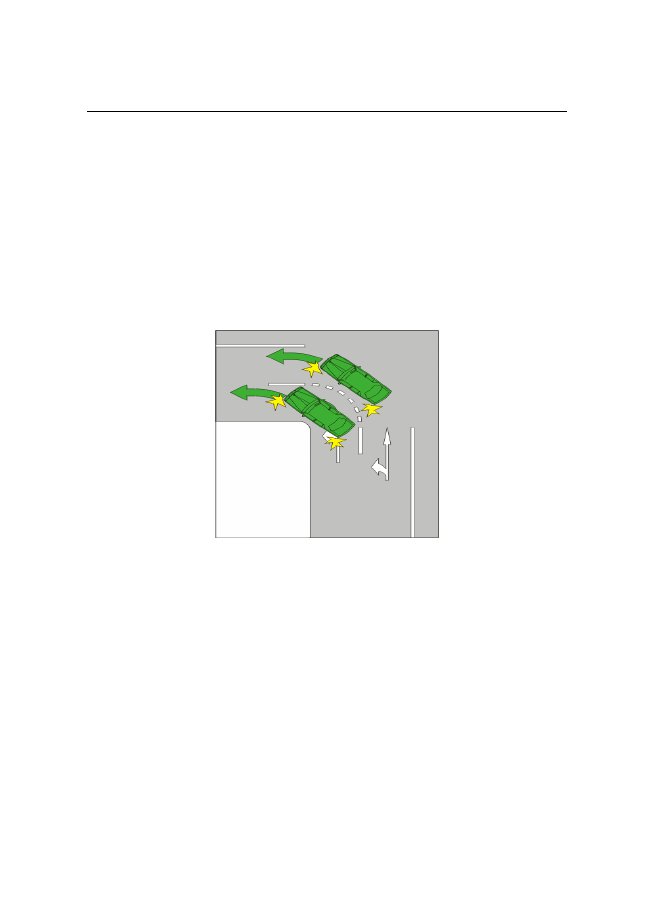
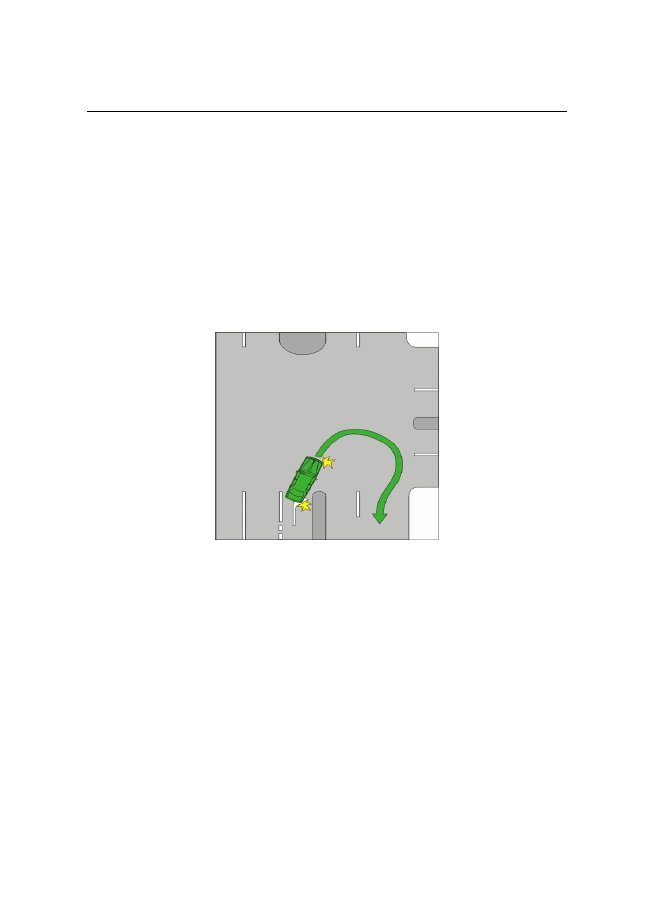
a white traffic arrow,under part 17, division 2.Maximum penalty—20 penalty units.Example—Making a left
turn as indicated by road markingsDivision 2Right turns (except hook turns) atintersections30Division does not apply to certain
turns(1)This division does not apply
to—(a)a driver turning right at an
intersection where there is ahook turn only
sign; or(b)the rider of a bicycle making a hook
turn under division3; or(c)a
driver turning—
s
3131Transport Operations (Road Use
Management—RoadRules) Regulation 1999s 31(i)fromaroadintoaroad-relatedareaoradjacentland; or(ii)from a road-related area into a road;
or(d)a driver making a U–turn; or(e)a driver entering or leaving a
roundabout.(1A)Subsection (1)(c) is subject to
section 43(2).(2)In subsection (1)(c)—roaddoes not include a road-related
area.31Starting a right turn from a road
(except a multi-lane road)(1)A driver turning
right at an intersection from a road (except amulti-lane road)
must approach and enter the intersection inaccordance with
this section.Maximum penalty—20 penalty units.(2)If the road has a dividing line or
median strip, the driver mustapproach and
enter the intersection from the left of, parallelto,
and as near as practicable to, the dividing line or medianstrip.(3)If
the road does not have a dividing line or median strip and
isnot a one-way road, the driver must approach
and enter theintersectionfromtheleftof,parallelto,andasnearaspracticable to, the centre of the
road.(4)If the road is a one-way road, the
driver must approach andentertheintersectionfromasnearaspracticabletothefarright side of the
road.(5)In this section—roaddoes
not include a road-related area.
s
3232Transport Operations (Road Use
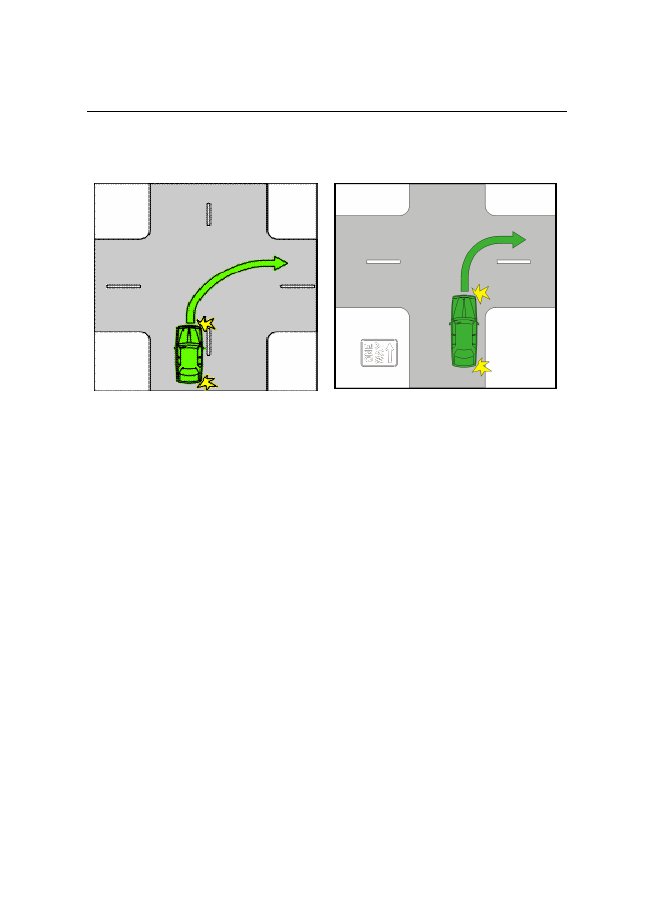
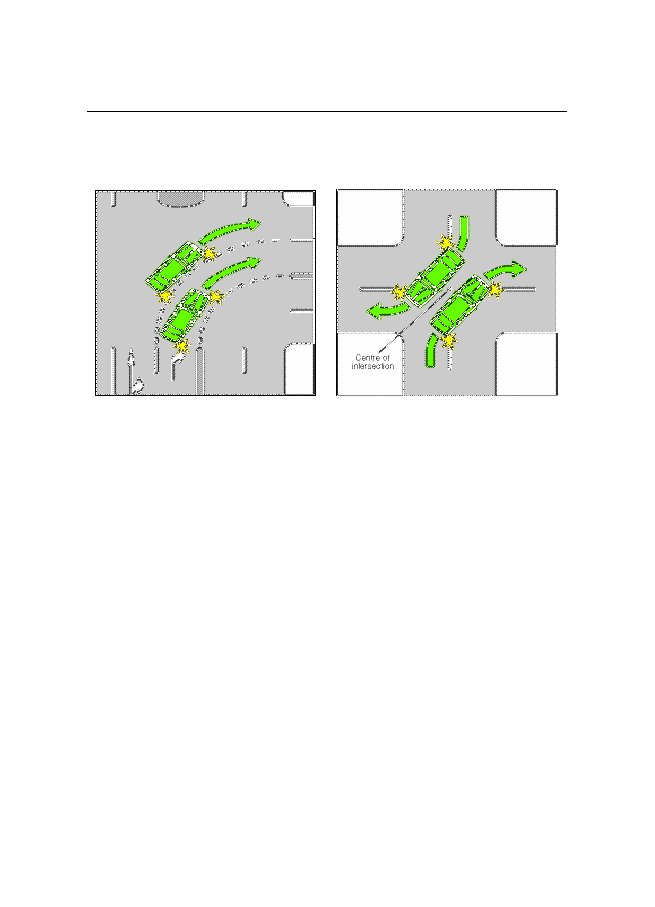
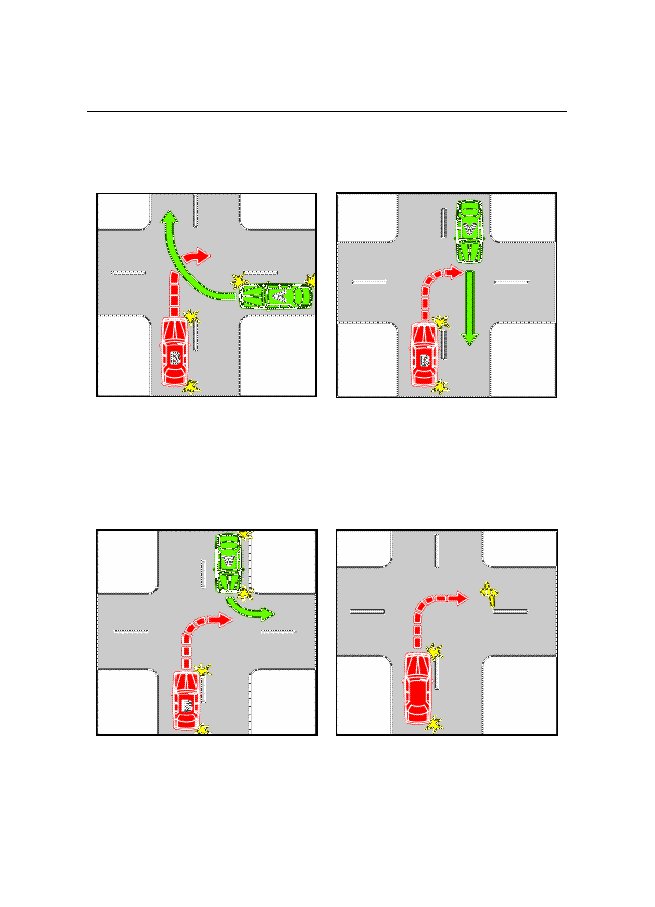
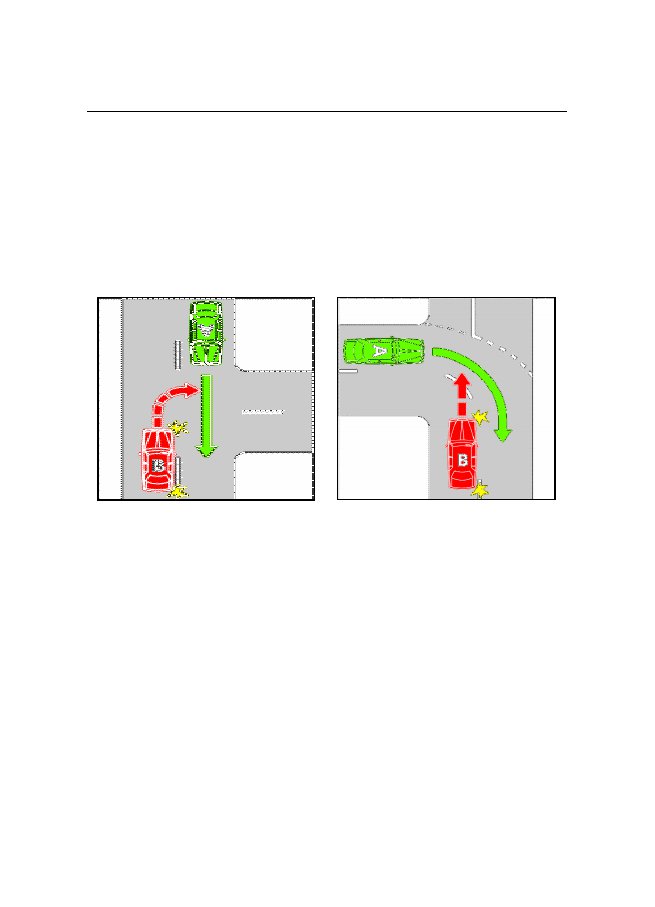
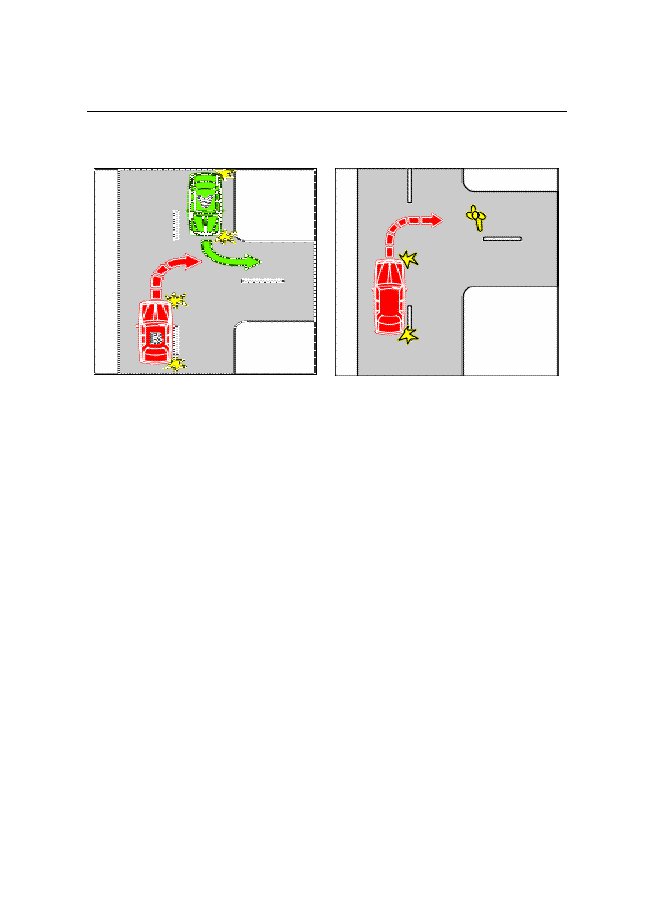
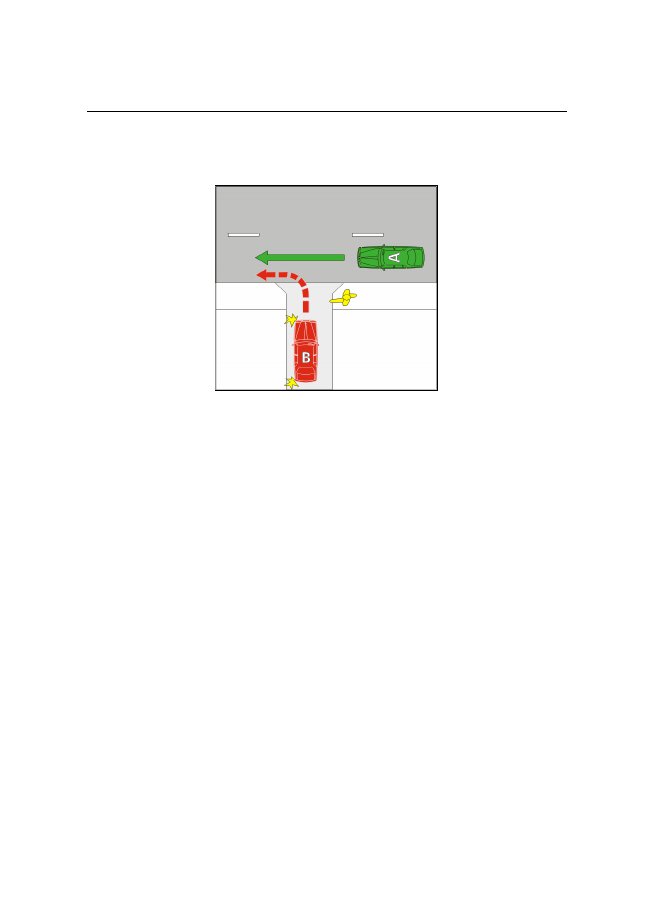
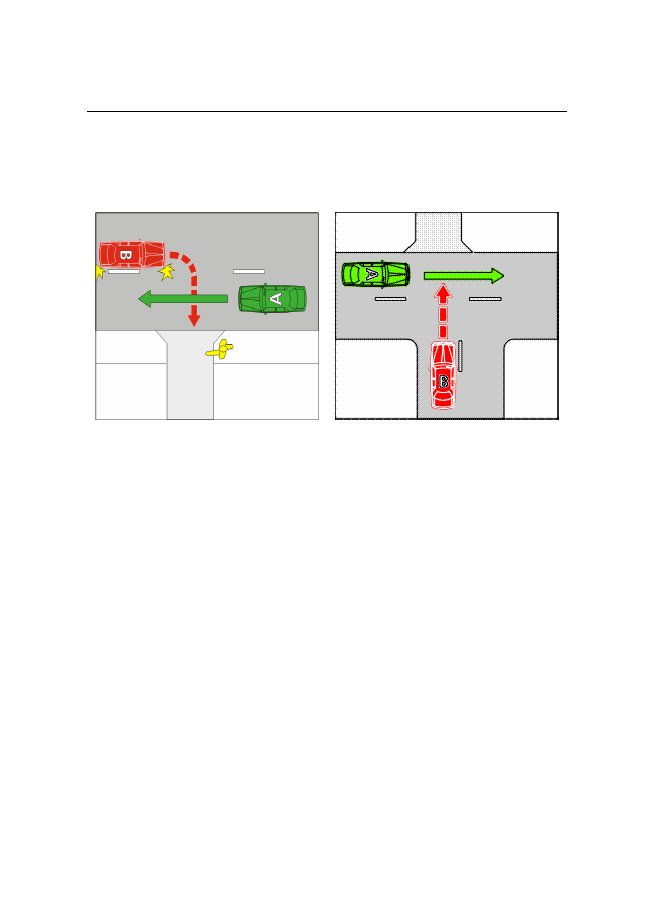
Management—RoadRules) Regulation 1999s 32Examples—Example 1Startingarightturnfromaroadwith
a dividing lineExample 2Starting a right
turn from a one-wayroad32Starting a right
turn from a multi-lane road(1)A driver turning
right at an intersection from a multi-lane roadmust approach and
enter the intersection from within the rightlane
unless—(a)the driver is required or permitted to
approach and entertheintersectionfromwithinanothermarkedlaneinaccordance with section 89(1), 92 or
159; or(b)the driver is turning, at B lights or
a white traffic arrow,in accordance with part 17, division
2; or(c)subsection (2) applies to the
driver.Maximum penalty—20 penalty
units.
s
3233Transport Operations (Road Use
Management—RoadRules) Regulation 1999s 32Example for subsection (1)(a)—Starting a right turn on a multi-lane road
with traffic lane arrows as required orpermitted under
section 92(2)Adrivermayapproachandentertheintersectionfromthemarked lane next to the right lane as
well as, or instead of, theright lane if—(a)the
driver’s vehicle, together with any load or projection,is
7.5m long, or longer; and(b)thevehicledisplaysadonotovertaketurningvehiclesign; and(c)any part of the vehicle is within 50m
of the nearest pointof the intersection; and(d)itisnotpracticableforthedrivertoturnrightfromwithin the right lane; and(e)the driver can safely occupy the next
marked lane andcan safely turn right at the intersection by
occupying thenext marked lane, or both lanes.(3)In this section—marked
lane, for a driver, does not include a special
purposelane in which the driver is not permitted to
drive.
s
3334Transport Operations (Road Use
Management—RoadRules) Regulation 1999s 33right lanemeans—(a)the marked lane nearest to the
dividing line or medianstrip on the road; or(b)if there is an obstruction (for
example, a parked car orroadworks)inthatmarkedlane—themarkedlanenearest to that marked lane that is not
obstructed.Examples of do not overtake turning vehicle
signs—33Making a right turn(1)Adriverturningrightatanintersection(exceptaT–intersection)mustmaketheturninaccordancewiththissectionunlessthedriveristurning,atBlightsorawhitetraffic arrow,
under part 17, division 2.Maximum penalty—20 penalty
units.(2)If there is a road marking indicating
how the turn is requiredto be made, the driver must make the
turn as indicated by theroad marking.(3)If
there is no road marking indicating how the turn is requiredto be
made, the driver must make the turn so the driver passesasnearaspracticabletotherightofthecentreoftheintersection.
s
3435Transport Operations (Road Use
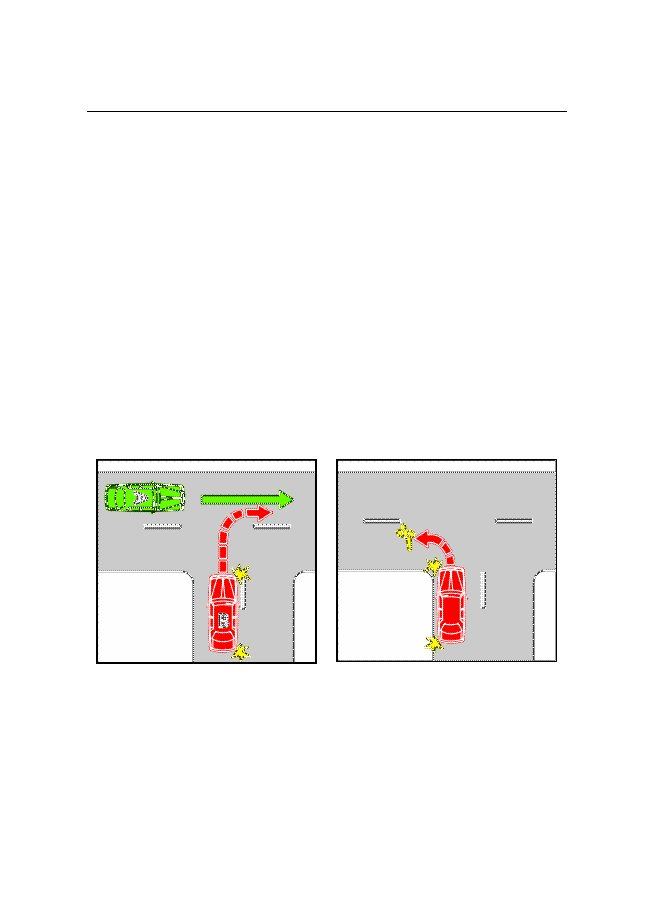
Management—RoadRules) Regulation 1999s 34Examples—Making a right turn as indicated byroad
markingsMaking a right turn from a roadwith
no road marking indicatinghow to make the turnDivision 3Hook turns at
intersections34Making a hook turn at a hook turn only
sign(1)A driver turning right at an
intersection with traffic lights anda hook turn only
sign must turn right by making a hook turn inaccordance with
this section.Maximum penalty—20 penalty units.(2)To make ahook turn, the
driver must take, in sequence, eachof the following
steps—1Approachandentertheintersectionfromasnearaspracticable to the far left side of the road
that the driveris leaving.2Move
forward—(a)keeping as near as practicable to the
far left side ofthe intersection; and(b)keeping clear of any marked foot
crossing;
s
3536Transport Operations (Road Use
Management—RoadRules) Regulation 1999s 35until
the driver is as near as practicable to the far side ofthe
road that the driver is entering.3Remainatthepositionreachedunderstep2untilthetrafficlightsontheroadthatthedriverisenteringchange to
green.4Turn right into the road that the
driver is entering.(3)In this section—roaddoes
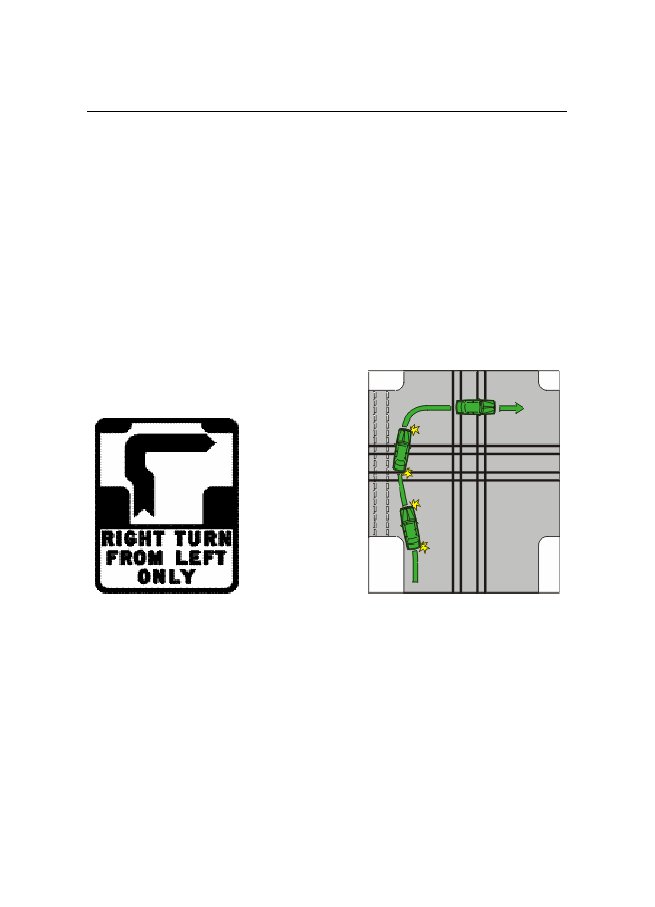
not include a road-related area.Examples—Hook turn only signMaking a hook turn at a hook turnonly
sign35Optional hook turn by a bicycle
rider(1)The rider of a bicycle turning right
at an intersection, withouta hook turn only sign or a no hook
turn by bicycles sign, mayturn right at the intersection by
making—(a)a right turn under division 2;
or(b)a hook turn under this
section.
s
3537Transport Operations (Road Use
Management—RoadRules) Regulation 1999s 35(2)Theridermustmakeahookturnunderthissectioninaccordance with subsection (3).Maximum penalty—20 penalty units.(3)To make ahook turnunder
this section, the rider must take, insequence, each of
the following steps—1Approachandentertheintersectionfromasnearaspracticable to the far left side of the road
that the rider isleaving.2Move
forward—(a)keeping as near as practicable to the
far left side ofthe intersection; and(b)keeping clear of any marked foot crossing;
and(c)keeping clear, as far as practicable,
of any driverturning left from the left of the
intersection;until the rider is as near as practicable to
the far side ofthe road that the rider is entering.3If there are traffic lights at the
intersection, remain at theposition reached under step 2 until
the traffic lights onthe road that the rider is entering
change to green.4If there are no traffic lights at the
intersection, remain atthepositionreachedunderstep2untiltheriderhasgiven
way to approaching drivers on the road that therider is
leaving.5Turn right into the road that the
rider is entering.
s
3638Transport Operations (Road Use
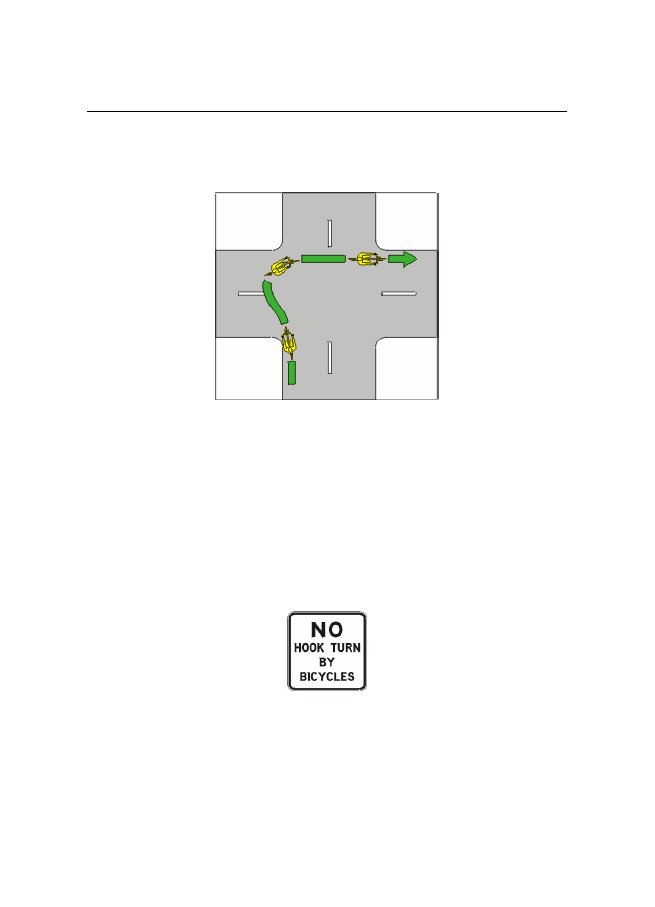
Management—RoadRules) Regulation 1999s 36Example—Bicycle rider
making a hook turn at an intersection without traffic lights36Bicycle rider making a hook turn
contrary to no hook turnby bicycles signTheriderofabicyclemustnotmakeahookturnatanintersection that has a no hook turn
by bicycles sign.Maximum penalty—20 penalty units.Example—No hook turn by
bicycles sign
s
3739Transport Operations (Road Use
Management—RoadRules) Regulation 1999s 39Division 4U–turns37Beginning a U–turnA driver must not
begin a U–turn unless—(a)the driver has a
clear view of any approaching traffic;and(b)thedrivercansafelymaketheU–turnwithoutunreasonably obstructing the free movement
of traffic.Maximum penalty—20 penalty units.38Giving way when making a U–turnA
driver making a U–turn must give way to all vehicles andpedestrians.Maximum
penalty—20 penalty units.39Making a U–turn
contrary to a no U–turn sign(1)A
driver must not make a U–turn at a break in a dividing striponaroadifthereisanoU–turnsignatthebreakinthedividing strip.Maximum
penalty—20 penalty units.(2)A driver must not
make a U–turn on a length of road to whicha no U–turn sign
applies.Maximum penalty—20 penalty units.(3)A no U–turn sign on a road (except a
no U–turn sign at anintersectionoratabreakinadividingstrip)appliestothelength of road
beginning at the sign and ending at the nearerof the
following—(a)the next intersection on the
road;(b)if the road ends at a T–intersection
or dead end—the endof the road.
s
4040Transport Operations (Road Use
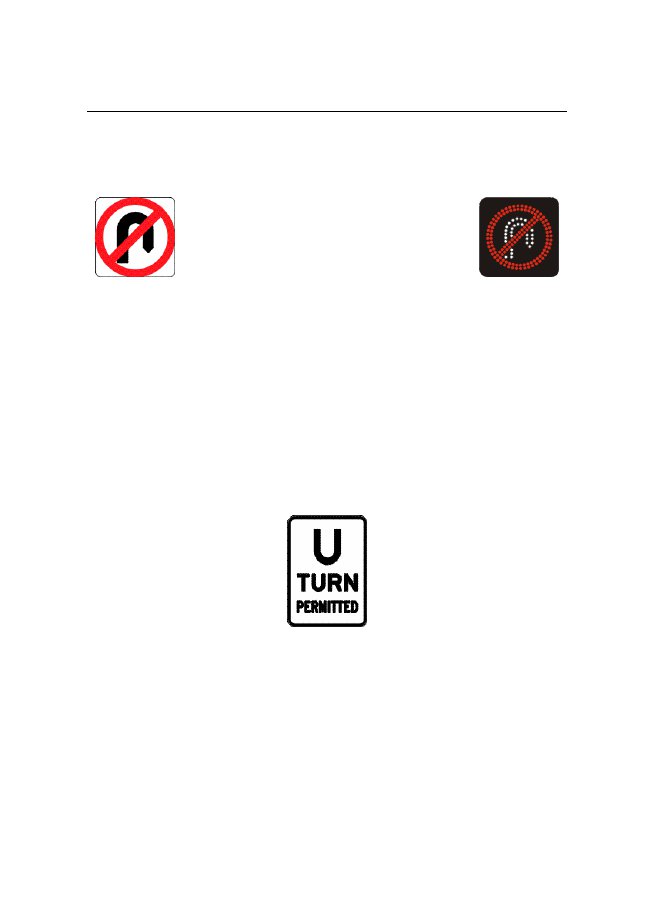
Management—RoadRules) Regulation 1999s 42Example of no U–turn signs—No
U–turn sign (Standard sign)No U–turn sign (Variableilluminated message sign)40Making a U–turn at an intersection
with traffic lightsA driver must not make a U–turn at an
intersection with trafficlightsunlessthereisaU–turnpermittedsignattheintersection.Maximum
penalty—20 penalty units.Example of U-turn permitted
sign—41Making a U–turn at an intersection
without traffic lightsA driver must not make a U–turn at an
intersection withouttraffic lights if there is a no U–turn sign
at the intersection.Maximum penalty—20 penalty units.42Starting a U–turn at an
intersectionAdrivermakingaU–turnatanintersectionmuststarttheU–turn—
s
4341Transport Operations (Road Use
Management—RoadRules) Regulation 1999s 43(a)if the road where the driver is
turning has a dividing lineormedianstrip—fromthemarkedlanenearest,orasnear as practicable, to the dividing
line or median strip;or(b)inanyothercase—fromtheleftofthecentreoftheroad.Maximum
penalty—20 penalty units.Example—Starting a U–turn
on a road with a median stripDivision 5Turns into or from road-relatedareas or adjacent land43Starting and making turns into or from
road-related areasor adjacent land(1)A
driver turning left from a road into a road-related area oradjacent land, or from a road-related area
into a road, mustcomply with division 1 as if the driver were
turning left at anintersection.Maximum
penalty—20 penalty units.(2)A driver turning
right from a road into a road-related area oradjacent land, or
from a road-related area into a road, must
s
4442Transport Operations (Road Use
Management—RoadRules) Regulation 1999s 45comply with division 2 as if the driver were
turning right at anintersection.Maximum
penalty—20 penalty units.(3)In this
section—roaddoes not include a road-related
area.Part 5Change of
direction and stopsignalsDivision 1Change of direction signals44Division does not apply to entering or
leaving aroundaboutThis division
does not apply to a driver entering, in or leavinga
roundabout.45What ischanging
direction(1)A driverchanges
directionif—(a)the driver
changes direction to the left; or(b)the
driver changes direction to the right.(2)Adriverchangesdirectiontotheleftbydoinganyofthefollowing—(a)turning left;(b)changing marked lanes to the left;(c)diverging to the left;(d)entering a marked lane, or a line of
traffic, to the left;(e)moving to the
left from a stationary position;(f)turning left into a marked lane, or a line
of traffic, from amedian strip parking area;
s
4543Transport Operations (Road Use
Management—RoadRules) Regulation 1999s 45(g)at a T–intersection where the
continuing road curves totheright—leavingthecontinuingroadtoproceedstraight ahead
onto the terminating road.(3)A driverchanges direction to the rightby
doing any of thefollowing—(a)turning right;(b)changing marked lanes to the right;(c)diverging to the right;(d)entering a marked lane, or a line of
traffic, to the right;(e)moving to the
right from a stationary position;(f)turning right into a marked lane, or a line
of traffic, froma median strip parking area;(g)making a U–turn;(h)at a
T–intersection where the continuing road curves tothe
left—leaving the continuing road to proceed straightahead
onto the terminating road.
s
4644Transport Operations (Road Use
Management—RoadRules) Regulation 1999s 46Examples for subsections (2)(g) and
(3)(h)—Example 1Example 2Driver
indicating change of direction at aDriver indicating
change of direction at aT–intersection where the continuing
roadT–intersection where the continuing
roadcurves to the right and the driver iscurves to the left and the driver isproceeding straight ahead onto theproceeding straight ahead onto theterminating roadterminating
road46Giving a left change of direction
signal(1)Before a driver changes direction to
the left, the driver mustgivealeftchangeofdirectionsignalinaccordancewithsection 47 for long enough to comply
with—(a)subsection (2); and(b)if subsection (3) applies to the
driver—subsection (3).Maximum penalty—20 penalty
units.(2)The driver must give the change of
direction signal for longenoughtogivesufficientwarningtootherdriversandpedestrians.(3)If
the driver is about to change direction by moving from astationary position at the side of the road
or in a median stripparkingarea,thedrivermustgivethechangeofdirectionsignalforatleast5secondsbeforethedriverchangesdirection.
s
4745Transport Operations (Road Use
Management—RoadRules) Regulation 1999s 48(4)The driver must stop giving the change
of direction signal assoon as the driver completes the
change of direction.Maximum penalty—20 penalty units.(5)This section does not apply to a
driver if the driver’s vehicle isnot fitted with
direction indicator lights.47How to give a
left change of direction signalThe driver of a
vehicle must give a left change of directionsignal by
operating the vehicle’s left direction indicator lights.48Giving a right change of direction
signal(1)Before a driver changes direction to
the right, the driver mustgivearightchangeofdirectionsignalinaccordancewithsection 49 for long enough to comply
with—(a)subsection (2); and(b)if subsection (3) applies to the
driver—subsection (3).Maximum penalty—20 penalty
units.(2)The driver must give the change of
direction signal for longenoughtogivesufficientwarningtootherdriversandpedestrians.(3)If
the driver is about to change direction by moving from astationary position at the side of the road
or in a median stripparkingarea,thedrivermustgivethechangeofdirectionsignalforatleast5secondsbeforethedriverchangesdirection.(3A)Subsection (3) does not apply to the rider
of a bicycle that isstopped in traffic but not parked.(4)The driver must stop giving the change
of direction signal assoon as the driver completes the
change of direction.Maximum penalty—20 penalty units.(5)This section does not apply to—(a)thedriverofatramthatisnotfittedwithdirection
s
4946Transport Operations (Road Use
Management—RoadRules) Regulation 1999s 50indicator lights; or(b)the
rider of a bicycle making a hook turn.49How
to give a right change of direction signal(1)The
driver of a vehicle must give a right change of directionsignalbyoperatingthevehicle’srightdirectionindicatorlights.(2)However, if the vehicle’s direction
indicator lights are not inworking order or are not clearly
visible, or the vehicle is notfitted with
direction indicator lights, the driver must give thechange of direction signal by—(a)giving a hand signal in accordance
with section 50; or(b)usingamechanicalsignallingdevicefittedtothevehicle.50How to give a right change of
direction signal by giving ahand
signalTo give a hand signal for changing direction
to the right, thedriver must extend the right arm and hand
horizontally and atright angles from the right side of the
vehicle, with the handopen and the palm facing the direction
of travel.
s
5147Transport Operations (Road Use
Management—RoadRules) Regulation 1999s 52Example—Giving a hand
signal for changing direction to the right51When
use of direction indicator lights permittedThe driver of a
vehicle must not operate a direction indicatorlight
except—(a)to give a change of direction signal
when the driver isrequired to give the signal under this
regulation; or(b)as part of the vehicle’s hazard
warning lights.Maximum penalty—20 penalty units.Division 2Stop
signals52Division does not apply to bicycle
riders or certain tramdriversThis division
does not apply—(a)to the rider of a bicycle; or(b)to the driver of a tram that is not
fitted with brake lights.
s
5348Transport Operations (Road Use
Management—RoadRules) Regulation 1999s 5553Giving a stop signal(1)A driver must give a stop signal in
accordance with section 54before stopping or when suddenly
slowing.Maximum penalty—20 penalty units.(2)If the driver is stopping, the driver
must give the stop signalfor long enough to give sufficient
warning to other road users.Maximum
penalty—20 penalty units.(3)If the driver is
slowing suddenly, the driver must give the stopsignal while
slowing.Maximum penalty—20 penalty units.54How to give a stop signal(1)The driver of a vehicle must give a
stop signal by means of thevehicle’s brake lights.(2)However, if the vehicle’s brake lights
are not in working orderor are not clearly visible, or the
vehicle is not fitted with brakelights, the
driver must give the stop signal by—(a)giving a hand signal in accordance with
section 55; or(b)usingamechanicalsignallingdevicefittedtothevehicle.55How to give a stop signal by giving a
hand signal(1)To give a hand signal for stopping or
suddenly slowing, thedriver must extend the right arm and
hand at right angles fromthe right side of the vehicle
with—(a)theupperarmhorizontalandtheforearmandhandpointing upwards; and(b)thehandopenandthepalmfacingthedirectionoftravel.(2)However, the rider of a motorbike may give
the hand signalby extending the left arm and hand at right
angles from the leftside of the motorbike with—
s
5649Transport Operations (Road Use
Management—RoadRules) Regulation 1999s 56(a)theupperarmhorizontalandtheforearmandhandpointing upwards; and(b)thehandopenandthepalmfacingthedirectionoftravel.Example—Giving a hand signal for stopping or
suddenly slowingPart 6Traffic lights
and twin red lightsDivision 1Obeying traffic
lights56Stopping on a red traffic light or
arrow(1)A driver approaching or at traffic
lights showing a red trafficlight—(a)must stop—(i)if
there is a stop line at or near the traffic lights—asnear
as practicable to, but before reaching, the stopline;
or
s
5650Transport Operations (Road Use
Management—RoadRules) Regulation 1999s 56(ii)if there is a stop here on red signal
sign at or nearthetrafficlights,butnostopline—asnearaspracticable to, but before reaching,
the sign; or(iii)if there is no
stop line or stop here on red signalsignatornearthetrafficlights—asnearaspracticable to,
but before reaching, the nearest oronly traffic
lights; and(b)must not proceed until—(i)thetrafficlightschangetogreenorflashingyellow; or(ii)a green or flashing yellow traffic
arrow is showing,if the driver is turning in the direction
indicated bythe arrow.Maximum
penalty—20 penalty units.Example for subsection
(1)(a)(ii)—Stopping at a stop here on red signal
signIn this example the driver may go straight
ahead, or turn right or left, if there is a greentraffic light showing at 1. However, the
driver must not go beyond the stop here on redsignal sign at 2
if there is a red traffic light showing on the road the driver is
entering (see2 and 3).
s
5651Transport Operations (Road Use
Management—RoadRules) Regulation 1999s 56(1A)However, if the traffic lights are at
an intersection with a leftturn on red after stopping sign and
the driver is turning left atthe intersection,
the driver may turn left after stopping.(2)A
driver approaching or at traffic arrows showing a red
trafficarrow who is turning in the direction
indicated by the arrow—(a)must stop—(i)ifthereisastoplineatornearthetrafficarrows—asnearaspracticableto,butbeforereaching, the
stop line; or(ii)if there is a stop here on red arrow
sign at or nearthetrafficarrows,butnostopline—asnearaspracticable to, but before reaching,
the sign; or(iii)if there is no
stop line or stop here on red arrowsignatornearthetrafficarrows—asnearaspracticable to,
but before reaching, the nearest oronly traffic
arrows; and(b)must not proceed until—(i)thetrafficarrowschangetogreenorflashingyellow; or(ii)the traffic lights show a green or
flashing yellowtrafficlightandthereisnoredoryellowtrafficarrow
showing.Maximum penalty—20 penalty units.Examples—Stop here on red
signal signStop here on red arrow sign
s
5752Transport Operations (Road Use
Management—RoadRules) Regulation 1999s 5757Stopping for a yellow traffic light or
arrow(1)Adriverwhoisapproaching,orat,trafficlightsshowingayellow traffic light—(a)must
stop—(i)if there is a stop line at or near the
traffic lights andthe driver can stop safely before reaching
the stopline—asnearaspracticableto,andbeforereaching, the
stop line; or(ii)if there is no stop line at or near
the traffic lightsand the driver can stop safely before
reaching thetraffic lights—as near as practicable to,
and beforereaching, the nearest traffic lights;
or(iii)ifthetrafficlightsareatanintersectionandthedriver can not stop safely under
subparagraph (i) or(ii),butcanstopsafelybeforeenteringtheintersection—before entering the
intersection; and(b)must not proceed until the traffic
lights—(i)change to green or flashing yellow;
or(ii)show no traffic light.Maximum penalty—20 penalty units.(2)A driver who is approaching, or at,
traffic arrows showing ayellow traffic arrow, and turning in
the direction indicated bythe arrow—(a)must
stop—(i)if there is a stop line at or near the
traffic arrowsand the driver can stop safely before
reaching thestopline—asnearaspracticableto,andbeforereaching, the
stop line; or(ii)if there is no stop line at or near
the traffic arrowsand the driver can stop safely before
reaching thetrafficarrows—asnearaspracticableto,andbefore reaching, the nearest traffic
arrows; or(iii)if the traffic
arrows are at an intersection and thedriver can not
stop safely under subparagraph (i) or
s
5853Transport Operations (Road Use
Management—RoadRules) Regulation 1999s 59(ii),butcanstopsafelybeforeenteringtheintersection—before entering the
intersection; and(b)must not proceed until the traffic
arrows—(i)change to green or flashing yellow;
or(ii)show no traffic arrow.Maximum penalty—20 penalty units.(3)Ifthetrafficlightsorarrowsareatanintersectionandthedrivercannotstopsafelyundersubsection(1)or(2)andenters the intersection, the driver
must leave the intersectionas soon as the driver can do so
safely.Maximum penalty—20 penalty units.58Exceptions to stopping for a red or
yellow traffic light(1)Adriverapproachingorattrafficlightsshowingaredoryellowtrafficlightdoesnothavetostopifagreentrafficarrow
is also showing and the driver is turning in the directionindicated by the arrow.(2)Adriverturningatanintersectionwithtrafficlightswhoapproaches,orisat,aredtrafficlightontheroadthatthedriver is
entering does not have to stop for the red traffic lightif
there is no stop line or stop here on red signal sign at or
nearthe traffic light.59Proceeding through a red traffic
light(1)If traffic lights at an intersection
or marked foot crossing areshowingaredtrafficlight,adrivermustnotentertheintersection or marked foot crossing.Maximum penalty—20 penalty units.(2)However, if the traffic lights are at
an intersection with a leftturn on red after stopping sign and
the driver is turning left attheintersection,thedrivermayturnleftbeforethetrafficlights change to
green or flashing yellow.
s
6054Transport Operations (Road Use
Management—RoadRules) Regulation 1999s 61Example—Left turn on red
after stopping sign(3)Subsection(1)doesnotapplytoadriverifsection58(1)applies to the driver.60Proceeding through a red traffic
arrowIftrafficarrowsatanintersectionareshowingaredtrafficarrow, and a
driver is turning in the direction indicated by thearrow, the driver must not enter the
intersection.Maximum penalty—20 penalty units.61Proceeding when traffic lights or
arrows at anintersection change to red or yellow(1)This section applies to a
driver—(a)atanintersectionwithtrafficlightsshowingagreentraffic light who
has stopped after the stop line, stop hereon red signal
sign, or nearest or only traffic lights, at theintersectionandisnotmakingahookturnattheintersection;
or(b)atanintersectionwithtrafficarrowsshowingagreentraffic arrow who
is turning in the direction indicated bythe arrow and has
stopped after the stop line, stop hereon red arrow
sign, or nearest or only traffic arrows, atthe
intersection.Example—A
driver may stop after the stop line at an intersection with traffic
lightsshowing a green traffic light, and not
proceed through the intersection,because traffic
is congested.
s
6255Transport Operations (Road Use
Management—RoadRules) Regulation 1999s 62(2)If the traffic lights or arrows change
to red or yellow while thedriverisstoppedandthedriverhasnotenteredtheintersection, the driver must not enter the
intersection.Maximum penalty—20 penalty units.(3)However, if the traffic lights are at
an intersection with a leftturn on red after stopping sign and
the driver is turning left atthe intersection,
the driver may turn left after stopping.(4)Also,
subsection (2) does not apply to a driver if section 58(1)applies to the driver.(5)If
the traffic lights or arrows change to red or yellow while
thedriver is stopped and the driver has entered
the intersection,the driver must leave the intersection as
soon as the driver cando so safely.Maximum
penalty—20 penalty units.Division 2Giving way at
traffic lights62Giving way when turning at
intersection with traffic lightsA driver turning
at an intersection with traffic lights must giveway
to—(a)any pedestrian at or near the
intersection who is on theroad the driver is entering;
and(b)ifthedriveristurningleftataleftturnonredafterstopping sign at
the intersection—(i)anyvehicleapproachingfromtheright,turningright
at the intersection into the road the driver isentering,ormakingaU–turnattheintersection;and(ii)any pedestrian at or near the
intersection who is onthe road the driver is leaving;
and(c)if the driver is turning right—any
oncoming vehicle thatis going straight ahead or turning
left at the intersection(except a vehicle turning left using a
slip lane).Maximum penalty—20 penalty
units.
s
6356Transport Operations (Road Use
Management—RoadRules) Regulation 1999s 63Examples—Example 1Giving
way to a pedestrian on the road thedriver is
enteringExample 2Driver turning
right giving way to anoncoming vehicle going straight
aheadExample 3Driver turning
right does not have to give way to an oncoming vehicle that is
turningleft into the road the driver is entering
using a slip laneIn example 1, the vehicle must give way to
the pedestrian.In examples 2 and 3, vehicle B must give way
to vehicle A.63Giving way at an intersection with
traffic lights notoperating or only partly operating(1)This section applies to a driver at an
intersection if—
s
6457Transport Operations (Road Use
Management—RoadRules) Regulation 1999s 64(a)traffic lights at the intersection are
not operating; or(b)thetrafficlightsareshowingonlyaflashingyellowtraffic light.(2)If
there is a traffic light-stop sign at the intersection, the
drivermust comply with section 67 as if the sign
were a stop sign atan intersection without traffic
lights.Maximum penalty—20 penalty units.(3)Ifthereisnotrafficlight-stopsignattheintersection,thedriver must give way to vehicles and
pedestrians at or near theintersectioninaccordancewithsection72or73asiftheintersectionwereanintersectionwithouttrafficlightsorastop sign, stop
line, give way sign or give way line.Maximum
penalty—20 penalty units.Example—Traffic
light-stop sign64Giving way at a flashing yellow
traffic arrow at anintersectionA driver turning
in the direction indicated by a flashing yellowtrafficarrowatanintersectionwithtrafficlightsmustgiveway to—(a)any vehicle travelling on the road the
driver is entering;and(b)any pedestrian at
or near the intersection who is on theroad the driver
is entering; and(c)if the driver is turning right—any
oncoming vehicle thatis going straight ahead or turning
left at the intersection
s
6558Transport Operations (Road Use
Management—RoadRules) Regulation 1999s 66(except a vehicle turning left using a slip
lane).Maximum penalty—20 penalty units.65Giving way at a marked foot crossing
(except at anintersection) with a flashing yellow traffic
light(1)This section applies to a driver
approaching or at a markedfoot crossing (except at or near an
intersection) with a flashingyellow traffic
light at the crossing.(2)The driver
must—(a)give way to any pedestrian on the
crossing; and(b)not obstruct any pedestrian on the
crossing; and(c)notovertakeorpassavehiclethatistravellinginthesamedirectionasthedriverandisstopping,orhasstopped, to give
way at the crossing.Maximum penalty—20 penalty units.(3)If there is no pedestrian on the
crossing, and no other vehicletravelling in the
same direction as the driver that is stopping,or has stopped,
to give way at the crossing, the driver mayproceed through
the crossing.Division 3Twin red lights
(except at levelcrossings)66Stopping for twin red lights (except at
level crossings)(1)A driver approaching or at twin red
lights on a road (except ata level crossing) must stop in
accordance with subsections (2)and (3).Maximum penalty—20 penalty units.(2)If there is a stop line at or near the
lights and the driver canstop safely before reaching the stop
line, the driver must stopas near as practicable to, but before
reaching, the stop line.
s
6759Transport Operations (Road Use
Management—RoadRules) Regulation 1999s 67(3)If there is no stop line at or near
the lights and the driver canstop safely
before reaching the lights, the driver must stop asnear
as practicable to, but before reaching, the lights.(4)If the driver stops for the lights,
the driver must not proceeduntil the lights are not
showing.Maximum penalty—20 penalty units.Part
7Giving wayDivision 1Giving way at a stop sign, stop line,give
way sign or give way lineapplying to the driver67Stopping and giving way at a stop sign
or stop line at anintersection without traffic lights(1)Thissectionappliestoadriveratanintersectionwithouttraffic lights who is facing a stop sign or
stop line.(2)The driver must stop at the stop line
or, if there is no stop line,thedrivermuststopasnearaspracticableto,butbeforeentering, the
intersection.Maximum penalty—20 penalty units.(3)Thedrivermustgivewaytoavehiclein,enteringorapproaching the intersection except—(a)an oncoming vehicle turning right at
the intersection, ifastopsign,stopline,givewaysignorgivewaylineapplies to the driver of the oncoming
vehicle; or(b)a vehicle turning left at the
intersection using a slip lane;or(c)a vehicle making a U–turn.Maximum penalty—20 penalty
units.
s
6760Transport Operations (Road Use
Management—RoadRules) Regulation 1999s 67(4)If the driver is turning left or right
or making a U–turn, thedrivermustalsogivewaytoanypedestrianatorneartheintersectionontheroad,orpartoftheroad,thedriverisentering.Maximum
penalty—20 penalty units.(6)For this section,
an oncoming vehicle proceeding through aT–intersectiononthecontinuingroadistakennottobeturning.Examples—Example 1Stop
signExample 2Stop
line
s
6861Transport Operations (Road Use
Management—RoadRules) Regulation 1999s 68Example 3Stopping and
giving way at a stop sign to vehicles on the left and rightIn
example 3, vehicle B must stop and give way to each vehicle
A.68Stopping and giving way at a stop sign
or stop line atother places(1)Thissectionappliestoadriverapproachingorataplace(except an intersection, children’s
crossing, level crossing, ora place with twin
red lights) with a stop sign or stop line.Examples—1a stop sign at a
break in a dividing strip dividing the part of the roadused
by the main body of moving vehicles from a service road2a stop sign on an exit from a carpark
where the exit joins the road(2)The
driver must stop at the stop line or, if there is no stop
line,the driver must stop as near as practicable
to, but before, thestop sign.Maximum
penalty—20 penalty units.(3)The driver must
give way to any vehicle or pedestrian at ornear the stop
sign.Maximum penalty—20 penalty
units.
s
6962Transport Operations (Road Use
Management—RoadRules) Regulation 1999s 69Examples—Example 1Stopping and giving way at a stop sign at
abreak in a dividing stripExample 2Stopping and giving way at a stop
signwhere a carpark exit joins a roadIn
each example, vehicle B must stop and give way to vehicle A.69Giving way at a give way sign or give
way line at anintersection, other than a roundabout(1)This section applies to a driver at an
intersection, other than aroundabout, who is facing a give way
sign or give way line.(2)Unless the driver
is turning left using a slip lane, the drivermustgivewaytoavehiclein,enteringorapproachingtheintersection except—(a)an
oncoming vehicle turning right at the intersection, ifastopsign,stopline,givewaysignorgivewaylineapplies to the driver of the oncoming
vehicle; or(b)a vehicle turning left at the
intersection using a slip lane;or(c)a vehicle making a U–turn.Maximum penalty—20 penalty units.(2A)If the driver is turning left using a
slip lane, the driver mustgive way to—
s
6963Transport Operations (Road Use
Management—RoadRules) Regulation 1999s 69(a)a vehicle, other than a vehicle making
a U-turn at theintersection, that is—(i)on
the road that the driver is entering; or(ii)turning right at the intersection into the
road thatthe driver is entering; and(b)a vehicle or a pedestrian on the slip
lane.Maximum penalty—20 penalty units.(3)If the driver is turning left or right
or making a U–turn, thedrivermustalsogivewaytoanypedestrianatorneartheintersectionontheroad,orpartoftheroad,thedriverisentering.Maximum
penalty—20 penalty units.(5)For this section,
an oncoming vehicle proceeding through aT–intersectiononthecontinuingroadistakennottobeturning.Examples—Example 1Give
way signExample 2Give way
line
s
69A64Transport Operations (Road Use
Management—RoadRules) Regulation 1999s 70Example 3Giving way at a
give way sign to vehicleson the left and rightExample 4Driver turning
right at a give way linedoes not have to give way to a
vehicleturning left using a slip laneIn
example 3, vehicle B must give way to each vehicle A.In
example 4, vehicle B must give way to vehicle A.69ATwo or more drivers facing various
signs or lines at anintersectionIf 2 or more
drivers at an intersection are each facing a stopsign,stopline,givewaysignorgivewayline,eachdrivermustgivewaytotheotherorothers,asrequiredunderdivision 2, as if none of the drivers were
facing a stop sign,stop line, give way sign or give way
line.Maximum penalty—20 penalty units.70Giving way at a give way sign at a
bridge or length ofnarrow roadA driver
approaching a bridge or length of narrow road with agive
way sign must give way to any oncoming vehicle that ison
the bridge or length of road when the driver reaches thesign.Maximum
penalty—20 penalty units.
s
7165Transport Operations (Road Use
Management—RoadRules) Regulation 1999s 71Examples—Example 1Giving way at a bridgeExample 2Giving way at a length of narrow roadIn
each example, vehicle B must give way to vehicle A.71Giving way at a give way sign or give
way line at otherplaces(1)Adriverapproachingorataplace(exceptanintersection,bridge or length
of narrow road, level crossing, or a place withtwin red lights)
with a give way sign or give way line mustgive way in
accordance with this section.Maximum
penalty—20 penalty units.Examples—1a give way sign at a break in a
dividing strip dividing the part of theroad used by the
main body of moving vehicles from a service road
s
7266Transport Operations (Road Use
Management—RoadRules) Regulation 1999s 722a give way sign on a road at a place
where a bicycle path meets theroad(2)The driver must give way to any
vehicle or pedestrian at ornear the give way sign or give way
line.Examples—Example 1Giving
way at a give way sign at a break ina dividing
stripExample 2Giving way at a
give way sign where abicycle path meets a roadIn
example 1, vehicle B must give way to vehicle A.In
example 2, the motor vehicle must give way to the bicycle.Division 2Giving way at an
intersectionwithout traffic lights or a stop
sign,stop line, give way sign or give wayline72Giving way at an
intersection (except a T-intersection orroundabout)(1)Adriveratanintersection(exceptaT–intersectionorroundabout) who is not facing traffic lights
or a stop sign, stopline,givewaysign,orgivewayline,mustgivewayinaccordance with this section.Maximum penalty—20 penalty
units.
s
7267Transport Operations (Road Use
Management—RoadRules) Regulation 1999s 72(2)If the driver is going straight ahead,
the driver must give wayto any vehicle approaching from the
right (except a vehicleapproaching or at a place with a stop
sign, stop line, give waysign, or give way line).Examples—Example 1Driver
going straight ahead givingway to a vehicle on the right that
isgoing straight aheadExample 2Driver going straight ahead givingway
to a vehicle on the rightthat is turning rightIn
each example, vehicle B must give way to vehicle A.(3)If the driver is turning left (except
if the driver is using a sliplane), the driver
must give way to—(a)any vehicle approaching from the right
(except a vehicleapproaching or at a place with a stop sign,
stop line, giveway sign, or give way line); and(b)any pedestrian at or near the
intersection on the road thedriver is
entering.
s
7268Transport Operations (Road Use
Management—RoadRules) Regulation 1999s 72Examples—Example 3Driver
turning left giving way to a vehicleon the right that
is going straight aheadExample 4Driver turning
left giving way to apedestrian on the road the driver isenteringIn example 3,
vehicle B must give way to vehicle A.In example 4, the
vehicle must give way to the pedestrian.(4)If
the driver is turning left using a slip lane, the driver
mustgive way to—(a)any
vehicle approaching from the right or turning rightattheintersectionintotheroadthedriverisentering(except a vehicle
making a U–turn at the intersection);and(b)any pedestrian on the slip
lane.
s
7269Transport Operations (Road Use
Management—RoadRules) Regulation 1999s 72Example—Example 5Driver
turning left using a slip lane giving way to a vehicle that is
turning right intothe road the driver is enteringIn
this example, vehicle B must give way to vehicle A.(5)If the driver is turning right, the
driver must give way to—(a)any vehicle
approaching from the right (except a vehicleapproaching or at
a place with a stop sign, stop line, giveway sign, or give
way line); and(b)anyoncomingvehiclethatisgoingstraightaheadorturning left at the intersection (except a
vehicle turningleftusingasliplaneoravehicleapproachingorataplace with a stop
sign, stop line, give way sign, or giveway line);
and(c)any pedestrian at or near the
intersection on the road thedriver is
entering.
s
7270Transport Operations (Road Use
Management—RoadRules) Regulation 1999s 72Examples—Example 6Driver
turning right giving way to avehicle on the
right that is turning rightinto the road the driver is
leavingExample 7Driver turning
right giving way to anoncoming vehicle that is going
straightahead on the road the driver is
leavingIn examples 6 and 7, vehicle B must give way
to vehicle A.Example 8Driverturningrightgivingwaytoanoncoming vehicle
that is turning left intothe road the driver is enteringExample 9Driver turning
right giving way to apedestrian on the road the driver
isenteringIn example 8,
vehicle B must give way to vehicle A.In example 9, the
vehicle must give way to the pedestrian.
s
7371Transport Operations (Road Use
Management—RoadRules) Regulation 1999s 7373Giving way at a T-intersection(1)A driver at a T–intersection who is
not facing traffic lights ora stop sign, stop
line, give way sign, or give way line, mustgive way in
accordance with this section.Maximum
penalty—20 penalty units.(2)If the driver is
turning left (except if the driver is using a sliplane)
or right from the terminating road into the continuingroad,
the driver must give way to—(a)any
vehicle travelling on the continuing road (except avehicle approaching or at a place with a
stop sign, stopline, give way sign, or give way line);
and(b)anypedestrianonthecontinuingroadatorneartheintersection.Examples—Example 1Driver turning
right from the terminatingroad giving way to a vehicle on
thecontinuing roadExample 2Driver turning left (except if the
driveris using a slip lane) from the
terminatingroad giving way to a pedestrian on
thecontinuing roadIn example 1,
vehicle B must give way to vehicle A.In example 2, the
vehicle must give way to the pedestrian.(3)If
the driver is turning left from the terminating road into
thecontinuing road using a slip lane, the
driver must give wayto—
s
7372Transport Operations (Road Use
Management—RoadRules) Regulation 1999s 73(a)any vehicle travelling on the
continuing road; and(b)any pedestrian on the slip
lane.(4)If the driver is turning left (except
if the driver is using a sliplane) from the
continuing road into the terminating road, thedrivermustgivewaytoanypedestrianontheterminatingroad at or near
the intersection.Example—Example 3Driver
turning left (except if the driver is using a slip lane) from the
continuing roadgiving way to a pedestrian on the
terminating roadIn this example, the vehicle must give way to
the pedestrian.(5)Ifthedriveristurningfromthecontinuingroadintotheterminating road
using a slip lane, the driver must give wayto—(a)any vehicle approaching from the
right; and(b)any pedestrian on the slip
lane.(6)If the driver is turning right from
the continuing road into theterminating road,
the driver must give way to—(a)anyoncomingvehiclethatistravellingthroughtheintersection on the continuing road or
turning left at theintersection (except a vehicle approaching
or at a place
s
7373Transport Operations (Road Use
Management—RoadRules) Regulation 1999s 73with
a stop sign, stop line, give way sign, or give wayline); and(b)anypedestrianontheterminatingroadatorneartheintersection.Examples—Example 4Driver turning
right from the continuingroad giving way to an oncoming
vehicletravelling through the intersection on
thecontinuing roadExample 5Driver leaving the continuing road togo
straight ahead on the terminatingroad giving way
to a vehicle goingthrough the intersection on thecontinuing roadExample 5 shows a
T–intersection where the continuing road (marked with broken
whitelines)goesaroundacorner.VehicleBisleavingthecontinuingroadtoentertheterminating road.In examples 4 and
5, vehicle B must give way to vehicle A.
s
7374Transport Operations (Road Use
Management—RoadRules) Regulation 1999s 73Example 6Driver turning
right from the continuingroad giving way to an oncoming
vehicleturning left from the continuing roadExample 7Driver turning
right from thecontinuing road giving way to apedestrian on the terminating roadIn
example 6, vehicle B must give way to vehicle A.In
example 7, the vehicle must give way to the pedestrian.(7)In this section—(a)turningleftfromthecontinuingroadintotheterminatingroad,foradriver,includes,wherethecontinuing road curves to the right at
a T–intersection,leavingthecontinuingroadtoproceedstraightaheadonto the
terminating road; and(b)turningrightfromthecontinuingroadintotheterminatingroad,foradriver,includes,wherethecontinuingroadcurvestotheleftataT–intersection,leavingthecontinuingroadtoproceedstraightaheadonto the
terminating road.
s
7475Transport Operations (Road Use
Management—RoadRules) Regulation 1999s 74Division 3Entering or
leaving road-relatedareas and adjacent land74Giving way when entering a road from a
road-related areaor adjacent land(1)A
driver entering a road from a road-related area, or adjacentland,
without traffic lights or a stop sign, stop line, give waysign
or give way line must give way to all of the following—(a)a vehicle travelling on the road or
turning into the road,other than a vehicle turning right
into the road from aroad-related area or adjacent land;(b)a pedestrian on the road;(c)a vehicle or a pedestrian on a
road-related area that thedriver crosses to enter the
road;(d)for a driver entering the road from a
road-related area—(i)a pedestrian on the road-related area;
and(ii)anothervehicleaheadofthedriver’svehicleorapproaching from the left or
right.Maximum penalty—20 penalty units.(2)In this section—roaddoes
not include a road-related area.
s
7576Transport Operations (Road Use
Management—RoadRules) Regulation 1999s 75Example—Driver entering a
road from a road-related area giving way to a pedestrian on
thefootpath and a vehicle on the roadIn
this example, vehicle B must give way to the pedestrian on the
footpath and to vehicleA.75Giving way when entering a road-related area
or adjacentland from a road(1)A
driver entering a road-related area or adjacent land from aplace
on a road without traffic lights or a stop sign, stop line,give
way sign or give way line must give way to—(a)any
pedestrian on the road; and(b)any vehicle or
pedestrian on any road-related area thatthe driver
crosses or enters; and(c)ifthedriveristurningrightfromtheroad—anyoncomingvehicleontheroadthatisgoingstraightahead or turning
left; and(d)if the road the driver is leaving ends
at a T–intersectionopposite the road-related area or adjacent
land and thedriver is crossing the continuing road—any
vehicle onthe continuing road.Maximum
penalty—20 penalty units.(2)In this
section—
s
7677Transport Operations (Road Use
Management—RoadRules) Regulation 1999s 76roaddoes not include a road-related
area.Examples—Example 1Driver
turning right from a road intoa road-related
area giving way to anoncoming vehicle that is goingstraight ahead and to a pedestrian onthe
footpathExample 2Driver crossing a
continuing road at aT–intersection to enter a
road-relatedarea giving way to a vehicle on thecontinuing roadIn each example,
vehicle B must give way to vehicle A. In example 1, vehicle B must
alsogive way to the pedestrian on the
footpath.Division 4Keeping clear of
and giving way toparticular vehicles76Keeping clear of trams travelling in tram
lanes etc.(1)A driver must not move into the path
of an approaching tramtravelling in a tram lane, or on tram
tracks marked along theleft side of the tracks by a broken or
continuous yellow lineparallel to the tracks.Maximum penalty—20 penalty units.(2)If a driver is in the path of an
approaching tram travelling in atram lane, or on
tram tracks marked along the left side of thetracks by a
broken or continuous yellow line parallel to the
s
7778Transport Operations (Road Use
Management—RoadRules) Regulation 1999s 77tracks, the driver must move out of the path
of the tram assoon as the driver can do so safely.Maximum penalty—20 penalty units.(3)In this section—tramincludes a bus travelling along tram
tracks.77Giving way to buses(1)A driver driving on a length of road
in a built-up area wherethe speed limit applying to the driver
is not more than 70km/h,in the left lane or left line of
traffic, or in a bicycle lane on thefar left side of
the road, must give way to a bus in front of thedriver if—(a)the
bus has stopped, or is moving slowly, at the far leftside
of the road or in a bus-stop bay; and(b)the
bus displays a give way to buses sign and the rightdirection indicator lights of the bus are
operating; and(c)the bus is about to enter or proceed
in the lane or line oftraffic in which the driver is
driving.Maximum penalty—20 penalty units.(2)In this section—left laneof a
road means—(a)the marked lane nearest to the far
left side of the road(thefirst
lane) or, if the first lane is a bicycle lane,
themarked lane next to the first lane;
or(b)if there is an obstruction in the
first lane (for example, aparkedcarorroadworks)andthefirstlaneisnotabicycle lane—the marked lane next to the
first lane.left line of traffic, for a road,
means the line of traffic nearestto the far left
side of the road.
s
7879Transport Operations (Road Use
Management—RoadRules) Regulation 1999s 79Example—Give way to buses
sign78Keeping clear of police and emergency
vehicles(1)A driver must not move into the path
of an approaching policeor emergency vehicle that is
displaying a flashing blue or redlight(whetherornotitisalsodisplayingotherlights)orsounding an alarm.Maximum
penalty—20 penalty units.(2)Ifadriverisinthepathofanapproachingpoliceoremergencyvehiclethatisdisplayingaflashingblueorredlight(whetherornotitisalsodisplayingotherlights)orsounding an alarm, the driver must move out
of the path of thevehicle as soon as the driver can do so
safely.Maximum penalty—20 penalty units.(3)This section applies to the driver
despite any other section ofthis
regulation.79Giving way to police and emergency
vehicles(1)A driver must give way to a police or
emergency vehicle thatis displaying a flashing blue or red
light (whether or not it isalso displaying other lights) or
sounding an alarm.Maximum penalty—20 penalty units.(2)This section applies to the driver
despite any other section thatwould otherwise
require the driver of a police or emergencyvehicle to give
way to the driver.
s
79A80Transport Operations (Road Use
Management—RoadRules) Regulation 1999s 8079AGiving way to escorted vehicles(1)A driver must give way to an oversize
vehicle that is beingescorted by a pilot or escort
vehicle.Maximum penalty—20 penalty units.(2)This section applies to the driver
despite any other section thatwould otherwise
require the driver of an oversize vehicle togive way to the
driver.Division 5Crossings and
shared zones80Stopping at a children’s
crossing(1)Adriverapproachingachildren’scrossingmustdriveataspeed at which the driver can, if
necessary, stop safely beforethe
crossing.Maximum penalty—20 penalty units.(2)A driver approaching or at a
children’s crossing must stop atthe stop line at
the crossing if—(a)a hand-held stop sign is displayed at
the crossing; or(b)a pedestrian is on or entering the
crossing.Maximum penalty—20 penalty units.(3)If a driver stops at a children’s
crossing for a hand-held stopsign, the driver
must not proceed until the holder of the sign—(a)no
longer displays the sign towards the driver; or(b)otherwise indicates that the driver may
proceed.Maximum penalty—20 penalty units.(4)If a driver stops at a children’s
crossing for a pedestrian, thedrivermustnotproceeduntilthereisnopedestrianonorentering the
crossing.Maximum penalty—20 penalty units.(5)For this section, if a children’s
crossing extends across a roadwithadividingstrip,thepartofthechildren’scrossingon
s
8081Transport Operations (Road Use
Management—RoadRules) Regulation 1999s 80eachsideofthedividingstripistakentobeaseparatechildren’s crossing.(6)Achildren’s crossingis an
area of a road—(a)at a place with stop lines marked on
the road, and—(i)children crossing flags; or(ii)children’scrossingsignsandtwinyellowlights;and(b)indicated
by—(i)2 red and white posts erected on each
side of theroad; or(ii)2
parallel continuous or broken lines on the roadsurfacefromonesideoftheroadcompletelyorpartly across the road; and(c)extending across the road between the
posts or lines.Examples—Children crossing
flagChildren’s crossing signHand-held stop
signs
s
8182Transport Operations (Road Use
Management—RoadRules) Regulation 1999s 81Example 1Driver stopped at
stop line forpedestrians on a children’s crossingwith
children crossing flagsExample 2Driver stopped at
stop line forpedestrians on a children’s crossing
withchildren’s crossing signs and twinyellow lightsIneachoftheseexamples,thedrivermuststopatthestoplinebecausetherearepedestrians on the children’s
crossing.81Giving way at a pedestrian
crossing(1)Adriverapproachingapedestriancrossingmustdriveataspeed at which the driver can, if
necessary, stop safely beforethe
crossing.Maximum penalty—20 penalty units.(2)Adrivermustgivewaytoanypedestrianonapedestriancrossing.Maximum
penalty—20 penalty units.(3)Apedestrian crossingis an area of a
road—(a)ataplacethathasapedestriancrossingsign(withorwithout alternating flashing twin yellow
lights); and
s
8183Transport Operations (Road Use
Management—RoadRules) Regulation 1999s 81(b)indicated by white stripes on the road
surface that are—(i)approximately parallel to each other;
and(ii)fromonesideoftheroadcompletelyorpartlyacross the
road.Examples—Pedestrian
crossing signExample 1Givingwaytoapedestrianonapedestrian crossingExample 2Giving way to a pedestrian on apedestrian crossing at a slip laneIn
each of these examples, the driver must give way to the pedestrian
on the crossing.
s
8284Transport Operations (Road Use
Management—RoadRules) Regulation 1999s 8382Overtaking or passing a vehicle at a
children’s crossingor pedestrian crossingAdriverapproachingachildren’scrossing,orpedestriancrossing, must
not overtake or pass a vehicle that is travellinginthesamedirectionasthedriverandisstopping,orhasstopped, to give way to a pedestrian
at the crossing.Maximum penalty—20 penalty units.Example—Driver not
passing a vehicle that has stopped to give way to a pedestrian at
apedestrian crossingIn the example,
vehicle A has stopped to give way to a pedestrian on the crossing.
VehicleB must not overtake or pass vehicle A.83Giving way to pedestrians in a shared
zoneAdriverdrivinginasharedzonemustgivewaytoanypedestrian in the zone.Maximum
penalty—20 penalty units.
s
8485Transport Operations (Road Use
Management—RoadRules) Regulation 1999s 84Division 6Other give way
rules84Giving way when driving through a
break in a dividingstrip(1)If a
driver drives through a break in a dividing strip that has
nostop sign, stop line, give way sign or give
way line, the drivermust give way to—(a)any
tram on the dividing strip; and(b)any
vehicle travelling on the part of the road the driver isentering (except a vehicle to which a stop
sign, stop line,give way sign, or give way line,
applies).Maximum penalty—20 penalty units.(2)In this section—tramincludes a bus travelling along tram
tracks.Examples—Example 1Giving
way when driving through abreak in a median stripExample 2Giving way when
driving through a breakin a dividing strip to leave a service
road
s
8586Transport Operations (Road Use
Management—RoadRules) Regulation 1999s 85Example 3Giving way when
driving through a break in a dividing strip to enter a service
roadIn each of the examples, vehicle B must give
way to vehicle A.85Giving way on a painted islandA
driver entering a turning lane from a painted island mustgive
way to any vehicle—(a)in the turning lane; or(b)entering the turning lane from the
marked lane, or lineof traffic, immediately adjacent to the
turning lane.Maximum penalty—20 penalty
units.
s
8687Transport Operations (Road Use
Management—RoadRules) Regulation 1999s 86Example—Driver entering a
turning lane from a painted island giving way to a vehicle
enteringthe turning lane from the marked lane
immediately to the left of the turning laneIn the example,
vehicle B must give way to vehicle A.86Giving way in median turning bays(1)A driver entering a median turning bay
must give way to anyoncoming vehicle already in the turning
bay.Maximum penalty—20 penalty units.(2)In this section—medianturningbaymeansamarkedlane,orthepartofamarked
lane—(a)to which a median turning lane sign
applies; or(b)where traffic lane arrows applying to
the lane indicatethat vehicles travelling in opposite
directions must turnright.
s
8788Transport Operations (Road Use
Management—RoadRules) Regulation 1999s 87Examples—Example 1Median
turning lane signExample 2Giving way in a
median turning bayIn example 2, vehicle B must give way to
vehicle A.87Giving way when moving from a side or
shoulder of theroad or a median strip parking area(1)A driver entering a marked lane, or a
line of traffic, from thefar left or right side of a road must
give way to any vehicletravelling in the lane or line of
traffic.Maximum penalty—20 penalty units.(2)However, the driver of a bus does not
have to give way to avehicle if—(a)the
driver of the vehicle is required to give way to thebus
under section 77; and(b)it is safe for
the bus to enter the lane or line of traffic inwhich the vehicle
is driving.(3)Adriverturningfromamedianstripparkingareaintoamarked lane, or a
line of traffic, must give way to any vehicletravelling in the
lane or line of traffic.Maximum penalty—20 penalty
units.
s
8889Transport Operations (Road Use
Management—RoadRules) Regulation 1999s 89Part
8Traffic signs and road markingsDivision 1Traffic signs
and road markings atintersections88Left
turn signs(1)If there is a left turn only sign at
an intersection, a driver mustturn left at the
intersection.Maximum penalty—20 penalty units.(2)If there is a left lane must turn left
sign at an intersection, adriverwhoisintheleftmarkedlanewhenenteringtheintersection must turn left at the
intersection.Maximum penalty—20 penalty units.Examples—Left turn only
signLeft lane must turn left sign89Right turn signs(1)Ifthereisarightturnonly
signatanintersection,adrivermust turn right
at the intersection.Maximum penalty—20 penalty units.(2)If there is a right lane must turn
right sign at an intersection, adriverwhoisintherightmarkedlanewhenenteringtheintersection must turn right at the
intersection.Maximum penalty—20 penalty units.(3)In this section—
s
9090Transport Operations (Road Use
Management—RoadRules) Regulation 1999s 91turn
rightdoes not include make a U–turn.Examples—Right turn only
signRight lane must turn right sign90No turns signsIf there is a no
turns sign at an intersection, a driver must notturn
left or right, or make a U–turn, at the intersection.Maximum penalty—20 penalty units.Example—No turns
sign91No left turn and no right turn
signs(1)If there is a no left turn sign at an
intersection, a driver mustnot turn left at the
intersection.Maximum penalty—20 penalty units.(2)If there is a no right turn sign at an
intersection, a driver mustnot turn right or make a U–turn at the
intersection.Maximum penalty—20 penalty
units.
s
9291Transport Operations (Road Use
Management—RoadRules) Regulation 1999s 92(3)However,adrivermaymakeaU-turnatanintersectionmentioned in
subsection (2) if there is a U-turn permitted signat
the intersection.Examples of no left turn signs—No
left turn sign (Standard sign)No left turn sign
(Variable illuminatedmessage sign)Examples of no
right turn signs—No right turn sign (Standard sign)No
right turn sign (Variableilluminated message sign)92Traffic lane arrows(1)Ifadriverisdrivinginamarkedlaneatanintersection(exceptaroundabout)andtherearetrafficlanearrowsapplying to the
lane, the driver must—(a)ifthearrowsindicatea
singledirection—driveinthatdirection; or(b)if
the arrows indicate 2 or more directions—drive in oneof
those directions.Maximum penalty—20 penalty units.(2)However, this section does not apply
to a driver if the arrowsindicateadirectiontotheright(whetherornottheyalsoindicate another direction) and the
driver is making a U–turnat the intersection.
s
9392Transport Operations (Road Use
Management—RoadRules) Regulation 1999s 93Examples—Traffic lane
arrows on the surface ofmarked lanesTraffic lane
arrows on a traffic signDivision 2Traffic signs
and road markingsgenerally93No
overtaking or passing signs(1)A driver must
not—(a)drivepastanoovertakingorpassingsignifanyoncoming vehicle
is on the bridge or length of road towhich the sign
applies; or(b)overtake a vehicle on a bridge or
length of road to whicha no overtaking or passing sign
applies.Maximum penalty—20 penalty units.(2)A no overtaking or passing sign on a
road applies to the lengthof road (including a length of road on
a bridge) beginning atthe sign and ending—(a)ifinformationonorwiththesignindicatesadistance—at that distance past the sign;
or
s
9493Transport Operations (Road Use
Management—RoadRules) Regulation 1999s 95(b)if the sign applies to a bridge—at the
end of the bridge;or(c)at an end no
overtaking or passing sign on the road.Examples—No
overtaking or passing signEnd no overtaking or passing
sign94No overtaking on bridge signsA
driver on a bridge with a no overtaking on bridge sign mustnot
overtake a vehicle between the sign and the far end of thebridge.Maximum
penalty—20 penalty units.Example—No overtaking on
bridge sign95Emergency stopping lane only
signs(1)Adrivermustnotdriveinanemergencystoppinglaneunless—
s
9694Transport Operations (Road Use
Management—RoadRules) Regulation 1999s 96(a)the driver needs to drive in the
emergency stopping laneto avoid a collision, to stop in the
lane, or because thedriver’s vehicle is disabled; or(b)thedriverispermittedtodriveintheemergencystopping lane
under another section.Maximum penalty—20 penalty
units.(2)This section does not apply to the
rider of a bicycle.(3)In this regulation—emergency stopping lanemeans a marked
lane, or the part ofa marked lane, to which an emergency
stopping lane only signapplies.Example—Emergency stopping lane only sign96Keep clear markings(1)A driver must not stop on an area of a
road marked with akeep clear marking.Maximum
penalty—20 penalty units.(2)In this
section—keepclearmarkingmeansthewords‘keepclear’markedacross all or part of a road, with or
without continuous linesmarked across all or part of the
road.
s
9795Transport Operations (Road Use
Management—RoadRules) Regulation 1999s 97Examples—Keep clear marking
bounded by line roadmarkingsKeep clear
marking with no line roadmarkings97Road
access signs(1)A driver must not drive on a length of
road to which a roadaccess sign applies if information on or
with the sign indicatesthat the driver or the driver’s
vehicle is not permitted beyondthe sign.Maximum penalty—20 penalty units.(2)Aroadaccesssignonaroadappliestothelengthofroadbeginningatthesign(includinganyroadintowhichthelength of road merges) and ending—(a)if the sign is on a freeway—at an end
freeway sign orend road access sign on the road; or(b)ifthesignisnotonafreeway—atthenearerofthefollowing—(i)iftheroadendsataT–intersectionordeadend—the end of the road;(ii)an end road access sign on the
road.Example—A
road access sign on an access ramp to a freeway applies to the
accessramp and the freeway into which the access
ramp merges.
s
9896Transport Operations (Road Use
Management—RoadRules) Regulation 1999s 98Examples—Road access
signEnd freeway signEnd road access
sign98One-way signs(1)Adrivermustnotdriveonalengthofroadtowhichaone-way sign applies except in the
direction indicated by thearrow on the sign.Maximum
penalty—20 penalty units.(2)Aone-waysignonaroadappliestothelengthofroadbeginningatthesignandendingatthenearerofthefollowing—(a)a
two-way sign on the road;(b)a keep left sign
on the road;(c)another sign or road marking on the
road that indicatesthat the road is a two-way road;(d)if the road ends at a
T–intersection—the end of the road.
s
9997s 100Transport
Operations (Road Use Management—RoadRules) Regulation
1999Examples—One-way signTwo-way
sign99Keep left and keep right signs(1)A driver driving past a keep left sign
must drive to the left ofthe sign.Maximum
penalty—20 penalty units.(2)A driver driving
past a keep right sign must drive to the rightof the
sign.Maximum penalty—20 penalty units.Examples—Keep
left signKeep right sign100No
entry signsA driver must not drive past a no entry
sign.Maximum penalty—20 penalty
units.
s
10198Transport Operations (Road Use
Management—RoadRules) Regulation 1999Example—s 102No entry
sign101Hand-held stop signs(1)A driver approaching a hand-held stop
sign must stop beforereaching the sign.Maximum
penalty—20 penalty units.(2)The driver must
not proceed until the holder of the sign—(a)no
longer displays the sign towards the driver; or(b)otherwise indicates that the driver may
proceed.Maximum penalty—20 penalty units.Examples of hand-held stop signs—Division 3Signs for
trucks, buses and otherlarge vehicles102Clearance and low clearance signs(1)Adrivermustnotdrivepastaclearancesign,oralowclearancesign,ifthedriver’svehicle,oranyvehicle
s
10399Transport Operations (Road Use
Management—RoadRules) Regulation 1999s 103connected to it, is higher than the height
(in metres) indicatedby the sign.Maximum
penalty—20 penalty units.(2)In this
section—vehicleincludes any load
carried by the vehicle.Examples—Clearance signLow clearance
sign103Load limit signs(1)A
driver must not drive past a bridge load limit (gross mass)sign
or gross load limit sign if the total of the gross mass (intonnes) of the driver’s vehicle, and any
vehicle connected toit, is more than the gross mass indicated by
the sign.Maximum penalty—20 penalty units.(2)A driver must not drive past a bridge
load limit (mass per axlegroup) sign if the mass (in tonnes)
carried by an axle group ofthe driver’s vehicle, or any vehicle
connected to it, is morethan the mass indicated by the sign
for the axle group.Maximum penalty—20 penalty units.(3)In this section—vehicleincludes any load carried by the
vehicle.
s
104100Transport Operations (Road Use
Management—RoadRules) Regulation 1999Examples—s 104Bridge load limit
(gross mass) signGross load limit signBridge load limit
(mass per axle group) sign104No trucks
signs(1)A driver (except the driver of a bus)
must not drive past a notrucks sign that has information on or
with it indicating a massif the GVM of the driver’s vehicle
(or, if the driver is driving acombination,anyvehicleinthecombination)ismorethanthat mass.Maximum penalty—20 penalty units.(2)A driver (except the driver of a bus)
must not drive past a notruckssignthathasinformationonorwithitindicatingalength if the length of the driver’s vehicle
(or, if the driver isdrivingacombination,thelengthofthecombination)islonger than that length.Maximum
penalty—20 penalty units.(3)The driver of a
truck must not drive past a no trucks sign thathas no
information on or with it indicating a mass or length.Maximum penalty—20 penalty
units.
s
104101Transport Operations (Road Use
Management—RoadRules) Regulation 1999s 104(4)It is a defence to a charge under
subsection (1), (2) or (3) forthe driver to
prove—(a)the destination of the driver’s
vehicle was on or near theroad on which the no trucks sign was
located; and(b)the driver—(i)could
not reach the vehicle’s destination by anotherroute; or(ii)couldreachthevehicle’sdestinationbyanotherroute only by
driving past another no trucks sign.(5)Subsections (1) to (3) do not apply to a
driver of a motorisedcaravan on the Brisbane Urban Corridor
or on the part of theIpswichMotorwaybetweenGranardRoadandtheAlbertStreet pedestrian
bridge at Goodna.(6)In this section—BrisbaneUrbanCorridormeanstheroutebetweenArcherfieldandWishartconsistingofMtGravatt–CapalabaRoad west of the
Gateway Motorway, Kessels Road, RiawenaRoad and Granard
Road.motorised caravanmeans—(a)1vehiclewithaGVMover4.5t,designedmainlyforpeople to live in; or(b)a
combination of 2 vehicles with a GVM over 4.5t if 1of
the vehicles is designed mainly for people to live inand
the other has a GVM of less than 4.5t.Example of a no
trucks sign—No trucks sign
s
105102Transport Operations (Road Use
Management—RoadRules) Regulation 1999s 106105Trucks must enter signsIf
the driver of a truck drives past a trucks must enter sign,
thedriver must enter the area indicated by
information on or withthe sign.Maximum
penalty—20 penalty units.Example—Trucks must enter sign106No
buses signs(1)The driver of a bus must not drive
past a no buses sign thathas information on or with it
indicating a mass if the GVM ofthe bus is more
than that mass.Maximum penalty—20 penalty units.(2)The driver of a bus must not drive
past a no buses sign thathas information on or with it
indicating a length if the bus islonger than that
length.Maximum penalty—20 penalty units.(3)The driver of a bus must not drive
past a no buses sign thathas no information on or with it
indicating a mass or length.Maximum
penalty—20 penalty units.
s
107103Transport Operations (Road Use
Management—RoadRules) Regulation 1999Example—s 108No buses
sign107Buses must enter signsIf
the driver of a bus drives past a buses must enter sign, thedriver must enter the area indicated by
information on or withthe sign.Maximum
penalty—20 penalty units.Example—Buses
must enter sign108Trucks and buses low gear signs(1)If the driver of a truck or bus is
driving on a length of road towhichatrucksandbuseslowgearsignapplies,thedrivermust drive the
truck or bus in a gear that is low enough tolimit the speed
of the truck or bus without the use of a primarybrake.Maximum
penalty—20 penalty units.
s
109104Transport Operations (Road Use
Management—RoadRules) Regulation 1999s 109(2)Subsection(1)doesnotapplytothedriverofabusifinformation on or with the sign
indicates that it applies only totrucks.(3)Atrucksandbuseslowgearsignonaroadappliestothelength of road
beginning at the sign and ending—(a)ifinformationonorwiththesignindicatesadistance—at that distance on the road from
the sign; or(b)in any other case—at an end trucks and
buses low gearsign on the road.(4)In
this section—primary brakemeans the
footbrake, or other brake, fitted to atruck or bus that
is normally used to slow or stop the vehicle.Examples—Trucks and buses low gear signEnd
trucks and buses low gear signPart 9Roundabouts109What
is aroundaboutAroundaboutis an
intersection with—(a)either—(i)1 or
more marked lanes, all of which are for the useof vehicles
travelling in the same direction arounda central traffic
island; or
s
110105Transport Operations (Road Use
Management—RoadRules) Regulation 1999s 111(ii)room for 1 or more lines of traffic
travelling in thesame direction around a central traffic
island; and(b)a roundabout sign at each
entrance.Example—Roundabout sign110Meaning ofhalfway
arounda roundaboutA driver leaves a
roundabouthalfway aroundthe
roundaboutif the driver leaves the roundabout on a
road that is straightahead, or substantially straight
ahead, from the road on whichthe driver enters
the roundabout.111Entering a roundabout from a
multi-lane road or a roadwith 2 or more lines of traffic
travelling in the samedirection(1)A
driver entering a roundabout from a multi-lane road, or aroadwithroomfor2ormorelinesoftraffic,otherthananimals,bicycles,motorbikesormotorisedwheelchairs,travelling in the
same direction as the driver, must enter theroundabout in
accordance with this section.Maximum
penalty—20 penalty units.(2)Ifthedriveristoleavetheroundaboutlessthanhalfwayaround it, the
driver must enter the roundabout—(a)from
the left marked lane; or(b)iftheroadisnotamulti-laneroad—asnearaspracticable to the left side of the
road.
s
111106Transport Operations (Road Use
Management—RoadRules) Regulation 1999Example—s 111Example 1Leaving a roundabout less than halfway
around it(3)Ifthedriveristoleavetheroundaboutmorethanhalfwayaround it, the
driver must enter the roundabout from—(a)the
right marked lane; or(b)if the road is
not a multi-lane road—the left of, parallelto,andasnearaspracticableto,thedividinglineormedian strip of the road.
s
111107Transport Operations (Road Use
Management—RoadRules) Regulation 1999Example—s 111Example 2Leaving a roundabout more than halfway
around it(4)If the driver is to leave the
roundabout halfway around it, thedriver may enter
the roundabout from—(a)any marked lane; or(b)if the road is not a multi-lane
road—any part of the roadon which vehicles travelling in the
same direction as thedriver may travel.
s
111108Transport Operations (Road Use
Management—RoadRules) Regulation 1999Example—s 111Example 3Leaving a roundabout halfway around
it(5)Despitesubsections(2)to(4),ifthedriverisenteringtheroundaboutfromamarkedlaneandtherearetrafficlanearrows applying to the lane, the driver
must—(a)ifthearrowsindicatea
singledirection—driveinthatdirection after entering the
roundabout; or(b)if the arrows indicate 2 or more
directions—drive in oneof those directions after entering the
roundabout.
s
111109Transport Operations (Road Use
Management—RoadRules) Regulation 1999Examples—s 111Example 4Roundabout with 3 entry pointsExample 5Roundabout with 5
entry points(6)Subsection(3)doesnotapplytotheriderofabicycleoranimal.(7)Subsection (5) does not apply to the rider
of a bicycle or ananimaliftherideristoleavetheroundaboutmorethanhalfway around it.(8)Despite subsection (2), a driver may
approach and enter theroundabout from the marked lane next
to the left lane as wellas, or instead of, the left lane
if—(a)the driver’s vehicle, together with
any load or projection,is at least 7.5m long; and(b)thevehicledisplaysadonotovertaketurningvehiclesign;
and(c)any part of the vehicle is within 50m
of the nearest pointof the roundabout; and(d)it is
not practicable for the driver to leave the roundaboutless
than halfway around it from within the left lane; and(e)the driver can safely occupy the next
marked lane andcansafelyleavetheroundaboutlessthanhalfway
s
111110Transport Operations (Road Use
Management—RoadRules) Regulation 1999s 111arounditbyoccupyingthenextmarkedlaneorbothlanes.(9)Despite subsection (3), a driver may
approach and enter theroundabout from the marked lane next
to the right lane as wellas, or instead of, the right lane
if—(a)the driver’s vehicle, together with
any load or projection,is at least 7.5m long; and(b)thevehicledisplaysadonotovertaketurningvehiclesign;
and(c)any part of the vehicle is within 50m
of the nearest pointof the roundabout; and(d)it is
not practicable for the driver to leave the roundaboutmore
than halfway around it from within the right lane;and(e)the driver can
safely occupy the next marked lane andcansafelyleavetheroundaboutmorethanhalfwayarounditbyoccupyingthenextmarkedlaneorbothlanes.(10)In
this section—left lanemeans—(a)the marked lane nearest to the far
left side of the road; or(b)ifthereisanobstruction,including,forexample,aparkedcarorroadworksinthatmarkedlane—themarkedlanenearesttothatmarkedlanethatisnotobstructed.marked
lane, for a driver, does not include a special
purposelane in which the driver is not permitted to
drive.right lanemeans—(a)the marked lane nearest to the
dividing line or medianstrip of the road; or(b)ifthereisanobstruction,including,forexample,aparkedcarorroadworksinthatmarkedlane—themarkedlanenearesttothatmarkedlanethatisnotobstructed.
s
112111Transport Operations (Road Use
Management—RoadRules) Regulation 1999s 114112Giving a left change of direction
signal when entering aroundabout(1)This
section applies to a driver entering a roundabout if—(a)the driver is to leave the roundabout
at the first exit afterentering the roundabout; and(b)the exit is less than halfway around
the roundabout.(2)The driver must give a left change of
direction signal whenthe driver is entering the
roundabout.Maximum penalty—20 penalty units.(3)Thedrivermustcontinuetogivethechangeofdirectionsignal until the
driver has left the roundabout.Maximum
penalty—20 penalty units.(4)This section does
not apply to a driver if the driver’s vehicle isnot
fitted with direction indicator lights.113Giving a right change of direction signal
when entering aroundabout(1)This
section applies to a driver entering a roundabout if thedriver is to leave the roundabout more than
halfway around it.(2)The driver must give a right change of
direction signal whenthe driver is entering the
roundabout.Maximum penalty—20 penalty units.(3)Thedrivermustcontinuetogivethechangeofdirectionsignal while the
driver is driving in the roundabout, unless—(a)the
driver is changing marked lanes, or entering anotherline
of traffic; or(b)the driver’s vehicle is not fitted
with direction indicatorlights.Maximum
penalty—20 penalty units.114Giving way when
entering or driving in a roundabout(1)A
driver entering a roundabout must give way to—
s
115112Transport Operations (Road Use
Management—RoadRules) Regulation 1999s 116(a)any vehicle in the roundabout;
and(b)a tram that is entering or approaching
the roundabout.Maximum penalty—20 penalty units.(2)A driver driving in a roundabout must
give way to a tram thatis in, entering or approaching the
roundabout.Maximum penalty—20 penalty units.(3)In this section—tramincludes a bus travelling along tram
tracks.115Driving in a roundabout to the left of
the central trafficisland(1)A
driver driving in a roundabout must drive to the left of thecentral traffic island in the roundabout,
unless subsection (2)or (3) applies to the driver.Maximum penalty—20 penalty units.(2)This subsection applies to a driver
if—(a)thedriver’svehicleistoolargetodriveintheroundaboutwithoutdrivingon theedgeofthecentraltraffic island;
and(b)thedrivercansafelydriveontheedgeofthecentraltraffic island.(3)This
subsection applies to a driver if—(a)thedriver’svehicleistoolargetodriveintheroundaboutwithoutdrivingoverthecentraltrafficisland; and(b)the
central traffic island is designed to allow a vehicle ofthat
kind to be driven over it.116Obeying traffic
lane arrows when driving in or leaving aroundaboutIfadriverisdrivinginamarkedlaneinaroundaboutandthere are traffic lane arrows applying
to the lane, the drivermust—
s
117113Transport Operations (Road Use
Management—RoadRules) Regulation 1999s 119(a)ifthearrowsindicateasingledirection—driveinorleave the roundabout in that
direction; or(b)if the arrows indicate 2 or more
directions—drive in orleave the roundabout in one of those
directions.Maximum penalty—20 penalty units.117Giving a change of direction signal
when changingmarked lanes or lines of traffic in a
roundabout(1)A driver driving in a roundabout must
give a left change ofdirection signal before the driver
changes marked lanes to theleft, or enters a part of the
roundabout where there is room foranother line of
traffic to the left, in the roundabout, unless thedriver’s vehicle is not fitted with
direction indicator lights.Maximum penalty—20 penalty
units.(2)A driver driving in a roundabout must
give a right change ofdirection signal before the driver
changes marked lanes to theright, or enters a part of the
roundabout where there is roomfor another line
of traffic to the right, in the roundabout.Maximum
penalty—20 penalty units.118Giving a left
change of direction signal when leaving aroundabout(1)If practicable, a driver driving in a
roundabout must give a leftchange of direction signal when
leaving the roundabout.Maximum penalty—20 penalty
units.(2)The driver must stop giving the change
of direction signal assoon as the driver has left the
roundabout.Maximum penalty—20 penalty units.(3)This section does not apply to a
driver if the driver’s vehicle isnot fitted with
direction indicator lights.119Giving way by the
rider of a bicycle or animal to a vehicleleaving a
roundaboutThe rider of a bicycle or animal who is
riding in the far left
s
120114Transport Operations (Road Use
Management—RoadRules) Regulation 1999s 121marked lane of a roundabout with 2 or more
marked lanes, orthe far left line of traffic in a roundabout
with room for 2 ormore lines of traffic, other than animals,
bicycles, motorbikesormotorisedwheelchairs,mustgivewaytoanyvehicleleaving the
roundabout.Maximum penalty—20 penalty units.Part
10Level crossings120What
is alevel crossing(1)Alevel crossingis—(a)an area where a road and a railway
meet at substantiallythe same level, whether or not there
is a level crossingsign on the road at all or any of the
entrances to the area;or(b)anareawherearoadandtramtracksmeetatsubstantially the same level and that
has a level crossingsign on the road at each entrance to the
area.(2)In this section—roaddoes
not include a road-related area.Examples of
level crossing signs—121Stopping and
giving way at a stop sign at a level crossingA driver at a
level crossing with a stop sign must—
s
122115Transport Operations (Road Use
Management—RoadRules) Regulation 1999s 123(a)stop at the stop line or, if there is
no stop line, at the stopsign; and(b)givewaytoanytrainortramon,approachingorentering the crossing.Maximum
penalty—20 penalty units.Example—Stop
sign122Giving way at a give way sign or give
way line at a levelcrossingA driver at a
level crossing with a give way sign or give waylinemustgivewaytoanytrainortramon,approachingorentering the crossing.Maximum
penalty—20 penalty units.Example—Give
way sign123Entering a level crossing when a train
or tram isapproaching etc.A driver must not
enter a level crossing if—
s
124116Transport Operations (Road Use
Management—RoadRules) Regulation 1999s 125(a)warning lights (for example, twin red
lights or rotatingred lights) are operating or warning bells
are ringing; or(b)agate,boomorbarrieratthecrossingisclosedorisopening or closing; or(c)a train or tram is on or entering the
crossing; or(d)atrainortramapproachingthecrossingcanbeseenfrom the
crossing, or is sounding a warning, and therewould be a danger
of a collision with the train or tram ifthe driver
entered the crossing; or(e)the driver can
not drive through the crossing because thecrossing, or a
road beyond the crossing, is blocked.Maximum
penalty—20 penalty units.Example for paragraph (e)—The crossing, or a road beyond the
crossing, may be blocked bycongestedtraffic,adisabledvehicle,acollisionbetweenvehicles or between a vehicle and a
pedestrian, or by stock onthe road.124Leaving a level crossingAdriverwhoentersalevelcrossingmustleavethelevelcrossing as soon
as the driver can do so safely.Maximum
penalty—20 penalty units.Part 11Keeping left,
overtaking andother driving rulesDivision 1General125Unreasonably obstructing drivers or
pedestrians(1)A driver must not unreasonably
obstruct the path of anotherdriver or a
pedestrian.
s
126117Transport Operations (Road Use
Management—RoadRules) Regulation 1999s 127Maximum penalty—20 penalty units.(2)For this section, a driver does not
unreasonably obstruct thepath of another driver or a pedestrian
only because—(a)the driver is stopped in traffic;
or(b)thedriverisdrivingmoreslowlythanothervehicles(unlessthedriverisdrivingabnormallyslowlyinthecircumstances).Example of a
driver driving abnormally slowly—A
driver driving at a speed of 20km/h on a length of road towhich
a speed limit of 80km/h applies when there is no reasonfor
the driver to drive at that speed on the length of road.126Keeping a safe distance behind
vehiclesAdrivermustdriveasufficientdistancebehindavehicletravelling in
front of the driver so the driver can, if necessary,stop
safely to avoid a collision with the vehicle.Maximum
penalty—20 penalty units.127Keeping a minimum
distance between long vehicles(1)The
driver of a long vehicle must drive at least the requiredminimum distance behind another long vehicle
travelling infront of the driver, unless the driver
is—(a)driving on—(i)a
multi-lane road; or(ii)a length of road in a built-up area;
or(b)overtaking.Maximum
penalty—20 penalty units.(2)In this
section—long vehiclemeans a vehicle
that, together with any load orprojection, is
7.5m long, or longer.required minimum distancemeans—(a)for a
long vehicle in a road train area—200m; or
s
128118Transport Operations (Road Use
Management—RoadRules) Regulation 1999s 129(b)for a long vehicle in another
area—60m.roadtrainareameansanareawhereroadtrainsmaybedrivenunderapermitorguidelineundertheTransportOperations (Road
Use Management—Mass, Dimensions andLoading)
Regulation 2005.128Entering blocked
intersectionsA driver must not enter an intersection if
the driver can notdrivethroughtheintersectionbecausetheintersection,oraroad beyond the intersection, is
blocked.Maximum penalty—20 penalty units.Example—The
intersection, or a road beyond the intersection, may be blocked
bycongested traffic, a disabled vehicle, a
collision between vehicles orbetween a vehicle
and a pedestrian, or by a fallen load on the road.128AEntering blocked crossingAdrivermustnotenterachildren’scrossing,markedfootcrossingorpedestriancrossingifthedrivercannotdrivethrough the crossing because the crossing,
or a road beyondthe crossing, is blocked.Maximum penalty—20 penalty units.Example—Thecrossing,oraroadbeyondthecrossing,maybeblockedbycongested traffic, a disabled vehicle, a
collision between vehicles orbetween a vehicle
and a pedestrian, or a fallen load on the road.Division 2Keeping to the left129Keeping to the far left side of a
road(1)A driver on a road, other than a
multi-lane road, must drive asnear as
practicable to the far left side of the road.Maximum
penalty—20 penalty units.(2)This section does
not apply to the rider of a motorbike.
s
130119Transport Operations (Road Use
Management—RoadRules) Regulation 1999s 130(3)In this section—roaddoes
not include a road-related area.130Keeping to the left on a multi-lane
road(1)This section applies to a driver
driving on a multi-lane roadif—(a)the speed limit applying to the driver
for the length ofroad where the driver is driving is over
80km/h; or(b)a keep left unless overtaking sign
applies to the length ofroad where the driver is
driving.(2)The driver must not drive in the right
lane unless—(a)the driver is—(i)turning right or making a U–turn from the
centre ofthe road; and(ii)giving a right change of direction signal;
or(b)the driver is overtaking; or(c)a left lane must turn left sign or
left traffic lane arrowsapply to any other lane and the driver
is not turning left;or(d)thedriverisrequiredtodriveintherightlaneundersection 159;
or(e)the driver is avoiding an obstruction;
or(f)the traffic in each other lane is
congested; or(g)the traffic in every lane is
congested.Maximum penalty—20 penalty units.(3)A keep left unless overtaking sign on
a multi-lane road appliesto the length of road beginning at the
sign and ending at thenearest of the following—(a)an end keep left unless overtaking
sign on the road;(b)a traffic sign or road marking on the
road that indicatesthat the road is no longer a multi-lane
road;
s
131120Transport Operations (Road Use
Management—RoadRules) Regulation 1999s 131(c)if the road ends at a T–intersection
or dead end—the endof the road.(4)In
this section—lane, for a driver, means a marked lane
for vehicles travellinginthesamedirectionasthedriver,butdoesnotincludeaspecial purpose lane in which the
driver is not permitted todrive.Examples—Keep left unless overtaking signEnd
keep left unless overtaking sign131Keeping to the left of oncoming
vehiclesAdrivermustdrivetotheleftofanyoncomingvehicleunless—(a)the
driver is turning right at an intersection; and(b)the
driver is passing an oncoming vehicle turning rightat
the intersection; and(c)there is no
traffic sign or road marking indicating thatthe driver must
pass to the left of the oncoming vehicle.Maximum
penalty—20 penalty units.
s
132121Transport Operations (Road Use
Management—RoadRules) Regulation 1999Examples—s 132Example 1Example 2Driving to the
left of an oncoming vehicleOncoming vehicles turning right
passingto the right of each other132Keeping to the left of the centre of a
road or the dividingline(1)A driver on a
two-way road without a dividing line or medianstrip must drive
to the left of the centre of the road, except aspermitted under section 133 or
139(1).Maximum penalty—20 penalty units.(2)A driver on a road with a dividing
line (except 2 continuousdividinglines)mustdrivetotheleftofthedividingline,except as permitted under section 134 or
139(2).Maximum penalty—20 penalty units.(3)A driver on a road with 2 continuous
dividing lines must drivetotheleftofthedividinglines,exceptaspermittedundersection 134 or 139(2).Maximum
penalty—20 penalty units.
s
132122Transport Operations (Road Use
Management—RoadRules) Regulation 1999s 132(4)This section, and sections 133, 134
and 139(1) and (2), applyto a service road to which a two-way
sign applies as if it werea separate road, but do not apply to
any other service road.Example of two-way sign—Two-way signExamples for
subsection (2)—Example 1Driving to the
left of a single continuousdividing line onlyExample 2Driving to the left of a single
continuousdividing line to the left of a brokendividing line
s
133123Transport Operations (Road Use
Management—RoadRules) Regulation 1999s 134Example 3Driving to the
left of 2 parallel continuous dividing lines133Exceptions to keeping to the left of the
centre of a road(1)This section applies to a driver on a
two-way road without adividing line or median strip.(2)The driver may drive to the right of
the centre of the road—(a)to overtake
another driver; or(b)to enter or leave the road; or(c)to enter a part of the road of 1 kind
from a part of theroad of another kind (for example, moving to
or from aservice road or emergency stopping
lane).(3)The driver may also drive to the right
of the centre of the roadif—(a)because of the width or condition of the
road, it is notpracticable to drive to the left of the
centre of the road;and(b)the driver can do
so safely.134Exceptions to keeping to the left of a
dividing line(1)This section applies to a driver on a
road with a dividing line.
s
134124Transport Operations (Road Use
Management—RoadRules) Regulation 1999s 134(2)If the dividing line is a broken
dividing line only, or a brokendividing line to
the left of a single continuous dividing line,the driver may
drive to the right of the dividing line—(a)to
overtake another driver; or(b)to perform a
U-turn, unless the driver is prohibited fromperformingtheU-turnunderanotherprovisionofthisregulation.(3)If
the dividing line is not 2 parallel continuous dividing
lines,the driver may drive to the right of the
dividing line—(a)to enter or leave the road; or(b)to enter a part of the road of 1 kind
from a part of theroad of another kind (for example, moving to
or from aservice road or emergency stopping
lane).Examples—Example 1Driving to the
right of the centre of theroad permitted—overtaking on a
roadwith a broken dividing line onlyExample 2Driving to the
right of the centre of theroad permitted—overtaking on a
roadwith a broken dividing line to the left of
asingle continuous dividing line
s
135125Transport Operations (Road Use
Management—RoadRules) Regulation 1999s 135Example 3Driving to the
right of the centre of theroad not permitted—overtaking on
aroad with a single continuous dividingline
onlyExample 4Driving to the
right of the centre of theroad not permitted—overtaking on a
roadwith a single continuous dividing line
tothe left of a broken dividing lineExample 5Driving to the
right of the centre of the road not permitted—overtaking on a
roadwith 2 parallel continuous dividing
lines135Keeping to the left of a median
strip(1)A driver on a road with a median strip
must drive to the left ofthe median strip, unless the driver
is—(a)entering or driving in a median strip
parking area; or(b)requiredtodrivetotherightofthemedianstripbyakeep right
sign.
s
136126Transport Operations (Road Use
Management—RoadRules) Regulation 1999Maximum
penalty—20 penalty units.(2)In this
section—median stripdoes not include
a painted island.Example—s
136Keep right sign136Driving on a one-way service roadA
driver on the part of the road that is a service road (except
aservice road to which a two-way sign
applies) must drive inthe same direction as a vehicle
travelling on the part of theroad closest to
the service road must travel.Maximum
penalty—20 penalty units.Example—Two-way sign
s
137127Transport Operations (Road Use
Management—RoadRules) Regulation 1999s 139137Section number not used138Keeping off a painted island(1)A driver must not drive on or over a
single continuous line, or2 parallel continuous lines, along a
side of or surrounding apaintedisland,exceptaspermittedunderthissectionorsection 139(4).Maximum
penalty—20 penalty units.Example—Painted island surrounded by 2 parallel
continuous linesIn this example, vehicle B is contravening
the section.(2)A driver may drive on or over a single
continuous line alongthe side of or surrounding a painted
island for up to 50m—(a)to enter or leave
the road; or(b)to enter a turning lane that begins
immediately after thepainted island.139Exceptions for avoiding obstructions on a
road(1)A driver on a two-way road without a
dividing line or medianstrip may drive to the right of the
centre of the road to avoidan obstruction if—(a)the
driver has a clear view of any approaching traffic;and
s
140128Transport Operations (Road Use
Management—RoadRules) Regulation 1999s 140(b)it is necessary and reasonable, in all
the circumstances,for the driver to drive to the right of the
centre of theroad to avoid the obstruction; and(c)the driver can do so safely.(2)A driver on a road with a dividing
line may drive to the rightof the dividing line to avoid an
obstruction if—(a)the driver has a clear view of any
approaching traffic;and(b)it is necessary
and reasonable, in all the circumstances,for the driver to
drive to the right of the dividing line toavoid the
obstruction; and(c)the driver can do so safely.(3)For subsection (2), if the dividing
line is a single continuousdividinglinetotheleftofabrokendividingline,asinglecontinuousdividinglineonlyor2parallelcontinuousdividinglines,thehazardindrivingtotherightofsuchadividing line
must be taken into account in deciding whether itis
reasonable to drive to the right of the dividing line.(4)A driver may drive on a dividing
strip, or on or over a singlecontinuous line,
or 2 parallel continuous lines, along a side ofor surrounding a
painted island, to avoid an obstruction if—(a)the
driver has a clear view of any approaching traffic;and(b)it is necessary
and reasonable to drive on the dividingstrip or painted
island to avoid the obstruction; and(c)the
driver can do so safely.Division 3Overtaking140No
overtaking unless safe to do soA driver must not
overtake a vehicle unless—(a)the driver has a
clear view of any approaching traffic;and
s
141129Transport Operations (Road Use
Management—RoadRules) Regulation 1999s 142(b)the driver can safely overtake the
vehicle.Maximum penalty—20 penalty units.141No overtaking etc. to the left of a
vehicle(1)A driver (except the rider of a
bicycle) must not overtake avehicle to the
left of the vehicle unless—(a)the driver is
driving on a multi-lane road and the vehiclecan be safely
overtaken in a marked lane to the left ofthe vehicle;
or(b)the vehicle is turning right, or
making a U–turn from thecentreoftheroad,andisgivingarightchangeofdirection signal; or(c)the vehicle is stationary and can be
safely overtaken tothe left of the vehicle.Maximum
penalty—20 penalty units.(2)The rider of a
bicycle must not ride past, or overtake, to theleft of a vehicle
that is turning left and is giving a left changeof
direction signal.Maximum penalty—20 penalty units.(3)In this section—turning
rightdoes not include making a hook turn.vehicledoes not include
a bus travelling along tram tracks, orany vehicle
displaying a do not overtake turning vehicle sign.142No overtaking to the right of a
vehicle turning right etc.(1)Adrivermustnotovertaketotherightofavehicleifthevehicle is—(a)turning right or making a U–turn from the
centre of theroad; and(b)giving a right change of direction
signal.Maximum penalty—20 penalty units.(2)In this section—
s
143130Transport Operations (Road Use
Management—RoadRules) Regulation 1999s 143turning rightdoes not include
making a hook turn.vehicledoes not include
a bus travelling along tram tracks, orany vehicle
displaying a do not overtake turning vehicle sign.143Passing or overtaking a vehicle
displaying a do notovertake turning vehicle sign(1)Adrivermustnotdrivepast,orovertake,totheleftofavehicle displaying a do not overtake
turning vehicle sign if thevehicle is turning left and is giving
a left change of directionsignal, unless it is safe to do
so.Maximum penalty—20 penalty units.(2)Adrivermustnotdrivepast,orovertake,totherightofavehicle displaying a do not overtake
turning vehicle sign if thevehicle is turning right, or making a
U–turn from the centre oftheroad,andisgivingarightchangeofdirectionsignal,unless it is safe to do so.Maximum penalty—20 penalty units.Example—Adriverdrivingonamulti-laneroadwhoisturningrightatanintersection to
which a right turn only sign applies may drive past avehicle displaying a do not overtake turning
vehicle sign that is turningright from
another marked lane, and giving a right change of directionsignal, if it is safe to do so.(3)In this section—turning
rightdoes not include making a hook turn.Examples of do not overtake turning vechicle
signs—
s
144131Transport Operations (Road Use
Management—RoadRules) Regulation 1999s 146144Keeping a safe distance when
overtakingA driver overtaking a vehicle—(a)must pass the vehicle at a sufficient
distance to avoid acollision with the vehicle or obstructing
the path of thevehicle; and(b)mustnotreturntothemarkedlaneorlineoftrafficwherethevehicleistravellinguntilthedriverisasufficient distance past the vehicle
to avoid a collisionwith the vehicle or obstructing the path of
the vehicle.Maximum penalty—20 penalty units.145Driver being overtaken not to increase
speedIf a driver is overtaking another driver on
a two-way road bycrossing a dividing line, or crossing to the
right of the centreoftheroad,theotherdrivermustnotincreasethespeedatwhich
the driver is driving until the first driver—(a)has
passed the other driver; and(b)has
returned to the marked lane or line of traffic wherethe
other driver is driving; and(c)isasufficientdistanceinfrontoftheotherdrivertoavoid a collision.Maximum
penalty—20 penalty units.Division 4Driving in
marked lanes or lines oftraffic146Driving within a single marked lane or line
of traffic(1)Adriveronamulti-laneroadmustdrivesothedriver’svehicle is completely in a marked lane,
unless the driver is—(a)entering a part
of the road of 1 kind from a part of theroad of another
kind (for example, moving to or from aserviceroad,ashoulderoftheroadoremergencystopping lane);
or
s
147132Transport Operations (Road Use
Management—RoadRules) Regulation 1999s 147(b)entering or leaving the road;
or(c)moving from 1 marked lane to another
marked lane; or(d)avoiding an obstruction; or(e)obeying a traffic control device
applying to the markedlane; or(f)permitted to drive in more than 1 marked
lane under thisregulation.Maximum
penalty—20 penalty units.(2)A driver on a
road with 2 or more lines of traffic travelling inthesamedirectionasthedriver,butwithoutmarkedlanes,must drive so the
driver’s vehicle is completely in a single lineof traffic
unless—(a)it is not practicable to drive
completely in a single lineof traffic; or(b)the
driver is entering a part of the road of 1 kind from apart
of the road of another kind (for example, moving toorfromaserviceroad,ashoulderoftheroadoranemergency stopping lane); or(c)the driver is entering or leaving the
road; or(d)the driver is moving from 1 line of
traffic to another lineof traffic; or(e)the
driver is avoiding an obstruction.Maximum
penalty—20 penalty units.147Moving from 1
marked lane to another marked laneacross a
continuous line separating the lanes(1)A
driver on a multi-lane road must not move from 1 markedlanetoanothermarkedlanebycrossingacontinuouslineseparating the lanes unless—(a)the driver is avoiding an obstruction;
or(b)the driver is obeying a traffic
control device applying tothe first marked lane; or
s
148133Transport Operations (Road Use
Management—RoadRules) Regulation 1999s 148(c)thedriverispermittedtodriveinbothmarkedlanesunder
subsection (2); or(d)either of the marked lanes is a
special purpose lane inwhichthedriverispermittedtodriveunderthisregulationandthedriverismovingtoorfromthespecial purpose lane.Maximum
penalty—20 penalty units.(2)A driver on a
multi-lane road may move from 1 marked lanetoanothermarkedlanebycrossingacontinuouslineseparating the lanes if—(a)thedrivermakesthemovetoapproachorenteranintersection from the multi-lane road and
section 28(2)or 32(2) applies to the driver for the
purpose of makingthe move; or(b)thedrivermakesthemovetoapproachorenteraroundabout from the multi-lane road and
section 111(8)or (9) applies to the driver for the purpose
of making themove.148Giving way when moving from 1 marked lane or
line oftraffic to another marked lane or line of
traffic(1)A driver on a multi-lane road who is
moving from 1 markedlane(whetherornotthelaneisending)toanothermarkedlanemustgivewaytoanyvehicletravellinginthesamedirection as the driver in the marked lane
to which the driveris moving.Maximum
penalty—20 penalty units.
s
149134Transport Operations (Road Use
Management—RoadRules) Regulation 1999Examples—Example 1Example 2s
149In these examples, vehicle B must give way
to vehicle A.(2)A driver on a road with 2 or more
lines of traffic travelling inthe same
direction as the driver, and who is moving from 1line
of traffic to another line of traffic, must give way to anyvehicle travelling in the same direction as
the driver in the lineof traffic to which the driver is
moving.Maximum penalty—20 penalty units.(3)Subsection (2) does not apply to a
driver if the line of traffic inwhich the driver
is driving is merging with the line of trafficto which the
driver is moving.149Giving way when lines of traffic merge
into a single lineof trafficA driver in a
line of traffic that is merging with 1 or more linesof
traffic travelling in the same direction as the driver
must
s
150135Transport Operations (Road Use
Management—RoadRules) Regulation 1999s 150give
way to a vehicle in another line of traffic if any part of
thevehicle is ahead of the driver’s
vehicle.Maximum penalty—20 penalty units.Example—Giving way when lines of traffic merge into
a single line of trafficIn this example, vehicle B must give
way to vehicle A.150Driving on or across a continuous
white edge line(1)A driver must not drive on or over a
continuous white edgeline on a road unless the driver
is—(a)turning at an intersection; or(b)entering or leaving the road;
or(c)entering a part of the road of 1 kind
from a part of theroad of another kind (for example, moving to
or from aserviceroad,ashoulderoftheroadoranemergencystopping lane);
or(d)overtaking a vehicle that is—(i)turning right or making a U–turn from
the centre ofthe road; and(ii)giving a right change of direction signal;
or(e)driving a slow-moving vehicle;
or(f)stopping at the side of the road;
or
s
151136Transport Operations (Road Use
Management—RoadRules) Regulation 1999s 151(g)driving a vehicle that is too wide, or
too long, to drive onthe road without driving on or over
the edge line.Maximum penalty—20 penalty units.(2)This section does not apply to the
rider of a bicycle or animal.(3)For
this section, a driver drives over a continuous white edgeline
on a road if—(a)for a line on the far left side of the
road—the driver’svehicle is completely or partly to the left
of the line; or(b)for a line on the far right side of
the road—the driver’svehicle is completely or partly to the
right of the line.151Riding a motorbike or bicycle
alongside more than 1other rider(1)The
rider of a motorbike or bicycle must not ride on a roadthat
is not a multi-lane road alongside more than 1 other rider,unless subsection (3) applies to the
rider.Maximum penalty—20 penalty units.(2)The rider of a motorbike or bicycle
must not ride in a markedlanealongsidemorethan1otherriderinthemarkedlane,unless subsection
(3) applies to the rider.Maximum penalty—20 penalty
units.(3)The rider of a motorbike or bicycle
may ride alongside morethan 1 other rider if the rider is
overtaking the other riders.(4)If
the rider of a motorbike or bicycle is riding on a road that
isnot a multi-lane road alongside another
rider, or in a markedlane alongside another rider in the
marked lane, the rider mustride not over 1.5m from the other
rider.Maximum penalty—20 penalty units.(5)In this section—roaddoesnotincludearoad-relatedarea,butincludesabicycle path, a shared path and any shoulder
of the road.
s
152137Transport Operations (Road Use
Management—RoadRules) Regulation 1999s 152Division 5Obeying overhead
lane controldevices applying to marked lanes152Complying with overhead lane control
devices(1)A driver in a marked lane to which an
overhead lane controldevice applies must comply with this
section.Maximum penalty—20 penalty units.(2)If the device displays an illuminated
red diagonal cross or is atrafficsigndisplayingareddiagonalcross,thedrivermustnot
drive in the marked lane past the device.(3)Ifthedevicedisplaysaflashingilluminatedreddiagonalcross, the driver
must leave the marked lane as soon as it issafe to do
so.(4)If the device displays an illuminated
white, green or yellowarrow pointing downwards or indicating
1 or more directions,the driver may drive in the marked
lane past the device.Example—Overhead lane control device applying to
marked lanes
s
153138Transport Operations (Road Use
Management—RoadRules) Regulation 1999s 153Division 6Driving in
marked lanes designatedfor special purposes153Bicycle lanes(1)A
driver (except the rider ofa bicycle) must not drive in abicyclelane,unlessthedriverispermittedtodriveinthebicycle lane under this section or
section 158.Maximum penalty—20 penalty units.(2)If stopping or parking is permitted at
a place in a bicycle laneunder this regulation, a driver may
drive for up to 50m in thebicycle lane to stop or park at that
place.(3)A driver may drive for up to 50m in a
bicycle lane if the driveris—(a)driving a bus or taxi; and(b)dropping off, or picking up,
passengers.(4)Abicyclelaneisamarkedlane,orthepartofamarkedlane—(a)beginning at a bicycle lane sign applying to
the lane; and(b)ending at the nearest of the
following—(i)an end bicycle lane sign applying to
the lane;(ii)an intersection (unless the lane is at
the unbrokenside of the continuing road at a
T–intersection orcontinued across the intersection by broken
lines);(iii)if the road ends
at a dead end—the end of the road.
s
154139Transport Operations (Road Use
Management—RoadRules) Regulation 1999Examples—s 154Bicycle lane
signEnd bicycle lane sign154Bus
lanes(1)A driver must not drive in a bus lane,
unless the driver is—(a)driving—(i)a bus; or(ii)a
bicycle or taxi; or(b)permitted to drive in the bus lane
under section 158.Maximum penalty—20 penalty units.(2)Abus laneis a
marked lane, or the part of a marked lane—(a)beginning at a bus lane sign; and(b)ending at an end bus lane sign.Examples—Bus
lane signEnd bus lane sign
s
155140Transport Operations (Road Use
Management—RoadRules) Regulation 1999s 155155Tram lanes(1)A
driver must not drive a in a tram lane, unless the driver
is—(a)driving—(i)a
tram; or(ii)a bicycle, bus or taxi; or(b)permitted to drive in the tram lane
under this section orsection 158.Maximum
penalty—20 penalty units.(2)A driver may
drive in a tram lane if the driver is driving atruck and it is
necessary for the driver to drive in the tram laneto
reach a place to drop off, or pick up, passengers or goods.(3)Atram laneis a
part of a road with tram tracks that—(a)ismarkedalongtheleftsideofthetracksbyacontinuous yellow
line parallel to the tracks; and(b)begins at a tram lane sign; and(c)ends at an end tram lane sign.Examples—Tram
lane signEnd tram lane sign
s
156141Transport Operations (Road Use
Management—RoadRules) Regulation 1999s 156Tram
lane156Transit lanes(1)A
driver must not drive in a transit lane, unless—(a)the driver is driving—(i)a bicycle, bus, motorbike, taxi or
tram; or(ii)if the transit lane sign applying to
the transit lane isa transit lane (T2) sign—a vehicle carrying
at least1 other person; or(iii)if
the transit lane sign applying to the transit lane isa
transit lane (T3) sign—a vehicle carrying at least2
other people; or(b)the driver is permitted to drive in
the transit lane undersection 158.Maximum
penalty—20 penalty units.(2)Atransit laneis a marked lane,
or the part of a marked lane—(a)beginning at a transit lane sign; and(b)ending at an end transit lane
sign.
s
157142Transport Operations (Road Use
Management—RoadRules) Regulation 1999Examples of
transit lane signs—s 157Transit lane (T2)
signExamples of end transit lane signs—Transit lane (T3) signEnd
transit lane (T2) signEnd transit lane (T3) sign157Truck lanes(1)A
driver must not drive in a truck lane, unless—(a)the
driver is driving a truck; or(b)the
driver is permitted to drive in the truck lane undersection 158.Maximum
penalty—20 penalty units.(2)Atruck laneis a marked lane,
or the part of a marked lane—(a)beginning at a truck lane sign; and(b)ending at an end truck lane
sign.
s
158143Transport Operations (Road Use
Management—RoadRules) Regulation 1999Examples—s 158Truck lane
signEnd truck lane sign158Exceptions to driving in special purpose
lanes etc.(1)The driver of any vehicle may drive
for up to the permitteddistance in a bicycle lane, bus lane,
tram lane, transit lane ortruck lane if it is necessary for the
driver to drive in the lane—(a)to
enter or leave the road; or(b)to enter a part
of the road of 1 kind from a part of theroad of another
kind (for example, moving to or from aservice road, the
shoulder of the road or an emergencystopping lane);
or(c)to overtake a vehicle that is—(i)turning right, or making a U–turn from
the centreof the road; and(ii)giving a right change of direction signal;
or(d)to enter a marked lane, or a part of
the road where thereis room for a line of traffic, other than
animals, bicycles,motorbikes or motorised wheelchairs, from
the side ofthe road.(2)Thedriverofanyvehiclemaydriveinabicyclelane,buslane, tram lane, transit lane or truck
lane if—(a)it is necessary for the driver to
drive in the lane to avoidan obstruction; or(b)information on or with a traffic sign
applying to the laneindicates that the driver may drive in the
lane.
s
159144Transport Operations (Road Use
Management—RoadRules) Regulation 1999s 159(3)It is a defence to the prosecution of
a driver for an offenceagainstaprovisionofthisdivisionfordrivinginabicyclelane, bus lane,
tram lane, transit lane or truck lane if—(a)it is
necessary for the driver to drive in the lane to stop ata
place in the lane; and(b)the driver
is—(i)permittedtostopatthatplaceunderthisregulation; or(ii)it is
a defence under section 165 for the driver tostop at that
place; and(c)if the lane is a bicycle lane—the
driver drives in the lanefor no more than the permitted
distance.(4)In this section—permitted
distancemeans—(a)for a
bicycle lane—50m; or(b)for any other lane—100m.159Marked lanes required to be used by
particular kinds ofvehicles(1)If
information on or with a traffic sign applying to a length
ofroad indicates that a vehicle of a
particular kind must drive inaparticularmarkedlane,adriverdrivingavehicleofthatkind on the length of road must drive
in the indicated lane,unless the driver is—(a)avoiding an obstruction; or(b)obeying a traffic control device
applying to the indicatedlane; or(c)permitted to drive in the indicated lane and
also anothermarked lane under this regulation.Maximum penalty—20 penalty units.(2)Atrafficsignmentionedinthissectionthatisonaroadapplies to the length of road
beginning at the sign and endingat the nearest of
the following—
s
160145Transport Operations (Road Use
Management—RoadRules) Regulation 1999s 160(a)a traffic sign or road marking on the
road that indicatesthat the first traffic sign no longer
applies;(b)the next intersection on the
road;(c)if the road ends at a T–intersection
or dead end—the endof the road.Examplesofatrafficsignmentionedinthesectionandatrafficsignindicating that
the first traffic sign no longer applies—Trucks
use left lane signEnd trucks use left lane signDivision 7Passing trams
and safety zones160Passing or overtaking a tram that is
not at or near the leftside of the road(1)This
section applies to a driver driving on a road with tramtracks that are not at or near the far left
side of the road.(2)The driver must not drive past, or
overtake, a tram to the rightof the tram,
unless a traffic sign or a road marking indicatesthat
the driver may drive past, or overtake, the tram to the
rightof the tram.Maximum
penalty—20 penalty units.(3)The driver must
not drive past, or overtake, a tram if the tramis turning left
or is giving a left change of direction signal,unless—(a)the driver is turning left; and(b)there is no danger of a collision with
the tram.Maximum penalty—20 penalty
units.
s
161146Transport Operations (Road Use
Management—RoadRules) Regulation 1999s 162(4)In this section—tramincludes a bus travelling along tram
tracks.161Passing or overtaking a tram at or
near the left side of aroad(1)This
section applies to a driver driving on a road with tramtracks at or near the far left side of the
road.(2)The driver must not drive past, or
overtake, a tram to the leftofthetramunlessthedriveristurningleftandthereisnodanger of a collision with the
tram.Maximum penalty—20 penalty units.(3)The driver must not drive past, or
overtake, a tram if the tramis turning right
or is giving a right change of direction signal.Maximum penalty—20 penalty units.(4)In this section—tramincludes a bus travelling along tram
tracks.162Driving past a safety zone(1)A driver driving past a safety
zone—(a)must not drive on the safety zone;
and(b)must drive to the left of the safety
zone at a speed thatdoes not put at risk the safety of any
pedestrian crossingthe road to or from the safety zone.Maximum penalty—20 penalty units.(2)Asafety
zoneis an area of a road—(a)at a
place with safety zone signs at or near a tram stop;and(b)indicatedbyastructureontheroad(forexample,adividing strip, pedestrian refuge or traffic
island).
s
163147Transport Operations (Road Use
Management—RoadRules) Regulation 1999Example—s 163Safety zone
sign163Driving past the rear of a stopped
tram at a tram stop(1)This section applies if—(a)a driver is driving behind the rear of
a tram travelling inthe same direction as the driver; and(b)the tram stops at a tram stop, other
than a tram stop atthe far left side of the road; and(c)thereisnosafetyzone,dividingstriportrafficislandbetweenthetramandthepartoftheroadwherethedriver is driving.(2)The
driver must stop before passing the rear of the tram.Maximum penalty—20 penalty units.(3)After stopping under subsection (2),
the driver must not drivepast the tram if—(a)the
tram’s doors are open; or(b)a pedestrian is
entering or crossing the road between thetram tracks and
the far left side of the road.Maximum
penalty—20 penalty units.(4)Also, after
stopping under subsection (2), the driver must notdrive
past the tram at a speed over 10km/h.Maximum
penalty—20 penalty units.(5)Subsections (2)
to (4) do not apply to a driver if the driver isdirected to drive past the tram by an
authorised officer.
s
164148Transport Operations (Road Use
Management—RoadRules) Regulation 1999s 164(6)In this section—tramincludes a bus travelling along tram
tracks.164Stopping beside a stopped tram at a
tram stop(1)This section applies if—(a)adriverisdrivingalongside,orovertaking,atramtravelling in the same direction as
the driver; and(b)the tram stops at a tram stop, other
than a tram stop atthe far left side of the road; and(c)thereisnosafetyzone,dividingstriportrafficislandbetweenthetramandthepartoftheroadwherethedriver is driving.(2)The
driver must stop when the tram stops.Maximum
penalty—20 penalty units.(3)After stopping
under subsection (2), the driver must not drivepast, or
overtake, the tram if—(a)the tram’s doors
are open; or(b)a pedestrian is entering or crossing
the road between thetram tracks and the far left side of the
road.Maximum penalty—20 penalty units.(4)Also, after stopping under subsection
(2), the driver must notdrive past, or overtake, the tram at a
speed over 10km/h.Maximum penalty—20 penalty units.(5)Subsections (2) to (4) do not apply to
a driver if the driver isdirected to drive past the tram by an
authorised officer.(6)In this section—tramincludes a bus travelling along tram
tracks.
s
164A149Transport Operations (Road Use
Management—RoadRules) Regulation 1999s 165Part
12Restrictions on stopping andparkingDivision 1General164AMinor
traffic offencesThe offences in this part are prescribed
minor traffic offencesfor section 108 of the Act.165Stopping in an emergency etc. or to
comply with anotherprovisionIt is a defence
to the prosecution of a driver for an offenceagainst a
provision of this part if—(a)the driver stops
at a particular place, or in a particularway,toavoidacollision,andthedriverstopsfornolonger than is
necessary to avoid the collision; or(b)the
driver stops at a particular place, or in a particularway,becausethedriver’svehicleisdisabled,andthedriverstopsfornolongerthanisnecessaryforthevehicle to be
moved safely to a place where the driver ispermitted to park
the vehicle under the Act; or(c)the
driver stops at a particular place, or in a particularway,
to deal with a medical or other emergency, or toassistadisabledvehicle,andthedriverstopsfornolonger than is necessary in the
circumstances; or(d)the driver stops at a particular
place, or in a particularway, because the condition of the
driver, a passenger, orthe driver’s vehicle makes it
necessary for the driver tostop in the interests of safety, and
the driver stops for nolonger than is necessary in the
circumstances; or(e)the driver stops at a particular
place, or in a particularway, to comply with this regulation,
and the driver stopsfor no longer than is necessary to comply
with the otherprovision.
s
166150Transport Operations (Road Use
Management—RoadRules) Regulation 1999s 168Example for paragraph (e)—If a driver stops at an intersection
at a stop line, stop sign, ortraffic lights,
or to give way to a vehicle, the driver does notcontravene section 170 (Stopping in or near
an intersection).166Application of part to bicyclesThis
part does not apply to a bicycle that is parked at a bicyclerail
or in a bicycle rack.Division 2No stopping and
parking signs androad markings167No
stopping signsA driver must not stop on a length of road
or in an area towhich a no stopping sign applies.Maximum penalty—20 penalty units.Examples of no stopping signs—No stopping sign (for a length of
road)No stopping sign (for an area)168No parking signs(1)The
driver of a vehicle must not stop on a length of road or inan
area to which a no parking sign applies, unless the driver—(a)is dropping off, or picking up,
passengers or goods; and(b)does not leave
the vehicle unattended; and
s
169151Transport Operations (Road Use
Management—RoadRules) Regulation 1999s 170(c)completesthedroppingoff,orpickingup,ofthepassengers or
goods, and drives on, as soon as possibleand, in any case,
within the required time after stopping.Maximum
penalty—20 penalty units.(2)For this section,
a driver leaves a vehicleunattendedif thedriverleavesthevehiclesothedriverisover3mfromtheclosest point of the vehicle.(3)In this section—required
timemeans—(a)2
minutes; or(b)ifinformationonorwiththesignindicatesanothertime—the indicated time.Examples of no
parking signs—No parking sign (for a length of
road)No parking sign (for an area)169No stopping on a road with a yellow
edge lineA driver must not stop at the side of a road
marked with acontinuous yellow edge line.Maximum penalty—20 penalty units.Division 3Stopping at
intersections andcrossings170Stopping in or near an intersection(1)A driver must not stop at a place in
an intersection unless—
s
170152Transport Operations (Road Use
Management—RoadRules) Regulation 1999s 170(a)thedriverispermittedtostopattheplaceunderthisregulation; or(b)the
intersection is a T-intersection without traffic lightsandthedriverstopsalongthecontinuoussideofthecontinuing road
at the intersection.Maximum penalty—20 penalty units.(2)A driver must not stop on a road
within 20m from the nearestpointofanintersectingroadatanintersectionwithtrafficlights, unless
the driver—(a)stopsataplaceonalengthofroad,orinanarea,towhich a parking control sign applies;
and(b)is permitted to stop at that place
under this regulation.Maximum penalty—20 penalty
units.(3)However, subsection (2) does not apply
if a no stopping signis installed within 20m from the
nearest point.Example—Ifanostoppingsignisinstalled6mfromthenearestpointofanintersecting road to which subsection
(2) would otherwise apply, it is notan offence
against subsection (2) for a driver to stop within 20m, butmore
than 6m, from the nearest point.(4)A
driver must not stop on a road within 10m from the nearestpoint
of an intersecting road at an intersection without trafficlights, unless—(a)the
driver—(i)stops at a place on a length of road,
or in an area, towhich a parking control sign applies;
and(ii)ispermittedtostopatthatplaceunderthisregulation; or(b)if
the intersection is a T–intersection—the driver stopsalong
the continuous side of the continuing road at theintersection.Maximum
penalty—20 penalty units.(5)However,
subsection (4) does not apply if a no stopping signis
installed within 10m from the nearest point.
s
171153Transport Operations (Road Use
Management—RoadRules) Regulation 1999s 171(6)For this section, distances are
measured—(a)in the direction in which the driver
is driving; and(b)as shown in—(i)for
subsection (2)—example 1; or(ii)for
subsection (4)—example 2.(7)In this
section—roaddoesnotincludearoad-relatedarea,butincludesanyshoulder of the road.Examples—Example 1Measurement of
distance—intersectionwith traffic lightsExample 2Measurement of
distance—T-intersectionwithout traffic lights171Stopping on or near a children’s
crossing(1)A driver must not stop—(a)on a children’s crossing; or(b)on the road within 20m before the
crossing or 10m afterthe crossing.Maximum
penalty—20 penalty units.(2)For this section,
distances are measured—
s
172154Transport Operations (Road Use
Management—RoadRules) Regulation 1999s 172(a)in the direction in which the driver
is driving; and(b)as shown in example 1 or 2.(3)In this section—roaddoesnotincludearoad-relatedarea,butincludesanyshoulder of the road.Examples—Example 1Measurement of
distance—children’scrossing with red and white postsExample 2Measurement of
distance—children’scrossing with 2 parallel continuous
orbroken lines172Stopping on or near a pedestrian crossing
(except at anintersection)(1)A
driver must not stop on a pedestrian crossing that is not atan
intersection, or on the road within 20m before the crossingand
10m after the crossing, unless the driver—(a)stopsataplaceonalengthofroad,orinanarea,towhich a parking control sign applies;
and(b)is permitted to stop at that place
under this regulation.Maximum penalty—20 penalty
units.(2)For this section, distances are
measured—(a)in the direction in which the driver
is driving; and(b)as shown in the example.(3)In this section—
s
173155Transport Operations (Road Use
Management—RoadRules) Regulation 1999s 173roaddoesnotincludearoad-relatedarea,butincludesanyshoulder of the road.Example—Measurement of distance—pedestrian
crossing173Stopping on or near a marked foot
crossing (except at anintersection)(1)A
driver must not stop on a marked foot crossing that is not
atan intersection, or on the road within 10m
before the trafficlights pole nearest to the driver at the
crossing and 3m afterthe crossing, unless the
driver—(a)stopsataplaceonalengthofroad,orinanarea,towhich a parking control sign applies;
and(b)is permitted to stop at that place
under this regulation.Maximum penalty—20 penalty
units.(2)For this section, distances are
measured—(a)in the direction in which the driver
is driving; and(b)as shown in the example.(3)In this section—roaddoesnotincludearoad-relatedarea,butincludesanyshoulder of the road.
s
174156Transport Operations (Road Use
Management—RoadRules) Regulation 1999Example—s 174Measurement of
distance—marked foot crossing174Stopping at or near bicycle crossing lights
(except at anintersection)(1)This
section applies to a place on a road—(a)withbicyclecrossinglightsfacingbicycleriderscrossing the road; and(b)withtrafficlightsfacingtraffictravellingontheroad;and(c)that is not at an intersection.(2)Adrivermustnotstopwithin10mbeforethetrafficlightsnearesttothedriverattheplace,and3mafterthetrafficlights, unless
the driver—(a)stopsataplaceonalengthofroad,orinanarea,towhich a parking control sign applies;
and(b)is permitted to stop at that place
under this regulation.Maximum penalty—20 penalty
units.(3)For this section, distances are
measured—(a)in the direction in which the driver
is driving; and(b)as shown in the example.(4)In this section—roaddoesnotincludearoad-relatedarea,butincludesanyshoulder of the road.
s
175157Transport Operations (Road Use
Management—RoadRules) Regulation 1999Example—s 175Measurement of
distance—bicycle crossing lights175Stopping on or near a level crossing(1)A driver must not stop on a level
crossing, or on a road within20m before the
nearest rail or track to the driver approachingthecrossingand20mafterthenearestrailortracktothedriver leaving the crossing, unless
the driver—(a)stopsataplaceonalengthofroad,orinanarea,towhich a parking control sign applies;
and(b)is permitted to stop at that place
under this regulation.Maximum penalty—20 penalty
units.(2)Forthissection,distancesaremeasuredasshownintheexample.(3)In
this section—roaddoesnotincludearoad-relatedarea,butincludesanyshoulder of the road.
s
176158Transport Operations (Road Use
Management—RoadRules) Regulation 1999Example—s 176Measurement of
distance—level crossingDivision 4Stopping on
clearways andfreeways and in emergencystopping lanes176Stopping on a clearway(1)Adrivermustnotstoponalengthofroad,otherthanaroad-related
area, to which a clearway sign applies, unless thedriver is—(a)driving a bus or taxi; and(b)dropping off, or picking up,
passengers.Maximum penalty—20 penalty units.(2)If a clearway sign on a road indicates
the days or times whenit applies, the sign applies to the
length of road beginning atthe sign and ending at the nearer of
the following—(a)a clearway sign on the road that
indicates different daysor times;(b)an
end clearway sign on the road.(3)Ifaclearwaysignonaroaddoesnotindicatethedaysortimes when it
applies, the sign applies to the length of roadbeginningatthesignandendingatthenearerofthefollowing—
s
177159Transport Operations (Road Use
Management—RoadRules) Regulation 1999s 177(a)a clearway sign on the road that
indicates the days ortimes when it applies;(b)an end clearway sign on the
road.Examples—Clearway signEnd clearway
signs177Stopping on a freeway(1)A driver must not stop on a freeway,
unless the driver stops inan emergency stopping lane.Maximum penalty—20 penalty units.(2)Afreewayis a
length of road to which a freeway sign applies.(3)A
freeway sign on a road applies to a length of road beginningat
the sign (including any road into which the length of roadmerges) and ending at the next end freeway
sign on the road.Examples of freeway signs—
s
178160Transport Operations (Road Use
Management—RoadRules) Regulation 1999Example of end
freeway sign—s 179178Stopping in an emergency stopping
laneA driver (except the rider of a bicycle)
must not stop in anemergency stopping lane unless—(a)the condition of the driver, a
passenger or the driver’svehicle,oranyotherfactor,makesitnecessaryordesirableforthedrivertostopintheemergencystopping lane in
the interests of safety; and(b)the
driver stops for no longer than is necessary in thecircumstances.Maximum
penalty—20 penalty units.Division 5Stopping in
zones for particularvehicles179Stopping in a loading zone(1)A driver must not stop in a loading
zone, unless the driver isdriving—(a)a bus
that is dropping off, or picking up, passengers; or(b)a truck that is dropping off, or
picking up, passengers orgoods; or(c)amotorvehicledisplayingacommercialvehicleidentification label issued by the local
government forthe local government area in which the
loading zone issituated; or(d)another motor vehicle that is—
s
179161Transport Operations (Road Use
Management—RoadRules) Regulation 1999s 179(i)dropping off, or picking up, goods;
or(ii)dropping off, or picking up,
passengers.Maximum penalty—20 penalty units.(2)Adriverwhoispermittedtostopinaloadingzoneundersubsection
(1)(a), (b) or (c) must not stay continuously in thezone
for longer than—(a)30 minutes; or(b)ifinformationonorwiththeloadingzonesignsapplyingtotheloadingzoneindicatesanothertime—the indicated time.Maximum
penalty—20 penalty units.(2A)Adriverwhoispermittedtostopinaloadingzoneundersubsection
(1)(d)(i) must not stay continuously in the zone forlonger than 20 minutes.Maximum
penalty—20 penalty units.(2B)Adriverwhoispermittedtostopinaloadingzoneundersubsection(1)(d)(ii)mustnotstaycontinuouslyinthezonefor longer than 2
minutes.Maximum penalty—20 penalty units.(3)Aloading
zoneis a length of a road to which a loading
zonesign applies.Example—Loading zone sign
s
180162Transport Operations (Road Use
Management—RoadRules) Regulation 1999s 181180Stopping in a truck zone(1)A driver must not stop in a truck
zone, unless the driver isdriving a truck that is dropping off,
or picking up, passengersor goods.Maximum
penalty—20 penalty units.(2)Atruck zoneis a length of a
road to which a truck zone signapplies.Example—Truck
zone sign181Stopping in a works zone(1)A driver must not stop in a works
zone, unless the driver isdriving a vehicle that is engaged in
construction work in ornear the zone.Maximum
penalty—20 penalty units.(2)Aworks zoneis a length of a
road to which a works zone signapplies.
s
182163Transport Operations (Road Use
Management—RoadRules) Regulation 1999Example—s 183Works zone
sign182Stopping in a taxi zone(1)Adrivermustnotstopinataxizone,unlessthedriverisdriving a taxi.Maximum
penalty—20 penalty units.(2)Ataxi
zoneis a length of a road to which a taxi zone
signapplies.Example—Taxi zone sign183Stopping in a bus zone(1)Adrivermustnotstopinabuszone,unlessthedriverisdriving a bus (except a bus of a kind that
is not permitted tostop in the bus zone by information on or
with the bus zonesign applying to the bus zone).Maximum penalty—20 penalty
units.
s
184164Transport Operations (Road Use
Management—RoadRules) Regulation 1999s 185(2)Abuszoneisalengthofaroadtowhichabuszonesignapplies.Example—Bus zone sign184Section number not used185Stopping in a permit zone(1)A driver must not stop in a permit
zone, unless the driver’svehicle displays a current permit
issued under this regulationthat permits the
vehicle to stop in the zone.Maximum
penalty—20 penalty units.(2)Apermit zoneis a length of a
road to which a permit zonesign applies.Example—Permit zone sign
s
186165Transport Operations (Road Use
Management—RoadRules) Regulation 1999s 188186Stopping in a mail zone(1)A driver must not stop in a mail
zone.Maximum penalty—20 penalty units.(2)Amail zoneis a
length of a road to which a mail zone signapplies.Example—Mail
zone signDivision 6Other places
where stopping isrestricted187Stopping in bus lane, tram lane, transit
lane, truck lane oron tram tracksA driver must not
stop in a bus lane, tram lane, transit lane,truck lane or on
tram tracks, unless the driver—(a)is—(i)driving a bus,
taxi, or tram; and(ii)dropping off, or picking up,
passengers; or(b)is permitted to drive in the lane, or
on the tram tracks,under this regulation.Maximum
penalty—20 penalty units.188Stopping in a
shared zoneA driver must not stop in a shared zone
unless—
s
189166Transport Operations (Road Use
Management—RoadRules) Regulation 1999s 189(a)the driver stops at a place on a
length of road, or in anarea,towhichaparkingcontrolsignappliesandthedriver is permitted to stop at that
place under the Act; or(b)the
driver—(i)stops in a parking bay; and(ii)is permitted to stop in the parking
bay under thisregulation; or(c)the
driver is dropping off, or picking up, passengers orgoods; or(d)thedriverisengagedinthedoor-to-doordeliveryorcollectionofgoods,orinthecollectionofwasteorgarbage.Maximum
penalty—20 penalty units.189Double
parking(1)A driver must not stop on a
road—(a)if the road is a two-way road—between
the centre of theroad and another vehicle that is parked at
the side of theroad; or(b)if
the road is a one-way road—between the far side ofthe
road and another vehicle that is parked at the side ofthe
road.Maximum penalty—20 penalty units.(2)A driver does not contravene
subsection (1) by parking on thesideoftheroad,orinamedianstripparkingarea,inaccordance with section
210.
s
190167Transport Operations (Road Use
Management—RoadRules) Regulation 1999Example—s 190In the example,
the vehicle marked with an ‘X’ is stopped in contravention of this
section.190Stopping in or near a safety
zone(1)A driver must not stop in a safety
zone, or on a road within10m before or after a safety zone,
unless the driver—(a)stopsataplaceonalengthofroad,orinanarea,towhich a parking control sign applies;
and(b)is permitted to stop at that place
under this regulation.Maximum penalty—20 penalty
units.(2)For this section, distances are
measured—(a)in the direction in which the driver
is driving; and(b)from the end of the structure;
and(c)as shown in example 2.(3)In this section—roaddoesnotincludearoad-relatedarea,butincludesanyshoulder of the road.
s
191168Transport Operations (Road Use
Management—RoadRules) Regulation 1999Examples—s 192Example 1Safety
zone signExample 2Measurement of
distance—safety zoneIn example 2, the vehicles marked with an ‘X’
are stopped in contravention of this section.191Stopping near an obstructionA
driver must not stop on a road near an obstruction on theroad
in a position that obstructs traffic on the road.Maximum penalty—20 penalty units.192Stopping on a bridge or in a tunnel
etc.(1)A driver must not stop on a bridge,
causeway, ramp or similarstructure unless—(a)the
road is at least as wide on the structure as it is oneach
of the approaches; or(b)the
driver—(i)stops at a place on a length of road,
or in an area, towhich a parking control sign applies;
and(ii)ispermittedtostopatthatplaceunderthisregulation.Maximum
penalty—20 penalty units.(2)A driver must not
stop in a tunnel or underpass unless—(a)the
road is at least as wide in the tunnel or underpass asit is
on each of the approaches; or
s
193169Transport Operations (Road Use
Management—RoadRules) Regulation 1999s 193(b)the driver—(i)stops
at a place on a length of road, or in an area, towhich
a parking control sign applies; and(ii)ispermittedtostopatthatplaceunderthisregulation.Maximum
penalty—20 penalty units.Example—Stopping on a bridge where the road on the
bridge is narrower than on an approachIn the example,
the vehicle is stopped in contravention of subsection (1).193Stopping on a crest or curve outside a
built-up area(1)A driver must not stop on or near a
crest or curve on a lengthof road that is not in a built-up area
unless—(a)thedriver’svehicleisvisiblefor100mtodriversapproaching the vehicle and travelling in
the direction oftraveloftrafficonthesamesideoftheroadasthevehicle;
or(b)the driver—(i)stops
at a place on a length of road, or in an area, towhich
a parking control sign applies; and(ii)ispermittedtostopatthatplaceunderthisregulation.Maximum
penalty—20 penalty units.(2)In this
section—
s
194170Transport Operations (Road Use
Management—RoadRules) Regulation 1999s 194roaddoesnotincludearoad-relatedarea,butincludesanyshoulder of a road.194Stopping near a fire hydrant etc.(1)Adrivermustnotstopwithin1mofafirehydrant,firehydrant indicator, or fire plug indicator,
unless—(a)the driver—(i)is
driving a bus; and(ii)stops at a bus stop or in a bus zone;
and(iii)does not leave
the bus unattended; or(b)the
driver—(i)is driving a taxi; and(ii)stops in a taxi zone; and(iii)does not leave
the taxi unattended.Maximum penalty—20 penalty units.(2)For this section, a driver leaves a
vehicleunattendedif thedriverleavesthevehiclesothedriverisover3mfromtheclosest point of the vehicle.(3)In this section—firehydrantmeansanuprightpipewithaspout,nozzleorother
outlet for drawing water from a main or service pipe incase
of fire or other emergency.Examples—Fire hydrant indicators
s
195171Transport Operations (Road Use
Management—RoadRules) Regulation 1999s 196Fire
plug indicator195Stopping at or near a bus stop(1)A driver (except the driver of a bus)
must not stop at a busstop, or on the road, within 20m
before a sign on the road thatindicatesthebusstop,and10mafterthesign,unlessthedriver—(a)stopsataplaceonalengthofroad,orinanarea,towhich a parking control sign applies;
and(b)is permitted to stop at that place
under this regulation.Maximum penalty—20 penalty
units.(2)Forthissection,distancesaremeasuredinthedirectioninwhich
the driver is driving.(3)In this
section—roaddoesnotincludearoad-relatedarea,butincludesanyshoulder of the road.196Stopping at or near a tram stop(1)A driver (except the driver of a tram
or a bus travelling alongtram tracks) must not stop at a tram
stop or on the road within10mbeforeasignontheroaddisplayingthewords‘tramstop’
or ‘tram stop request’.Maximum penalty—20 penalty
units.(2)For this section, the distance is
measured in the direction inwhich the driver
is driving.(3)In this section—
s
197172Transport Operations (Road Use
Management—RoadRules) Regulation 1999s 198roaddoesnotincludearoad-relatedarea,butincludesanyshoulder of the road.197Stopping on a path, dividing strip or nature
strip(1)A driver must not stop on a bicycle
path, footpath, shared pathor dividing strip, or a nature strip
adjacent to a length of roadin a built-up
area, unless the driver—(a)stopsataplaceonalengthofroad,orinanarea,towhich a parking control sign applies;
and(b)is permitted to stop at that place
under this regulation.Maximum penalty—20 penalty
units.(2)This section does not apply to the
rider of a bicycle or animal.198Obstructing access to and from a footpath,
driveway etc.(1)A driver must not stop on a road in a
position that obstructsaccess by vehicles or pedestrians to
or from a footpath rampor a similar way of access to a
footpath, or a bicycle path orpassageway
unless—(a)the driver is driving a bus that is
dropping off, or pickingup, passengers; or(b)the
driver—(i)stops in a parking bay; and(ii)is permitted to stop in the parking
bay under thisregulation.Maximum
penalty—20 penalty units.(2)A driver must not
stop on or across a driveway or other way ofaccessforvehiclestravellingtoorfromadjacentlandunless—(a)the
driver—(i)is dropping off or picking up
passengers; and(ii)does not leave the vehicle unattended;
and
s
199173Transport Operations (Road Use
Management—RoadRules) Regulation 1999s 199(iii)completesthedroppingofforpickingupofthepassengers,anddriveson,assoonaspracticableand, in any case,
within 2 minutes after stopping;or(b)the driver—(i)stops
in a parking bay; and(ii)is permitted to
stop in the parking bay under thisregulation.Maximum
penalty—20 penalty units.(3)For subsection
(2)(a)(ii), a driver leaves a vehicle unattendedifthedriverismorethan3mfromtheclosestpartofthevehicle.Example—Blocking a drivewayIn the example,
the vehicle marked with an ‘X’ is stopped in contravention of
subsection(2).199Stopping near a
postboxAdrivermustnotstoponaroadwithin3mofapublicpostbox
unless—(a)the driver is dropping off, or picking
up, passengers ormail; or(b)the
driver—
s
200174Transport Operations (Road Use
Management—RoadRules) Regulation 1999s 201(i)stops at a place on a length of road,
or in an area, towhich a parking control sign applies;
and(ii)ispermittedtostopatthatplaceunderthisregulation.Maximum
penalty—20 penalty units.200Stopping on
roads—heavy and long vehicles(1)The
driver of a heavy vehicle, or long vehicle, must not stopon a
length of road that is not in a built-up area, except on theshoulder of the road.Maximum
penalty—20 penalty units.(2)Subject to
subsections (2A) and (2B), the driver of a heavyvehicle, or long vehicle, must not stop on a
length of road in abuilt-upareaforlongerthan1hour,unlessthedriverispermitted to stop on the length of road for
longer than 1 hourby information on or with a traffic control
device.Maximum penalty—20 penalty units.(2A)The driver of a heavy vehicle, or long
vehicle, may stop on alength of road in a built-up area for
longer than 1 hour if thedriver is engaged in dropping off or
picking up goods for all ofthe period when the vehicle is
stopped.(2B)Subsections (2) and (2A) apply unless
a local law otherwiseprovides.(3)In
this section—long vehiclemeans a vehicle
that, together with any load orprojection, is
7.5m long, or longer.roaddoesnotincludearoad-relatedarea,butincludesanyshoulder of a road.201Stopping on a road with bicycle parking
signAdriver(excepttheriderofabicycle)mustnotstoponalength of road to which a bicycle
parking sign applies, unlessthe driver is
dropping off, or picking up, passengers.Maximum
penalty—20 penalty units.
s
202175Transport Operations (Road Use
Management—RoadRules) Regulation 1999Example—s 203Bicycle parking
sign202Stopping on a road with motorbike
parking signA driver (except the rider of a motorbike)
must not stop on alengthofroadtowhichamotorbikeparkingsignapplies,unless the driver
is dropping off, or picking up, passengers.Maximum
penalty—20 penalty units.Example—Motorbike parking sign203Stopping in a parking area for people with
disabilities(1)Adrivermustnotstopinaparkingareaforpeoplewithdisabilities unless—(a)the driver’s vehicle displays a
current parking permit forpeople with disabilities; and(b)thedrivercomplieswiththeconditionsofuseofthepermit.
s
203176Transport Operations (Road Use
Management—RoadRules) Regulation 1999s 203Maximum penalty—20 penalty units.(2)Aparking area for
people with disabilitiesis a length or areaof a
road—(a)to which a permissive parking sign
displaying a peoplewith disabilities symbol applies; or(b)to which a people with disabilities
parking sign applies;or(c)indicated by a road marking (apeople with disabilitiesroadmarking)thatconsistsof,orincludes,apeoplewith disabilities
symbol.Examples—People with disabilities symbolsPermissive parking sign displaying apeople
with disabilities symbol (for alength of
road)Permissive parking sign displaying apeople with disabilities symbol (for
anarea)
s
203A177Transport Operations (Road Use
Management—RoadRules) Regulation 1999s 204People with disabilities parking sign203AStopping in a slip laneA
driver must not stop in a slip lane unless—(a)aparkingcontrolsignappliestotheplacewherethedriver stops; and(b)thedriverispermittedtostopattheplaceunderthisregulation.Maximum
penalty—20 penalty units.Division 7Permissive
parking signs andparking fees204Meaning of particular information on or with
permissiveparking signs(1)This
section explains the meaning of certain information on orwith
a permissive parking sign applying to a length of road oran
area.
s
204178Transport Operations (Road Use
Management—RoadRules) Regulation 1999Examples—s 204Permissive parking
sign (for a length ofroad)Permissive
parking sign (for an area)Permissive parking sign (for a length
of road)(2)Awholenumber,fraction,orwholenumberandfraction,immediately to
the left of the letter ‘P’ indicates that a drivermustnotparkonthelengthofroad,orinthearea,continuously for longer than the period of
hours, or fraction ofan hour, equal to the number,
fraction, or number and fraction,shown.
s
204179Transport Operations (Road Use
Management—RoadRules) Regulation 1999s 204Examples of permissive parking signs showing
permitted parking periodsand times of operation—Example 1Example 2Permissive parking sign applying to aPermissive parking sign applying to
anlength of road with a whole number to
thearea with a whole number to the left of
Pleft of PIn example 1, the
sign indicates that a driver must not park continuously for longer
than 1hour on Saturdays between 9a.m. and
midday.In example 2, the sign indicates that, unless
permitted by information on or with anothertraffic control
device, a person must not park in the area for longer than 2 hours
on—•Mondays to Fridays between 8:30a.m.
and 5p.m.•Saturdays between 8:30a.m. and
midday.(3)A number, together with the word
‘minute’, immediately tothe right of the letter ‘P’ indicate
that a driver must not parkon the length of road, or in the area,
continuously for longerthan the number of minutes
shown.Example—Example 3Permissive parking sign with a number of
minutes to the right of PIn this example, the sign indicates
that a driver must not park continuously for longer than5
minutes between 9a.m. and 4p.m. on Mondays to Fridays.(4)The word ‘parking’, together with
words indicating a numberof hours or minutes, indicate that a
driver must not park on the
s
205180Transport Operations (Road Use
Management—RoadRules) Regulation 1999s 207length of road, or in the area, continuously
for longer than thenumber of hours or minutes shown.205Parking for longer than
indicated(1)A driver must not park continuously on
a length of road, or inan area, to which a permissive parking
sign applies for longerthan—(a)the
period indicated by information on or with the sign;or(b)ifsection206appliestothedriver—theperiodpermitted under that section.Maximum penalty—20 penalty units.(2)For subsection (1), a driver parks
continuously on a length ofroad, or in an area, to which a
permissive parking sign appliesfrom the time
when the driver parks on the length of road or inthe
area until the driver or another driver moves the vehicle
offthe length of road or out of the
area.206Time extension for people with
disabilities(1)This section applies to a driver
if—(a)the driver’s vehicle displays a
current parking permit forpeople with disabilities; and(b)thedrivercomplieswiththeconditionsofuseofthepermit.(2)The
driver may park continuously on a length of road, or in anarea,
to which a permissive parking sign applies for the periodstated in the permit.207Section number not used
s
208181Transport Operations (Road Use
Management—RoadRules) Regulation 1999s 208Division 8Parallel
parking208Parallel parking on a road (except in
a median stripparking area)(1)Adriverwhoparksonaroad(exceptinamedianstripparking area)
must position the driver’s vehicle in accordancewith
subsections (2) to (8).Maximum penalty—20 penalty
units.(2)The driver must position the vehicle
to face—(a)in the direction of travel of vehicles
in the marked laneor line of traffic on, or next to, the part
of the road wherethe driver parks; or(b)ifthereisnotrafficon,ornextto,thepartoftheroad—inthedirectioninwhichvehiclesordinarilytravel on, or
next to, the part of the road.(3)Iftheroadisatwo-wayroad,thedrivermustpositionthevehicle parallel, and as near as
practicable, to the far left sideof the
road.(4)Iftheroadisaone-wayroad,thedrivermustpositionthevehicle parallel, and as near as
practicable, to the far left or farrightsideoftheroad,unlessotherwiseindicatedbyinformation on or with a parking
control sign.(5)If the driver does not park in a
parking bay, the driver mustposition the
vehicle at least 1m from the closest point of anyvehicle in front of it and any vehicle
behind it.(6)If the road has a continuous dividing
line or a dividing strip,thedrivermustpositionthevehicleatleast3mfromanydividing line or
dividing strip, unless otherwise indicated byinformation on or
with a parking control sign.(7)Iftheroaddoesnothaveacontinuousdividinglineoradividing strip, the driver must position the
vehicle so there isat least 3m of the road alongside the
vehicle that is clear forothervehiclestopass,unlessotherwiseindicatedbyinformation on or with a parking
control sign.
s
208182Transport Operations (Road Use
Management—RoadRules) Regulation 1999s 208(8)The driver must position the vehicle
so the vehicle does notunreasonablyobstructthepathofothervehiclesorpedestrians.(9)This
section does not apply to—(a)a driver if the
driver parks on a length of road, or in anarea, to which a
parking control sign or road markingapplies,andinformationonorwiththesignorroadmarking includes the words ‘angle parking’
or ‘angle’;or(b)the rider of a
motorbike if the rider parks the motorbikeon a length of
road, or in an area, to which a permissiveparkingsignappliesandthesignindicatesthatthelength of road or
area is for parking motorbikes.(10)Subsections(3)and(4)donotapplytotheriderofamotorbikeiftheriderpositionsthemotorbikesoatleast1wheel
is as near as practicable to the far left or far right side
ofthe road.(11)If a
road has one or more service roads, the part of the roadused
by the main body of moving vehicles, and each serviceroad,
is taken to be a separate road for this section.(12)In this section—continuous
dividing linemeans—(a)a
single continuous dividing line only; or(b)a
single continuous dividing line to the left or right of abroken dividing line; or(c)2
parallel continuous dividing lines.roaddoesnotincludearoad-relatedarea,butincludesanyshoulder of the road.
s
209183Transport Operations (Road Use
Management—RoadRules) Regulation 1999Example—s
209Parallel parking—minimum distance from other
vehicles and dividing stripIn the example, the vehicles marked
with an ‘X’ are parked in contravention of thissection.209Parallel parking in a median strip
parking area(1)This section applies to a driver who
parks in a median stripparking area if a parking control sign
or road marking appliestothearea,andinformationonorwiththesignorroadmarking indicates that the driver’s vehicle
must be positionedparallel to the median strip.(2)The driver must position the driver’s
vehicle—(a)to face—(i)in
the direction of travel of vehicles in the markedlane
or line of traffic to the left of the driver; or(ii)if there is no traffic to the left of
the driver—in thedirection in which vehicles ordinarily
travel on thepart of the road to the left of the driver;
and(b)parallel, and as near as practicable,
to the centre of themedian strip; and(c)if
the driver does not park in a parking bay—at least 1mfrom
the closest point of any vehicle in front of it andany
vehicle behind it.Maximum penalty—20 penalty units.(3)This section does not apply to the
rider of a motorbike.
s
210184Transport Operations (Road Use
Management—RoadRules) Regulation 1999s 210Division 9Angle
parking210Angle parking(1)If a
driver parks in a parking area on the side of a road, or in
amedian strip parking area, to which a
parking control sign orroadmarkingapplies,andinformationonthesignincludesthewords‘angleparking’or‘angle’,ortheroadmarkingindicatesaparticularangleforparking,thedrivermustposition the driver’s vehicle in accordance
with subsections(2) to (4).Maximum
penalty—20 penalty units.(2)If the parking
control sign or road marking indicates that thevehicle must be
positioned at a stated angle, other than 90°,the driver must
position the vehicle—(a)at an angle as
near as practicable to the stated angle; and(b)if
the vehicle is parked on the side of the road—with therear
of the vehicle nearest to the centre of the road.(2A)If the parking control sign or road
marking does not indicatean angle at which the vehicle must be
positioned, the drivermust position the vehicle—(a)atanangleasnearas practicable to 45°, as shown
inexample 1 or 2; and(b)if
the vehicle is parked on the side of the road—with therear
of the vehicle nearest to the centre of the road.
s
210185Transport Operations (Road Use
Management—RoadRules) Regulation 1999Example 1Examples—Example 2s 210Parking at 45° at the side of a
two-wayParking at 45° at the side of a
one-wayroadroad(2B)Subsections (2) and (2A) do not apply if the
road marking orinformationontheparkingcontrolsignincludesthewords‘rear in’, or
similar words.(3)If the parking control sign or road
marking indicates that thevehicle must be positioned at an angle
of 90º, the driver—(a)must position the driver’s vehicle so
the vehicle is at anangle as near as practicable to 90º, as
shown in example3 or 4; and(b)if
the vehicle is parked on the side of the road—(i)iftheroadmarking,orinformationonthesign,includesthewords‘rearin’,orsimilarwords—must position the vehicle with the
front ofthe vehicle nearest to the centre of the
road; or(ii)iftheroadmarking,orinformationonthesign,includesthewords‘frontin’orsimilar
s
210186Transport Operations (Road Use
Management—RoadRules) Regulation 1999s 210words—must position the vehicle with the
rear ofthe vehicle nearest to the centre of the
road; or(iii)otherwise—maypositionthevehiclewitheitherthe front or rear
of the vehicle nearest to the centreof the
road.Examples—Example 3Parking at 90º at
the side of a two-wayroadExample 4Parking at 90º at the right side of aone-way road(4)Iftheroadmarking,orinformationontheparkingcontrolsign,
includes the words ‘rear in’, or similar words, the drivermust
position the vehicle—(a)at an angle as
near as practicable to—(i)iftheroadmarkingorsignindicatesthatthevehicle must be
positioned at a stated angle—thestated angle;
or(ii)iftheroadmarkingorsigndoesnotindicateanangleatwhichthevehiclemustbepositioned—45°; and(b)if the vehicle is parked on the side
of the road—with thefront of the vehicle nearest to the centre
of the road.
s
210187Transport Operations (Road Use
Management—RoadRules) Regulation 1999Example 5Examples—Example 6s 210Parking rear in at 30° at the side of a
roadParking rear in at 30° in a median
stripparking area
s
210188Transport Operations (Road Use
Management—RoadRules) Regulation 1999Example 7Example 8s 210Parking rear in at 45° at the side of a
roadParking rear in at 45° in a median
stripparking area
s
211189Transport Operations (Road Use
Management—RoadRules) Regulation 1999Example 9Example 10s 211Parking rear in at 60° at the side of a
roadParking rear in at 60° in a median
stripparking area(4A)Subsection(4)doesnotapplyiftheparkingsignorroadmarkingindicatesthatthevehiclemustbepositionedatanangle of
90°.(5)This section does not apply to the
rider of a motorbike.Division 10Other parking
related rules211Parking in parking bays(1)A driver must not park on a length of
road, or in an area, towhich a park in bays only sign
applies, except in a parkingbay.Maximum penalty—20 penalty units.(2)A driver who parks in a parking bay
must position the driver’svehicle completely within the bay,
unless the vehicle is toowide or long to fit completely within
the bay.
s
212190Transport Operations (Road Use
Management—RoadRules) Regulation 1999s 212Maximum penalty—20 penalty units.(3)If the vehicle is too wide or long to
fit completely within asingle parking bay, the driver must
park the driver’s vehiclewithin the minimum number of parking
bays needed to parkthe vehicle.Maximum
penalty—20 penalty units.Example—Park
in bays only sign212Entering and leaving a median strip
parking area(1)If information on or with a traffic
control device indicates thata driver must
enter or leave a median strip parking area in aparticular
direction, the driver must enter or leave the area inthat
direction.Maximum penalty—20 penalty units.(2)If there is no information on or with
a traffic control devicethat indicates that a driver must
enter or leave a median stripparking area in a
particular direction, the driver must enter orleave the area by
driving forward.Maximum penalty—20 penalty
units.
s
213191Transport Operations (Road Use
Management—RoadRules) Regulation 1999Example—s 213Leaving median
strip parking area by driving forward213Making a motor vehicle secure(1)This section applies to the driver of
a motor vehicle who stopsand leaves the vehicle on a road,
unless the driver need notcomplywiththesectionunderanotherprovisionofthisregulation.(2)Before leaving the vehicle, the driver
must—(a)apply the vehicle’s parking brake
effectively; or(b)ifweatherconditions,forexample,snow,preventtheeffectiveoperationoftheparkingbrake—effectivelyrestrain the
vehicle’s movement in another way.Maximum
penalty—20 penalty units.(3)Also, before
leaving the vehicle the driver must switch off theengine if the driver will be more than 3m
from the closest partof the vehicle.Maximum
penalty—20 penalty units.(4)In addition,
before leaving the vehicle the driver must removethe
ignition key if there is no-one 16 years or older remainingin
the vehicle.
s
213A192Transport Operations (Road Use
Management—RoadRules) Regulation 1999s 214Maximum penalty—20 penalty units.(5)The driver must lock the vehicle
immediately after leaving thevehicle
if—(a)after leaving the vehicle, the driver
will be more than 3mfrom the closest part of the vehicle;
and(b)there is no-one remaining in the
vehicle; and(c)the vehicle’s doors can be
locked.Maximum penalty—20 penalty units.(6)Subsections (3) to (5) do not apply
to—(a)thedriverofawastemanagementvehiclewhileemptying or
collecting wheelie bins; or(b)the driver of an
armoured vehicle while on duty.213AEvidentiary provisionFor this part,
evidence that a vehicle was found stationary at aplace
is evidence that the vehicle was parked or stopped at theplace.Part 13Lights and warning devicesDivision 1Lights on
vehicles (except bicycles,animals and animal-drawn
vehicles)214Division does not apply to riders of
bicycles, animals oranimal-drawn vehiclesThis division
does not apply to the rider of a bicycle, animalor
animal-drawn vehicle.
s
215193Transport Operations (Road Use
Management—RoadRules) Regulation 1999s 216215Using lights when driving at night in
hazardous weatherconditions(1)Adrivermustnotdriveatnight,orinhazardousweatherconditions causing reduced visibility
unless—(a)the headlights, tail lights and number
plate light fitted tothedriver’svehicleareoperatingeffectivelyandareclearly visible; and(b)ifthevehicleisfittedwithclearancelightsorsidemarker
lights—those lights are operating effectively andare
clearly visible.Maximum penalty—20 penalty units.(2)However, this section does not apply
to a driver if—(a)the driver’s vehicle is stopped or
parked at a place on alength of road, or in an area, to
which a parking controlsign applies; and(b)the
driver is permitted to stop or park at that place underthis
regulation.(3)Also,adriverdrivingduringthedayinfog,orotherhazardous weather
conditions causing reduced visibility, maydrive without the
headlights of the driver’s vehicle operatingif the vehicle is
fitted with front fog lights and those lights areoperating effectively and are clearly
visible.(4)Insubsection(1),areferencetoakindoflightfittedtoavehicleisareferencetoalightofthatkindrequiredtobefittedtothevehicleundertheStandardsandSafetyRegulation.216Towing a vehicle at night or in hazardous
weatherconditions(1)Adrivermustnottowavehicleatnight,orinhazardousweather
conditions causing reduced visibility, unless—(a)if
the towed vehicle is being towed from the front of thevehicle—(i)thetaillightsofthevehicleareoperatingeffectively and
are clearly visible; or
s
216194Transport Operations (Road Use
Management—RoadRules) Regulation 1999s 216(ii)thevehiclehasportablerearlightsthatareoperating; or(b)if
the towed vehicle is being towed from the rear of thevehicle—thevehiclehasportablerearlightsthatareoperating.Maximum
penalty—20 penalty units.(2)However, this
section does not apply to the driver of a towtruck if—(a)the driver is towing a disabled
vehicle carrying a placardload of dangerous goods to a place
that is safely off theroad; and(b)a
vehicle carrying a warning to other traffic is followingimmediately behind the disabled
vehicle.(3)In this section—dangerous
goodshas the meaning given under theTransportOperations(RoadUseManagement—DangerousGoods)Regulation
2008.placardloadhasthemeaninggivenundertheTransportOperations(RoadUseManagement—DangerousGoods)Regulation
2008.portable rear lightsmeans—(a)foravehiclebeingtowedfromthefrontofthevehicle—apairoflightsattachedtotherearofthevehiclethat,whenoperating,showaredlightthatisclearlyvisibleforatleast200mfromtherearofthevehicle;
or(b)for a vehicle being towed from the
rear of the vehicle—apairoflightsattachedtothefrontofthevehiclethat,when operating,
show a red light that is clearly visiblefor at least 200m
from the front of the vehicle.roaddoesnotincludearoad-relatedarea,butincludesanyshoulder of the road.
s
217195Transport Operations (Road Use
Management—RoadRules) Regulation 1999s 218217Using rear fog lights(1)The driver of a vehicle fitted with a
rear fog light must notoperate the fog light unless the
driver is driving in fog or otherhazardous weather
conditions causing reduced visibility.Maximum
penalty—20 penalty units.(2)In this
section—rear fog lightmeans a light
fitted to a vehicle to make it moreeasily visible
from the rear in fog.218Using headlights
on high-beam(1)The driver of a vehicle must not use
the vehicle’s headlightson high-beam, or allow the vehicle’s
headlights to be used onhigh-beam, if the driver is
driving—(a)less than 200m behind a vehicle
travelling in the samedirection as the driver; or(b)less than 200m from an oncoming
vehicle.Maximum penalty—20 penalty units.(2)However, if the driver is overtaking a
vehicle, the driver maybrieflyswitchtheheadlightsfromlow-beamtohigh-beamimmediately
before the driver begins to overtake the vehicle.
s
219196Transport Operations (Road Use
Management—RoadRules) Regulation 1999Examples—s
220Example 1Using headlights
on low-beam when travelling less than 200m behind another
vehicletravelling in the same directionExample 2Using headlights
on low-beam when travelling within 200m of an oncoming
vehicle219Lights not to be used to dazzle other
road usersA driver must not use, or allow to be used,
any light fitted toor in the driver’s vehicle to dazzle, or in
a way that is likely todazzle, another road user.Maximum penalty—20 penalty units.220Using lights on vehicles that are
stopped(1)A driver must not stop on a road at
night unless—(a)ifthedriver’svehicleis2.2mwide,orwider—theclearance and
side marker lights fitted to the vehicle areoperating
effectively and are clearly visible; or(b)inanyothercase—theparkinglightsfittedtothedriver’s vehicle
are operating effectively and are clearlyvisible.Maximum penalty—20 penalty
units.
s
221197Transport Operations (Road Use
Management—RoadRules) Regulation 1999s 221(2)This section does not apply to a
driver if the driver stops on alengthofroad,orinanarea,withstreetlightingandthedriver’s vehicle
is visible for at least 200m in all directionsfrom the
vehicle.(3)Insubsection(1),areferencetoakindoflightfittedtoavehicleisareferencetoalightofthatkindrequiredorpermitted to be fitted to the vehicle under
the Standards andSafety Regulation.(4)In
this section—roaddoesnotincludearoad-relatedarea,butincludesanyshoulder of the road.221Using
hazard warning lightsThe driver of a vehicle fitted with
hazard warning lights mustnot use the hazard warning lights, or
allow them to be used,unless—(a)the
vehicle is stopped and is obstructing, or is likely toobstruct, the path of other vehicles or
pedestrians; or(b)the vehicle is a slow-moving vehicle
and is obstructing,orislikelytoobstruct,thepathofothervehiclesorpedestrians; or(c)the
vehicle is stopped in an emergency stopping lane; or(d)thedriverstopsthevehicletosellaproduct(forexample, ice creams) that may attract
children onto theroad; or(e)thedriverisdrivinginhazardousweatherconditions(for example, fog
or smoke); or(f)thehazardwarninglightsareoperatingaspartofananti-theft device fitted to the
vehicle.Maximum penalty—20 penalty
units.
s
222198Transport Operations (Road Use
Management—RoadRules) Regulation 1999s 222A222School bus not to be driven without
warning lights andwarning signsA person must not
drive a school bus unless it is fitted withwarningsignsandwarninglightsunderthepassengertransport
standard, schedule 1, section 19.Maximum
penalty—20 penalty units.222AUse of warning
lights—picking up or setting down schoolchildren(1)This section applies to the driver of
a vehicle, whether or not aschool bus, fitted with warning lights
and warning signs underthepassengertransportstandard,schedule1,section19or25(1).(2)The
driver must—(a)ifthedriverintendstostoptopickuporsetdownchildren—signalthatintentionbysimultaneouslyactivating the
warning lights, at least 5 seconds beforethebusstops,unlessthewarninglightsarealreadyoperatingunderthepassengertransportstandard,schedule 1,
section 24(3); and(b)keep the warning lights activated
until at least 5 secondsafter the vehicle has started to move
off after stopping.Maximum penalty—20 penalty units.(3)The driver must ensure the warning
lights are not activated,otherthanundersubsection(2)orthepassengertransportstandard, schedule 1, section 24(3), while
the vehicle is on aroad, unless the driver has a reasonable
excuse.Example—The
driver is testing the lights to ensure their satisfactory
operation.Maximum penalty—20 penalty units.(4)Thissectionappliesdespitetherequirementunderthepassengertransportstandard,schedule1,section24(3)thatthevehiclebefittedwithautomaticallyoperatingwarninglights.
s
223199Transport Operations (Road Use
Management—RoadRules) Regulation 1999s 224Division 2Lights on
animal-drawn vehicles223Using lights when
riding an animal-drawn vehicle at nightor in hazardous
weather conditionsA person must not ride an animal-drawn
vehicle at night, or inhazardousweatherconditionscausingreducedvisibility,unless the
vehicle is fitted with, and displays—(a)a
white light fitted at or towards the front of each side ofthe
vehicle that is clearly visible for at least 200m fromthe
front of the vehicle; and(b)a red light
fitted at or towards the rear of each side of thevehicle that is clearly visible for at least
200m from therear of the vehicle; and(c)a red
reflector fitted at or towards the rear of each side ofthe
vehicle that is—(i)not over 1.5m above ground level;
and(ii)clearly visible for at least 50m from
the rear of thevehicle when light is projected onto it by
anothervehicle’s headlight on low-beam.Maximum penalty—20 penalty units.Division 3Horns and radar
detectors224Using horns and similar warning
devicesA driver must not use, or allow to be used,
a horn, or similarwarning device, fitted to or in the driver’s
vehicle unless—(a)itisnecessarytousethehorn,orwarningdevice,towarnotherroadusersoranimalsoftheapproachorposition of the vehicle; or(b)the horn, or warning device, is being
used as part of ananti-theft device fitted to the
vehicle.Maximum penalty—20 penalty
units.
s
225200Transport Operations (Road Use
Management—RoadRules) Regulation 1999s 227225Using radar detectors and similar
devices(1)A person must not drive a vehicle if
the vehicle has in or onit—(a)adeviceforpreventingtheeffectiveuseofaspeedmeasuring device; or(b)adevicefordetectingtheuseofaspeedmeasuringdevice.Maximum
penalty—40 penalty units.(2)Subsection (1)
applies to a device whether or not the device isoperating or in working order.Division 4Portable warning
triangles for heavyvehicles226Heavy
vehicles to be equipped with portable warningtriangles(1)A person must not drive a vehicle with
a GVM over 12t unlessthevehicleisequippedwithatleast3portablewarningtriangles.Maximum
penalty—20 penalty units.(2)Aportable warning triangleis a
device that complies withAS 3790–1992.227Using
portable warning triangles(1)ThissectionappliestoadriveriftheGVMofthedriver’svehicle is over 12t.(2)If
the driver stops on a road and the vehicle is not visible atany
time for at least 200m in all directions from the vehicle,thedrivermustuseatleast3portablewarningtriangles,positionedinaccordancewithsubsection(4),towarnotherroad
users of the vehicle.Maximum penalty—20 penalty
units.
s
227A201Transport Operations (Road Use
Management—RoadRules) Regulation 1999s 227B(3)If some or all of any load being
carried by the vehicle fallsonto a road and
is not clearly visible at any time for at least200m in all
directions from the fallen load, the driver must useat
least 3 portable warning triangles, positioned in accordancewithsubsection(4),towarnotherroadusersofthefallenload.Maximum penalty—20 penalty units.(4)The driver must position the portable
warning triangles so—(a)1 triangle is at
least 50m, but not over 150m, in front ofthe vehicle or
fallen load; and(b)1 triangle is at least 50m, but not
over 150m, behind thevehicle or fallen load; and(c)1 triangle is at the side of the
vehicle, or fallen load, in aposition that
gives sufficient warning to other road usersof the position
of the vehicle or fallen load.(5)In
this section—roaddoesnotincludearoad-relatedarea,butincludesanyshoulder of a road.Division 5Signs for oversize vehicles227ADo not overtake turning vehicle signs
for long vehiclesA person must not drive a vehicle displaying
a do not overtaketurning vehicle sign if the vehicle,
together with any load orprojection, is not 7.5m long, or
longer.Maximum penalty—20 penalty units.227BWarning sign not to be displayed if
not required by lawApersonmustnotdriveavehicledisplayinganoversizewarning sign
unless—(a)the person is required under the Act
or another Act todisplay the sign; or
s
228202Transport Operations (Road Use
Management—RoadRules) Regulation 1999s 229(b)the vehicle is temporarily in
Queensland on a journeyfrom another State and the sign must
be displayed on thevehicle under the law of the other
State.Maximum penalty—20 penalty units.Part
14Rules for pedestriansDivision 1General228No
pedestrian signsA pedestrian must not travel past a no
pedestrians sign.Maximum penalty—20 penalty units.Example—No
pedestrians sign229Pedestrians on a road with a road
access signA pedestrian must not be on a length of road
to which a roadaccess sign applies if information on or
with the sign indicatesthat pedestrians are not permitted
beyond the sign.Maximum penalty—20 penalty
units.
s
230203Transport Operations (Road Use
Management—RoadRules) Regulation 1999Example—s 230Road access
sign230Crossing a road—general(1)A pedestrian crossing a road—(a)must cross by the shortest safe route;
and(b)must not stay on the road longer than
necessary to crossthe road safely.Maximum
penalty—20 penalty units.(2)However,ifthepedestrianiscrossingtheroadatanintersectionwithtrafficlightsandapedestriansmaycrossdiagonally sign,
the pedestrian may cross the road diagonallyat the
intersection.(3)In this section—roaddoesnotincludearoad-relatedarea,butincludesanyshoulder of the road.Examples—Pedestrians may cross diagonally
sign
s
231204Transport Operations (Road Use
Management—RoadRules) Regulation 1999s 231231Crossing a road at pedestrian
lights(1)Apedestrianapproachingoratanintersection,oranotherplace on a road,
with pedestrian lights and traffic lights mustcomply with this
section.Maximum penalty—20 penalty units.(2)Ifthepedestrianlightsshowaredpedestrianlightandthepedestrian has
not already started crossing the intersection orroad,
the pedestrian must not start to cross until the pedestrianlights change to green.(3)If,whilethepedestrianiscrossingtheroad,thepedestrianlights change to
flashing red or red, the pedestrian must notstay on the road
for longer than necessary to cross safely tothe nearer (in
the direction of travel of the pedestrian) of thefollowing—(a)a
dividing strip, safety zone, or traffic island, formingpart
of the area set aside or used by pedestrians to crossthe
road at the intersection or place (thesafety
area);(b)the nearest side
of the road.(4)If, under subsection (3), the
pedestrian crosses to the safetyarea, the
pedestrian must remain in the safety area until thepedestrian lights change to green.(5)However,ifthepedestriancannotoperatethepedestrianlights from the
safety area, the pedestrian may cross to the farside
of the road when—(a)the traffic lights change to green or
flashing yellow, orthere is no red traffic light showing;
and(b)it is safe to do so.(6)In this section—roaddoesnotincludearoad-relatedarea,butincludesanyshoulder of the road.
s
232205Transport Operations (Road Use
Management—RoadRules) Regulation 1999Examples—s 232Red pedestrian
light showing redpedestrian symbolGreen pedestrian
light showing greenpedestrian symbol232Crossing a road at traffic lights(1)Apedestrianapproachingoratanintersection,oranotherplaceonaroad,withtrafficlights,butwithoutpedestrianlights must comply with this section.Maximum penalty—20 penalty units.(2)If the traffic lights show a red or
yellow traffic light and thepedestrian has
not already started crossing the intersection orroad,
the pedestrian must not start to cross until—(a)the
traffic lights change to green or flashing yellow; or(b)there is no red traffic light
showing.(3)If, while the pedestrian is crossing
the road, the traffic lightschange to yellow
or red, the pedestrian must not stay on theroad for longer
than necessary to cross safely to the nearer (inthe
direction of travel of the pedestrian) of the following—(a)a dividing strip, safety zone, or
traffic island, formingpart of the area set aside or used by
pedestrians to crossthe road at the intersection or place
(thesafety area);(b)the nearest side of the road.(4)If, under subsection (3), the
pedestrian crosses to the safetyarea, the
pedestrian must remain in the safety area until—(a)the traffic lights change to green or
flashing yellow; or(b)there is no red traffic light
showing.(5)In this section—
s
233206Transport Operations (Road Use
Management—RoadRules) Regulation 1999s 234roaddoesnotincludearoad-relatedarea,butincludesanyshoulder of the road.233Crossing a road to or from a tram(1)A pedestrian must not cross a road to
get on a tram at a tramstop until the tram has stopped at the
tram stop.Maximum penalty—20 penalty units.(2)A pedestrian crossing a road after
getting off a tram—(a)must cross to the nearest footpath by
the shortest saferouteor,ifthereisnofootpath,crosstheroad bytheshortest safe route; and(b)must
not stay on the road for longer than necessary tocross
the road safely.Maximum penalty—20 penalty units.(3)This section does not apply to a
pedestrian—(a)on a safety zone; or(b)crossing a road to or from a safety
zone.(4)Subsection (2) does not apply
to—(a)a pedestrian in a shared zone;
or(b)anemployeeofapublictransportoperatorwhoisinuniform and engaged in carrying out his or
her duties.(5)In this section—roaddoesnotincludearoad-relatedarea,butincludesanyshoulder of the road.tramincludes a bus travelling along tram
tracks.234Crossing a road on or near a crossing
for pedestrians(1)A pedestrian must not cross a road, or
part of a road, within20mofacrossingontheroad,exceptatthecrossingoranother crossing, unless the
pedestrian is—
s
235207Transport Operations (Road Use
Management—RoadRules) Regulation 1999s 235(a)crossing, or helping another
pedestrian to cross, an areaof the road
between tram tracks and the far left side ofthe road to get
on, or after getting off, a tram or bus; or(b)crossing to or from a safety zone; or(c)crossingatanintersectionwithtrafficlightsandapedestrians may
cross diagonally sign; or(d)crossing in a
shared zone; or(e)crossing a road, or a part of a road,
from which vehiclesare excluded, either permanently or
temporarily.Maximum penalty—20 penalty units.(2)A pedestrian must not stay on a
crossing on a road for longerthan necessary to
cross the road safely.Maximum penalty—20 penalty
units.(3)Subsection (2) does not apply to a
person who is a crossingsupervisor under the Act.(4)In this section—crossingmeans
a children’s crossing, marked foot crossing orpedestrian
crossing.Example—Pedestrians may cross diagonally sign235Crossing a level crossing(1)A pedestrian must not cross a railway
line, or tram tracks, at alevel crossing unless—
s
236208Transport Operations (Road Use
Management—RoadRules) Regulation 1999s 236(a)thereisapedestrianfacilityatthecrossingandthepedestrian uses
the facility; or(b)there is no pedestrian facility at, or
within 20m of, thecrossing.Maximum
penalty—20 penalty units.(2)A pedestrian must
not cross a railway line, or tram tracks, at alevel crossing
if—(a)warning lights (for example, twin red
lights or rotatingred lights) are flashing or warning bells
are ringing; or(b)agate,boomorbarrieratthecrossingisclosedorisopening or closing; or(c)a train or tram is on or entering the
crossing; or(d)atrainortramapproachingthecrossingcanbeseenfrom the crossing
or is sounding a warning, and therewould be a danger
of the pedestrian being struck by thetrain or tram if
the pedestrian entered the crossing; or(e)the
crossing, or a road beyond the crossing, is blocked.Maximum penalty—20 penalty units.Example for subsection (2)(e)—Thecrossing,oraroadbeyondthecrossing,maybeblockedbycongested traffic, a disabled vehicle, a
collision between vehicles orbetween a vehicle
and a pedestrian, or by stock on the road.(3)In
this section—pedestrian facilitymeans a footpath,
bridge or other structuredesigned for the use of
pedestrians.236Pedestrians not to cause a traffic
hazard or obstruction(1)A pedestrian must
not cause a traffic hazard by moving intothe path of a
driver.Maximum penalty—20 penalty units.(2)A pedestrian must not unreasonably
obstruct the path of anydriver or another pedestrian.Maximum penalty—20 penalty
units.
s
237209Transport Operations (Road Use
Management—RoadRules) Regulation 1999s 237(3)Forsubsection(2),apedestriandoesnotunreasonablyobstruct the path
of another pedestrian only by travelling moreslowly than other
pedestrians.(4)A pedestrian must not stand on, or
move onto, a road—(a)to solicit contributions, employment
or business from anoccupant of a vehicle; or(b)to hitchhike; or(c)to
display an advertisement; or(d)to
sell things or offer things for sale; or(e)to
wash or clean, or offer to wash or clean, a vehicle’swindscreen.Maximum
penalty—20 penalty units.(5)Subsection
(4)(a), (c) and (d) do not apply to a pedestrian whoisengagedinroadsidevendingunderapermitorotherauthority given
to the person under a local law.(6)In
this section—roadincludes a shoulder of a road, a
median strip, a paintedislandoratrafficisland,butdoesnotincludeanotherroad-related area.237Getting on or into a moving vehicle(1)A person must not get on, or into, a
moving vehicle unless—(a)the person
is—(i)engaged in the door-to-door delivery
or collectionof goods, or in the collection of waste or
garbage;and(ii)required to get
in or out of the vehicle, or on or offthe vehicle, at
frequent intervals; and(b)the vehicle is
not travelling at a speed over 5km/h.Maximum
penalty—20 penalty units.(2)This section does
not apply to a person who is getting on oroff a bicycle or
animal.
s
238210Transport Operations (Road Use
Management—RoadRules) Regulation 1999s 239238Pedestrians travelling along a road
(except in or on awheeled recreational device or toy)(1)A pedestrian must not travel along a
road if there is a footpathor nature strip adjacent to the road,
unless it is impracticableto travel on the footpath or nature
strip.Maximum penalty—20 penalty units.(2)A pedestrian travelling along a
road—(a)must keep as far to the left or right
side of the road as ispracticable; and(b)must
not travel on the road alongside more than 1 otherpedestrian or vehicle travelling on the road
in the samedirectionasthepedestrian,unlessthepedestrianisovertaking other pedestrians.Maximum penalty—20 penalty units.(3)In this section—pedestriandoesnotincludeapersontravellinginoronawheeled recreational device or wheeled
toy.roaddoesnotincludearoad-relatedarea,butincludesanyshoulder of the road.239Pedestrians on a bicycle path or separated
footpath(1)Apedestrianmustnotbeonabicyclepath,orapartofaseparated footpath designated for the
use of bicycles, unlessthe pedestrian—(a)is
crossing the bicycle path or separated footpath by theshortest safe route; and(b)does
not stay on the bicycle path or separated footpathforlongerthannecessarytocrossthebicyclepathorseparated footpath safely.Maximum penalty—20 penalty units.(2)However, a pedestrian may be on a
bicycle path, or a part of aseparated
footpath designated for the use of bicycles, if—(a)the pedestrian is—
s
239211Transport Operations (Road Use
Management—RoadRules) Regulation 1999s 239(i)in or pushing a wheelchair; or(ii)onrollerblades,rollerskatesorasimilarwheeledrecreational device; and(b)there
is no traffic control device, or information on orwith
a traffic control device, applying to the bicycle pathor
separated footpath that indicates that the pedestrian isnot
permitted to be on the bicycle path or the part of theseparated footpath designated for the use of
bicycles.(3)Apedestrianwhoiscrossingabicyclepath,orapartofaseparatedfootpathdesignatedfortheuseofbicycles,mustkeep
out of the path of any bicycle, or any pedestrian who ispermitted under subsection (2) to be on the
bicycle path, orthepartoftheseparatedfootpathdesignatedfortheuseofbicycles.Maximum
penalty—20 penalty units.(4)In this
regulation—bicyclepathmeansalengthofpathbeginningatabicyclepathsignorbicyclepathroadmarking,andendingatthenearest of the following—(a)anendbicyclepathsignorendbicyclepathroadmarking;(b)aseparatedfootpathsignorseparatedfootpathroadmarking;(c)a
road (except a road-related area);(d)the
end of the path.bicycle path road markingmeans
a road marking on a path,consisting of a bicycle symbol, the
words ‘bicycles only’, orboth the bicycle symbol and the word
‘only’.endbicyclepathroadmarkingmeansabicyclepathroadmarking with the word ‘end’.endseparatedfootpathroadmarkingmeansaseparatedfootpath road
marking with the word ‘end’.separated
footpathmeans a length of footpath beginning at
aseparatedfootpathsignorseparatedfootpathroadmarking,and ending at the
nearest of the following—
s
239212Transport Operations (Road Use
Management—RoadRules) Regulation 1999s 239(a)an end separated footpath sign or end
separated footpathroad marking;(b)a
bicycle path sign or bicycle path road marking;(c)a no
bicycles sign or no bicycles road marking;(d)a
road (except a road-related area);(e)the
end of the footpath.separated footpath road markingmeans
a road marking on afootpathconsistingofapedestriansymbolandabicyclesymbol side by
side, with or without the word ‘only’.Examples—Bicycle path signEnd bicycle path
signSeparated footpath signEnd separated
footpath signNo bicycles sign
s
240213Transport Operations (Road Use
Management—RoadRules) Regulation 1999s 240ADivision 2Rules for
persons travelling in or onwheeled
recreational devices andwheeled toys240Wheeled recreational devices and toys not to
be used oncertain roads(1)Apersonmustnottravelinoronawheeledrecreationaldevice or wheeled
toy on—(a)a road with a dividing line or median
strip; or(b)a road on which the speed limit is
more than 60km/h; or(c)a one-way road with more than 1 marked
lane.Maximum penalty—20 penalty units.(2)In this section—roaddoesnotincludearoad-relatedarea,butincludesanyshoulder of the road.240APowered wheeled recreational devices(1)Apersonagedunder16yearsmustnottravelinoronapowered wheeled recreational device on a
road.Maximum penalty—20 penalty units.(2)A person aged 16 or more years must
not travel in or on apowered wheeled recreational device
on—(a)a road with a dividing line or median
strip; or(b)a one-way road with more than 1 marked
lane.Maximum penalty—20 penalty units.(3)A person aged 16 or more years must
not travel in or on apoweredwheeledrecreationaldeviceonafootpathifthemotor is
operating.Maximum penalty—20 penalty units.(4)A person aged 16 or more years must
not travel in or on apoweredwheeledrecreationaldeviceunlessthepersonis
s
241214Transport Operations (Road Use
Management—RoadRules) Regulation 1999s 242wearinganapprovedbicycleormotorbikehelmetsecurelyfitted and
fastened on the person’s head.Maximum
penalty—20 penalty units.(5)Subsection (3)
does not apply to a person travelling in or on awheeledrecreationaldeviceonafootpathifalocallawprohibits the travelling.(6)In subsection (2)—roaddoesnotincludearoad-relatedarea,butincludesanyshoulder of the road.241Travelling in or on a wheeled recreational
device or toy ona road(1)A
person travelling in or on a wheeled recreational device orwheeled toy on a road—(a)mustkeepasfartotheleftsideoftheroadasispracticable; and(b)must
not travel alongside more than 1 other pedestrianor
vehicle travelling on the road in the same direction astheperson,unlessthepersonisovertakingotherpedestrians.Maximum
penalty—20 penalty units.(2)In this
section—roaddoes not include a road-related area,
but, in subsection(1)(b), includes any shoulder of the
road.242Travelling in or on a wheeled
recreational device or toy ona footpath or
shared path(1)Subjecttosubsection(1A),apersontravellinginoronawheeled recreational device or wheeled
toy on a footpath orshared path must—(a)keep
to the left of the footpath or shared path unless it isimpracticable to do so; and
s
242215Transport Operations (Road Use
Management—RoadRules) Regulation 1999s 242(b)give way to any pedestrian (except a
person travelling inor on a wheeled recreational device or
wheeled toy) whois on the footpath or shared path.Maximum penalty—20 penalty units.(1A)Subsection (1) does not apply to a
person travelling in or on awheeled
recreational device or wheeled toy on a footpath if alocal
law prohibits the travelling.(2)Asharedpathisanareaopentothepublic(exceptaseparated footpath) that is designated
for, or has as one of itsmain uses, use by both the riders of
bicycles and pedestrians,andincludesalengthofpathforusebybothbicyclesandpedestriansbeginningatasharedpathsign,orsharedpathroad
marking, and ending at the nearest of the following—(a)anendsharedpathsignorendsharedpathroadmarking;(b)a no
bicycles sign or no bicycles road marking;(c)a
bicycle path sign or bicycle path road marking;(d)a
road (except a road-related area);(e)the
end of the path.(3)In this section—endsharedpathroadmarkingmeansasharedpathroadmarking that includes the word
‘end’.shared path road markingmeans a road
marking consistingof a pedestrian symbol above a bicycle
symbol.Examples—Shared
path signEnd shared path sign
s
243216Transport Operations (Road Use
Management—RoadRules) Regulation 1999s 244No
bicycles signBicycle path sign243Travelling on rollerblades etc. on a bicycle
path orseparated footpath(1)A
person travelling on rollerblades, rollerskates, or a
similarwheeledrecreationaldevice,mustnotbeonapartofaseparated
footpath designated for the use of pedestrians unlessthe
person—(a)iscrossingtheseparatedfootpathbytheshortestsaferoute; and(b)does
not stay on the separated footpath for longer thannecessary to cross the separated footpath
safely.Maximum penalty—20 penalty units.(2)A person travelling on rollerblades,
rollerskates, or a similarwheeled recreational device, on a
bicycle path, or a part of aseparatedfootpathdesignatedfortheuseofbicycles,mustkeep
out of the path of any bicycle.Maximum
penalty—20 penalty units.244Wheeled
recreational devices or wheeled toys beingtowed etc.(1)Apersonmustnottravelinoronawheeledrecreationaldevice or wheeled
toy that is being towed by a vehicle.Maximum
penalty—20 penalty units.(2)A person
travelling in or on a wheeled recreational device orwheeled toy must not hold onto a vehicle
while the vehicle ismoving.
s
245217Transport Operations (Road Use
Management—RoadRules) Regulation 1999s 247Maximum penalty—20 penalty units.(3)A person travelling in or on a wheeled
recreational device orwheeled toy must not travel within 2m
of the rear of a movingmotor vehicle continuously for more
than 200m.Maximum penalty—20 penalty units.Part
15Additional rules for bicycleriders245Riding a bicycleThe rider of a
bicycle must—(a)sit astride the rider’s seat facing
forwards (except if thebicycle is not built to be ridden
astride); and(b)ride with at least 1 hand on the
handlebars; and(c)ifthebicycleisequippedwithaseat—notridethebicycle seated in any other position
on the bicycle.Maximum penalty—20 penalty units.246Carrying people on a bicycleTheriderofabicyclemustnotcarrymorepersonsonthebicycle than the bicycle is designed
to carry.Maximum penalty—20 penalty units.Example—A
single-seat bicycle with a child’s seat attached is designed to
carry 2people, 1 on the bicycle seat and 1 on the
attached child’s seat.247Riding in a
bicycle lane on a road(1)The rider of a
bicycle riding on a length of road with a bicyclelane
designed for bicycles travelling in the same direction asthe
rider must ride in the bicycle lane unless it is
impracticableto do so.
s
248218Transport Operations (Road Use
Management—RoadRules) Regulation 1999s 250Maximum penalty—20 penalty units.(2)In this section—roaddoes
not include a road-related area.248No
riding across a road on a crossing(1)The
rider of a bicycle must not ride across a road, or a part ofa
road, on a children’s crossing or a pedestrian crossing.Maximum penalty—20 penalty units.(2)The rider of a bicycle must not ride
across a road, or a part ofaroad,onamarkedfootcrossing,unlesstherearebicyclecrossinglightsatthecrossingshowingagreenbicyclecrossing light.Maximum
penalty—20 penalty units.249Riding on a
separated footpathThe rider of a bicycle must not ride on a
part of a separatedfootpath designated for the use of
pedestrians.Maximum penalty—20 penalty units.250Riding on a footpath or shared
path(1)Subject to subsection (1A), the rider
of a bicycle riding on afootpath or shared path must—(a)keep to the left of the footpath or
shared path unless it isimpracticable to do so; and(b)givewaytoanypedestrianonthefootpathorsharedpath.Maximum penalty—20 penalty units.(1A)Subsection (1) does not apply to a
person riding a bicycle on afootpath if a
local law otherwise provides.(2)In
this section—footpathdoes not include
a separated footpath.
s
251219Transport Operations (Road Use
Management—RoadRules) Regulation 1999s 252251Riding to the left of oncoming bicycle
riders on a pathTheriderofabicycleridingonabicyclepath,footpath,separated footpath or shared path must keep
to the left of anyoncoming bicycle rider on the path.Maximum penalty—20 penalty units.252No bicycles signs and markings(1)The rider of a bicycle must not ride
on a length of road orfootpathtowhichanobicycles sign, or a no bicycles
roadmarking, applies.Maximum
penalty—20 penalty units.(2)A no bicycles
sign, or a no bicycles road marking, applies to alength of road or footpath beginning at the
sign or markingand ending at the nearest of the
following—(a)a bicycle path sign or bicycle path
road marking;(b)a bicycle lane sign;(c)aseparatedfootpathsignorseparatedfootpathroadmarking;(d)a
shared path sign;(e)an end no bicycles sign;(f)the next intersection.Examples—No
bicycles signBicycle path sign
s
253220Transport Operations (Road Use
Management—RoadRules) Regulation 1999s 254Bicycle lane signSeparated
footpath signShared path signEnd no bicycles
sign253Bicycle riders not to cause a traffic
hazardTheriderofabicyclemustnotcauseatraffichazardbymoving into the path of a driver or
pedestrian.Maximum penalty—20 penalty units.254Bicycles being towed etc.(1)A person must not ride on a bicycle
that is being towed byanother vehicle.Maximum
penalty—20 penalty units.(2)Theriderofabicyclemustnotholdontoanothervehiclewhile
the vehicle is moving.Maximum penalty—20 penalty
units.
s
255221Transport Operations (Road Use
Management—RoadRules) Regulation 1999s 257255Riding too close to the rear of a
motor vehicleThe rider of a bicycle must not ride within
2m of the rear of amoving motor vehicle continuously for more
than 200m.Maximum penalty—20 penalty units.256Bicycle helmets(1)The
rider of a bicycle must wear an approved bicycle helmetsecurely fitted and fastened on the rider’s
head.Maximum penalty—20 penalty units.(2)Theriderofabicyclemustnotcarryapassengeronthebicycle unless the passenger is
wearing an approved bicyclehelmet securely fitted and fastened on
the passenger’s head.Maximum penalty—20 penalty
units.(3)Subsection (2) does not apply to the
rider of a 3-wheeled or4-wheeled bicycle who is carrying a
paying passenger.(4)Apersonisexemptfromwearingabicyclehelmetifthepersoniscarryingacurrentdoctor’scertificatestatingthat,for a stated
period—(a)thepersoncannotwearabicyclehelmetformedicalreasons;
or(b)becauseofaphysicalcharacteristicoftheperson,itwould
be unreasonable to require the person to wear abicycle
helmet.257Riding with a person on a bicycle
trailer(1)The rider of a bicycle must not tow a
bicycle trailer with aperson in or on the bicycle trailer,
unless—(a)the rider is 16 years old, or older;
and(b)the person in or on the bicycle
trailer is under 10 yearsold; and(c)the
bicycle trailer can safely carry the person; and
s
258222Transport Operations (Road Use
Management—RoadRules) Regulation 1999s 260(d)thepersoninoronthebicycletraileriswearinganapproved bicycle helmet securely fitted and
fastened onthe person’s head.Maximum
penalty—20 penalty units.(2)In this
section—bicycle trailermeans a vehicle
that is built to be towed, or istowed, by a
bicycle.258Equipment on a bicycleApersonmustnotrideabicycleorpoweredwheeledrecreational device that does not
have—(a)at least 1 effective brake; and(b)a bell, horn or similar warning device
in working order.Maximum penalty—20 penalty units.259Riding at nightThe rider of a
bicycle or powered wheeled recreational devicemustnotrideatnight,orinhazardousweatherconditionscausing reduced
visibility, unless the bicycle or device, or therider, displays—(a)a
flashing or steady white light that is clearly visible forat
least 200m from the front of the bicycle or device; and(b)a flashing or steady red light that is
clearly visible for atleast 200m from the rear of the
bicycle or device; and(c)aredreflectorthatisclearlyvisibleforatleast50mfromtherearofthebicycleordevicewhenlightisprojected onto it by a vehicle’s headlight
on low-beam.Maximum penalty—20 penalty units.260Stopping for a red bicycle crossing
light(1)The rider of a bicycle approaching or
at bicycle crossing lightsshowing a red bicycle crossing light
must stop before reachingthe bicycle crossing
lights.
s
261223Transport Operations (Road Use
Management—RoadRules) Regulation 1999s 261Maximum penalty—20 penalty units.(2)The rider must not proceed
until—(a)the bicycle crossing lights change to
green; or(b)there is no red bicycle crossing light
showing.Maximum penalty—20 penalty units.Example—Red
bicycle crossing lightGreen bicycle crossing light261Stopping for a yellow bicycle crossing
light(1)Theriderofabicycleapproachingbicyclecrossinglightsshowing a yellow bicycle crossing light must
comply with thissection.Maximum
penalty—20 penalty units.(2)Iftheridercanstopsafelybeforereachingthebicyclecrossing lights,
the bicycle rider must stop before reaching thelights.(3)If the rider stops before reaching the
bicycle crossing lights,andthelightschangetored,thebicycleridermustnotproceed
until—(a)the bicycle crossing lights change to
green; or(b)there is no red or yellow bicycle
crossing light showing.
s
262224Transport Operations (Road Use
Management—RoadRules) Regulation 1999Example—s 263Yellow bicycle
crossing light262Proceeding when bicycle crossing
lights change toyellow or red(1)If
bicycle crossing lights at an intersection change from greentoyelloworredwhiletheriderofabicycleisintheintersection, the
rider must finish crossing the intersection assoon as the rider
can do so safely.Maximum penalty—20 penalty units.(2)If bicycle crossing lights at a place
on a road where the riderof a bicycle is crossing the road
change from green to yellowor red while the rider is on the road,
the rider must cross theroad as soon as the rider can do so
safely.Maximum penalty—20 penalty units.(3)In this section—roaddoes
not include a road-related area.Part 16Rules
for persons travelling inor on vehicles263Application of part to persons in or on
tramsThis part, except section 269(1), does not
apply to a person inor on a tram.
s
264225Transport Operations (Road Use
Management—RoadRules) Regulation 1999s 265264Wearing of seatbelts by drivers(1)The driver of a motor vehicle that is
moving, or is stationarybut not parked, must comply with this
section if the driver’sseating position is fitted with a
seatbelt.Maximum penalty—20 penalty units.(2)Thedrivermustweartheseatbeltproperlyadjustedandfastened unless the driver is—(a)reversing the vehicle; or(b)exempt from wearing a seatbelt under
section 267.265Wearing of seatbelts by passengers 16
years old, or older(1)Apassengerinoronamotorvehiclethatismoving,orisstationary but
not parked, must comply with this section if thepassenger is 16 years old, or older.Maximum penalty—20 penalty units.(2)Thepassengermustoccupyaseatingpositionfittedwithaseatbelt if—(a)there
is a seating position fitted with a seatbelt that is notalreadyoccupiedbysomeoneelsewhoisnotexemptfrom wearing a
seatbelt; and(b)thepassengerisnotexemptfromwearingaseatbeltunder section
267.(3)Ifthepassengeroccupiesaseatingpositionfittedwithaseatbelt,thepassengermustweartheseatbeltproperlyadjustedandfastenedunlessthepassengerisexemptfromwearing a seatbelt under section 267.(4)If the motor vehicle has 2 or more
rows of seats, the passengermust not sit in
the front row of seats unless—(a)the
passenger is occupying a seating position fitted witha
seatbelt; or(b)there is not a seating position
available for the passengerin another row of seats.
s
266226Transport Operations (Road Use
Management—RoadRules) Regulation 1999s 267266Wearing of seatbelts by passengers
under 16 years old(1)The driver of a motor vehicle (except
a bus or motorbike) thatis moving, or is stationary but not
parked, must ensure thatthis section is complied with for each
passenger in or on thevehicle who is under 16 years
old.Maximum penalty—20 penalty units.(2)Ifthepassengerisunder1yearold,andnotexemptfromwearing a seatbelt under section 267, the
passenger must berestrainedinasuitableapprovedchildrestraintthatisproperlyfastenedandadjusted,unlessthedriverisexemptfrom this
subsection under subsection (4).(3)If
the passenger is at least 1 year old but under 16 years old,and
not exempt from wearing a seatbelt under section 267, thepassenger must—(a)be
restrained in a suitable approved child restraint that isproperly fastened and adjusted; or(b)occupy a seating position fitted with
a suitable seatbeltand wear the seatbelt properly adjusted and
fastened.(4)The driver of a taxi is exempt from
subsection (2) in relationto a passenger if—(a)there
is no suitable approved child restraint available inthe
taxi for the passenger; and(b)if the taxi has 2
or more rows of seats—the passenger isnot in the front
row of seats.(5)Itisadefencetoaprosecutionofadriverforanoffenceagainstsubsection(1)ifthedriverprovesthattheoffencehappenedincircumstancesthatmadecompliancewithsubsection (1) unreasonable or
impractical.267Exemptions from wearing
seatbelts(1)A person in or on a motor vehicle is
exempt from wearing aseatbelt if—(a)the
person is—
s
267227Transport Operations (Road Use
Management—RoadRules) Regulation 1999s 267(i)engaged in the door-to-door delivery
or collectionof goods, or in the collection of waste or
garbage;and(ii)required to get
in or out of the vehicle, or on or offthe vehicle, at
frequent intervals; and(b)the vehicle is
not travelling over 25km/h.(2)A person is
exempt from wearing a seatbelt if the person (or,for a
passenger, the driver of the vehicle in which the personis a
passenger) is carrying a current doctor’s certificate
statingthat, for a stated period—(a)the person can not wear a seatbelt for
medical reasons;or(b)becauseofaphysicalcharacteristicoftheperson,itwould
be unreasonable to require the person to wear aseatbelt;
or(c)for a person who is the driver of a
vehicle—because of aphysical characteristic of the person, the
person can notsafely drive a motor vehicle while wearing a
seatbelt.(3)However, a person is not exempt under
subsection (2) fromwearing a seatbelt if the person (or, for a
passenger, the driverof the vehicle in which the person is
a passenger) does notimmediately produce the certificate
mentioned in subsection(2) for inspection when a police
officer asks the person (or thedriver) whether
the person is exempt from wearing a seatbelt.(4)A
person is exempt from wearing a seatbelt if—(a)thepersonisapassengerinapoliceoremergencyvehicle;
and(b)if the vehicle has 2 or more rows of
seats—(i)the person is not in the front row of
seats; or(ii)thereisnotaseatingpositionavailablefortheperson in another
row of seats.(5)A person is exempt from wearing a
seatbelt if the person isdriving a taxi, while 1 or more
passengers are in the taxi.
s
268228Transport Operations (Road Use
Management—RoadRules) Regulation 1999s 268268How persons must travel in or on a
motor vehicle(1)A person must not travel in or on a
part of a motor vehicle thatis not a part
designed primarily for the carriage of passengersor
goods.Maximum penalty—20 penalty units.(2)A person must not travel in or on a
part of a motor vehicle thatis a part
designed primarily for the carriage of goods if thepart
is not enclosed.Maximum penalty—20 penalty units.(3)A person must not travel in or on a
motor vehicle with anypartoftheperson’sbodyoutsideawindowordoorofthevehicle, unless the person is the driver of
the vehicle and isgiving a hand signal—(a)forchangingdirectiontotherightinaccordancewithsection 50; or(b)for
stopping or slowing in accordance with section 55.Maximum penalty—20 penalty units.(4)The driver of a motor vehicle (except
a bus) must not drivewith a passenger if any part of the
passenger’s body is outsidea window or door of the
vehicle.Maximum penalty—20 penalty units.(4A)The driver of a motor vehicle must not
drive with a passengerinoronapartofthevehiclethatisnotapartdesignedprimarily for the carriage of passengers or
goods.Maximum penalty—20 penalty units.(4B)The driver of a motor vehicle must not
drive with a passengerin or on a part of the vehicle that is
a part designed primarilyfor the carriage of goods if the part
is not enclosed.Maximum penalty—20 penalty units.(5)This section does not apply to a
person who is—(a)in or on a police or emergency
vehicle; or(b)on a motorbike; or
s
269229Transport Operations (Road Use
Management—RoadRules) Regulation 1999s 270(c)engagedinthedoor-to-doordeliveryorcollectionofgoods, or in the collection of waste or
garbage, in or ona motor vehicle that is not travelling over
25km/h.(6)In this section—enclosed, for
a part of a vehicle—(a)means enclosed by the structure of the
vehicle; but(b)does not include enclosed by a canopy
or cage fitted tothe vehicle.269Opening doors and getting out of a vehicle
etc.(1)A person must not get off, or out of,
a moving vehicle, unlessthepersonisengagedinthedoor-to-doordeliveryorcollection of goods, or in the
collection of waste or garbage,and the vehicle
is not travelling over 5km/h.Maximum
penalty—20 penalty units.(2)Subsection (1)
does not apply to a person getting off a bicycleor
animal.(3)A person must not cause a hazard to
any person or vehicle byopening a door of a vehicle, leaving a
door of a vehicle open,or getting off, or out of, a
vehicle.Maximum penalty—20 penalty units.(4)The driver of a bus must not drive the
bus unless the doors ofthe bus are closed while the bus is
moving.Maximum penalty—20 penalty units.270Wearing motorbike helmets(1)The rider of a motorbike that is
moving, or is stationary butnot parked,
must—(a)wear an approved motorbike helmet
securely fitted andfastened on the rider’s head; and(b)not ride with a passenger unless the
passenger complieswith subsection (2).Maximum
penalty—20 penalty units.
s
271230Transport Operations (Road Use
Management—RoadRules) Regulation 1999s 271(2)A passenger on a motorbike that is
moving, or is stationarybutnotparked,mustwearanapprovedmotorbikehelmetsecurely fitted and fastened on the
passenger’s head.Maximum penalty—20 penalty units.(3)In this section—passenger, of
a motorbike, includes a person on a passengerseatofthemotorbike,includingthepillionseat,orinasidecar.271Riding on motorbikes(1)The
rider of a motorbike that is moving, or is stationary butnot
parked, must—(a)sit astride the rider’s seat facing
forwards; and(b)ride with at least 1 hand on the
handlebars; and(c)ifthemotorbikeismoving—keepbothfeetonthefootrests designed for use by the rider of
the motorbike.Maximum penalty—20 penalty units.(2)A passenger on a motorbike (except a
passenger in a sidecaroronaseat,otherthanapillionseat,designedforapassenger)thatismoving,orisstationarybutnotparked,must—(a)sit
astride the pillion seat facing forwards; and(b)keepbothfeetonthefootrestsdesignedforusebyapillion passenger on the motorbike.Maximum penalty—20 penalty units.(3)Theriderofamotorbikemustnotridewithapassenger(exceptapassengerinasidecaroronaseat,otherthanapillionseat,designedforapassenger)unlessthepassengercomplies with
subsection (2).Maximum penalty—20 penalty units.(4)Theriderofamotorbikemustnotridewithmorethan1passenger (excluding any passenger in
a sidecar or on a seat,other than a pillion seat, designed
for a passenger).
s
272231Transport Operations (Road Use
Management—RoadRules) Regulation 1999s 274Maximum penalty—20 penalty units.(5)The rider of a motorbike must not ride
with more passengersin a sidecar, or on a seat designed for a
passenger, than thesidecar or seat is designed to carry.Maximum penalty—20 penalty units.(6)Theriderofamotorbikemustnotridewithapassenger(exceptapassengerinasidecar)unlessthepassengerisatleast 8 years of age.Maximum penalty—20 penalty units.272Interfering with the driver’s control
of the vehicle etc.A passenger in or on a vehicle must
not—(a)interfere with the driver’s control of
the vehicle; or(b)obstruct the driver’s view of the road
or traffic.Maximum penalty—20 penalty units.Part
17Additional rules for drivers andriders of particular vehiclesDivision 1Trams273Division also applies to public buses
travelling alongtram tracksThisdivisionappliestothedriverofabustravellingalongtram
tracks as if a reference in the division to a tram includeda
reference to a bus travelling along tram tracks.274Stopping for a red T lightThe
driver of a tram approaching or at T lights showing a redT
light must stop—
s
275232Transport Operations (Road Use
Management—RoadRules) Regulation 1999s 277(a)if there is a stop line at or near the
T lights—as near aspracticable to, but before reaching, the
stop line; or(b)if there is no stop line at or near
the T lights—as near aspracticable to, but before reaching,
the nearest or only Tlights.Maximum
penalty—20 penalty units.275Stopping for a
yellow T lightThedriverofatramapproachingoratTlightsshowingayellow T light must stop—(a)if there is a stop line at or near the
T lights and the drivercan stop safely before reaching the
stop line—as near aspracticable to, but before reaching, the
stop line; or(b)ifthereisnostoplineat orneartheTlightsand
thedriver can stop safely before reaching the T
lights—asnear as practicable to, but before reaching,
the nearest oronly T lights.Maximum
penalty—20 penalty units.276Exception to
stopping for a red or yellow T lightThe driver of a
tram approaching or at T lights showing a redor yellow T light
does not have to stop if a white traffic arrowisalsoshowingandthedriveristurninginthedirectionindicated by the
arrow.277Proceeding after stopping for a red or
yellow T lightThe driver of a tram who stops for T lights
showing a red oryellow T light must not proceed
until—(a)a white T light is showing; or(b)no T light is showing and traffic
lights at or near the Tlights are showing a green traffic
light.Maximum penalty—20 penalty
units.
s
278233Transport Operations (Road Use
Management—RoadRules) Regulation 1999s 279278Proceeding when a red traffic light
and a white T light orwhite traffic arrow is showing(1)The driver of a tram approaching or at
a white T light at orneartrafficlightsshowingaredtrafficlightmayproceedstraight ahead,
or turn, despite the red traffic light.(2)The
driver of a tram approaching or at a white traffic arrow ator
near traffic lights showing a red traffic light may turn in
thedirection indicated by the arrow, despite
the red traffic light.Example—White
T light279Proceeding when a white T light or
white traffic arrow isno longer showing(1)This
section applies to—(a)thedriverofatramatanintersectionwithTlightsshowing a white T
light who has stopped after the stopline, or nearest
or only T lights, at the intersection; or(b)the
driver of a tram at an intersection with traffic arrowsshowingawhitetrafficarrowwhoisturninginthedirection indicated by the arrow and
has stopped afterthestopline,ornearestoronlytrafficarrows,attheintersection.Example—The driver of a tram may stop after
the stop line at an intersection with Tlights showing a
white T light, and not proceed through the intersection,because the intersection, or a road beyond
the intersection, is blocked bytraffic.(2)If the T lights or traffic arrows
change to yellow or red, or turnoff, while the
driver is stopped and the driver has not enteredthe
intersection, the driver must not proceed until—
s
280234Transport Operations (Road Use
Management—RoadRules) Regulation 1999s 281(a)a white T light is showing; or(b)there is no T light showing, and
traffic lights at or nearthe T lights are showing a green
traffic light; or(c)if the driver is turning at the
intersection—a white trafficarrowisshowingthatindicatesthedirectioninwhichthe driver is
turning.Maximum penalty—20 penalty units.(3)If the T lights or traffic arrows
change to yellow or red, or turnoff, while the
driver is stopped and the driver has entered theintersection, the driver must leave the
intersection as soon asthe driver can do so safely.Maximum penalty—20 penalty units.Division 2Buses and
taxis280Division does not apply to buses
travelling along tramtracksThis division
does not apply to the driver of a bus travellingalong
tram tracks.281Stopping for a red B lightThedriverofabusortaxi,ortheriderofabicycle,approaching or at
B lights showing a red B light must stop—(a)if
there is a stop line at or near the B lights—as near aspracticable to, but before reaching, the
stop line; or(b)if there is no stop line at or near
the B lights—as near aspracticable to, but before reaching,
the nearest or only Blights.Maximum
penalty—20 penalty units.
s
282235Transport Operations (Road Use
Management—RoadRules) Regulation 1999s 285282Stopping for a yellow B lightThedriverofabusortaxi,ortheriderofabicycle,approachingoratBlightsshowingayellowBlightmuststop—(a)if
there is a stop line at or near the B lights and the driveror
rider can stop safely before reaching the stop line—asnear
as practicable to, but before reaching, the stop line;or(b)if there is no
stop line at or near the B lights and thedriverorridercanstopsafelybeforereachingtheBlights—asnearaspracticableto,butbeforereaching,the
nearest or only B lights.Maximum penalty—20 penalty
units.283Exception to stopping for a red or
yellow B lightThedriverofabusortaxi,ortheriderofabicycle,approachingoratBlightsshowingaredoryellowBlightdoes not have to
stop if a white traffic arrow is also showingand the driver or
rider is turning in the direction indicated bythe arrow.284Proceeding after stopping for a red or
yellow B lightThe driver of a bus or taxi, or the rider of
a bicycle, who stopsfor B lights showing a red or yellow B light
must not proceeduntil—(a)a
white B light is showing; or(b)no B
light is showing and traffic lights at or near the Blights are showing a green traffic
light.Maximum penalty—20 penalty units.285Proceeding when a red traffic light
and a white B light orwhite traffic arrow is showing(1)Thedriverofabusortaxi,ortheriderofabicycle,approachingoratawhiteBlightatorneartrafficlights
s
286236Transport Operations (Road Use
Management—RoadRules) Regulation 1999s 286showing a red traffic light may proceed
straight ahead, or turn,despite the red traffic light.(2)Thedriverofabusortaxi,ortheriderofabicycle,approaching or at
a white traffic arrow at or near traffic lightsshowing a red
traffic light may turn in the direction indicatedby
the arrow, despite the red traffic light.Example—White B light286Proceeding when a white B light or white
traffic arrow isno longer showing(1)This
section applies to—(a)the driver of a bus or taxi, or the
rider of a bicycle, at anintersection with B lights showing a
white B light whohasstoppedafterthestopline,ornearestoronlyBlights, at the
intersection; or(b)the driver of a bus or taxi, or the
rider of a bicycle, at anintersection with traffic arrows
showing a white trafficarrow who is turning in thedirection indicated by thearrow
and has stopped after the stop line, or nearest oronly
traffic arrows, at the intersection.Example—The driver of a bus or taxi, or the
rider of a bicycle, may stop after thestop line at an
intersection with B lights showing a white B light, andnot
proceed through the intersection, because the intersection, or a
roadbeyond the intersection, is blocked by
traffic.(2)If the B lights or traffic arrows
change to yellow or red, orturnoff,whilethedriverorriderisstoppedandhasnotentered the
intersection, the driver or rider must not proceeduntil—
s
287237Transport Operations (Road Use
Management—RoadRules) Regulation 1999s 287(a)a white B light is showing; or(b)there is no B light showing, and
traffic lights at or nearthe B lights are showing a green
traffic light; or(c)ifthedriverorrideristurningattheintersection—awhitetrafficarrowisshowingthatindicatesthedirection in which the driver or rider is
turning.Maximum penalty—20 penalty units.(3)If the B lights or traffic arrows
change to yellow or red, orturn off, while the driver or rider is
stopped and has enteredthe intersection, the driver or rider
must leave the intersectionas soon as the driver or rider can do
so safely.Maximum penalty—20 penalty units.Part
18Miscellaneous road rulesDivision 1Miscellaneous rules for drivers287Duties of a driver involved in a
crash(1)This section applies to a driver
involved in a crash.(2)The driver must stop at the scene of
the crash and give thedriver’s required particulars, within
the required time and, ifpracticable, at the scene of the
crash, to—(a)any other driver (or that driver’s
representative) involvedin the crash; and(b)any
other person involved in the crash who is injured, orthe
person’s representative; and(c)theownerofanyproperty(includinganyvehicle)damagedinthecrash(ortheowner’srepresentative),unless, in the
case of damage to a vehicle, the particularsaregiventothedriverofthevehicle(orthedriver’srepresentative).
s
288238Transport Operations (Road Use
Management—RoadRules) Regulation 1999s 288Maximum penalty—20 penalty units.(3)Thedrivermustalsogivethedriver’srequiredparticulars,within the
required time, to a police officer if—(a)anyone is killed or injured in the crash;
or(b)thedriverdoesnot,foranyreason,givethedriver’srequiredparticularstoeachpersonmentionedinsubsection (2); or(c)the
required particulars for any other driver involved inthe
crash are not given to the driver; or(d)a
motor vehicle involved in the crash is towed or carriedaway
by another vehicle; or(e)property, except
the driver’s motor vehicle, is damagedto the value of
at least the amount fixed for the purposeof section
92(1)(i) of the Act.Maximum penalty—20 penalty units.(4)The amount fixed for the purpose of
section 92(1)(i) of theAct is $2500.(5)For
this section—requiredparticulars,foradriverinvolvedinacrash,means—(a)the driver’s name and address;
and(b)thenameandaddressoftheownerofthedriver’svehicle;
and(c)the vehicle’s registration number (if
any); and(d)any other information necessary to
identify the vehicle.required time, for a driver
involved in a crash, means as soonas possible but,
except in exceptional circumstances, within24 hours after
the crash.288Driving on a path(1)A
driver (except the rider of a bicycle) must not drive on apath,
unless subsection (2) or (3) applies to the driver.Maximum penalty—20 penalty
units.
s
289239Transport Operations (Road Use
Management—RoadRules) Regulation 1999s 289(2)A driver may drive on a path if the
driver is—(a)driving on a part of the path
indicated by information onor with a traffic control device as a
part where vehiclesmay drive; or(b)drivingonthepathtoenterorleave,bytheshortestpracticableroute,aroad-relatedareaoradjacentlandandthereisnotapartofthepathindicatedbyinformation on or with a traffic control
device as a partwhere vehicles may drive.(3)A driver may drive a motorised
wheelchair on a path if—(a)the unladen mass
of the wheelchair is not over 110kg;and(b)the wheelchair is not travelling over
10km/h; and(c)because of the driver’s physical
condition, the driver hasa reasonable need to use a
wheelchair.(4)A driver on a path (except the rider
of a bicycle, or a driverdriving on the path to enter a road
from a road-related area oradjacent land, or to enter a
road-related area or adjacent landfromaroad)mustgivewaytoallotherroadusers,andtoanimals, on the path.Maximum penalty—20 penalty units.(5)This section does not apply to the
rider of an animal riding theanimal on a
footpath.(6)In this section—pathmeans
a bicycle path, footpath or shared path.289Driving on a nature strip(1)A driver must not drive on a nature
strip adjacent to a lengthof road in a built-up area, unless the
driver is—(a)entering or leaving, by the shortest
practicable route, anarea on the nature strip indicated by
information on orwith a traffic control device as an area
where vehiclesmay drive; or
s
290240Transport Operations (Road Use
Management—RoadRules) Regulation 1999s 291(b)drivingonapartofthenaturestripindicatedbyinformation on or with a traffic control
device as a partwhere vehicles may drive; or(c)drivingonthenaturestriptoenterorleave,bytheshortest practicable route, a
road-related area or adjacentland and there is
not a part of the nature strip indicatedby information on
or with a traffic control device as apart where
vehicles may drive; or(d)riding a bicycle
or animal; or(e)driving a ride-on lawnmower that is
cutting grass on thenature strip; or(f)driving a motorised wheelchair.Maximum penalty—20 penalty units.(2)Adriverdrivingonanaturestrip(excepttheriderofananimal, or a driver driving on the
nature strip to enter a roadfromaroad-relatedareaoradjacentland,ortoenteraroad-related area or adjacent land
from a road) must give wayto all other road users, and to
animals, on the nature strip.Maximum
penalty—20 penalty units.290Driving on a
traffic islandA driver must not drive on a traffic island
(except the centraltrafficislandinaroundabout),unlessthetrafficislandisdesigned to allow vehicles to be
driven on it.Maximum penalty—20 penalty units.291Making unnecessary noise or
smoke(1)A person must not—(a)start
a vehicle, or drive a vehicle, in a way that makesunnecessary noise or smoke; or(b)wilfully start a vehicle, or drive a
vehicle, in a way thatmakes unnecessary noise or
smoke.Maximum penalty—20 penalty
units.
s
292241Transport Operations (Road Use
Management—RoadRules) Regulation 1999s 292Example of subsection (1)(a)—Driving a vehicle in a way that causes
noise or smoke because of—(a)disrepair of the
vehicle; or(b)the way the vehicle is loaded;
or(c)the condition, construction or
adjustment of the vehicle’s engineor other
equipment.Example of subsection (1)(b)—Driving a vehicle in a way that causes
noise or smoke by wilfully andunnecessarily
causing the wheels of the vehicle to lose traction and spinon
the road surface.(2)A person must not drive a vehicle to
which a noisy instrumentis attached or on which a noisy
instrument is used.Maximum penalty—20 penalty units.(3)Thedriverofavehicleorapassengerinoronthevehiclemust not—(a)ringabellorsoundahorn,exceptahornorsimilarwarning device
under section 224; or(b)play or use a
noisy instrument.Maximum penalty—20 penalty units.292Insecure or overhanging loadAdrivermustnotdriveortowavehicleifthevehicleiscarrying a load that—(a)is not properly secured to the
vehicle; or(b)is placed on the vehicle in a way that
causes the vehicleto be unstable; or(c)projects from the vehicle in a way that is
likely to injureaperson,obstructthepathofotherdriversorpedestrians,ordamageavehicleoranythingelse(forexample, the road surface).Maximum penalty—20 penalty
units.
s
293242Transport Operations (Road Use
Management—RoadRules) Regulation 1999s 293A293Removing fallen etc. things from the
road(1)This section applies to a driver
if—(a)something falls onto the road from the
driver’s vehicle,or the driver, or a passenger in or on the
driver’s vehicle,puts something on the road; and(b)there is a possibility that the thing,
if left on the road,may injure a person, obstruct the path of
other drivers orpedestrians,ordamageavehicleoranythingelse(forexample, the road surface).(2)The driver must remove the thing, or
take action to have thething removed, from the road as soon
as the driver can do sosafely.Maximum
penalty—20 penalty units.Examples of things—a
fallen load, oil, grease, a wheel chock, debris from an
accident(3)If something has fallen onto the road
from a vehicle becauseofacrashandthevehicleistowedawaybyaperson,theperson must remove the thing from the
road as soon as theperson can do so safely.Maximum
penalty—20 penalty units.(4)In this
section—putsomething onto the road
includes—(a)throw, drop or propel the thing onto
the road; and(b)otherwise cause the thing to be on the
road.293AOil and greaseApersonmustnotdriveavehiclewithouttakingadequateprecautions to stop oil or grease from the
engine or anotherpart of the vehicle dropping on the
road.Maximum penalty—20 penalty
units.
s
293B243Transport Operations (Road Use
Management—RoadRules) Regulation 1999s 294293BRestriction on driving or stopping
vehicle on road(1)A person must not drive or stop a
vehicle on a road for thepurposeofsolicitingemploymentorbusinessfromthevehicle, unless the person—(a)is permitted to drive or stop the
vehicle for the purposeunderapermitgrantedundertheTrafficRegulation1962,
part 16; or(b)is engaged in roadside vending under a
permit or otherauthority given to the person under a local
law.Maximum penalty—20 penalty units.(2)In this section—roadincludes a shoulder of a road, a median
strip, a paintedislandoratrafficisland,butdoesnotincludeanotherroad-related area.294Keeping control of a vehicle being
towed(1)Thedriverofamotorvehiclemustnottowanothermotorvehicle
unless—(a)either—(i)the
driver can control the movement of the towedvehicle;
or(ii)the brakes and steering of the towed
vehicle are inworkingorderandapersonwhoislicensedtodrive the towed vehicle is sitting in
the driver’s seatof the towed vehicle, and is in control of
its brakesand steering; and(b)it is
safe to tow the towed vehicle.Maximum
penalty—20 penalty units.(2)The driver of a
motor vehicle must not tow a trailer unless—(a)the
driver can control the movement of the trailer; and(b)it is safe to tow the trailer.Maximum penalty—20 penalty
units.
s
295244Transport Operations (Road Use
Management—RoadRules) Regulation 1999s 295(3)The driver of a motor vehicle must not
tow a bicycle, wheeledrecreational device, wheeled toy or
wheelchair.Maximum penalty—20 penalty units.(4)The driver of a motor vehicle must not
tow more than 1 motorvehicle or trailer.3Maximum penalty—20 penalty
units.(5)However, the driver may tow—(a)morethan1vehicle,ifthemotorvehicleandtowedvehicles combine
to form a B-double or road train; or(b)a car
towing trailer with a vehicle secured to the trailerif—(i)thetrailerhaseffectiveindependentbrakesoroverrun brakes; and(ii)instructions for securing a vehicle to
the trailer areattached to the trailer.(6)In
this section—cartowingtrailermeansa trailerwith
1 axle that allows avehicle to be towed by securing the wheels
of 1 axle of thevehicle to the trailer.motor
vehicledoes not include a trailer attached to the
motorvehicle.295Motor
vehicle towing another vehicle with a towline(1)The
driver of a motor vehicle towing another vehicle using achain, rope, fabric, strap or wire
(thetowline) must
complywith this section.Maximum
penalty—20 penalty units.(2)If neither of the
vehicles is a motorbike, the driver must keepa distance of not
over 4m between the vehicles.3However,aspecialcircumstancespermitmaybeissuedundertheTransportOperations(RoadUseManagement—AccreditationandOtherProvisions)Regulation
2005, section 106 to authorise a person’s use of
a road that may beprohibited under subsection
(4).
s
296245Transport Operations (Road Use
Management—RoadRules) Regulation 1999s 297(3)Ifatleast1ofthevehiclesisamotorbike,thedrivermustkeep
a distance of not over 2.5m between the vehicles.(4)If the towline is longer than 2m, the
driver must attach a whiteorbrightlycolouredflag,pieceofclothorothersimilarmaterial (thewarning
material) to the towline in accordancewith
subsection (5).(5)The warning material must—(a)besubstantiallysquareorrectangularwith2adjacentsides at least
300mm long; and(b)be attached midway along the towline;
and(c)bevisibleforatleast100mfromeithersideofthewarning material.(6)Ifthedriveristowingatnight,thedrivermustensurethewarning material is lit by a light attached
to 1 of the vehicles.296Driving a vehicle
in reverse(1)The driver of a vehicle must not
reverse the vehicle unless thedriver can do so
safely.Maximum penalty—20 penalty units.(2)The driver of a vehicle must not
reverse the vehicle furtherthan is reasonable in the
circumstances.Maximum penalty—20 penalty units.297Driver to have proper control of a
vehicle etc.(1)A driver must not drive a vehicle
unless the driver has propercontrol of the
vehicle.Maximum penalty—20 penalty units.(2)A driver must not drive a motor
vehicle unless the driver has aclear view of the
road, and traffic, ahead, behind and to eachside of the
driver.Maximum penalty—20 penalty
units.
s
298246Transport Operations (Road Use
Management—RoadRules) Regulation 1999s 300298Driving with a person in a
trailerA driver must not drive a motor vehicle
towing a trailer with aperson in or on the trailer.Maximum penalty—20 penalty units.299Television receivers and visual
display units in motorvehicles(1)A
driver must not drive a motor vehicle that has a televisionreceiver or visual display unit in or on the
vehicle operatingwhile the vehicle is moving, or is
stationary but not parked, ifany part of the
image on the screen—(a)is visible to the driver from the
normal driving position;or(b)is
likely to distract another driver.Maximum
penalty—20 penalty units.(2)This section does
not apply to the driver if—(a)the driver is
driving a bus and the visual display unit is,or displays, a
destination sign or other bus sign; or(b)the
visual display unit is, or is part of, a driver’s aid.Examples of driver’s aids—•closed-circuit
television security cameras•dispatch
system•navigationalorintelligenthighwayandvehiclesystemequipment•rearview screens•ticket-issuing machines•vehicle monitoring devices300Use of mobile phones(1)The driver of a vehicle (except an
emergency vehicle or policevehicle) must not use a mobile phone
that the driver is holdingin his or her hand while the vehicle
is moving, or is stationarybut not parked.
s
300A247Transport Operations (Road Use
Management—RoadRules) Regulation 1999s 300BMaximum penalty—20 penalty units.(2)In this section—mobilephonedoesnotincludeaCBradiooranyothertwo-way
radio.use,inrelationtoamobilephone,includesanyofthefollowing—(a)holdingthephoneto,ornear,theear,whetherornotengaged in a phone call;(b)writing, sending or reading a text
message on the phone;(c)turning the phone
on or off;(d)operating any other function of the
phone.300ADrinking liquor while drivingThe
driver of a vehicle must not drink liquor while driving thevehicle.Maximum
penalty—20 penalty units.300BBrisbane CBD
driving restrictions(1)This section applies to a
vehicle—(a)withatleast2decksforcarryingvehicles,thatiscarrying a motor
vehicle on the upper deck; or(b)that
is carrying a motor vehicle if more than 50cm of thelength of motor vehicle is above the roof of
the driver’scabin of the carrying vehicle.(2)ApersonmustnotdrivethevehiclewithintheBrisbaneCBD—(a)between 7a.m. and 6p.m. on a weekday;
or(b)between 7a.m. and midday on a
Saturday.Maximum penalty—20 penalty units.(3)In this section—
s
300C248Transport Operations (Road Use
Management—RoadRules) Regulation 1999s 301BrisbaneCBDmeansthenetworkofroads,includingthefollowingroads,inanareaboundedbyanimaginarylinedrawn—•from
the intersection of North Quay and Adelaide St•along
Adelaide St to Wharf St•along Wharf St to
Eagle St•along Eagle St to Mary St•along Mary St to Felix St•along Felix St to Margaret St•along Margaret St to Edward St•along Edward St to Alice Street•along Alice St to William St•along William St to Queen St•along North Quay to Adelaide
St.300CLimitation on use of wheeled
recreational device orwheeled toy(1)Apersonmustnottravelinoronawheeledrecreationaldevice or wheeled
toy if a propellant is attached to it or theperson.Maximum penalty—20 penalty units.(2)In this section—propellantmeansamachine(otherthanalever,wheelandaxle,pulley,screw,wedgeorinclinedplane)capableofpropelling a wheeled recreational device or
wheeled toy.Division 2Rules for people
in charge ofanimals301Leading an animal(1)The
driver of a motor vehicle must not lead an animal.
s
301A249Transport Operations (Road Use
Management—RoadRules) Regulation 1999s 302Maximum penalty—10 penalty units.(2)The driver of, or a passenger in, a
vehicle (other than a motorvehicle) must not lead more than 2
animals.Maximum penalty—20 penalty units.(3)The rider of an animal must not lead
more than 1 other animalon a road, unless the rider holds a
permit issued by a localgovernment.Maximum
penalty—20 penalty units.301AHarnessing an
animal drawing a vehicleThe driver of a vehicle drawn by an
animal must ensure theanimal is harnessed in a way that
enables the driver to—(a)control the
animal; and(b)regulate its speed.Maximum penalty—20 penalty units.301BRiding an animal on a road related
area when possible(1)A person must not ride or leadan
animal on a road if it ispracticable to ride or lead the animal
on a road related area.Maximum penalty—20 penalty
units.(2)In this section—roaddoesnotincludearoad-relatedarea,butincludesanyshoulder of the road.302Rider
of an animal on a footpath or nature strip to giveway
to pedestriansThe rider of an animal must give way to any
pedestrian on afootpath or nature strip.Maximum penalty—20 penalty
units.
s
303250Transport Operations (Road Use
Management—RoadRules) Regulation 1999s 303A303Riding an animal alongside more than 1
other rider(1)The rider of an animal must not ride
on a road alongside morethan1otherrider,unlesstheriderisovertakingtheotherriders or droving
stock.Maximum penalty—20 penalty units.(2)If the rider of an animal is riding on
a road alongside anotherrider, the rider must ride not over
1.5m from the other rider.Maximum penalty—20 penalty
units.(3)In this section—roaddoesnotincludearoad-relatedarea,butincludesabicycle path, shared path and any shoulder
of the road.303AGiving way to restive horses(1)This section applies if a person in
charge of a restive horsegives a signal, by raising a hand and
pointing to the horse, tothe driver of a motor vehicle on a
road.(2)The driver must—(a)drive
the vehicle as near as practicable to the far left sideof
the road; and(b)stop the vehicle’s engine; and(c)notmovethevehicleuntilthereisnoreasonablelikelihood that
the noise of the motor, or the movementofthevehicle,willaggravatetherestivenessofthehorse.Maximum
penalty—20 penalty units.(3)In this
section—in charge ofincludes leading,
driving or riding.
s
303B251Transport Operations (Road Use
Management—RoadRules) Regulation 1999s 304Division 2ARules for people
in charge of animaldrawn vehicles303BBrakes(1)Apersoninchargeofananimaldrawingavehiclemustensurethatthevehiclehasanefficientbrakecapableofstopping and holding the vehicle.Maximum penalty—20 penalty units.(2)Fora2wheeledvehicle,subsection(1)issatisfiedifthevehicle is attached to the animal by a
harness that is suitableand sufficient to enable the vehicle
to be stopped.(3)If the vehicle is a van, lorry, wagon,
or other heavy animaldrawn vehicle, subsection (1) is not
satisfied if the vehicle isequipped only with a nave
brake.Division 3Obeying
directions304Direction by police officer or traffic
controller(1)It is a defence to the prosecution of
a person for an offenceagainstaprovisionofthisregulationif,atthetimeoftheoffence,thepersonwasobeyingadirectiongiventotheperson—(a)byapoliceofficerunderthePolicePowersandResponsibilities Act 2000,
section 59; or(b)byatrafficcontrollercarryingoutthefunctionsofatraffic controller under theTransport Operations (RoadUse
Management—Accreditation and Other Provisions)Regulation
1995, section 26.(2)In
this section—traffic controllermeans a person
who holds an appointmentundertheTransportOperations(RoadUseManagement—AccreditationandOtherProvisions)Regulation2005,part2 asanaccreditedpersonwiththefunction of a
traffic controller.
s
304A252Transport Operations (Road Use
Management—RoadRules) Regulation 1999s 305Division 4Pushcarts304AUsing pushcarts at night(1)Apersonmustnotuseapushcartatnight,orinhazardousweatherconditionscausingreducedvisibility,unlessthepushcart, or the person,
displays—(a)a flashing or steady white light that
is clearly visible forat least 200m from the front of the
pushcart; and(b)a flashing or steady red light that is
clearly visible for atleast 200m from the rear of the
pushcart; and(c)aredreflectorthatisclearlyvisibleforatleast50mfromtherearofthepushcartwhenlightisprojectedonto it by a
vehicle’s headlight on low-beam.Maximum
penalty—20 penalty units.(2)In this
section—pushcartdoes not include
a trolley.Part 19Exemptions305Exemption for drivers of police
vehicles(1)A provision of this regulation does
not apply to the driver of apolice vehicle
if—(a)in the circumstances—(i)the driver is taking reasonable care;
and(ii)it is reasonable that the provision
should not apply;and(b)ifthevehicleisamotorvehiclethatismoving—thevehicleisdisplayingablueorredflashinglightorsounding an alarm.(2)Subsection(1)(b)doesnotapplytothedriverif,inthecircumstances, it is
reasonable—
s
306253Transport Operations (Road Use
Management—RoadRules) Regulation 1999s 308(a)not to display the light or sound the
alarm; or(b)for the vehicle not to be fitted or
equipped with a blue orred flashing light or an alarm.306Exemptions for drivers of emergency
vehiclesA provision of this regulation does not
apply to the driver ofan emergency vehicle if—(a)in the circumstances—(i)the driver is taking reasonable care;
and(ii)it is reasonable that the section
should not apply;and(b)ifthevehicleisamotorvehiclethatismoving—thevehicle is displaying a red flashing light
or sounding analarm.307Stopping and parking exemption for police
andemergency vehiclesA provision of
part 12 does not apply to the driver of a policevehicle or emergency vehicle if, in the
circumstances—(a)the driver is taking reasonable care;
and(b)it is reasonable that the provision
should not apply.308Exemption for police officers and
emergency workers onfootA provision in part 14 does not apply
to a police officer oremergency worker acting in the course
of his or her duty if, inthe circumstances—(a)thepoliceofficeroremergencyworkeristakingreasonable care;
and(b)it is reasonable that the provision
should not apply.
s
309254Transport Operations (Road Use
Management—RoadRules) Regulation 1999s 310309Exemptions for drivers of trams
etc.The following provisions do not apply to the
driver of a tram,or a bus travelling along tram
tracks—•part4(Makingturns),division1(Leftturnsatintersections)•section 88 (Left turn signs)•section 89 (Right turn signs)•section 90 (No turns signs)•section 91 (No left turn and no right
turn signs)•section 92 (Traffic lane
arrows)•section 99 (Keep left and keep right
signs)•section 100 (No entry signs)•part 9 (Roundabouts)•part11(Keepingleft,overtakingandotherdrivingrules), divisions 2 (Keeping to the left), 3
(Overtaking),and 7 (Passing trams and safety
zones)•part 12 (Restrictions on stopping and
parking).310Exemption for road workers etc.(1)A provision mentioned in subsection
(2) does not apply to apersonatthesiteof,andengagedin,roadworksif,inthecircumstances—(a)it is
not practicable for the person to comply with theprovision; and(b)sufficient warning of the roadworks has been
given toother road users.(2)Subsection (1) applies to the following
provisions—•part4(Makingturns),divisions1(Leftturnsatintersections) and 2 (Right turns
(except hook turns) atintersections)•part
7 (Giving way), except—
s
310255Transport Operations (Road Use
Management—RoadRules) Regulation 1999s 310—section 67 (Stopping and giving way at
a stop signor stop line at an intersection without
traffic lights)—section 68 (Stopping and giving way at
a stop signor stop line at other places)—section 69 (Giving way at a give way
sign or givewaylineatanintersection,otherthanaroundabout)—section70(Givingwayatagivewaysignatabridge or length of narrow
road)—section 71 (Giving way at a give way
sign or giveway line at other places)•part 8 (Traffic signs and road
markings), except——section 102 (Clearance and low
clearance signs)—section 103 (Load limit signs)•part11(Keepingleft,overtakingandotherdrivingrules)•part
12 (Restrictions on stopping and parking)•section 224 (Using horns and similar warning
devices)•part14(Rulesforpedestrians),exceptsection236(1)(which is about causing a traffic hazard by
moving intothe path of an approaching vehicle)•section 264 (Wearing of seatbelts by
drivers)•section265(Wearingofseatbeltsbypassengers16years
old, or older)•section 268 (How persons must travel
in or on a motorvehicle)•section 288 (Driving on a path)•section 289 (Driving on a nature
strip)•section 290 (Driving on a traffic
island)•section 295 (Motor vehicle towing
another vehicle witha towline)•section 296 (Driving a vehicle in
reverse)
s
311256Transport Operations (Road Use
Management—RoadRules) Regulation 1999s 311•section 297(2) (which requires a
driver to have a clearview of the surrounding road and
traffic)•section 298 (Driving with a person in
a trailer).(3)Section20(Obeyingthespeedlimit)doesnotapplytoadriverdrivingasnow-clearingvehicleandengagedinsnow-clearing.(4)In
this section—road transport infrastructurehas
the meaning given by theTransport Infrastructure Act
1994.roadworksmeans—(a)construction or maintenance of a road
or road transportinfrastructure; or(b)road
cleaning; or(c)installationormaintenanceofatrafficcontroldevice,traffic-related
item or traffic monitoring device; or(d)a
road surface survey test.311Exemption for
oversize vehicles(1)A provision mentioned in subsection
(2) does not apply to thedriverofanoversizevehicle,orthedriverofavehicleescorting or piloting an oversize vehicle,
if—(a)itisnotpracticableforthedrivertocomplywiththeprovision; and(b)the
driver is taking reasonable care; and(c)thedriveriscomplyingwithanyguidelineorpermitapplyinginrelationtothemovementoftheoversizevehicleundertheTransportOperations(RoadUseManagement—Mass,DimensionsandLoading)Regulation
2005; and(d)the
vehicle is displaying an oversize warning sign.(2)For
subsection (1), the provisions are as follows—•part
7 (Giving way), except—
s
311257Transport Operations (Road Use
Management—RoadRules) Regulation 1999s 311—section 67 (Stopping and giving way at
a stop signor stop line at an intersection without
traffic lights)—section 68 (Stopping and giving way at
a stop signor stop line at other places)—section 69 (Giving way at a give way
sign or givewaylineatanintersection,otherthanaroundabout)—section70(Givingwayatagivewaysignatabridge or length of narrow
road)—section 71 (Giving way at a give way
sign or giveway line at other places)•part 8 (Traffic signs and road
markings), except——section 102 (Clearance and low
clearance signs)—section 103 (Load limit signs)•section111(3)(whichisaboutenteringaroundaboutfrom the right
marked lane or line of traffic)•section 116 (Obeying traffic lane arrows
when driving inor leaving a roundabout)•part11(Keepingleft,overtakingandotherdrivingrules)•part
12 (Restrictions on stopping and parking)•section 268 (How persons must travel in or
on a motorvehicle)•section 288 (Driving on a path)•section 289 (Driving on a nature
strip)•section 290 (Driving on a traffic
island)•section 296 (Driving a vehicle in
reverse)•section 297(2) (which requires a
driver to have a clearview of the surrounding road and
traffic).
s
312258Transport Operations (Road Use
Management—RoadRules) Regulation 1999s 312312Exemption for tow truck drivers(1)It is a defence to the prosecution of
the driver of a tow truckfor an offence against a provision
mentioned in subsection (2)if, at the time of the offence—(a)thedriverisengagedinloading,orconnectingto,avehicle to which this section applies;
and(b)the driver is unable to comply with
the provision; and(c)the tow truck is displaying a flashing
light; and(d)the driver is acting safely.(2)For subsection (1), the provisions are
as follows—•part 4 (Making turns)•part 6 (Traffic lights and twin red
lights)•part 7 (Giving way), division 1
(Giving way at a stopsign, stop line, give way sign or give
way line applyingto the driver)•part
8 (Traffic signs and road markings)•part
9 (Roundabouts)•part11(Keepingleft,overtakingandotherdrivingrules)•part
12 (Restrictions on stopping and parking)•section 288 (Driving on a path)•section 289 (Driving on a nature
strip)•section 290 (Driving on a traffic
island).(3)This section applies to the following
vehicles—(a)a vehicle at the scene of a
crash;(b)a disabled vehicle;(c)a vehicle unsafely or unlawfully
parked that the driver isauthorised to tow away under the
Act.
s
313259Transport Operations (Road Use
Management—RoadRules) Regulation 1999s 313A313Exemption for postal vehicles(1)A provision mentioned in subsection
(2) does not apply to thedriver of a postal vehicle.(2)This section applies to the following
provisions—•section 186 (Stopping in a mail
zone)•section 198 (Obstructing access to and
from a footpath,driveway etc.).(3)Section 288 does not apply to the driver of
a postal vehicleif—(a)the postal
vehicle is a motorbike with an engine capacityof 125mL or less;
and(b)the driver is driving the motorbike at
a speed of 10km/hor less; and(c)the
driver drives in a way that does not cause danger to,or
obstruct, anyone or anything on the path; and(d)the
driver takes reasonable precautions to avoid crashingwith
anyone or anything on the path.313AExemption for garbage truck drivers
etc.(1)A provision mentioned in subsection
(2) does not apply to thedriver of a garbage truck, a waste
disposal truck or a vehicledesigned for collecting goods for
recycling if—(a)the driver is engaged in the
collection of garbage, wasteor goods for
recycling; and(b)itisnotpracticableforthedrivertocomplywiththeprovision; and(c)the
truck or vehicle is displaying a flashing light; and(d)the driver is acting safely.(2)For subsection (1), the provisions are
as follows—•sections 98 to 100•part
12, other than sections 175, 177, 178, 192, 196 and197
s
314260Transport Operations (Road Use
Management—RoadRules) Regulation 1999•section 228•section 230•section 234•section 238.s 314Part
20Traffic control devices andtraffic-related itemsDivision 1General314Diagrams of traffic control devices,
traffic-related itemsand symbols(1)Adiagraminthisregulationofatrafficcontroldevice,traffic-relateditem,orsymbol,representsalikenessofthedevice, item or symbol.(2)If there are 2 or more diagrams of a
traffic sign in schedules 2and3,orofatraffic-relateditemorsymbolinschedule4,each
diagram represents a likeness of a permitted version ofthe
sign, item or symbol.(3)Ifadiagramofatrafficsigninschedule2or3,orofatraffic-related
item or symbol in schedule 4, is in black andwhite, the
permitted version of the sign, item or symbol is inblack
and white only.(4)If a diagram of a traffic sign,
traffic-related item or symbol ina section of this
regulation is in black and white and the sign,item or symbol is
not in black and white only in schedule 2, 3or 4, the diagram
is a black and white representation of thesign,itemorsymbol,andisnotapermittedversionofthesign, item or
symbol.
s
315261Transport Operations (Road Use
Management—RoadRules) Regulation 1999s 316315Legal effect of traffic control
devices(1)A traffic control device of a kind
mentioned in this regulationhas effect for
this regulation if—(a)the device is on a road; and(b)the device complies substantially with
this regulation.(2)A traffic control device is taken to
comply substantially withthis regulation unless the contrary is
proved.316When do traffic control devices comply
substantially withthis regulation(1)A
traffic sign complies substantially with this regulation if—(a)it is a reasonable likeness of a
diagram in schedule 2 or3 of that kind of traffic sign;
or(b)foratrafficsignofakindforwhichthereisnotadiagraminschedule2or3—itcompliessubstantiallywithadescriptionofthatkindoftrafficsigninthisregulation and,
if the description includes a symbol forwhich there is a
diagram in schedule 4, the symbol onthe sign is a
reasonable likeness of the diagram.(2)A
road marking complies substantially with this regulation ifitcompliessubstantiallywithadescriptionofthatkindofroad
marking in this regulation and, if the description includesasymbolforwhichthereisadiagraminschedule4,thesymbolintheroadmarkingisareasonablelikenessofthediagram.(3)Atrafficcontroldevice(exceptatrafficsignoraroadmarking)compliessubstantiallywiththisregulationifthedevice complies substantially with a
description of that kindoftrafficcontroldeviceinthisregulationand,ifthedescription includes a symbol for which
there is a diagram inschedule 4, the symbol on the device
is a reasonable likenessof the diagram.(4)A
traffic sign may be a reasonable likeness of a diagram of akindoftrafficsignmentionedinthisregulationeventhough—
s
316262Transport Operations (Road Use
Management—RoadRules) Regulation 1999s 316(a)the dimensions of the sign, or of
anything on the sign,are different; or(b)the
sign has additional information on or with it; or(c)the number on the sign is different;
or(d)the sign has a different number of
panels; or(e)the sign is combined on a single panel
with 1 or moreother traffic signs; or(f)for a
parking control sign—words, figures, symbols, oranything else, on the sign are differently
arranged; or(g)for a bus lane sign, emergency
stopping lane only sign,one-way sign or parking control
sign—the sign has anarrow pointing in a different direction;
or(h)foraseparatedfootpathsignoranendseparatedfootpath sign—the
pedestrian and bicycle symbols arereversed;
or(i)for a road access sign—information on
or with the signindicates(whetherbydifferentwordingorinanotherway)
that it applies to different or additional vehicles orpersons; or(j)thereisavariationinshadeorbrightnessbetweenacolouronthesignandtheequivalentcolourinthediagram.Example of subsection (4)(b)—A speed limit sign near a school may
say that the sign has effect atcertaintimes.Thisadditionalinformationdoesnotpreventthesignbeing a reasonable likeness of the
diagram of a speed limit sign inschedule
2.Example of subsection (4)(c)—The diagram of the area speed limit
sign in schedule 2 has the number‘60’. A
particular area speed limit sign may have another number,
forexample, ‘50’. The different number on the
sign does not prevent thesign being a reasonable likeness of
the diagram.Examples of subsection (4)(d)—1A school zone
sign may have the indicated speed limit, the words‘school zone’, and the times of operation,
ona single panel orseparate
panels.
s
316263Transport Operations (Road Use
Management—RoadRules) Regulation 1999s 3162An end bicycle path sign may have the
word ‘end’ on a separatepanel or on the same panel as the rest
of the sign.Example of subsection (4)(e)—A no parking sign that operates at
certain times may be combined on asingle panel with
a permissive parking sign allowing pay parking atother
times.Example of subsection (4)(f)—A permissive parking sign limiting
parking to 2 hours may have the timelimit above, or
below, the word ‘parking’.Example of subsection (4)(i)—The diagram of the road access sign in
schedule 2 says ‘no pedestriansbicyclesanimalsbeyondthispoint’.Thereplacementoftheword‘bicycles’ by the
word ‘tractors’ on a particular sign does not prevent thesign
being a reasonable likeness of the diagram.(5)A
variable illuminated message sign may also be a reasonablelikeness of a diagram of a kind of traffic
sign in schedule 2 or3 even though the colour of the sign,
or of anything else on thesign, is different.Example of standard sign and variable
illuminated message sign—Speed limit sign
(Standard sign)Speed limit sign (Variable
illuminatedmessage sign)(6)A
symbol on or in a traffic control device may be a reasonablelikeness of a diagram of a kind of symbol
mentioned in thisregulation even though the dimensions of the
symbol, or ofanything on the symbol, are
different.(7)In this section—panelincludes a board, plate and
screen.
s
317264Transport Operations (Road Use
Management—RoadRules) Regulation 1999s 318317Information on or with traffic control
devices(1)Atrafficcontroldevicemay,bytheuseofwords,figures,symbols or
anything else, indicate any of the following—(a)the
times, days or circumstances when it applies or doesnot
apply;(b)the lengths of road or areas where it
applies or does notapply;(c)the
persons to whom it applies or does not apply;(d)the
vehicles to which it applies or does not apply;(e)other
information.Examples of circumstances—1A speed limit
sign may indicate that it applies when the lights at achildren’s crossing are flashing.2A speed limit sign may indicate that
it applies when children arepresent.(2)In this section—traffic control
deviceincludes a board, device, plate,
screen,word, figure, symbol, or anything else, with
a traffic controldevice that provides information about the
application of thetraffic control device.Examples of
information with a traffic control device—1a plate erected immediately below a no
U–turn sign indicating thatthe sign applies on Monday to Friday
between 8a.m. and 6p.m.2an illuminated
board erected close to, but not next to, a no entrysign
indicating that commercial trucks are permitted to pass thesign
when the words on the board are illuminated318Limited effect of certain traffic control
devices(1)Ifinformationonatrafficcontroldeviceindicatesthatthedevice applies
during particular times, on particular days, inparticular
circumstances, to a particular length of road or area,or to
particular persons or vehicles, the device has effect onlyfor
the indicated times, days, circumstances, length of road,area,
persons or vehicles.
s
319265Transport Operations (Road Use
Management—RoadRules) Regulation 1999s 319Example—a
shared zone sign on a road into an area indicating that the sign
applieson Monday to Friday between 7a.m. and
6p.m.(2)Ifinformationonatrafficcontroldeviceindicatesthatthedevicedoesnotapplyduringparticulartimes,onparticulardays, in
particular circumstances, to a particular length of roador
area, or to particular persons or vehicles, the device doesnot
have effect for the indicated times, days, circumstances,length of road, area, persons or
vehicles.Examples—1aplateerectednexttoapedestriancrossingsignataplaceindicating that the sign does not apply on a
particular day2aboarderectedclosetoabuslanesignaboveamarkedlaneindicating that the sign does not apply when
the words on the boardare illuminated(3)Ifinformationonatrafficcontroldevicethatisataplaceindicates that it
applies on a particular day of the week, thedevice does not
have effect on a day that is a public holidayfortheplaceunlessinformationonthedevicestatesotherwise.Example—If a loading zone sign indicates that
it applies on Monday to Fridaybetween 9a.m. and
4p.m. and information on or with the sign does notindicate that it applies on public holidays,
the sign does not have effecton any public
holiday falling on a Monday to Friday.(4)In
this section—traffic control deviceincludes a board,
device, plate, screen,word, figure, symbol, or anything
else, with a traffic controldevice that
provides information about the application of thetraffic control device.319Legal
effect of traffic-related items mentioned in thisregulation(1)A
traffic-related item of a kind mentioned in this regulationhas
effect for this regulation if—(a)the
item is on a road, or on a vehicle on a road; and(b)the item complies substantially with
this regulation.
s
320266Transport Operations (Road Use
Management—RoadRules) Regulation 1999s 321(2)A traffic-related item is taken to
comply with this regulationunless the contrary is proved.320When do traffic-related items comply
substantially withthis regulation(1)Atraffic-relateditemcompliessubstantiallywiththisregulation if—(a)it is
a reasonable likeness of a diagram in schedule 4 ofthat
kind of traffic-related item; or(b)for a
traffic-related item of a kind for which there is nota
diagram in schedule 4—it complies substantially witha
description of that kind of traffic-related item in thisregulation and, if the description includes
a symbol forwhich there is a diagram in schedule 4, the
symbol onthe item is a reasonable likeness of the
diagram.(2)Atraffic-relateditemmaybeareasonablelikenessofadiagramofakindoftraffic-relateditemmentionedinthisregulation even though—(a)the dimensions of the item, or of
anything on the item,are different; or(b)the
item has additional information.(3)Asymbolonatraffic-relateditemmaybeareasonablelikeness of a
diagram of a kind of symbol mentioned in thisregulation even
though the dimensions of the symbol, or ofanything on the
symbol, are different.321Meaning of
information on or with traffic control devicesand
traffic-related itemsAword,figure,symboloranythingelseusedonorwithatrafficcontroldeviceortraffic-relateditemhasthesamemeaning as in this regulation.
s
322267Transport Operations (Road Use
Management—RoadRules) Regulation 1999s 322322Reference to traffic control devices
and traffic-relateditems on a road etc.(1)A
traffic control device or traffic-related item above or near
aroad is taken to be on the road.Examples—1A speed limit sign erected on a post
at the side of a road is taken tobe a speed limit
sign on the road.2A traffic lane arrow on a structure
immediately above the road istaken to be a
traffic lane arrow on the road.3A do
not overtake turning vehicle sign attached to a vehicle on aroad
is taken to be a do not overtake turning vehicle sign on theroad.(2)However, the device or item is taken to be
on the road only ifitisclearlyvisibletoroaduserstowhomitisdesignedtoapply.Example—A shared zone sign erected on a post
near the side of a road is a trafficsign on the road
only if it is clearly visible to drivers driving on the roadduring the day and in normal weather
conditions.(3)A traffic control device or
traffic-related item above or nearan area or place
is taken to be in or at the area or place.Examples—1Traffic lights
erected outside the area of an intersection, but nearthat
area, are taken to be traffic lights at the intersection.2A hook turn only sign fixed to a
structure above a road that is closeto, but before,
an intersection is taken to be a hook turn only sign atthe
intersection.3A parking control sign near the side
of a road is taken to be at theside of the
road.4A parking control sign near the centre
of a road is taken to be at thecentre of the
road.(4)However, the device or item is taken
to be in or at the area orplace only if it is clearly visible to
road users to whom it isdesigned to apply.Example—A no right turn sign suspended from
wires above a road close to, butbefore, an
intersection is a traffic sign at the intersection only if it
is
s
323268Transport Operations (Road Use
Management—RoadRules) Regulation 1999s 323clearly visible to drivers approaching the
intersection during the day andin normal weather
conditions.(5)Withoutlimitingsubsection(3),atrafficcontroldeviceortraffic-related item above or near a break
in a dividing strip istaken to be at the break.Example—A no
U–turn sign erected in a dividing strip close to, but before, a
breakin the dividing strip is taken to be at the
break.(6)However, the device or item is taken
to be at the break only ifitisclearlyvisibletoroaduserstowhomitisdesignedtoapply.(7)Atrafficcontroldeviceortraffic-relateditemistakentocomply with subsection (2), (4) or (6)
unless the contrary isproved.(8)In
this section—clearly visiblemeans—(a)for a traffic signal—clearly visible
during the day andnight in normal weather conditions;
or(b)foranothertrafficcontroldeviceoratraffic-relateditem—clearly
visible during the day in normal weatherconditions.daymeans
the period between sunrise on a day and sunset onthe
same day.normal weather conditionsmeans
weather conditions that arenot hazardous weather conditions
causing reduced visibility.323References to
lights that are traffic signalsA reference in
this regulation to a light that is, or is part of,traffic signals is a reference to a steady
light, unless otherwiseexpressly stated.
s
324269Transport Operations (Road Use
Management—RoadRules) Regulation 1999s 326Division 2Application of
traffic controldevices to lengths of roads andareas324Purpose of division(1)Thisdivisioncontainsrulesexplainingwhentrafficcontroldevices apply to lengths of road and
areas.(2)Other relevant rules are found
elsewhere in this regulation.325References to traffic control
devices—application tolengths of road and areasInapplyingthisregulationtoalengthofroadoranarea,unless the
contrary intention appears, a reference to a trafficcontroldeviceisareferencetoatrafficcontroldeviceapplying to the length of road or
area.326When do traffic control devices apply
to a length of roador area—the basic rules(1)A
traffic control device applies to a length of road or an
areaif—(a)the device
applies to the length of road or area under 1or more
provisions of this regulation; or(b)the
device, the position of the device, or information onor
with the device, indicates that the device applies tothe
length of road or area.(2)A traffic control
device does not apply to a length of road oranareaifinformationonorwiththedeviceexpresslyindicates that it does not apply to the
length of road or area.(3)Subsection(2)appliesdespiteanyotherprovisionofthisdivision.(4)In subsection (1)(b)—the
deviceincludes another traffic control
device.
s
327270Transport Operations (Road Use
Management—RoadRules) Regulation 1999s 329327Length of road to which a traffic sign
(except a parkingcontrol sign) appliesThe length of
road to which a traffic sign on a road (except aparkingcontrolsign)appliesisworkedoutinthedirectiondriven by a driver, or travelled by a
pedestrian, on the roadwho faces the sign before passing
it.Example—Section 21(2) provides that a speed limit
sign applies to the length ofroad beginning at
the sign and ending at the nearest of a different speedlimit
sign, an end speed limit sign, or speed derestriction sign, and
theend of the road. Only the nearest of those
things, in the direction drivenby a driver, or
travelled by a pedestrian, who faces the sign beforepassing it, is relevant.328References to a traffic control device
applying to a lengthof roadIf,underthisregulation,atrafficcontroldeviceonaroadapplies to a
length of road, the device applies only to a lengthof
road on that road, unless otherwise expressly stated.Example—A
speed limit sign on a road does not apply to roads leading off from
theroad.329Traffic control devices applying to a marked
lane(1)A traffic control device (except a
road marking) applies to amarked lane if—(a)it is
above the marked lane; or(b)it is near the
marked lane, and the device, the position ofthedevice,orinformationonorwiththedevice,indicates that it
applies to the marked lane.Example—Anemergencystoppinglaneonlysignappliestothemarkedlaneindicated by the arrow on the
sign.(2)A road marking applies to a marked
lane if it is on the surfaceof the
lane.
s
330271Transport Operations (Road Use
Management—RoadRules) Regulation 1999s 332(3)However, a traffic control device does
not apply to a markedlane if information on or with the
device expressly indicatesthat the device does not apply to the
marked lane.(4)In subsection (1)(b)—the
deviceincludes another traffic control
device.330Traffic control devices applying to a
slip lane(1)A traffic control device (except a
road marking) applies to aslip lane if—(a)it is
above the slip lane; or(b)it is near the
slip lane and on the left side of the slip lane;or(c)it is near the
slip lane, and the device, the position of thedevice, or
information on or with the device, indicatesthat it applies
to the slip lane.(2)A road marking applies to a slip lane
if it is on the surface ofthe slip lane.(3)However, a traffic control device does not
apply to a slip laneif information on or with the device
expressly indicates thatthe device does not apply to the slip
lane.(4)In subsection (1)(c)—the
deviceincludes another traffic control
device.331Traffic control devices applying to an
intersectionA traffic control device—(a)applies to an intersection if it is at
the intersection; and(b)does not apply to
a slip lane at the intersection, unlessinformationonorwiththedeviceexpresslyindicatesthat the device
does not apply to the intersection.332Parking control signs applying to a length
of road(1)If a parking control sign displays an
arrow and is at the side ofa road, then, unless information on or
with the sign indicates
s
333272Transport Operations (Road Use
Management—RoadRules) Regulation 1999s 333otherwise, the sign applies to the length of
road between thesign and the nearest (in the direction
indicated by the arrow)of the following—(a)aparkingcontrolsignatthatsideoftheroadthatdisplays an arrow
indicating the opposite direction;(b)a
yellow edge line on the road;(c)if
the road ends at a T–intersection or dead end—the endof
the road.(2)If a parking control sign displays an
arrow and is at the centreof a road or on a dividing strip,
then, unless information on orwiththesignindicatesotherwise,thesignappliestothelengthofroadbetweenthesignandthenearest(inthedirection indicated by the arrow) of
the following—(a)aparkingcontrolsignatthatsideoftheroadthatdisplays an arrow indicating the
opposite direction;(b)a yellow edge line on the road;(c)if the road ends at a T–intersection
or dead end—the endof the road.333Parking control signs applying to a length
of road in anarea to which another parking control sign
applies etc.(1)If a parking control sign that applies
to a length of road is inanareatowhichanotherparkingcontrolsignappliesinaccordancewithsection335,thefirstparkingcontrolsignapplies in the same way as it would apply if
it were not in thatarea, and the second parking control sign
does not apply to thelength of road.Example—Parking control signs that establish a
loading zone or taxi zone mayoperateonalengthofroadinanareawhereparkingisotherwiserestricted to
residents only by other parking control signs on each roadinto
the area.(2)If the area indicated by a people with
disabilities road markingisinanareatowhichaparkingcontrolsignappliesinaccordance with section 335, the road
marking applies in thesame way as it would apply if it were
not in that area, and the
s
334273Transport Operations (Road Use
Management—RoadRules) Regulation 1999s 334parking control sign does not apply to the
area indicated bythe road marking.334How
parking control signs apply to a length of road(1)If a
permissive parking sign, bicycle parking sign, motorbikeparking sign, or a parking control sign for
a zone mentioned inpart 12, division 5, applies to a length of
road and there areparking bays on the length of road, the sign
applies only to theparking bays, unless information on or with
the sign indicatesotherwise.(2)If a
parking control sign applies to a length of road, the sign
isat the side of the road, and there are no
parking bays to whichthe sign applies, then, unless
information on or with the signindicates
otherwise, the sign applies to the part of the road onthe
length of road that extends from the far side of the road(excludinganyroad-relatedarea)onthatsideoftheroadfor—(a)if the sign, or
information on or with the sign, includesthe words ‘angle
parking’ or ‘angle’—6m; or(b)in any other
case—3m.
s
335274Transport Operations (Road Use
Management—RoadRules) Regulation 1999Examples—s 335Example 1Example 2Part of a road to
which a parking controlPart of a road to which a parking
controlsign indicating angle parking appliessign
(except a sign indicating angleparking)
applies(3)If a parking control sign applies to a
length of road, the sign isat the centre of the road or on a
dividing strip, and there are noparkingbaystowhichthesignapplies,then,unlessinformation on or with the sign indicates
otherwise, the signapplies to—(a)ifthesignisatthecentreoftheroad,butnotonadividingstrip—thepartoftheroadonthatlengthofroad
that extends 3m from the centre of the road on eachside
of the road; or(b)if the sign is on a dividing strip—the
dividing strip onthat length of road and the part of the road
on that lengthof road that extends 3m from each edge of
the dividingstrip.335Traffic control devices applying to an
area(1)A traffic control device (except a
road marking) applies to anarea if—(a)it is
in the area; and
s
335275Transport Operations (Road Use
Management—RoadRules) Regulation 1999s 335(b)the device, the position of the
device, or information onor with the device, indicates that the
device applies tothe area.(2)A
traffic control device (except a road marking) also appliesto an
area if—(a)there is an identical kind of traffic
control device (thefirst traffic control device) on
each road into the area;and(b)thetrafficcontroldeviceisatrafficcontroldeviceapplying to an
area, or information on or with the deviceindicates that it
applies to an area; and(c)information on or
with a traffic control device on eachroad out of the
area indicates that the first traffic controldevice no longer
applies or that the area has ended.Examples of
traffic control devices applying to an area—1a school zone sign (in some
circumstances—see section 23)2a
shared zone sign3a no stopping sign or no parking sign
with the word ‘area’4a permissive parking sign with the
words ‘parking area’(3)A road marking applies to an area
if—(a)it is on the surface of the area;
and(b)the road marking, the position of the
road marking, orinformation in or with the road marking,
indicates thatthe road marking applies to the area.(4)However, a traffic control device does
not apply to an area ifinformation on or with the device
expressly indicates that thedevice does not
apply to the area.(5)Aparkingcontrolsignthatappliestoanareaappliestoparking bays on each length of road in
the area, and to otherparts of each length of road, as if it
were a parking controlsign that applied only to that length
of road.(6)In this section—road, in
subsection (2)(a) and (c) and for an area of road, doesnot
include a road-related area.
s
336276Transport Operations (Road Use
Management—RoadRules) Regulation 1999s 337thedevice,insubsection(1)(b),includesanothertrafficcontrol
device.theroadmarking,insubsection(3)(b),includesanothertraffic control
device.336How separated footpath signs and
separated footpathroad markings apply(1)Aseparatedfootpathsign,orseparatedfootpathroadmarking,onafootpathappliesinthewaysetoutinthissection.(2)The
part of the footpath to the left of the centre of the
footpathis designated—(a)if a
pedestrian symbol is on the left side of the sign orthe
path—for the use of pedestrians; or(b)if a
bicycle symbol is on the left side of the sign or thepath—for the use of bicycles.(3)Thepartofthefootpathtotherightofthecentreofthefootpath is
designated—(a)if a pedestrian symbol is on the right
side of the sign orthe path—for the use of pedestrians;
or(b)if a bicycle symbol is on the right
side of the sign or thepath—for the use of bicycles.Division 3Application of
traffic controldevices to persons337Purpose of divisionThis division
explains when a traffic control device applies toa
person.
s
338277Transport Operations (Road Use
Management—RoadRules) Regulation 1999s 340338References to traffic control
devices—application topersonsInapplyingthisregulationtoaperson,unlessthecontraryintention
appears, a reference to a traffic control device is areference to a traffic control device
applying to the person.339When do traffic
control devices apply to a person—thebasic
rules(1)A traffic control device applies to a
person if—(a)the device applies to the person under
a provision of thisdivision; or(b)the
device, the position of the device, or information onor
with the device, indicates that the device applies tothe
person.(2)Atrafficcontroldevicedoesnotapplytoapersonifinformation on or with the device
expressly indicates that itdoes not apply to the person.(3)Subsection(2)appliesdespiteanyotherprovisionofthisdivision.(4)In subsection (1)(b)—the
deviceincludes another traffic control
device.340Traffic control devices (except road
markings andparking control signs)(1)Atrafficcontroldevice(exceptaroadmarkingorparkingcontrol sign)
applies to a person if—(a)the device faces
the person; or(b)the person has passed the device and
the device facedthe person as the person approached
it.(2)However,thedevicedoesnotapplytothepersoniftheposition of the device indicates that
it does not apply to theperson.
s
341278Transport Operations (Road Use
Management—RoadRules) Regulation 1999s 342Examples—1If a driver is driving in a marked
lane of a multi-lane road, a trafficlane arrow above
another marked lane does not apply to the driver.2If a driver is turning left using a
slip lane at an intersection, a trafficlight on the
right side of the slip lane does not apply to the driver.3If a driver is driving on a two-way
road, a speed limit sign facingonly traffic
travelling in the opposite direction does not apply to thedriver.341Road
markingsA road marking on the surface of a road
applies to a person onthe road unless the position of the
road marking indicates thatit does not apply to the
person.Examples—1If a driver is driving on a road that
is not a multi-lane road orone-way road, a road marking to the
right of the centre of the roaddoes not apply to
the driver.2If a driver is driving in a marked
lane of a multi-lane road, a roadmarking in
another marked lane does not apply to the driver.3At an intersection, or on a
roundabout, road markings indicating theedge of a marked
lane for use by traffic coming from a particulardirection do not apply to a driver coming
from another direction.342Traffic signs
(except parking control signs) applying to alength of
road(1)A traffic sign (except a parking
control sign) that applies to alength of road
and to drivers applies to a driver driving on thelength of road if the driver is driving in
the same direction as adriver on the road who faces the sign
before passing it.(2)Atrafficsignthatappliestoalengthofroadandtopedestrians applies to a pedestrian
travelling on the length ofroad if the pedestrian is travelling
in the same direction as apedestrian on the road who faces the
sign before passing it.(3)The traffic sign
applies to the driver or pedestrian even thoughthe driver or
pedestrian does not pass the sign.
s
343279Transport Operations (Road Use
Management—RoadRules) Regulation 1999s 346Example—If a
driver turns from a side road or private land onto a length of road
towhich a traffic sign applies, the traffic
sign applies to the driver eventhough the driver
does not pass the sign.343Traffic signs
(except parking control signs) applying to anarea(1)A traffic sign (except a parking
control sign) that applies to anarea and to
drivers applies to a driver driving on any road inthe
area.(2)A traffic sign that applies to an area
and to pedestrians appliesto a pedestrian on any road in the
area.(3)The traffic sign applies to the driver
or pedestrian even thoughthe driver or pedestrian does not pass
the sign.Example—The
shared zone signs on the roads into a shared zone apply to a
driverwho starts a journey inside the shared
zone.344Traffic control devices applying to a
driver in a markedlaneA traffic control device applying to a
marked lane applies to adriver approaching, in or leaving the
marked lane unless theposition of the device indicates that
it does not apply to thedriver.Example—An overhead lane control device above
a marked lane that the driverdoes not face as
the driver approaches it does not apply to the driver.345Traffic control devices applying to a
driver in a slip laneAtrafficcontroldeviceapplyingtoasliplaneappliestoadriver approaching, in or leaving the
slip lane.346Parking control signs(1)A parking control sign that applies to
a length of road appliesto a driver on the length of
road.
s
347280Transport Operations (Road Use
Management—RoadRules) Regulation 1999s 349(2)Aparkingcontrolsignthatappliestoanareaappliestoadriver in the
area.(3)Aparkingcontrolsignappliestoadrivermentionedinsubsection (1) or (2) even though the
driver does not pass thesign.Part 21General347Meaning of abbreviations and symbolsSchedule 1 provides the meaning of certain
abbreviations andsymbols used in this regulation and on
traffic control devicesand traffic-related items.348References to a driver doing something
etc.If the context permits, a reference in this
regulation to a driverdoingornotdoingsomethingisareferencetothedrivercausing the driver’s vehicle to do or not to
do the thing.Example—The
reference in section 27 to a driver turning left at an intersection
is areference to the driver causing the driver’s
vehicle to turn left at theintersection.349References to certain kinds of roadsA
reference in this regulation to a road of a particular kind is
areference to a road of that kind at any
relevant place.Example—Section 31 deals with a driver starting a
right turn at an intersection froma road (except a
multi-lane road). The section applies to a particulardriveronlyiftheroadfromwhichthedriveristurningisnotamulti-lane road
at the intersection. In applying the section to the driver,it is
irrelevant that the road is, or is not, a multi-lane road at
anotherplace away from the
intersection.
s
350281Transport Operations (Road Use
Management—RoadRules) Regulation 1999s 352350References to stopping or parking on a
length of roadetc.(1)A driver stops or
parks on a length of road, or in an area, if thedriver stops or parks the driver’s vehicle
so any part of thevehicle is on the length of road or in the
area.(2)Adriverstopsorparkswithinaparticulardistancefrom,before,orafter,somethingifthedriverstopsorparksthedriver’svehiclesoanypartofthevehicleiswithinthatdistance.Example for
subsection (2)—Section 190 provides that a driver
must not stop on a road within 10mbefore or after a
safety zone. The example diagram in section 190 showsa
vehicle stopped so part of the vehicle is within 10m of the zone.
Forsection 190, the vehicle is taken to be
stopped within 10m of the zone.(3)A
driver stops or parks on or across a driveway or other wayof
access for vehicles if the driver stops or parks the vehicle
sothat any part of the vehicle is on or across
the driveway or wayof access.(4)In
this section—parkhas the same meaning as in part
12.stophas the same meaning as in part
12.351References to left and rightA
driver drives to the left, or right, of a line, sign or
anythingelse only if the driver’s vehicle is
completely to the left, orright, of the line, sign or other
thing.352Prescribed offences for ch 5, pt 7 of
the ActForchapter5,part74oftheAct,offencesagainstthefollowing provisions are prescribed
offences—(a)section 20;(b)section 56;4Chapter 5, part 7 of the Act is about
camera-detected offences.
s
352282Transport Operations (Road Use
Management—RoadRules) Regulation 1999s 352(c)section 104(1), (2) and (3);(d)Transport Operations (Road Use
Management—VehicleRegistration) Regulation 1999,
sections 10 and 76(2)(f);(e)Motor Accident
Insurance Act 1994, section 20.
283Transport Operations (Road Use
Management—RoadRules) Regulation 1999Schedule 1Abbreviations and symbolssection 347Abbreviation/SymbolMONTUEWEDTHUFRISATSUNJANFEBMARAPRJUNJULAUGSEPOCTNOVDECAM or A.M.PM or
P.M.HOLSMAXMINSPUBVEHMeaningMondayTuesdayWednesdayThursdayFridaySaturdaySundayJanuaryFebruaryMarchAprilJuneJulyAugustSeptemberOctoberNovemberDecemberthe time after
midnight and ending atmiddaythe time after
midday and ending atmidnightholidaysmaximumminutespublicvehicle
284Transport Operations (Road Use
Management—RoadRules) Regulation 1999Schedule 2Standard or commonly usedtraffic signssections 314 and
316Area speed limit sign(section
22)Bicycle lane sign(sections 153,
252)Bicycle parking sign(section
201)Bicycle path sign(sections 239,
242, 252)
285Transport Operations (Road Use
Management—RoadRules) Regulation 1999Schedule 2
(continued)Bridge load limit (gross mass) sign(section 103)Bridge load
limit (mass per axle group)sign(section 103)Bus lane
sign(section 154)Buses must enter
sign(section 107)Bus zone
sign(section 183)Children
crossing flag(section 80)
286Transport Operations (Road Use
Management—RoadRules) Regulation 1999Schedule 2
(continued)Children’s crossing sign(section
80)Clearance sign(section
102)Clearway sign(section
176)Emergency stopping lane only sign(section 95)End area speed
limit sign(section 22)End bicycle lane
sign(section 153)
287Transport Operations (Road Use
Management—RoadRules) Regulation 1999Schedule 2
(continued)End bicycle path sign(section
239)End bus lane sign(section
154)End clearway sign(section
176)End freeway sign(sections 97,
177)End keep left unless overtaking sign(section 130)End no bicycles
sign(section 252)
288Transport Operations (Road Use
Management—RoadRules) Regulation 1999Schedule 2
(continued)End no overtaking or passing sign(section 93)End road access
sign(sections 97, 229)End school zone
sign(section 23)End separated
footpath sign(section 239)End shared path
sign(section 242)End shared zone
sign(section 24)
289Transport Operations (Road Use
Management—RoadRules) Regulation 1999Schedule 2
(continued)End speed limit sign(section
21)End tram lane sign(section
155)End transit lane sign (End transit
lane(T2) sign)(section
156)End transit lane sign (End transit
lane(T3) sign)(section
156)End trucks and buses low gear sign(section 108)End truck lane
sign(section 157)
290Transport Operations (Road Use
Management—RoadRules) Regulation 1999Schedule 2
(continued)End trucks use left lane sign(section 159)Freeway
sign(section 177)Freeway
sign(section 177)Give way
sign(sections 69, 70, 71, 122)Gross load limit sign(section
103)Hand-held stop sign(section
80)
291Transport Operations (Road Use
Management—RoadRules) Regulation 1999Schedule 2
(continued)Hand-held stop sign(section
80)Hook turn only sign(section
34)Keep left sign(section
99)Keep left unless overtaking sign(section 130)Keep right
sign(sections 99, 135)Left lane must
turn left sign(section 88)
292Transport Operations (Road Use
Management—RoadRules) Regulation 1999Schedule 2
(continued)Left turn on red after stopping sign(section 59)Left turn only
sign(section 88)Level crossing
sign(section 120)Level crossing
sign(section 120)Level crossing
sign(section 120)Loading zone
sign(section 179)
293Transport Operations (Road Use
Management—RoadRules) Regulation 1999Schedule 2
(continued)Low clearance sign(section
102)Mail zone sign(section
186)Median turning lane sign(section
86)Motorbike parking sign(section
202)No bicycles sign(sections 239,
242, 252)
294Transport Operations (Road Use
Management—RoadRules) Regulation 1999Schedule 2
(continued)No buses sign(section
106)No entry sign(section
100)No hook turn by bicycles sign(section 36)No left turn
sign (Standard sign)(section 91)No left turn sign
(Variable illuminatedmessage sign)(section
91)No overtaking on bridge sign(section 94)No overtaking or
passing sign(section 93)No parking sign
(for a length of road)(section 168)
295Transport Operations (Road Use
Management—RoadRules) Regulation 1999Schedule 2
(continued)No parking sign (for an area)(section 168)No pedestrians
sign(section 228)No right turn
sign (Standard sign)(section 91)No right turn
sign (Variable illuminatedmessage sign)(section
91)No stopping sign (for a length of
road)(section 167)No stopping sign
(for an area)(section 167)
297Transport Operations (Road Use
Management—RoadRules) Regulation 1999Schedule 2
(continued)Pedestrian crossing sign(section
81)Pedestrians may cross diagonally sign(sections 230, 234)People with
disabilities parking sign(section 203)Permissive
parking sign (for a length ofroad)(section 204)Permissive
parking sign (for a length ofPermissive
parking sign (for an area)road)(section
204)(section 204)
298Transport Operations (Road Use
Management—RoadRules) Regulation 1999Schedule 2
(continued)Permissive parking sign displaying apeople with disabilities symbol (for
alength of road)(section
203)Permissive parking sign displaying apeople with disabilities symbol (for
anarea)(section
203)Permit zone sign(section
185)Right lane must turn right sign(section 89)Right turn only
sign(section 89)Road access
sign(sections 97, 229)
299Transport Operations (Road Use
Management—RoadRules) Regulation 1999Schedule 2
(continued)Roundabout sign(section
109)Safety zone sign(sections 162,
190)Separated footpath sign(sections 239,
252)School zone sign(section
23)Shared path sign(sections 242,
252)Shared zone sign(section
24)
300Transport Operations (Road Use
Management—RoadRules) Regulation 1999Schedule 2
(continued)Speed derestriction sign(section
21)Speed limit sign (Standard sign)(sections 21, 316)Speed limit sign
(Variable illuminatedmessage sign)(sections 21,
316)Stop here on red arrow sign(section 56)Stop here on red
signal sign(section 56)Stop sign(sections 67, 68, 121)
301Transport Operations (Road Use
Management—RoadRules) Regulation 1999Schedule 2
(continued)Taxi zone sign(section
182)Traffic light–stop sign(section
63)Tram lane sign(section
155)Transit lane sign (Transit lane (T2)
sign)(section 156)Transit lane sign
(Transit lane (T3) sign)(section 156)Truck lane
sign(section 157)
302Transport Operations (Road Use
Management—RoadRules) Regulation 1999Schedule 2
(continued)Trucks and buses low gear sign(section 108)Trucks must
enter sign(section 105)Trucks use left
lane sign(section 159)Truck zone
sign(section 180)Two-way
sign(sections 98, 132, 136)U–turn permitted
sign(section 40)
303Transport Operations (Road Use
Management—RoadRules) Regulation 1999Schedule 2
(continued)Works zone sign(section
181)
304Transport Operations (Road Use
Management—RoadRules) Regulation 1999Schedule 3Other
permitted traffic signssections 314 and 316Area
speed limit sign(section 22)Area speed limit
sign(section 22)Area speed limit
sign(section 22)Bicycle lane
sign(sections 153, 252)Bicycle lane
sign(sections 153, 252)Bicycle path
sign(sections 239, 242, 252)
305Transport Operations (Road Use
Management—RoadRules) Regulation 1999Schedule 3
(continued)Bicycle path sign(sections 239,
242, 252)Bridge load limit (mass per axle
groupsign)(section
103)Bridge load limit (mass per axle groupsign)(section
103)Bus lane sign(section
154)Bus lane sign(section
154)Bus lane sign(section
154)
306Transport Operations (Road Use
Management—RoadRules) Regulation 1999Schedule 3
(continued)Bus lane sign(section
154)Bus lane sign(section
154)Bus lane sign(section
154)Bus lane sign(section
154)Bus lane sign(section
154)Bus lane sign(section
154)
307Transport Operations (Road Use
Management—RoadRules) Regulation 1999Schedule 3
(continued)Buses must enter sign(section
107)Bus zone sign(section
183)Bus zone sign(section
183)Children’s crossing sign(section
80)End area speed limit sign(section 22)End area speed
limit sign(section 22)
308Transport Operations (Road Use
Management—RoadRules) Regulation 1999Schedule 3
(continued)End area speed limit sign(section 22)End bicycle lane
sign(section 153)End bicycle path
sign(section 239)End bicycle path
sign(section 239)End bus lane
sign(section 154)End bus lane
sign(section 154)
309Transport Operations (Road Use
Management—RoadRules) Regulation 1999Schedule 3
(continued)End bus lane sign(section
154)End bus lane sign(section
154)End freeway sign(sections 97,
177)End freeway sign(sections 97,
177)End freeway sign(sections 97,
177)End freeway sign(sections 97,
177)End school zone sign(section
23)End school zone sign(section
23)
310Transport Operations (Road Use
Management—RoadRules) Regulation 1999Schedule 3
(continued)End school zone sign(section
23)End separated footpath sign(section 239)End shared path
sign(section 242)End shared zone
sign(section 24)End shared zone
sign(section 24)End speed limit
sign(section 21)
311Transport Operations (Road Use
Management—RoadRules) Regulation 1999Schedule 3
(continued)End tram lane sign(section
155)End transit lane sign(section
156)End trucks and buses low gear sign(section 108)End truck lane
sign(section 157)Freeway
sign(section 177)Freeway
sign(section 177)Freeway
sign(section 177)Freeway
sign(section 177)
312Transport Operations (Road Use
Management—RoadRules) Regulation 1999Schedule 3
(continued)Freeway sign(section
177)Hand-held stop sign(section
80)Hand-held stop sign(section
80)Hand-held stop sign(section
80)Keep right sign(sections 99,
135)Left lane must turn left sign(section 88)Left turn only
sign(section 88)Loading zone
sign(section 179)
313Transport Operations (Road Use
Management—RoadRules) Regulation 1999Schedule 3
(continued)Loading zone sign(section
179)Median turning lane sign(section
86)No bicycles sign(sections 239,
242, 252)No entry sign(section
100)No entry sign(section
100)No entry sign(section
100)
314Transport Operations (Road Use
Management—RoadRules) Regulation 1999Schedule 3
(continued)No entry sign(section
100)No left turn sign (Standard sign)(section 91)No left turn sign
(Variable illuminatedmessage sign)(section
91)No overtaking on bridge sign(section 94)No parking sign
(for a length of road)No parking sign (for a length of
road)(section 168)(section
168)
315Transport Operations (Road Use
Management—RoadRules) Regulation 1999Schedule 3
(continued)No parking sign (for a length of road)No
parking sign (for a length of road)(section
168)(section 168)No parking sign
(for an area)(section 168)No parking sign
(for an area)(section 168)No parking sign
(for an area)(section 168)No right turn
sign (Standard sign)(section 91)
316Transport Operations (Road Use
Management—RoadRules) Regulation 1999Schedule 3
(continued)No right turn sign (Variable
illuminatedmessage sign)(section
91)No right turn sign(section
91)No stopping sign (for a length of
road)No stopping sign (for a length of
road)(section 167)(section
167)No stopping sign (for a length of
road)(section 167)No stopping sign
(for an area)(section 167)
318Transport Operations (Road Use
Management—RoadRules) Regulation 1999Schedule 3
(continued)Permissive parking sign (for a length
ofPermissive parking sign (for a length
ofroad)road)(section 204)(section
204)Permissive parking sign (for a length
ofPermissive parking sign (for a length
ofroad)road)(section 204)(section
204)Permissive parking sign (for an area)Permissive parking sign (for an area)(section 204)(section
204)
319Transport Operations (Road Use
Management—RoadRules) Regulation 1999Schedule 3
(continued)Permissive parking sign (for an area)Permissive parking sign (for an area)(section 204)(section
204)Permit zone sign(section
185)Permit zone sign(section
185)Right lane must turn right sign(section 89)Right turn only
sign(section 89)
320Transport Operations (Road Use
Management—RoadRules) Regulation 1999Schedule 3
(continued)Right turn only sign(section
89)Road access sign(sections 97,
229)Road access sign(sections 97,
229)Road access sign(sections 97,
229)School zone sign(section
23)School zone sign(section
23)
321Transport Operations (Road Use
Management—RoadRules) Regulation 1999Schedule 3
(continued)School zone sign(section
23)School zone sign(section
23)School zone sign(section
23)Separated footpath sign(sections 239,
252)Shared path sign(sections 242,
252)Shared zone sign(section
24)
322Transport Operations (Road Use
Management—RoadRules) Regulation 1999Schedule 3
(continued)Shared zone sign(section
24)Stop here on red signal sign(section 56)Taxi zone
sign(section 182)Taxi zone
sign(section 182)Taxi zone
sign(section 182)Tram lane
sign(section 155)
323Transport Operations (Road Use
Management—RoadRules) Regulation 1999Schedule 3
(continued)Tram lane sign(section
155)Transit lane sign(section
156)Transit lane sign(section
156)Trucks and buses low gear sign(section 108)Trucks and buses
low gear sign(section 108)Trucks must
enter sign(section 105)
324Transport Operations (Road Use
Management—RoadRules) Regulation 1999Schedule 3
(continued)Trucks must enter sign(section
105)Trucks use left lane sign(section 159)Truck zone
sign(section 180)Two-way
sign(sections 98, 132, 136)Works zone
sign(section 181)
325Transport Operations (Road Use
Management—RoadRules) Regulation 1999Schedule 4Symbols and traffic-relateditemssection
320Do not overtake turning vehicle sign(sections 28, 32, 143)Do not overtake
turning vehicle sign(sections 28, 32, 143)Fire
hydrant indicator (example)(section
194)Fire hydrant indicator (example)(section 194)Fire plug
indicator (example)(section 194)Give way to
buses sign(section 77)
328Transport Operations (Road Use
Management—RoadRules) Regulation 1999Schedule 6Dictionarysection 4approved bicycle helmetmeans a helmet
that complies with—(a)AS 2063.1 and 2063.2; or(b)another standard the chief executive
considers is at leastequal to that standard.approved child restraintmeans a child
restraint that complieswith—(a)AS
1754–1989, parts 1, 2 and 4; or(b)AS
1754–1991; or(c)AS 1754–1975; or(d)another standard the chief executive
considers is at leastequal to that standard.approvedmotorbikehelmetmeansahelmetthatcomplieswith—(a)AS 1698–1988; or(b)another standard the chief executive
considers is at leastequal to that standard.areaincludes—(a)a
bridge; and(b)a network of roads; and(c)a slip lane.bicycle crossing
lightmeans a green, yellow or red bicyclecrossing light.bicyclecrossinglightsmeansadevicedesignedtoshowabicycle crossing light, or 2 or more bicycle
crossing lights atdifferent times.bicycle
lanesee section 153.bicycle
pathsee section 239.
329Transport Operations (Road Use
Management—RoadRules) Regulation 1999Schedule 6
(continued)bicycle path road markingsee
section 239.bicycle symbolmeans a symbol
consisting of a picture of abicycle.B
lightmeans a red, white or yellow B light.B
lightsmeans a device designed to show a B light,
or 2 ormore B lights at different times.built-up area, in relation to
a length of road, means an area inwhich there are
buildings on land next to the road, or there isstreet lighting,
at intervals not over 100m for a distance of atleast 500m or, if
the road is shorter than 500m, for the wholeroad.busmeans a motor vehicle built mainly to
carry people thatseats over 12 adults (including the
driver).bus lanesee section
154.bus zonesee section
183.centre of the road, for a driver on
a 2-way road, means the farright side of the part of the road
used by traffic travelling inthe same
direction as the driver.changes directionsee section
45.children’s crossingsee section
80.combinationmeans a group of
vehicles consisting of a motorvehicle connected
to 1 or more vehicles.continuing road, for a
T–intersection, means the road (exceptaroad-relatedarea)thatmeetstheterminatingroadattheT–intersection.crashincludes—(a)a
collision between 2 or more vehicles; or(b)another accident or incident involving a
vehicle in whicha person is killed or injured, property is
damaged, or ananimal in someone’s charge is killed or
injured.crossingmeans—(a)a children’s crossing; or
330Transport Operations (Road Use
Management—RoadRules) Regulation 1999Schedule 6
(continued)(b)a level crossing; or(c)a marked foot crossing; or(d)a pedestrian crossing.dividinglinemeansaroadmarkingformedbyaline,or2parallellines,whetherbrokenorcontinuous,designedtoindicate the parts of the road to be
used by vehicles travellingin opposite directions.dividing stripmeans an area or
structure that divides a roadlengthways, but
does not include a nature strip, bicycle path,footpath or
shared path.do not overtake turning vehicle signmeans
a sign with—(a)a minimum area of 0.125m2; and(b)thewords‘donotovertaketurningvehicle’inblocklettersatleast50mmhighinblackletteringonaretroreflective yellow
background.driveincludes be in
control of.driversee sections 16
and 19.driver’s vehiclefor a driver,
means the vehicle being drivenby the
driver.edge linefor a road, means
a line marked along the road at ornear the far left
or far right side of the road.emergency
stopping lanesee section 95.emergency
vehiclemeans a motor vehicle driven by a
personwho is—(a)an
emergency worker; and(b)driving the
vehicle in the course of his or her duties asan emergency
worker.emergency workermeans—(a)an officer of the Queensland Ambulance
Service or anambulance service of another State;
or
331Transport Operations (Road Use
Management—RoadRules) Regulation 1999Schedule 6
(continued)(b)an officer of the Queensland Fire and
Rescue Authorityor a fire and rescue service of another
State; or(c)an officer or employee of another
entity with the writtenpermission of the commissioner.end
bicycle path road markingsee section 239.end separated
footpath road markingsee section 239.enteran
intersection or crossing, for the driver of a vehicle ora
train, means enter the intersection or crossing with any
partof the vehicle or train.freewaysee
section 177.give way, for a driver or
pedestrian, means—(a)if the driver or pedestrian is
stopped—remain stationaryuntil it is safe to proceed; or(b)in any other case—slow down and, if
necessary, stop toavoid a collision.give way
linemeans a broken line that is marked across
all orpart of a road and is not part of a marked
foot crossing.greenbicyclecrossinglightmeansanilluminatedgreenbicycle symbol as shown in the diagram in
schedule 4.green pedestrian lightmeans—(a)an illuminated green pedestrian
symbol; or(b)theword‘walk’illuminatedingreen(whetherornotflashing).greenpedestriansymbolmeansasymbolconsistingofapicture of a
pedestrian as shown in the diagram in green inschedule
4.green traffic arrowmeans an
illuminated green arrow.green traffic lightmeans
an illuminated green disc.halfway around, for a
roundabout, see section 110.hazardwarninglightsmeansapairofyellowdirectionindicatorlightsfittedtoavehicleundertheStandardsand
332Transport Operations (Road Use
Management—RoadRules) Regulation 1999Schedule 6
(continued)Safety Regulation that display regular
flashes of light at thesame time, and at the same rate, as
each other.heavy vehiclemeans a vehicle
with a GVM of 4.5t or more.high-beamfor a
headlight fitted to a vehicle, means that theheadlight is
built or adjusted so, when the vehicle is standingon
level ground, the top of the main beam of light projected isabove
the headlight’s low-beam.hook turnsee sections 34
and 35.intersectionmeanstheareawhere2ormoreroads(exceptany
road-related area) meet, and includes—(a)anyareaoftheroadswherevehiclestravellingondifferent roads might collide;
and(b)theplace,otherthanaroad-relatedarea,whereasliplane between the roads meets the road
into which trafficon the slip lane may turn.landincludes premises or a part of
premises.left change of direction signalmeans
a change of directionsignal given in accordance with
section 47.left traffic lane arrowsmeans traffic
lane arrows applying toa marked lane that indicate only a
direction to the left.lengthof road
includes—(a)a marked lane or a part of a marked
lane; and(b)another part of a length of
road.level crossingsee section
120.line of trafficmeans—(a)2 or more vehicles, other than
vehicles in a marked lane,travelling in line on a road, whether
or not the vehiclesare moving; or
333Transport Operations (Road Use
Management—RoadRules) Regulation 1999Schedule 6
(continued)(b)a single vehicle, other than a vehicle
in a marked lane ora vehicle that is part of a line of traffic
under paragraph(a),thatistravellingalongaroad,whetherornotthevehicle is moving.Examples—1A vehicle
travelling on a road, other than in a marked lane, in linebehind another vehicle forms part of a line
of traffic with the othervehicle.2A
vehicle travelling on a road, other than in a marked lane, with
noother vehicles near it forms a line of
traffic by itself.3Two vehicles travelling in the same
direction on a road, other thanin a marked lane,
but not in line, form 2 lines of traffic.low-beam, for
a headlight fitted to a vehicle, means that theheadlight is
built or adjusted so, when the vehicle is standingon
level ground, the top of the main beam of light projectedis—(a)nothigherthanthecentreoftheheadlight,whenmeasured 8m in front of the vehicle;
and(b)not over 1m higher than the level
where the vehicle isstanding, when measured 25m in front of the
vehicle.mail zonesee section
186.marked foot crossingmeans an area of
a road—(a)ataplacewithpedestrianlightsfacingpedestrianscrossingtheroadandtrafficlightsfacingvehiclesdriving on the road; and(b)indicatedbyadifferentroadsurface,orbetween2parallel continuous or broken lines, or rows
of studs ormarkers, on the road surface substantially
from 1 side ofthe road to the other.Example of a
different road surface—The area of road
could be indicated by brick paving across abitumen
road.marked lanemeans an area of
a road marked by continuous orbroken lines, or
rows of studs or markers, on the road surfacethat is designed
for use by a single line of vehicles.
334Transport Operations (Road Use
Management—RoadRules) Regulation 1999Schedule 6
(continued)mechanical signalling devicemeans
a mechanical signallingdevice under the Standards and Safety
Regulation.median stripmeans a dividing
strip designed or developed toseparate vehicles
travelling in opposite directions.median strip
parking areameans a parking area on, or in, amedian strip.multi-laneroad,foradriver,meansaone-wayroad,oratwo-way road,
with 2 or more marked lanes (except bicyclelanes) that
are—(a)on the side of the dividing line or
median strip where thedriver is driving; and(b)for the use of vehicles travelling in
the same direction.nature strip, except in
section 13(1), means an area between aroad (except a
road-related area) and adjacent land, but doesnot include a
bicycle path, footpath or shared path.nightmeans
the period between sunset on a day and sunriseon the next
day.no bicycles road markingmeans a road
marking consisting ofa bicycle symbol with a diagonal line
across it, or the words‘no bicycles’, or both the symbol and
the words.obstructionincludes a
traffic hazard, but does not include avehicleonlybecausethevehicleisstoppedintrafficoristravelling more slowly than other
vehicles.oncoming vehicle, for a driver,
means a vehicle approachingthe driver travelling in the opposite
direction to the directionin which the driver is driving.one-way roadmeans a road with
1 or more marked lanes, allofwhicharefortheuseofvehiclestravellinginthesamedirection.overhead lane control devicemeans
an overhead lane controlsign or signal.
335Transport Operations (Road Use
Management—RoadRules) Regulation 1999Schedule 6
(continued)overhead lane control signmeans
a traffic sign displaying ared diagonal cross that is installed
on a structure over a road orpart of a
road.overhead lane control signalmeans—(a)anilluminatedreddiagonalcross(whetherornotflashing); or(b)anilluminatedwhite,greenoryellowarrowpointingdownwards or
indicating 1 or more directions.overhead lane
control signalsmeans a device on a structureover
a road, or part of a road, that is designed to display anoverheadlanecontrolsignal,or2ormoreoverheadlanecontrol signals.oversize warning
signmeans a sign that—(a)displaystheword‘oversize’inblack,upper-caseandnon-reflective letters that—(i)are at least 200mm high and at least
125mm fromthe top and bottom of the sign; and(ii)are in typeface series C(N);
and(iii)complywithAS1744Formsoflettersandnumerals(knownasstandardalphabetsforroadsigns);
and(b)isatleast450mmhighandatleast1200mmlong,whether or not it
is split; and(c)for a split sign—does not have a
border between the 2parts of the sign; and(d)except for the part of its surface required
to be made ofretroreflectivematerial,ismadeofrigid,flatandweatherproof material unless, for a
sign attached to therear of a vehicle, the vehicle’s load makes
it impracticalto have a rigid warning sign; and(e)is clean enough to be easily read by
other road users.
336Transport Operations (Road Use
Management—RoadRules) Regulation 1999Schedule 6
(continued)overtake, for a driver,
means the action of—(a)approaching from behind another driver
travelling in thesame marked lane or line of traffic;
and(b)moving into an adjacent marked lane or
a part of a roadwhere there is room for a line of traffic,
whether or notthe lane or part of the road is for drivers
travelling in thesame direction; and(c)passing the other driver while travelling in
the adjacentmarked lane or line of traffic.painted islandmeans an area of
a road, surrounded by a lineor lines (whether
broken or continuous), on which there arestripes marked on
the road surface in white or another colourcontrasting with
the colour of the road.parkingareameansalengthofroadorareadesignedforparking vehicles.parking control
signmeans any of the following—(a)a bicycle parking sign;(b)a bus zone sign;(c)a
clearway sign;(d)a loading zone sign;(e)a mail zone sign;(g)a
motorbike parking sign;(h)a no parking
sign;(i)a no stopping sign;(j)a people with disabilities parking
sign;(k)a permissive parking sign;(l)a permit zone sign;(m)a taxi zone sign;(n)a
truck zone sign;(o)a works zone sign.
337Transport Operations (Road Use
Management—RoadRules) Regulation 1999Schedule 6
(continued)part of the road used by the main body of
moving vehiclesmeans the area of the road, except—(a)a road-related area; and(b)if the road has 1 or more service
roads—the area of aservice road.passengertransportstandardmeanstheTransportOperations
(Passenger Transport) Standard 2000.pedestriansee section
18.pedestrian crossingsee section
81.pedestrianlightsmeansadevicedesignedtoshow,atdifferent times, a green or red pedestrian
light.pedestrian symbolmeans a symbol
consisting of a picture of apedestrian.people with
disabilities road markingsee section 203.people with
disabilities symbolmeans a picture of a personseated in a wheelchair as shown in the
diagrams in schedule 4.permit zonesee section
185.police vehiclemeans a vehicle
driven by a police officer oftheQueenslandPoliceService,orthepoliceserviceoftheCommonwealth or
another State, in the course of the policeofficer’s
duty.postal vehiclemeans a vehicle
driven by a person who is—(a)a postal worker;
and(b)driving the vehicle in the course of
his or her duties as apostal worker.postalworkermeansanemployeeof,orcontractororsubcontractor with, the Australian Postal
Commission.poweredwheeledrecreationaldevicemeansawheeledrecreational
device to which a motor with a power output of200W or less is
attached.
338Transport Operations (Road Use
Management—RoadRules) Regulation 1999Schedule 6
(continued)red bicycle crossing lightmeans
an illuminated red bicyclesymbol (whether or not flashing) as
shown in the diagram inschedule 4.red B
lightmeans an illuminated red B.red
pedestrian lightmeans—(a)anilluminatedredpedestriansymbol(whetherornotflashing); or(b)thewords‘don’twalk’illuminatedinred(whetherornot
flashing).red pedestrian symbolmeans a symbol
consisting of a pictureof a pedestrian as shown in the
diagram in red in schedule 4.red T
lightmeans an illuminated red T.red
traffic arrowmeans an illuminated red arrow.red
traffic lightmeans an illuminated red disc.ride,fortheriderofamotorbikeoranimal-drawnvehicle,includes be in control of.ridersee section
17.right change of direction signalmeans
a change of directionsignal given in accordance with
section 49.right traffic lane arrowsmeans
traffic lane arrows applying toa marked lane
that indicate only a direction to the right.roadsee
section 11(2).5roadmarkingmeansaword,figure,symbol,mark,line,raised marker or
stud, or something else, on the surface of aroad to direct or
warn traffic, but does not include a paintedisland.road-related areasee section
13.road usersee section
14.roundaboutsee section
109.5See also the definitionroadin schedule 4 of the Act.
339Transport Operations (Road Use
Management—RoadRules) Regulation 1999Schedule 6
(continued)safety zonesee section
162.school bussee the passenger
transport standard, schedule 4.school
zonesee section 23.separated
footpathsee section 239.separated
footpath road markingsee section 239.service
roadmeans the part of a road that—(a)is separated from other parts of the
road by a dividingstripthatisnotdesignedordeveloped,whollyormainly,toseparatevehiclestravellinginoppositedirections;
and(b)is—(i)designedordevelopedtobeused,whollyormainly, by traffic servicing adjacent
land; or(ii)indicated to be a service road by
information on orwith a traffic control device on the
road.shared pathsee section
242.shared zonesee section
24.shouldersee section
13(3).slip lanemeans an area of
road for vehicles turning left that isseparated,atsomepoint,fromotherpartsoftheroadbyapainted island or
traffic island.special purpose lanemeans a marked
lane, or the part of amarkedlane,thatisabicyclelane,buslane,emergencystopping lane, tram lane, transit lane or
truck lane.speed limited areasee section
22.StandardsandSafetyRegulationmeanstheTransportOperations (Road
Use Management—Vehicle Standards andSafety)
Regulation 1999.stop, in part 12 and
for a driver, includes park, but does notinclude stop to
reverse the driver’s vehicle into a parking bayor other parking
space.
340Transport Operations (Road Use
Management—RoadRules) Regulation 1999Schedule 6
(continued)stop linemeans a
continuous line that—(a)is marked across
all or part of a road; and(b)isnotpartofamarkedfootcrossingorakeepclearmarking.straight
aheadincludes substantially straight
ahead.taximeansataxiorlimousineundertheTransportOperations
(Passenger Transport) Act 1994.taxi
zonesee section 182.terminating
road, for a T–intersection, means—(a)if a road (except a road related area)
at the intersection isdesignatedbytrafficsignsorroadmarkings,orinanother way, as a
road that ends at the intersection—thatroad; or(b)in any other case—a road (except a
road-related area)that ends at the intersection.T–intersectionmeansanintersection,otherthanaroundabout,where2roadsmeet(whetherornotatrightangles) and 1 of the roads ends.T
lightmeans a red, white or yellow T light.T
lightsmeans a device designed to show a T light,
or 2 ormore T lights at different times.tractordoesnotincludeamotorvehiclebuilttotowasemitrailer.trafficincludes vehicles and pedestrians.traffic arrowmeans a green,
white or red traffic arrow, or ayellow traffic
arrow (whether or not flashing).traffic
arrowsmeans a device installed with traffic lights
thatis designed to show a traffic arrow, or 2 or
more traffic arrowsat different times.trafficcontroldevicemeansatrafficsign,roadmarking,trafficsignals,orotherdevice,todirectorwarntrafficon,entering or leaving a road.
341Transport Operations (Road Use
Management—RoadRules) Regulation 1999Schedule 6
(continued)traffic islandmeans a structure
on a road to direct traffic, butdoes not include
a road marking or painted island.trafficlanearrowsmeansatrafficsign,roadmarkingordevicethatdisplaysarrowsindicating1ormoredirectionsand
is designed to apply to 1 or more marked lanes, but doesnot
include traffic arrows.trafficlightmeansagreentrafficlight,oraredoryellowtraffic light
(whether or not flashing).traffic lightsmeans a device
designed to show a traffic light,or2ormoretrafficlightsinaverticalarrangementandatdifferent times, and includes any
traffic arrows installed withor near the
device.traffic lights polemeans a pole or
other structure on whichtraffic lights are installed.traffic-related itemmeans any of the
following—(a)a do not overtake turning vehicle
sign;(b)a give way to buses sign;(c)a fire hydrant indicator or fire plug
indicator.traffic signmeans a board,
plate, screen, or another device,whetherornotilluminated,displayingwords,figures,symbols or anything else to direct or warn
traffic on, enteringorleavingaroad,andincludesachildrencrossingflag,ahand-heldstopsign,aparkingcontrolsignandavariableilluminated
message sign, but does not include traffic signals.trafficsignalsmeansbicyclecrossinglights,Blights,overheadlanecontrolsignals,pedestrianlights,Tlights,traffic arrows,
traffic lights or twin red or yellow lights.tram lanesee
section 155.tramstopmeansapartofaroaddesignatedbyapublictransport
operator as a tram stop, and near which is a sign thatincludes the words ‘tram stop’ or ‘hail
trams here’, or similarwords.
342Transport Operations (Road Use
Management—RoadRules) Regulation 1999Schedule 6
(continued)tram tracksincludes a rail
designed for a light rail vehicle torun on.transit lanesee section
156.travelling along tram tracks, for
a bus, means being drivenalong the area where the tram tracks
are laid.trolleyincludesashoppingtrolleyandanyotherkindofhandcart.truck lanesee section
157.truck zonesee section
180.turning lanemeans a marked
lane, or the part of a markedlane, for
vehicles travelling in 1 direction to which—(a)a
left turn only sign, a left lane must turn left sign or lefttraffic lane arrows apply; or(b)a right turn only sign, a right lane
must turn right sign orright traffic lane arrows
apply.twinredlightsmeansadeviceshowing,inahorizontalordiagonalarrangement,2illuminatedreddiscsthatflashalternately.twin yellow
lightsmeans a device showing, in a horizontal
ordiagonalarrangement,2illuminatedyellowdiscsthatflashalternately.two-way
roadmeans a road for use by vehicles travelling
inopposite directions.U–turnmeansaturnmadebyadriversothatthedriver’svehiclefacesinapproximatelytheoppositedirectionfromwhich it was facing immediately before
the turn was made,but does not include a turn made at a
roundabout.variable illuminated message devicemeans
a device designedtodisplay,andtochangeorturnofffromtimetotimebyelectronicoropticalmeans,illuminatedwords,figures,symbols,oranythingelse,todirectorwarntrafficon,entering or leaving a road, but does not
include traffic signals.
343Transport Operations (Road Use
Management—RoadRules) Regulation 1999Schedule 6
(continued)variableilluminatedmessagesignmeanstheilluminatedwords,figures,symbols,orotherthings,displayedatanyrelevant time on a variable
illuminated message device.vehiclesee
section 15.wheeled toymeans a child’s
pedal car, scooter or tricycle or asimilar toy, but
only when it is being used by a child who isunder 12 years
old.white B lightmeans an
illuminated white B as shown in thediagram in
schedule 4.white T lightmeans an
illuminated white T as shown in thediagram in
schedule 4.white traffic arrowmeans an
illuminated white arrow.with, for information
about the application of a traffic controldevice, includes
accompanying or reasonably associated withthe
device.yellow B lightmeans an
illuminated yellow B.yellow T lightmeans an
illuminated yellow T.yellow traffic arrowmeans
an illuminated yellow arrow.yellow traffic
lightmeans an illuminated yellow
disc.
344Transport Operations (Road Use
Management—RoadRules) Regulation 1999Endnotes1Index to endnotesPage2Date to which amendments incorporated
. . . . . . . . . . . . . . . . . . . . . . . . . . . . . . .
.3443Key . . . . . . . . . . . . . . . . .
. . . . . . . . . . . . . . . . . . . . . . . . . . . . . . . . . .
. . . . . . . . . .3454Table of reprints
. . . . . . . . . . . . . . . . . . . . . . . . . . . . . . . . . .
. . . . . . . . . . . . . . . . .3455List
of legislation . . . . . . . . . . . . . . . . . . . . . . . . . .
. . . . . . . . . . . . . . . . . . . . . . . .3466List of annotations . . . . . . . . .
. . . . . . . . . . . . . . . . . . . . . . . . . . . . . . . . . .
. . . . . .3492Date to which amendments
incorporatedThis is the reprint date mentioned in the
Reprints Act 1992, section 5(c). Accordingly, thisreprint includes all amendments that
commenced operation on or before 1 January 2009.Future
amendments of the Transport Operations (Road Use Management—Road
Rules)Regulation 1999 may be made in accordance
with this reprint under the Reprints Act1992, section
49.
345Transport Operations (Road Use
Management—RoadRules) Regulation 19993KeyKey to abbreviations in list of
legislation and annotationsKeyAIAamdamdtchdefdivexpgazhdginslapnotfdnumo in comorigpparaprecpresprevExplanation=Acts
Interpretation Act 1954=amended=amendment=chapter=definition=division=expires/expired=gazette=heading=inserted=lapsed=notified=numbered=order
in council=omitted=original=page=paragraph=preceding=present=previousKey(prev)procprovptpubdR[X]RArelocrenumrep(retro)rvsschsdivSIASIRSLsubunnumExplanation=previously=proclamation=provision=part=published=Reprint No. [X]=Reprints Act 1992=relocated=renumbered=repealed=retrospectively=revised edition=section=schedule=subdivision=Statutory Instruments Act 1992=Statutory Instruments Regulation
2002=subordinate legislation=substituted=unnumbered4Table of reprintsReprints are
issued for both future and past effective dates. For the most
up-to-date tableof reprints, see the reprint with the latest
effective date.Ifareprintnumberincludesaletterofthealphabet,thereprintwasreleasedinunauthorised, electronic form only.ReprintNo.11A1B1C1DAmendments
to1999 SL No. 2992000 SL No.
1512000 SL No. 2972001 SL No.
282002 SL No. 32EffectiveReprint date1 December
19991 July 200027 November
20006 April 20011 March
20021 December 199911 August
200011 December 200020 July
200115 March 2002ReprintNo.1E1F1G22A2B2CAmendments
included2002 SL No. 2852003 SL No.
662003 SL No. 180—2003
SL No. 3582004 SL No. 2122004 SL No.
300Effective1 February
200317 April 20031 September
20031 September 200319 December
20031 November 20041 January
2005NotesR1G withdrawn,
see R2
346Transport Operations (Road Use
Management—RoadRules) Regulation 1999ReprintNo.2D2E2F
rv2G rv33A3B3C3D rv3E
rv44A4B4C4DAmendments
included2004 SL No. 3012005 SL No.
1872005 SL No. 1882005 SL No.
3292006 SL No. 173—2006
SL No. 2892007 SL No. 112007 SL No.
532007 SL No. 2262007 SL No.
267—2008 SL No. 942008 SL No.
1482008 SL No. 3962008 SL No.
427EffectiveNotes5
July 20051 September 200516 December
20057 July 20067 July
20061 December 20061 March
200713 April 200714 September
20072 November 20072 November
200724 April 20081 July
200817 December 20081 January
2009R2G rv withdrawn, see R3R3E rv withdrawn,
see R45List of legislationTransport Operations (Road Use
Management—Road Rules) Regulation 1999 SLNo. 246 (may also
be cited as Queensland Road Rules)made by the
governor in Council on 28 October 1999notfd gaz 29
October 1999 pp 814–7ss 1–2 commenced on date of
notificationremaining provisions commenced 1 December
1999 (see s 2)exp 1 September 2010 (see SIA s 54)Note—The expiry date may have changed since
this reprint was published. See thelatest reprint of
the SIR for any change.amending legislation—Road
Transport Reform Regulation 1999 SL No. 286 ss 1, 2(2), 4 sch
2notfd gaz 19 November 1999 pp 1149–52ss
1–2 commenced on date of notificationremaining
provisions commenced 1 December 1999 (see s 2(2))Traffic and Other Legislation Amendment
Regulation (No. 1) 1999 SL No. 299 ss1–2, 3(3) sch pt
3notfd gaz 26 November 1999 pp 1268–70ss
1–2 commenced on date of notificationremaining
provisions commenced 1 December 1999 (see s 2)Transport
Legislation Amendment Regulation (No. 2) 2000 SL No. 151 pts 1,
3notfd gaz 30 June 2000 pp 736–48ss
1–2 commenced on date of notificationremaining
provisions commenced 1 July 2000 (see s 2)
347Transport Operations (Road Use
Management—RoadRules) Regulation 1999Transport
Legislation Amendment Regulation (No. 4) 2000 SL No. 297 pts 1,
7notfd gaz 24 November 2000 pp 1188–9ss
1–2 commenced on date of notificationremaining
provisions commenced 27 November 2000 (see s 2)Transport
Legislation Amendment Regulation (No. 1) 2001 SL No. 28 pts 1,
4notfd gaz 6 April 2001 pp 1452–3commenced on date of notificationTransport Legislation Amendment Regulation
(No. 1) 2002 SL No. 32 pts 1, 8notfd gaz 1 March
2002 pp 850–2commenced on date of notificationTransport Legislation Amendment Regulation
(No. 5) 2002 SL No. 285 pts 1, 7notfd gaz 1
November 2002 pp 759–62ss 1–2 commenced on date of
notificationremaining provisions commenced 1 February
2003 (see s 2)Transport Legislation Amendment Regulation
(No. 1) 2003 SL No. 66 pts 1, 4notfd gaz 11
April 2003 pp 1315–16ss 1–2 commenced on date of
notificationremaining provisions commenced 17 April 2003
(see s 2)Transport and Other Legislation Amendment
Regulation (No. 1) 2003 SL No. 180 pts1, 4notfd
gaz 15 August 2003 pp 1312–13ss 1–2 commenced
on date of notificationremaining provisions commenced 1
September 2003 (see s 2)Transport Legislation Amendment
Regulation (No. 3) 2003 SL No. 358 pts 1, 6notfd gaz 19
December 2003 pp 1307–13commenced on date of
notificationTransport Legislation Amendment Regulation
(No. 2) 2004 SL No. 212 pts 1, 4notfd gaz 8
October 2004 pp 477–8ss 1–2 commenced on date of
notificationremaining provisions commenced 1 November
2004 (see s 2)Transport Legislation Amendment Regulation
(No. 3) 2004 SL No. 300 pts 1, 4notfd gaz 17
December 2004 pp 1277–85ss 1–2 commenced on date of
notificationremaining provisions commenced 1 January
2005 (see s 2)Transport Legislation Amendment Regulation
(No. 4) 2004 SL No. 301 pts 1, 4notfd gaz 17
December 2004 pp 1277–85ss 1–2 commenced on date of
notificationremaining provisions commenced 5 July 2005
(see s 2)TransportOperations(RoadUseManagement—AccreditationandOtherProvisions)
Regulation 2005 SL No. 187 ss 1–2, pt 10 div 4notfd gaz 12
August 2005 pp 1297–1303ss 1–2 commenced on date of
notificationremaining provisions commenced 1 September
2005 (see s 2)
348Transport Operations (Road Use
Management—RoadRules) Regulation 1999Transport
Operations (Road Use Management—Mass, Dimensions and
Loading)Regulation 2005 SL No. 188 ss 1–2, pt 9 div
4notfd gaz 12 August 2005 pp 1297–1303ss
1–2 commenced on date of notificationremaining
provisions commenced 1 September 2005 (see s 2)Transport
Operations (Passenger Transport) Regulation 2005 SL No. 329 ss 1,
160schnotfd gaz 16 December 2005 pp
1490–6commenced on date of notificationNote—A regulatory impact statement and
explanatory note were prepared.Transport
Legislation and Another Regulation Amendment Regulation (No. 2)
2006SL No. 173 pts1, 9notfd
gaz 7 July 2006 pp 1167–9commenced on date of
notificationTransport and Other Legislation Amendment
Regulation (No. 1) 2006 SL No. 289 ss1, 44 schnotfd
gaz 1 December 2006 pp 1587–90commenced on date
of notificationTransport Legislation and Another Regulation
Amendment Regulation (No. 1) 2007SL No. 11 pts 1,
4noftd gaz 16 February 2007 pp 760–1ss
1–2 commenced on date of notificationremaining
provisions commenced 1 March 2007 (see s 2)Transport
Legislation and Another Regulation Amendment Regulation (No. 2)
2007SL No. 53 s 1, pt 4notfd gaz 13
April 2007 pp 1685–6commenced on date of notificationTransport Legislation Amendment Regulation
(No. 2) 2007 SL No. 226 s 1, pt 4notfd gaz 14
September 2007 pp 321–2commenced on date of
notificationTransportOperations(RoadUseManagement—RoadRegulation (No.
1) 2007 SL No. 267notfd gaz 2 November 2007 pp 1224–5commenced on date of notificationRules)AmendmentTransport Operations and Other Legislation
Amendment Regulation (No. 1) 2008SL No. 94 pts 1,
4notfd gaz 18 April 2008 pp 2085–8ss
1–2 commenced on date of notificationremaining
provisions commenced 24 April 2008 (see s 2)Transport
Legislation and Another Regulation Amendment Regulation (No. 1)
2008SL No. 148 pts 1, 4notfd gaz 6 June
2008 pp 800–2ss 1–2 commenced on date of
notificationremaining provisions commenced 1 July 2008
(see s 2)
349Transport Operations (Road Use
Management—RoadRules) Regulation 1999Transport and
Other Legislation Amendment Regulation (No. 2) 2008 SL No. 396
pts1, 3notfd gaz 5 December 2008 pp
1840–3ss 1–2 commenced on date of
notificationremaining provisions commenced 17 December
2008 (see s 2)Transport Operations (Road Use
Management—Dangerous Goods) Regulation 2008SL No. 427 ss
1–2, 253 sch 3notfd gaz 12 December 2008 pp 2044–55ss
1–2 commenced on date of notificationremaining
provisions commenced 1 January 2009 (see s 2)6List
of annotationsSection number not useds 12sub
1999 SL No. 299 s 3(3) sch pt 3What is a
“road-related area”s 13amd 1999 SL No. 299 s 3(3) sch pt 3;
2004 SL No. 301 s 10Who is a “driver”s 16amd
2007 SL No. 11 s 9Who is a “rider”s 17amd
2000 SL No. 297 s 33Obeying the speed limits 20amd
2003 SL No. 66 s 17Speed limit in a speed limited areas
22amd 1999 SL No. 299 s 3(3) sch pt 3Speed
limit in a school zones 23amd 1999 SL No.
299 s 3(3) sch pt 3Speed limit in a shared zones
24amd 1999 SL No. 299 s 3(3) sch pt 3Speed
limit elsewheres 25amd 2001 SL No. 28 s 19; 2002 SL No.
285 s 33Division does not apply to certain
turnss 26amd 2004 SL No. 300 s 8Starting a left turn from a road (except a
multi-lane road)s 27amd 1999 SL No. 299 s 3(3) sch pt 3;
2004 SL No. 300 s 9Starting a left turn from a multi-lane
roads 28amd 2004 SL No. 300 s 10Making
a left turn as indicated by a road markings 29amd
2004 SL No. 300 s 11
350Transport Operations (Road Use
Management—RoadRules) Regulation 1999Division does not
apply to certain turnss 30amd 2004 SL No.
300 s 12Starting a right turn from a multi-lane
roads 32amd 2004 SL No. 300 s 13Making
a right turns 33amd 1999 SL No. 299 s 3(3) sch pt 3;
2004 SL No. 300 s 14Optional hook turn by a bicycle riders
35amd 2006 SL No. 289 s 44 schStarting and making turns into or from
road-related areas or adjacent lands 43 prov
hdgamd 2004 SL No. 300 s 15Giving a right
change of direction signals 48amd 2004 SL No.
300 s 16Division does not apply to bicycle riders or
certain tram driverss 52amd 2004 SL No. 301 s 11Stopping on a red traffic light or
arrows 56amd 2004 SL No. 300 s 17; 2007 SL No.
11 s 10Stopping for a yellow traffic light or
arrows 57sub 2004 SL No. 300 s 18Proceeding through a red traffic lightprov
hdgamd 2004 SL No. 300 s 19(1)sub
2007 SL No. 11 s 11(1)s 59amd 2004 SL No.
300 s 19(2); 2007 SL No. 11 s 11(2)Proceeding through
a red traffic arrows 60sub 2007 SL No. 11 s 12Proceeding when traffic lights or arrows at
an intersection change to red or yellows 61amd
2007 SL No. 11 s 13PART 7—GIVING WAYDivision 1—Giving
way at a stop sign, stop line, give way sign or give way
lineapplying to the driverdiv hdgsub
1999 SL No. 299 s 3(3) sch pt 3Stopping and
giving way at a stop sign or stop line at an intersection without
trafficlightss 67amd
1999 SL No. 299 s 3(3) sch pt 3; 2004 SL No. 300 s 20Giving
way at a give way sign or give way line at an intersection, other
than aroundaboutprov hdgamd
2004 SL No. 300 s 21(1)s 69amd 1999 SL No.
299 s 3(3) sch pt 3; 2004 SL No. 300 s 21(2)–(5)Two or
more drivers facing various signs or lines at an
intersections 69Ains 2004 SL No. 300 s 22
351Transport Operations (Road Use
Management—RoadRules) Regulation 1999Giving way when
entering a road from a road-related area or adjacent lands
74amd 2004 SL No. 300 s 23Giving way to
busess 77amd 1999 SL No. 299 s 3(3) sch pt 3;
2004 SL No. 300 s 24Giving way to escorted vehicless
79Aamd 2004 SL No. 301 s 12Giving way when
moving from a side or shoulder of the road or a median stripparking areas 87amd
1999 SL No. 299 s 3(3) sch pt 3No left turn and
no right turn signss 91amd 2004 SL No. 300 s 25No
trucks signss 104amd 2004 SL No. 300 s 26; 2007 SL No.
53 s 12What is a “roundabout”s 109amd
2004 SL No. 300 s 27Entering a roundabout from a multi-lane road
or a road with 2 or more lines oftraffic
travelling in the same directions 111amd
2004 SL No. 300 s 28Giving a change of direction signal when
changing marked lanes or lines of traffic ina
roundabouts 117amd 2004 SL No. 300 s 29; 2005 SL No.
188 s 69Giving way by the rider of a bicycle or
animal to a vehicle leaving a roundabouts 119amd
2004 SL No. 300 s 30Keeping a minimum distance between long
vehicless 127amd 2004 SL No. 300 s 30; 2005 SL No.
188 s 69Entering blocked crossings 128Ains
2004 SL No. 300 s 31Keeping to the far left side of a roads
129amd 2004 SL No. 300 s 32Exceptions to
keeping to the left of a dividing lines 134amd
2004 SL No. 300 s 33Driving on a one-way service roads
136amd 2004 SL No. 300 s 34Keeping off a
painted islands 138amd 2004 SL No. 300 s 35No
overtaking etc. to the left of a vehicles 141amd
2004 SL No. 300 s 36Movingfrom1markedlanetoanothermarkedlaneacrossacontinuouslineseparating the laness 147amd
2004 SL No. 300 s 37
352Transport Operations (Road Use
Management—RoadRules) Regulation 1999Giving way when
moving from 1 marked lane or line of traffic to another
markedlane or line of traffics 148amd
2004 SL No. 300 s 38Driving on or across a continuous white edge
lines 150amd 1999 SL No. 299 s 3(3) sch pt 3;
2004 SL No. 300 s 39Exceptions to driving in special purpose
lanes etc.s 158amd 2004 SL No. 300 s 40Passing or overtaking a tram that is not at
or near the left side of the roads 160amd
2004 SL No. 300 s 41Driving past the rear of a stopped tram at a
tram stops 163sub 2004 SL No. 300 s 42Stopping beside a stopped tram at a tram
stops 164sub 2004 SL No. 300 s 42Minor
traffic offencess 164Ains 1999 SL No.
286 s 4 sch 2Stopping in an emergency etc. or to comply
with another provisions 165amd 2004 SL No.
300 s 43Stopping in or near an intersections
170amd 2004 SL No. 300 s 44; 2004 SL No. 301 s
13Stopping on a clearways 176amd
2004 SL No. 300 s 45Stopping in a loading zones
179amd 1999 SL No. 299 s 3(3) sch pt 3Stopping in bus lane, tram lane, transit
lane, truck lane or on tram trackss 187amd
2006 SL No. 289 s 44 schStopping in or near a safety
zones 190amd 2006 SL No. 289 s 44 schObstructing access to and from a footpath,
driveway etc.s 198amd 2004 SL No. 300 s 46Stopping on roads—heavy and long
vehicless 200amd 2000 SL No. 151 s 7; 2004 SL No.
300 s 47Stopping in a slip lanes 203Ains
2004 SL No. 300 s 48Meaning of particular information on or with
permissive parking signsprov hdgamd 2007 SL No.
226 s 39(1)s 204amd 2006 SL No. 289 s 44 sch; 2007 SL
No. 226 s 39(2)–(3)Parking for longer than indicateds
205amd 2004 SL No. 300 s 49
353Transport Operations (Road Use
Management—RoadRules) Regulation 1999Time extension for
people with disabilitiess 206amd 1999 SL No.
299 s 3(3) sch pt 3Parallel parking on a road (except in a
median strip parking area)s 208amd 2004 SL No.
300 s 50Parallel parking in a median strip parking
areas 209amd 2004 SL No. 300 s 51Angle
parkings 210amd 2004 SL No. 300 s 52Making
a motor vehicle secures 213amd 1999 SL No.
299 s 3(3) sch pt 3; 2000 SL No. 297 s 34; 2003 SL No. 358s
24sub 2004 SL No. 300 s 53Towing a vehicle
at night or in hazardous weather conditionss 216amd
2008 SL No. 427 s 253 sch 3Using hazard warning lightss
221amd 2004 SL No. 301 s 14School bus not to
be driven without warning lights and warning signss
222sub 2004 SL No. 301 s 15amd 2005 SL No.
329 s 160 sch 10sub 2008 SL No. 396 s 12Use of warning
lights—picking up or setting down school childrens
222Ains 2004 SL No. 301 s 15sub 2008 SL No.
396 s 12Crossing a level crossings 235amd
2004 SL No. 300 s 54Pedestrians not to cause a traffic hazard or
obstructions 236amd 2004 SL No. 300 s 55Getting on or into a moving vehicles
237amd 2006 SL No. 289 s 44 schWheeled recreational devices and toys not to
be used on certain roadss 240amd 2004 SL No.
300 s 56Powered wheeled recreational devicess
240Ains 2000 SL No. 297 s 35amd 2001 SL No.
28 s 20; 2006 SL No. 289 s 44 schTravelling in or
on a wheeled recreational device or toy on a footpath or shared
paths 242amd 2000 SL No. 151 s 8; 2000 SL No.
297 s 36; 2004 SL No. 300 s 57Wheeled
recreational devices or wheeled toys being towed etc.s
244sub 2004 SL No. 300 s 58Carrying people on
a bicycles 246amd 2004 SL No. 300 s 59
354Transport Operations (Road Use
Management—RoadRules) Regulation 1999No riding across a
road on a crossings 248sub 2004 SL No. 300 s 60Riding
on a footpath or shared paths 250amd
2000 SL No. 151 s 9Bicycle helmetss 256amd
1999 SL No. 299 s 3(3) sch pt 3Equipment on a
bicycles 258amd 2000 SL No. 297 s 37Riding
at nights 259amd 2000 SL No. 297 s 38Exemptions from wearing seatbeltss
267amd 1999 SL No. 299 s 3(3) sch pt 3; 2006 SL
No. 289 s 44 sch; 2008 SL No.94 s 23How
persons must travel in or on a motor vehicles 268amd
2004 SL No. 212 s 10Wearing motorbike helmetss 270amd
2004 SL No. 300 s 61Riding on motorbikess 271amd
2004 SL No. 300 s 62; 2008 SL No. 148 s 17PART17—ADDITIONALRULESFORDRIVERSANDRIDERSOFPARTICULAR VEHICLESpt hdgamd
2004 SL No. 300 s 63Stopping for a red B lights
281amd 2004 SL No. 300 s 64Stopping for a
yellow B lights 282amd 2004 SL No. 300 s 65Exception to stopping for a red or yellow B
lights 283amd 2004 SL No. 300 s 66Proceeding after stopping for a red or yellow
B lights 284amd 2004 SL No. 300 s 67Proceeding when a red traffic light and a
white B light or white traffic arrow isshowings
285amd 2004 SL No. 300 s 68Proceeding when a
white B light or white traffic arrow is no longer showings
286amd 2004 SL No. 300 s 69PART
18—MISCELLANEOUS ROAD RULESDuties of a driver involved in a
crashs 287amd 2002 SL No. 32 s 31; 2004 SL No.
300 s 70Driving on a paths 288amd
2006 SL No. 289 s 44 sch
355Transport Operations (Road Use
Management—RoadRules) Regulation 1999Making unnecessary
noise or smokes 291amd 1999 SL No. 299 s 3(3) sch pt
3Removing fallen etc. things from the
roads 293amd 2006 SL No. 289 s 44 schRestriction on driving or stopping vehicle on
roads 293Bins 2004 SL No.
300 s 71Keeping control of a vehicle being
toweds 294amd 2000 SL No. 151 s 10; 2005 SL No.
188 s 70; 2006 SL No. 173 s 31Motor vehicle
towing another vehicle with a towlines 295amd
2006 SL No. 289 s 44 schTelevision receivers and visual display
units in motor vehicless 299amd 2006 SL No.
289 s 44 schUse of mobile phonesprov hdgamd
2007 SL No. 267 s 3(1)s 300amd 2007 SL No.
267 s 3(2)–(3)Brisbane CBD driving restrictionss
300Bins 1999 SL No. 299 s 3(3) sch pt 3amd
2006 SL No. 289 s 44 schLimitation on use of wheeled
recreational device or wheeled toys 300Cins
2000 SL No. 297 s 39amd 2006 SL No. 173 s 32Giving way to
restive horsess 303Asub 1999 SL No.
299 s 3(3) sch pt 3Direction by police officer or traffic
controllerprov hdgamd 2003 SL No.
180 s 19(1)s 304sub 2000 SL No. 297 s 40amd
2003 SL No. 180 s 19(2)–(3); 2005 SL No. 187 s 141; 2006 SL No. 289
s44 schExemption for road
workers etc.s 310amd 2006 SL No. 289 s 44 schExemption for oversize vehicless
311amd 2005 SL No. 188 s 71; 2006 SL No. 289 s
44 schExemption for tow truck driverss
312amd 2004 SL No. 301 s 16Exemption for
garbage truck drivers etc.s 313Ains 2004 SL No.
300 s 72When do traffic control devices comply
substantially with this regulations 316amd
2006 SL No. 289 s 44 schInformation on or with traffic control
devicess 317amd 2006 SL No. 289 s 44
sch