Transport Operations (Road Use Management—Vehicle Registration) Regulation 1999
Transport Operations (Road Use Management—Vehicle
Registration) Regulation 1999
QueenslandTransport
Operations (Road Use Management) Act 1995TransportOperations(RoadUseManagement—VehicleRegistration)Regulation1999Reprinted as in force on 1 July
2010Reprint No. 5GThis reprint is
prepared bythe Office of the Queensland Parliamentary
CounselWarning—This reprint is not an authorised
copyNOT FURTHER AMENDEDLAST REPRINT
BEFORE REPEALSee 2010 SL No. 191 s 129
Information about this reprintThis
regulation is reprinted as at 1 July 2010. The reprint shows the
law as amended by allamendments that commenced on or before
that day (Reprints Act 1992 s 5(c)).The reprint
includes a reference to the law by which each amendment was
made—see listof legislation and list of annotations in
endnotes. Also see list of legislation for anyuncommenced
amendments.This page is specific to this reprint. See
previous reprints for information about earlierchanges made under
the Reprints Act 1992. A table of reprints is included in the
endnotes.Also see endnotes for information
about—•when provisions commenced•editorial changes made in earlier
reprints.SpellingThe spelling of
certain words or phrases may be inconsistent in this reprint or
with otherreprints because of changes made in various
editions of the Macquarie Dictionary (forexample, in the
dictionary, ‘lodgement’ has replaced ‘lodgment’). Variations of
spellingwill be updated in the next authorised
reprint.Dates shown on reprintsReprints dated at
last amendmentAllreprintsproducedonorafter1July2002,authorised (that is, hard copy) and
unauthorised (that is, electronic), are dated as at the lastdate
of amendment. Previously reprints were dated as at the date of
publication. If anauthorised reprint is dated earlier than an
unauthorised version published before 1 July2002,itmeansthelegislationwasnotfurtheramendedandthereprintdateisthecommencement of the last amendment.If the
date of an authorised reprint is the same as the date shown for an
unauthorisedversion previously published, it merely means
that the unauthorised version was publishedbeforetheauthorisedversion.Also,anyrevisededitionofthepreviouslypublishedunauthorised
version will have the same date as that version.Replacement reprint dateIf the date of an
authorised reprint is the same as the dateshown on another
authorised reprint it means that one is the replacement of the
other.
Transport Operations (Road Use
Management—Vehicle Registration) Regulation 1999Part
1 Preliminary[s 1]Transport
Operations (Road UseManagement—Vehicle Registration)
Regulation1999[as amended by all amendments that
commenced on or before 1 July 2010]Part 1Preliminary1Short
titleThisregulationmaybecitedastheTransportOperations(RoadUseManagement—VehicleRegistration)Regulation1999.2Commencement(1)Subjecttosubsection(2),thisregulationcommenceson1October
1999.(2)Part8,division5andschedule3,part2,items2to4commence on 1 January 2000.3DefinitionsThe dictionary in
schedule 4 defines particular words used inthis
regulation.4Meaning ofexempt
vehicleIn this regulation, a vehicle is anexempt vehicleif the
vehicleis—(a)an agricultural
implement, if it is being towed by—(i)anagriculturalmachinesuitablymatchedtotheimplement;
orReprint 5G effective 1 July 2010Page
9
Transport Operations (Road Use
Management—Vehicle Registration) Regulation 1999Part 1
Preliminary[s 4](ii)anothervehicleofasuitablesizefortowingtheimplement; or(b)a
trailer being towed by—(i)anagriculturalmachinethatisbeingusedforitsintended agricultural purpose; or(ii)aconditionallyregisteredvehiclewithlimitedaccess
registration; or(c)amotorisedgolfbuggyorothermotorisedmachinerybeing used on a
golf course or on a golf course car park,oramotorisedgolfbuggybeingusedfordirectlycrossing a road dividing a golf course;
or(d)a ride-on mower, other than a ride-on
mower that is anagricultural machine, that is being used for
mowing, andis—(i)directly crossing
a road; or(ii)crossing from 1 road related area to
another roadrelated area; or(iii)on a
road related area; or(e)walking speed
equipment that is on a road only for—(i)loadingitonto,orunloadingitfrom,anothervehicle; or(ii)repositioning it at a work site; or(f)a low powered motor vehicle; or(g)a vehicle that is not a motor vehicle
or a trailer; or(h)a vehicle being towed by a tow truck;
or(i)aracingvehiclebeingusedonaracingtrackorinarelated area for a racing track; or(j)amotorbikebeingusedinfreestylemotocrossinafreestyle
motocross area; or(k)amotorbikebeingusedinanobservedtrialinanobserved trial area; orPage
10Reprint 5G effective 1 July
2010
Transport Operations (Road Use
Management—Vehicle Registration) Regulation 1999Part
1 Preliminary[s 4A](l)drawnplantbeingtowed byaconditionallyregisteredvehicle of a size suitable for towing the
plant.4AMeaning ofregistered
operatorin this regulation(1)Thissectiondefinesregisteredoperatorforitsuseinthisregulationonly,andhaseffectdespitetheexpression’sdefinition in the
Act.(2)Theregistered
operatorof a vehicle is the person in whosename
the vehicle is currently registered.(3)Theregisteredoperatorofadealerplateisthepersoninwhose
name the dealer plate is currently registered.5Registered and unregistered vehicles(1)In this regulation, a vehicle is taken
to be a registered vehicleif it has current registration under
this regulation.(2)Inthisregulation,avehicleistakentobeanunregisteredvehicle
if—(a)ithasnocurrentregistrationunderthisregulationbecause—(i)it has never had registration under
this regulation;or(ii)it has had
registration under this regulation, but theregistration has
expired or been cancelled; and(b)nothinginthisregulationpermitsitsuseonaroad,whether or not
under limited circumstances.Reprint 5G
effective 1 July 2010Page 11
Transport Operations (Road Use
Management—Vehicle Registration) Regulation 1999Part 2
Registration principles[s 6]Part 2Registration principles6Garage address in QueenslandA
vehicle may be registered in Queensland only if its garageaddress is in Queensland.7Persons eligible to register
vehicle(1)Anypersonmayapplytothechiefexecutivetoregisteracategory 1 vehicle in the person’s
name.(2)Apersonmayapplytothechiefexecutivetoregisteracategory 2 vehicle in the person’s name only
if the person is acorporation or an individual aged 18 or
over.8Compliance with vehicle lawTobeeligibleforregistration,otherthanconditionalregistration,avehiclemustconformwiththerequirementsapplying to the
vehicle under each vehicle law.9Proof
of compliance with vehicle law(1)Thechiefexecutivemayacceptasevidencethatavehicleconforms with the
requirements applying to the vehicle undera vehicle
law—(a)a plate attached to the vehicle under
the vehicle law; or(b)awrittenstatementtothateffectfromthevehicle’smanufacturer.(2)In
the absence of evidence mentioned in subsection (1), thechiefexecutivemay,oninspectingthevehicleandbeingsatisfieditconformswiththerequirementsapplyingtothevehicleundereachvehiclelaw,issueacertificatetothateffect.Page 12Reprint 5G effective 1 July
2010
Transport Operations (Road Use
Management—Vehicle Registration) Regulation 1999Part
3 Vehicle registration[s 10]Part 3Vehicle registrationDivision 1Vehicles used on roads must beregistered10Vehicles used on roads must be
registeredApersonmustnotuse,orpermittobeused,onaroadavehicle that is not a registered vehicle
unless—(a)under section 12A or 13, the vehicle
is being driven ortowed to where it is to be inspected;
or(b)the vehicle is being used under an
unregistered vehiclepermit under section 50; or(c)the vehicle is being used under the
authority of a dealerplate under section 52; or(d)theuseofthevehicleontheroad isauthorisedundersection 60; or(e)the
vehicle is being used under an authorisation issuedunder
section 62; or(f)thevehicleisbeingusedunderapermitissuedundersection 63;
or(g)the vehicle is an exempt
vehicle.Maximum penalty—80 penalty units.Division 2Conditional
registration10AConditional registration(1)This section applies to a vehicle
if—(a)thereisaguidelineundertheRoadUseManagementRegulation,section48forthesafemovementofthevehicle,orvehiclesofitstype,onaroad(asafemovement
guideline); andReprint 5G
effective 1 July 2010Page 13
Transport Operations (Road Use
Management—Vehicle Registration) Regulation 1999Part 3
Vehicle registration[s 10A](b)the
vehicle—(i)does not conform with the requirements
applyingto the vehicle under a vehicle law;
or(ii)isusedprimarilyforoff-roadusebutisusedoccasionally, or has restricted use, on a
road.Example of paragraph (b)(ii)—A farmer owns separate paddocks a
short distance apartadjoining a road and drives a vehicle on the
road to take itfrom one paddock to another.(2)Thechiefexecutivemay,onapplicationundersection11,registerthevehicle(conditionalregistration)with1ofthefollowing—(a)limited access registration;(b)zone access registration;(c)unrestricted access
registration.(3)However,thechiefexecutivemustnotregisterthevehicleunlessthechiefexecutiveissatisfiedthevehicleconformswith
the safe movement guideline.(4)Apersonwhousesaconditionallyregisteredvehiclemustcomply with the conditions for use applying
to the vehicle thatare stated in the safe movement
guideline.Maximum penalty—30 penalty units.(5)A person must not permit a
conditionally registered vehicle tobe used on a road
unless the conditions for use applying to thevehicle that are
stated in the guideline allow the vehicle to beused on the
road.Maximum penalty—30 penalty units.Page
14Reprint 5G effective 1 July
2010
Transport Operations (Road Use
Management—Vehicle Registration) Regulation 1999Part
3 Vehicle registration[s 11]Division 3Registration generally11Application for registration(1)An application for the registration of
a vehicle must be madeto the chief executive in the approved
form accompanied bythe following—(a)any
relevant registration fee;(b)anyregistrationadministrationfeeforaconditionallyregistered
vehicle;(c)any relevant plate fee;(d)ifthevehicleisacategory1vehicle,thecategory1vehicle traffic improvement fee;(e)if the vehicle is a category 2
vehicle, other than a trailer,the category 2
registration administration fee;(f)aninsurancecertificateundertheMotorAccidentInsuranceAct1994forthevehiclefortheproposedregistrationtermortheinsurancepremiumpayableunder
that Act for the certificate;(g)ifthevehicleisaCOIvehicleundertheVehicleStandards and
Safety Regulation, a current certificate ofinspection under
that regulation for the vehicle, but onlyif,oncethevehicleisregistered,itsownerwillberequiredunderthatregulationtopossessacurrentcertificate of
inspection for the vehicle;(h)ifthevehicleisanSCvehicleundertheVehicleStandardsandSafetyRegulation,acurrentsafetycertificate under that regulation,
unless—(i)thegarageaddressofthevehicleisinanareamentioned in schedule 2, item 4 or 5 of the
VehicleStandards and Safety Regulation; or(ii)the vehicle has never previously been
registered inQueensland,inanotherStateorinaforeigncountry;
orReprint 5G effective 1 July 2010Page
15
Transport Operations (Road Use
Management—Vehicle Registration) Regulation 1999Part 3
Vehicle registration[s 12](iii)thevehicleisbeingregisteredinthenameofadealer for resale
purposes;(i)any duty payable under theDuties Act 2001;(j)if applicable, a gas certificate for
each gas system in thevehicle.(2)A
vehicle mentioned in subsection (1)(g) or (h) must be takenwith
the application to the place where the application is to begiven
to the chief executive.12Registration
application made by agent(1)Thissectionappliesiftheapplicationofaperson(theapplicant) to register a
vehicle is made by another person (theagent) as
agent for the applicant.(2)The chief
executive must not grant the application unless theagent
gives the chief executive satisfactory evidence of—(a)the agent’s identity; and(b)the applicant’s identity; and(c)the agent’s authority to act as agent
for the applicant toregister the vehicle.12ADriving or towing unregistered vehicle to
place forinspection(1)Thissectionappliesifitisnecessary,forregisteringanunregistered vehicle under this regulation,
for the vehicle tobe driven or towed to—(a)anAISundertheVehicleStandardsandSafetyRegulationforinspectionforobtaininganinspectioncertificate under
that regulation; or(b)if the vehicle is a vehicle that is
recorded in the registeras a repairable write-off, a
written-off vehicle inspectionsite for
obtaining a written-off vehicle inspection report;or(c)another place as
required by the chief executive.Page 16Reprint 5G effective 1 July
2010
Transport Operations (Road Use
Management—Vehicle Registration) Regulation 1999Part
3 Vehicle registration[s 13]Examples for
paragraph (c)—•a place for
inspecting by the Queensland Police Service•a
place for road testing by an inspection station•a
place for having an identifying number stamped•a
place for obtaining a gas certificate orfor
obtaining ameasurement ticket(2)Thevehiclemaybedrivenortowedtotheplaceandsubsequently to an office of the chief
executive where it maybe registered, but only if—(a)anapplicationintheapprovedformtoregisterthevehicle has been completed; and(b)if the vehicle is required to be
insured under theMotorAccidentInsuranceAct1994,acurrentinsurancecertificate has been issued for the vehicle;
and(c)thedocumentsmentionedinparagraphs(a)and(b)are—(i)for a trailer—carried in the motor
vehicle towingthe trailer; or(ii)for
another vehicle—carried in the vehicle.13Vehicle inspections(1)The
chief executive may require a vehicle to be brought to thechief
executive for an inspection—(a)before the vehicle is registered under this
regulation; or(b)if the vehicle is recorded in the
register as a repairablewrite-off, before the chief executive
changes the registertoensurethevehicleisnolongerrecordedasarepairable
write-off.(2)Subsection(3)appliesif,whenthechiefexecutiveinspectsthe
vehicle—(a)anidentifyingnumberplacedonthevehiclebythevehicle’s manufacturer is not clearly
legible or appearsto have been altered or defaced; orReprint 5G effective 1 July 2010Page
17
Transport Operations (Road Use
Management—Vehicle Registration) Regulation 1999Part 3
Vehicle registration[s 13](b)foravehiclerecordedintheregisterasarepairablewrite-off that
has been repaired, the vehicle no longerhas an
identifying number.(3)The chief executive—(a)mayallotareplacementidentifyingnumberforthevehicle;
and(b)must record the allotted replacement
identifying numberin the register.(4)The
applicant must, as soon as practicable—(a)takeactiontoobtainthenecessarypermissionundersection 134 of
the Act to stamp the allotted replacementidentifying
number on the vehicle; and(b)ifthepermissionisobtained,ensuretheallottedreplacementidentifyingnumberisstampedonthevehicle.Maximum penalty—8
penalty units.(5)Theobligationtowhichtheapplicantissubjectundersubsection (4) continues to apply even if
the applicant doesnot further pursue the registration of the
vehicle.(6)Subsection (7) applies if, after the
vehicle is registered or, foravehiclethatwasrecordedintheregisterasarepairablewrite-off, after
the chief executive has changed the register toensurethevehicleisnolongerrecordedasarepairablewrite-off,itappearstothechiefexecutivethatthereisapossible discrepancy relating to the
particulars of the vehicleas registered.(7)The
registered operator of the vehicle must, if requested bywritten notice from the chief executive,
return the vehicle forfurther inspection.Maximum penalty for subsection (7)—8 penalty
units.Page 18Reprint 5G
effective 1 July 2010
Transport Operations (Road Use
Management—Vehicle Registration) Regulation 1999Part
3 Vehicle registration[s 14]14Determination of applications(1)Thechiefexecutivemayrefuseanapplicationfortheregistrationofavehicleifthechiefexecutivereasonablybelieves—(a)the vehicle or a part of the vehicle
is, or may be, stolen;or(b)informationgivenintheapplicationisfalseormisleading; or(c)the
vehicle’s chassis number or VIN is the same as thechassisnumberorVINofavehiclerecordedintheregister, or in a
register kept under a corresponding lawto this
regulation, as a statutory write-off; or(d)the
vehicle’s chassis number or VIN is the same as thechassisnumberorVINofavehiclerecordedintheregisterasarepairablewrite-off,unlessthereisawritten-off vehicle inspection report
for the vehicle; or(e)the vehicle’s chassis number or VIN is
the same as thechassisnumberorVINofavehiclerecordedinaregisterkeptunderacorrespondinglawtothisregulationasarepairablewrite-off,unlessthereisawritten-off vehicle inspection report
for the vehicle or,underthecorrespondinglaw,thereisareportforthevehiclethatisequivalenttoawritten-offvehicleinspection report; or(f)aperson,bygivingorpurportingtogiveunderthisregulation a written-off vehicle inspection
report for thevehicle, has committed an offence; or(g)aperson,bygivingorpurportingtogiveunderacorrespondinglawtothisregulationareportthatisequivalent to a written-off vehicle
inspection report forthe vehicle, has committed an offence;
or(h)an approved examiner under the Vehicle
Standards andSafetyRegulationhas,byissuinganinspectioncertificateforthevehicleunderthatregulation,contravened the
Act; orReprint 5G effective 1 July 2010Page
19
Transport Operations (Road Use
Management—Vehicle Registration) Regulation 1999Part 3
Vehicle registration[s 14](i)there
are unpaid fines or penalties arising out of the useof
the vehicle in Queensland or another State; or(j)the
vehicle’s garage address is in another State; or(k)thevehicledoesnotconformwiththerequirementsapplying to the
vehicle under a vehicle law; or(l)the
vehicle has been registered in another State and—(i)theregistrationintheotherStatehasbeensuspended or
cancelled for a reason other than itsexpiry;
and(ii)the reasons for the cancellation or
suspension stillexist.(2)Subsection (1) does not limit the chief
executive’s power torefusetheapplicationunderanotherprovisionofthisregulation.(2A)Despite subsection (1), the chief executive
may decide that awritten-offvehicleinspectionreportisnotrequiredforavehiclethatisrecordedintheregister,orinaregisterkeptunder
a corresponding law to this regulation, as a repairablewrite-off.Example—Thechiefexecutivedecidesthedamagetoavehicleislimitedtocosmetic damage.(3)Ifthechiefexecutivedecidestogranttheapplication,thechiefexecutivemustregisterthevehicleintheapplicant’sname.(4)Ifthechiefexecutivedecidestorefusetheapplication,thechief
executive must tell the applicant—(a)the
reasons for the refusal; and(b)thatthedecisionmaybereviewedundersection66,unless the vehicle’s chassis number or
VIN is the sameas the chassis number or VIN of a vehicle
recorded inthe register, or in a register kept under a
correspondinglaw to this regulation, as a statutory
write-off.Page 20Reprint 5G
effective 1 July 2010
Transport Operations (Road Use
Management—Vehicle Registration) Regulation 1999Part
3 Vehicle registration[s 15](5)Ifaskedbytheapplicant,thechiefexecutivemustgivewritten reasons
for refusing the application.15Registered vehicles register(1)The chief executive must keep a
register of registered vehicles(theregister).(2)The register must contain the
following particulars for eachregistered
vehicle, to the extent the particulars are applicablefor
the vehicle—(a)the registered operator’s name;(b)thevehicle’sregistrationnumberandotheridentification
details;(c)the vehicle’s GVM or GCM;(d)the vehicle’s garage address;(e)the registered operator’s
address;(f)for a conditionally registered
vehicle, the conditions foruseapplyingtothevehiclethatarestatedinthesafemovement guideline;(g)the
commencement and expiry days for the registration;(h)foracategory2vehicle—thevehicle’snominatedconfiguration;(i)foramotorbike,otherthanamotorbikethatisconditionallyregistered—whetherthemotorbikeisalearner approved motorbike.(3)Thechiefexecutivemustensuretheregistercontainstheparticulars of each vehicle
that—(a)is currently registered; or(b)isnotcurrentlyregistered,buthasbeenaregisteredvehicle within
the previous 2 years.(4)Theregistermustalsocontainthenotifiableinformationabout a
written-off vehicle notified under part 7A, whether ornot
the vehicle is currently registered.Reprint 5G
effective 1 July 2010Page 21
Transport Operations (Road Use
Management—Vehicle Registration) Regulation 1999Part 3
Vehicle registration[s 16](5)However, subsection (6) applies if—(a)foravehiclerecordedintheregisterasarepairablewrite-off, there is a written-off vehicle
inspection reportfor the vehicle; or(b)foravehiclerecordedinaregisterkeptunderacorresponding law to this regulation, there
is under thecorrespondinglawareportforthevehiclethatisequivalent to a written-off vehicle
inspection report.(6)Thechiefexecutivemustchangetheregistertoensurethevehicle is no longer recorded as a
repairable write-off.(7)Thechiefexecutivemayrecordintheregisterotherinformation—(a)required to be recorded under the Act or
another Act; or(b)the chief executive decides is
appropriate.Examples of information the chief executive
could decide to recordunder subsection (7)(b)—1odometer readings to help in consumer
protection2pensiondetailsformanagingconcessionalregistrationschemes(8)Despite anything else in this
regulation—(a)the chief executive is not required to
make sure that thepersonwhosenameisshownintheregisterastheregistered
operator of a vehicle is a person who has titleto the vehicle;
and(b)the register is not intended to be a
means by which thetitletoaregisteredvehiclemaybeconclusivelyestablished.16Registration certificates(1)If the chief executive registers a
vehicle, the chief executivemustissuearegistrationcertificatetotheapplicantforthevehicle.Page 22Reprint 5G effective 1 July
2010
Transport Operations (Road Use
Management—Vehicle Registration) Regulation 1999Part
3 Vehicle registration[s 17](2)The
certificate must include the following particulars, to theextent the particulars are applicable for
the vehicle—(a)the registered operator’s name and
address;(b)the vehicle’s garage address;(c)the vehicle’s registration
number;(d)the make of the vehicle;(e)the vehicle’s VIN or, if there is no
VIN, the vehicle’schassis number or engine number;(f)the vehicle’s GCM or GVM;(g)the vehicle charging category;(h)the commencement and expiry days for
the registration;(i)ifthevehicleisaconditionallyregisteredvehicle,theconditions for use applying to the vehicle
that are statedin the safe movement guideline;(j)a separate code, for example a letter
of the alphabet, foreach of the conditions.(3)Thechiefexecutivemayalsoincludeinthecertificateanyother
information the chief executive decides appropriate.17Registered operator to notify change
of particulars(1)The registered operator of a vehicle
must, within 14 days afterthe person’s address, or the garage
address of the vehicle, ischanged,givethechiefexecutivefullparticularsofthechange.Maximum penalty—8
penalty units.(2)The registered operator of a vehicle
must, within 14 days afterthe person’s name is changed, give the
chief executive—(a)written notice containing full
particulars of the change;and(b)suitable material in writing evidencing the
change.Maximum penalty—8 penalty units.Reprint 5G effective 1 July 2010Page
23
Transport Operations (Road Use
Management—Vehicle Registration) Regulation 1999Part 3
Vehicle registration[s 18](3)Ifapersonmodifiesaregisteredvehicle,theregisteredoperator of the
vehicle must give the chief executive writtennotice containing
full particulars of the modification within 14days after the
modification.Maximum penalty—8 penalty units.(4)Theregisteredoperatormustnotusethevehicleonaroaduntil the chief
executive has been notified of the modification,and
any additional registration fee or charge attributable to
themodification has been paid to the chief
executive, if—(a)the vehicle is a category 2 vehicle;
and(b)at least 1 of the following
applies—(i)the modification is to the vehicle’s
description asrecorded in the register;(ii)becauseofthemodification,theregistrationfeeapplicable to the vehicle is higher than the
fee paidfor its current registration.Maximum penalty—80 penalty units.(5)In this section—modifiesaregisteredvehiclemeansmodifiesanyofthefollowing—(a)the
vehicle’s axle configuration;(b)the
vehicle’s carrying capacity;(c)the
vehicle’s description as recorded in the register;(d)the method of propulsion of the
vehicle;(e)the vehicle’s GCM or GVM;(f)anyotherparticularofthevehiclerecordedintheregister.18Recording change in vehicle
particulars andreassessment of registration fee(1)If the chief executive is satisfied
the particulars given undersection 17 are correct, the chief
executive must—Page 24Reprint 5G
effective 1 July 2010
Transport Operations (Road Use
Management—Vehicle Registration) Regulation 1999Part
3 Vehicle registration[s 19](a)recordthecorrectname,addressorparticularsintheregister; and(b)issue
an updated registration certificate; and(c)ifthedetailsontheregistrationlabelissuedforthevehiclehave
changed,issue areplacementregistrationlabel.(1A)However,thechiefexecutivemustnotactundersubsection(1)torecordanidentifyingnumberofavehiclethatisrecorded in the
register as a written-off vehicle, other than ifthechiefexecutiveallotsareplacementidentifyingnumberfor
the vehicle under section 13.(2)Also,
if the particulars are for the modification of a vehicle,the
chief executive may reassess the registration fee payablefor
the vehicle for the term (theunexpired
term) from whenthe vehicle was
modified to the end of the vehicle’s currentregistration.(3)The
chief executive must as soon as practicable refund to theregistered operator any amount by which the
reassessed fee isless than the fee already paid for the
unexpired term.(4)Thechiefexecutivemay,bywrittennoticegiventotheregistered operator, require the
registered operator to pay anyamountbywhichthereassessedfeeismorethanthefeealready paid for
the unexpired term within 28 days after thenotice is
given.(5)Theregisteredoperatormustcomplywiththerequirementunless the
registered operator has a reasonable excuse.Maximum penalty
for subsection (5)—60 penalty units.19Registration termAvehiclemayberegisteredforthetermaskedforbytheapplicant from the following terms—(a)1 year;(b)6
months;(c)if the vehicle is a category 2
vehicle, 3 months;Reprint 5G effective 1 July 2010Page
25
Transport Operations (Road Use
Management—Vehicle Registration) Regulation 1999Part 3
Vehicle registration[s 20](d)anothertermthechiefexecutiveconsidersreasonableandappropriate,havingregardtotheadministrativeneeds of the
applicant.20Seasonal registration(1)A vehicle owned by a primary producer
may be registered for3 or 6 months if it is used only in
the registered operator’sbusiness as a primary producer.(2)A vehicle used only seasonally may be
registered for 3 or 6months if it is used only to transport
primary produce from afarm or fishing waters to where the
primary produce is—(a)loaded onto a train, vessel or another
vehicle; or(b)stored before being processed;
or(c)the subject of the first processing
step applied to it; or(d)processed.(3)At the end of the registration term,
the registration of a vehicleunder subsection
(1) or (2) may be—(a)renewed for 3 months or 6 months;
or(b)deferred for not longer than 1 year
and then renewed.(4)Subsection(3)doesnotstoptheregistrationofavehiclebeing—(a)renewedforatermforwhichvehiclesareusuallyregistered under
section 19; or(b)cancelled under part 6.(5)In this section—vehiclemeans—(a)a
prime mover or truck with a GVM of 6t or over 6t; or(b)a trailer with an MRC over
4.5t.Page 26Reprint 5G
effective 1 July 2010
Transport Operations (Road Use
Management—Vehicle Registration) Regulation 1999Part
3 Vehicle registration[s 21]21When
registration becomes effectiveThe registration
of a vehicle is effective on the issue of thechief executive’s
receipt for payment.Division 3AApproval of
motorbikes as learnerapproved motorbikes21APurpose of div 3AThe purpose of
this division is to enable a person to apply tothe chief
executive for the approval of a particular motorbikeas a
learner approved motorbike.Note—This application process may be used
if a particular bike is not stated tobealearnerapprovedmotorbikeinthelistoflearnerapprovedmotorbikes kept by the chief
executive.21BDefinition for div 3AIn
this division—LAMinformation,foramotorbike,meansthefollowinginformation about
the motorbike—(a)engine capacity;(b)maximum engine power;(c)tare
mass.21CMeaning ofLAM test
report(1)ALAM test
reportis documentation showing the results of
1or more tests conducted on a motorbike to
work out the LAMinformation for an application for approval
of the motorbikeunder section 21D.Example of LAM
test report—a printout of the results of a test
from a vehicle testing facility and aprintout of the
results of a test by a weighbridgeReprint 5G
effective 1 July 2010Page 27
Transport Operations (Road Use
Management—Vehicle Registration) Regulation 1999Part 3
Vehicle registration[s 21D](2)A
test mentioned in subsection (1) may be conducted by 1 ormore
entities or persons.(3)ALAMtestreportmustcontainthefollowinginformationabout a test
conducted on a motorbike—(a)thenameandaddressoftheentityorpersonwhoconducted the test;Examples of an
entity for subsection (3)(a)—a
vehicle testing facility or a weighbridge(b)the
date of the test;(c)the LAM information;(d)details about the measuring system
used to conduct thetest.Example of
measuring system for subsection (3)(d)—adynamometerorasimilarmeasuringsystemthatisdesignedtomeasure power produced by an engine21DApplication for approval of motorbike
as a learnerapproved motorbike(1)A
person may apply to the chief executive for approval of aproduction motorbike as a learner approved
motorbike.(2)The application must—(a)be in the approved form; and(b)be accompanied by—(i)a
copy of a document published by the motorbike’smanufacturershowingtheLAMinformation(themanufacturer’s document) for the
motorbike; or(ii)ifacopyofthemanufacturer’sdocumentisunavailableordoesnotprovidetheLAMinformation for
the motorbike—a LAM test report;and(c)totheextenttheinformationisavailabletotheapplicant,includethefollowinginformationaboutthemotorbike—Page 28Reprint 5G effective 1 July
2010
Transport Operations (Road Use
Management—Vehicle Registration) Regulation 1999Part
3 Vehicle registration[s 21D](i)make
and model;(ii)year of manufacture;(iii)engine
number;(iv)VIN or chassis number.(3)The chief executive may grant the
application only if the chiefexecutive is
satisfied that—(a)foramotorbikewithaninternalcombustionengine—theenginecapacityforthemotorbikeisnotmore than 660mL; and(b)the power to weight ratio for the
motorbike is not morethan 150kW per tonne; and(c)anymodificationstothemotorbikeareallowablemodifications.(4)Ifthechiefexecutivedecidestogranttheapplication,thechief
executive must—(a)recordthemotorbikeintheregisterasalearnerapproved
motorbike; and(b)issuearegistrationlabelforthemotorbikewhichindicates the
motorbike is a learner approved motorbike;and(c)recordthemotorbikeinthelistoflearnerapprovedmotorbikes kept by the chief
executive.(5)However, the chief executive is not
required to do the thingsmentionedinsubsection(4)(a)and(b)ifthemotorbikeisconditionally registered.(6)Ifthechiefexecutivedecidestorefusetheapplication,thechief
executive must tell the applicant—(a)the
reasons for the refusal; and(b)that
the decision may be reviewed under section 66.(7)Ifaskedbytheapplicant,thechiefexecutivemustgivewritten reasons
for refusing the application.Reprint 5G
effective 1 July 2010Page 29
Transport Operations (Road Use
Management—Vehicle Registration) Regulation 1999Part 3
Vehicle registration[s 23]Division 4Number plates23Chief
executive to assign registration number and issuenumber plates(1)If
the chief executive registers a vehicle, the chief executivemust—(a)assignadistinguishingregistrationnumbertothevehicle;
and(b)issue to the registered operator of
the vehicle the numberplatesdisplayingtheassignednumberrequiredundersubsection (2).(2)The
chief executive must issue—(a)if the vehicle is
a motorbike, motorised wheelchair, quadbike or trailer—1
number plate; or(b)if the vehicle is a vehicle other than
a vehicle mentionedin paragraph (a)—2 number plates.24Position, visibility and legibility of
number plate(1)Theregisteredoperatorofavehiclemustensurethateachnumber plate issued for a vehicle is
permanently attached tothe vehicle so that, if the vehicle is
on level ground—(a)the number plate is—(i)inanuprightpositionparalleltothevehicle’saxles; and(ii)not more than 1.3m above ground level;
and(b)unless an accessory plate is attached
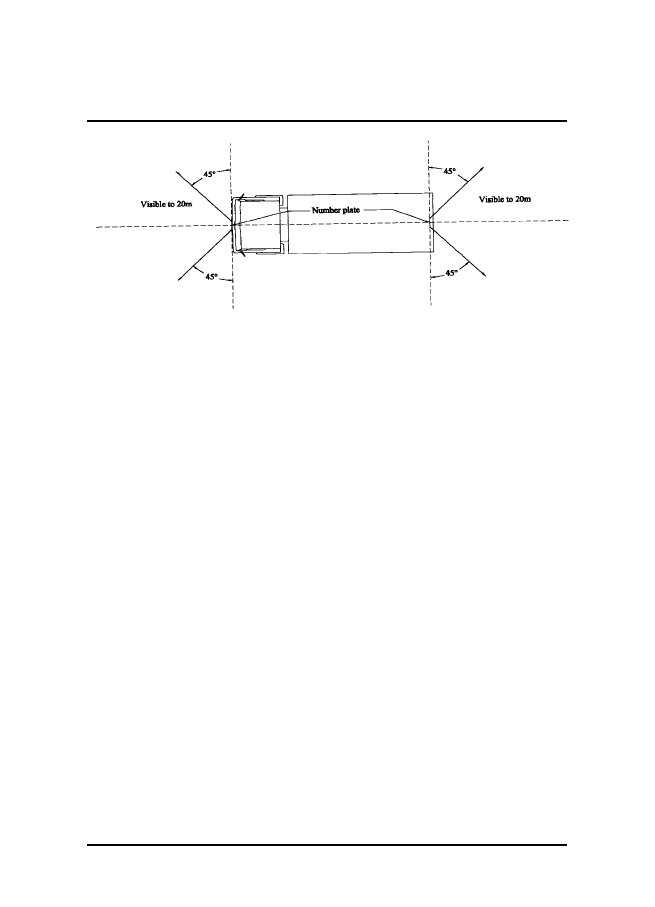
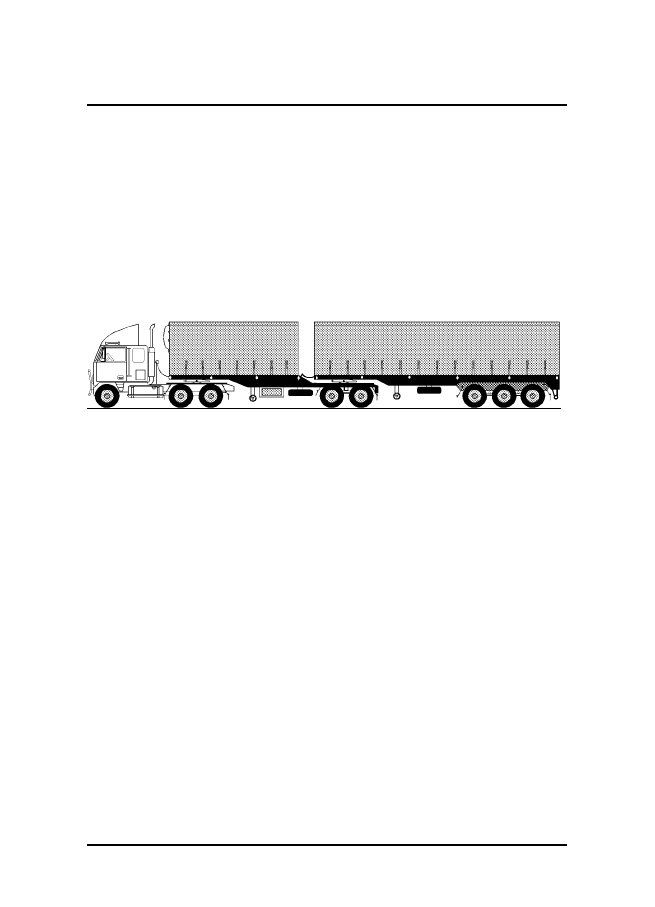
to the vehicle in thewayrequiredundersection31,thecharactersonthenumberplatearevisiblefrom20mawayatanypointwithinanarcof45degreesfromthesurfaceofthenumber plate above or to either side
of the vehicle, in theway shown in figures 1 and 2 at the
end of this section;and(c)any cover on the
number plate—Page 30Reprint 5G
effective 1 July 2010
Transport Operations (Road Use
Management—Vehicle Registration) Regulation 1999Part
3 Vehicle registration[s 24](i)isclear,clean,untintedandflatoveritsentiresurface;
and(ii)has no reflective or other
characteristics that wouldprevent—(A)thesuccessfuloperationofaphotographicdetection device;
or(B)the number plate from being legible;
and(d)thenumberplateisinaclearlylegiblecondition,including being clearly legible from any
position fromwhich it is required to be visible.Maximum penalty—40 penalty units.(1A)Aloadonthevehicleistakentomakethecharactersnotvisible contrary to subsection (1)(b)
if the load—(a)makes the characters not visible or
only partly visible; or(b)obscures the
characters.(2)The registered operator must also
ensure that—(a)if the vehicle has been issued with 2
number plates—1number plate is attached to the front of the
vehicle andthe other to its rear; or(b)ifthevehiclehasbeenissuedwithonly1numberplate—the number plate is attached to its
rear.Maximum penalty—12 penalty units.(3)The registered operator does not
contravene subsection (1)(a)or (b) if—(a)itisnotpracticabletoattachanumberplatetothevehicle in the
way required under subsection (1)(a) or(b) because of
the vehicle’s construction; and(b)the
registered operator attaches the number plate to thevehicleasnearlyaspracticableinthewayrequiredunder
subsection (1)(a) or (b).(4)The registered
operator does not contravene subsection (1)(b)ifthepositionfortherearnumberplateofthevehicle(theReprint 5G effective 1 July 2010Page
31
Transport Operations (Road Use
Management—Vehicle Registration) Regulation 1999Part 3
Vehicle registration[s 24]towingvehicle)isobscuredbyanothervehicle(thetowedvehicle)beingtowedbythetowingvehicleandanyofthefollowing applies—(a)the
towed vehicle is registered under this regulation or acorrespondinglawtothisregulation,anddisplaysitsrear
number plate in the way required under subsection(1)
or under the corresponding law;(b)the
towing vehicle is a tow truck, the towed vehicle isnot
registered under this regulation or a correspondinglaw
to this regulation, and the towed vehicle—(i)displays the towing vehicle’s rear number
plate in away consistent with the requirements of
subsection(1); or(ii)displays an accessory plate for the towing
vehiclein the way required under section
31A(5);(c)the towing vehicle is not a tow truck,
the towed vehicleis an exempt vehicle under section 4(a), (b)
or (l) whenbeing towed by the towing vehicle and the
towed vehicledisplays the towing vehicle’s rear number
plate in a wayconsistentwiththerequirementsofsubsection(1)orunder a corresponding law to this
regulation.(5)In this section—numberplatedoesnotincludeanaccessoryplateissuedunder section
31.photographic detection devicehas
the meaning given by theTransportOperations(RoadUseManagement)Act1995,section
113.Page 32Figure 1Reprint 5G effective 1 July
2010
Transport Operations (Road Use
Management—Vehicle Registration) Regulation 1999Part
3 Vehicle registration[s 25]Figure 225Time for attaching number
plates(1)The registered operator of a vehicle
must attach to the vehicleanumberplateissuedforthevehiclewithin1dayafterreceiving the
number plate.Maximum penalty—12 penalty units.(2)The registered operator of a vehicle
must attach to the vehicleaspecialplatetheregisteredoperatorholdsforthevehiclewithin 1 day
after receiving a registration certificate showingthe
number of the special plate as the registration number ofthe
vehicle.Maximum penalty—12 penalty units.26Q plates(1)A
person must not manufacture a replacement Q plate unlessthe
person—(a)haswrittenapprovalfromthechiefexecutivetomanufacture the plate; and(b)manufactures the plate under the
specifications for theplate stated in the approval.Maximum penalty—12 penalty units.(2)A replacement Q plate manufactured
under subsection (1) istaken to have been issued by the chief
executive.Reprint 5G effective 1 July 2010Page
33
Transport Operations (Road Use
Management—Vehicle Registration) Regulation 1999Part 3
Vehicle registration[s 27](3)In
this section—Q platemeans a number
plate the number of which consists oftheletter‘Q’followedbyatleast1,butnotmorethan6,figures.27Personalised number plates(1)Thechiefexecutivemayissueanumberplateasapersonalised
number plate—(a)on receipt of—(i)an
application in the approved form; and(ii)an
amount determined by the chief executive; or(b)on a
sale at public auction for an amount acceptable tothe
chief executive.(2)When the chief executive issues a
personalised number plate,the chief executive must—(a)assign a registration number;
and(b)record information relating to the
plate in the register;and(c)issue
to the applicant a certificate stating the particularsof
the plate.(3)The right to use the number on a
personalised number plateissued to a person is the property of
the person to whom theplate is issued.(4)A
personalised number plate may be—(a)kept
without being attached to a vehicle; or(b)subject to subsection (5), attached to a
vehicle; or(c)surrendered to the chief executive for
cancellation.(5)Apersonmustnotattachapersonalisednumberplatetoavehicle until the person has—(a)applied to the chief executive in the
approved form; andPage 34Reprint 5G
effective 1 July 2010
Transport Operations (Road Use
Management—Vehicle Registration) Regulation 1999Part
3 Vehicle registration[s 28](b)received a registration certificate showing
the number ofthe personalised number plate as the
registration numberfor the vehicle.Maximum
penalty—12 penalty units.(5A)Apersonalisednumberplatemustbeattachedtoavehicleunder any
directions given by the chief executive.Maximum
penalty—12 penalty units.(6)Thechiefexecutivemustnotissueapersonalisednumberplate
if the number of the plate is identical, or appears to beidentical,tothenumberofanothernumberplatethatiscurrently issued.(7)If a
person surrenders a personalised number plate to the chiefexecutive for cancellation, subsection (3)
no longer applies tothe personalised number plate.28Transfer of personalised number
plate(1)Apersonalisednumberplate,includingtherighttousethenumber on the
personalised number plate, is transferable.(2)A
person to whom a personalised number plate is transferred,includingapersonadministeringanestate,mustwithin14days
after the transfer—(a)notify the chief executive of the
transfer in writing; and(b)pay the relevant
fee.Maximum penalty—16 penalty units.(3)A person must not transfer a
personalised number plate on itsown if it is one
of a pair.Maximum penalty—16 penalty units.29Converting number plate to
personalised number plateA person may, on payment of an amount
decided by the chiefexecutive,applytothechiefexecutivetoconvertanumberplate to a
personalised number plate.Reprint 5G effective 1 July 2010Page
35
Transport Operations (Road Use
Management—Vehicle Registration) Regulation 1999Part 3
Vehicle registration[s 30]30Customised number plates(1)The
registered operator of a vehicle may apply to the chiefexecutivetocustomisethevehicle’snumberplateorapreviously issued number plate.(2)Oncethenumberplatehasbeencustomised,theregisteredoperator
may—(a)keep the number plate without
attaching it to a vehicle;or(b)applytothechiefexecutiveintheapprovedformtoattach it to a
vehicle owned by the registered operator.(3)Apersonmustnotattachacustomisednumberplatetoavehicle unless—(a)thechiefexecutivegivesthepersonaregistrationcertificateshowingthenumberofthecustomisednumber plate as
the registration number for the vehicle;and(b)the customised number plate is
attached to the vehicleunder any directions given by the
chief executive.Maximum penalty—12 penalty units.31Accessory plates(1)This
section applies if the chief executive has issued a specialplate
to a person.(2)The person may apply to the chief
executive for an accessoryplateforanaccessorythatistobeattachedtoavehicletowhich
the special plate may be attached.(3)Theaccessoryplatemustdisplaythesameregistrationnumber as the
special plate.(4)Theapplicationmustbeintheapprovedformandaccompanied by the relevant
fee.(5)Ifthechiefexecutivedecidestoissuetheplate,thechiefexecutive must
issue the plate as soon as convenient after theplate has been
prepared.Page 36Reprint 5G
effective 1 July 2010
Transport Operations (Road Use
Management—Vehicle Registration) Regulation 1999Part
3 Vehicle registration[s 31A](6)Apersonwhoattachesanaccessoryplatetothefrontofavehicle must
attach the plate—(a)at the front of the accessory;
and(b)inawaythatallowstheaccessoryplatetobelegiblefromadistanceofatleast20mfromthefrontoftheaccessory.Maximum
penalty—12 penalty units.(7)Apersonwhoattachesanaccessoryplatetotherearofavehicle must
attach the plate—(a)at the rear of the accessory;
and(b)inawaythatallowstheaccessoryplatetobelegiblefromadistanceofatleast20mfromtherearoftheaccessory.Maximum
penalty—12 penalty units.(8)In this
section—accessorymeans a bike rack
or other device attached to thefront or rear of
a vehicle in a way that—(a)makesthevehicle’sfrontorrearnumberplatenotvisible or only partly visible; or(b)obscures the vehicle’s front or rear
number plate.31AAccessory plate for tow truck(1)The registered operator of a tow truck
may apply to the chiefexecutive for an accessory plate to be
attached to unregisteredvehicles when towed by the tow
truck.(2)Theaccessoryplatemustdisplaythesameregistrationnumber as each
number plate for the tow truck.(3)Theapplicationmustbeintheapprovedformandaccompanied by the relevant
fee.(4)Ifthechiefexecutivedecidestoissuetheplate,thechiefexecutive must
issue the plate as soon as convenient after theplate has been
prepared.Reprint 5G effective 1 July 2010Page
37
Transport Operations (Road Use
Management—Vehicle Registration) Regulation 1999Part 3
Vehicle registration[s 32](5)A
person who attaches an accessory plate for a tow truck to anunregistered vehicle to be towed by the tow
truck must attachit to the rearmost end of the vehicle, as
towed, in a way that isas nearly as practicable in the same
way a number plate wouldbe required to be attached to that end
of the vehicle were it aregistered vehicle.Maximum penalty for subsection (5)—12
penalty units.Division 5Registration
labels32Chief executive to issue registration
labels(1)When a vehicle is registered, the
chief executive must issue alabel for the
vehicle to its registered operator.(2)Thelabelmustbeintheapprovedformandincludethefollowing particulars for the
vehicle—(a)its registration number;(b)its make;(c)its
model or body type, according to which is the moredescriptive;(d)itsVINor,ifthevehicledoesnothaveaVIN,thevehicle’s chassis number or engine
number;(e)the expiry day of its
registration;(f)ifthevehicleisaconditionallyregisteredvehicle,thecodes
for the conditions of use applying to the vehiclethatarestatedontheregistrationcertificateforthevehicle;(g)its
GCM and GVM;(h)the vehicle charging category
code;(i)if the vehicle is a motorbike, other
than a motorbike thatisconditionallyregistered,whetherthevehicleisalearner approved motorbike.Page
38Reprint 5G effective 1 July
2010
Transport Operations (Road Use
Management—Vehicle Registration) Regulation 1999Part
3 Vehicle registration[s 33]33Position for attaching registration
label(1)The registered operator of a vehicle
must attach the vehicle’sregistration label to the
vehicle—(a)so as to be clearly visible from
outside the vehicle; and(b)in a way
complying with subsections (2) to (6).Maximum penalty—6
penalty units.(2)Ifthevehicle isa
motorbike,the labelmustbeplacedinaholder attached to the motorbike on
the left-hand side or rearof the motorbike.(3)If
the vehicle is a trailer that is a category 1 vehicle, the
labelmust be placed to the left-hand side or rear
of the trailer.(4)If the vehicle is a trailer that is a
category 2 vehicle, the labelmust be placed on
or adjacent to the trailer’s number plate.(5)If
the vehicle is other than a vehicle mentioned in subsections(2)
to (4) and has a windscreen, the label must be placed—(a)tothelowerleft-handcornerofthevehicle’swindscreen;
or(b)to a fixed or pivoted window on the
left-hand side of thevehicle.(6)If
the vehicle is other than a vehicle mentioned in subsections(2)
to (4) and does not have a windscreen, the label must beattached, whether or not by a holder, to the
left-hand side ofthe vehicle as near as practicable to the
position mentioned insubsection (5)(a).(7)The
registered operator must take the registration label off thevehicleanddestroyitimmediatelyonthesoonerofthefollowing—(a)the
day another registration label issued for the vehicleis
attached to the vehicle;(b)21 days after the
expiry day of the registration to whichthe registration
label relates.Maximum penalty—6 penalty units.Reprint 5G effective 1 July 2010Page
39
Transport Operations (Road Use
Management—Vehicle Registration) Regulation 1999Part 3
Vehicle registration[s 34]34Time
for attaching registration label(1)The
registered operator of a vehicle must attach the vehicle’sregistration label to the vehicle—(a)for a label issued on initial
registration—within 21 daysafter the application for registration
is made; or(b)foralabelissuedonanapplicationforrenewalofregistration—(i)ifthelabelisissuedbeforetheregistrationexpires—within 21
days after the day on which theregistration
would have expired if it had not beenrenewed;
or(ii)ifthelabelisissuedaftertheregistrationexpires—within21daysaftertheapplicationismade;
or(c)for a replacement label—(i)ifthelabelisissuedonanapplicationforareplacementlabel—within21daysaftertheapplication is made; or(ii)ifthelabelisissuedasanupdatedregistrationlabel—within 21
days after the chief executive isnotifiedofthemattersrequiringtheissueofanupdated registration label.Maximum penalty—6 penalty units.(2)Apersondoesnotcontravenesubsection(1)ifitisnotreasonably practicable to attach the
label within the requiredtime because of a delay by the chief
executive in issuing thelabel.Page 40Reprint 5G effective 1 July
2010
Transport Operations (Road Use
Management—Vehicle Registration) Regulation 1999Part
4 Renewal of registration[s 36]Part 4Renewal of registration36Registration renewal notice(1)Aregistrationrenewalnotice(arenewalnotice)foraregistered vehicle is a notice sent by the
chief executive—(a)addressed to—(i)ifthevehicle’sregisteredoperatorhasgiventhechiefexecutiveawrittendirectiontoaddressthenotice to another person—the person;
or(ii)otherwise—the vehicle’s registered
operator; and(b)stating that, if the vehicle’s
registration is not renewedon or before a stated day, it
expires.(2)However,ifthechiefexecutivedoesnotsend,ortheregisteredoperatordoesnotreceive,arenewalnotice,thenon-receipt of the notice does not
affect—(a)the expiry of the vehicle’s
registration; or(b)theregisteredoperator’sobligationtorenewthevehicle’s registration before it expires, if
the registeredoperator intends to use the vehicle on a
road after theexisting registration expires.37Renewal of registration(1)Avehicle’sregistrationmayberenewedbypresentingtherenewalnotice,orawrittenrequesttorenewthevehicle’sregistration,tothechiefexecutivetogetherwiththefollowing—(a)any
relevant registration fee;(b)anyregistrationadministrationfeeforaconditionallyregistered
vehicle;(c)ifthevehicleisacategory1vehicle,thecategory1vehicle traffic improvement fee;Reprint 5G effective 1 July 2010Page
41
Transport Operations (Road Use
Management—Vehicle Registration) Regulation 1999Part 4
Renewal of registration[s 37](d)if
the vehicle is a category 2 vehicle, other than a trailer,the
category 2 registration administration fee;(e)aninsurancecertificateundertheMotorAccidentInsurance Act 1994for the vehicle
for the proposed termof registration or the insurance
premium payable underthat Act for the certificate;(f)ifthevehicleisaCOIvehicleundertheVehicleStandards and
Safety Regulation, a current certificate ofinspection under
that regulation for the vehicle, but onlyif its owner is
required under that regulation to possess acurrent
certificate of inspection for the vehicle.(2)Thepersonrenewingtheregistrationmustnominatetheregistration term for the vehicle.(3)The registration term must be a term
available under section19 or 37B or permitted under section
20.(4)The registration of a vehicle may be
renewed—(a)ifthevehicleisregisteredforatermpermittedundersection 20—not
more than 1 year after its registrationexpires;
or(b)otherwise—not more than 2 months after
its registrationexpires.(5)Despitesubsection(4),thechiefexecutivemayacceptanapplication for renewal of registration at
any time if the chiefexecutive considers it reasonable in
the circumstances to doso.(6)The
expiry day of a renewed term of registration for a vehiclemust
be worked out as if the renewal had commenced—(a)ifthevehicleisregisteredforatermpermittedundersection 20—on the
first day of the nominated term; or(b)otherwise—onthedayafterthedayrecordedintheregisterastheexpirydayoftheregistrationbeingrenewed.(7)Subsections (4) to (6) do not have the
effect of retrospectivelyregistering a vehicle.Page
42Reprint 5G effective 1 July
2010
Transport Operations (Road Use
Management—Vehicle Registration) Regulation 1999Part
4 Renewal of registration[s 37A](8)If
the period by which a vehicle’s registration may be renewedhas
ended but the registration has not been renewed, the chiefexecutive may, by written notice given to
the person who wasrecordedasthevehicle’sregisteredoperatorbeforetheregistration expired, require the
person to return the vehicle’snumber plates to
the chief executive within 14 days after thenotice is
given.(9)A person of whom a requirement is made
under subsection (8)must not contravene the requirement, unless
the person has areasonable excuse.Maximum
penalty—20 penalty units.(10)Despiteanythinginsubsections(1)to(9),apersonmayrenew
a vehicle’s registration using any of the ways stated inthe
renewal notice for the particular renewal.(11)Despiteanythinginsubsections(1)to(10),thechiefexecutivemayrefuseanapplicationfortherenewaloftheregistration of a vehicle under the
same circumstances, and inthesameway,thatthechiefexecutivemayrefuseanapplication for the registration of a
vehicle under section 14.37AWhen surcharge is
payable for renewal(1)This section applies if—(a)an applicant for renewal of
registration for a vehicle isnotrequiredtopayaCTPinsurancepremiumtothechief executive
under section 37(1)(e) in relation to therenewal;
and(b)the applicant underpays the
registration-related amountfor the renewal by more than
$1.(2)This section also applies if—(a)an applicant for renewal of
registration for a vehicle isrequired to pay a
CTP insurance premium to the chiefexecutiveundersection37(1)(e)inrelationtotherenewal; andReprint 5G
effective 1 July 2010Page 43
Transport Operations (Road Use
Management—Vehicle Registration) Regulation 1999Part 4
Renewal of registration[s 37B](b)the
amount paid by the applicant for the purpose of theregistration-related amount for the renewal
is more than$1 below what the registration-related
amount would beif—(i)the relevant
registration fee payable under section37(1)(a)fortherenewalwerefor1year’sregistration;
and(ii)the CTP insurance premium payable
under section37(1)(e) in relation to the renewal were the
lowestpremiumsetbyanyCTPinsurerforinsurancecovering 1 year’s
registration.(3)Theapplicantundersubsection(1)or(2)mustpaythesurcharge provided for in schedule 3.37BRegistration term if overpayment or
underpayment ofregistration-related amount and any
surcharge(1)This section applies if an applicant
for renewal of registrationfor a vehicle—(a)doesnotpresentaninsurancecertificateundertheMotor Accident Insurance Act
1994for the vehicle forthe proposed term
of registration to the chief executiveunder section
37(1)(e); and(b)overpaysorunderpaysthetotaloftheregistration-relatedamountfortherenewalandanysurcharge payable for the
renewal.(2)Despite section 19, the registration
may be renewed for a termthat is in proportion to the amount
paid after deducting—(a)any surcharge
payable for the renewal; and(b)any
administrative fee for late payment payable for therenewal.(3)However,theregistrationmustnotberenewedundersubsection (2) if
the amount paid is more than $1 below whatthe total of the
registration-related amount for the renewal andany surcharge
payable for the renewal would be if any CTPinsurance
premium, payable under section 37(1)(e) in relationPage
44Reprint 5G effective 1 July
2010
Transport Operations (Road Use
Management—Vehicle Registration) Regulation 1999Part
4 Renewal of registration[s 37C]to the renewal,
for the minimum available registration term forthe vehicle, were
the lowest premium set by any CTP insurer.(4)Also,
if the amount paid is more than the registration-relatedamountfortherenewalthatwouldbepayableiftheregistration were to be renewed for 14
months—(a)thevehicle’sregistrationmayonlyberenewedfor1year; and(b)thedifferencebetweentheamountpaidandtheregistration-related amount for the 1 year
renewal mustbe refunded.(5)Ifthetermofregistrationwould,otherthanforthissubsection, not
be a whole number of days—(a)thetermmustberoundeddowntothenearestwholeday; and(b)the difference between the amount paid
and the total ofthe registration-related amount for the
renewal and anysurchargepayablefortherenewalmustbecreditedtothe applicant.(6)If
subsection (3) applies, the chief executive must refund theamount paid to the applicant.(7)The chief executive must give the
applicant a written noticestating—(a)the
term of registration for the vehicle; or(b)thattheamountpaidisbeingrefundedbecauseitisbelowtheminimumrequiredtoenablerenewalofregistration.37CAdministrative fee for late payment if
chequedishonoured(1)This
section applies if—(a)paymentforpartoralloftheamountpayableforrenewal of registration is made, before the
expiry day ofthe registration, by cheque or other method
of payment;andReprint 5G effective 1 July 2010Page
45
Transport Operations (Road Use
Management—Vehicle Registration) Regulation 1999Part 4
Renewal of registration[s 38](b)the
cheque or payment is not honoured on presentationor is
later dishonoured; and(c)paymentforpartoralloftheamountpayablefortherenewal is made
after the expiry day of the registration.(2)Inapplyingtheadministrativefeeforlatepayment,thepurportedpaymentmadebeforetheexpirydaymustbedisregarded.38Issue
of receipt and updating of records(1)The
renewal of the registration of a vehicle is effective—(a)if the renewal involves the issue of
the chief executive’sreceiptforpaymentbeforetheexpiryofthetermofregistrationbeingrenewed—immediatelyaftertheexpiry of that term; or(b)iftherenewaldoesnotinvolvetheissueofthechiefexecutive’s
receipt for payment but involves transactionsthatarecompletedbeforetheexpiryofthetermofregistration being renewed, including on the
day of theexpiry—immediately after the expiry of that
term; or(c)if the renewal involves the issue of
the chief executive’sreceiptforpaymentaftertheexpiryofthetermofregistrationbeingrenewed—ontheissueofthechiefexecutive’s
receipt for payment; or(d)iftherenewaldoesnotinvolvetheissueofthechiefexecutive’s
receipt for payment but involves transactionsthatarecompletedaftertheexpiryofthetermofregistrationbeingrenewed—onthecompletionofthetransactions.(3)If
the chief executive renews the registration of a vehicle,
thechief executive must—(a)update the records for the vehicle in the
register; and(b)issue to the registered
operator—(i)an updated registration certificate;
and(ii)a registration label.Page
46Reprint 5G effective 1 July
2010
Transport Operations (Road Use
Management—Vehicle Registration) Regulation 1999Part
5 Transfer of registration[s 39](4)Subsection (3)(b)(ii) applies only if the
vehicle is a vehicle forwhich a registration label is required
to be issued when thevehicle is registered.Part
5Transfer of registration39Transfer of registration(1)A
person who buys or otherwise acquires, a registered vehiclemust
apply to the chief executive for transfer of the vehicle’sregistration within 14 days after acquiring
it.Maximum penalty—16 penalty units.(2)Theapplicationmustbeintheapprovedformandaccompaniedbythefollowing,totheextenttheyareapplicable—(a)the
relevant fee;(b)any other amounts due, including fees
payable for therenewal of the vehicle’s
registration;(c)the duty payable under theDuties Act 2001;(d)a gas certificate for each gas system
in the vehicle;(e)ifthepurchaseorotheracquisitionoftheregisteredvehicleisadisposalforwhich,undertheVehicleStandardsandSafetyRegulation,acurrentinspectioncertificateisrequired,acurrentinspectioncertificateunder that
regulation for the vehicle.(3)However,
subsection (2)(a) to (c) does not apply to a transferlodged under subsection (7).(4)Adealerwhoacquiresaregisteredvehiclemustnotifythechief
executive of the acquisition in the approved form within14
days after the acquisition.Maximum penalty—16 penalty
units.Reprint 5G effective 1 July 2010Page
47
Transport Operations (Road Use
Management—Vehicle Registration) Regulation 1999Part 5
Transfer of registration[s 39](5)Allamountspayableundersubsection(2)(a)and(c)arepayable by the
person who acquires a vehicle from the day oftransfer
appearing in the application form.(6)If a
person who acquires a registered vehicle can not find outthe
full name and address of the person who sold or disposedof
the vehicle or obtain the signature of the person who sold
ordisposedofthevehicleonanapprovedform,thepersonacquiringthevehiclemustgiveawrittenstatementtothateffect to the chief executive.(7)If a person (thedisposer)
disposes of a registered vehicle tosomeoneelse(theacquirer)andreasonablybelievestheacquirerhasnotappliedfortransferofthevehicle’sregistrationwithin14daysafteracquiringit,thedisposermay—(a)apply in the approved form for
transfer of the vehicle’sregistration to the acquirer;
or(b)give notice (adisposal
notice) to the chief executive, intheapprovedform,ofthedisposer’sdisposaltotheacquirer.(8)Thechiefexecutive,onreceiptofanapplicationundersubsection (1) or (7)(a), or a notification
under subsection (4),or on being satisfied as to the
correctness of the informationcontained in a
statement received under subsection (6), may—(a)record in the register the day of the
transfer appearing inthe approved form; and(b)substitute the name and address of the
person acquiringthe vehicle for those of the registered
operator recordedin the register; and(c)issue
an updated registration certificate.(9)Onreceiptofadisposalnoticeundersubsection(7)(b),thechief
executive may—(a)record in the register the day of
disposal stated in thenotice; andPage 48Reprint 5G effective 1 July
2010
Transport Operations (Road Use
Management—Vehicle Registration) Regulation 1999Part
5 Transfer of registration[s 40](b)substitute the name and address of the
acquirer of thevehicle for those of the registered operator
recorded inthe register; and(c)bywrittennoticegiventotheacquirer,requiretheacquirer to apply for transfer of the
vehicle’s registrationwithin 14 days after the notice is
given.(10)The acquirer must not contravene the
requirement mentionedinsubsection(9)(c)unlesstheacquirerhasareasonableexcuse.Maximum penalty—16 penalty units.(11)If the chief executive acts under
subsection (9), the person inwhosenamethevehicleisregisteredorrecordedintheregisterunderadisposalnoticeistakentobethevehicle’sregistered operator for this regulation
until the chief executivereceives notice of the transfer or
disposal of a vehicle.40Failure by dealer
to apply for transfer of registration(1)This
section applies if—(a)aperson(thebuyer)buysorotherwiseacquiresaregistered vehicle from a dealer;
and(b)the dealer accepts from the buyer an
amount mentionedin section 39(2)(a), (b) or (c).(2)The dealer must, within 14 days after
the buyer’s acquisitionofthevehicle,applytothechiefexecutiveonthebuyer’sbehalf for
transfer of the vehicle’s registration.Maximum
penalty—16 penalty units.(3)The buyer does
not contravene section 39(1) if an applicationis not made to
the chief executive for transfer of the vehicle’sregistration within 14 days after the
buyer’s acquisition of thevehicle.Reprint 5G
effective 1 July 2010Page 49
Transport Operations (Road Use
Management—Vehicle Registration) Regulation 1999Part 5
Transfer of registration[s 41]41Transfer of registration under legal
process(1)Apersonwhoobtainsaregisteredvehicleunderalegalprocess must
notify the chief executive in the approved formwithin 14 days
after obtaining the vehicle.Maximum
penalty—16 penalty units.(2)Apersonwhorepossessesaregisteredvehiclethatisnotredeemed within 28 days after the
repossession must, within afurther7days,notifythechiefexecutiveintheapprovedform.Maximum
penalty—16 penalty units.(3)A person
mentioned in subsection (1) or (2) (thenew owner)who can not obtain the signature of
the vehicle’s registeredoperator on the approved form, must
give a written statementto that effect to the chief
executive.(4)Subsection (5) applies if the chief
executive is satisfied—(a)the information
contained in a statement received undersubsection (3) is
correct; and(b)the new owner has a lawful entitlement
to the vehicle.(5)The chief executive may—(a)record the day of the transfer
appearing in the approvedform in the register; and(b)substitute the new owner’s name and
address for thoseof the registered operator recorded in the
register; and(c)give the new registered operator an
updated registrationcertificate.(6)A
notification in the approved form under subsection (1) or(2)mustbeaccompaniedbytheamounts,andbythedocuments, that
would be required under section 39(2) werethe notification
an application for a transfer of the vehicle’sregistration.Page 50Reprint 5G effective 1 July
2010
Transport Operations (Road Use
Management—Vehicle Registration) Regulation 1999Part
6 Expiry and cancellation of registration[s 42]42Refusing to register transfer of
registration(1)Thechiefexecutivemayrefusetoregisteratransferofavehicle’s registration if—(a)thevehicleisaconditionallyregisteredvehicleandaconditioninthesafemovementguidelineisthattheregistration is
not transferable; or(b)thechiefexecutivereasonablybelievesthereisuncertainty about the ownership,
possession or controlof the vehicle or that the description
of the vehicle asrecorded in the register may be inaccurate;
or(c)were the vehicle to be the subject of
an application forregistration,thechiefexecutivewouldrefusetheapplication.(2)If an
order of an Australian court prohibits the transfer of avehicle’s registration and the chief
executive has notice of theorder, the chief executive must not
register a transfer of theregistration.(3)Subsections(1)and(2)donotlimitthechiefexecutive’spowertorefusetoregisterthetransferofavehicle’sregistration.Part 6Expiry and cancellation ofregistrationDivision 1Expiry of registration43Expiry of registrationA vehicle’s
registration expires at the end of the day recordedin
the register as the expiry day of the registration unless
theregistrationissoonercancelledorrenewedunderthisregulation.Reprint 5G
effective 1 July 2010Page 51
Transport Operations (Road Use
Management—Vehicle Registration) Regulation 1999Part 6
Expiry and cancellation of registration[s 44]44Return of registration plates when
registration expires(1)The chief executive may by written
notice given to the personwhowastheregisteredoperatorofavehiclewhoseregistrationhasexpired,requirethepersontoreturnthevehicle’s number plates to the chief
executive within 14 daysof the date of the notice (thereturn period).(2)The person must, within the return
period—(a)return the vehicle’s number plates to
the chief executive;or(b)if the plates
have been lost, stolen or destroyed, notifythe chief
executive in writing of the details of the loss,theft
or destruction.Maximum penalty—20 penalty units.Division 2Cancellation of
registration45Cancellation of registration at
registered operator’srequest(1)The
registered operator of a vehicle may apply to the chiefexecutive to cancel the vehicle’s
registration if—(a)the registered operator of the vehicle
is a dealer, and thevehicle is for sale; or(b)the
vehicle—(i)has been stolen; or(ii)has been taken out of the State;
or(iii)has ceased to be
used on roads; or(iv)is a total loss.(1A)The
application must be made in the approved form.(1B)If
cancellation is applied for under subsection (1)(b)(iv), theapprovedformmustincludeastatementbyorfortheapplicant that the vehicle has not been used
on a road since itbecame a total loss.Page 52Reprint 5G effective 1 July
2010
Transport Operations (Road Use
Management—Vehicle Registration) Regulation 1999Part
6 Expiry and cancellation of registration[s 45](2)Also, a person acting under the
authority of a court to sell avehiclemayapplytothechiefexecutivetocancelthevehicle’s registration.(3)Iftheapplicationofaperson(theapplicant)tocancelavehicle’s registration is made by another
person on behalf ofthe applicant, the other person must give
the chief executivewrittenevidenceoftheotherperson’sappointment,astheregistered operator’s agent, with the
application.(4)Ifapersonactingundertheauthorityofacourttosellavehicle applies
to the chief executive to cancel the vehicle’sregistration, the
person must give the chief executive, with theapplication,
written evidence of the person’s authority to sellthe
vehicle.(5)A person applying under subsection (1)
or (2) must includewith the application—(a)if
the registration label or a number plate has been lost,stolen or destroyed—each item that has not
been lost,stolen or destroyed, and a statement
advising of the loss,theft or destruction of the other item
or items; or(b)ifparagraph(a)doesnotapply—theregistrationlabeland
each number plate for the vehicle.(5A)Also,
if the vehicle is a total loss, the person must include withthe
application the notifiable information for the vehicle theperson would have been required to give the
chief executiveunder section 55J.(6)Thechiefexecutivemustcancelthevehicle’sregistrationunless—(a)the applicant has not complied with
subsection (3), (4),(5) or (5A); or(b)the
chief executive is already taking action to cancel theregistration because of a ground existing
under section47 or 48.Reprint 5G
effective 1 July 2010Page 53
Transport Operations (Road Use
Management—Vehicle Registration) Regulation 1999Part 6
Expiry and cancellation of registration[s 45A]45ACancellation if registration in other
StateThe chief executive may cancel a vehicle’s
registration otherthanonaperson’sapplicationifthechiefexecutiveknowsthat the vehicle
has been registered in another State under acorresponding law
to this regulation.46Partial refund of registration
fee(1)Thissectionappliesifavehicle’sregistrationiscancelledunder section 45
or 45A.(2)Thechiefexecutivemustmakeapartialrefundoftheregistration fee paid for the vehicle
to the person who was theregistered operator immediately before
the cancellation.(3)The refund is worked out using the
following formula—refund=-n---u---m-----b----e3--r-6---5o---f----d---a---y---s-annual registration feewhere—number of daysis the number of
unexpired whole days of theregistration term for which the fee
was paid, from the day onwhich the chief executive approves the
application to cancelthe registration.(4)However, the chief executive may deduct from
the refund—(a)anamountdecidedbythechiefexecutivetocoverreasonable
administrative costs; and(b)anyunpaidfeespayableunderatransportActforthevehicle.47Cancellation for noncompliance with
defect notice(1)Agroundexiststocanceltheregistrationofaregisteredvehicle
if—(a)a defect notice is issued under the
Vehicle Standards andSafety Regulation for the vehicle;
andPage 54Reprint 5G
effective 1 July 2010
Transport Operations (Road Use
Management—Vehicle Registration) Regulation 1999Part
6 Expiry and cancellation of registration[s 47](b)thevehicle’sregisteredoperatorcontravenestherequirements of the defect notice;
and(c)thechiefexecutivegivestheregisteredoperatorawritten notice (thewarning notice) stating that a
groundwillexisttocancelthevehicle’sregistrationundersection 19 of the Act at the end of 14 days
after the dateof the warning notice if the registered
operator does not,within that time—(i)comply with the defect notice; or(ii)askthechiefexecutivetocancelthevehicle’sregistration;
and(d)thechiefexecutiveissatisfiedthattheregisteredoperator has not
complied with all the requirements ofthedefectnoticewithinthe14daysmentionedinparagraph (c); and(e)the
registered operator has not asked the chief executiveto
cancel the vehicle’s registration.(2)If
the chief executive decides to cancel the registration undersection 19(2)(c) of the Act, the chief
executive must includein the written notice given under
section 19(3) of the Act arequirement that the person
(therelevant person) to whom
thenotice is directed must return the vehicle’s
registration labeland number plates to the chief executive
within 14 days afterthe giving of the notice (thereturn period).(3)Therelevantpersonmustreturnthevehicle’sregistrationlabelandnumberplatestothechiefexecutivewithinthereturn period.Maximum
penalty—20 penalty units.(4)However, if the
registration label or a number plate has beenlost,stolenordestroyed,therelevantpersondoesnotcontravene
subsection (3) in relation to the registration labelornumberplateiftherelevantperson,withinthereturnperiod, notifies
the chief executive in writing of the details ofthe
loss, theft or destruction.Reprint 5G
effective 1 July 2010Page 55
Transport Operations (Road Use
Management—Vehicle Registration) Regulation 1999Part 6
Expiry and cancellation of registration[s 48]48Cancellation of registration of
vehicle or dealer plate(1)This section
applies if—(a)avehicledoesnotconformwiththerequirementsapplyingtothevehicleunderavehiclelawabouttheconstruction,equipmentandperformanceofmotorvehicles;
or(b)theregisteredoperatorofavehicledoesnotcomplywith a notice
given under section 39(9)(c); or(c)the
registration or renewal of registration of a vehicle ordealerplateispaidforbyacheque,orbyanothermethodofpayment,thatisnothonouredonpresentation,andthechiefexecutivehasnotyetreceived full payment for the registration
or renewal; or(d)lessthanthecorrectamountispaidinrelationtothepayment for registration, or renewal
of registration, of avehicle or dealer plate, and the chief
executive has notyet received the unpaid amount; or(e)avehicleisrecordedintheregisterasawritten-offvehicle;
or(f)the application for the registration
of a vehicle or dealerplatewasnotaccompaniedbyadocumentrequiredundersection11(1)inrelationtoavehicleorsection52(3) in relation
to a dealer plate.(2)If this section applies in relation to
a vehicle, a ground existsto cancel the registration of the
vehicle.(3)Ifthechiefexecutivedecidestocancelthevehicle’sregistrationundersection19(2)(c)oftheAct,thechiefexecutivemustincludeinthewrittennoticegivenundersection19(3)oftheActarequirementthattheperson(therelevant person) to whom the
notice is directed must returnthe vehicle’s
registration label and number plates to the chiefexecutivewithin14daysafterthegivingofthenotice(thereturn period).Page
56Reprint 5G effective 1 July
2010
Transport Operations (Road Use
Management—Vehicle Registration) Regulation 1999Part
6 Expiry and cancellation of registration[s 48](4)Therelevantpersonmustreturnthevehicle’sregistrationlabelandnumberplatestothechiefexecutivewithinthereturn period.Maximum
penalty—20 penalty units.(5)However, if the
registration label or a number plate has beenlost,stolenordestroyed,therelevantpersondoesnotcontravene
subsection (4) in relation to the registration labelornumberplateiftherelevantperson,withinthereturnperiod, notifies
the chief executive in writing of the details ofthe
loss, theft or destruction.(6)If this section
applies in relation to a dealer plate, a groundexists to cancel
the registration of the dealer plate.(7)If
the chief executive decides to cancel the registration of
thedealerplateundersection19(2)(c)oftheAct,thechiefexecutivemustincludeinthewrittennoticegivenundersection19(3)oftheActarequirementthattheperson(thedealerplateholder)towhomthenoticeisdirectedmustreturn the dealer plate to the chief
executive within 14 daysafter the giving of the notice
(thedealer plate return period).(8)Thedealerplateholdermustreturnthedealerplatetothechief executive
within the dealer plate return period.Maximum
penalty—30 penalty units.(9)However, if the
dealer plate has been lost, stolen or destroyed,the
dealer plate holder does not contravene subsection (8) ifthe
dealer plate holder, within the dealer plate return period,notifies the chief executive in writing of
the details of the loss,theft or destruction.(10)Nothinginthissectionstopsthechiefexecutivefromrecovering from the relevant person or
dealer plate holder anamount, worked out on a proportional
basis, of any amountforregistrationreferabletotheperiodendingonthecancellation.(11)Section56oftheActdoesnotapplytoaregistration,orrenewal of registration, of a vehicle or
dealer plate.Reprint 5G effective 1 July 2010Page
57
Transport Operations (Road Use
Management—Vehicle Registration) Regulation 1999Part 6
Expiry and cancellation of registration[s 49]49Recording cancellation of registration
in register(1)If the chief executive cancels a
vehicle’s registration, the chiefexecutive must
record the cancellation in the register.(2)Iftheregisteredoperatorappliedforthecancellationundersection 45(1)(a) or (b)(iii), the
cancellation is effective on theday of receipt of
the application conforming with that section.(3)Iftheregisteredoperatorappliedforthecancellationundersection45(1)(b)(i),thecancellationiseffectiveonthedayafter the vehicle
is reported as stolen to the police service.(3A)Iftheregisteredoperatorappliedforthecancellationundersection45(1)(b)(iv),thecancellationiseffectiveonthedayafterthedaythevehiclestoppedbeingusedonroadsasaresult of it having become a total
loss.(4)Iftheregisteredoperatorappliedforcancellationundersection 45(1)(b)(ii), the cancellation is
effective on the day ofreceipt of the application conforming
with that section.(5)However,ifonanapplicationundersubsection45(1)(b)(ii)the chief
executive is satisfied the vehicle has been registeredin
another State under a corresponding law to this regulation,thecancellationistakentobeeffectiveonthedayimmediatelyafterthedaythevehiclewasregisteredintheother State.(6)Ifthechiefexecutivecancelsavehicle’sregistrationundersection 45A, the cancellation is taken to be
effective on theday immediately after the day the vehicle
was registered in theother State.(7)If
none of subsections (2) to (6) applies, the cancellation iseffectiveonthedaythechiefexecutiverecordsthecancellation in the register.Page
58Reprint 5G effective 1 July
2010
Transport Operations (Road Use
Management—Vehicle Registration) Regulation 1999Part
7 When registration unnecessary[s 50]Part
7When registration unnecessaryDivision 1Unregistered
vehicle permits50Unregistered vehicle permits(1)The chief executive may authorise the
use of an unregisteredvehicle on a road by issuing an
unregistered vehicle permit forthe
vehicle.(2)An applicant for the permit must apply
to the chief executivein the approved form, accompanied
by—(a)the relevant fee; and(b)aninsurancecertificateundertheMotorAccidentInsurance Act 1994for the vehicle
for the proposed termof the permit.(3)The
chief executive may issue the permit for the term, whichmustnotbelongerthan7days,andonthereasonableconditions, stated in it.(4)If the permit is issued on conditions,
it is void if the conditionsare
contravened.(5)Apersontowhomanunregisteredvehiclepermitisissuedmust ensure that,
whenever the vehicle is being used under thepermit on a
road—(a)ifthevehicleisamotorbike or a vehicle that may
beconditionallyregistered—the
drivercarriesthepermit;or(b)ifthevehicleisatrailer—thepermitiscarriedinthevehicle towing the trailer; or(c)otherwise—the permit is attached to
the vehicle in theway required under section 33 as if it were
a registrationlabel.Maximum
penalty—12 penalty units.Reprint 5G effective 1 July 2010Page
59
Transport Operations (Road Use
Management—Vehicle Registration) Regulation 1999Part 7
When registration unnecessary[s 51](6)Thechiefexecutivemaynotissueanunregisteredvehiclepermit for a vehicle that—(a)does not conform with a vehicle law;
or(b)is recorded in the register, or in a
register kept under acorrespondinglawtothisregulation,asawritten-offvehicle.Division 2Dealer
plates51Designation of dealer platesThe
chief executive may designate a series of number platesas
dealer plates.52Registration of dealer plate(1)An unregistered vehicle may be used on
a road if—(a)a dealer plate is attached to the
vehicle; and(b)the registration of the dealer plate
is current.(2)The chief executive must not register
a dealer plate unless thechief executive is satisfied that the
person in whose name thedealer plate is to be registered is a
person who requires theplate for the conduct of the person’s
business.(3)Anapplicantforadealerplatemustapplytothechiefexecutive in the
approved form, which must be accompaniedby—(a)the relevant fee; and(b)aninsurancecertificateundertheMotorAccidentInsurance Act 1994for the proposed
registration term ortheinsurancepremiumpayableunderthatActforthecertificate.(4)On
registering the dealer plate, the chief executive must—(a)assign a registration number;
andPage 60Reprint 5G
effective 1 July 2010
Transport Operations (Road Use
Management—Vehicle Registration) Regulation 1999Part
7 When registration unnecessary[s 53](b)record in the register the following
particulars—(i)thename,addressandplaceofbusinessoftheperson to whom the plate has been
issued;(ii)commencementandexpirydaysfortheregistration of
the dealer plate; and(c)give the
applicant—(i)a registration certificate; and(ii)the dealer plate; and(iii)a registration
label for the dealer plate.(5)Theregistrationofadealerplateisrenewable,butisnottransferable.(6)In
this section—unregistered vehicledoes not include
a vehicle that—(a)is not capable of being registered
under this regulation;or(b)isonlycapableofbeingconditionallyregisteredwithlimited access registration or zone
access registration.53Attaching dealer plate(1)The person in whose name a dealer
plate is registered mustensurethatwhenanunregisteredvehicleisusedundertheauthority of the dealer plate on a
road—(a)the registration label for the dealer
plate is attached tothe dealer plate; and(b)thedealerplateisattachedtothevehicleinthewayrequired under
subsection (2).Maximum penalty—12 penalty units.(2)The plate must be attached to the
vehicle in the way requiredif the dealer plate were a number
plate issued for the vehicle.(3)Subsection (1)(a) does not apply if—Reprint 5G effective 1 July 2010Page
61
Transport Operations (Road Use
Management—Vehicle Registration) Regulation 1999Part 7
When registration unnecessary[s 54](a)fewer than 14 days have elapsed since
the dealer platewasregistered,orthedealerplate’sregistrationwasrenewed, in the person’s name; and(b)thepersonhasnotyetreceivedtheregistrationlabelfrom
the chief executive.54Use of dealer plates(1)Apersonmustnotuse,orpermittobeused,onaroad,avehicle with a dealer plate attached to it
unless the vehicle—(a)is being demonstrated for its sale;
or(b)is being delivered to a purchaser
after sale; or(c)is travelling to or from a workshop or
another facilityfor—(i)painting, repairs
or motor body construction work;or(ii)the fitting of optional equipment
before delivery toa purchaser; or(d)is
being tested after having been painted or repaired, orafter
having been the subject of motor body constructionwork;
or(e)isbeingusedfordemonstrationpurposesfortheconductofanartunionundertheCharitableandNon-Profit Gaming Act 1999;
or(f)isbeingusedforapurposeapprovedbythechiefexecutiveinawrittennoticegiventothepersoninwhose
name the dealer plate is registered; or(g)isbeingdrivenortowedtoanAISundertheVehicleStandardsandSafetyRegulationforinspectionforobtaining an inspection certificate under
that regulation;or(h)is recorded in
the register as a repairable write-off and isbeing driven or
towed to a written-off vehicle inspectionsite for
obtaining a written-off vehicle inspection report;orPage 62Reprint 5G
effective 1 July 2010
Transport Operations (Road Use
Management—Vehicle Registration) Regulation 1999Part
7 When registration unnecessary[s 54](i)is being driven or towed to a place as
required by thechief executive; or(j)isbeingdrivenortowedtoanofficeofthechiefexecutive to be
registered; or(k)isbeingdrivenortowedfromthemanufactureroradistributor of the vehicle to a
dealer; or(l)isbeingdrivenortowedbetweenadealer’spremiseswhere
vehicles are sold or displayed for sale and otherpremises,ofthesameoradifferentdealer,wherevehicles are sold
or displayed for sale, whether or not asale has taken
place.Maximum penalty—16 penalty units.(2)Apersonmustnotuse,orpermittobeused,onaroad,avehicle with a dealer plate, other than a
dealer (trailer trade)plate, attached to it if the vehicle
is carrying a load or towing avehiclecarryingaload,unlessthevehiclewiththedealerplate
attached—(a)is a boat trailer carrying a boat;
or(b)is towing a motor vehicle travelling
on its rear wheelsonly,withitsfrontportionmountedonthetowingvehicle;
or(c)is carrying the load only to
demonstrate the vehicle forits sale, and not for hire or
reward.Maximum penalty—40 penalty units.(3)Apersonmustnotuse,orpermittobeused,onaroad,avehicle with a dealer (trailer trade) plate
attached to it unlessthe vehicle is—(a)a
trailer not carrying a load; or(b)is a
boat trailer, carrying 1 or more boat trailers, beingtowed
from the manufacturer or a distributor of all thetrailers to a dealer; or(c)a
boat trailer carrying a boat; orReprint 5G
effective 1 July 2010Page 63
Transport Operations (Road Use
Management—Vehicle Registration) Regulation 1999Part 7
When registration unnecessary[s 55](d)a trailer carrying a load only to
demonstrate the trailerfor its sale, and not for hire or
reward.Maximum penalty—40 penalty units.(4)Apersonmustnotuse,orpermittobeused,onaroad,avehicle with a dealer plate attached to it
unless the person inwhose name the dealer plate is registered
has authorised theperson to use the dealer plate or to permit
another person touse the dealer plate.Maximum
penalty—16 penalty units.(5)Apersonmustnotuse,orpermittobeused,onaroad,avehicle with a dealer plate attached to it
unless the vehicle isusedintheconductofthebusinessofthepersoninwhosename the dealer
plate is registered.Maximum penalty—16 penalty units.(6)In this section—dealer (trailer
trade) platemeans a dealer plate issued underthis
division authorising the use of an unregistered trailer on aroad.55Cancellation of dealer plates(1)Thechiefexecutivemaycanceltheregistrationofadealerplate, and record
the cancellation in the register, if the personin whose name the
plate is registered—(a)appliesinwritingtothechiefexecutiveforthecancellation;
and(b)unlessthepersonhasnotifiedthechiefexecutiveinwriting of details of the loss, theft
or destruction of thedealerplate—returnsthedealerplatetothechiefexecutive.(2)Subsection (3) applies if either of the
following events (therelevant event) happens in
relation to a person in whose namea dealer plate is
registered—(a)the person stops carrying on the
business for which theplate was registered;Page
64Reprint 5G effective 1 July
2010
Transport Operations (Road Use
Management—Vehicle Registration) Regulation 1999Part
7 When registration unnecessary[s 55](b)there is a material change in the
nature of the person’sbusiness from that stated in the
person’s application forthe registration of the plate.(3)Thepersonmust,within14daysaftertherelevanteventhappens—(a)notify the chief executive in writing about
the relevantevent; and(b)return the dealer plate to the chief
executive.Maximum penalty—30 penalty units.(4)Onreceivinganotificationundersubsection(3),thechiefexecutive must
cancel the registration of the dealer plate andrecord in the
register the cancellation of the registration.(5)A
ground exists to cancel the registration of a dealer plate if
aperson required to comply with subsection
(3) does not notifythe chief executive under the
subsection.(6)If, the chief executive decides to
cancel the registration of adealerplateundersection19(2)(c)oftheAct,thechiefexecutivemustincludeinthewrittennoticegivenundersection19(3)oftheActarequirementthattheperson(therelevant person) to whom the
notice is directed must, unlessthe relevant
person has already done so, return the dealer plateto
the chief executive within 14 days after the giving of thenotice.(7)The
relevant person must comply with the requirement undersubsection (6).Maximum
penalty—30 penalty units.(8)Ifadealerplaterequiredtobereturnedundersubsection(3)(b) or (7)
(therelevant provision) has been lost,
stolen ordestroyed,thepersonrequiredtoreturntheplatedoesnotcontravene the relevant provision if
the person, in the periodwithinwhichthedealerplateisrequiredtobereturned,notifies the
chief executive in writing of the details of the loss,theft
or destruction.(9)Thecancellationoftheregistrationofadealerplateiseffective—Reprint 5G
effective 1 July 2010Page 65
Transport Operations (Road Use
Management—Vehicle Registration) Regulation 1999Part
7A Written-off vehicles[s 55A](a)foracancellationundersubsection(1)—immediatelythe person has
complied with the subsection; or(b)otherwise—onthedaythechiefexecutiverecordsthecancellation in the register.Part
7AWritten-off vehiclesDivision 1Objects of part 7A55AObjectsThe objects of
this part include—(a)toprovideforthecollectionofinformationaboutwritten-off vehicles; and(b)to provide for the inspection of
written-off vehicles thatare repairable write-offs.Division 2Notifying of
written-off vehicleinformation55BGeneral obligations of notifiers(1)Thechiefexecutivemayrequireanotifierrequiredtogivenotifiableinformationforawritten-offvehicleunderthisregulationtogivetothechiefexecutiveinformationintheapproved form.(2)Theinformationthechiefexecutivemayrequireundersubsection(1)mustbeinformationthechiefexecutivereasonably considers is required to maintain
the integrity ofinformationaboutwritten-offvehicleskeptbythechiefexecutive in the
register.Page 66Reprint 5G
effective 1 July 2010
Transport Operations (Road Use
Management—Vehicle Registration) Regulation 1999Part
7A Written-off vehicles[s 55C](3)The
notifier must comply with a requirement given under thissection.Maximum penalty
for subsection (3)—20 penalty units.55CAuditing of notifiers(1)Thechiefexecutivemustconductauditsofnotifiers’operationsasgiversofnotifiableinformationaboutwritten-off vehicles under this
regulation.(2)Anotifiermustallowthenotifier’soperationsasagiverofnotifiable information to be audited
by the chief executive.Maximum penalty—20 penalty
units.(3)Ifthereportofanauditunderthissectionidentifiesnoncompliance with this regulation, the
chief executive may,by written notice given to the notifier,
require the notifier togive the chief executive, within 14
days after the date of thenotice,anoticesignedbythenotifierstatingtheactionthenotifierhastakentodoeitherorbothofthefollowing,asdirected in the chief executive’s
notice—(a)rectify the non-compliance;(b)ensurethatthenon-compliancedoesnotcontinueorhappen again.(4)Thenotifiermustcomplywiththerequirement,unlessthenotifier has a reasonable
excuse.Maximum penalty—20 penalty units.(5)In a proceeding against the notifier
for an offence against thisregulation,otherthanforanoffenceagainstsubsection(4),neither the notice given by the notifier,
nor the fact that thenotifier gave the notice, can be used
in evidence against thenotifier.(6)If an
audit report identifies material non-compliance with thisregulation, the notifier must pay the cost
of the audit and ofcompiling the audit report, but is not
otherwise required to paythe cost.Reprint 5G
effective 1 July 2010Page 67
Transport Operations (Road Use
Management—Vehicle Registration) Regulation 1999Part
7A Written-off vehicles[s 55D]55DObligation of notifiers to give notifiable
information(1)A notifier must give notifiable
information for a vehicle to thechief
executive—(a)in the approved form; or(b)if the notifier obtains the chief
executive’s approval togive the notifiable information in an
electronic form—inthe electronic form.(2)A
notifier may change details of the notifiable information
fora vehicle given to the chief executive only
if—(a)the vehicle has not been repaired;
and(b)the vehicle has not left the
notifier’s possession since thenotifier gave the
information to the chief executive.(3)Anotifiermustnotknowinglyorrecklesslygivenotifiableinformation for a
vehicle to the chief executive that is false ormisleading in a
material particular.Maximum penalty for subsection (3)—80
penalty units.55EObligation of insurer to report
written-off vehicle(1)This section applies if an insurer, in
the course of the businesscarried on by the insurer in the
State, and whether or not onthe advice of a
loss adjuster—(a)assessesasatotallossanotifiablevehicleregisteredunder this
regulation; or(b)assessesasatotallossanotifiablevehiclethatisanywhere in
Australia, but is not registered under thisregulation or a
corresponding law to this regulation.(2)Theinsurermustgivethechiefexecutivethenotifiableinformationforthevehiclebeforethefirstofthefollowinghappens—(a)7 days elapse after the insurer makes
a final decision fora claim in relation to the vehicle;(b)the insurer—Page 68Reprint 5G effective 1 July
2010
Transport Operations (Road Use
Management—Vehicle Registration) Regulation 1999Part
7A Written-off vehicles[s 55F](i)disposes of the vehicle; or(ii)disposesofanypartofthevehiclethathasachassis number or
VIN; or(iii)sells the
vehicle; or(iv)sellsanypartofthevehiclethathasachassisnumber or VIN.Maximum penalty for subsection (2)—50
penalty units.55FObligation of self-insurer to report
written-off vehicle(1)This section applies if a
self-insurer—(a)assessesasatotallossanotifiablevehicleregisteredunder this
regulation in the name of the self-insurer; or(b)assessesasatotallossanotifiablevehiclethatisanywhere in
Australia and is owned by the self-insurer,butisnotregisteredunderthisregulationoracorresponding law to this
regulation.(2)The self-insurer must give the chief
executive the notifiableinformationforthevehiclebeforethefirstofthefollowinghappens—(a)7 days elapse after making the
assessment;(b)the self-insurer—(i)disposes of the vehicle; or(ii)disposesofanypartofthevehiclethathasachassis number or
VIN; or(iii)sells the
vehicle; or(iv)sellsanypartofthevehiclethathasachassisnumber or VIN.Maximum penalty
for subsection (2)—50 penalty units.Reprint 5G
effective 1 July 2010Page 69
Transport Operations (Road Use
Management—Vehicle Registration) Regulation 1999Part
7A Written-off vehicles[s 55G]55GObligation of loss adjuster to report
written-off vehicle(1)This section applies if a loss
adjuster, acting in the course ofthe business
carried on by the loss adjuster, but acting otherthan
to advise an insurer, auctioneer or dealer—(a)assessesasatotallossanotifiablevehicleregisteredunder this
regulation; or(b)assesses as a total loss a notifiable
vehicle that is in theState,butisnotregisteredunderthisregulationoracorresponding law to this
regulation.(2)The loss adjuster must give the chief
executive the notifiableinformation for the vehicle within 7
days after finalising theloss adjuster’s assessment of the
vehicle.Maximum penalty for subsection (2)—50
penalty units.55HObligation of dealer or auctioneer to
report written-offvehicle(1)Thissectionappliesifapersonwhoisadealeroranauctioneer,inthecourseofthebusinesscarriedonbytheperson, has in the person’s
possession—(a)a notifiable vehicle, registered under
this regulation, thatis a total loss; or(b)a notifiable vehicle, not registered
under this regulationor a corresponding law to this
regulation, that is a totalloss.(2)Thepersonmustgivethechiefexecutivethenotifiableinformationforthevehiclebeforethefirstofthefollowinghappens—(a)7dayselapseafterthepersontakespossessionofthevehicle;(b)the
auctioneer or dealer—(i)disposes of the
vehicle; or(ii)disposesofanypartofthevehiclethathasachassis number or
VIN; orPage 70Reprint 5G
effective 1 July 2010
Transport Operations (Road Use
Management—Vehicle Registration) Regulation 1999Part
7A Written-off vehicles[s 55I](iii)sells
the vehicle; or(iv)sellsanypartofthevehiclethathasachassisnumber or VIN.Maximum penalty—50 penalty units.(3)Thepersonisnotrequiredtoactundersubsection(2)ifsomeone else has already given the
notifiable information forthe vehicle to the chief
executive.(4)In this section—possessionincludes custody
or control.55IObligation of auto parts dismantler to
report written-offvehicle(1)Thissectionappliesifapersonwhoisanautopartsdismantler,inthecourseofthebusinesscarriedonbytheperson—(a)assessesasatotallossanotifiablevehicleregisteredunder this
regulation; or(b)assesses as a total loss a notifiable
vehicle that is in theState,butisnotregisteredunderthisregulationoracorresponding law to this
regulation.(2)Thepersonmustgivethechiefexecutivethenotifiableinformationforthevehiclebeforethefirstofthefollowinghappens—(a)7dayselapseafterthepersontakespossessionofthevehicle;(b)the
person—(i)demolishes or dismantles the vehicle;
or(ii)disposes of the vehicle; or(iii)disposesofanypartofthevehiclethathasachassis number or VIN; or(iv)sells the vehicle; orReprint 5G effective 1 July 2010Page
71
Transport Operations (Road Use
Management—Vehicle Registration) Regulation 1999Part
7A Written-off vehicles[s 55J](v)sellsanypartofthevehiclethathasachassisnumber or VIN.Maximum
penalty—50 penalty units.(3)Thepersonisnotrequiredtoactundersubsection(2)ifsomeone else has
already given the information to the chiefexecutive.(4)Despitesubsection(3),thepersonmustgivethechiefexecutivethenotifiableinformationforthevehicleondemolishing or dismantling the
vehicle.55JObligation of registered operator or
owner ofunregistered vehicle to report written-off
vehicle(1)Thissectionappliesifaperson,otherthanaself-insurer,proposes to sell
or otherwise dispose of a notifiable vehicle, ora
part of a notifiable vehicle that has an identifying number,and—(a)the vehicle is a
total loss; and(b)either—(i)the
person is the registered operator of the vehicle;or(ii)the vehicle is
not registered under this regulation ora corresponding
law to this regulation, the personis the owner of
the vehicle and the vehicle is in theState.(2)Thepersonmustgivethechiefexecutivethenotifiableinformation for
the vehicle, in the approved form, before—(a)disposing of the vehicle; or(b)disposing of any part of the vehicle
that has a chassisnumber or VIN; or(c)selling the vehicle; or(d)selling any part of the vehicle that has a
chassis numberor VIN.Maximum
penalty—10 penalty units.Page 72Reprint 5G
effective 1 July 2010
Transport Operations (Road Use
Management—Vehicle Registration) Regulation 1999Part
7A Written-off vehicles[s 55K](3)Despitesubsection(2),thepersonisnotrequiredtostatewhetherthevehicleisarepairablewrite-offorastatutorywrite-off.(4)Thechiefexecutiveistakentohavebeennotifiedthatthevehicleisarepairablewrite-offunlesssomeoneelsehasalready—(a)giventhenotifiableinformationforthevehicletothechief executive; and(b)stated that the vehicle is a statutory
write-off.(5)Thepersonisnotrequiredtoactundersubsection(2)ifsomeone else has already given the
information to the chiefexecutive.55KNotifier’s obligation to tell registered
operator or owner(1)This section applies if—(a)a notifier gives the notifiable
information for a notifiablevehicle to the
chief executive under this part; and(b)the
notifier is not the registered operator or the owner ofthe
vehicle.(2)The notifier must tell the registered
operator of the vehicle or,ifthevehicleisnotregisteredunderthisregulationoracorresponding law to this regulation,
the owner of the vehicle,thatthenotifierhasgiventheinformationtothechiefexecutive.Maximum penalty for subsection (2)—10
penalty units.55LObligation on notifiers to attach
written-off vehicle labelto written-off vehicle(1)This section applies if a notifier
gives notifiable informationfor a notifiable
vehicle to the chief executive under this part.(2)The
notifier must, in accordance with subsections (3) to (6),on
giving the information to the chief executive, attach to theReprint 5G effective 1 July 2010Page
73
Transport Operations (Road Use
Management—Vehicle Registration) Regulation 1999Part
7A Written-off vehicles[s 55M]vehicle a label
that meets the chief executive’s specificationsfor the
vehicle.Maximum penalty—30 penalty
units.(3)Thelabelmuststatewhetherthevehicleisarepairablewrite-off or a
statutory write-off.(4)If the label states that the vehicle
is a repairable write-off, thelabelmustalsostatethatarepairablewrite-offcanberegistered under this regulation only
if it passes a written-offvehicle inspection.(5)If the label states that the vehicle
is a statutory write-off, thelabelmustalsostatethatastatutorywrite-offcannotberegistered under
this regulation.(6)Thelabelmustbeattachedtothevehicleinaconspicuousposition so as to
be clearly visible from outside the vehicle.Examples of when
a label is not attached in a conspicuous position—•label attached to
back seat•label attached to vehicle floor55MObligation on registered operator or
owner to attachwritten-off vehicle label to written-off
vehicle(1)This section applies if the registered
operator or the owner ofanotifiablevehiclegivesthenotifiableinformationforthevehicle to the chief executive under
this part.(2)Theregisteredoperatororownermust,inaccordancewithsubsection(3),attachalabelintheapprovedformtothevehicle.Maximum penalty—30 penalty
units.(3)The label must—(a)beattachedtothevehiclewithin24hoursaftertheperson gives the information to the
chief executive; and(b)be attached to the vehicle in a
conspicuous position so asto be clearly visible from outside the
vehicle.Page 74Reprint 5G
effective 1 July 2010
Transport Operations (Road Use
Management—Vehicle Registration) Regulation 1999Part
7A Written-off vehicles[s 55N]Examples of when
a label is not attached in a conspicuous position—•label attached to
back seat•label attached to vehicle floor55NOffence to remove written-off vehicle
labelA person must not remove from a vehicle a
label attached tothe vehicle under this part while the
vehicle is recorded in theregisterasawritten-offvehicle,unlessthepersonhasareasonable excuse.Maximum penalty—30 penalty units.55OWritten-off vehicles must not be used
on road(1)Apersonmustnotuse,orpermittobeused,onaroadavehiclethatisrecordedintheregister,orinaregisterkeptunderacorrespondinglawtothisregulation,asastatutorywrite-off.Maximum penalty—20 penalty units.(2)Apersonmustnotuse,orpermittobeused,onaroadavehicle that is—(a)registeredunderthisregulationorunderacorresponding law to this regulation;
and(b)recordedintheregister,orinaregisterkeptunderacorrespondinglawtothisregulation,asarepairablewrite-off.Maximum penalty—20 penalty units.(3)A person does not commit an offence
against subsection (2) ifthe vehicle is being driven or towed
to—(a)anAISundertheVehicleStandardsandSafetyRegulationforinspectionforobtaininganinspectioncertificate under
that regulation; or(b)awritten-offvehicleinspectionsiteforobtainingawritten-off vehicle inspection report, but
only if there isReprint 5G effective 1 July 2010Page
75
Transport Operations (Road Use
Management—Vehicle Registration) Regulation 1999Part
7A Written-off vehicles[s 55P]a current
inspection certificate for the vehicle under theVehicle Standards and Safety Regulation;
or(c)another place as required by the chief
executive.Examples for paragraph (c)—•a place for
inspecting by the Queensland Police Service•a
place for road testing by an inspection station•a
place for having an identifying number stampedDivision 3Written-off vehicle inspections55PDefinition for div 3In
this division—approvalmeans an approval
of a person as—(a)an approved written-off vehicle
examiner; or(b)an approved written-off vehicle
nominee.55QApprovals(1)The
chief executive may grant a person an approval.(2)Apersonmayapplytothechiefexecutiveintheapprovedform
for an approval.(3)Thechiefexecutivemustconsideranapplicationforanapproval within 28 days after it is
received and decide eitherto—(a)grant
the approval; or(b)refuse to grant the approval.(4)If the chief executive decides an
applicant is a suitable personforanapproval,thechiefexecutivemust,promptlyaftermaking the
decision, grant the approval.Page 76Reprint 5G effective 1 July
2010
Transport Operations (Road Use
Management—Vehicle Registration) Regulation 1999Part
7A Written-off vehicles[s 55R]55RConditions of approvalAnapprovalmaybegrantedsubjecttoconditions,including—(a)for an approval of a person as an
approved written-offvehicle examiner—(i)aconditionthattheapprovedwritten-offvehicleexaminermayonlyperformwritten-offvehicleinspections while employed or otherwise
engagedbyanentitycontractedbythechiefexecutivetooperate a written-off vehicle
inspection site; and(ii)conditions about the way the approved
written-offvehicle examiner is to perform written-off
vehicleinspections; or(b)for
an approval of a person as an approved written-offvehicle nominee—(i)aconditionthattheapprovedwritten-offvehiclenomineemayonlysupervisethedaytodayrunningofwritten-offvehicleinspectionswhileemployedorotherwiseengagedbyanentitycontractedbythechiefexecutivetooperateawritten-off vehicle inspection site;
and(ii)conditions about the way the approved
written-offvehiclenomineeistosupervisethedaytodayrunning of written-off vehicle
inspections.55SRefusing to grant approval(1)If the chief executive decides to
refuse to grant the approval,the chief
executive must give written notice to the applicant ofthe
decision promptly after making the decision.(2)The
notice must state—(a)the reasons for the refusal;
and(b)that the person may ask for the
decision to be reviewedunder section 66.Reprint 5G
effective 1 July 2010Page 77
Transport Operations (Road Use
Management—Vehicle Registration) Regulation 1999Part
7A Written-off vehicles[s 55T]55TApproval prescribed for the Act, ss 17B(2)
and18(1)(c)(ii)Anapprovalunderthisdivisionisprescribedforsections17B(2) and
18(1)(c)(ii) of the Act.Division 4Offences
relating to written-offvehicle inspections55UPerforming written-off vehicle
inspection when notapprovedApersonmustnotperform,orpurporttoperform,awritten-off vehicle inspection unless the
person is an approvedwritten-off vehicle examiner.Maximum penalty—80 penalty units.55VSupervising written-off vehicle
inspections when notapprovedApersonmustnotsupervise,orpurporttosupervise,therunning of written-off vehicle inspections
unless the person isan approved written-off vehicle
nominee.Maximum penalty—80 penalty units.55WNot complying with conditions of
approvalA person holding an approval must comply
with all conditionsstated in the approval.Maximum
penalty—80 penalty units.55XFalse or
misleading written-off vehicle inspection reportA
person must not knowingly or recklessly give a written-offvehicleinspectionreporttoanotherpersonthatisfalseormisleading in a material
particular.Maximum penalty—80 penalty units.Page
78Reprint 5G effective 1 July
2010
Transport Operations (Road Use
Management—Vehicle Registration) Regulation 1999Part
7A Written-off vehicles[s 55Y]55YOperating place as a written-off vehicle
inspection siteA person must not operate, or purport to
operate, a place as awritten-offvehicleinspectionsiteunlessthepersoniscontractedbythechiefexecutivetooperatetheplaceasawritten-off vehicle inspection
site.Maximum penalty—80 penalty units.55ZPerforming written-off vehicle
inspection at place otherthan written-off vehicle inspection
siteAn approved written-off vehicle examiner
must not perform awritten-offvehicleinspectionataplaceotherthanaplaceoperatedbyapersoncontractedbythechiefexecutivetooperate the place as a written-off vehicle
inspection site.Maximum penalty—80 penalty units.55ZASupervising written-off vehicle
inspections at place otherthan written-off vehicle inspection
siteAn approved written-off vehicle nominee must
not supervisethe running of written-off vehicle
inspections at a place otherthanaplaceoperatedbyapersoncontractedbythechiefexecutivetooperatetheplaceasawritten-offvehicleinspection site.Maximum
penalty—80 penalty units.55ZBFalse advertising
or holding outApersonmustnotfalselyadvertiseorholdoutthataparticularplaceisaplacewherewritten-offvehicleinspections may be performed.Maximum penalty—80 penalty units.Reprint 5G effective 1 July 2010Page
79
Transport Operations (Road Use
Management—Vehicle Registration) Regulation 1999Part 8
General[s 56]Part 8GeneralDivision 1Other provisions about numberplates and other items56Replacement registration items(1)Thissectionappliesifaregistrationitemforaregisteredvehicle has been damaged, destroyed, lost or
stolen.(2)The registered operator of the vehicle
must apply to the chiefexecutiveinwritingforareplacementitemwithin14daysafter discovering the item has been
damaged, destroyed, lostor stolen.Maximum penalty—6
penalty units.(3)Anapplicationforareplacementnumberplatemustbeaccompanied by—(a)the
relevant plate fee; and(b)either—(i)forthereplacementofadamagednumberplate—the damaged number plate; or(ii)for the replacement of a destroyed,
lost or stolennumberplate—awrittenstatementgivingdetailsof
the loss, theft or destruction.(4)On
receipt of the application, the chief executive may—(a)record in the register—(i)the day the application was received;
and(ii)the damage, destruction, loss or theft
of the item;and(b)issue a
replacement or updated registration item.(5)Iftheapplicationisforthereplacementofanumberplate,untilthereplacementnumberplateisissued,theregisteredPage 80Reprint 5G effective 1 July
2010
Transport Operations (Road Use
Management—Vehicle Registration) Regulation 1999Part
8 General[s 57]operatormustattachanyremainingplatetotherearofthevehicle.Maximum penalty—12 penalty units.(6)The registration item being replaced
ceases to be effective ontheissueofthereplacementregistrationitem,andthereplacement
registration item becomes the current registrationlabel
or number plate for the vehicle.(7)The
person must immediately return to the chief executive anitemthatwasaregistrationitemifthepersonrecoverstheitem
after the chief executive has issued a replacement itemfor
it.Maximum penalty—20 penalty units.(8)In this section—registration
itemmeans—(a)a
current registration label; or(b)a
number plate.57Chief executive may require exchange
of number plates(1)This section applies if the chief
executive—(a)considers the number displayed on a
number plate for avehicle is obscene or indecent; or(b)changes the specifications to which a
number plate for avehicle is manufactured.(2)Thechiefexecutivemay,bywrittennoticegiventotheregisteredoperatorofthevehicle,requiretheregisteredoperatortoreturnthenumberplatetothechiefexecutivewithinthetimestatedinthenoticetobeexchangedforanother number plate.(3)Thenoticemuststatethechiefexecutive’sreasonforrequiring the return of the original
plate.(4)The registered operator must not
contravene the requirementunless the person has notified the
chief executive in writingthat the original plate has been lost,
stolen or destroyed.Reprint 5G effective 1 July 2010Page
81
Transport Operations (Road Use
Management—Vehicle Registration) Regulation 1999Part 8
General[s 58]Maximum
penalty—20 penalty units.(5)The chief
executive must record the exchange of the plate inthe
register.58Chief executive may require return of
number plates(1)Thissectionappliesifthechiefexecutivereasonablybelieves—(a)anumberplateisbeingused,orhasbeenused,incontravention of this regulation; or(b)anumberplatewasissuedasthenumberplateforalimousine or taxi
and the limousine or taxi is no longeroperating under
the licence issued under theTransportOperations (Passenger Transport) Act
1994.(2)The chief
executive may, by written notice, require the personto
whom the number plate was issued to return the plate to thechief
executive within 14 days of the date of the notice (thereturn period).(3)Thepersonmustreturnthenumberplatetothechiefexecutive within the return period.Maximum penalty—20 penalty units.(4)However,ifthenumberplatehasbeenlost,stolenordestroyed, the person does not contravene
subsection (3) if theperson, within the return period,
notifies the chief executive inwriting of the
details of the loss, theft or destruction.(5)The
chief executive must record the return of the number platein
the register.(6)If this section applies because of
subsection (1)(b)—(a)the chief executive may, in the
written notice given to apersonundersubsection(2),alsorequirethatthenumber plate, when returned, be
exchanged for a newnumber plate; and(b)ifthenumberplateisnotreturnedwithinthereturnperiod,thechiefexecutivemayissueareplacementnumber plate for
the limousine or taxi.Page 82Reprint 5G
effective 1 July 2010
Transport Operations (Road Use
Management—Vehicle Registration) Regulation 1999Part
8 General[s 59](7)The
number plate being replaced ceases to be effective on theissue
of the replacement number plate, and the replacementnumberplatebecomesthecurrentnumberplateforthevehicle.59Property in number plates(1)Anumberplateissuedbythechiefexecutiveremainstheproperty of the State.(2)Subsection (1) applies even if the
right to use the number inthe number plate is the property of
the person to whom theplate was issued.Division 2Vehicles temporarily in Queensland60Vehicles temporarily in
Queensland(1)This section applies to a vehicle if
the vehicle—(a)does not have a garage address in
Queensland or has hadagarageaddressinQueenslandfornotmorethan14days; and(b)is to
be used on a road; and(c)either—(i)the vehicle is registered in—(A)anotherStateunderacorrespondinglawtothis regulation; or(B)a foreign country under a law of the
countryabouttheregistrationofvehiclesusedonroads; or(ii)the
vehicle is not registered in a way mentioned insubparagraph (i),
but may be used on a road underanauthorityorpermitinforceunderalawofanotherStaterelatingtotheuseofunregisteredvehicles,
including a law relating to dealer plates.Reprint 5G
effective 1 July 2010Page 83
Transport Operations (Road Use
Management—Vehicle Registration) Regulation 1999Part 8
General[s 60](2)The
vehicle may be used on a road if—(a)thevehiclecarriesanddisplaysallnumberplatesandregistration labels it is required to
carry and display inthe way required by the law—(i)for a vehicle mentioned in subsection
(1)(c)(i)—ofthe other State or foreign country;
or(ii)for a vehicle mentioned in subsection
(1)(c)(ii)—ofthe other State; and(b)foravehiclementionedinsubsection(1)(c)(ii)—thevehicle is used
in accordance with the relevant authorityor permit, so far
as it is capable of being applied to theuse of the
vehicle outside the other State; and(c)the
vehicle is insured—(i)foravehicleregisteredinaforeigncountry—under theMotor Accident
Insurance Act1994; or(ii)foravehicleregisteredin,orusedunderanapprovalissuedby,anotherState—underacontract of insurance made under a law of
the Statesimilar to theMotor Accident
Insurance Act 1994.(3)The owner or
person in charge of the vehicle must ensure thatwhen
the vehicle is used on a road the owner or person is abletoproduceforinspectionondemandbyanauthorisedofficer—(a)foravehicleregisteredinaforeigncountry—anoverseas vehicle
permit issued under subsection (6); or(b)otherwise—the approval to use the vehicle
under the lawof the other State.Maximum penalty—8
penalty units.(4)Ifthevehicleisavehiclementionedinsubsection(1)(c)(i)(B), an
owner or person in charge of the vehicle whois temporarily in
Australia may apply to the chief executivefor an overseas
vehicle permit for the vehicle.Page 84Reprint 5G effective 1 July
2010
Transport Operations (Road Use
Management—Vehicle Registration) Regulation 1999Part
8 General[s 61](5)Theapplicationmustbeintheapprovedformandaccompanied by the relevant
fee.(6)The chief executive may issue the
permit only if the owner orperson satisfies the chief executive
that—(a)the vehicle is—(i)registered in a foreign country; and(ii)temporarily in Queensland; and(b)theownerorpersonhasinsuredthevehicleundersubsection(2)(c)(i)andwillcontinuetocomplywithsubsection (2)(a)(i).(7)Acategory2vehicle’sgarageaddressistakentobeanaddress in
Queensland if the vehicle is used continuously inQueensland for more than 3 months.Division 3Other
miscellaneous provisions61Sale of
unregistered vehicles by dealers(1)Adealermustnotdeliveranunregisteredvehicletoapurchaser, other
than another dealer, on the sale of the vehicleunlessanapplicationtoregisterthevehicleunderthisregulation has been made.Maximum penalty—40 penalty units.(2)However, the dealer does not
contravene subsection (1) if thedealer obtains a
written statement from the purchaser that—(a)the
vehicle is not to be used on a road; or(b)the
vehicle’s garage address will not be in Queensland.(3)Ifthevehicleisdeliveredundersubsection(2),thedealermust keep the
statement for atleast 1 year after the day ofdelivery of the vehicle to the
purchaser.Maximum penalty—8 penalty units.Reprint 5G effective 1 July 2010Page
85
Transport Operations (Road Use
Management—Vehicle Registration) Regulation 1999Part 8
General[s 62]62Authorisation to use unregistered vehicle on
roads(1)A person may apply in writing to the
chief executive for anauthorisation to use on a road an
unregistered vehicle, or classof unregistered
vehicle, including a vehicle or class of vehiclethat
does not conform with the requirements applying to thevehicle or class under a vehicle law.(2)Thechiefexecutivemaygranttheauthorisationonlyifthechief executive
is satisfied the use of the vehicle, or class ofvehicle, on the road would not—(a)adversely affect road safety;
or(b)inconvenience other road users.(3)Before granting the authorisation, or
as a condition of it, thechiefexecutivemayrequiretheapplicanttopaythechiefexecutive’s costs or estimated costs of the
following—(a)assessing the vehicle’s route and
preparing the relevantplans and estimates;(b)preparingandstrengtheningroadtransportinfrastructure on
the route;(c)repairing,replacingorreconstructingroadtransportinfrastructure on
the route;(d)ensuringcompliancewithaconditionoraproposedcondition of the authorisation.(4)The authorisation must be in writing
and state the followingparticulars—(a)the
vehicle or the class of vehicles to which it applies;(b)the roads where the vehicle may be
used;(c)the term, not longer than 5 years, for
which it is issued;(d)the conditions, if any, on which it is
issued.(5)Iftheauthorisationisissued on conditions, it is void if
theconditions are contravened.Page
86Reprint 5G effective 1 July
2010
Transport Operations (Road Use
Management—Vehicle Registration) Regulation 1999Part
8 General[s 63]63Permit to use intercepted unregistered
vehicle on road(1)This section applies if an authorised
officer finds on a road—(a)a stationary
unregistered vehicle; or(b)an unregistered
vehicle that has been stopped under—(i)section 31 or 32 of the Act; or(ii)thePolice Powers
and Responsibilities Act 2000.(2)The authorised officer may issue a
permit authorising the useofthevehicleonroadstomoveittoastatedplaceiftheofficer
has—(a)issued an infringement notice under
theState PenaltiesEnforcement Act
1999for a contravention of section 10;or(b)completed a
report for dealing with the contravention ata later
time.(3)The permit must—(a)be in
the approved form; and(b)state the term,
not longer than 24 hours, for which it isissued;
and(c)state the conditions, if any, on which
it is issued; and(d)state—(i)ifsubsection(2)(a)applies—thenumberoftheinfringement
notice; or(ii)if subsection (2)(b) applies—that the
contraventionofsection10istobedealtwithatalatertimeeither by issuing an infringement
notice under theState Penalties Enforcement Act 1999or by
takinga proceeding by complaint and summons under
theJustices Act 1886.(4)If the permit is issued on a
condition, it is void if the conditionis
contravened.Reprint 5G effective 1 July 2010Page
87
Transport Operations (Road Use
Management—Vehicle Registration) Regulation 1999Part 8
General[s 64]64Damaged or dirty number plates(1)This section applies if a vehicle’s
number plate is—(a)damaged and not legible; or(b)dirty and not legible.(2)Anauthorisedofficermay,bywrittennoticegiventotheregistered operator of the vehicle, or
to a person in charge ofthe vehicle, require the registered
operator to—(a)foradamagednumberplate—applytothechiefexecutive,withinthetimestatedinthenotice,forareplacement number plate under section
56; or(b)for a dirty number plate—(i)clean the number plate; and(ii)bringthevehicletothechiefexecutivetobeinspected, within
the time stated in the notice.(3)If
the person to whom the notice is given is not the registeredoperator of the vehicle, the person to whom
the notice is givenmust immediately give the notice to the
registered operator ofthe vehicle, unless the person has a
reasonable excuse.Maximum penalty—6 penalty units.(4)Theregisteredoperatormustnotcontravenearequirementundersubsection(2)unlesstheregisteredoperatorhasareasonable
excuse.Maximum penalty—6 penalty units.(5)Despite anything else in this
regulation a person who uses, orpermits to be
used, a vehicle on a road when a number platerequired under
this regulation to be attached to the vehicle isnot
attached to the vehicle does not commit an offence if—(a)the number plate is damaged;
and(b)an authorised officer, acting under
subsection (2)(a), hasgiventheregisteredoperatorofthevehicleawrittennotice directing
the registered operator to apply to thechiefexecutiveforareplacementnumberplateundersection 56; andPage 88Reprint 5G effective 1 July
2010
Transport Operations (Road Use
Management—Vehicle Registration) Regulation 1999Part
8 General[s 65](c)thedamagednumberplateandthewrittennoticearebeing carried in the vehicle;
and(d)the vehicle is being driven to a place
for the purpose ofapplying,attheplace,tothechiefexecutiveforareplacement
number plate under section 56.Division 4Review of decisions65Decision to which this division
applies(1)This division applies to a decision of
the chief executive madeunder this regulation if the decision
is one of the following—(a)a decision not to
register a vehicle, other than a vehiclethat is a
statutory write-off;(b)adecisionnottorenewtheregistrationofavehicle,other than a
vehicle that is a statutory write-off;(c)a
decision not to register the transfer of the registrationof a
vehicle;(d)a decision not to authorise the use of
a vehicle on a roadunder an unregistered vehicle permit;(e)adecisiontorefuseanoverseasvehiclepermitforavehicle;(f)adecisiontorefusetograntanapprovaltoapersonunder part 7A,
division 3;(g)a decision to refuse to approve a
motorbike as a learnerapproved motorbike.(2)This division also applies to a
decision of the chief executivemadeunderthisregulationifthedecisionistorefuseanauthorisation under section 62 to use on a
road a vehicle or aclass of vehicles.Reprint 5G
effective 1 July 2010Page 89
Transport Operations (Road Use
Management—Vehicle Registration) Regulation 1999Part 8
General[s 66]66Review of decisions(1)Sections 65 and 65A of the Act apply to a
division 4 decisionas if a reference to an original decision in
the sections were areference to the division 4 decision.(2)In this section—division4decisionmeans a decision
to which this divisionapplies as mentioned in section
65.Division 5Release of
information67Definitions for div 5In
this division—clientuser,ofapublicaccessprovider,meansalawyer,insurance
company, insolvency entity or statutory entity—(a)who
has entered into a public access agreement with apublic access provider; and(b)who has been approved by the chief
executive, before orafterthecommencementofthissection,asasuitableentity to obtain
extracts from the register of informationabout vehicles,
using on-line computer access; and(c)whoseapprovalasasuitableentityhasnotbeenwithdrawn.eligible personmeans—(a)an involved person; or(b)a statutory entity; or(c)the registered operator of a vehicle
seeking informationfrom the register about the vehicle;
or(d)a safety recall agency; or(e)a person seeking information from the
register about avehiclewiththewrittenconsentoftheregisteredoperator of the vehicle; orPage
90Reprint 5G effective 1 July
2010
Transport Operations (Road Use
Management—Vehicle Registration) Regulation 1999Part
8 General[s 67](f)an
insolvency entity.give, in relation to information, includes
allowing a person toobtain the information.history
certificatesee section 67A.insolvency
entitymeans an entity exercising powers—(a)undertheBankruptcyAct1966(Cwlth)inrelationtobankruptcy; or(b)under
the provisions of the Corporations Act relating toexternal administration.interstateregistermeansaregisterkeptbyanotherStateunder
a corresponding law to this regulation.involved
personmeans a person who proposes to
commence,or has commenced, litigation.litigationmeans a
proceeding, or a proposed proceeding, in acourt for which
information in the register about a particularvehicle is, or
may be, of relevance, but only if—(a)the
proceeding is about—(i)an incident on a road or somewhere
else involvingthe vehicle; or(ii)thebankruptcyorpossiblebankruptcyoftheregisteredoperatorofthevehicle,ortheapplication,orthepossibleapplication,totheregistered operator of the vehicle, of
the provisionsoftheCorporationsActrelatingtoexternaladministration;
or(iii)fraudulentactivitiesoftheregisteredoperatorofthe vehicle; or(b)the
proceeding is before the Family Court of Australiaand
involves the registered operator of the vehicle; or(c)inthecourseoftheproceeding,thecourtdecidesinformation about the registered operator of
the vehicleisrequired,including,forexample,tohelptofinalisethe
proceeding.Reprint 5G effective 1 July 2010Page
91
Transport Operations (Road Use
Management—Vehicle Registration) Regulation 1999Part 8
General[s 67]Page 92NEVDISmeansthedatabaseknownasthe‘NationalExchange of Vehicle and Driver Information
System’ that—(a)isoperatedunderanarrangementamongQueenslandand other States;
and(b)containsinformationaboutvehiclesanddriversfromregisterskeptbytheStatesparticipatinginthearrangement.personalinformation,aboutavehicle’scurrentorpreviousregistered
operator, means—(a)the person’s name and address;
and(b)any information that may identify the
person.public access providermeans—(a)the chief executive; or(b)apersonwhohasenteredintoanagreementwiththechiefexecutivetoprovideon-linecomputeraccesstothe register to entities approved by
the chief executive.safetyrecallagencymeansavehiclemanufacturerconductinganationalvehiclesafetyrecallprogramwhorequiresdetailsfromtheregistertoidentifytheregisteredoperators of
particular vehicles.status certificatesee section
67B.statutory entitymeans—(a)a local government or other entity
established under astatuteenforcingalawaboutvehiclesorabouttheparking of vehicles in an area under its
control; or(b)anentityhavinglawfulaccess,underanotherAct,orunderadministrativearrangementsapprovedbythechief executive,
to details kept by the chief executive inthe
register.vehiclerelatedinformation,aboutavehicle,meansinformationaboutthevehiclefromtheregister,orfromaninterstateregisterthatisavailabletothechiefexecutivethrough NEVDIS, but does not include—Reprint 5G effective 1 July
2010
Transport Operations (Road Use
Management—Vehicle Registration) Regulation 1999Part
8 General[s 67A](a)foravehiclecurrentlyrecordedintheregisterorinterstate register as a written-off
vehicle—(i)personalinformationaboutacurrentorpreviousregistered
operator of the vehicle; or(ii)informationaboutanotifierthathasgivennotifiable
information for the vehicle; or(iii)informationaboutthelocationof,ortheseverityof,
damage to the vehicle; or(b)foravehiclenotcurrentlyrecordedintheregisterorinterstateregisterasawritten-offvehicle,personalinformationaboutacurrentorpreviousregisteredoperator of the vehicle.vehicle related
information providersee section 68A(1).67AMeaning ofhistory
certificate(1)Ahistorycertificateisacertificateissuedbythechiefexecutive showing information stated in
subsection (2) about avehicle if—(a)the
vehicle is or was manufactured on or after 1 January1989;
and(b)thevehicleisregisteredinQueensland,orwasregistered in Queensland and is not
currently registeredin any State.(2)Forsubsection(1),theinformationisthefollowingvehiclerelatedinformationaboutthevehicletotheextenttheinformation is included in the
register—(a)the day the vehicle was first
registered and the day ofany subsequent registration of the
vehicle;(b)thedayofeachtransferofthevehicle’sregistration,other than a
transfer from a dealer to another dealer;(c)the
vehicle’s engine number and odometer reading at thetime
of each registration of the vehicle and each transferof
the vehicle’s registration, other than a transfer from adealer to another dealer;Reprint 5G effective 1 July 2010Page
93
Transport Operations (Road Use
Management—Vehicle Registration) Regulation 1999Part 8
General[s 67B](d)each
purpose the vehicle is or has been used for;(e)whether the vehicle is or was recorded as a
written-offvehicleand,ifso,therelevantdayandwhetherthevehicle was a repairable write-off or
statutory write-off;(f)the day of each cancellation of the
vehicle’s registration;(g)a postcode
indicating the usual place the vehicle is orwas kept or the
registered operator of the vehicle lives orlived,orapostcodeotherwiseassociatedwiththevehicle;(h)theinformationthatwouldbeincludedinastatuscertificateforthevehicleifthestatuscertificatewereissued at the time of issuing the history
certificate;(i)anyothervehiclerelatedinformationdecidedbythechief
executive.67BMeaning ofstatus
certificate(1)Astatuscertificateisacertificateissuedbythechiefexecutive showing information stated in
subsection (2) about avehicle if—(a)the
vehicle is or was manufactured on or after 1 January1989;
and(b)the vehicle—(i)is
registered in Queensland or another State; or(ii)was
registered in Queensland or another State andis not currently
registered in any State.(2)Forsubsection(1),theinformationisthefollowingvehiclerelated information to the extent the
information is included intheregisteroraninterstateregisteravailabletothechiefexecutive through NEVDIS—(a)the State in which the vehicle is or
was registered;(b)the vehicle’s registration
number;(c)the vehicle’s VIN, make, model, engine
number, bodyshape, colour, year of manufacture, seating
capacity andPage 94Reprint 5G
effective 1 July 2010
Transport Operations (Road Use
Management—Vehicle Registration) Regulation 1999Part
8 General[s 67B]odometer reading
most recently recorded in the registeror interstate
register;(d)the purpose the vehicle is used
for;(e)whether the vehicle is fuelled or
powered by, or fuelledorpoweredbyacombinationof,diesel,electric,gas,kerosene, petrol or steam;(f)the number of cylinders or rotors the
vehicle has;(g)whether the vehicle is currently
recorded in the registerorinterstateregisterasstolenand,ifso,eachofthefollowing—(i)the day the vehicle was recorded as
stolen;(ii)anyreferencenumberusedbytheQueenslandPoliceService,orthepoliceserviceofanotherState, in
relation to the theft of the vehicle that isrecorded in the
register or interstate register;(h)ifthevehicleiscurrentlyrecordedintheregisterorinterstateregisterasawritten-offvehicleandisnotcurrently recorded in the register or
interstate register ashaving passed a written-off vehicle
inspection, each ofthe following—(i)whetherthevehicleisarepairablewrite-offorstatutory write-off;(ii)the day the vehicle was recorded as a
written-offvehicle;(iii)theStateinwhichthevehicleisrecordedasawritten-off vehicle;(iv)informationrecordedintheregisterorinterstateregister about
the cause of damage to the vehicle;(i)ifthevehicleiscurrentlyrecordedintheregisterorinterstate register as having passed a
written-off vehicleinspection, each of the following—(i)thatthevehiclehaspassedawritten-offvehicleinspection;Reprint 5G
effective 1 July 2010Page 95
Transport Operations (Road Use
Management—Vehicle Registration) Regulation 1999Part 8
General[s 68](ii)the
date of the written-off vehicle inspection;(iii)the
State in which the vehicle is recorded as havingpassed the written-off vehicle
inspection;(iv)informationrecordedintheregisterorinterstateregister about
the cause of damage to the vehicle;(j)any
expiry day relevant to the vehicle’s registration or, ifthe
vehicle’s registration has been cancelled, the fact theregistration has been cancelled;(k)a postcode indicating the usual place
the vehicle is keptortheregisteredoperatorofthevehiclelives,orapostcode
otherwise associated with the vehicle;(l)anyothervehiclerelatedinformationdecidedbythechief
executive.68Release of information on payment of
fee(1)The chief executive may, in the
circumstances approved bythechiefexecutive,giveanextractfromtheregisterofinformation about a vehicle to an eligible
person, or a personacting on the eligible person’s behalf, if
the eligible person, orthe person acting on the eligible
person’s behalf—(a)submitsarequestfortheinformationtothechiefexecutive in the
approved form; and(b)pays the relevant fee.(2)Theeligibleperson,orthepersonactingontheeligibleperson’s behalf, must not use or disclose
information obtainedunder subsection (1) other than in
accordance with conditionsapproved by the chief executive for
the use and disclosure oftheinformationandadvisedtotheeligiblepersonortheperson acting on
the eligible person’s behalf when, or before,the information
is obtained.Maximum penalty—20 penalty units.(3)Apublicaccessprovidermayallowaclientuseroftheprovider to
obtain an extract from the register of informationPage
96Reprint 5G effective 1 July
2010
Transport Operations (Road Use
Management—Vehicle Registration) Regulation 1999Part
8 General[s 68AA]about a vehicle,
using on-line computer access, if the clientuser—(a)pays the public access provider the
relevant fee; and(b)obtains the extract only in the
circumstances approvedby the chief executive for obtaining
the extract.(4)The client user must not use or
disclose information obtainedunder subsection
(3) other than in accordance with conditionsapproved by the
chief executive for the use and disclosure ofthe information
and advised to the client user when, or before,the information
is obtained.Maximum penalty—20 penalty units.(5)The information given under subsection
(1) or obtained undersubsection (3) may include personal
information.68AARelease of information to relevant
tolling entities andother persons(1)Thechiefexecutivemay,underanarrangementinwritingenteredintobetweenthechiefexecutiveandatollroadoperator or local government tollway
operator, give an extractfrom the register of information about
a vehicle to—(a)the operator; or(b)a
person acting for the operator.(1A)Withoutlimitingsubsection(1),thechiefexecutivemay,underanarrangementinwritingenteredintobetweenthechief
executive and a local government, give an extract from arelevant register of information about a
vehicle to—(a)the local government; or(b)a person acting for the local
government;forthepurposeofthelocalgovernmentenforcingtollingoffences
committed in relation to a local government tollwayin
the local government area.(2)An arrangement
under subsection (1) or (1A) must—Reprint 5G
effective 1 July 2010Page 97
Transport Operations (Road Use
Management—Vehicle Registration) Regulation 1999Part 8
General[s 68AA](a)includeconditionsimposedbythechiefexecutiveabout—(i)the
giving of the information; and(ii)the
use and disclosure of the information; and(b)provideforpaymenttothechiefexecutiveofthereasonableamountdecidedbythechiefexecutiveforgiving the information.(3)Arelevanttollingentitygiveninformationaboutavehicleunder an
arrangement as mentioned in subsection (1) or (1A)must
not use or disclose the information other than under theconditionsstatedinthearrangementfortheuseanddisclosure.Maximum
penalty—20 penalty units.(4)If a person who
is acting for a relevant tolling entity is giveninformationaboutavehicleunderanarrangementasmentioned in subsection (1) or (1A), the
person must not useor disclose the information other than under
the conditions—(a)stated in the arrangement for the use
and disclosure; and(b)advised to the person when, or before,
the information isgiven.Maximum
penalty—20 penalty units.(5)Informationaboutavehiclethatmaybereleasedundersubsection (1) or
(1A) includes personal information about thevehicle’s current
or previous registered operator.(6)In
this section—local government tollwaysee theTransport Infrastructure Act1994, section 105GA(5).localgovernmenttollwayoperatorseetheTransportInfrastructure
Act 1994, section 105B.relevant
registermeans—(a)the
register; orPage 98Reprint 5G
effective 1 July 2010
Transport Operations (Road Use
Management—Vehicle Registration) Regulation 1999Part
8 General[s 68A](b)aninterstateregisterthatisavailabletothechiefexecutive through NEVDIS.relevant tolling entitymeans any of the
following—(a)a toll road operator;(b)a local government tollway
operator;(c)a local government with which the
chief executive hasentered into an arrangement under subsection
(1A).tollingoffencemeansanoffenceagainsttheTransportInfrastructureAct1994,section105ZH(3),105ZJ(4)or105ZK(3).toll road
operatorsee theTransport
Infrastructure Act 1994,section
92.68ARelease of vehicle related
information(1)Thissectionappliestothefollowing(eachofwhomisavehicle related information
provider)—(a)the chief
executive;(b)apersonwhohasenteredintoanagreementwiththechief executive
that provides the person will give vehiclerelated
information about a vehicle to other persons.(2)Avehiclerelatedinformationprovidermaygiveapersonvehicle related
information about a vehicle, including givingthe person
information by issuing a history certificate or statuscertificate and giving it to the person,
if—(a)the person pays the vehicle related
information providerthe fee or amount provided for under section
68B; and(b)theinformationisgiventothepersononlyinthecircumstancesapprovedbythechiefexecutiveforgiving the information.(2A)However,subsection(2)(a)doesnotapplytothechiefexecutiveingivinginformationtoapersonundersection68AA.Reprint 5G effective 1 July 2010Page
99
Transport Operations (Road Use
Management—Vehicle Registration) Regulation 1999Part 8
General[s 68B]Note—See section 68AA(2)(b) about payment
to the chief executive for givinginformation to
the person under that section.(3)A
person given information under subsection (2) must not useor
disclose the information other than in accordance with anyconditionsapprovedbythechiefexecutivefortheuseordisclosure of the information and advised to
the person when,or before, the information is given.Maximum penalty for subsection (3)—20
penalty units.68BFee or amount payable to vehicle
related informationprovider(1)Thissectionprovidesforthefee or amount to
be paid to avehiclerelatedinformationproviderasstatedinsection68A(2)(a).(2)The fee or amount is—(a)if the vehicle related information
provider is the chiefexecutiveandafeeforgivingtheinformationtotheperson is stated in schedule 3, part
2, the fee stated in theschedule; or(b)if
the vehicle related information provider is the chiefexecutive and paragraph (a) does not apply,
a reasonableamount decided by the chief executive;
or(c)ifthevehiclerelatedinformationproviderisnotthechiefexecutive,areasonableamountdecidedbythevehicle related information
provider.Division 6Use of
information from register forparticular
purpose68CUse of information for contacting
registered operatorabout moving or removing vehicle(1)The chief executive may contact the
registered operator of avehicle before, during or after moving
or removing the vehiclePage 100Reprint 5G
effective 1 July 2010
Transport Operations (Road Use
Management—Vehicle Registration) Regulation 1999Part
9 Fees[s 69]under section 51G
of the Act for the purpose of advising theregistered
operator of—(a)the movement or intended movement of
the vehicle; or(b)the removal or intended removal of the
vehicle.Note—See section 4A
(Meaning ofregistered operatorin this
regulation).(2)The chief executive may use prescribed
information about thevehiclefromtheregisterforthepurposeofcontactingtheregistered operator under subsection
(1).Note—See section 143
(Confidentiality) of the Act.(3)In
this section—contactincludescontactbyphone,inpersonorinanotherway.prescribed information, about a
vehicle, means the registeredoperator’s name
and address.registeredoperator,ofavehiclethatisnot,buthasbeenregistered,includesthepreviousregisteredoperatorofthevehicle.Part 9FeesDivision 1General69Fees(1)Theregistrationfeespayableforacategory1vehiclearestated in schedule 1.(2)Theregistrationfeespayableforacategory2vehiclearestated in schedule 2.Reprint 5G
effective 1 July 2010Page 101
Transport Operations (Road Use
Management—Vehicle Registration) Regulation 1999Part 9
Fees[s 70](3)Other
fees payable under this regulation are stated in schedule3.(4)Thefeespayableunderschedules1to3forvehicleregistration for
a term less than 1 year are to be adjusted inproportion to the
number of days in the term.(5)To remove any
doubt, it is declared that subsection (3) doesnotapplytoanamountpayabletothechiefexecutiveforgiving information under section
68AA.Note—See section
68AA(2)(b) about payment to the chief executive for givinginformation under that section.70Charging categories(1)Ifacategory2vehiclefallswithin2ormorecategoriesinschedule 2, the registration fee for
the vehicle is the higher orhighest of the
fees that could apply to the vehicle.(2)To
decide the number of trailers a prime mover or truck maytow—(a)a dolly and a
semitrailer, when used together, are takento be 1 trailer;
and(b)a low loader and low loader dolly,
when used together,are taken to be 1 trailer.(3)If a category 2 vehicle is registered
according to a particulartypeinschedule2,apersonmustnotusethevehicle,or,whether or not the person is the vehicle’s
registered operator,permitanotherpersontousethevehicle,asavehicleofanother type to which a higher
registration fee applies.Maximum penalty—80 penalty
units.Example of subsection (3)—If a vehicle is not registered to tow
a trailer, the vehicle cannot be usedtohaulatrailerunlessitsregistrationischangedandtherelevantregistration fee
is paid.(4)For applying schedule 2 (other than
schedule 2, part 1, item2)—Page 102Reprint 5G effective 1 July
2010
Transport Operations (Road Use
Management—Vehicle Registration) Regulation 1999Part
9 Fees[s 71](a)2
axles with less than 1m between them are taken to be 1axle;
and(b)3axleswithnotmorethan2mbetweenthefirstandthird
axles are taken to be 2 axles; and(c)4
axles with not more than 3.2m between the first andfourth axles are taken to be 3 axles.(5)Forapplyingsubsection(4)inrelationtoavehicle,thedistance between axles is measured between
the centres of thewheels—(a)mounted on the axles; and(b)parallel to the length of the
vehicle.Division 2Vehicles
exempted from registrationfees71Exemption from payment of fee(1)Thechiefexecutivemaygrantanexemptionfromthepaymentofthefollowingfeesotherwisepayableunderthisregulation—(a)theregistrationfeepayablefortheregistrationofavehicleordealerplateiftheregisteredoperatorisanassociationestablishedsolelyforacharitablepurposewithin the
meaning of theCollections Act 1966and thevehicle or dealer plate is used solely for
that purpose;(b)theregistrationfeepayablefortheregistrationofavehicle if the registered operator
is—(i)a consulate; or(ii)the
head of a consulate; or(iii)a career officer
of a consulate; or(iv)the head of an honorary consular
mission;Reprint 5G effective 1 July 2010Page
103
Transport Operations (Road Use
Management—Vehicle Registration) Regulation 1999Part 9
Fees[s 71](c)theregistrationfeepayablefortheregistrationofavehicle that is a motorised wheelchair
used by a personwith a disability affecting the person’s
mobility;(d)theregistrationfeepayablefortheregistrationofavehicle if the registered operator
is—(i)a designated overseas mission;
or(ii)the head of a designated overseas
mission; or(iii)an officer of a
designated overseas mission.(2)An
exemption under subsection (1)(b) or (d) may be grantedonlywiththeapprovalofthechiefexecutiveofthedepartmentwithinwhichthePublicServiceAct2008isadministered.(3)The
registered operator of a vehicle or dealer plate must applyfor
the exemption in the approved form.(4)A
person who is granted an exemption from the payment ofthe
registration fee for a vehicle or dealer plate must notify
thechief executive in writing—(a)beforeusingthevehicleordealerplateforapurposeotherthanthepurposeforwhichtheexemptionwasgranted; or(b)within 14 days—(i)after
a material change in the circumstances underwhich the
exemption was granted; or(ii)of the sale or
other transfer of the vehicle.Maximum
penalty—20 penalty units.(5)On receipt of the
notice, the chief executive may reassess theregistrationfeepayablefortheregistrationofthevehicle,without the
exemption, for the term (theunexpired
term)—•from when the
registered operator or vehicle ceased tobe eligible for
the exemption•to the end of the current registration
of the vehicle.Page 104Reprint 5G
effective 1 July 2010
Transport Operations (Road Use
Management—Vehicle Registration) Regulation 1999Part
9 Fees[s 72](6)Thechiefexecutivemay,bywrittennotice,requiretheamount of the reassessed fee for the
unexpired term to be paidby—(a)ifthenoticeisgivenundersubsection(4)(a)or(b)(i)—the person to whom the
exemption was granted;or(b)ifthenoticeisgivenundersubsection(4)(b)(ii)—thepersontowhomthevehicleissoldorotherwisetransferred.(7)Thepersontowhomthenoticeisdirectedmust,within28days
after the chief executive gives the notice, pay the amountassessed.Maximum
penalty—60 penalty units.(8)In this
section—designatedoverseasmissionmeansadesignatedoverseasmissionundertheOverseasMissions(PrivilegesandImmunities) Act 1995(Cwlth).officer,ofadesignatedoverseasmission,meansapersonentrusted as an
officer with the exercise of the functions of thedesignatedoverseasmission,butdoesnotincludeapersonemployedinthetechnicaloradministrativeserviceofthedesignated
overseas mission.Division 3Concessional
registration fees forcertain category 1 vehicles72Concessional registration
fees—category 1 vehicles(1)Thechiefexecutivemaygranttheregisteredoperatorofavehiclementionedinschedule1,part2,aconcessionalregistration fee
for the vehicle.(2)Anapplicationfortheconcessionmustbeintheapprovedform.Reprint 5G effective 1 July 2010Page
105
Transport Operations (Road Use
Management—Vehicle Registration) Regulation 1999Part 9
Fees[s 72](3)Apersonwhoisgrantedconcessionalregistrationforavehicle must not use, or permit to be
used, the vehicle—(a)forapurposeotherthanthepurposeforwhichtheconcession is granted; and(b)otherthaninaccordancewithanyconditionsoftheconcessional registration.Maximum penalty—20 penalty units.(3A)Apersonwhoisgrantedconcessionalregistrationforavehicle and who intends to use the
vehicle for a purpose otherthan the purpose for which the
concession was granted mayadvise the chief executive of the
intention.(3B)Apersonwhoisgrantedconcessionalregistrationforavehiclemust,within14daysafteramaterialchangeinthecircumstances
under which the concession was granted, givethe chief
executive written notice of the change.Maximum
penalty—20 penalty units.(3C)Apersonwhoisgrantedconcessionalregistrationforavehicle must, within 14 days after a
sale or other transfer ofthe vehicle, give the chief executive
written notice of the saleor transfer.Maximum
penalty—20 penalty units.(4)Onreceiptofthenoticeor adviceorprescribedconcessioninformationabouttheperson,thechiefexecutivemayreassesstheregistrationfeepayableforthevehicle’sregistration,withouttheconcession,fortheterm(theunexpired term)—•from when the registered operator or
vehicle ceased tobe eligible for the concession•to the end of the vehicle’s current
registration.(5)Thechiefexecutivemay,bywrittennotice,requiretheamount of the reassessed fee for the
unexpired term to be paidby—(a)if
the notice or advice is given under subsection (3A) or(3B)orbecauseoftheprescribedconcessionPage 106Reprint 5G effective 1 July
2010
Transport Operations (Road Use
Management—Vehicle Registration) Regulation 1999Part
9 Fees[s 73]information—thepersontowhomtheconcessionwasgranted; or(b)if
the notice is given under subsection (3C)—the personto
whom the vehicle is sold or otherwise transferred.(6)Thepersontowhomthenoticeisdirectedmust,within28days
after the chief executive gives the notice, pay the amountassessed.Maximum
penalty—20 penalty units.Division 4Concessional
registration fees forcategory 2 vehicles73Concessional registration fees—primary
productionvehicles(1)Thechiefexecutivemaygrantaprimaryproducertheconcessional registration fee provided
for in schedule 2, part 2for the registration of a primary
production vehicle.(2)Anapplicationfortheconcessionmustbeintheapprovedform.(3)A primary producer who is granted
concessional registrationfor a primary production vehicle must
not use, or permit to beused, the vehicle for a purpose other
than for carrying on theproducer’s business as a primary
producer.Maximum penalty—60 penalty units.(3A)A primary producer who is granted
concessional registrationforaprimaryproductionvehiclemust,within14daysofasale
or other transfer of the vehicle, give the chief executivewritten notice of the sale or other
transfer.Maximum penalty—60 penalty units.(3B)A primary producer who is granted
concessional registrationfor a primary production vehicle and
who intends to use thevehicle for a purpose other than for
carrying on the producer’sReprint 5G effective 1 July 2010Page
107
Transport Operations (Road Use
Management—Vehicle Registration) Regulation 1999Part 9
Fees[s 74]business as a
primary producer may advise the chief executiveof the
intention.(4)Onreceiptofthenoticeoradvice,thechiefexecutivemayreassess the registration fee payable
for the registration of avehiclementionedinsubsection(3A)or(3B),withouttheconcession, for the term (theunexpired term)—•from when the primary producer ceased
to be eligiblefortheconcessionortheendofthedaythechiefexecutive
received the notice or advice•to
the end of the vehicle’s current registration.(5)Thechiefexecutivemay,bywrittennotice,requireanyamountbywhichthereassessedfeeismorethanthefeealready paid for
the unexpired term to be paid by—(a)the
primary producer who gave the advice; or(b)the
person to whom the vehicle mentioned in the noticeis
sold or otherwise transferred.(6)Thepersontowhomthenoticeisdirectedmust,within28days
after the chief executive gives the notice, pay the amountassessed.Maximum
penalty—60 penalty units.74Concessional
registration fee for motorised caravan forcard
holders(1)The chief executive may grant a card
holder a concessionalregistrationfeeprovidedforinschedule2,part2fortheregistration of a motorised caravan
owned by the person.(2)Anapplicationfortheconcessionmustbeintheapprovedform.(3)A person who is granted a concessional
registration as a cardholder for a motorised caravan must
give the chief executivewritten notice—(a)of
ceasing to be a card holder, within 14 days after thecessation; orPage 108Reprint 5G effective 1 July
2010
Transport Operations (Road Use
Management—Vehicle Registration) Regulation 1999Part
9 Fees[s 75](b)ofthesaleorothertransferofthecaravanwithin14days
after the sale or other transfer.Maximum
penalty—20 penalty units.(4)On receipt of the
notice or prescribed concession informationabouttheperson,thechiefexecutivemayreassesstheregistration fee payable for the caravan’s
registration, withoutthe concession, for the term
(theunexpired term)—•fromwhenthepersonceasedtobeeligiblefortheconcession•to the end of the caravan’s current
registration.(5)Thechiefexecutivemay,bywrittennotice,requireanyamountbywhichthereassessedfeeismorethanthefeealready paid for
the unexpired term to be paid by—(a)if
the person’s notice is given under subsection (3)(a) orbecause of the prescribed concession
information—theperson; or(b)iftheperson’snoticeisgivenundersubsection(3)(b)—thepersontowhomthecaravanissoldorotherwise transferred.(6)Thepersontowhomthenoticeisdirectedmust,within28days
after the chief executive gives the notice, pay the amountassessed.Maximum
penalty—20 penalty units.75Concessional
registration fees for other vehicles(1)Thechiefexecutivemaygrantapersonaconcessionalregistration fee
provided for in schedule 2, part 2, items 1 and2 for the
registration of a vehicle.(2)Anapplicationfortheconcessionmustbeintheapprovedform.(3)Apersonwhoisgrantedconcessionalregistrationforavehicle must not use, or permit to be
used, the vehicle—Reprint 5G effective 1 July 2010Page
109
Transport Operations (Road Use
Management—Vehicle Registration) Regulation 1999Part 9
Fees[s 75](a)forapurposeotherthanthepurposeforwhichtheconcession is granted; and(b)otherthaninaccordancewithanyconditionsoftheconcessional registration.Maximum penalty—60 penalty units.(3A)Apersonwhoisgrantedconcessionalregistrationforavehicle must, within 14 days of a sale
or other transfer of thevehicle, give the chief executive
written notice of the sale orother
transfer.Maximum penalty—60 penalty units.(3B)Apersonwhoisgrantedconcessionalregistrationforavehicle and who intends to use the
vehicle for a purpose otherthan the purpose for which the
concession was granted mayadvise the chief executive of the
intention.(4)Onreceiptofthenoticeoradvice,thechiefexecutivemayreassess the registration fee payable
for the registration of avehiclementionedinsubsection(3A)or(3B),withouttheconcession, for the term (theunexpired term)—•fromwhenthepersonceasedtobeeligiblefortheconcessionortheendofthedaythechiefexecutivereceived the notice or advice•to the end of the vehicle’s current
registration.(5)Thechiefexecutivemay,bywrittennotice,requireanyamountbywhichthereassessedfeeismorethanthefeealready paid for
the unexpired term to be paid by—(a)the
person who gave the advice; or(b)the
person to whom the vehicle mentioned in the noticeis
sold or otherwise transferred.(6)Thepersontowhomthenoticeisdirectedmust,within28days
after the chief executive gives the notice, pay the amountassessed.Maximum
penalty—60 penalty units.Page 110Reprint 5G
effective 1 July 2010
Transport Operations (Road Use
Management—Vehicle Registration) Regulation 1999Part
10 Other offence provisions[s 76]Part
10Other offence provisions76Offences involving registration certificates
etc.(1)Apersonmustnot,unlessthepersonhasareasonableexcuse—(a)make, sell or have in the person’s
possession anythingthat purports to be, but is not, a
registration certificate,registration label, number plate or
permit; or(b)alterordefacearegistrationcertificate,registrationlabel, number
plate or permit.Maximum penalty—40 penalty units.(2)A person must not, unless the person
has a reasonable excuse,use, or permit to be used, on a road,
a vehicle if—(a)a registration certificate,
registration label, number plateor permit for the
vehicle has been unlawfully altered; or(b)a
registration certificate, registration label, number plateor
permit for the vehicle has been defaced; or(c)areflectorisednumberplateforthevehiclehasbeenrepainted in any way, for example, to
repair stone chipsor other damage; or(d)any
writing, mark, or colour on a registration certificate,registration label, number plate or permit
for the vehicleis not clearly legible; or(e)a registration label, number plate or
permit attached tothe vehicle was issued for another vehicle;
or(f)aregistrationlabelornumberplateattachedtothevehicle has been recorded in the
register as having beencancelled, lost, stolen, destroyed or
damaged; or(g)aregistrationlabel,numberplateorpermitrequiredunder
this regulation to be attached to the vehicle—(i)is
not attached to the vehicle; orReprint 5G
effective 1 July 2010Page 111
Transport Operations (Road Use
Management—Vehicle Registration) Regulation 1999Part
10 Other offence provisions[s 77](ii)isattachedtothevehicle,butnotinthewayrequired under
this regulation; or(h)aregistrationlabelstillattachedtothevehicleshouldhave been taken
off the vehicle under section 33(7); or(i)a
permit required under section 50(5)(a) to be carried bythe
driver of the vehicle is not being carried by the driverof
the vehicle; or(j)a permit required under section
50(5)(b) to be carried inthe vehicle is not being carried in
the vehicle.Maximum penalty—16 penalty units.(3)Inthissectionareferencetoaregistrationcertificate,registration
label, number plate or permit is a reference to aregistrationcertificate,registrationlabel,numberplateorpermit issued—(a)by
the chief executive under this regulation; or(b)under
a corresponding law to this regulation; or(c)under
a law of a foreign country about the registration ofvehicles.77Requirement to remove unlawful registration
item(1)Anauthorisedofficermayrequireapersoninchargeofavehicletotakearegistrationitemfromthevehicle,andtodeliverittotheauthorisedofficer,iftheauthorisedofficerbelieves on
reasonable grounds that—(a)under this
regulation, the use of the vehicle on a road isprohibited;
or(b)theregistrationitemwasnotlawfullyissuedforthevehicle; or(c)the
registration item is recorded in the register as havingbeen
cancelled, lost, stolen, destroyed or damaged.(2)Thepersonmustnotcontravenetherequirementunlesstheperson has a reasonable excuse.Maximum penalty—16 penalty units.Page
112Reprint 5G effective 1 July
2010
Transport Operations (Road Use
Management—Vehicle Registration) Regulation 1999Part
11 Transitional provisions[s 78](3)In
this section—registration itemmeans—(a)aregistrationcertificate,registrationlabel,numberplate, permit or
similar item; or(b)an item purporting to be an item
mentioned in paragraph(a).Part 11Transitional provisionsDivision 1Transitional provisions forTransport Operations (Road UseManagement—Vehicle Registration)Regulation 199978Purpose of pt 11Thispartprovidesforthetransitionfromtheformerregulation to
this regulation.79Definition for pt 11In
this part—formerregulationmeanstheTransportInfrastructure(Roads)Regulation1991inforceimmediatelybeforeitsexpiry under section 93A of the
Act.80Continuation of registration and other
authorities underformer regulation(1)Avehiclethatisregisteredundertheformerregulationimmediatelybeforethecommencementofthissectionistaken
to be registered under this regulation for the unexpiredReprint 5G effective 1 July 2010Page
113
Transport Operations (Road Use
Management—Vehicle Registration) Regulation 1999Part
11 Transitional provisions[s 81]term of its
registration under the former regulation, unless theregistration is sooner cancelled under this
regulation.(2)Onthecommencementofthissection,anumberplate,registration certificate or registration
label that was issued foravehiclethatisregisteredundertheformerregulationimmediatelybeforethecommencementofthissectionandthat
is current immediately before the commencement of thissectionistakentobeacurrentnumberplate,certificateorlabel
for the vehicle under this regulation.(3)A
limited use permit issued for a vehicle under section 34 oftheformerregulationandcurrentimmediatelybeforethecommencementofthissectioncontinues,fortheunexpiredterm
of the permit, to have effect as an unregistered vehiclepermit issued for the vehicle under section
50.(4)Anapprovalissuedforavehicleundersection44oftheformerregulationandcurrentimmediatelybeforethecommencementofthissectioncontinues,fortheunexpiredterm
of the approval, to have effect as an authorisation issuedfor
the vehicle under section 62.(5)A
permit issued for a vehicle under section 44A of the formerregulation and current immediately before
the commencementof this section continues, for the unexpired
term of the permit,to have effect as a permit issued for the
vehicle under section63.81Postponement of particular changes until 31
December1999Until the end of 31 December
1999—(a)the following vehicles are taken to be
included in the listof vehicles that are exempt vehicles under
section 4—(i)all agricultural machines;(ii)all items of equipment used for the
construction ofworksfor,ormaintenanceof,roadtransportinfrastructure;(iii)all
fire-engines;Page 114Reprint 5G
effective 1 July 2010
Transport Operations (Road Use
Management—Vehicle Registration) Regulation 1999Part
11 Transitional provisions[s 82](iv)all
motorised golf buggies; and(b)despite the
expiry of the former regulation, the supply ofextracts from the
register is to continue to happen underthe following
provisions of the former regulation as ifthe regulation
had not expired—(i)section 13(3);(ii)schedule 1, part 4, items 2 to 4.82Limited use plates under former
regulation(1)This section applies to a vehicle
that, immediately before thecommencementofthissection,isthesubjectofacurrentauthorisation
under section 35 of the former regulation for theuseofthevehicleonaroadonthebasisoftheissueofalimited use plate.(2)Section 35 of the former regulation,
together with any otherprovisionsoftheformerregulationnecessaryforgivingsection 35
continued effect, continues to apply to the vehicleuntil
the expiry of the term for which the limited use plate wasissued.83Position for attaching registration label to
certain trailersSection33doesnotapplytoatrailerthatisacategory2vehicleinrelationtoaregistrationlabelattachedundersection 22 of the former regulation before
the commencementof this section.Division 2Transitional provision for
written-offvehicle amendments84Registration of vehicle recorded as a
written-off vehicleunder corresponding law(1)This
section applies if—Reprint 5G effective 1 July 2010Page
115
Transport Operations (Road Use
Management—Vehicle Registration) Regulation 1999Part
11 Transitional provisions[s 84](a)immediately before the commencement of this
section, avehicleisrecordedinaregisterkeptunderacorrespondinglawtothisregulationasawritten-offvehicle;
and(b)after the vehicle was recorded in the
register kept underthecorrespondinglawasawritten-offvehicle,butbeforethecommencementofthissection,thevehiclewas registered
under this regulation, whether or not it isstill
registered.(2)For this regulation, the vehicle is
taken not to be recorded as awritten-offvehicleintheregisterkeptunderthecorresponding law.Page 116Reprint 5G effective 1 July
2010
Transport Operations (Road Use
Management—Vehicle Registration) Regulation 1999Schedule 1Schedule 1Category 1 vehicle registrationfeessection
69(1)Part 1Category 1
vehicle registrationfees for 1 year$1Motor vehicle with a GVM not over
4t—(a)1, 2 or 3 cylinders, electric or steam
. . . . . . . . . . . . . .212.55(b)4
cylinders or 2 rotors . . . . . . . . . . . . . . . . . . . . . . .
. .270.30(c)5 or
6 cylinders or 3 rotors. . . . . . . . . . . . . . . . . . . . .
.428.05(d)7 or
8 cylinders. . . . . . . . . . . . . . . . . . . . . .
. . . . . . . .599.35(e)9 to
12 cylinders. . . . . . . . . . . . . . . . . . . . . . . . . . . .
. .702.952Motor
vehicle, other than a motorised caravan or bus, witha GVM
over 4t but not over 4.5t . . . . . . . . . . . . . . . . . . . .
.671.853Motorised caravan with a GVM over 4t but not
over 4.5t . .488.354Bus
with a GVM over 4t but not over 4.5t. . . . . . . . .
. . . .669.605Mobile machinery or equipment—(a)GVM not over 1t . . . . . . . . . . .
. . . . . . . . . . . . . . . . . .152.40(b)GVM over 1t but not over 2t . . . . .
. . . . . . . . . . . . . . .208.95(c)GVM over 2t but not over 3t . . . . .
. . . . . . . . . . . . . . .265.50(d)GVM over 3t but not over 4t . . . . .
. . . . . . . . . . . . . . .321.95(e)GVM over 4t but not over 4.5t. . . . .
. . . . . . . . . . . . . .326.506Motorbike. . . . . . . . .
. . . . . . . . . . . . . . . . . . . . . . . . . . . . .94.057Trailer—(a)ATM
not over 1.02t. . . . . . . . . . . . . . . . . . . . . . . . . .
.85.20(b)ATM
over 1.02t but not over 4.5t . . . . . . . . . . . . . . . .162.20Reprint 5G
effective 1 July 2010Page 117
Transport Operations (Road Use
Management—Vehicle Registration) Regulation 1999Schedule 1Note—Under schedule 4, definitioncaravan, a caravan is a
type of trailer.Part 2Category 1
vehicleconcessional registration feesfor 1
year1Ambulance vehicle. . . . . . . . .
. . . . . . . . . . . .2Vehicle,withdistanceandroaduselimitsimposedbythechiefexecutive,ownedbyaprimary producer and used only in the
owner’sbusiness as a primary producer—(a)motor vehicle with a GCM or GVM
notover 4t . . . . . . . . . . . . . . . . . .
. . . . . . . . .(b)motor vehicle with a GCM or GVM
over4t but not over 4.5t. . . . . . . . .
. . . . . . . .(c)trailer with an ATM not over 4.5t . .
. . . .3One motor vehicle (other than a
conditionallyregisteredvehicleormobilemachineryorequipment)registeredinthenameoftheholder of a
seniors card . . . . . . . . . . . . . . . . . .4Motor vehicle with a GCM or GVM not
over4tmentionedinschedule3A,otherthanaconditionally registered vehicle . . .
. . . . . . . . .$76.2080.50117.6580.50the
greater of thefollowing—(a)50%
of thepart 1 fee;(b)76.2076.20Page
118Reprint 5G effective 1 July
2010
Transport Operations (Road Use
Management—Vehicle Registration) Regulation 1999Schedule 15Motorvehiclewith
aGCMorGVMover4tbutnotover4.5tmentionedinschedule3A,other
than a conditionally registered vehicle . .6One
motor vehicle (other than a conditionallyregisteredvehicleormobilemachineryorequipment)registeredinthenameoftheholderofapensionerconcessioncardissuedbefore 1 July
1994—(a)withaGCMorGVMnotover4t,incircumstancesmentionedintheTransport
concession policy . . . . . . . . . .(b)with
GVM over 4t but not over 4.5t, incircumstancesmentionedintheTransport
concession policy . . . . . . . . . .7One
motor vehicle (other than a conditionallyregisteredvehicleormobilemachineryorequipment)registeredinthenameoftheholderofapensionerconcessioncardissuedafter 30 June
1994, with a GCM or GVM notover4.5t,incircumstancesmentionedintheTransport
concession policy. . . . . . . . . . . . . .8Special interest vehicle. . .
. . . . . . . . . . . . . . .$the
greater of thefollowing—(a)25%
of thepart 1 fee;(b)76.2076.20the
greater of thefollowing—(a)25%
of thepart 1 fee;(b)76.20the greater of
thefollowing—(a)50%
of thepart 1 fee;(b)76.2076.20Reprint 5G effective 1 July 2010Page
119
Transport Operations (Road Use
Management—Vehicle Registration) Regulation 1999Schedule 2Schedule 2Category 2 vehicle registrationfeessection
69(2)Part 1Category 2
vehicle registrationfees for 1 year—nationallyregulated fees1VehiclesVehicle
type2 axleTrucks—•Truck (type 1)•Truck
(type 2)•Short combinationtruck•Mediumcombination
truck•Long combinationtruckPrime
movers—•Short combinationprime
mover•Multi-combinationprime
mover$408$701$701$6267$8641$1075$75823
axle$701$923$923$6267$8641$4226$75824
axle$701$923$1713$6769$8641$4647$83395 or
moreaxles$701$923$1713$6769$8641$4647$8339Page 120Reprint 5G effective 1 July
2010
Transport Operations (Road Use
Management—Vehicle Registration) Regulation 1999Schedule 22TrailersTrailer
typePig trailersingleaxle
orsingleaxlegroup$408Dog
trailer$408Semitrailer$408B-double lead trailer,B-triple lead
trailer orB-triple middle trailer$408Converter dolly or lowloader
dolly$408tandemtri-axlequad-axle multi-axleaxlegroupgroupgroupgroup$816$816$816$1224$1632$1224$1632$1386$1848$408
xnumberof axles$408
xnumberof axles$462
xnumberof axles$4034$6372$8496$2124 xnumberof axles$816$1224$1632$408
xnumberof axles3BusesBus typeBus
(type 1)Bus (type 2)Articulated
bus2 axle$408$408*3 axle*$2244$4084 or
more axles*$2244$408Reprint 5G effective 1 July 2010Page
121
Transport Operations (Road Use
Management—Vehicle Registration) Regulation 1999Schedule 24Special purpose vehiclesSpecial purpose
vehicle (type o)Special purpose vehicle (type p)Special purpose vehicle (type t)$333
+ ($333 x number of axlesin excess of 2)No fee$267*not
applicablePart 1ACategory 2
vehicle registrationfees for 1 year—non-nationallyregulated feesVehicle
typeMotorised caravans2 axle$474.103 axle$948.154 axle5 or
moreaxles$1422.20$1422.20Part 2Category 2 vehicleconcessional
registration feesfor 1 year1Thepercentageoftheregistrationfeepayableunderaconcessional registration for a
category 2 vehicle mentionedinschedule3A(otherthanaspecialinterestvehicle,motorisedcaravanoravehiclethatmaybeconditionallyregistered) is as
follows—(a)for a truck with 2 or 3
axles—50%;(b)for a truck with 4 or more
axles—25%;Page 122Reprint 5G
effective 1 July 2010
Transport Operations (Road Use
Management—Vehicle Registration) Regulation 1999Schedule 2(c)for a
short combination prime mover, or a short, mediumor
long combination truck, with 2 axles—50%;(d)foramulti-combinationprimemoverwith2axles—25%;(e)for a
short or multi-combination prime mover, or a short,mediumorlongcombinationtruck,with3ormoreaxles—25%;(f)for a
trailer with 1 axle—50%;(g)for a trailer
with 2 axles—35%;(h)for a trailer with 3 or more
axles—30%;(i)for a special purpose
vehicle—25%;(j)for a caravan, mobile library, mobile
workshop, mobilelaboratory or mobile billboard—35%;(k)for a bus—50%.2The
concessional registration fee for a special interest vehicleis
$76.20.3Thepercentageoftheregistrationfeepayableunderaconcessional registration for a
motorised caravan owned by acard holder
is—(a)if the card holder holds a seniors
card—50%; or(b)ifthecardholderholdsapensionerconcessioncardissued—(i)before 1 July 1994—25%; or(ii)after 30 June 1994—50%.4The concessional registration fee for
a vehicle, with distanceand road use limits imposed by the
chief executive, owned bya primary producer and used only in
the owner’s business as aprimary producer, is—(a)for a motor vehicle—$49.35; or(b)for a trailer—$117.65.Reprint 5G effective 1 July 2010Page
123
Transport Operations (Road Use
Management—Vehicle Registration) Regulation 1999Schedule 3$3Extractfromtheregisterforuseinavehiclessafetyrecall, for each vehicle to a maximum of
$5000 . . . . . .1.454Extractfromtheregisterthroughapublicaccessprovider—(a)foreachvehicle,ifthevehicle’sregistrationnumber is
supplied. . . . . . . . . . . . . . . . . . . . . . . . .13.90(b)ifthenameandaddressofthepersoninwhosename a vehicle is
registered are provided, but notthe vehicle’s
registration number, for each list ofvehicle
registration numbers supplied . . . . . . . . . .8.35(c)for each vehicle,
if information about the vehicleis supplied by
electronic or disk file. . . . . . . . . . .8.35(d)for each vehicle,
for each extract certified by thechief executive .
. . . . . . . . . . . . . . . . . . . . . . . . . . .22.255Extract from the register other than under
item 3 or 4—(a)foreachvehicle,ifthevehicle’sregistrationnumber, VIN,
chassis number or engine number issupplied . . . .
. . . . . . . . . . . . . . . . . . . . . . . . . . . . .13.90(b)ifthenameandaddressofthepersoninwhosename a vehicle is
registered are provided, but notthe vehicle’s
registration number, for each list ofvehicle
registration numbers supplied . . . . . . . . . .8.35(c)foreachvehicle,foreachextractfromarchivalrecords . . . . .
. . . . . . . . . . . . . . . . . . . . . . . . . . . . .22.25(d)for
each vehicle, for each extract certified by thechief executive .
. . . . . . . . . . . . . . . . . . . . . . . . . . .22.256Surcharge for processing an application for
registration,otherthanconditionalregistration,forlessthan1year—(a)category 1 vehicle. . . . . . . . .
. . . . . . . . . . . . . . . .8.35(b)category 2 vehicle. . . . . . . . .
. . . . . . . . . . . . . . . .29.257Surcharge for processing an
application for renewal ofregistration, other than conditional
registration, for lessthan 1 year if payable under section
37A—(a)category 1 vehicle. . . . . . . . .
. . . . . . . . . . . . . . . .8.35(b)category 2 vehicle. . . . . . . . .
. . . . . . . . . . . . . . . .29.25Reprint 5G effective 1 July 2010Page
125
Transport Operations (Road Use
Management—Vehicle Registration) Regulation 1999Schedule 3$8Surchargeforprocessingconcessionalregistrationinrelation to an application for registration
for less than 1year for a category 1 vehicle . . . . . . .
. . . . . . . . . . . . . .4.109Surchargeforprocessingconcessionalregistrationinrelation to an application for renewal of
registration forlessthan1yearforacategory1vehicleifpayableunder section 37A
. . . . . . . . . . . . . . . . . . . . . . . . . . . . .4.1010Surcharge for
processing an application for conditionalregistration for
less than 1 year . . . . . . . . . . . . . . . . . . .8.3511Customising a
number plate. . . . . . . . . . . . . . . . . . . .
.39.5012Traffic improvement fee for a category 1
vehicle . . . . .47.1513Registration administration fee for a
category 2 vehicleother than a trailer . . . . . . . . . . . .
. . . . . . . . . . . . . . . . .57.0514Registration fee for dealer plate. . .
. . . . . . . . . . . . . . . .455.2515Administration fee payable to the
chief executive by anentitycontractedbythechiefexecutivetooperateawritten-off vehicle inspection site, for
each written-offvehicle inspection. . . . . . . . .
. . . . . . . . . . . . . . . . . . . .57.2016Feepayabletothechiefexecutiveinrelationtoahistory certificate—(a)if the chief executive provides
information for thecertificatetoanothervehiclerelatedinformationprovider . . . .
. . . . . . . . . . . . . . . . . . . . . . . . . . . . .14.95(b)if
the chief executive provides the certificate to apersonotherthanavehiclerelatedinformationprovider . . . .
. . . . . . . . . . . . . . . . . . . . . . . . . . . . .20.8517Fee
payable to the chief executive in relation to a statuscertificate—(a)if
the chief executive provides information for thecertificatetoanothervehiclerelatedinformationprovider . . . .
. . . . . . . . . . . . . . . . . . . . . . . . . . . . .8.45(b)if the chief
executive provides the certificate to apersonotherthanavehiclerelatedinformationprovider . . . .
. . . . . . . . . . . . . . . . . . . . . . . . . . . . .14.95Page 126Reprint 5G effective 1 July
2010
Transport Operations (Road Use
Management—Vehicle Registration) Regulation 1999Schedule 3Part 3Conditionally registeredvehicles$1Registrationadministrationfeeforconditionallyregistered
vehicle—(a)vehicle with unrestricted access
registration . . . . . . .81.40(b)vehicle with limited access registration . .
. . . . . . . . .37.20(c)vehicle with zone access registration. . . .
. . . . . . . . .37.20Part 4Administrative fees for latepayment$1Administrativefeepayableonpaymentforrenewalofregistration after the expiry date—(a)renewal of registration of a dealer
plate or category 1 or2 vehicle other than—•a trailer that is a category 1
vehicle•aspecialinterestvehiclethatissubjecttoconcessional registration•a vehicle that may be conditionally
registered•avehicleforwhichanexemptionfromthepaymentoftheregistrationfeepayablefortherenewal has been granted under section
71(1)(a)or (b)•drawn
plant. . . . . . . . . . . . . . . . . . . . . .
. . . . . . . .49.50(b)otherwise . . . . . . . . . . . . . . . . .
. . . . . . . . . . . . . . . . . . .12.30Reprint 5G effective 1 July 2010Page
127
Transport Operations (Road Use
Management—Vehicle Registration) Regulation 1999Schedule 3ASchedule 3AVehicles for particularconcessional
registration feesschedule 1, part 2, items 4 and 5 and
schedule 2, part 2, item 11Special interest
vehicleA special interest vehicle.2Local government vehicleA
vehicle whose registered operator is a local government.3Community service organisation
vehicleA vehicle, whose registered operator is a
community serviceorganisation, used on a road solely to give
help to persons indistress.4Vehicle used only in particular areasA
vehicle used on a road only in 1 or more of the followingareas—•Aurukun Shire•thecommunitygovernmentareasofthefollowingcommunitygovernmentsundertheLocalGovernment(Community
Government Areas) Act 2004—•Doomadgee Shire Council•Kowanyama Shire Council•Pormpuraaw Shire Council•Yarrabah Shire Council•a
coastal island that is not joined to the mainland by abridge•the
area north of the Archer River from the western tothe
eastern end of the riverPage 128Reprint 5G
effective 1 July 2010
Transport Operations (Road Use
Management—Vehicle Registration) Regulation 1999Schedule 3A•the
area north of a straight line from the eastern end ofthe
Archer River to Friendly Point.Editor’s
note—FriendlyPointisontheeastcoastofQueenslandnorthofCooktown.5Vehicle used solely to cross roads within an
agriculturalpropertyA vehicle—(a)whoseregisteredoperator,oratleast1ofwhoseregistered
operators, is the sole or joint operator of anagricultural
property; and(b)used on a road solely to cross roads
within the propertythatneedtobecrossedbythevehicletooperatetheproperty.6Vehicle used solely to travel between 2
agriculturalproperties, or 2 mining properties, directly
across theroad from each otherA vehicle
if—(a)itsregisteredoperator,oratleast1ofitsregisteredoperators, is the sole or joint operator
of—(i)anagriculturalproperty,orapropertysolelyorpartlyusedformining,withafrontage(thefirstfrontage) to
a side of a road; and(ii)a separate
agricultural property, or property solelyorpartlyusedformining,withafrontage(thesecond frontage) to the opposite
side of the road;and(b)part or all of
the first frontage is directly opposite part orall of the second
frontage; and(c)the vehicle is used on a road solely
to travel along theroadfornomorethan2kilometresbetweentheproperties.Reprint 5G
effective 1 July 2010Page 129
Transport Operations (Road Use
Management—Vehicle Registration) Regulation 1999Schedule 3AExample of the
travel—Travel along the road for 2km between
a gated entry and exit on1 of the properties to an undeveloped
entry and exit on the otherproperty.7Vehicle used solely for fencing of primary
producer’spropertyA vehicle—(a)whoseregisteredoperator,oratleast1ofwhoseregisteredoperators,isthesoleorjointoperatorofaproperty used for
carrying on the registered operator’sbusiness as a
primary producer; and(b)usedonaroadsolelytotravelonroadswithintheproperty, or onto which the property
has a frontage, tobuild, maintain or remove the property’s
fences.8Vehicle used solely as a mobile
workshop for carrying onbusiness of bee keepingAvehicleusedonaroadsolelyasamobileworkshopforcarrying on the vehicle’s registered
operator’s business of beekeeping.9Vehicle used solely to cross roads within a
miningpropertyA vehicle—(a)whoseregisteredoperator,oratleast1ofwhoseregisteredoperators,isthesoleorjointoperatorofaproperty solely
or partly used for mining; and(b)used
on a road solely to cross roads within the propertythatneedtobecrossedbythevehicletoperformthemining.10Vehicle used solely to carry on business of
oil, mineral orwater explorationA vehicle—Page
130Reprint 5G effective 1 July
2010
Transport Operations (Road Use
Management—Vehicle Registration) Regulation 1999Schedule 3A(a)permanently fitted with oil, mineral or
water explorationequipment; and(b)usedonaroadsolelyforcarryingonthevehicle’sregisteredoperator’sbusinessofexploringforoil,minerals or water.11Vehicle used solely for carrying on business
ofprospecting in particular areas(1)A vehicle used on a road solely for
carrying on the vehicle’sregistered operator’s business of
prospecting in 1 or more ofthe areas mentioned in schedule
3B.(2)For schedule 3B, a reference to a
shire or city by name is areference to the shire or city of that
name declared as a localgovernment area under theLocal Government Act 1993as
inforce immediately before the changeover
day.Notes—1Under theLocalGovernmentAct1993as in force immediatelybefore the changeover day, shires and cities
were described in theLocal Government (Areas) Regulation
2005, schedule 1 as in forceimmediately
before the changeover day.2Each map
mentioned in theLocal Government (Areas) Regulation2005, schedule 1 as in force immediately
before the changeover daycan be—(a)accessedbymembersofthepublic,freeofcharge,onthedepartment’s website; or(b)purchasedfromanyofficeofthedepartmentinwhichtheSurvey and Mapping Infrastructure Act
2003is administered.Editor’s
note—At the commencement of this
subsection, the department’s website was<www.transport.qld.gov.au>.(3)In this section—changeover
daymeans 15 March 2008.Note—15March2008isthechangeoverdaydeclaredundertheLocalGovernmentAct1993,section159YE(2)forallnew,adjustedandcontinuing local government areas
listed in schedule 1A of that Act.Reprint 5G
effective 1 July 2010Page 131
Transport Operations (Road Use
Management—Vehicle Registration) Regulation 1999Schedule 3ASee the notice
published in the gazette on 23 November 2007 at page1680.12Vehicle used solely for carrying on business
of wellboringA vehicle—(a)permanently fitted with well boring
equipment; and(b)usedonaroadsolelyforcarryingonthevehicle’sregistered
operator’s business of well boring.Page 132Reprint 5G effective 1 July
2010
Transport Operations (Road Use
Management—Vehicle Registration) Regulation 1999Schedule 3BSchedule 3BAreas
for schedule 3A, section11 for category 1 vehiclesused
solely to carry onbusiness of prospectingschedule 3A,
section 11Aramac ShireAurukun
ShireBaloone ShireBarcaldine
ShireBarcoo ShireBauhinia
ShireBelyando ShireBendemere
ShireBlackall ShireBooringa
ShireBoulia ShireBulloo
ShireBungil ShireBurke
ShireCarpentaria ShireCloncurry
ShireCook ShireCroydon
ShireDiamantina ShireDoomadgee
ShireEmeraldShireotherthanwithina20kmradiusofthepostoffice at
EmeraldReprint 5G effective 1 July 2010Page
133
Transport Operations (Road Use
Management—Vehicle Registration) Regulation 1999Schedule 3BEtheridge
ShireFlinders ShireHope Vale
ShireIlfracombe ShireInjinoo
ShireIsisford ShireJericho
ShireLockhart River ShireLongreach
ShireMapoon ShireMcKinlay
ShireMornington ShireCity of Mount Isa
other than within a 20km radius of the postoffice in the
CityMurweh ShireNapranum
ShireNew Mapoon ShireParoo
ShirePeak Downs ShireQuilpie
ShireRichmond ShireTambo
ShireTorres ShireUmagico
ShireWarroo ShireWinton
ShireWujal Wujal ShirePage 134Reprint 5G effective 1 July
2010
Transport Operations (Road Use
Management—Vehicle Registration) Regulation 1999Schedule 4Schedule 4Dictionarysection 3addressmeansplaceofresidenceorbusinessor,foracorporation, its
registered office or place of business.administrative
fee for late paymentmeans an administrativefee for late
payment under schedule 3.agriculturalimplementmeansavehiclewithoutitsownautomotive power,
built to perform agricultural tasks.Examples—augers, conveyors, empty field bins,
irrigating equipment and machineryfully carried on
the three-point linkage of a tractoragriculturalmachinemeansamachinewithitsownautomotive
power—(a)built to perform agricultural tasks;
and(b)being used for agricultural
purposes.Examples—tractors and harvesters being used for
agricultural purposesallowablemodification,foralearnerapprovedmotorbike,means—(a)a
modification that is—(i)designedtoenableapersonwithaphysicalimpairmenttoridethemotorbike,otherthanamodificationthatincreasesthemaximumenginepower
of the motorbike; and(ii)approved under
the Vehicle Standards and SafetyRegulation;
orExample—modification of
the motorbike’s foot controls to enable the driverto
operate the motorbike by hand controls(b)amodificationtotheseatingcapacityapprovedunderthe
Vehicle Standards and Safety Regulation.Reprint 5G
effective 1 July 2010Page 135
Transport Operations (Road Use
Management—Vehicle Registration) Regulation 1999Schedule 4Page 136ambulancevehiclemeansamotorvehicleusedsolelyforrendering emergency treatment and
pre-hospital patient careto,andthetransportof,sickorinjuredpersonsbyanambulance service or hospital.approvedwritten-offvehicleexaminermeansapersonapproved by the
chief executive to perform written-off vehicleinspections.approvedwritten-offvehiclenomineemeansapersonapproved by the
chief executive to supervise the day to dayrunning of
written-off vehicle inspections for an entityarticulatedbusmeansabuswith2ormorerigidsectionsconnected to one
another in a way allowing—(a)passenger access
between the sections; and(b)rotary movement
between the sections.ATM(aggregate
trailer mass), for a trailer—(a)meansthemaximummass,specifiedbythemanufacturer, for the loaded trailer;
and(b)includesanymassimposedonthevehicletowingthetrailer when they are on a horizontal
surface.auctioneermeansapersonwhocarriesonabusinessthatincludessellingorattemptingtosellorofferingforsaleorresalenotifiablevehicles,orpartsofnotifiablevehicleshaving a chassis number or VIN, by
auction.Australian Design Rulemeans a national
standard under theMotor Vehicle Standards Act 1989(Cwlth), part 2.autopartsdismantlermeansapersonwhocarriesonthebusiness of—(a)demolishing or dismantling vehicles or
vehicle parts oraccessories; or(b)buyingvehiclesandsubstantiallydemolishedorsubstantiallydismantledvehiclesandsellingsubstantiallydemolishedorsubstantiallydismantledvehicles,whetherornotthepersonalsosellsvehicleparts
or accessories.Reprint 5G effective 1 July
2010
Transport Operations (Road Use
Management—Vehicle Registration) Regulation 1999Schedule 4axlemeans1ormoreshaftspositionedinalineacrossavehicle, on which 1 or more wheels
intended to support thevehicle, turn.axlegroupmeansasingleaxlegroup,tandemaxlegroup,twinsteeraxlegroup,tri-axlegroup,quad-axlegroupormulti-axle group.B-doublemeans
a combination consisting of a prime movertowing 2
semitrailers, with the first semitrailer being attacheddirectly to the prime mover, and the second
semitrailer beingmounted on the rear of the first
semitrailer.Typical B-doubleB-double lead
trailermeans a semitrailer that is nominatedfor
use as the lead trailer in a B-double.B-triplemeansacombinationconsistingofaprimemovertowing 3
semitrailers.B-triple lead trailermeans a
semitrailer that is nominated foruse as the lead
trailer in a B-triple.B-triple middle trailermeans
a semitrailer that is nominatedfor use as the
second trailer in a B-triple.busmeans
a motor vehicle built mainly to carry 10 or moreseated adults, including the driver.bus
type 1means a rigid bus with 2 axles and an MRC of
notmore than 12t.bus type
2means a rigid bus with—(a)2
axles and an MRC of more than 12t; or(b)3 or
more axles.caravanmeans an enclosed
trailer designed for people to livein.Reprint 5G effective 1 July 2010Page
137
Transport Operations (Road Use
Management—Vehicle Registration) Regulation 1999Schedule 4Page 138card
holdermeans a person who holds—(a)a pensioner concession card; or(b)a seniors card.category1vehiclemeansavehiclewithaGVM,GCMorATM of not more than 4.5t.category2vehiclemeansavehiclewithaGVM,GCMorATM of more than 4.5t.chassis number, of a vehicle,
means an identification numberof the chassis
that is permanently marked on the chassis oranother part of
the vehicle, but does not include the vehicle’sVIN.client user, for part 8,
division 5, see section 67.communityserviceorganisationmeansanorganisationestablished for
the purpose of providing any of the followingto persons in
distress—(a)care, relief or support;(b)housing;(c)educationorinstruction,whethermental,physical,technical, social, spiritual or
otherwise;(d)any other help.concessional
registration, for a vehicle, means concessionalregistrationgrantedunderpart9,division3or4fortheregistration of the vehicle.conditionallyregisteredmeansregisteredundersection10A(2).conditionallyregisteredvehiclemeansavehicleregisteredunder
section 10A(2).conditional registrationsee section
10A(2).converterdollymeansatrailerwithafifthwheelcouplingdesigned to
support a semitrailer for hauling purposes.CTPinsurancepremiummeanstheinsurancepremiumpayable under theMotor Accident
Insurance Act 1994for aninsurance
certificate under that Act.Reprint 5G
effective 1 July 2010
Transport Operations (Road Use
Management—Vehicle Registration) Regulation 1999Schedule 4customised
number platemeans a number plate customisedunder
section 30.damagedincludes
significantly deteriorated.dealermeans—(a)the
holder of a motor dealer’s licence under thePropertyAgentsandMotorDealersAct2000or,otherthaninsection 61, the holder of an
equivalent licence or otherauthority under a corresponding law;
or(b)apersonwhosebusinessisthesaleofnewmotorvehicles or new or used trailers.dealerplatemeansanumberplateincludedinaseriesofnumberplatesdesignatedbythechiefexecutiveasdealerplates.dog
trailermeans a trailer with—(a)1axlegrouporasingleaxleatthefrontthatisconnected to the towing vehicle by a
drawbar; and(b)1 axle group or single axle at the
rear.drawbarmeans a part of a
trailer, other than a semitrailer, thatconnects the
trailer body to a coupling for towing purposes.drawnplantmeansamachinebuiltonatrailerbase,otherthan
an agricultural implement.eligible person, for part 8,
division 5, see section 67.enginecapacity,foramotorbike,meanstheenginecapacity—(a)underthemanufacturer’sspecificationsforthemotorbike; or(b)stated in a LAM test report for the
motorbike.equipmenttrailermeansatrailerthatisaspecialpurposevehicle built to
transport machinery forming an integral partof the
trailer.exempt vehiclesee section
4.fifthwheelcouplingmeansadevice,otherthantheupperrotatingelementandthekingpin(whicharepartsofaReprint 5G effective 1 July 2010Page
139
Transport Operations (Road Use
Management—Vehicle Registration) Regulation 1999Schedule 4Page 140semitrailer),usedwithaprimemover,semitraileroraconverter dolly to permit quick
coupling and uncoupling andto provide for articulation.fire
and rescue appliancemeans a vehicle—(a)built
or modified for—(i)fighting fires; or(ii)supporting or performing rescue operations;
and(b)approvedbythechiefexecutiveundertheFireandRescue Service Act 1990as a suitably
built or modifiedvehicle; and(c)operated by authorised fire officers under
theFire andRescue Service
Act 1990.freestylemotocrossmeansacompetitiontocomparecompetitors’
skills, or an event to demonstrate a rider’s skills,in
performing motorbike acrobatics on a motorbike that hasbeen
ridden off a ramp.freestylemotocrossareameansanareanotdedicatedtopublicuseasaroad,fromwhichothertrafficisexcludedwhileitisbeingusedtoperformtheridinginvolvedinfreestyle motocross.garage addressof a vehicle,
means the principal depot or baseof operations of
the vehicle.gas certificate, for a gas
system in a vehicle, means—(a)for a new
vehicle—the certificate or plate for the systemrequired under
thePetroleum and Gas (Production andSafety)Regulation2004,chapter5,part3beforethevehicle may be offered for sale;
orEditor’s note—See
thePetroleum and Gas (Production and Safety)
Regulation2004, sections 98 and 105C.(b)forausedvehicle—thecertificateforthesystemrequired under
thePetroleum and Gas (Production andSafety) Regulation 2004, chapter 5, part
3 to be given,upon a sale or transfer of the vehicle, to
the person towhom the vehicle is sold or
transferred.Reprint 5G effective 1 July
2010
Transport Operations (Road Use
Management—Vehicle Registration) Regulation 1999Schedule 4Editor’s
note—See thePetroleum and
Gas (Production and Safety) Regulation2004,
sections 99 and 105D.gassystemseethePetroleumandGas(ProductionandSafety) Act 2004, schedule
2.GCM(gross combinationmass),ofa motorvehicle,meansthemaximumloadedmassforthemotorvehicleandanyvehicles it may
lawfully tow—(a)stated by the vehicle’s
manufacturer—(i)on the vehicle’s compliance plate;
or(ii)if there is no compliance plate—in
another place;or(b)statedbythechiefexecutiveorthecorrespondingauthority under a
corresponding law to the Act, if—(i)thevehicle’smanufacturerhasnotstatedthevehicle’s maximum loaded mass; or(ii)the manufacturer cannot be identified;
or(iii)thevehiclehasbeenmodifiedandthemaximumloadedmassstatedbythemanufacturerisnolonger appropriate; or(c)stated in an evaluation report about
the vehicle given byan accredited person.give,inrelationtoinformation,forpart8,division5,seesection
67.GTMR(gross trailer mass rating), of a
trailer, means the masstransmitted to the ground by the axles
of the trailer when—(a)coupled to a towing vehicle;
and(b)carryingitsmaximumloadapproximatelyuniformlydistributed over the trailer’s load bearing
area.historic ambulance vehiclemeans
a vehicle that was used asanambulancevehiclebutisnowusedfordisplaybyanambulance service or historical
ambulance society.Reprint 5G effective 1 July 2010Page
141
Transport Operations (Road Use
Management—Vehicle Registration) Regulation 1999Schedule 4historic
firefighting equipmentmeans a vehicle that was usedfor
firefighting but is now used for display by an historical
firebrigade society.history
certificatesee section 67A.identifying
numbermeans—(a)a
chassis number; or(b)an engine number; or(c)a VIN.insolvency
entity, for part 8, division 5, see section
67.insurermeansabodycorporateauthorisedundertheInsurance Act 1973(Cwlth) to carry
on insurance business.interstate register, for
part 8, division 5, see section 67.involved
person, for part 8, division 5, see section
67.LAM information, for part 3,
division 3A, see section 21B.LAM test
reportsee section 21C.late-model
vehiclemeans a vehicle that is not more than
15years old, counting from its date of
manufacture.lead trailer, in a
combination, means the trailer that is, or thatis to be,
attached to the prime mover.learner approved
motorbikemeans a production motorbike—(a)that—(i)is
fitted with an electric motor; or(ii)has
an internal combustion engine with an enginecapacity of not
more than 660mL; and(b)with a power to weight ratio of not
more than 150kWper tonne; and(c)that
has not been modified other than for an allowablemodification; and(d)that
is stated to be a learner approved motorbike in a listkeptbythechiefexecutiveandpublishedonthedepartment’s website.Page
142Reprint 5G effective 1 July
2010
Transport Operations (Road Use
Management—Vehicle Registration) Regulation 1999Schedule 4Editor’s
note—Atthecommencementofthisdefinition,thedepartment’swebsite was at
<www.transport.qld.gov.au>.limitedaccessregistration,foraconditionallyregisteredvehicle,meansregistrationthatresultsinthevehiclebeingsubjecttoconditionsforuse,statedinthesafemovementguideline, that allow the vehicle to be used
only in a statedarea or only for a stated purpose.litigation, for part 8,
division 5, see section 67.load, of
a vehicle, includes—(a)anything normally taken from the
vehicle when it is notin use; and(b)anythingthatmayfallfromthevehiclewhenitisinmotion.loaded
mass, of a vehicle, means the vehicle’s mass
togetherwith the mass of the vehicle’s load
transmitted to the ground.long combination truckmeans
a truck nominated to tow 2 ormore
trailers.loss adjustermeans a person
who assesses the extent of lossordamageinvolvingavehiclefororonbehalfofanotherperson.lowestpremiumsetbyanyCTPinsurermeansthelowestCTP insurance
premium set by any licensed insurer under theMotor Accident
Insurance Act 1994, section 13A for the classofCTPinsurancethatrelatestothevehicleforwhichanapplication for renewal of registration has
been made.low loadermeans a gooseneck
semitrailer with a loading deck1m or less above
the ground.low loader dollymeans a mass
distributing device that—(a)is of the type
usually coupled between a prime moverand a low loader;
and(b)consists of a gooseneck rigid frame;
and(c)does not carry any load directly on
itself; andReprint 5G effective 1 July 2010Page
143
Transport Operations (Road Use
Management—Vehicle Registration) Regulation 1999Schedule 4(d)is
equipped with 1 or more axles, a kingpin and a fifthwheel
coupling.low powered motor vehiclemeans
a motor vehicle propelledby—(a)a
motor with a maximum power output of not more than200
watts; or(b)2ormoremotorswithacombinedmaximumpoweroutput of not
more than 200 watts.maximumenginepower,foramotorbike,meansthemaximum engine power—(a)underthemanufacturer’sspecificationsforthemotorbike; or(b)stated in a LAM test report for the
motorbike.medium combination truckmeans a truck,
other than a shortcombination truck, nominated to haul 1
trailer.minimum available registration term, for
a vehicle, means—(a)if the vehicle is a category 2
vehicle—3 months; or(b)otherwise—6 months.mobile machinerymeans a motor
vehicle that—(a)is built to transport and operate
machinery or equipmentforming an integral part of the
vehicle; and(b)is not—(i)a
truck, semitrailer or prime mover; or(ii)a tow
truck; or(iii)a vehicle that
may be conditionally registered.motorisedcaravanmeansamotorvehicledesignedmainlyfor
people to live in.motorised golf buggymeans a motor
vehicle that—(a)is designed as transport for persons
playing, or personsassociated with persons playing, golf;
and(b)can not be driven faster than
10km/h.Page 144Reprint 5G
effective 1 July 2010
Transport Operations (Road Use
Management—Vehicle Registration) Regulation 1999Schedule 4motorised
wheelchairmeans a motor vehicle that—(a)is designed and constructed for use by
a seated personwith mobility difficulties; and(b)is not capable of going faster than
10km/h; and(c)has a tare of not more than 110kgs;
and(d)is not propelled by an internal
combustion engine.motorracemeansaraceinvolvingmotorvehicles,orapractice or a time trial for a race or
competition involving 1 ormore motor vehicles.MRC(massratingforcharging),ofavehicle,meansthemaximum permissible mass of the
vehicle and its load—(a)shown on the
vehicle’s compliance plate as the GVM,GTMR or ATM of
the vehicle; or(b)foravehiclewithoutacomplianceplate—decidedbythe
chief executive or the corresponding authority underacorrespondinglawtotheAct,havingregardtothedesign and
construction of—(i)the vehicle; or(ii)any
of its components.multi-axle groupmeans—(a)for a dog trailer, 5 or more axles at
the front or at therear, or 5 or more axles at the front and 5
or more axlesat the rear; or(b)for a
pig trailer, 5 or more axles near the middle of theload
carrying surface of the trailer; or(c)for a
semitrailer, 5 or more axles towards the rear of thetrailer; or(d)foraB-doubleleadtrailerorB-tripleleadtrailerorB-triple middle trailer, 5 or more axles
towards the rearof the trailer; or(e)for a
converter dolly or low loader dolly, 5 or more axleslocated under the fifth wheel
coupling.Reprint 5G effective 1 July 2010Page
145
Transport Operations (Road Use
Management—Vehicle Registration) Regulation 1999Schedule 4multi-combinationprimemovermeansaprimemovernominated to haul 2 or more trailers.NEVDIS, for part 8,
division 5, see section 67.nominated, in
relation to a vehicle, means nominated in anapplication for
registration of the vehicle.nominated
configuration, for a category 2 vehicle, means theconfiguration in which the vehicle is
nominated to operate forthe term of its registration.notifiable information, for a
written-off vehicle, means—(a)the vehicle’s
chassis number or VIN; and(b)the vehicle’s
engine number, if available; and(c)if
the vehicle has been assessed as a total loss—whenthe
vehicle was assessed to be a total loss; and(d)whetherthevehicleisarepairablewrite-offorastatutory
write-off; and(e)thetype,locationandseverityofthedamagetothevehicle; and(f)detailsofthepersonprovidingtheinformationmentioned in
paragraphs (a) to (e).notifiable vehiclemeans—(a)a vehicle that—(i)isalate-modelvehicleof1ofthefollowingtypes—(A)a motor vehicle with a GVM not over
4.5t;(B)a motorbike;(C)a
caravan;(D)a trailer with an ATM over 4.5t;
and(ii)complieswiththerequirementsofallAustralianDesign Rules
applying to it; or(b)anyothervehicleofatypenotifiedbythechiefexecutive by gazette notice.Page
146Reprint 5G effective 1 July
2010
Transport Operations (Road Use
Management—Vehicle Registration) Regulation 1999Schedule 4notifiermeans
any of the following—(a)an
insurer;(b)a self-insurer;(c)a
loss adjuster;(d)a dealer;(e)an
auctioneer;(f)an auto parts dismantler.observed trialmeans a
competition to compare competitors’skills, or an
event to demonstrate a rider’s skills, in riding amotorbike around a marked course, 1 at a
time.observed trial areameans an area not
dedicated to public useas a road, from which other traffic is
excluded while it is beingused as a course for an observed
trial.passengers,ofavehicle,doesnotincludethedriveroratrainee driver of the vehicle or a
person in the vehicle who isnecessary for the
normal operation of the vehicle.pensionerconcessioncardmeansacardknownasapensionerconcessioncardissuedunderaCommonwealthlaw.personal information, for part 8,
division 5, see section 67.personalisednumberplatemeansanumberplateissuedunder section 27
as a personalised number plate.pig
trailermeans a trailer with 1 axle group or a
single axlenear the middle of its load carrying
surface, and connected tothe towing vehicle by a
drawbar.plantmeans a machine
with its own automotive power.pole-type
trailermeans a trailer that—(a)isattachedtoatowingvehiclebyapole,oranattachment fitted
to the pole; and(b)isordinarilyusedfortransportingloads,suchaslogs,pipes, structural members, or other long
objects, that aregenerally capable of supporting themselves
like beamsbetween supports.Reprint 5G
effective 1 July 2010Page 147
Transport Operations (Road Use
Management—Vehicle Registration) Regulation 1999Schedule 4Page 148power to weight ratio, for a learner
approved motorbike, is aratio—(a)expressed in kilowatts per tonne; and(b)calculated by—(i)dividing the maximum engine power by the sum
ofthe tare mass and 90kg; and(ii)multiplying the product of the
division by 1000.Example—The power to
weight ratio of a motorbike that has a maximum enginepower
of 54kW and a tare mass of 360kg is calculated by dividing54kW
by the sum of 360kg and 90kg (that is, 450kg) and
multiplyingtheproductofthedivisionby1000.Inthis
examplethe power toweight ratio is
120kW/t.prescribedconcessioninformation,aboutaperson,meansinformationfromaStateorCommonwealthgovernmentagency that shows a change in the person’s
benefits granted bythe State or Commonwealth.primary producemeans—(a)tobacco; or(b)raw
material for clothing or food derived from—(i)agriculture; or(ii)dairying; or(iii)fishing; or(iv)the
raising of livestock; or(v)viticulture.primaryproducermeansapersonengagedmainlyintheproduction of primary produce.primary production vehiclemeans
a vehicle that is—(a)owned by a person who is a primary
producer; andReprint 5G effective 1 July
2010
Transport Operations (Road Use
Management—Vehicle Registration) Regulation 1999Schedule 4(b)usedonlyforcarryingontheperson’sbusinessasaprimary producer;
and(c)either of the following—(i)a prime mover or truck with a GVM of
6t or over6t;(ii)a trailer with an
MRC of over 4.5t.primemovermeansamotorvehicledesignedtotowasemitrailer.production
motorbikemeans a motorbike that—(a)ismanufacturedandmarketedinvolumefornormalroad use;
and(b)conformswiththerequirementsapplyingtothemotorbike under
each vehicle law.public access provider, for part 8,
division 5, see section 67.quad-axlegroupmeansagroupof4axles,inwhichthehorizontal distance between the centre-lines
of the outermostaxles is more than 3.2 metres but not more
than 4.9 metres.quad bikemeans a 4 wheeled
motor vehicle that is ridden inthe same way as a
2 wheeled motor vehicle.racing trackmeans a circuit
or track, not dedicated to publicuse as a road,
being used as a course for a motor race or motorrace
driver training, if other traffic is excluded from the
circuitor track during its use for the race or
training.racing vehiclemeans a vehicle
that is used in a motor race orfor motor race
driver training.recklesslyincludes with
gross negligence.register, as a noun, see
section 15.registered operator, of a vehicle or
dealer plate, see section4A.registrationcertificate,foravehicle,meansacertificateissued by the
chief executive and including the matters aboutthe vehicle
listed in section 16(2).Reprint 5G effective 1 July 2010Page
149
Transport Operations (Road Use
Management—Vehicle Registration) Regulation 1999Schedule 4registration
label, for a vehicle, means a label issued by
thechiefexecutiveandincludingthemattersaboutthevehiclelisted in section
32(2).registration numbermeans a
distinguishing number—(a)assigned by the
chief executive to identify a vehicle thatis, or has been,
registered; and(b)displayed, or intended for display, on
a number plate.registration-relatedamount,forarenewalofregistration,meansthetotalofthefollowingfeespayableundersection37(1)—(a)any relevant registration fee;(b)anyregistrationadministrationfeeforaconditionallyregistered
vehicle;(c)any category 1 vehicle traffic
improvement fee;(d)any category 2 registration
administration fee;(e)any CTP insurance premium.related area, for a racing
track, means an area—(a)adjacenttotheracingtrackwherearacingvehicleisparked or driven for a purpose
associated with the motorrace or motor race driver training;
and(b)not dedicated to public use as a
road.renewal noticesee section
36.repairable write-off—(a)means a notifiable vehicle that is a
total loss but is not astatutory write-off; and(b)in the context of a written-off
vehicle inspection and awritten-off vehicle inspection report,
includes a vehiclewithachassisnumberorVINthatisthesameasthechassisnumberorVINofavehiclerecordedintheregister, or in a
register kept under a corresponding lawto this
regulation, as a repairable write-off.Page 150Reprint 5G effective 1 July
2010
Transport Operations (Road Use
Management—Vehicle Registration) Regulation 1999Schedule 4road related
areameans an area that is part of a road
and—(a)divides a part of the road from
another part of the roadandisformedbylinesmarkedontheroadorisconstructed on
the road; or(b)is a footpath or nature strip;
or(c)is open to the public and is designed
for use by cyclistsor animals.Example for
paragraph (a)—traffic islandRoadUseManagementRegulationmeanstheTransportOperations (Road
Use Management—Mass, Dimensions andLoading)
Regulation 2005.safe movement guidelinesee
section 10A(1)(a).safety recall agency, for part 8,
division 5, see section 67.sale, of
a vehicle, includes—(a)the hiring of the vehicle on
hire-purchase; and(b)the leasing of the vehicle.self-insurermeans an entity
that owns 5 or more notifiablevehicles for
which there is no insurance policy with an insurercovering loss or damage.semitrailermeans a trailer
(including a pole type trailer) thathas—(a)1 axle group or a single axle towards
the rear; and(b)a means of attachment to a prime mover
or a converterdolly that results in some of the load being
imposed onthe prime mover, or the converter dolly, as
the case maybe.seniors cardmeans a
Queensland Government seniors card.shortcombinationprimemovermeansaprimemovernominated to tow 1 semitrailer.short combination truckmeans a truck
nominated to haul 1trailer, if the combination has—Reprint 5G effective 1 July 2010Page
151
Transport Operations (Road Use
Management—Vehicle Registration) Regulation 1999Schedule 4(a)6 or
fewer axles; and(b)a total mass of not more than
42.5t.single axlemeans an axle not
forming part of an axle group.single axle
groupmeans a group of 2 or more axles, in
whichthehorizontaldistancebetweenthecentre-linesoftheoutermost axles is less than 1
metre.special interest vehiclemeans—(a)a vehicle that is at least 30 years
old; or(b)anhistoricambulancevehicleorhistoricfirefightingequipment;
or(c)a street rod vehicle.special platemeans—(a)a customised number plate; or(b)a personalised number plate.special purpose vehiclemeans—(a)aforklift,straddlecarrier,mobilecherrypickerormobilecrane,otherthanavehiclethatmaybeconditionally
registered; or(b)a vehicle, other than a vehicle
mentioned in paragraph(a)oracaravan,motorisedcaravan,mobilelibrary,mobileworkshop,mobilelaboratoryormobilebillboard, that
has been built, or permanently modified,forapurposeotherthanforcarryinggoodsorpassengers.specialpurposevehicle(typeo)meansaspecialpurposevehicle, other than a special purpose
vehicle (type p), that—(a)is built, or
permanently modified, primarily for use onroads; and(b)has at least 1 axle or axle group
loaded above the masslimits stated in the Road Use
Management Regulation,schedule 2.Page 152Reprint 5G effective 1 July
2010
Transport Operations (Road Use
Management—Vehicle Registration) Regulation 1999Schedule 4specialpurposevehicle(typep)meansaspecialpurposevehicle,otherthanavehiclethatmaybeconditionallyregistered, built
or permanently modified for—(a)off-road use; or(b)use
on a road related area; or(c)use on an area of
road that is under construction.specialpurposevehicle(typet)meansaspecialpurposevehicle, other than a special purpose
vehicle (type p), that—(a)is built, or
permanently modified, primarily for use onroads; and(b)has no axle or axle group loaded above
the mass limitsstatedintheRoadUseManagementRegulation,schedule
2.Examples of special purpose vehicle (type
t)—boringplant,fire-engine,mobilecraneandtruckmountedconcretepumpstatus certificatesee section
67B.statutory entity, for part 8,
division 5, see section 67.statutorywrite-offmeansanotifiablevehiclethatisatotalloss and that
is—(a)a motor vehicle or trailer, other than
a motorbike, thathas been immersed—(i)in
salt water above the doorsill level for any period;or(ii)infreshwateruptothedashboardorsteeringwheel for more
than 48 hours; or(b)a motor bike that has been fully
immersed—(i)in salt water for any period;
or(ii)in fresh water for more than 48 hours;
or(c)amotorvehicleortrailerthathasbeenburnttotheextent that it is
fit only for wrecking or scrap; orReprint 5G
effective 1 July 2010Page 153
Transport Operations (Road Use
Management—Vehicle Registration) Regulation 1999Schedule 4Page 154(d)a motor vehicle or trailer that has
been stripped of all, ora combination or most, interior and
exterior body parts,panels and components; orExamples of body parts, panels and
components—engine, wheels, bonnet, guards, doors,
boot lid(e)a motor vehicle, other than a
motorbike, that has beendamagedtotheextentofatleast3ofthefollowingimpact damage indicators—(i)damage to an area of the roof equal to
or exceeding300mm by 300mm;(ii)damage to an area of the cabin floor pan
equal to orexceeding 300mm by 300mm;(iii)damagetoanareaofthefirewallequaltoorexceeding 300mm by 300mm;(iv)damage to the suspension;(v)damage in the form of cracks or breaks
to majormechanical components; orExamples of major mechanical
components—engineblock, transmission
casings(f)a motorbike that has—(i)impactdamage,otherthanscratching,tothesuspension; and(ii)at
least 2 areas of structural frame damage.streetrodvehiclemeansamotorvehiclemodifiedforsaferoad use that—(a)has a
body and frame built before 1949; or(b)isareplicaofamotorvehiclethebodyandframeofwhich were built before 1949.tandem axle groupmeans a group of
at least 2 axles, in whichthehorizontaldistancebetweenthecentre-linesoftheoutermost axles is at least 1 metre
but not more than 2 metres.tare, of
a vehicle, means the total of the following—(a)the
mass of the vehicle when unloaded;Reprint 5G
effective 1 July 2010
Transport Operations (Road Use
Management—Vehicle Registration) Regulation 1999Schedule 4(b)the
mass of the fuel, water, lubricants and tools, and ofanyequipmentandaccessories,loadedonthevehicleand
necessary for its normal operation.taremass,foramotorbike,meansthemassofthemotorbike—(a)with
all fluid reservoirs on the motorbike, other than thefuel
tank, filled to a normal operating level; and(b)with
the fuel tank empty; and(c)with all standard
equipment and any optional items ofequipment fitted;
and(d)without the weight of a motorbike
rider or a passenger.totallossmeansanotifiablevehicledamagedbyaccident,collision,demolition,dismantling,fire,flood,trespassorothereventtotheextentthatitsfairsalvagevalue,whenaddedtothecostofrepairingitforuseonaroadorroadrelatedarea,wouldbemorethanitsfairmarketvalueimmediately before the event that caused the
damage.tow truckmeans a motor
vehicle that is—(a)equippedwithaliftingorloadingdevicecapableofbeing
used for the towing of a vehicle; and(b)usedmainlyforcarryingonabusinessoftowingabandoned,
disabled and damaged vehicles.tractormeans
a motor vehicle used for towing purposes, otherthan a motor
vehicle—(a)designedtocarrypassengersorgoods(otherthanitsown fuel or
water); or(b)that is a tow truck.Transportconcessionpolicymeansthemanualofpoliciesand procedures
issued by the chief executive for administeringtheschemeofvehicleregistrationestablishedunderthisregulation.tri-axle
groupmeans a group of at least 3 axles, in which
thehorizontal distance between the centre-lines
of the outermostaxles is more than 2 metres but not more
than 3.2 metres.Reprint 5G effective 1 July 2010Page
155
Transport Operations (Road Use
Management—Vehicle Registration) Regulation 1999Schedule 4truckmeansarigidmotorvehiclebuiltmainlyasaloadcarrying
vehicle.truck (type 1)means a truck
with—(a)2 axles and an MRC of not more than
12t; or(b)3 axles and an MRC of not more than
16.5t; or(c)4 or more axles and an MRC of not more
than 20t.truck (type 2)means a truck
with—(a)2 axles and an MRC of more than 12t;
or(b)3 axles and an MRC of more than 16.5t;
or(c)4 or more axles and an MRC of more
than 20t.twinsteer axle groupmeans a group of
2 axles—(a)with single tyres; and(b)fitted to a motor vehicle; and(c)connected to the same steering
mechanism; and(d)thehorizontaldistancebetweenthecentre-linesofwhich
is at least 1 metre, but not more than 2 metres.unrestricted access registration, for
a conditionally registeredvehicle,meansregistrationthatisnotlimitedaccessregistration or
zone access registration.use, of a vehicle on
a road, includes standing the vehicle onthe road.vehicle lawmeans—(a)the Road Use Management Regulation;
or(b)theVehicleStandardsandSafetyRegulation,totheextenttheregulationrequirescompliancewiththevehicle standards mentioned in the
regulation.vehicle related information, for
part 8, division 5, see section67.vehiclerelatedinformationprovider, for
part 8, division 5,see section 68A(1).Page 156Reprint 5G effective 1 July
2010
Transport Operations (Road Use
Management—Vehicle Registration) Regulation 1999Schedule 4VehicleStandardsandSafetyRegulationmeanstheTransportOperations(RoadUseManagement—VehicleStandards and
Safety) Regulation 1999.VIN,ofavehicle,meanstheuniquevehicleidentificationnumber assigned
to the vehicle.walking speed equipmentmeans a motor
vehicle—(a)usedforconstruction,maintenanceorwarehouseoperation;
and(b)designed mainly for use outside the
road system; and(c)not capable of going faster than
10km/h.written-off vehiclemeans a vehicle
that is—(a)a repairable write-off; or(b)a statutory write-off.written-offvehicleinspectionmeansaninspectionofarepairable write-off, in accordance
with procedures approvedby the chief executive, to decide on
the vehicle’s identity.written-offvehicleinspectionreportmeansareportofawritten-offvehicleinspectionthatincludesadecisionofanapprovedwritten-offvehicleexaminerthatthevehicle’sidentity is
legitimate.written-offvehicleinspectionsitemeansaplacewherewritten-off vehicle inspections are
performed.zoneaccessregistration,foraconditionallyregisteredvehicle,meansregistrationthatresultsinthevehiclebeingsubjecttoconditionsforuse,statedinthesafemovementguideline, that limit the distance, for each
stated zone, that avehicle may travel on a single journey in
the zone.Reprint 5G effective 1 July 2010Page
157
Transport Operations (Road Use
Management—Vehicle Registration) Regulation 1999Endnotes3KeyKey to abbreviations in list of
legislation and annotationsKeyAIAamdamdtchdefdivexpgazhdginslapnotfdnumo in comorigpparaprecpresprevExplanation=Acts
Interpretation Act 1954=amended=amendment=chapter=definition=division=expires/expired=gazette=heading=inserted=lapsed=notified=numbered=order
in council=omitted=original=page=paragraph=preceding=present=previousKey(prev)procprovptpubdR[X]RArelocrenumrep(retro)rvsschsdivSIASIRSLsubunnumExplanation=previously=proclamation=provision=part=published=Reprint No. [X]=Reprints Act 1992=relocated=renumbered=repealed=retrospectively=revised edition=section=schedule=subdivision=Statutory Instruments Act 1992=Statutory Instruments Regulation
2002=subordinate legislation=substituted=unnumbered4Table of reprintsReprints are
issued for both future and past effective dates. For the most
up-to-date tableof reprints, see the reprint with the latest
effective date.Ifareprintnumberincludesaletterofthealphabet,thereprintwasreleasedinunauthorised, electronic form only.ReprintNo.11A1B1C1D1E22A2BAmendments tonone1999
SL No. 2862000 SL No. 902000 SL No.
2972001 SL No. 282001 SL No.
1452001 SL No. 1452001 SL No.
2482001 SL No. 248Effective1
October 19991 January 20001 July
200027 November 20006 April
20011 October 20011 October
20017 December 20011 February
2002Reprint date1 October
199917 January 200018 August
20006 December 200020 April
20015 October 20012 November
200114 December 20011 February
2002ReprintNo.2C2DAmendments
included2002 SL No. 1122002 SL No.
199Effective1 July
200219 August 2002NotesReprint 5G effective 1 July 2010Page
159
Transport Operations (Road Use
Management—Vehicle Registration) Regulation 1999EndnotesReprintNo.2E2F2G2H2I2J33A3B3C3D3E3F3G3H3I44A4B4C4D55A5B5C5D5E5F5GAmendments included2000 SL No.
1852002 SL No. 2512002 SL No.
3662003 SL No. 602003 SL No.
602003 SL No. 106—2004
SL No. 542004 SL No. 3192005 SL No.
1312005 SL No. 912005 SL No.
1882005 SL No. 2152005 SL No.
297—2006 SL No. 90—2007
SL No. 832007 SL No. 2002008 SL No.
582008 SL No. 1312008 SL No.
1322008 SL No. 209—2009
SL No. 562009 SL No. 642009 SL No.
652009 SL No. 662009 SL No.
2222009 Act No. 242009 SL No.
3012010 SL No. 32010 SL No.
100Effective1 September
200230 September 20021 February
20034 April 20031 May 20031
July 20031 July 20031 July
20041 January 200524 June
20051 July 20051 September
200526 September 200517 December
20051 February 20061 July
20061 July 20061 July
200717 August 200715 March
20081 July 20081 July
200815 May 20091 July
200916 October 20091 December
200911 December 200929 January
20101 July 2010NotesR2J
withdrawn, see R3provs exp 31 January 2006R3I
withdrawn, see R4R4D withdrawn, see R55List
of legislationTransport Operations (Road Use
Management—Vehicle Registration) Regulation1999 SL No.
225made by the Governor in Council on 30
September 1999notfd gaz 1 October 1999 pp 468–9ss
1–2 commenced on date of notificationpt 8 div 5, sch 3
pt 2 items 2–4 commenced 1 January 2000 (see s 2(2))remaining provisions commenced 1 October
1999 (see s 2(1))exp 1 September 2010 (see SIA s 54)Page
160Reprint 5G effective 1 July
2010
Transport Operations (Road Use
Management—Vehicle Registration) Regulation 1999EndnotesNote—The expiry
date may have changed since this reprint was published. See
thelatest reprint of the SIR for any
change.amending legislation—Road Transport
Reform Regulation 1999 SL No. 286 ss 1, 2(2), 4 sch 2notfd
gaz 19 November 1999 pp 1149–52ss 1–2 commenced
on date of notificationremaining provisions commenced 1
December 1999 (see s 2(2))Transport Operations (Road Use
Management—Vehicle Registration) AmendmentRegulation (No.
1) 2000 SL No. 90notfd gaz 19 May 2000 pp 218–19ss
1–2 commenced on date of notificationremaining
provisions commenced 1 July 2000 (see s 2)Transport
Legislation Amendment Regulation (No. 4) 2000 SL No. 297 pts 1, 8 s
44sch 2notfd gaz 24
November 2000 pp 1188–9ss 1–2 commenced on date of
notificationremaining provisions commenced 27 November
2000 (see s 2)Transport Legislation Amendment Regulation
(No. 1) 2001 SL No. 28 pts 1, 5notfd gaz 6 April
2001 pp 1452–3commenced on date of notificationTransport Legislation Amendment Regulation
(No. 2) 2001 SL No. 57 pts 1, 11notfd gaz 25 May
2001 pp 334–6ss 1–2 commenced on date of
notificationremaining provisions commenced 1 July 2001
(see s 2)Transport Operations (Road Use
Management—Vehicle Registration) AmendmentRegulation (No.
1) 2001 SL No. 145notfd gaz 24 August 2001 pp 1526–9ss
1–2 commenced on date of notificationremaining
provisions commenced 1 October 2001 (see s 2)Transport
Operations (Road Use Management—Vehicle Registration)
AmendmentRegulation (No. 3) 2001 SL No. 248notfd
gaz 7 December 2001 pp 1270–1ss 10, 11, 15(3)
commenced 1 February 2002 (see s 2)remaining
provisions commenced on date of notificationTransport
Legislation Amendment Regulation (No. 2) 2002 SL No. 112 pts 1,
14notfd gaz 24 May 2002 pp 308–10ss
1–2 commenced on date of notificationremaining
provisions commenced 1 July 2002 (see s 2)Transport
Operations (Road Use Management—Vehicle Registration)
AmendmentRegulation (No. 1) 2002 SL No. 185notfd
gaz 26 July 2002 pp 1212–13ss 1–2 commenced on date of
notificationremaining provisions commenced 1 September
2002 (see s 2)Reprint 5G effective 1 July 2010Page
161
Transport Operations (Road Use
Management—Vehicle Registration) Regulation 1999EndnotesTransport
Legislation Amendment Regulation (No. 3) 2002 SL No. 199 pts 1,
4notfd gaz 16 August 2002 pp 1420–1ss
1–2 commenced on date of notificationremaining
provisions commenced 19 August 2002 (see s 2)Transport
Legislation Amendment Regulation (No. 4) 2002 SL No. 251 pts 1, 3,
s 22schnotfd gaz 27 September 2002 pp
340–4ss 1–2 commenced on date of
notificationremaining provisions commenced 30 September
2002 (see s 2)Transport Operations (Road Use
Management—Vehicle Registration) AmendmentRegulation (No.
2) 2002 SL No. 366notfd gaz 20 December 2002 pp 1359–63ss
1–2 commenced on date of notificationremaining
provisions commenced 1 February 2003 (see s 2)Transport
Operations (Road Use Management—Vehicle Registration)
AmendmentRegulation (No. 1) 2003 SL No. 60 pts
1–2notfd gaz 4 April 2003 pp 1198–9ss
1–2, 20 commenced on date of notificationremaining
provisions commenced 1 May 2003 (see s 2)Transport
Legislation Amendment Regulation (No. 2) 2003 SL No. 106 pts 1,
15notfd gaz 30 May 2003 pp 371–6ss
1–2 commenced on date of notificationremaining
provisions commenced 1 July 2003 (see s 2)Transport
Legislation Amendment Regulation (No. 1) 2004 SL No. 54 pts 1,
14notfd gaz 14 May 2004 pp 112–14ss
1–2 commenced on date of notificationremaining
provisions commenced 1 July 2004 (see s 2)Local Government
(Community Government Areas) Regulation 2004 SL No. 319 ss1–2,
23 sch 1notfd gaz 17 December 2004 pp 1277–85ss
1–2 commenced on date of notificationremaining
provisions commenced 1 January 2005 (see s 2)Transport
Legislation Amendment Regulation (No. 1) 2005 SL No. 91 pts 1,
15notfd gaz 20 May 2005 pp 224–6ss
1–2 commenced on date of notificationremaining
provisions commenced 1 July 2005 (see s 2)Transport
Operations (Road Use Management—Vehicle Registration)
AmendmentRegulation (No. 1) 2005 SL No. 131notfd
gaz 24 June 2005 pp 639–45commenced on date of
notificationPage 162Reprint 5G
effective 1 July 2010
Transport Operations (Road Use
Management—Vehicle Registration) Regulation 1999EndnotesTransport
Operations (Road Use Management—Mass, Dimensions and
Loading)Regulation 2005 SL No. 188 ss 1–2, pt 9 div
5notfd gaz 12 August 2005 pp 1297–1303ss
1–2 commenced on date of notificationremaining
provisions commenced 1 September 2005 (see s 2)Transport
Operations (Road Use Management—Vehicle Registration)
AmendmentRegulation (No. 2) 2005 SL No. 215notfd
gaz 2 September 2005 pp 71–2ss 1–2 commenced
on date of notificationremaining provisions commenced 26
September 2005 (see s 2)Transport Legislation Amendment
Regulation (No. 3) 2005 SL No. 297 pts 1, 3notfd gaz 9
December 2005 pp 1375–8ss 1–2 commenced on date of
notificationremaining provisions commenced 17 December
2005 (see s 2)Transport Legislation and Another Regulation
Amendment Regulation (No. 1) 2006SL No. 90 ss 1,
2(1), pt 17notfd gaz 19 May 2006 pp 252–4ss
1–2 commenced on date of notificationremaining
provisions commenced 1 July 2006 (see s 2(1))Transport
Legislation (Fees) Amendment Regulation (No. 1) 2007 SL No. 83 pts
1, 16notfd gaz 18 May 2007 pp 345–8ss
1–2 commenced on date of notificationremaining
provisions commenced 1 July 2007 (see s 2)TransportOperations(PassengerTransport) and OtherLegislationAmendmentRegulation (No. 2) 2007 SL No. 200 ss 1, 17
schnotfd gaz 17 August 2007 pp 2023–5commenced on date of notificationTransport Legislation Amendment Regulation
(No. 1) 2008 SL No. 58 pts 1, 4notfd gaz 14
March 2008 pp 1469–72ss 1–2 commenced on date of
notificationremaining provisions commenced 15 March 2008
(see s 2)Transport Legislation (Fees) Amendment
Regulation (No. 1) 2008 SL No. 131 pts 1,16notfd
gaz 23 May 2008 pp 543–5ss 1–2 commenced on date of
notificationremaining provisions commenced 1 July 2008
(see s 2)Transport Operations (Road Use
Management—Vehicle Registration) AmendmentRegulation (No.
1) 2008 SL No. 132notfd gaz 23 May 2008 pp 543–5ss
1–2 commenced on date of notificationremaining
provisions commenced 1 July 2008 (see s 2)Reprint 5G
effective 1 July 2010Page 163
Transport Operations (Road Use
Management—Vehicle Registration) Regulation 1999EndnotesPublic Service
Regulation 2008 SL No. 209 ss 1–2, 20 sch 2notfd gaz 27 June
2008 pp 1268–78ss 1–2 commenced on date of
notificationremaining provisions commenced 1 July 2008
(see s 2)Transport Operations (Road Use
Management—Vehicle Registration) and AnotherRegulation
Amendment Regulation (No. 1) 2009 SL No. 56 pts 1–2, s 2 schnotfd
gaz 15 May 2009 pp 258–9commenced on date of
notificationTransport Legislation (Fees) Amendment
Regulation (No. 1) 2009 SL No. 64 pts 1, 16notfd gaz 22 May
2009 pp 331–3ss 1–2 commenced on date of
notificationremaining provisions commenced 1 July 2009
(see s 2)Transport Legislation Amendment Regulation
(No. 1) 2009 SL No. 65 pts 1, 4notfd gaz 22 May
2009 pp 331–3ss 1–2 commenced on date of
notifications 25 commenced 1 July 2009 (amdt could not
be given effect)remaining provisions commenced 1 July 2009
(see s 2)Transport Operations (Road Use
Management—Vehicle Registration) AmendmentRegulation (No.
1) 2009 SL No. 66notfd gaz 22 May 2009 pp 331–3ss
1–2 commenced on date of notificationremaining
provisions commenced 1 July 2009 (see s 2)Queensland Civil
and Administrative Tribunal (Jurisdiction Provisions)
AmendmentAct 2009 No. 24 ss 1–2, ch 13 pt 20date
of assent 26 June 2009ss 1–2 commenced on date of
assentremaining provisions commenced 1 December
2009 (2009 SL No. 252)Transport Legislation and Another
Regulation Amendment Regulation (No. 1) 2009SL No. 222 s 1,
pt 5notfd gaz 16 October 2009 pp 523–4commenced on date of notificationTransport Legislation Amendment Regulation
(No. 3) 2009 SL No. 301 pts 1, 3notfd gaz 11
December 2009 pp 1187–91commenced on date of
notificationTransport Operations (Road Use
Management—Vehicle Registration) AmendmentRegulation (No.
1) 2010 SL No. 3notfd gaz 29 January 2010 pp 233–4commenced on date of notificationTransport Legislation (Fees) Amendment
Regulation (No. 1) 2010 SL No. 100 ss 1,2(1), pt
16notfd gaz 28 May 2010 pp 290–2ss
1–2 commenced on date of notificationremaining
provisions commenced 1 July 2010 (see s 2(1))Page 164Reprint 5G effective 1 July
2010
Transport Operations (Road Use
Management—Vehicle Registration) Regulation 1999Endnotes6List
of annotationsMeaning of “exempt vehicle”s
4amd 2000 SL No. 297 s 45; 2001 SL No. 248 s
4; 2003 SL No. 60 s 4; 2009SL No. 222 s 42Meaning of
“registered operator” in this regulations 4Ains
2000 SL No. 297 s 46Persons eligible to register vehicles
7amd 2003 SL No. 60 s 5Compliance with
vehicle laws 8amd 2003 SL No. 60 s 6PART
3—VEHICLE REGISTRATIONVehicles used on roads must be
registereds 10amd 2001 SL No. 28 s 23Division 2—Conditional registrationdiv
hdgsub 2003 SL No, 60 s 7Conditional
registrations 10Ains 2003 SL No. 60 s 7amd
2005 SL No. 188 s 73Division 3—Registration generallydiv
hdgins 2003 SL No. 60 s 7Application for
registrations 11amd 2000 SL No. 297 s 47; 2001 SL No.
28 s 24; 2002 SL No. 251 s 22 sch;2003 SL No. 60 s
8, 2007 SL No. 200 s 17 schDriving or towing unregistered vehicle
to place for inspectionprov hdgamd 2002 SL No.
251 s 6(1)s 12Ains 2001 SL No. 28 s 25amd
2002 SL No. 251 s 6(2)–(3); 2005 SL No. 131 s 3Vehicle
inspectionss 13amd 1999 SL No. 286 s 4 sch 2; 2000 SL
No. 297 s 44 sch 2sub 2002 SL No. 251 s 7Determination of
applicationss 14amd 2001 SL No. 28 s 26; 2002 SL No.
251 s 8Registered vehicles registers
15amd 2000 SL No. 297 s 44 sch 2; 2002 SL No.
251 s 9; 2002 SL No. 366 s 4;2003 SL No. 60 s
9; 2009 SL No. 65 s 22Registration certificatess
16amd 2000 SL No. 297 s 44 sch 2; 2003 SL No.
60 s 10Reprint 5G effective 1 July 2010Page
165
Transport Operations (Road Use
Management—Vehicle Registration) Regulation 1999EndnotesRegistered
operator to notify change of particularsprov hdgamd
2000 SL No. 297 s 44 sch 2s 17amd 2000 SL No.
297 s 44 sch 2Recording change in vehicle particulars and
reassessment of registration fees 18amd
2000 SL No. 297 s 44 sch 2; 2002 SL No. 251 s 10; 2007 SL No. 200 s
17sch; 2009 SL No. 56 s 2 schSeasonal registrations 20amd
2000 SL No. 297 s 44 sch 2; 2001 SL No. 248 s 5Division 3—Limited
use registrationdiv hdgom 2003 SL No. 60
s 11Division 3A—Approval of motorbikes as learner
approved motorbikesdiv 3A (ss 21A–21D)ins 2009 SL No.
65 s 23Limited use registrations 22amd
2000 SL No. 90 s 4om 2003 SL No. 60 s 11Chief executive to
assign registration number and issue number platess
23amd 2000 SL No. 297 s 44 sch 2; 2003 SL No.
60 s 12; 2005 SL No. 131 s 4Position,
visibility and legibility of number plateprov hdgsub
2000 SL No. 297 s 48(1)s 24amd 1999 SL No.
286 s 4 sch 2; 2000 SL No. 297 ss 48(2)–(4), 44 sch 2; 2003SL
No. 60 s 13; 2005 SL No. 131 s 5Time for attaching
number platess 25amd 2000 SL No. 297 s 44 sch 2Personalised number platess
27amd 2003 SL No. 60 s 14Customised number
platess 30amd 2000 SL No. 297 s 44 sch 2Accessory platess 31amd
2003 SL No. 60 s 15Accessory plate for tow trucks
31Ains 2000 SL No. 297 s 49amd 2009 SL No.
56 s 2 schChief executive to issue registration
labelss 32amd 2000 SL No. 297 s 44 sch 2; 2003
SL No. 60 s 16; 2009 SL No. 65 s 24Position for
attaching registration labels 33amd
2000 SL No. 297 s 44 sch 2Time for attaching registration
labels 34amd 2000 SL No. 297 s 44 sch 2; 2005
SL No. 131 s 6Page 166Reprint 5G
effective 1 July 2010
Transport Operations (Road Use
Management—Vehicle Registration) Regulation 1999EndnotesDivision 6—Further
obligations of registered operatordiv hdgsub
2000 SL No. 297 s 44 sch 2om 2002 SL No. 251 s 11Vehicle destroyed or written offs
35amd 2000 SL No. 297 s 44 sch 2om
2002 SL No. 251 s 11Registration renewal notices
36amd 2000 SL No. 297 s 44 sch 2Renewal of registrations 37amd
2000 SL No. 297 s 44 sch 2; 2002 SL No. 366 s 5; 2003 SL No. 60 s
17;2005 SL No. 131 s 7When surcharge is
payable for renewals 37Ains 2002 SL No. 366 s 6amd
2003 SL No. 60 s 18Registration term if overpayment or
underpayment of registration-related amountand any
surcharges 37Bins 2002 SL No. 366 s 6amd
2003 SL No. 60 s 19Administrative fee for late payment if cheque
dishonoureds 37Cins 2003 SL No. 60 s 20Issue
of receipt and updating of recordss 38amd
2000 SL No. 297 s 44 sch 2; 2005 SL No. 131 s 8Transfer of
registrations 39amd 2000 SL No. 297 s 44 sch 2; 2002
SL No. 251 s 22 sch; 2007 SL No. 200s 17 schTransfer of registration under legal
processs 41amd 2000 SL No. 297 ss 50, 44 sch
2Refusing to register transfer of
registrations 42amd 2002 SL No. 251 s 22 sch; 2003 SL
No. 60 s 21Return of registration plates when
registration expiress 44amd 2000 SL No. 297 s 44 sch 2Cancellation of registration at registered
operator’s requestprov hdgamd 2000 SL No.
297 s 44 sch 2s 45amd 2000 SL No. 297 s 44 sch 2; 2002
SL No. 251 s 12; 2003 SL No. 60 s 22Cancellation if
registration in other States 45Ains 2001 SL No.
248 s 6Partial refund of registration fees
46amd 2000 SL No. 297 s 44 sch 2; 2001 SL No.
248 s 7Cancellation for noncompliance with defect
notices 47amd 2000 SL No. 297 s 44 sch 2Reprint 5G effective 1 July 2010Page
167
Transport Operations (Road Use
Management—Vehicle Registration) Regulation 1999EndnotesCancellation of
registration of vehicle or dealer plates 48amd
2000 SL No. 297 s 44 sch 2; 2001 SL No. 248 s 8; 2002 SL No. 251 s
13;2005 SL No. 131 s 9Recording
cancellation of registration in registers 49amd
2000 SL No. 297 ss 51, 44 sch 2; 2001 SL No. 248 s 9; 2002 SL No.
251s 14Unregistered vehicle permitss
50amd 2000 SL No. 297 s 44 sch 2; 2003 SL No.
60 s 23Registration of dealer plates
52amd 2003 SL No. 60 s 24; 2009 SL No. 222 s
43Attaching dealer plates 53amd
2000 SL No. 297 s 52Use of dealer platess 54amd
2003 SL No. 60 s 25; 2009 SL No. 222 s 44PART
7A—WRITTEN-OFF VEHICLESpt hdgins 2002 SL No.
251 s 15Division 1—Objects of part 7Adiv
hdgins 2002 SL No. 251 s 15amd 2007 SL No.
200 s 17 schObjectss 55Ains
2002 SL No. 251 s 15Division 2—Notifying of written-off vehicle
informationdiv 2 (ss 55B–55O)ins 2002 SL No.
251 s 15Division 3—Written-off vehicle
inspectionsdiv hdgins 2002 SL No.
251 s 15Definition for div 3s 55Pins
2002 SL No. 251 s 15Approvalss 55Qins
2002 SL No. 251 s 15Conditions of approvals 55Rins
2002 SL No. 251 s 15Refusing to grant approvals
55Sins 2002 SL No. 251 s 15Approval
prescribed for the Act, ss 17B(2) and 18(1)(c)(ii)prov
hdgamd 2009 SL No. 56 s 2 schs
55Tins 2002 SL No. 251 s 15amd 2009 SL No.
56 s 2 sch; 2009 SL No. 65 s 25 (amdt could not be giveneffect)Page 168Reprint 5G effective 1 July
2010
Transport Operations (Road Use
Management—Vehicle Registration) Regulation 1999EndnotesDivision
4—Offences relating to written-off vehicle inspectionsdiv 4
(ss 55U-55ZB)ins 2002 SL No. 251 s 15PART
8—GENERALReplacement registration itemss
56amd 2000 SL No. 297 s 44 sch 2Chief
executive may require exchange of number platess 57amd
2000 SL No. 297 s 44 sch 2Chief executive may require return of
number platess 58amd 2000 SL No. 297 s 53Permit
to use intercepted unregistered vehicle on roads 63amd
1999 SL No. 286 s 4 sch 2; 2003 SL No. 60 s 26; 2005 SL No. 131 s
10Damaged or dirty number platess
64amd 2000 SL No. 297 s 44 sch 2Decision to which this division
appliess 65amd 2002 SL No. 251 s 16; 2009 SL No.
65 s 26Review of decisionss 66amd
2002 SL No. 251 s 22 schsub 2009 Act No. 24 s 1826Definitions for div 5s 67sub
2000 SL No. 297 s 54def“eligible person”amd 2005 SL No.
131 s 11def“give”ins 2005 SL No.
215 s 4(2)def“history certificate”ins
2005 SL No. 215 s 4(2)def“insolvency
entity”amd 2003 SL No. 60 s 27def“interstate register”ins 2005 SL No.
215 s 4(2)def“litigation”amd 2003 SL No.
60 s 27def“NEVDIS”ins 2005 SL No.
215 s 4(2)def“personal information”ins
2001 SL No. 248 s 10def“status certificate”ins
2005 SL No. 215 s 4(2)def“vehicle related
information”ins 2001 SL No. 248 s 10sub 2002 SL No.
251 s 17(1)–(2); 2005 SL No. 215 s 4(1)–(2)def“vehicle related information
provider”ins 2001 SL No. 248 s 10sub 2005 SL No.
215 s 4(1)–(2)def“written-off vehicle
information”ins 2002 SL No. 251 s 17(2)om
2005 SL No. 215 s 4(1)Meaning of “history certificate”s
67Ains 2005 SL No. 215 s 5amd 2005 SL No.
297 s 6Meaning of “status certificate”s
67Bins 2005 SL No. 215 s 5amd 2005 SL No.
297 s 7Reprint 5G effective 1 July 2010Page
169
Transport Operations (Road Use
Management—Vehicle Registration) Regulation 1999EndnotesRelease of
information on payment of fees 68sub
2000 SL No. 297 s 54amd 2009 SL No. 222 s 45Release of
information to relevant tolling entities and other personsprov
hdgamd 2010 SL No. 3 s 3(1)s 68AAins
2009 SL No. 56 s 3amd 2010 SL No. 3(2)–(8)Release of vehicle
related informations 68Ains 2001 SL No. 248 s 11amd
2002 SL No. 251 s 18sub 2005 SL No. 215 s 6amd 2009 SL No.
56 s 4Fee or amount payable to vehicle related
information providers 68Bins 2005 SL No. 215 s 6Division 6—Use of information from register
for particular purposediv 6 (s 68C)ins 2009 SL No.
301 s 5Feess 69amd 2009 SL No.
56 s 5; 2010 SL No. 3 s 4Charging categoriess 70amd
2000 SL No. 297 s 55; 2009 SL No. 66 s 4Exemption from
payment of fees 71amd 2000 SL No. 297 s 44 sch 2; 2005
SL No. 131 s 12; 2008 SL No. 209 s 20sch 2; 2009 SL
No. 222 s 46Concessional registration fees—category 1
vehicless 72amd 2000 SL No. 297 s 44 sch 2; 2003
SL No. 60 s 28; 2009 SL No. 222 s 47Concessional
registration fees—primary production vehiclesprov hdgamd
2003 SL No. 60 s 29(1)s 73amd 2003 SL No.
60 s 29(2)–(3)Concessional registration fee for motorised
caravan for card holderss 74amd 2003 SL No.
60 s 30Concessional registration fees for other
vehicless 75amd 2003 SL No. 60 s 31; 2006 SL No.
90 s 36; 2009 SL No. 222 s 48Offences involving
registration certificates etc.s 76amd
2000 SL No. 297 s 56PART 11—TRANSITIONAL PROVISIONSpt
hdgsub 2002 SL No. 251 s 19(1)Division1—TransitionalprovisionsforTransportOperations(RoadUseManagement—Vehicle Registration) Regulation
1999div hdgins 2002 SL No.
251 s 19(2)Page 170Reprint 5G
effective 1 July 2010
Transport Operations (Road Use
Management—Vehicle Registration) Regulation 1999EndnotesDivision
2—Transitional provision for written-off vehicle amendmentsdiv
hdgins 2002 SL No. 251 s 19(3)Registration of vehicle recorded as a
written-off vehicle under corresponding laws 84prev
s 84 om R1 (see RA s 40)pres s 84 ins 2002 SL No. 251 s
19(3)PART 12—EXPIRYpt hdgorig
pt hdg om R1 (see RA s 7(1)(k))prev pt hdg ins
2005 SL No. 215 s 7exp 31 January 2006 (see s 85)Expiry
of provisions about particular fees and this parts
85orig s 85 om R1 (see RA s 40)prev
85 ins 2005 SL No. 215 s 7exp 31 January 2006 (see s 85)Amendment of sch 1, pt 45Bs
86om R1 (see RA s 40)Insertion of new
sch 1, pt 45Es 87om R1 (see RA s 40)PART
13—AMENDMENT OF TRAFFIC REGULATION 1962pt 13 (ss
88–89)om R1 (see RA ss 7(1)(k) and 40)PART14—AMENDMENTOFTRANSPORTOPERATIONS(ROADUSEMANAGEMENT) REGULATION 1995pt 14
(ss 90–99)om R1 (see RA ss 7(1)(k) and 40)SCHEDULE 1—CATEGORY 1 VEHICLE REGISTRATION
FEESsub 2000 SL No. 90 s 5amd 2000 SL No.
297 ss 57, 44 sch 2sub 2001 SL No. 57 s 22amd 2001 SL No.
248 s 12sub 2002 SL No. 112 s 28; 2002 SL No. 185 s
4amd 2003 SL No. 60 s 32sub 2003 SL No.
106 s 30; 2004 SL No. 54 s 28amd 2005 SL No.
131 s 13sub 2005 SL No. 91 s 30; 2006 SL No. 90 s
37; 2007 SL No. 83 s 32; 2008 SLNo. 131 s 33;
2009 SL No. 64 s 33; 2010 SL No. 100 s 46SCHEDULE
2—CATEGORY 2 VEHICLE REGISTRATION FEESsub 2000 SL No.
90 s 5amd 2000 SL No. 297 s 58sub 2001 SL No.
57 s 22amd 2001 SL No. 145 s 4; 2001 SL No. 248 s
13sub 2002 SL No. 112 s 28amd 2002 SL No.
185 s 4; 2003 SL No. 60 s 33sub 2003 SL No.
106 s 30; 2004 SL No. 54 s 28; 2005 SL No. 91 s 30; 2006SL
No. 90 s 37; 2007 SL No. 83 s 32Reprint 5G
effective 1 July 2010Page 171
Transport Operations (Road Use
Management—Vehicle Registration) Regulation 1999Endnotesamd 2008 SL No.
131 s 34; 2008 SL No. 132 s 4; 2009 SL No. 64 s 34; 2009SL
No. 66 s 5sub 2010 SL No. 100 s 46SCHEDULE 3—OTHER
FEESsub 2000 SL No. 90 s 5; 2001 SL No. 57 s 22;
2001 SL No. 248 s 14; 2002 SLNo. 112 s
28amd 2002 SL No. 199 s 9; 2002 SL No. 251 s
20; 2002 SL No. 366 s 7; 2003SL No. 60 s
34sub 2003 SL No. 106 s 30; 2004 SL No. 54 s
28; 2005 SL No. 91 s 30amd 2005 SL No. 215 s 8pt 2,
items 6 and 16 exp 31 January 2006 (see s 85)sub 2006 SL No.
90 s 37; 2007 SL No. 83 s 32; 2008 SL No. 131 s 35; 2009SL
No. 64 s 35; 2010 SL No. 100 s 46SCHEDULE3A—VEHICLESREGISTRATION
FEESins 2003 SL No. 60 s 35FORPARTICULARCONCESSIONALVehicle used only
in particular areass 4amd 2004 SL No. 319 s 23 sch 1Vehicle used solely for carrying on business
of prospecting in particular areass 11amd
2008 SL No. 58 s 11SCHEDULE 3B—AREAS FOR SCHEDULE 3A, SECTION 11
FOR CATEGORY 1VEHICLESUSEDSOLELYTOCARRYONBUSINESSOFPROSPECTINGins 2003 SL No.
60 s 35amd 2008 SL No. 58 s 12SCHEDULE
4—DICTIONARYdef“administrative fee for late
payment”ins 2002 SL No. 366 s 8def“agricultural implement”amd 2005 SL No.
131 s 14(3)def“agricultural machine”sub
2000 SL No. 297 s 59(1)–(2)def“allowable
modification”ins 2009 SL No. 65 s 27def“approved written-off vehicle
examiner”ins 2002 SL No. 251 s 21def“approved written-off vehicle
nominee”ins 2002 SL No. 251 s 21def“auctioneer”ins 2002 SL No.
251 s 21def“Australian Design Rule”ins
2002 SL No. 251 s 21def“auto parts dismantler”ins
2002 SL No. 251 s 21def“axle”sub 2000 SL No.
90 s 6(1)–(2)def“axle group”ins 2009 SL No.
66 s 6(1)def“B-double lead trailer”ins
2009 SL No. 66 s 6(1)def“B-triple”ins
2009 SL No. 66 s 6(1)def“B-triple lead
trailer”ins 2009 SL No. 66 s 6(1)def“B-triple middle trailer”ins
2009 SL No. 66 s 6(1)def“bus”amd
2000 SL No. 297 s 59(3)def“bus type
2”amd 2000 SL No. 90 s 6(3)def“category 1 vehicle”amd
2009 SL No. 64 s 36(2)def“category 2
vehicle”amd 2009 SL No. 64 s 36(2)Page
172Reprint 5G effective 1 July
2010
Transport Operations (Road Use
Management—Vehicle Registration) Regulation 1999Endnotesdef“chassis number”ins 2002 SL No.
251 s 21def“community service
organisation”ins 2003 SL No. 60 s 36(2)def“concessional registration”ins
2006 SL No. 90 s 38def“conditionally registered”ins
2003 SL No. 60 s 36(2)def“conditionally
registered vehicle”ins 2003 SL No. 60 s 36(2)def“conditional registration”ins
2003 SL No. 60 s 36(2)def“converter
dolly”ins 2009 SL No. 66 s 6(1)def“CTP insurance premium”ins
2002 SL No. 366 s 8def“dealer”amd 2000 SL No.
297 s 59(4); 2002 SL No. 251 s 22 schdef“Doc
Base Manual”om 2005 SL No. 131 s 14(1)def“dog trailer”ins 2009 SL No.
66 s 6(1)def“drawbar”ins 2009 SL No.
66 s 6(1)def“drawn plant”ins 2000 SL No.
90 s 6(2)def“engine capacity”ins 2009 SL No.
65 s 27def“fifth wheel coupling”ins
2009 SL No. 66 s 6(1)def“fire and rescue
appliance”ins 2000 SL No. 297 s 59(2)amd
2001 SL No. 248 s 15(4); 2002 SL No. 251 s 22 schdef“freestyle motocross”ins
2003 SL No. 60 s 36(2)def“freestyle
motocross area”ins 2003 SL No. 60 s 36(2)def“gas certificate”ins 2007 SL No.
200 s 17 schamd 2009 SL No. 56 s 2 schdef“gas system”ins 2007 SL No.
200 s 17 schdef“give”ins 2005 SL No.
215 s 9def“history certificate”ins
2005 SL No. 215 s 9def“identifying number”ins
2002 SL No. 251 s 21def“insolvency entity”ins
2001 SL No. 248 s 15(2)def“insurer”ins
2002 SL No. 251 s 21def“interstate register”ins
2005 SL No. 215 s 9def“LAM information”ins 2009 SL No.
65 s 27def“LAM test report”ins 2009 SL No.
65 s 27def“late-model vehicle”ins
2002 SL No. 251 s 21def“lead trailer”ins 2009 SL No.
66 s 6(1)def“learner approved motorbike”ins
2009 SL No. 65 s 27def“limited access registration”ins
2003 SL No. 60 s 36(2)def“local
agency”om 2005 SL No. 131 s 14(1)def“long combination prime mover”ins
2000 SL No. 90 s 6(2)om 2009 SL No. 64 s 36(1)def“long combination prime mover (type
1)”om 2000 SL No. 90 s 6(1)def“long
combination prime mover (type 2)”om 2000 SL No. 90
s 6(1)def“loss adjuster”ins 2002 SL No.
251 s 21def“lowest premium set by any CTP
insurer”ins 2002 SL No. 366 s 8def“low
loader”ins 2000 SL No. 297 s 59(2)def“low loader dolly”ins 2000 SL No.
297 s 59(2)def“maximum engine power”ins
2009 SL No. 65 s 27def“medium combination prime
mover”om 2009 SL No. 64 s 36(1)def“medium combination truck”sub
2000 SL No. 90 s 6(1)–(2)def“minimum
available registration term”ins 2002 SL No.
366 s 8def“mobile machinery”amd 2003 SL No.
60 s 36(3)Reprint 5G effective 1 July 2010Page
173
Transport Operations (Road Use
Management—Vehicle Registration) Regulation 1999Endnotesdef“motorcycle”om 2000 SL No.
297 s 59(1)def“motorised wheelchair”amd
2005 SL No. 131 s 14(4); 2009 SL No. 222s 49(2)def“motor race”ins 2001 SL No.
248 s 15(2)def“multi-axle group”ins 2009 SL No.
66 s 6(1)def“multi-combination prime mover”ins
2008 SL No. 132 s 5def“NEVDIS”ins 2005 SL No.
215 s 9def“notifiable information”ins
2002 SL No. 251 s 21def“notifiable vehicle”ins
2002 SL No. 251 s 21def“notifier”ins 2002 SL No.
251 s 21def“observed trial”ins 2003 SL No.
60 s 36(2)def“observed trial area”ins
2003 SL No. 60 s 36(2)def“passengers”ins 2000 SL No.
90 s 6(2)def“passenger vehicle”om
2000 SL No. 297 s 59(1)def“personal
information”ins 2001 SL No. 248 s 15(3)def“pig trailer”ins 2009 SL No.
66 s 6(1)def“plant”ins 2000 SL No.
90 s 6(2)def“pole-type trailer”amd
2000 SL No. 90 s 6(4)def“power to weight
ratio”ins 2009 SL No. 65 s 27def“prescribed concession information”ins
2003 SL No. 60 s 36(2)def“primary
produce”amd 2000 SL No. 297 s 59(5)def“primary production vehicle”sub
2001 SL No. 248 s 15(1)–(2)def“production
motorbike”ins 2009 SL No. 65 s 27def“quad-axle group”ins 2009 SL No.
66 s 6(1)def“quad bike”ins 2003 SL No.
60 s 36(2)def“racing track”ins 2001 SL No.
248 s 15(2)def“racing vehicle”ins 2001 SL No.
248 s 15(2)def“recklessly”ins 2002 SL No.
251 s 21def“registered operator”ins
2000 SL No. 297 s 59(2)def“registered
owner”om 2000 SL No. 297 s 59(1)def“registration-related amount”ins
2002 SL No. 366 s 8sub 2003 SL No. 60 s 36(1)–(2)def“related area”ins 2001 SL No.
248 s 15(2)def“repairable write-off”ins
2002 SL No. 251 s 21def“Road Use Management
Regulation”amd 2005 SL No. 188 s 74(1)def“safe movement guideline”ins
2003 SL No. 60 s 36(2)def“self-insurer”ins 2002 SL No.
251 s 21def“semitrailer”sub 2009 SL No.
66 s 6(2)def“short combination truck”sub
2000 SL No. 90 s 6(1)–(2)def“single
axle”ins 2009 SL No. 66 s 6(1)def“single axle group”ins
2009 SL No. 66 s 6(1)def“special purpose
vehicle”sub 2000 SL No. 90 s 6(1)–(2)amd
2003 SL No. 60 s 36(4)def“special purpose
vehicle (type 1)”om 2000 SL No. 90 s 6(1)def“special purpose vehicle (type 2)”om
2000 SL No. 90 s 6(1)def“special purpose
vehicle (type o)”ins 2000 SL No. 90 s 6(2)amd
2005 SL No. 188 s 74(2)def“special purpose
vehicle (type p)”ins 2000 SL No. 90 s 6(2)amd
2003 SL No. 60 s 36(5)Page 174Reprint 5G
effective 1 July 2010