Transport Operations (Road Use Management—Vehicle Standards and Safety) Regulation 1999
Transport Operations (Road Use Management—Vehicle Standards
and Safety) Regulation 1999
QueenslandTransport
Operations (Road Use Management) Act 1995TransportOperations(RoadUseManagement—VehicleStandardsandSafety)Regulation1999Reprinted as in force on 1 July
2010Reprint No. 5DThis reprint is
prepared bythe Office of the Queensland Parliamentary
CounselWarning—This reprint is not an authorised
copyNOT FURTHER AMENDEDLAST REPRINT
BEFORE REPEALSee 2010 SL No. 192 s 42
Information about this reprintThis
regulation is reprinted as at 1 July 2010. The reprint shows the
law as amended by allamendments that commenced on or before
that day (Reprints Act 1992 s 5(c)).The reprint
includes a reference to the law by which each amendment was
made—see listof legislation and list of annotations in
endnotes. Also see list of legislation for anyuncommenced
amendments.This page is specific to this reprint. See
previous reprints for information about earlierchanges made under
the Reprints Act 1992. A table of reprints is included in the
endnotes.Also see endnotes for information
about—•when provisions commenced•editorial changes made in earlier
reprints.SpellingThe spelling of
certain words or phrases may be inconsistent in this reprint or
with otherreprints because of changes made in various
editions of the Macquarie Dictionary (forexample, in the
dictionary, ‘lodgement’ has replaced ‘lodgment’). Variations of
spellingwill be updated in the next authorised
reprint.Dates shown on reprintsReprints dated at
last amendmentAllreprintsproducedonorafter1July2002,authorised (that is, hard copy) and
unauthorised (that is, electronic), are dated as at the lastdate
of amendment. Previously reprints were dated as at the date of
publication. If anauthorised reprint is dated earlier than an
unauthorised version published before 1 July2002,itmeansthelegislationwasnotfurtheramendedandthereprintdateisthecommencement of the last amendment.If the
date of an authorised reprint is the same as the date shown for an
unauthorisedversion previously published, it merely means
that the unauthorised version was publishedbeforetheauthorisedversion.Also,anyrevisededitionofthepreviouslypublishedunauthorised
version will have the same date as that version.Replacement reprint dateIf the date of an
authorised reprint is the same as the dateshown on another
authorised reprint it means that one is the replacement of the
other.
Transport Operations (Road Use
Management—Vehicle Standards and Safety) Regulation1999Chapter 1 Preliminary[s
1]Transport Operations (Road UseManagement—Vehicle Standards and
Safety)Regulation 1999[as amended by
all amendments that commenced on or before 1 July 2010]Chapter 1Preliminary1Short
titleThisregulationmaybecitedastheTransportOperations(RoadUseManagement—VehicleStandardsandSafety)Regulation
1999.2CommencementThis regulation
commences on 1 October 1999.3Definitions—the dictionaryThe
dictionary in schedule 4 defines particular words used inthis
regulation.4FeesFees payable
under this regulation are in schedule 3.Reprint 5D
effective 1 July 2010Page 11
Transport Operations (Road Use
Management—Vehicle Standards and Safety) Regulation1999Chapter 2 Vehicle standardsPart
1 Vehicle standards[s 5]Chapter 2Vehicle standardsPart 1Vehicle standards5Vehicles must comply with vehicle
standards(1)A person must not drive or park, or
permit someone else todrive or park, a vehicle on a road
if—(a)thevehicleisnotfittedwiththeequipment(theequipment)mentionedin,orrequiredby,thevehiclestandards,otherthanoptionalequipment,thatisappropriatetothevehicle,butonlytotheextentsubsection (4)(a)
or (5)(a) does not apply; or(b)theequipmentdoesnotcomplywiththerequirementsspecified in the
vehicle standards, but only to the extentsubsection (4)(b)
or (5)(b) does not apply; or(c)the
vehicle is not otherwise constructed and loaded tocomply with the vehicle standards; or(d)thevehicle,itspartsorequipmentarenotinsafecondition; or(e)the
vehicle is not unsafe, but it is otherwise defective; or(f)optional equipment fitted to the
vehicle does not complywiththerequirementsinthevehiclestandardsfortheoptional
equipment; or(g)the stationary noise level of the
vehicle does not complywith the vehicle standards.Maximum penalty—20 penalty units.(2)Without limiting subsection (1)(a), a
vehicle is taken to be notfittedwiththeequipmentmentionedinsubsection(1)(a)unless—(a)the
equipment is fitted securely to the vehicle; orPage 12Reprint 5D effective 1 July
2010
Transport Operations (Road Use
Management—Vehicle Standards and Safety) Regulation1999Chapter 2 Vehicle standardsPart
1 Vehicle standards[s 5](b)the
vehicle standards impose a different requirement forfittingtheequipmenttothevehicleanditisfittedasrequired by the standards.(3)Withoutlimitingsubsection(1)(f),optionalequipmentmentioned in subsection (1)(f) fitted to a
vehicle is taken tonotcomplywiththerequirementsofthevehiclestandardsunless—(a)the
optional equipment is fitted securely to the vehicle;or(b)the vehicle
standards impose a different requirement forfittingtheoptionalequipmenttothevehicleanditisfitted as required by the standards.(4)A person must not drive or park a
vehicle on a road if—(a)the vehicle is
not fitted with the equipment mentionedin, or required
by, ADR 65/00 or part 11 of the vehiclestandards that is
appropriate to the vehicle; or(b)theequipmentmentionedinparagraph(a)doesnotcomply with the
requirements mentioned in ADR 65/00or part 11 of the
vehicle standards.Maximum penalty—40 penalty units.(5)Apersonmustnotpermitsomeoneelsetodriveorparkavehicle on a road
if—(a)the vehicle is not fitted with the
equipment mentionedin, or required by, ADR 65/00 or part 11 of
the vehiclestandards that is appropriate to the
vehicle; or(b)theequipmentmentionedinparagraph(a)doesnotcomply with the
requirements mentioned in ADR 65/00or part 11 of the
vehicle standards.Maximum penalty—80 penalty units.(6)Without limiting subsection (4)(a) or
(5)(a), a vehicle is takento be not fitted with the equipment
mentioned in subsection(4)(a) or (5)(a) unless—(a)the equipment is fitted securely to
the vehicle; orReprint 5D effective 1 July 2010Page
13
Transport Operations (Road Use
Management—Vehicle Standards and Safety) Regulation1999Chapter 2 Vehicle standardsPart
1 Vehicle standards[s 6](b)ADR 65/00 or part
11 of the vehicle standards impose adifferentrequirementforfittingtheequipmenttothevehicle and it is fitted as required
by ADR 65/00 or part11 of the vehicle standards.6Modifying vehicle(1)A
person must not—(a)modify a vehicle chassis; or(b)modify a vehicle, its parts or
equipment in a way thatadversely affects the safety of the
vehicle.Maximum penalty—20 penalty units.(2)However, a person does not contravene
subsection (1) if—(a)themodificationcomplieswithacodeofpracticementionedin,orthechiefexecutive’sapprovalunder,section 30(2);
or(b)the person reasonably believes the
vehicle is not to beused on a road.(3)A
person must not alter, deface or remove from a vehicle anidentification plate without the chief
executive’s approval.Maximum penalty for subsection (3)—20
penalty units.7Action for compliance after speeding
conviction(1)Thissectionappliesifapersonisconvictedofanoffencewhich involves
driving at a speed exceeding 110km/h—(a)amotorvehiclethatmust,butdoesnot,complywithADR 65/00; or(b)amotorvehiclethatmust,butdoesnot,complywithpart 11 of the vehicle standards;
or(c)a motor vehicle with a GVM of more
than 15t.Editor’s note—See
the Act, schedule 4 for the definitionconvicting.Page
14Reprint 5D effective 1 July
2010
Transport Operations (Road Use
Management—Vehicle Standards and Safety) Regulation1999Chapter 2 Vehicle standardsPart
1 Vehicle standards[s 8](2)The
chief executive must, by written notice to the owner ofthe
motor vehicle, require the owner to take stated reasonableaction to ensure the motor vehicle complies
with—(a)foramotorvehiclementionedinsubsection(1)(a)—ADR 65/00;
or(b)foramotorvehiclementionedinsubsection(1)(b)or(c)—part 11 of the vehicle
standards.(3)The owner must ensure that the motor
vehicle is not driven orparked on a road until the owner
satisfies the chief executivetheownerhascompliedwiththerequirementundersubsection (2).Maximum penalty
for subsection (3)—20 penalty units.8Unauthorised lights(1)A
person must not fit a light or reflector to a vehicle unless
thelight or reflector is required to be fitted
to the vehicle or isoptional equipment for the vehicle—(a)under section 5; or(b)under a guideline or permit issued
under section 10.Maximum penalty—20 penalty units.(2)However, a person does not contravene
subsection (1) if theperson reasonably believes the vehicle
is not to be used on aroad.9Modifying silencing devices(1)Apersonmustnotdriveamotorvehicleonaroadifthevehicle’s
silencing device has been modified so as to reduce,or be
likely to reduce, the effectiveness of the device.Maximum penalty—20 penalty units.(2)A person must not modify a motor
vehicle’s silencing deviceifthemodificationreduces,orislikelytoreduce,theeffectiveness of the device.Reprint 5D effective 1 July 2010Page
15
Transport Operations (Road Use
Management—Vehicle Standards and Safety) Regulation1999Chapter 2 Vehicle standardsPart
2 Guidelines and permits for safe movement of vehicles[s
10]Maximum penalty—20 penalty units.(3)However, a person does not contravene
subsection (2) if theperson reasonably believes the vehicle
is not to be used on aroad.Part 2Guidelines and permits for safemovement of vehicles10Guidelines and permits for vehicles(1)The chief executive may issue—(a)aguideline,intheapprovedform,forthesafemovement on a
road of a type of vehicle; or(b)a
permit for the safe movement on a road of a particularvehicle or type of vehicle.(2)The commissioner may issue a permit
for the safe movementon a road of a particular vehicle or
type of vehicle.(3)Thechiefexecutiveorthecommissionermustconsiderallrelevantmattersindecidingwhetherornot,toissueaguideline or permit including, for example
the following—(a)the particular circumstances of the
movement on a roadof the type of vehicle or vehicle;(b)whether in the circumstances—(i)the type of the vehicle or vehicle may
be movedsafely; or(ii)compliancewithaprovisionofthisregulationisunnecessary; or(iii)the
conditions of a guideline or permit will be aseffectiveas,ormoreeffectivethan,compliancewith a provision
of this regulation.Page 16Reprint 5D
effective 1 July 2010
Transport Operations (Road Use
Management—Vehicle Standards and Safety) Regulation1999Chapter 2 Vehicle standardsPart
2 Guidelines and permits for safe movement of vehicles[s
11](4)The matters a guideline or permit may
relate to include thefollowing—(a)the
roads on which the type of vehicle or vehicle may, ormay
not, be driven;(b)any permissible or requisite
modifications to the type ofvehicle or
vehicle;(c)the times when the type of vehicle or
vehicle may, ormay not, be driven;(d)signs
and warning devices to be displayed on the type ofvehicle or vehicle.(5)The
roads on which the type of vehicle may be driven may beshown
on a map in the guideline.11Permit contents
and conditions(1)A permit must state—(a)if the permit is issued for—(i)a particular vehicle that is—(A)registered—thevehicle’sregistrationnumber; or(B)notregistered—thevehicle’smake,modeland
vehicle identification number or chassisnumber; or(ii)for a type of vehicle—the type of
vehicle; and(b)the name and address of the person the
permit is issuedto; and(c)the
term it is issued for, not longer than 5 years; and(d)the conditions of the permit.(2)Despite the term mentioned in
subsection (1)(c), a permit for aparticularvehicleexpireswhenthevehicle’sregistrationistransferred or the vehicle is disposed
of.Reprint 5D effective 1 July 2010Page
17
Transport Operations (Road Use
Management—Vehicle Standards and Safety) Regulation1999Chapter 2 Vehicle standardsPart
2 Guidelines and permits for safe movement of vehicles[s
12](3)Apermitmayincludeaconditionrequiringthepermitholder—(a)topaythereasonablecostsincurred,orthatmaybeincurred, by the issuing authority, another
department ora local government in relation to the issue
of the permit;or(b)to deposit with
the chief executive an amount reasonablyrequired by the
issuing authority, another department ora local
government as security for the costs mentionedin paragraph
(a).(4)Subsection (3) does not limit a
condition that may be imposedunder section
41.(5)If,nolaterthan28daysafterthepermitends,theissuingauthority decides
an amount deposited as a condition of thepermitisnotsufficientsecurityforthecosts,theissuingauthority may
require a further amount to be deposited withina reasonable
stated time.(6)Theissuingauthoritymust,within28daysafterthepermitends—(a)work out the costs incurred by it,
another department ora local government; and(b)if the costs incurred are less than
the amount depositedas security for costs, refund the difference
to the permitholder.12Driving under guideline or permit(1)A person who—(a)drives a vehicle in accordance with a
current guideline,or a permit, issued for the vehicle;
and(b)ifapermithasbeenissuedforaparticularvehicle,carries the permit in the vehicle;need
not comply with the provisions of this regulation statedin
the guideline or permit.Page 18Reprint 5D
effective 1 July 2010
Transport Operations (Road Use
Management—Vehicle Standards and Safety) Regulation1999Chapter 3 Vehicle safetyPart
1 Vehicle inspections[s 13](2)Apersonmustnotdriveavehicledisplayingasignorwarning device required to be displayed on
the vehicle underaguidelineorpermitforthevehicleunlessthepersonisdriving the vehicle in accordance with the
guideline or permit.Maximum penalty—30 penalty units.Chapter 3Vehicle
safetyPart 1Vehicle
inspections13When a vehicle is defectiveA
vehicle isdefectiveif—(a)apartofthevehiclethatisnecessaryforthesafeoperation of the vehicle—(i)does not perform its intended
function; or(ii)hasdeterioratedtoanextentwhereitcannotbereasonablyreliedontoperformitsintendedfunction;
or(b)a part of the vehicle that is
necessary for the control ofemissions of gas,
particles or noise—(i)does not perform its intended
function; or(ii)hasdeterioratedtoanextentwhereitcannotbereasonablyreliedontoperformitsintendedfunction;
or(c)the vehicle’s odometer—(i)does not perform its intended
function; or(ii)hasdeterioratedtoanextentwhereitcannotbereasonablyreliedontoperformitsintendedfunction;
orReprint 5D effective 1 July 2010Page
19
Transport Operations (Road Use
Management—Vehicle Standards and Safety) Regulation1999Chapter 3 Vehicle safetyPart
1 Vehicle inspections[s 14](d)the
vehicle is unsafe; or(e)thevehicledoesnotcomplywiththeCodeofPractice—VehicleInspectionGuidelines(thevehicleinspection code
of practice).Editor’s note—Thiscodeofpracticeisavailableonlineat<www.transport.qld.gov.au> or
through SDS Publications.14Defect
notices(1)An authorised officer may specify in a
defect notice, that theprohibition on use of the vehicle does
not operate if the persondriving the vehicle complies with
specified conditions.Example—If a
vehicle has faulty windscreen wipers, a person may be
prohibitedfrom driving a vehicle only while it is
raining.(2)If an authorised officer reasonably
believes—(a)that a vehicle is defective; or(b)thatavehicleisnotdefective,butthatitsdrivingorparking on a road by a person would,
for another reason,be in contravention of section 5;theauthorisedofficermay,bynoticeintheapprovedform,requiretheownerofthevehicletotakestatedreasonableactiontoensurethatthevehicleisnotdefectiveorthatitsdrivingorparkingonaroadbyapersonwouldnot,foranother reason,
be in contravention of section 5.(3)A
person must comply with a requirement of a defect noticegiven
under subsection (2), unless the person has a reasonableexcuse.Maximum
penalty—30 penalty units.(4)Apersonneednotcomplywitharequirementofadefectnotice if—(a)thevehicle’sregistrationiscancelledandthepersongives the
authorised officer who issued the defect noticePage 20Reprint 5D effective 1 July
2010
Transport Operations (Road Use
Management—Vehicle Standards and Safety) Regulation1999Chapter 3 Vehicle safetyPart
1 Vehicle inspections[s 15]writtennoticeofthatfactwithin7daysafterthecancellation; or(b)thevehicleisdisposedoftoamotordealerandthepersongivesthechiefexecutivewrittennoticeofthename and address
of the motor dealer within 7 days afterthe
disposal.(4A)A defect notice may be given
to—(a)the vehicle’s owner; or(b)apersonwhoisdrivingthevehiclewhenthedefectnoticeisissued,whetherornotthedriverisalsotheowner.(5)If the driver to whom a defect notice
is given is not the owner,thedrivermustgivethedefectnoticetotheownerattheearliest
opportunity, but in any event, within 48 hours, unlessthe
driver has a reasonable excuse.Maximum
penalty—30 penalty units.15Defective vehicle
label(1)If an authorised officer issues a
defect notice for a vehicle, theofficer may also
attach a label (defective vehicle label) to aconspicuous part of the vehicle.(2)A person must not remove a defective
vehicle label from thevehicle, unless the person has a
reasonable excuse.Maximum penalty—30 penalty units.(3)However, an authorised officer may
remove the label if theofficerisreasonablysatisfiedthevehicleisnolongerdefective.16Inspections by authorised officers for
certificate ofinspectionAn authorised
officer, other than a police officer, may issue acertificate of inspection for a
vehicle.Reprint 5D effective 1 July 2010Page
21
Transport Operations (Road Use
Management—Vehicle Standards and Safety) Regulation1999Chapter 3 Vehicle safetyPart
1 Vehicle inspections[s 16A]16AIdentifying vehicle before inspection(1)An approved examiner must, before
inspecting a vehicle foraninspectioncertificate,besatisfiedinthewayrequiredunder
subsection (2) about the identity of the vehicle.Maximum penalty—20 penalty units.(2)The only way the approved examiner may
be satisfied abouttheidentityofavehicleforsubsection(1)istoinspectthevehicle to find out—(a)ifthevehicleismanufacturedbefore1January1989—its chassis
number and engine number; or(b)otherwise—its VIN and engine number.(3)In this section—VIN,ofavehicleotherthanamotorvehicle,meanstheunique vehicle identification number
assigned to the vehicle.17Inspections by
approved examiners for inspectioncertificate(1)An
approved examiner may sign an inspection certificate onlyfor—(a)a registered
trailer with an ATM of 10t or less; or(b)another registered vehicle with a GVM of 16t
or less; or(c)an unregistered vehicle.(1A)A person who is not an approved
examiner must not sign aninspection certificate for a
vehicle.Maximum penalty—40 penalty units.(1B)Subsection (1A) does not
prevent—(a)anauthorisedofficer,otherthanapoliceofficer,fromissuingacertificateofinspectionforavehicleundersection 16; or(b)theproprietoroftheAISfromsigningtheinspectioncertificate under
subsection (6).Page 22Reprint 5D
effective 1 July 2010
Transport Operations (Road Use
Management—Vehicle Standards and Safety) Regulation1999Chapter 3 Vehicle safetyPart
1 Vehicle inspections[s 17](2)An
approved examiner must not sign an inspection certificatefor a
vehicle unless—(a)theexaminerissatisfiedundersection16Aabouttheidentity of the vehicle; and(b)afterafullinspectionofthevehicle,thepersonreasonably
considers the vehicle is not defective; and(c)if
the vehicle is a modified vehicle—(i)theownerproducestotheapprovedexamineracertificate of modification for the
modification; or(ii)a modification plate, that is stamped
or engravedwithdetailsofthemodification,isaffixedtothevehicle.Maximum
penalty—40 penalty units.(3)If,afterafullinspectionofavehiclefortheissueofaninspectioncertificate,anapprovedexaminerreasonablyconsiders the
vehicle is not defective the approved examineror proprietor
must immediately—(a)foranSCvehicle—giveasafetycertificate,intheapproved form, to the vehicle’s owner
or driver; or(b)foraCOIvehicle—giveacertificateofinspection,inthe
approved form, to the vehicle’s owner or driver.Maximum penalty—30 penalty units.(5)Beforesigninganinspectioncertificate,anapprovedexaminer must
ensure—(a)the certificate is completed correctly
and legibly; and(b)no entry in the certificate has been
altered; and(c)thedateofissueofthecertificateisindicatedonthelabel part of the certificate by
punching a hole throughthe appropriate day and month.Maximum penalty—30 penalty units.Reprint 5D effective 1 July 2010Page
23
Transport Operations (Road Use
Management—Vehicle Standards and Safety) Regulation1999Chapter 3 Vehicle safetyPart
1 Vehicle inspections[s 17A](6)Before an inspection certificate is issued,
the proprietor of theAIS must—(a)ifthevehicleisinspectedatafixedAIS—ensuretheapprovedexaminerhascompliedwithsubsection(5);and(b)sign the
certificate.Maximum penalty—30 penalty units.(7)IfanapprovedexaminerinspectsavehiclefromamobileAIS, the approved
examiner may sign the certificate for theproprietor of the
AIS to which the mobile AIS is attached.(8)If,afterafullinspectionofavehiclefortheissueofaninspectioncertificate,anapprovedexaminerreasonablyconsidersthevehicleisdefective,theapprovedexaminermust
immediately give the vehicle’s owner or driver a report(inspection report) that specifies
how the vehicle is defective.Maximum penalty
for subsection (8)—30 penalty units.17AIssue
of replacement certificate if registration refused(1)This section applies if, under
theTransport Operations (RoadUseManagement—VehicleRegistration)Regulation1999,section 14(1)(h), the chief executive
refuses an application fortheregistrationofavehiclebecausethechiefexecutivereasonably believes an approved examiner
has, by issuing aninspection certificate, contravened the
Act.(2)The person to whom the inspection
certificate was issued may,within 14 days after the refusal,
require the proprietor of theAISwherethecertificatewasissuedtoagaininspectthevehicle for a replacement inspection
certificate.(3)The proprietor of the AIS must ensure
that—(a)thevehicleisproperlyinspectedunderthisregulationfortheissueofthereplacementinspectioncertificate;and(b)the inspection is completed—Page
24Reprint 5D effective 1 July
2010
Transport Operations (Road Use
Management—Vehicle Standards and Safety) Regulation1999Chapter 3 Vehicle safetyPart
1 Vehicle inspections[s 18](i)within 7 days after the person requires it;
and(ii)at a time convenient to the
person.Maximum penalty—20 penalty units.(4)Despite section 4, the proprietor must
not charge a fee for theinspection or the issue of the
replacement certificate.Maximum penalty for subsection (4)—20
penalty units.18Reinspection by approved examiners for
inspectioncertificate(1)Thissectionappliesifavehiclethatisthesubjectofaninspection report is returned for
reinspection, within 14 days,to the AIS where
the inspection report was issued.(2)The
person who signed the inspection report for the vehicleundersection17(8)mustcarryoutthereinspectionofthevehicle.Maximum
penalty—30 penalty units.(3)However, if the
approved examiner who signed the inspectionreportisabsentfromtheAISwhenthevehicleistobereinspected,thereinspectionmaybedonebyanotherapproved examiner
who is accredited—(a)to work at the AIS; and(b)to inspect that type of
vehicle.(4)If neither a person mentioned in
subsection (2) nor a personmentioned in subsection (3) is able to
inspect the vehicle, theproprietor must—(a)arrangeforafullinspectionofthevehicleatanothertime convenient
to the vehicle’s owner, at no further costto the owner;
or(b)refund the amount paid for the
vehicle’s first inspectionto the owner.Maximum
penalty—30 penalty units.Reprint 5D effective 1 July 2010Page
25
Transport Operations (Road Use
Management—Vehicle Standards and Safety) Regulation1999Chapter 3 Vehicle safetyPart
1 Vehicle inspections[s 19](5)If,
after the reinspection, the approved examiner reasonablyconsiders the defects specified in the
inspection report havebeensatisfactorilycorrected,theproprietormustimmediately—(a)foranSCvehicle—giveasafetycertificatetothevehicle’s owner or driver; or(b)for a COI vehicle—give a certificate
of inspection to thevehicle’s owner or driver.Maximum penalty—30 penalty units.(6)If, after the reinspection, the
approved examiner reasonablyconsiders the
defects specified in the inspection report havenotbeensatisfactorilycorrectedorthevehicleisotherwisedefective, the
approved examiner must immediately—(a)give
the vehicle’s owner or driver the inspection reportthat
specifies how the vehicle is still defective; and(b)markthecorrespondinginspectioncertificateascancelled.Maximum
penalty—30 penalty units.19Action more than
14 days after inspection report issued(1)If a
vehicle that is the subject of an inspection report is notreturned for reinspection within 14 days
after the inspectionreportwassigned,theproprietoroftheAISwheretheinspectionreportwasissuedmustmarktheinspectioncertificatethatcorrespondswiththeinspectionreportascancelled.Maximum
penalty—30 penalty units.(2)If the vehicle is
returned for reinspection more than 14 daysafter the
inspection report was signed, an approved examinermay
issue an inspection certificate for the vehicle only afteranother full inspection of the
vehicle.(3)In this section—Page 26Reprint 5D effective 1 July
2010
Transport Operations (Road Use
Management—Vehicle Standards and Safety) Regulation1999Chapter 3 Vehicle safetyPart
1 Vehicle inspections[s 20]returned for
reinspectionmeans returned for reinspection tothe
AIS where the inspection report was issued.20SC
vehicles for sale(1)TheownerofaregisteredSCvehiclethatisforsalemustensureacurrentsafetycertificateissuedforthevehicleisaffixed to, or displayed on, a
conspicuous part of the vehicle.Maximum
penalty—60 penalty units.(2)A motor dealer
who is acting for the owner of a registered SCvehicle in
relation to its disposal must ensure a current safetycertificate issued for the vehicle is
affixed to, or displayed on,a conspicuous
part of the vehicle.Maximum penalty—60 penalty units.(3)Subsection (1) does not apply
to—(a)a demonstration vehicle; or(b)a motor dealer, between the day the
vehicle is deliveredand the next business day, if the motor
dealer—(i)takespossessionofthevehicleonthedayimmediatelybeforeadayotherthanabusinessday;
and(ii)has a reasonable excuse; or(c)avehicleforsaleatanauctiontowhichonlymotordealers are
allowed to bid; or(d)an owner who lives—(i)in an area mentioned in schedule 2,
section 1; or(ii)in an area mentioned in schedule 2,
section 2, 3, 4or 5 for that type of vehicle.(3A)Subsection(1)alsodoesnotapplytoavehicleonamotordealer’s approved
business premises if the vehicle—(a)is
clearly marked with the words ‘not for sale’ in lettersat
least 100mm high on a sign that—Reprint 5D
effective 1 July 2010Page 27
Transport Operations (Road Use
Management—Vehicle Standards and Safety) Regulation1999Chapter 3 Vehicle safetyPart
1 Vehicle inspections[s 21](i)is at
least 210mm by 290mm; and(ii)is clearly
visible from outside the vehicle; and(b)is
not, by way of a sign or other marking on or near thevehicle, indicated as being for sale;
and(c)is—(i)located at least 10m from other vehicles
that are forsale; or(ii)separated from other vehicles that are for
sale in away that clearly shows the vehicle is not
associatedwith vehicles that are for sale.Example for subparagraph (ii)—a rope or other temporary barrier is
erected around thevehicle(4)In
this section—demonstration vehiclemeans a
vehicle—(a)purchasedbyamotordealerfromthevehicle’smanufacturer; and(b)registered to the motor dealer; and(c)used only for the purpose of
demonstrating the vehiclewith a view to the sale of vehicles of
that type.safety certificatemeans either the
certificate or the label thatcomprises a
safety certificate.21Disposal of registered vehicles(1)Theownerofaregisteredvehiclemustnotdisposeofthevehicle to another person unless the
owner—(a)possesses a current inspection
certificate for the vehicle;and(b)gives the other person—(i)foranSCvehicle—theoriginalandduplicatecopies of the
certificate; orPage 28Reprint 5D
effective 1 July 2010
Transport Operations (Road Use
Management—Vehicle Standards and Safety) Regulation1999Chapter 3 Vehicle safetyPart
1 Vehicle inspections[s 22](ii)foraCOIvehicle—theoriginalcopyofthecertificate.Maximum
penalty—60 penalty units.(2)Amotordealermustnotactinthedisposalofaregisteredvehicleforthevehicle’sownerwithoutmakingsuretheowner,whetherornotthroughthemotordealer,complieswith subsection
(1).Maximum penalty—60 penalty units.(3)Subsection (1) does not apply to a
vehicle being disposed of toa motor
dealer.(4)Subsections (1) and (2) do not apply
to—(a)avehiclebeingdisposedofinanareamentionedinschedule 2, section 1 by an owner who lives
in the area;or(b)an SC vehicle
being disposed of in an area mentioned inschedule 2,
section 2, 3, 4 or 5 for that type of vehicle byan
owner who lives in the area.22Registered COI vehicles always require
certificate ofinspection(1)The
owner of a registered COI vehicle must possess a currentcertificate of inspection for the
vehicle.Maximum penalty—60 penalty units.(2)Subsection (1) does not apply
to—(a)a new vehicle during the year after it
is first registered;or(b)a vehicle while
used in an area mentioned in schedule 2,section 1;
or(c)aspecialinterestvehiclewithinthemeaningoftheTransport Operations (Road Use
Management—VehicleRegistration) Regulation 1999;
orReprint 5D effective 1 July 2010Page
29
Transport Operations (Road Use
Management—Vehicle Standards and Safety) Regulation1999Chapter 3 Vehicle safetyPart
1 Vehicle inspections[s 22A](d)avehicleoperatingunderanapprovedalternativecompliance
scheme; or(e)avehicleinrelationtowhichanextensionoftimeisoperating under
section 24; or(f)a vehicle while used in another State
if the owner givesthe chief executive a current certificate
for the vehiclethat the chief executive considers is at
least equivalent toa certificate of inspection.22AReferences to particular areas
mentioned in schedule 2(1)This section
applies for sections 20 to 22.(2)For
schedule 2, section 1 and section 5, column 1, a referenceto a
shire or city by name is a reference to the shire or city ofthat
name declared as a local government area under theLocalGovernmentAct1993asinforceimmediatelybeforethechangeover day.Notes—1Under theLocalGovernmentAct1993as in force immediatelybefore the changeover day, shires and cities
were described in theLocal Government (Areas) Regulation
2005, schedule 1 as in forceimmediately
before the changeover day.2Each map
mentioned in theLocal Government (Areas) Regulation2005, schedule 1 as in force immediately
before the changeover daycan be—(a)accessedbymembersofthepublic,freeofcharge,onthedepartment’s website; or(b)purchasedfromanyofficeofthedepartmentinwhichtheSurvey and Mapping Infrastructure Act
2003is administered.Editor’s
note—At the commencement of this section,
the department’s website was<www.transport.qld.gov.au>.(3)In this section—changeover
daymeans 15 March 2008.Page 30Reprint 5D effective 1 July
2010
Transport Operations (Road Use
Management—Vehicle Standards and Safety) Regulation1999Chapter 3 Vehicle safetyPart
1 Vehicle inspections[s 23]Note—15March2008isthechangeoverdaydeclaredundertheLocalGovernmentAct1993,section159YE(2)forallnew,adjustedandcontinuing local government areas
listed in schedule 1A of that Act.See the notice
published in the gazette on 23 November 2007 at page1680.23Currency of certificates(1)A
safety certificate is current—(a)for a
vehicle being disposed of by a motor dealer—for 3monthsafteritsissue,oruntilthevehiclehasbeendrivenafurther1000kmafteritsissue,whicheverhappens first; or(b)otherwise—for2monthsafteritsissueoruntilthevehicle has been driven a further 2000km
after its issue,whichever happens first.(2)A
certificate of inspection is current—(a)forapublicpassengervehicle—for6monthsafteritsissue; and(b)for a
bus not included in paragraph (a), other than a busbuilttocarryupto12seatedadults(includingthedriver)orabususedforprivateuseordrivertuition—for 6
months after its issue; and(c)for a vehicle not
included in paragraph (a) or (b), that isusedbyaschooltocarrystudentsattendingtheschool—for 6 months after its issue;
and(d)for a primary production vehicle for
which concessionalregistration has been granted—for 2 years
after its issue;and(e)otherwise—for 1
year after its issue.(3)However,avehicle’sinspectioncertificateceasestobecurrent
if—Reprint 5D effective 1 July 2010Page
31
Transport Operations (Road Use
Management—Vehicle Standards and Safety) Regulation1999Chapter 3 Vehicle safetyPart
1 Vehicle inspections[s 24](a)the
vehicle is a private vehicle that has been disposed of,otherthantoamotordealer,sincethecertificatewasissued; or(b)thevehicle’sregistrationunderaregistrationlawiscancelled; or(c)thevehicleismodifiedandthemodificationisnotapproved under section 30; or(d)there has been a significant change in
the condition orconstruction of the vehicle after the
certificate is issued.(4)In this
section—primaryproductionvehiclehasthemeaninggivenbytheTransportOperations(RoadUseManagement—VehicleRegistration)
Regulation 1999.24Extension of time
to comply(1)The owner of a vehicle, or the agent
of the owner, may applyto an authorised officer for an
extension of a time to complywith—(a)a defect notice; or(b)section 22.(2)The
application—(a)may be made—(i)in
the approved form; or(ii)using a
centralised booking service established bythe chief
executive; and(b)must include the reasons why the
extension is required.(3)If satisfied the
reasons warrant the extension, the authorisedofficer may
extend the time by no more than 2 months.(4)Theauthorisedofficermayimposereasonableandrelevantconditions on the
extension.Page 32Reprint 5D
effective 1 July 2010
Transport Operations (Road Use
Management—Vehicle Standards and Safety) Regulation1999Chapter 3 Vehicle safetyPart
2 Approved inspection stations[s 25]Example of subsection (4)—An authorised officer may prohibit the
use of the owner’s vehicle on aroad until the
owner complies with section 22.Part 2Approved inspection stations25AIS approvals(1)The
chief executive may grant an approval (anAIS
approval)for a person—(a)to
operate—(i)particular premises as a fixed AIS;
or(ii)particular premises as a fixed AIS and
a vehicle asa mobile AIS; and(b)to
inspect particular types of vehicles at the AIS.Editor’s note—See
section 42 (Granting of approval) for the approval process.(2)The chief executive may grant an
approval only if satisfied theapplicant—(a)is a suitable person to operate an
AIS; and(b)has, at the proposed AIS, the
equipment that the chiefexecutive reasonably considers
necessary for inspectingvehiclesofthetypethatmaybeinspectedundertheapproval; and(c)if
the applicant is a person mentioned in section 26(1)(a)to
(e)—has a nominee.26Nominees(1)The
holder of an AIS approval is required to have a nominee,if
the holder—Reprint 5D effective 1 July 2010Page
33
Transport Operations (Road Use
Management—Vehicle Standards and Safety) Regulation1999Chapter 3 Vehicle safetyPart
2 Approved inspection stations[s 26](a)is a corporation; or(b)is a partnership; or(c)is already an AIS proprietor for other
premises and hasnot appointed a nominee for the other
premises; or(d)is a nominee for another AIS;
or(e)will not be present at the fixed AIS
to supervise work ona daily basis.(2)An
individual may apply to the chief executive for approval oftheindividualasthenomineefortheholderofanAISapproval.(3)The application must be—(a)in the approved form; and(b)endorsed by the holder of the AIS
approval.(4)The chief executive may approve the
appointment of a personas a nominee only if satisfied the
person—(a)is an adult; and(b)is an
appropriate person to be a nominee.(5)A
person stops being a nominee if the person stops holdingthe
position in which the person is charged with responsibilityfor
the conduct of the business at the fixed AIS for which theapproval was given.(6)If—(a)theholderofanAISapprovalisrequiredtohaveanominee;
and(b)thepersonapprovedtobethenomineeunderthissection stops being the nominee;theAISapprovalissuspendeduntilanotherpersonisapproved under this section to be the
nominee.Page 34Reprint 5D
effective 1 July 2010
Transport Operations (Road Use
Management—Vehicle Standards and Safety) Regulation1999Chapter 3 Vehicle safetyPart
2 Approved inspection stations[s 26A]26ANominee is required to notify chief
executive of particulareventsAnomineeapprovedundersection26mustgivethechiefexecutive signed
notice of any of the following events within14 days after the
event happens—(a)the nominee is convicted of a
disqualifying offence; or(b)the nominee is
convicted of an offence against the Act ora corresponding
law.Maximum penalty—30 penalty units.27Exhibiting AIS approval(1)The holder of an AIS approval must
ensure—(a)the approval is exhibited at the fixed
AIS to which theapproval relates in a place that—(i)is open to the public; and(ii)allows the approval to be read easily
by a memberof the public at the place; and(b)a copy of the approval is carried in
any mobile AIS towhich the approval relates.Maximum penalty—30 penalty units.(2)TheholdermustproducetheAISapprovalorcopyoftheapproval for inspection at the request of
any person seeking toobtain an inspection
certificate.Maximum penalty—30 penalty units.28Keeping and maintaining equipment at
AISThe proprietor of an AIS must—(a)keep at the AIS the equipment that the
chief executive,when granting the AIS approval, reasonably
considerednecessary for inspecting vehicles of the
type that may beinspected under the approval; andReprint 5D effective 1 July 2010Page
35
Transport Operations (Road Use
Management—Vehicle Standards and Safety) Regulation1999Chapter 3 Vehicle safetyPart
2 Approved inspection stations[s 29](b)ensure the equipment is maintained so
that it efficientlyperforms the function for which it is
designed.Maximum penalty—30 penalty units.29Inspections permitted at an AIS(1)The proprietor of an AIS must ensure
an approved examiner isavailabletoinspectvehiclesattheAISduringitsordinarybusiness hours,
unless the proprietor has a reasonable excuse.Maximum
penalty—30 penalty units.(2)The approved
examiner must be accredited to inspect vehiclesof the type for
which the AIS is approved.Maximum penalty—30 penalty
units.(3)An approved examiner must not—(a)inspect a vehicle at an AIS unless the
vehicle is of a typefor which the AIS is approved; or(b)inspectavehicleunlesstheexaminerisaccreditedtoinspect that type of vehicle; or(c)inspect a vehicle at a place that is
not an AIS, other thaninaccordancewithanAISapprovalthatincludesapproval to
operate a mobile AIS.Maximum penalty—30 penalty
units.(4)The proprietor must—(a)ensure each approved examiner employed
at the AIS hasa sound knowledge of an approved examiner’s
functionsunder the Act; and(b)supervise each approved examiner employed at
the AIS;and(c)ensure the
approved examiner discharges the examiner’sfunctions under
the Act.Maximum penalty—30 penalty units.Page
36Reprint 5D effective 1 July
2010
Transport Operations (Road Use
Management—Vehicle Standards and Safety) Regulation1999Chapter 3 Vehicle safetyPart
3 Modifications[s 30](5)The
proprietor must not charge an amount for an inspectionfor
the issue of a safety certificate greater than the
prescribedfee for the inspection.Maximum
penalty—30 penalty units.Part 3Modifications30Approval of modified vehicle(1)The owner of a modified vehicle on a
road must ensure itsmodificationhasbeenapprovedbyanauthorisedofficerorapproved person.Maximum
penalty—60 penalty units.(2)After inspecting
a vehicle, an authorised officer or approvedpersonmustnotapproveamodificationofthevehicleunless—(a)themodificationcomplieswithoneofthefollowingcodes of practice
approved by the chief executive—(i)the
Code of Practice—Light Vehicles;Editor’s
note—Thiscodeofpracticeisavailableonlineat<www.transport.qld.gov.au>.(ii)the Code of Practice—Commercial Motor
VehicleModifications;Editor’s
note—This code of practice is available
atthe offices of thedepartmentatTransportHouse,BrunswickStreet,Fortitude Valley.(iii)theNationalCodeofPractice—HeavyVehicleModifications; orReprint 5D
effective 1 July 2010Page 37
Transport Operations (Road Use
Management—Vehicle Standards and Safety) Regulation1999Chapter 3 Vehicle safetyPart
3 Modifications[s 30]Editor’s
note—Thiscodeofpracticeisavailableonlineat<www.transport.qld.gov.au>.(b)if the modification is of a kind that
is not covered by acodeofpracticementionedinparagraph(a)—themodification is also approved by the chief
executive.Maximum penalty—40 penalty units.(3)If the officer or person approves the
modification, the officeror person must—(a)give
a certificate of modification, in the approved form,to
the owner; and(b)ensure a modification plate, in the
approved form, that isstamped or engraved with details of
the modification, isaffixed to a conspicuous part of the
vehicle.Maximum penalty—40 penalty units.(3A)A person who is not an authorised
officer or approved personmust not approve a modification to a
vehicle.Maximum penalty—40 penalty units.(4)Anapprovedpersonmustnotinspectandapproveamodification to a vehicle, unless the person
is accredited toapprove that type of modification.Maximum penalty—40 penalty units.(5)A person must not—(a)alter
a modification plate on a vehicle without the chiefexecutive’s approval; or(b)remove a modification plate from a vehicle
without thechief executive’s approval.Maximum penalty—40 penalty units.(6)In this section—authorised
officerdoes not include a police officer.Page
38Reprint 5D effective 1 July
2010
Transport Operations (Road Use
Management—Vehicle Standards and Safety) Regulation1999Chapter 3 Vehicle safetyPart
4 General[s 31]Part 4General31Notification of change(1)Theproprietorofabusinessmustgivethechiefexecutivewritten notice if
any of the following events happens—(a)anapprovedexaminerorapprovedpersonstartsorfinishes working at the proprietor’s
business;(b)thereisachangeofthenameorlocationoftheproprietor’s business;(c)thereisachangeofownershipoftheproprietor’sbusiness;(d)the proprietor stops carrying on
business.Maximum penalty—30 penalty units.(2)Thenoticemustbegivenwithin7daysaftertheeventhappens.Maximum penalty—30 penalty units.32Notification if certificate or plate
destroyed, lost or stolen(1)A person must
immediately notify the chief executive if anunusedinspectioncertificate,modificationcertificateormodificationplateissuedtothe
personis destroyed,lostorstolen.Maximum
penalty—30 penalty units.(2)The person must
confirm the notification in writing within 7days after the
event happens.Maximum penalty—30 penalty units.33Returning unused forms and
plates(1)If the proprietor of a business stops
carrying on business, theproprietor must return to the chief
executive—Reprint 5D effective 1 July 2010Page
39
Transport Operations (Road Use
Management—Vehicle Standards and Safety) Regulation1999Chapter 3 Vehicle safetyPart
4 General[s 34](a)any
unused inspection certificates and safety labels; and(b)any unused inspection reports;
and(c)anyunusedmodificationcertificatesandmodificationplates.Maximum penalty—30 penalty units.(2)The proprietor must return the things
within 7 days after theproprietor stops carrying on the
business.34Document keeping(1)Theproprietorofabusinessmustkeepthefollowingdocuments for the following periods—(a)the copy of an issued inspection
report for 2 years afterit was made;(b)the
copy of an issued inspection certificate for 2 yearsafter
it was made;(c)the copy of a certificate of
modification for 7 years afterit was
made.Maximum penalty—30 penalty units.(2)The proprietor of a business must keep
a cancelled inspectioncertificate or certificate of
modification for 2 years after thedocument was
cancelled.Maximum penalty—30 penalty units.(3)A proprietor must keep a document
mentioned in subsection(1)or(2)attheproprietor’sbusinesspremisesduringitsordinary business hours.(4)However,iftheproprietorofabusinessstopscarryingonbusiness, the proprietor must return to the
chief executive adocument that the proprietor has kept under
subsection (1) or(2).Maximum penalty—30 penalty
units.Page 40Reprint 5D
effective 1 July 2010
Transport Operations (Road Use
Management—Vehicle Standards and Safety) Regulation1999Chapter 3 Vehicle safetyPart
4 General[s 35]35Making, possessing or using false or
misleadingdocumentsA person must
not, for a purpose under this regulation, make,possessoruseadocumentthatcontainsinformationtheperson knows is false or misleading.Maximum penalty—60 penalty units.37Prescribed approvals—Act, ss 17B and
18(1)(c)(ii)(1)The chief executive may refuse to
grant or renew an approvalunderthisregulation,otherthananapprovalofanomineeunder
section 26, if the applicant or holder, or if the applicantor
holder is a corporation, an executive officer of the
applicantor holder, has been—(a)convictedofanoffenceagainsttheActoracorresponding law; or(b)convicted of a disqualifying offence;
or(c)charged with a disqualifying offence
and the charge hasnot been finally disposed of.(2)The chief executive may refuse to
grant an AIS approval if theindividualproposedforapproval,undersection26,asthenominee of the
applicant for the AIS approval has been—(a)convictedofanoffenceagainsttheActoracorresponding law; or(b)convicted of a disqualifying
offence.(3)The chief executive may refuse to
renew an AIS approval ifthe nominee approved under section 26
for the holder of theAIS approval has been—(a)convictedofanoffenceagainsttheActoracorresponding law; or(b)convicted of a disqualifying
offence.(4)Thechiefexecutivemayrefusetograntanapprovalundersection 26 if the applicant has been—Reprint 5D effective 1 July 2010Page
41
Transport Operations (Road Use
Management—Vehicle Standards and Safety) Regulation1999Chapter 4 Obtaining approvals[s
38](a)convictedofanoffenceagainsttheActoracorresponding law; or(b)convicted of a disqualifying
offence.(5)An approval under this regulation is a
prescribed approval forsection 18(1)(c)(ii) of the
Act.38Seizing certain vehicles for sale—Act,
s 46AForsection46A(1)(b)oftheAct,ifthevehicleisanSCvehicle, a safety certificate is
specified.Chapter 4Obtaining
approvals39Applying for approvalAn
application for an approval must be—(a)made
to the issuing authority in writing; and(b)supported by enough information to enable
the issuingauthority to decide the application.40Deciding applicationTheissuingauthoritymustconsideranapplicationforanapproval within 28 days after it is
received and decide eitherto—(a)grant
the approval; or(b)refuse to grant the approval.40AStatutory conditions(1)AnapprovalthatisanAISapprovalissubjecttotheconditions stated in schedule
3A.Page 42Reprint 5D
effective 1 July 2010
Transport Operations (Road Use
Management—Vehicle Standards and Safety) Regulation1999Chapter 4 Obtaining approvals[s
41](2)Subsection(1)doesnotlimittheconditionsthatmaybeimposed under
section 41.41Discretionary conditionsTheissuingauthoritymayimposereasonableandrelevantconditions on an
approval.42Granting of approvalIf
the issuing authority decides to grant the approval appliedfor,theissuingauthoritymustgivetheapprovalintheapprovedformtotheapplicantpromptlyaftermakingthedecision.43Refusing to grant approval(1)If the issuing authority decides to
refuse to grant the approvalapplied for, the
issuing authority must give written notice totheapplicantofthedecisionpromptlyaftermakingthedecision.(2)The
notice must state—(a)the reasons for the refusal;
and(b)thepersonmayaskforthedecisiontobereviewedunder section
44.44Review of decisions(1)Sections 65 and 65A of the Act apply
to an approval decisionas if a reference to an original
decision in the sections were areference to the
approval decision.(2)In this section—approval
decisionmeans a decision of the issuing
authority—(a)to refuse an approval; or(b)to issue an approval on a
condition.Reprint 5D effective 1 July 2010Page
43
Transport Operations (Road Use
Management—Vehicle Standards and Safety) Regulation1999Chapter 4 Obtaining approvals[s
44A]44AWaiver of particular feesThe
chief executive may waive the payment of the followingfor a
person—(a)an additional application fee payable
under schedule 3,item 11(a)(ii) or 11(b)(ii);(b)an application fee payable under
schedule 3, item 13.44BRefund of particular fees for AIS
approval or approval asnominee(1)This
section applies if—(a)a person makes an application—(i)for an AIS approval; or(ii)for approval, under section 26, as the
nominee foran AIS approval holder; and(b)thechiefexecutivedoesnotaskthecommissioner,under section 17C
of the Act, for a written report aboutthe person’s
criminal history for the application.(2)The
following fees must be refunded to the applicant—(a)if subsection (1)(a)(i) applies and
the applicant is 1 ormoreindividuals—theadditionalapplicationfeepaidfor the application under schedule 3,
item 11(a)(ii);(b)if subsection (1)(a)(ii) applies—the
application fee paidunder schedule 3, item 13 for the
application.(3)IftheapplicationisforanAISapprovalandismadebyacorporation,theadditionalapplicationfeepaidunderschedule 3, item
11(b)(ii) for the application must be refundedto the
applicant.Page 44Reprint 5D
effective 1 July 2010
Transport Operations (Road Use
Management—Vehicle Standards and Safety) Regulation1999Chapter 5 Transitional
provisions[s 45]Chapter 5Transitional provisions45Existing guidelines and permits(1)A guideline or permit about vehicle
standards issued under theTraffic Regulation 1962(theexisting
regulation) and in forceimmediatelybeforethecommencementofthissection,istaken
to be a guideline or permit issued under this regulation.(2)The guideline or permit—(a)is subject to a condition applying to
it under the existingregulation; and(b)for a
permit—expires when it would have expired underthe existing
regulation, unless it is sooner cancelled orsuspended under
the Act.46Existing approvals(1)Thissectionappliesif,immediatelybeforethecommencement of this section,
something was authorised byan approval under the repealed
regulation.(2)Theholderoftheapprovalistakentobetheholderofanapproval under
this regulation that authorises, to the greatestpracticable extent, the same thing.(3)The approval under this
regulation—(a)is, to the greatest practicable
extent, subject to the sameconditions that applied to the thing
immediately beforethe commencement; and(b)despiteparagraph(a),expiresattheearlierofthefollowing—(i)when
it would otherwise expire;(ii)1 July
2000.(4)Subsection (3)(b) does not apply to an
approval mentioned inthe repealed regulation, section
25A.Reprint 5D effective 1 July 2010Page
45
Transport Operations (Road Use
Management—Vehicle Standards and Safety) Regulation1999Chapter 5 Transitional provisions[s
47](5)In this section—approval,undertherepealedregulation,includesanaccreditation,appointment,certificate,consentordetermination given, granted or made
by the chief executiveunder the repealed regulation.repealed regulationmeans theTransportOperations(RoadUseManagement—MotorVehiclesSafety)TransitionalRegulation
1994.47Existing approved
examiners and personsA person who, immediately before the
commencement of thissection,holdsanappointmentasanapprovedexaminerorapprovedpersonistakentobeanapprovedexaminerorapproved person under this
regulation.48Existing defect noticesAdefectnoticegivenundertherepealedTransportOperations (Road Use Management—Motor
Vehicles Safety)TransitionalRegulation1994is,tothegreatestpracticableextent, taken to
be a defect notice given under this regulation.48AExisting nominees for holders of AIS
approvalsA person who, immediately before the
commencement of thissection,wasundersection26asinforceatthattime,appointed as the
nominee for the holder of an AIS approval istaken to be the
approved nominee for the holder under section26.48BApplication for appointment of
nominee(1)This section applies if—(a)theholderofanAISapprovalappliedtothechiefexecutive under old section 26 for the
appointment of anindividual as the holder’s nominee;
andPage 46Reprint 5D
effective 1 July 2010
Transport Operations (Road Use
Management—Vehicle Standards and Safety) Regulation1999Chapter 6 Miscellaneous[s
49](b)the application has not been
decided.(2)Thechiefexecutivemustdecidetheapplicationasifoldsection 26 was
still in force.(3)Ifthechiefexecutiveapprovestheindividualtobetheholder’s nominee,
the individual is taken to be the approvednominee for the
holder under section 26.(4)In this
section—oldsection26meanssection26asinforceimmediatelybefore the
commencement of this section.Chapter 6Miscellaneous49Alternative compliance
scheme—maintenance(1)Section 22 is a prescribed provision
for section 15(1) of theAct.Editor’s
note—See the Act, section 15 (Alternative
ways of complying with Act).(2)The
purpose of section 22 is to ensure that a vehicle to whichthe
section applies—(a)is maintained in good repair;
and(b)has no defects that would affect its
safe use on the road.50Meaning ofnomineefor Act, s
17CForsection17CoftheAct,nominee,foranAISapproval,means nominee
approved under section 26.Reprint 5D effective 1 July 2010Page
47
Transport Operations (Road Use
Management—Vehicle Standards and Safety) Regulation1999Schedule 1Schedule 1Vehicle standardssection 3 and
schedule 4, dictionary, definitionvehiclestandardsPart 1Preliminary1Non-application of standards—inconsistent
ADRrequirementsA provision of
parts 4 to 12 of these standards does not applyto a vehicle
if—(a)theprovisionisinconsistentwitharequirementofasecond or third edition ADR applying
to the vehicle; and(b)the vehicle complies with the
requirement.2Non-application of standards—Motor
Vehicle StandardsAct approvalsA provision of
parts 4 to 12 of these standards does not applyto a vehicle
if—(a)the vehicle does not complywith
a requirement of anADR applying to the vehicle; and(b)theprovisioncorrespondstotherequirementoftheADR; and(c)despitethenoncompliance,approvalhasbeengivenundertheMotorVehicleStandardsAct1989(Cwlth),section 10A(2) or
(3), to place identification plates onvehicles of that
type; and(d)thevehiclecomplieswiththeapprovalconditions,ifany.Page 48Reprint 5D effective 1 July
2010
Transport Operations (Road Use
Management—Vehicle Standards and Safety) Regulation1999Schedule 1Part 2AustralianDesign
RulesDivision 1Basic
concepts3What is anADRAnADR(Australian
Design Rule) is a national standard.4What
is anational standardAnational standardis a national
standard under theMotorVehicle
Standards Act 1989(Cwlth), part 2.5What
is asecond edition ADRAsecond edition ADRis a national
standard incorporated inthedocumentdescribedastheAustralianDesignRulesforMotor Vehicle Safety, Second Editionoriginally published bythe then
Commonwealth Department of Transport.6What
is athird edition ADRAthird edition ADRis a national
standard incorporated in thedocument
described as theAustralian Design Rules for MotorVehicles and Trailers, Third Editionpublished by the FederalOffice of Road
Safety of the Commonwealth Department ofTransport and
Regional Development.Division 2Compliance with
ADRs7Compliance with second edition
ADRs(1)If a second edition ADR recommends
that the ADR shouldapply to a vehicle, the vehicle must comply
with the ADR.(2)IfasecondeditionADRhasarequirementforatypeofequipment fitted to a vehicle built on or
after a stated time,Reprint 5D effective 1 July 2010Page
49
Transport Operations (Road Use
Management—Vehicle Standards and Safety) Regulation1999Schedule 1any equipment of
the same type fitted to the vehicle after it isbuilt must comply
with—(a)the requirement as in force when the
vehicle was built;or(b)if the
requirement is amended after the vehicle is builtand
before the equipment is fitted, the requirement as inforce
at any time between—(i)when the vehicle was built; and(ii)when the equipment was fitted.(3)However, a vehicle, or equipment
fitted to a vehicle, need notcomplywitharecommendationorrequirementofasecondedition ADR
if—(a)the recommendation or requirement is
replaced by, or isinconsistent with, a requirement of a third
edition ADRapplying to the vehicle or equipment;
and(b)the vehicle or equipment complies with
the requirementof the third edition ADR.(4)If a second edition ADR allows a
vehicle built on or after astated time to be fitted with
equipment, a vehicle built beforethe time may also
be fitted with the equipment.8Compliance with third edition ADRs(1)If a third edition ADR applies to the
design and constructionof a vehicle, the vehicle must comply
with the ADR.(2)If a third edition ADR contains a
requirement for a type ofequipment fitted to a vehicle built on
or after a stated time,any equipment of the same type fitted
to the vehicle after it isbuilt must comply with—(a)the requirement as in force when the
vehicle was built;or(b)if the
requirement is amended after the vehicle is builtand
before the equipment is fitted, the requirement as inforce
at any time between—Page 50Reprint 5D
effective 1 July 2010
Transport Operations (Road Use
Management—Vehicle Standards and Safety) Regulation1999Schedule 1(i)when
the vehicle was built; and(ii)when the
equipment was fitted.(3)However, a
vehicle, or equipment fitted to a vehicle, need notcomply with a requirement of a third edition
ADR if—(a)the requirement is replaced by, or is
inconsistent with, arequirement of a later version of the ADR
applying tothe vehicle or equipment; and(b)the vehicle or equipment complies with
the requirementof the later version.(4)IfathirdeditionADRallowsavehiclebuiltonorafterastated time to be fitted with
equipment, a vehicle built beforethe time may also
be fitted with the equipment.9Exception to compliance with ADRs—vehicles
that arenot road vehiclesA vehicle need
not comply with an ADR applied by section7(1) or 8(1) if a
determination or declaration under theMotorVehicle Standards Act 1989(Cwlth), section 5B, provides thatthe
vehicle is not a road vehicle for that Act.10Exception to compliance with ADRs—Motor
VehicleStandards Act(1)A
vehicle need not comply with an ADR applied by section7(1)
or 8(1) if—(a)despitenoncompliancewiththeADR,approvalhasbeen given, under theMotor Vehicle Standards Act 1989(Cwlth),section10A(2)or(3),toplaceidentificationplates on
vehicles of that type; and(b)thevehiclecomplieswiththeapprovalconditions,ifany.(2)A vehicle need
not comply with an ADR applied by section7(1) or 8(1)
if—Reprint 5D effective 1 July 2010Page
51
Transport Operations (Road Use
Management—Vehicle Standards and Safety) Regulation1999Schedule 1(a)thevehiclemaybesuppliedtothemarketundertheMotorVehicleStandardsAct1989(Cwlth),section14A(1); and(b)for a
vehicle for which an approval has been given underthatsection—thevehiclecomplieswiththeapprovalconditions, if
any.(3)A vehicle need not comply with an ADR
applied by section7(1) or 8(1) if—(a)the
vehicle may be used in transport in Australia undertheMotor Vehicle Standards Act
1989(Cwlth), section15(2); and(b)for a vehicle for which an approval
has been given underthatsection,thevehiclecomplieswiththeapprovalconditions, if any.11Partial exception to compliance with
ADRs—personallyimported vehicles(1)A
personally imported vehicle must be fitted with—(a)seat belts that are as effective as
seat belts that meet anAustralian Standard or British
Standard for seat belts asin force when this section commenced;
and(b)seat belt anchorages that meet the
number and locationrequirements of second or third edition ADR
5; and(c)childrestraintanchoragesthatmeetthenumber,location,accessibility,threadsizeandformrequirements of second edition ADR 34 or
third editionADR 5 or 34; and(d)head
restraints that meet the number, location and sizerequirements of second or third edition ADR
22.(2)However, a personally imported vehicle
need only meet therequirements of an ADR mentioned in
subsection (1) if theADR recommends that it should apply,
or applies, to a vehicleof the same type.(3)Apersonallyimportedvehicleneednototherwisecomplywith
an ADR applied by section 7(1) or 8(1).Page 52Reprint 5D effective 1 July
2010
Transport Operations (Road Use
Management—Vehicle Standards and Safety) Regulation1999Schedule 1(4)In
this section—personally imported vehiclemeans
a vehicle built after 1968that is imported into Australia by a
person who—(a)owned and used the vehicle for a
continuous period of atleast3monthsbeforeitwasimportedintoAustralia;and(b)when the vehicle was imported into
Australia, was—(i)anAustraliancitizen,permanentresidentoraperson who had applied to become an
Australiancitizen or permanent resident; and(ii)old enough to hold a driver’s licence
or learner’spermit to drive the vehicle; and(c)within the previous year, had not
imported into Australiaanother vehicle owned by the
person.12Attaching compliance or identification
plates(1)A compliance plate must be attached to
a motor vehicle builtfrom 1 January 1972 to 31 August 1989
(both inclusive).(2)A compliance plate or identification
plate must be attached toa motor vehicle built after 31 August
1989.(3)The compliance plate or identification
plate must be attachedto the motor vehicle in a conspicuous
place.(4)Subsections (1) to (3) do not apply to
a vehicle that—(a)maybeimportedintoAustraliawithoutacomplianceplateundertheMotorVehicleStandardsAct1989(Cwlth); and(b)complies with each ADR that applies to it
under section7(1) or 8(1).Reprint 5D
effective 1 July 2010Page 53
Transport Operations (Road Use
Management—Vehicle Standards and Safety) Regulation1999Schedule 1Part 3Adopted standards13What
is anadopted standardAnadoptedstandardisastandard,otherthananationalstandard,thatisapplied,adoptedorincorporatedbythesestandards.Example—Section52(7)adoptsAustralianStandardAS1906Retro-reflectiveMaterials and
Devices for Road Traffic Control Purposes.14Reference to adopted standardsUnlessthecontraryintentionappears,areferenceinaprovisionofthisscheduletoanadoptedstandardisareferencetothestandardasinforcewhentheprovisioncommenced.15Exception to compliance with adopted
standardsA vehicle need not comply with an adopted
standard if—(a)thestandardisreplacedby,orisinconsistentwith,alater version of the standard;
and(b)thevehiclecomplieswiththelaterversionofthestandard.Part
4General safety requirementsDivision 1All
vehicles16Steering(1)A
motor vehicle with a GVM over 4.5t must have a right-handdrive.Page 54Reprint 5D effective 1 July
2010
Transport Operations (Road Use
Management—Vehicle Standards and Safety) Regulation1999Schedule 1(2)AmotorvehiclewithaGVMnotover4.5tmusthavearight-hand drive if the vehicle is less than
30 years old.(3)A motor vehicle has a right-hand drive
if the centre of at least1 steering control of the vehicle is
to the right of, or in linewith, the centre of the
vehicle.(4)A component of a steering system of a
motor vehicle that isessential for effective steering of
the vehicle must be built totransmit energy
by mechanical means only.(5)Failure of a
non-mechanical component of the steering systemmust not prevent
effective steering of the vehicle.(6)This
section does not apply to a motor vehicle if the vehicle isbuilt
or used mainly for a purpose other than the transport ofgoods
or people by road.17Turning ability(1)A
motor vehicle must be able to turn in a circle not over 25min
diameter, measured by the outer edge of the tyre track atground level.(2)Thevehiclemustbeabletocomplywithsubsection(1)whether it turns to the left or to the
right.18Ability to travel backwards and
forwardsAmotorvehiclewithamass,whenunloaded,over450kgmust be able to
be driven both backwards and forwards whenthe driver is in
the normal driving position.19Protrusions(1)A
thing fitted to a vehicle must be designed, built and fitted
tothe vehicle in a way that minimises the
likelihood of injury toa person making contact with the
vehicle.(2)However, subsection (1) does not apply
to a thing fitted to avehicle if—(a)the
vehicle was designed before 1965 and the thing waspart
of the design of the vehicle; orReprint 5D
effective 1 July 2010Page 55
Transport Operations (Road Use
Management—Vehicle Standards and Safety) Regulation1999Schedule 1(b)thethingwasfittedtothevehiclebefore1965inaccordancewiththelawoftheplacewherethethingwas
fitted.20Driver’s view and vehicle
controlsA motor vehicle must be built—(a)to allow the driver a view of the road
and of traffic to thefront and sides of the vehicle so the
driver can drive thevehicle safely; and(b)withitscontrolslocatedsothedrivercandrivethevehicle safely.21SeatingA seat for a
driver or passenger in a vehicle must be securelyattached to the vehicle.22Mudguards and spray suppression(1)A vehicle must have firmly
fitted—(a)a mudguard for each wheel or for
adjacent wheels; and(b)for each axle group and single axle on
a vehicle that ispartofaB-double,spraysuppressiondevicescomplyingwithParts1and2ofBritishStandardAU200-1984Spray Reducing
Devices for Heavy GoodsVehicle.(2)However, subsection (1)(a) does not
apply to a vehicle if—(a)the construction
or use of the vehicle makes the fittingof mudguards
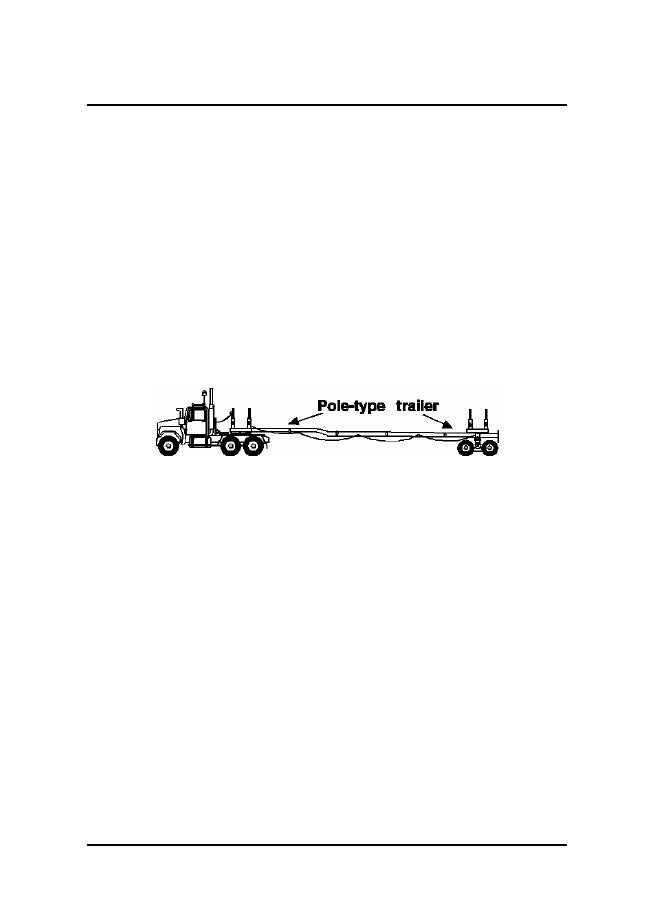
unnecessary or impracticable; or(b)thebodyorpartofthebodyofthevehicleactsasamudguard.Examples for subsection (2)(a)—•pole-type
trailers used to carry timber•most
road-making plant•some agricultural equipmentPage
56Reprint 5D effective 1 July
2010
Transport Operations (Road Use
Management—Vehicle Standards and Safety) Regulation1999Schedule 1(3)A
mudguard fitted to a vehicle with a GVM over 4.5t must,when
the wheels of the vehicle are in position to move straightahead—(a)reducethedangerofapersoncontactingthemovingwheels;
and(b)for the rear wheels—(i)cover the overall tyre width of the
wheel or wheelsto which it is fitted; and(ii)befittedsotheheightabovegroundlevelofthelowest edge of the rear of the
mudguard is not overone-thirdofthehorizontaldistancebetweentheedge
and the centre of the rearmost axle.(4)However, a mudguard may be up to—(a)230mm above ground level; or(b)if a vehicle is built to be used off
road—300mm aboveground level.(5)The
outside of a rear mudguard, other than a mudflap, of avehicle that can be seen from the rear of
the vehicle must becoloured white or silver if the
vehicle—(a)is at least 2.2m wide; and(b)has a body the vertical measurement of
which is under300mm at the rear, measured from the lowest
point ofthe body above ground level to the highest
point; and(c)is not fitted with rear marking plates
in accordance withsection 106.(6)Forsubsection(5)(a),thewidthofavehicleismeasureddisregarding any
anti-skid device mounted on wheels, centraltyreinflationsystems,lights,mirrors,reflectors,signallingdevices and tyre pressure gauges.23Horns, alarms etc.(1)A
motor vehicle must be fitted with at least 1 horn or otherdevice that can give sufficient audible
warning to other roadusers of the approach or position of
the vehicle.Reprint 5D effective 1 July 2010Page
57
Transport Operations (Road Use
Management—Vehicle Standards and Safety) Regulation1999Schedule 1(2)Amotorvehiclemustnotbefittedwithadevicethatcanmake a sound like the sound of a
siren, bell, exhaust whistle,compression
whistle or repeater horn.(3)However,subsection(2)doesnotapplytothefollowingmotor
vehicles—(a)a police vehicle;(b)an
emergency vehicle;(c)a transport enforcement
vehicle;(d)an Australian Protective Service
vehicle;(e)an Australian Customs Service
vehicle;(f)an Airservices Australia
vehicle;(g)a vehicle at least 25 years old and
fitted as a police oremergency vehicle if—(i)the vehicle is used for exhibition
purposes; or(ii)itispartofacollectionofformerpoliceoremergency vehicles;(h)amotorvehiclefittedwithananti-theftalarmifthealarm can not be operated while the
vehicle’s ignition ison.(4)Also,
a motor vehicle may be fitted with a device that emits aregular, intermittent sound while the
vehicle is reversing or inreverse gear.(5)The
device must not be louder than is necessary so the driver,and a
person near the vehicle, can hear the device when it isoperating.24Rear
vision mirrors(1)Arearvisionmirrorormirrorsmustbefittedtoamotorvehicleasrequiredbythissectionsothatadriverofthevehiclecanclearlyseebyreflectiontheroadbehindthevehicle and any following or overtaking
vehicle.(2)At least 1 rear vision mirror must be
fitted to—(a)a car; andPage 58Reprint 5D effective 1 July
2010
Transport Operations (Road Use
Management—Vehicle Standards and Safety) Regulation1999Schedule 1(b)a
motortrike with 2 front wheels; and(c)amotorbike,ormotortrikewith1frontwheel,builtbefore July
1975.(3)At least 1 rear vision mirror must be
fitted to each side of—(a)a motor vehicle
with a GVM over 3.5t; and(b)a motorbike, or
motortrike with 1 front wheel, built afterJune 1975.(4)A motor vehicle with a GVM not over
3.5t, other than a motorvehiclementionedinsubsection(2)or(3),mustbefittedwith—(a)atleast1rearvisionmirrorontherightsideofthevehicle;
and(b)at least 1 rear vision mirror on the
left side of the vehicleor inside the vehicle.(5)ArearvisionmirrorfittedtoamotorvehiclewithaGVMover3.5tmustnotprojectover150mmbeyondthewidestpart, excluding
lights, signalling devices and reflectors, of thevehicle or combination.(6)However, the rear vision mirror may project
not over 230mmbeyond the widest part of the vehicle or
combination if it canfold to project not over 150mm beyond
the widest part.25Rear vision mirrors—surfaces(1)A rear vision mirror required to be
fitted to the side of a motorvehicle with a
GVM over 3.5t must have a reflecting surfaceof at least
150cm2.(2)A
rear vision mirror required to be fitted to the right side of
amotorvehiclewithaGVMover3.5tmusthaveaflatreflecting surface if—(a)the
vehicle has only 1 steering control; and(b)the
centre of the steering control is to the right of, or inline
with, the centre of the vehicle.(3)Thereflectingsurfaceoftherearvisionmirrorsthatarerequired to be
fitted to a motorbike or moped must—Reprint 5D
effective 1 July 2010Page 59
Transport Operations (Road Use
Management—Vehicle Standards and Safety) Regulation1999Schedule 1(a)each
be of the same curvature; and(b)if
convex, be part of a notional sphere with a radius of atleast
1.2m.26Additional rear vision mirrorsAmotorvehiclemaybefittedwithadditionalrearvisionmirrorsormirrorsurfacesthatareflatorconvexoracombination of flat and convex
surfaces.27Automatic transmission(1)A motor vehicle fitted with an
automatic transmission musthave an engine starter mechanism that
can not operate whenthe transmission control is in a position to
drive the vehicle.(2)Amotorvehiclebuiltafter1975thatisfittedwithanautomatic
transmission must have an indicator in the driver’scompartment showing the transmission control
position.(3)Subsections (1) and (2) do not apply
to a motor vehicle withless than 4 wheels.28Diesel enginesA motor vehicle
propelled by a compression ignition engine,commonlyknownasadieselengine,mustbefittedwithadevice preventing
the engine from being started accidentallyor
inadvertently.29Bonnet securing devices(1)A motor vehicle with a moveable body
panel forward of thewindscreen that covers an engine or luggage
storage or batterycompartment, must have a device to secure
the panel.(2)However, if the panel opens from the
front in a way that partlyor completely obstructs the driver’s
forward view through thewindscreen,thepanelmusthaveprimaryandsecondarydevices to secure
the panel.Page 60Reprint 5D
effective 1 July 2010
Transport Operations (Road Use
Management—Vehicle Standards and Safety) Regulation1999Schedule 130Electrical wiring, connections and
installations(1)The wiring of electrical equipment of
a vehicle, other than thehigh tension ignition wiring,
must—(a)be supported at intervals of not over
600mm, unless thevehicleisapole-typetrailerwithapolewithanadjustable
length, or an extendible trailer; and(b)be
insulated at each of its joints; and(c)be
located where it can not—(i)become
overheated; or(ii)contact moving parts; or(iii)come near enough
to the fuel system to be a firehazard;
and(d)be protected from chafing.(2)The electrical connectors between
motor vehicles and trailers,for operation of
the vehicle lights required by these standards,mustcomplywithAustralianStandardAS2513-1982Electrical
Connectors for Trailer Vehicles.(3)Atrailermustbeequippedwithanelectricalconductor,independent of
the trailer coupling, that provides a return pathbetweentheelectricalcircuitsofthetrailerandtowingvehicle.(4)Theelectricalwiring,connectionsandinstallationsofasemitrailer, dog trailer or converter
dolly used in a road trainover 19m long after June 1998 must
comply with third editionADR 63, whether or not it was built
before the date stated inthe ADR for vehicles of that
type.31Television receivers and visual
display units(1)Atelevisionreceiverorvisualdisplayunitmustnotbeinstalled in a motor vehicle so any
part of the image on thescreenisvisibletothedriverfromthenormaldrivingposition.(2)However, subsection (1) does not apply
to—Reprint 5D effective 1 July 2010Page
61
Transport Operations (Road Use
Management—Vehicle Standards and Safety) Regulation1999Schedule 1(a)a
television receiver or visual display unit that can notbe
operated when the vehicle is moving; or(b)a
driver’s aid in any vehicle or a destination sign in a busor
minibus.Examples for paragraph (b)—•closed-circuit
television security cameras•dispatch
systems•navigationalorintelligenthighwayandvehiclesystemequipment•rear
view screens•ticket-issuing machines•vehicle monitoring devices(3)A television receiver, or visual
display unit, and its associatedequipment in a
motor vehicle must be securely mounted in aposition
that—(a)does not obscure the driver’s view of
the road; and(b)doesnotimpedethemovementofapersoninthevehicle.32Windscreens and windows(1)Transparentmaterialusedinawindscreen,window,oraninteriorpartition,ofamotorvehiclemustbeofapprovedmaterial
if—(a)the vehicle was built after June 1953;
or(b)thematerialwasfirstfittedtothevehicleafterJune1953.(2)In
this section—approvedmaterialmeansmaterialwiththesamecharacteristics as material mentioned in any
of the followingstandards—•Australian Standard AS R1-1965Safety Glass for LandTransportPage
62Reprint 5D effective 1 July
2010
Transport Operations (Road Use
Management—Vehicle Standards and Safety) Regulation1999Schedule 1•Australian Standard AS R1-1968Safety Glass for LandTransport•AustralianStandardAS2080-1977SafetyGlassforVehicles•BritishStandardBS857:1967SpecificationforSafetyGlass for Land
Transport•BritishStandardBS5282:1975RoadVehicleSafetyGlass•BritishStandardBSAU178:1980RoadVehicleSafetyGlass•JapaneseIndustrialStandardJISR3211-1979SafetyGlasses for Road Vehicles•AmericanNationalStandardANSIZ26.1-1980SafetyCodeforSafetyGlazingMaterialsforGlazingMotorVehicles Operating on Land Highway.transparent materialdoes
not include any coating added tothe windscreen,
window or partition after its manufacture.33Window tinting(1)Glazing used in a windscreen of a motor
vehicle must have aluminous transmittance of at least—(a)for a motor vehicle built after
1971—75%; or(b)for another motor vehicle—70%.(2)Glazing used in a windscreen of a
motor vehicle must not becoated in a way that reduces its
luminous transmittance.(3)However,
subsections (1) and (2) do not apply to the greaterof
the following areas of a windscreen—(a)the
area above the highest point of the windscreen that isswept
by a windscreen wiper;(b)the upper 10% of
the windscreen.(4)Glazingusedinawindoworinteriorpartitionofamotorvehicle must have a luminous transmittance
of at least 70%.Reprint 5D effective 1 July 2010Page
63
Transport Operations (Road Use
Management—Vehicle Standards and Safety) Regulation1999Schedule 1(5)Glazing used in a window or interior
partition may be coatedto achieve a luminous transmittance of
not less than 35%.(6)Glazingthathasbeencoatedtoreduceitsluminoustransmittance
must not have a reflectance of over 10%.(7)Theluminoustransmittancerequirementinsubsection(5)applies to a vehicle instead of the
corresponding requirementsin the relevant ADR.(8)In this section—glazingmeansmaterialfittedtothefront,sides,rearorinterior of a
motor vehicle, through which the driver can seetheroad,butdoesnotincludeacoatingaddedaftermanufacture of
the material.luminoustransmittance,forglazing,meanstheamountoflight
that can pass through the glazing as a percentage of theamount of light that would be transmitted if
the glazing wereabsent.34Windscreen wipers and washers(1)A motor vehicle with 3 or more wheels
that is fitted with awindscreenmustbefittedwithatleast1windscreenwiperunlessadriverinanormaldrivingpositioncanobtainanadequateviewoftheroadaheadofthevehiclewithoutlooking through the windscreen.(2)At least 1 windscreen wiper fitted to
the vehicle must—(a)beabletoremovemoisturefromthepartofthewindscreen in
front of the driver to allow the driver anadequate view of
the road ahead of the vehicle when thewindscreen is
wet; and(b)be able to be operated from a normal
driving position;and(c)for a vehicle
built after 1934—continue to operate untilthe wiper is
switched off; and(d)foravehiclebuiltafter1959,thedrivingpositionofwhich is nearer one side of the
vehicle than the other—Page 64Reprint 5D
effective 1 July 2010
Transport Operations (Road Use
Management—Vehicle Standards and Safety) Regulation1999Schedule 1(i)beabletoremovemoisturefromthepartofthewindscreeninfrontofthedriver,andacorresponding part of the windscreen
on the otherside of the centre of the vehicle, to allow
the driveran adequate view of the road ahead of the
vehiclewhen the windscreen is wet; and(ii)ifthewindscreenwiperisoperatedbyenginemanifoldvacuum—beprovidedwithavacuumreservoirorpumptomaintaintheefficientoperationofthewiperwhilethevehicleisinmotion.(3)If
the vehicle was built after 1982 and has a GVM over 4.5t, itmust
also be fitted with a windscreen washer that can directwaterontothewindscreenwithintheareasweptbyawindscreen wiper
so the wiper can spread the water to all ofthe area swept by
the wiper.(4)The windscreen washer must be able to
be operated from anormal driving position.35Wheels and tyres—size and capacityThe
wheels and tyres fitted to an axle of a vehicle must be ofsufficient size and capacity to carry the
part of the vehicle’sgross mass transmitted to the ground
through the axle.36Pneumatic tyres—generallyA
vehicle built after 1932 must be fitted with pneumatic
tyres.37Pneumatic tyres—carcass
construction(1)A vehicle with a GVM not over 4.5t
must not have pneumatictyres of different carcass
construction fitted to the same axle,but the tyres may
have different cord materials and a differentnumber of
plies.(2)However, subsection (1) does not apply
to a tyre being used inanemergencyasatemporaryreplacementforatyrecomplying with
the subsection.Reprint 5D effective 1 July 2010Page
65
Transport Operations (Road Use
Management—Vehicle Standards and Safety) Regulation1999Schedule 138Pneumatic tyres—size and capacityThesizeandcapacityofapneumatictyretobefittedtoavehicle must be
decided using a cold inflation pressure that isnot more than the
lesser of—(a)thepressurerecommendedbythetyremanufacturer;and(b)a pressure of—(i)for a
radial ply tyre—825kPa; or(ii)for another
tyre—700kPa.39Tyres—defectsA tyre fitted to
a vehicle must be free of any apparent defectthat could make
the vehicle unsafe.40Tyres for use on vehicles with GVM
over 4.5t(1)This section applies to a vehicle with
a GVM over 4.5t insteadof the tyre speed category
requirements for the vehicle in therelevant
ADR.(2)A tyre fitted to the vehicle must be
suitable for road use at thelower of—(a)100km/h; and(b)the
vehicle’s top speed.41Tyres—manufacturer’s rating(1)This section applies to a motor
vehicle if the vehicle—(a)has 4 or more
wheels; and(b)was built after 1972; and(c)has a GVM not over 4.5t.(2)However, this section does not apply
to a tyre if the tyre—(a)is recommended by
the vehicle manufacturer as suitablefor limited use
on the vehicle in special circumstances atPage 66Reprint 5D effective 1 July
2010
Transport Operations (Road Use
Management—Vehicle Standards and Safety) Regulation1999Schedule 1aspeedlowerthanthespeedapplyingtothevehicleunder subsection
(3); or(b)isbeingusedinanemergencyasatemporaryreplacement for a
tyre complying with this section.(3)Atyrefittedtoamotorvehiclemust,whenfirstmanufactured,havebeenratedbythetyremanufacturerassuitable for road use at the lower
of—(a)a speed of at least—(i)for an off-road passenger
vehicle—140km/h; or(ii)for a car or car derivative—180km/h;
or(iii)for another motor
vehicle—120km/h; and(b)the vehicle’s top speed.Example for paragraph (a)(i)—a
four-wheel drive vehicle(4)Thissectionappliestoamotorvehicleinsteadofthetyrespeed
category requirements in the relevant ADR.42Retreads(1)Atyrethatisretreadedbeforethecommencementofthissection must not be used on a vehicle
if—(a)AustralianStandardAS1973-1976RetreadedPneumaticPassengerCarandLightTruckTyresorAustralianStandardAS1973-1985RetreadedPneumaticPassengerandLightTruckTyresapplies tothe
tyre; and(b)the tyre was retreaded after
publication of the standard;and(c)the tyre was not retreaded in
accordance with—(i)AustralianStandardAS1973-1976RetreadedPneumaticPassengerCarandLightTruckTyres;or(ii)AustralianStandardAS1973-1985RetreadedPneumatic Passenger and Light Truck
Tyres; orReprint 5D
effective 1 July 2010Page 67
Transport Operations (Road Use
Management—Vehicle Standards and Safety) Regulation1999Schedule 1(iii)AustralianStandardAS1973-1993PneumaticTyres—PassengerCar,LightTruckandTruck/Bus—Retreading and Repair
Processes.(2)Atyrethatisretreadedafterthecommencementofthissection must not be used on a vehicle
if—(a)AustralianStandardAS1973-1993PneumaticTyres—PassengerCar,LightTruckandTruck/Bus—Retreading and Repair
Processesapplies tothe tyre;
and(b)thetyrewasnotretreadedinaccordancewiththestandard.43Tyre
tread(1)Atyrefittedtoavehiclemustnothavecleatsorothergripping devices
that could damage road surfaces.(2)A
tyre fitted to the vehicle must have a tread pattern at
least1.5mm deep, other than at tread wear
indicators, in a band thatruns continuously—(a)across—(i)for a
vehicle with a GVM over 4.5t—at least 75%of the tyre width
that normally comes into contactwith the road;
or(ii)for another vehicle—the tyre width
that normallycomes into contact with the road; and(b)around the whole circumference of the
tyre.(3)A vehicle must not be fitted with a
tyre that has been treatedbyrecuttingorregroovingthetreadrubber,unlessthetyrewas—(a)constructed with an extra thickness of
rubber designedfor recutting or regrooving; and(b)labelled to indicate the
construction.Page 68Reprint 5D
effective 1 July 2010
Transport Operations (Road Use
Management—Vehicle Standards and Safety) Regulation1999Schedule 144Alternative tyres, rims and wheels(1)Tyresandrimsfittedtoamotorvehiclethatisacar,carderivative or
off-road passenger vehicle need not comply withsection 7(1) or
8(1) if—(a)the combination of tyre and
rim—(i)has a diameter that is—(A)not more than 15mm more than the
diameterspecified by the vehicle’s manufacturer;
or(B)not more than 26mm less than the
diameterspecified by the vehicle’s manufacturer;
and(ii)accords with the specifications
contained in—(A)ifthevehiclewasmanufacturedbefore1January 1974—1 of the following
manuals—•the Tyre and Rim Standards Manual
oftheTyreandRimAssociationofAustralia•the
1981 Tire and Rim Association Inc.Year Book•the British Standard, BS AU 50•theJapanAutomobileTyreManufacturers Association•theJapaneseIndustrialStandards(JIS-D4202) and (JIS-D4218)•theEuropeanTyreandRimTechnicalOrganisation
Practices (E.T.R.T.O.)•theDeutscheIndustrieNorm(DIN)7818•theDeutscheIndustrieNorm(DIN)7817; or(B)if the vehicle was manufactured on or
after 1January 1974—Table 2 of ADR 23; and(b)the maximum tyre width is—Reprint 5D effective 1 July 2010Page
69
Transport Operations (Road Use
Management—Vehicle Standards and Safety) Regulation1999Schedule 1(i)for a
car or car derivative—not more than 1.3 timesthewidthofthevehiclemanufacturer’swidestoptional tyre; or(ii)for
an off-road passenger vehicle fitted with frontand rear beam
axles—not more than 1.5 times thewidthofthevehiclemanufacturer’swidestoptional tyre; and(c)theminimumtyrewidthis70%ofthewidthofthewidesttyrefittedtothevehiclebutnotlessthanthevehicle manufacturer’s narrowest
optional tyre.(2)Amotorvehiclethatisacar,carderivativeoroff-roadpassenger vehicle
using car tyres must not be fitted with—(a)any
combination of tyre and rim which, when fitted tothevehicle,foulsthewheelhousingorrunninggearunder
any condition; or(b)any wheel in which—(i)there is a circumferential weld other
than a weldattaching the rim to the wheel centre;
or(ii)the diameter, width or offset of its
rim differs fromthe rim of another wheel on the same axle;
or(iii)the wheel
securing stud holes are not circular; or(iv)the
pitch circle diameter of the wheel securing studholesisdifferentfromthatoftheoriginalequipment wheel
studs; or(c)any wheel which will result in the
widest track specifiedbythevehiclemanufacturerbeingexceededbymorethan—(i)for a
car or car derivative—26mm; or(ii)for
an off-road passenger vehicle fitted with frontand rear beam
axles—50mm; or(d)awheelthatwillreducethetrackspecifiedforthevehicle by its
manufacturer; or(e)foramotorvehiclemanufacturedonorafter1July1985, a wheel that—Page
70Reprint 5D effective 1 July
2010
Transport Operations (Road Use
Management—Vehicle Standards and Safety) Regulation1999Schedule 1(i)is
not approved as original equipment or originalequipmentreplacementbythevehiclemanufacturer;
or(ii)is not indelibly marked with the
wheel’s nominaldiameterandwidth,offset,andthemarkofastandard of an
approved organisation in a locationso that they are
readily visible when the wheel iscorrectly
installed on the vehicle; or(f)aspacerbetweenwheelandhubadditionaltoanyprovided by the vehicle manufacturer;
or(g)awheelnutwhichdoesnotengagethethreadofthewheel stud for at least the same
length as the wheel nutprovided by the vehicle manufacturer
or a wheel nut thatdoes not match the taper on the wheel stud
hole; or(h)any eccentric wheel stud or eccentric
wheel nut.(3)In subsection (2)(e)(ii)—approved organisationmeans any of the
following—•Wheel Industries Association
(Australia)•Standards Australia•Technischer Uberwachungen,
Verein•Japanese Industrial Standards.Division 2Additional
requirements formotorbikes45Steering gear and handlebars(1)The handlebars on a motorbike must
extend at least 250mm,but not over 450mm, on each side of
the longitudinal axis ofthe motorbike.(2)In
taking a measurement for subsection (1), mirrors and lightsmountedonthehandlebarsofthemotorbikearetobedisregarded.Reprint 5D
effective 1 July 2010Page 71
Transport Operations (Road Use
Management—Vehicle Standards and Safety) Regulation1999Schedule 1(3)The
lowest part of the hand grip on the handle bars must notbehigherthan380mmabovetheattachmentpointofthehandlebars to the
motorbike.(4)Hand grips on the handle bars must be
fitted symmetrically.(5)If a motorbike
has the head stem as the steering pivot point,the horizontal
distance from the midpoint between the headstem bearings to
the centre of the front wheel must not be over550mm.46Foot restsA motorbike must
be fitted with foot rests for the driver, andfor any passenger
for whom a seating position is provided.47Chain
guards(1)If the engine power of a motorbike is
transmitted to the rearwheelbyachain,thedriverandanypassengermustbeprotected from the front sprocket and
at least the upper part ofthe chain by—(a)the
frame or equipment of the motorbike; or(b)a
chain guard.(2)A chain guard must cover the chain to
a point—(a)at least 300mm to the rear of the
rearmost foot rest; or(b)above the centre
of the rear drive sprocket.Part 5Vehicle
marking48Vehicle and engine identification
numbers(1)The engine of a motor vehicle must
have an individual engineidentification number clearly stamped,
embossed or otherwisepermanently marked on it.Page
72Reprint 5D effective 1 July
2010
Transport Operations (Road Use
Management—Vehicle Standards and Safety) Regulation1999Schedule 1(2)The
engine of motor vehicle built after 1930 must have theengineidentificationnumberontheengineblockormaincomponent.(3)Avehiclemusthaveanindividualvehicleidentificationnumber clearly
stamped, embossed or otherwise permanentlymarked on a
substantial part of its frame or chassis.(4)Avehicleorengineidentificationnumbermustbelocatedwhere
a person can read it easily without having to use toolsto
remove a part of the vehicle that would otherwise obstructthe
person’s view.(5)In this section—numberincludes letter.49White
or silver band on certain vehicles(1)This
section applies to a vehicle that—(a)is at
least 2.2m wide; and(b)has a body with a vertical measurement
under 300mm attherear,measuredfromthelowestpointofthebodyabove ground
level to the highest point; and(c)is
not fitted with rear marking plates in accordance withsection 106.(2)Forsubsection(1)(a),thewidthofavehicleismeasureddisregarding any
anti-skid device mounted on wheels, centraltyreinflationsystems,lights,mirrors,reflectors,signallingdevices and tyre pressure gauges.(3)The vehicle must have a white or
silver band at least 75mmhigh across the full width of the
rearmost part of the body ofthe
vehicle.50Warning signs for combinations over
22m long(1)The following vehicles must display
road train warning signscomplying with this section and
section 52—(a)a combination over 36.5m long;Reprint 5D effective 1 July 2010Page
73
Transport Operations (Road Use
Management—Vehicle Standards and Safety) Regulation1999Schedule 1(b)aroadtrainover30m,butnotover36.5m,longthatincludes 1 or
more dog trailers.(2)The following vehicles must display
road train warning signs,or a long vehicle warning sign,
complying with this sectionand section 52—(a)aroadtrainover22m,butnotover30m,longthatincludes 1 or
more dog trailers;(b)a road train over 22m, but not over
36.5m, long that doesnot include a dog trailer.(3)Anothercombinationover22m,butnotover36.5m,longmust
display a long vehicle warning sign complying with thissection and section 52.(4)Roadtrainwarningsignsmustbeusedinpairsandfittedhorizontally, one
at the front and the other at the rear of thecombination.(5)A
long vehicle warning sign must be fitted horizontally at therear
of the combination.51Warning signs not to be displayed on
other vehicles(1)A road train warning sign must not be
displayed on a vehicleunlessthevehicleispartofacombinationorroadtrainmentioned in
section 50(1) or (2).(2)Alongvehiclewarningsignmustnotbedisplayedonavehicle unless the vehicle is a part
of a combination or roadtrain mentioned in section 50(2) or
(3).52Specifications for warning
signs(1)Aroadtrainorlongvehiclewarningsignmustbemanufactured in 1 or 2 parts from sheet
steel 0.8mm thick oranothermaterialofatleastthesamestiffness,unlessitisdesigned to be fitted to a vehicle
using an adhesive.(2)Thewarningsignmustbeatleast1.2mwideandatleast250mm
high.Page 74Reprint 5D
effective 1 July 2010
Transport Operations (Road Use
Management—Vehicle Standards and Safety) Regulation1999Schedule 1(3)A
road train warning sign must display the words ‘road train’,and a
long vehicle warning sign must display the words ‘longvehicle’,inblackcapitallettersatleast180mmhighintypeface Series B
(N) that complies with Australian StandardAS 1744Forms of Letters and Numerals for Road
Signs.(4)If the warning
sign is in 2 parts, one word of the expression‘road train’ or
‘long vehicle’ must be on one part and the otherword
of the expression must be on the other part.(5)The
warning sign must display the sign manufacturer’s nameorlogo,andthebrandandclass
ofretro-reflectivematerialused,
in block letters not over 10mm high.(6)The
warning sign must have a black border.(7)The
warning sign must be coated with yellow retro-reflectivematerialofclass1or2thatmeetsAustralianStandardAS1906Retro-reflective
Materials and Devices for Road TrafficControl
Purposes.(8)The warning sign
must be fitted so—(a)no part of the sign is—(i)over 1.8m above ground level;
or(ii)under 500mm above ground level;
and(b)if the sign is in 2 parts, the parts
are fitted at the sameheight above ground level.53Left-hand drive signs(1)This section applies to a motor
vehicle with a GVM over 4.5tthat has the
centre of a steering control to the left of the centreof
the vehicle.(2)The vehicle must display the words
‘left hand drive’ on therear of the vehicle.(3)Thewordsmustbeinlettersatleast75mmhigh,andinacolour
contrasting with the background to the words.Reprint 5D
effective 1 July 2010Page 75
Transport Operations (Road Use
Management—Vehicle Standards and Safety) Regulation1999Schedule 1Part 6Vehicle configuration54Axle
configuration(1)Amotorvehicle,otherthananarticulatedbus,musthaveonly—(a)1axlegroup,orsingleaxle,towardsthefrontofthevehicle; and(b)1axlegroup,orsingleaxle,towardstherearofthevehicle.(2)An
articulated bus must have only—(a)on
its front section—(i)1 axle group, or single axle, towards
the front ofthe section; and(ii)1
axle group, or single axle, towards the rear of thesection; and(b)on
another section—1 axle group or single axle.(3)A
trailer must have only—(a)1 axle group or
single axle; or(b)2 axle groups, 2 single axles, or 1
axle group and singleaxle, in the following
configuration—(i)1 axle group, or single axle, towards
the front ofthe vehicle, with all the wheels on the axle
groupor single axle connected to the steering
mechanismfor that part of the trailer;(ii)1 axle group, or single axle, towards
the rear of thevehicle.(4)A
semitrailer that is extendible, or is fitted with sliding
axles,must—(a)have
a securing device that—(i)can securely fix
the extendible part or sliding axlestotherestofthevehicleinanypositionofadjustment provided; andPage 76Reprint 5D effective 1 July
2010
Transport Operations (Road Use
Management—Vehicle Standards and Safety) Regulation1999Schedule 1(ii)is
located in a position that can prevent accidentalor
inadvertent release, if the device is mounted onthe
chassis of the vehicle; and(iii)is fitted with a
visible or audible warning system toindicate to a
person standing beside the vehicle thatthe device is not
engaged; and(iv)is fitted with a way of preventing
loss of air fromthe air brake supply, if the device uses air
from thebrakesystemandfailsinawayallowingairtoescape;
and(v)is held in the applied position by
direct mechanicalactionwithouttheinterventionofanelectric,hydraulic or
pneumatic device; and(b)bebuiltsotheadjustablepartsofthevehicleremainconnected if the
securing device fails.55Relation between
axles in axle group(1)The axles in an axle group, other than
a twinsteer axle group,fitted to a vehicle with a GVM over
4.5t must relate to eachother through a load-sharing
suspension system.(2)In this section—load-sharingsuspensionsystemmeansanaxlegroupsuspension system
that—(a)is built to divide the load between
the tyres on the groupso that no tyre carries a mass over
10% more than themassthatitwouldcarryiftheloadweredividedequally;
and(b)has effective damping characteristics
on all axles of thegroup.Reprint 5D
effective 1 July 2010Page 77
Transport Operations (Road Use
Management—Vehicle Standards and Safety) Regulation1999Schedule 1Part 7Lights and reflectorsDivision 1General requirements for lights56Certain requirements apply only at
nightThe requirements of this part for a light,
other than a brake ordirection indicator light, to be
visible over a stated distanceapply only at
night.57Prevention of glareA
light, other than a high-beam headlight, fitted to a vehiclemust
be built and adjusted to provide the necessary amount oflight,withoutdazzlingthedriverofanothervehicleapproaching, or being approached by, the
vehicle.58Pairs of lights(1)If
lights are required under these standards to be fitted to avehicle in pairs—(a)alightmustbefittedoneachsideofthelongitudinalaxis of the
vehicle; and(b)thecentreofeachlightinapairmustbethesamedistance from the longitudinal axis of
the vehicle; and(c)thecentreofeachlightin
apairmustbeatthesameheight above ground level; and(d)each light in a pair must project
approximately the sameamount of light of the same
colour.(2)Subsection (1) applies to a motorbike
with an attached sidecaras if the sidecar were not
attached.Page 78Reprint 5D
effective 1 July 2010
Transport Operations (Road Use
Management—Vehicle Standards and Safety) Regulation1999Schedule 1Division 2Headlights59Headlights to be fitted to vehicles(1)A motor vehicle must be fitted
with—(a)if it is a moped, motorbike, or
motortrike with 1 frontwheel—1 low-beam headlight; or(b)if it has 4 or more wheels or is a
motortrike, other than amoped,with2frontwheels—apairoflow-beamheadlights.(2)If a
motor vehicle built after 1934 can travel at over 60km/h—(a)eachlow-beamheadlightmentionedinsubsection(1)must
be able to work in the high-beam position; or(b)the
vehicle must be fitted with—(i)1headlightthatcanworkinthehigh-beampositionifthevehicleisrequiredtohave1low-beam
headlight; or(ii)a pair of headlights that can work in
the high-beamposition.(3)Amotorbikemaybeequippedwithaheadlightmodulationsystem that—(a)variesthebrightnessofitshigh-beamheadlightorlow-beamheadlight,butnotboth,atarateofatleast200
and at most 280 flashes a minute; and(b)is
designed to operate only in the daylight.(4)Additional headlights may be fitted
to—(a)a motorbike or motortrike; or(b)amotorvehiclewith4ormorewheelsthatwasbuiltbefore
1970.(5)Additional pairs of headlights may be
fitted to a motor vehiclewith 4 or more wheels that was built
after 1969.Reprint 5D effective 1 July 2010Page
79
Transport Operations (Road Use
Management—Vehicle Standards and Safety) Regulation1999Schedule 160How
headlights are to be fitted(1)The centres of
low-beam headlights fitted as a pair on a motorvehicle with 4 or
more wheels must be at least 600mm apart.(2)However,subsection(1)doesnotapplytoamotorvehiclebuilt
before 1970 if the centres of its low-beam headlights—(a)wereunder600mmapartwhenthevehiclewasbuilt;and(b)are not nearer than they were when the
vehicle was built.(3)Each low-beam headlight of a pair on a
motortrike, other thana moped, with 2 front wheels must not
be over 400mm fromthe nearer side of the vehicle.(4)The centre of a low-beam headlight
fitted to a motor vehiclebuilt after June 1953 must be—(a)at least 500mm above ground level;
and(b)not over 1.4m above ground
level.61How single headlights are to be
fitted(1)A motorbike or motortrike with a
single headlight fitted musthave the light
fitted in the centre.(2)Subsection (1)
applies to a motorbike with an attached sidecaras if the sidecar
were not attached.62How additional headlights are to be
fittedIf 2 or more additional headlights are
fitted to a motor vehiclewith 4 or more wheels, the additional
headlights must as far aspossible be fitted in pairs.63Performance of headlights(1)Whenon,aheadlight,oradditionalheadlight,fittedtoamotor vehicle must—(a)show only white light; and(b)project its main beam of light ahead
of the vehicle.Page 80Reprint 5D
effective 1 July 2010
Transport Operations (Road Use
Management—Vehicle Standards and Safety) Regulation1999Schedule 1(2)Headlights must be fitted to a motor vehicle
so their light doesnot reflect off the vehicle into the
driver’s eyes.64Effective range of headlights(1)This section applies to a headlight
that is on at night.(2)A low-beam headlight must illuminate
the road ahead of themotor vehicle for at least 25m.(3)A high-beam headlight must illuminate
the road ahead of themotor vehicle for at least 50m.(4)However, a low-beam headlight fitted
to a motor vehicle builtbefore 1931, or a moped, need only
illuminate the road aheadof the vehicle for 12m.65Changing headlights from high-beam to
low-beamposition(1)Amotorvehiclebuiltafter1934thatcantravelatover60km/h must be fitted with—(a)adippingdeviceenablingthedriverinthenormaldriving
position—(i)tochangetheheadlightsfromthehigh-beamposition to the
low-beam position; or(ii)simultaneously to
switch off a high-beam headlightand switch on a
low-beam headlight; and(b)foramotorvehiclebuiltafterJune1953,adevicetoindicatetothedriverthattheheadlightsareinthehigh-beam
position.(2)A headlight fitted to a motor vehicle
that is not fitted with adipping device mentioned in subsection
(1)(a) must operate inthe low-beam position.(3)When a headlight fitted to a motor
vehicle is switched to thelow-beam position, any other headlight
on the vehicle mustoperate only in the low-beam position or be
off.Reprint 5D effective 1 July 2010Page
81
Transport Operations (Road Use
Management—Vehicle Standards and Safety) Regulation1999Schedule 1Division 3Parking lights66Parking lights(1)A
motor vehicle built after June 1953 must be fitted with—(a)ifitisamotortrikewith2frontwheels,otherthanamoped,oramotorvehiclewith4ormorewheels—apair of parking
lights; or(b)ifitisamotorbikewithanattachedsidecar,oramotortrike with 1 front wheel, other
than a moped—atleast 1 parking light.(2)Apairofparkinglightsfittedtoamotorvehiclewith4ormore
wheels must be fitted with the centre of each light—(a)at least 600mm from the centre of the
other light; and(b)not over 510mm from the nearer side of
the vehicle.(3)However,apairofparkinglightsfittedtoamotorvehicleunder1300mmwidemaybefittedwiththecentreofeachlight not under
400mm from the centre of the other light.(4)A
parking light fitted to a motortrike with 2 front wheels
mustnot be over 400mm from the nearer side of
the vehicle.(5)A parking light fitted to a motorbike
with a sidecar must befitted not over 150mm from theside
of the sidecar furthestfrom the motorbike.(6)When on, a parking light must—(a)show a white or yellow light visible
200m from the frontof the motor vehicle; and(b)not use over 7W.(7)A
parking light fitted to a motor vehicle built after 1969
mustbe wired so the parking light is on when a
headlight on thevehicle is on.(8)Aparkinglightfittedtoasidecarattachedtoamotorbikemustbewiredtooperatewhenaheadlight,taillightorparking light on the motorbike is on.Page
82Reprint 5D effective 1 July
2010
Transport Operations (Road Use
Management—Vehicle Standards and Safety) Regulation1999Schedule 1(9)For
subsection (3), the width of a motor vehicle is measureddisregarding any anti-skid device mounted on
wheels, centraltyreinflationsystems,lights,mirrors,reflectors,signallingdevices and tyre pressure gauges.Division 4Daytime running
lights67Daytime running lights(1)Apairofdaytimerunninglightsmaybefittedtoamotorvehicle.(2)A pair of daytime running lights
fitted to a motor vehicle with4 or more wheels
must be fitted with the centre of each light—(a)at
least 600mm from the centre of the other light; and(b)not over 510mm from the nearer side of
the vehicle.(3)However, a pair of daytime running
lights fitted to a motorvehicle under 1300mm wide may be
fitted with the centre ofeach light not under 400mm from the
centre of the other light.(4)When on, a
daytime running light must—(a)show a white or
yellow light visible from the front of thevehicle;
and(b)not use over 25W.(5)Daytime running lights must be wired so they
are off when aheadlight,otherthanaheadlightbeingusedasaflashingsignal, is on.(6)For
subsection (3), the width of a motor vehicle is measureddisregarding any anti-skid device mounted on
wheels, centraltyreinflationsystems,lights,mirrors,reflectors,signallingdevices and tyre pressure gauges.Reprint 5D effective 1 July 2010Page
83
Transport Operations (Road Use
Management—Vehicle Standards and Safety) Regulation1999Schedule 1Division 5Tail
lights68Tail lights generally(1)A vehicle must have at least 1 tail
light fitted on or towardsthe rear of the vehicle.(2)A motortrike with 2 rear wheels, or a
motor vehicle with 4 ormore wheels, built after 1959 must
have at least 1 tail lightfitted on or towards each side of the
rear of the vehicle.(3)A trailer built after June 1973 must
have at least 1 tail lightfitted on or towards each side of the
rear of the vehicle.(4)The centre of a tail light mentioned
in subsection (1), (2) or(3) must not be over—(a)1.5m above ground level; or(b)if it is not practicable to fit the
light lower, 2.1m aboveground level.(5)Avehiclemayhave1ormoreadditionaltaillightsatanyheight above ground level.69Tail lights for sugar cane
trailers(1)Despite section 68, a sugar cane
trailer towed at night musthave 2 tail lights.(2)Each tail light must—(a)be attached to the rear of the
trailer; and(b)have its centre no more than 1m from
the ground.70Pattern of fitting tail lights(1)If only 1 tail light is fitted to a
vehicle, it must be fitted in thecentre or to the
right of the centre of the vehicle’s rear.(2)Subsection (1)applies to a motorbike with an attached
sidecaras if the sidecar were not attached.(3)If 2 or more tail lights are fitted to
a vehicle, at least 2 must befitted as a
pair.Page 84Reprint 5D
effective 1 July 2010
Transport Operations (Road Use
Management—Vehicle Standards and Safety) Regulation1999Schedule 1(4)Taillightsfittedinaccordancewiththisdivisionmayalsoserve as rear clearance lights if they
are fitted to a vehicle inaccordance with section 76(3).71Performance of tail lights(1)When on, a tail light of a vehicle
must—(a)showaredlightvisible200mfromtherearofthevehicle; and(b)not
use over 7W.(2)A tail light fitted to a street rod
vehicle may incorporate a bluelens not over
20mm in diameter.72Wiring of tail lightsA
tail light of a motor vehicle must be wired to come on, andstay
on, when a parking light or headlight on the vehicle is on,unless an external switch is fitted to
operate the tail light.Division 6Number plate
lights73Number plate lights(1)At least 1 number plate light must be
fitted to the rear of avehicle.(2)However,asugarcanetrailermustcomplywithsubsection(1) only when it
is towed at night.(3)Whenonatnight,thenumberplate
lightmustilluminate anumber plate on
the rear of the vehicle with white light, so thecharacters on the number plate can be read
at least 20m fromthe rear of the vehicle.(4)A
number plate light—(a)may be combined with another light;
and(b)mustnotprojectwhitelighttotherearofthevehicleother than by
reflection; andReprint 5D effective 1 July 2010Page
85
Transport Operations (Road Use
Management—Vehicle Standards and Safety) Regulation1999Schedule 1(c)mustnotobscurethecharactersonthenumberplate;and(d)must be wired to
come on, and stay on, when a parkinglight, headlight
or tail light on the vehicle is on.Division 7Clearance lights74Front
clearance lights(1)Front clearance lights may only be
fitted to a vehicle that is atleast 1.8m
wide.(2)Apairoffrontclearancelightsmustbefittedtoamotorvehicle that is
at least 2.2m wide, or a prime mover.(3)The
centre of a front clearance light must be—(a)not
over 400mm from the nearer side of the vehicle; and(b)if the vehicle was built after June
1953—(i)atleast750mmhigherthanthecentreofanylow-beam
headlight fitted to the vehicle; or(ii)not
lower than the top of the windscreen.(4)However,afrontclearancelightmaybemountedonanexternalrearvisionmirrororamirrorsupportif,whenthemirroriscorrectlyadjusted,nopartofthelensoftheclearancelightisvisibletoapersoninthenormaldrivingposition.(5)When
on, a front clearance light must—(a)show
a yellow or white light visible 200m from the frontof
the vehicle; and(b)not use over 7W.75External cabin lights(1)Amotorvehiclefittedwithfrontclearancelightsmayalsohave additional forward-facing lights
on or above the roof ofits cabin.Page 86Reprint 5D effective 1 July
2010
Transport Operations (Road Use
Management—Vehicle Standards and Safety) Regulation1999Schedule 1(2)Theadditionalforward-facinglightsmustbespacedevenlybetween the front
clearance lights, with their centres at least120mm
apart.(3)When on, an additional forward-facing
light must—(a)show a yellow or white light;
and(b)not use over 7W.76Rear
clearance lights(1)Rear clearance lights may only be
fitted to a vehicle that is atleast 1.8m
wide.(2)A pair of rear clearance lights must
be fitted to the rear of avehicle that is at least 2.2m
wide.(3)The centre of a rear clearance light
must be—(a)not over 400mm from the nearer side of
the vehicle; and(b)if practicable, at least 600mm above
ground level.(4)When on, a rear clearance light
must—(a)showaredlightvisible200mfromtherearofthevehicle; and(b)not
use over 7W.Division 8Side marker
lights77Vehicles needing side marker
lights(1)A pair of side marker lights must be
fitted towards the rear ofthe sides of a motor vehicle that is
over 7.5m long and at least2.2m wide.(2)A
pole-type trailer or a motor vehicle built to tow a
pole-typetrailer, each with at least 1 cross-bar or
bolster, must have asidemarkerlightfittedtoeachsideofthebackoronlycross-bar or bolster.Reprint 5D effective 1 July 2010Page
87
Transport Operations (Road Use
Management—Vehicle Standards and Safety) Regulation1999Schedule 1(3)A
pole-type trailer with 2 or more cross-bars or bolsters mayalso
have a side marker light fitted to each side of the frontcross-bar or bolster.(4)At
least 2 side marker lights must be fitted to each side of—(a)atrailer,otherthanapole-typetrailer,thatisatleast2.2m wide and not
over 7.5m long; and(b)a semitrailer that is not over 7.5m
long.(5)At least 3 side marker lights must be
fitted to each side of—(a)atrailer,otherthanapole-typetrailer,thatisatleast2.2m
wide and over 7.5m long; and(b)a
semitrailer that is over 7.5m long.(6)Forsubsections(1),(4)and(5),thewidthofavehicleismeasureddisregardinganyanti-skiddevicemountedonwheels,centraltyreinflationsystems,lights,mirrors,reflectors, signalling devices and tyre
pressure gauges.78Location of side marker lights(1)The centre of a side marker light must
not be over 150mmfrom the nearer side of the vehicle.(2)Afrontsidemarkerlightfittedtoamotorvehiclemustbetowards the front
of the side of the vehicle with no part of thelens visible to
the driver.(3)The centre of a front side marker
light fitted to a trailer mustbe—(a)within 300mm of the front of the side
of the trailer; or(b)if the construction of the trailer
makes it impracticableto comply with paragraph (a)—as near
as practicable tothe front of the trailer.(4)The centre of a rear side marker light
fitted to a vehicle mustbe—(a)within 300mm of the rear of the side of the
vehicle; orPage 88Reprint 5D
effective 1 July 2010
Transport Operations (Road Use
Management—Vehicle Standards and Safety) Regulation1999Schedule 1(b)if
the construction of the vehicle makes it impracticableto
comply with paragraph (a)—as near as practicable tothe
rear of the vehicle.(5)Sidemarkerlightsfittedtoavehiclemust,asfaraspracticable, be
evenly spaced along the side of the vehicle.(6)Subsections (2) to (5) do not apply to side
marker lights fittedto a cross-bar or bolster of a pole-type
trailer.(7)Only the side marker lights nearest to
the rear need be fitted ifcomplyingwithsubsections(3)and(4)wouldresultinthefront and rear side marker lights
being under 2.5m apart.(8)A side marker
light fitted to a vehicle must be fitted so—(a)its
centre is not over—(i)1.5m above ground level; or(ii)if it is not practicable to fit it
lower—2.1m aboveground level; and(b)its
centre is at least 600mm above ground level; and(c)it is, as far as practicable, in a row
of side marker lightsalong the side of the vehicle.(9)Subsection (8)(a) does not apply to a
side marker light that isnot required to be fitted to the
vehicle by section 77.79Performance of
side marker lights(1)When on, a side marker light fitted to
a vehicle must—(a)show a light visible 200m from the
vehicle; and(b)not use over 7W.(2)When
on, a side marker light fitted to a vehicle must show—(a)to the front of the vehicle—a yellow
light; and(b)to the rear of the vehicle—(i)ifthelightalsooperatesasarearlightorreflector—a red light; and(ii)in any other case—a red or yellow
light.Reprint 5D effective 1 July 2010Page
89
Transport Operations (Road Use
Management—Vehicle Standards and Safety) Regulation1999Schedule 1(3)However, if a pole-type trailer with 2 or
more cross-bars orbolstershasthesidemarkerlightspermittedbysection77(3)—(a)thesidemarkerlightsfittedtothefrontcross-barorbolster may comply with subsection
(2)(a) only; and(b)thesidemarkerlightsfittedtothebackcross-barorbolster may comply with subsection
(2)(b) only.80Side marker lights and rear clearance
lightsThe side marker light nearest to the rear of
a vehicle may alsobe a rear clearance light for section
76.Division 9Brake
lights81Fitting brake lights(1)A brake light must be fitted to the
rear of a vehicle, other thana sugar cane
trailer, built after 1934.(2)A pair of brake
lights must be fitted to the rear of—(a)amotorvehiclebuiltafter1959thathas4ormorewheels; and(b)a
motortrike built after 1959 that has 2 rear wheels; and(c)a trailer, other than a sugar cane
trailer, built after June1973.(3)The
centre of a brake light must be—(a)at
least 350mm above ground level; and(b)not
over—(i)1.5m above ground level; or(ii)if it is not practicable to fit the
light lower—2.1mabove ground level.(4)A
vehicle may be fitted with 1 or more additional brake
lights.Page 90Reprint 5D
effective 1 July 2010
Transport Operations (Road Use
Management—Vehicle Standards and Safety) Regulation1999Schedule 1(5)The
centre of an additional brake light must be at least 350mmabove
ground level.(6)If only 1 brake light is fitted to a
vehicle, it must be fitted inthe centre or to
the right of the centre of the vehicle’s rear.(7)Subsection (6) applies to a motorbike with
an attached sidecaras if the sidecar were not attached.82Brake lights for sugar cane
trailers(1)A sugar cane trailer must have 2 brake
lights at the rear of thetrailer.(2)The
lights must both be positioned at the same distance fromthegroundnolessthan350mm,andnomorethan1.5m,above ground
level.(3)One must be positioned no more than
400mm from the leftside of the trailer and the other light the
same distance fromthe right side of the trailer.83Performance and operation of brake
lights(1)Whenon,abrakelightmustshowaredlightvisible30mfrom the rear of the vehicle.(2)A brake light fitted to a street rod
vehicle may incorporate ablue lens not over 20mm in
diameter.(3)A brake light fitted to a motor
vehicle must come on, if it isnot already on,
when—(a)foravehiclewith4ormorewheelsorbuiltafter1974—a service brake is applied; or(b)for another vehicle—the rear wheel
brake is applied.(4)Subsection (3) does not apply if the
controls in the vehicle thatstart the engine
are in a position that makes it impossible forthe engine to
operate.(5)A brake light on a trailer must come
on when—(a)the brake light of the towing vehicle
comes on; orReprint 5D effective 1 July 2010Page
91
Transport Operations (Road Use
Management—Vehicle Standards and Safety) Regulation1999Schedule 1(b)abrakecontrolonthetowingvehicle,thatindependently activates the service brake on
the trailer,is operated.(6)A
brake light may be operated by an engine brake, retarder, orsimilar device if the device does not
interfere with the properoperation of the brake light.Division 10Reversing
lights84Reversing lights(1)Oneormorereversinglightsmaybefittedtotherearofavehicle and on
each side towards the rear of the vehicle.(2)A
reversing light must have its centre not over 1.2m aboveground level.(3)When
on, a reversing light must show a white or yellow lightto
the rear or to the side and rear of the vehicle.(4)A reversing light fitted to a motor
vehicle must be wired so itoperates only when the vehicle is
reversing or in reverse gear.(5)A
reversing light fitted to a trailer must be wired so it
operatesonly when a motor vehicle towing the trailer
is reversing or inreverse gear.(6)Ayellowreversinglightmayalsooperateasadirectionindicator
light.Division 11Direction
indicator lights85Direction indicator lights on motor
vehicles(1)A motor vehicle with 4 or more wheels
that was built afterAugust 1966 must have—(a)a
pair of direction indicator lights fitted on, or towards,its
front that face forwards; and(b)a
pair of direction indicator lights fitted on, or towards,its
rear that face backwards.Page 92Reprint 5D
effective 1 July 2010
Transport Operations (Road Use
Management—Vehicle Standards and Safety) Regulation1999Schedule 1(2)A
motor vehicle with less than 4 wheels that was built afterJune
1975 must have—(a)a pair of direction indicator lights
fitted on, or towards,its front that face forwards;
and(b)a pair of direction indicator lights
fitted on, or towards,its rear that face backwards.(3)A motor vehicle that is not required
to have direction indicatorlights may have—(a)1ormorepairsofdirectionindicatorlightsthatarevisible from both the front and rear
of the vehicle; or(b)both—(i)apairofdirectionindicatorlightsfittedon,ortowards, its
front that face forwards; and(ii)apairofdirectionindicatorlightsfittedon,ortowards, its rear
that face backwards.86Direction indicator lights on
trailers(1)A trailer built after June 1973 must
have a pair of directionindicatorlightsfittedon,ortowards,itsrearthatfacebackwards.(2)A
trailer that is not required to have direction indicator
lightsmay have 1 or more pairs of direction
indicator lights fittedon, or towards, its rear that face
backwards.87Location of direction indicator
lights(1)Apairofdirectionindicatorlightsfittedtoavehiclemusthave the centre of each light at
least—(a)foramotorbikeorthesinglewheelendofamotortrike—300mm from the centre of the
other light;and(b)forlightsfittedatthe2wheelendofamotortrike—600mm
from the centre of the other light,unless the centre
of each direction indicator light is notover 400mm from
the nearer side of the vehicle; andReprint 5D
effective 1 July 2010Page 93
Transport Operations (Road Use
Management—Vehicle Standards and Safety) Regulation1999Schedule 1(c)foranothervehiclewithawidthofnotover1300mm—400mmfromthecentreoftheotherlight;and(d)foranothervehiclewithawidthofover1300mm—600mm from
the centre of the other light.(2)The
centre of each direction indicator light must be at least350mm
above ground level.(3)The centre of each light in a pair of
direction indicator lightsrequired to be fitted to a vehicle
must not be over—(a)1.5m above ground level; or(b)ifitisnotpracticableforthelighttobefittedlower—2.1m above
ground level.(4)Forsubsection(1),thewidthofavehicleismeasureddisregarding any
anti-skid device mounted on wheels, centraltyreinflationsystems,lights,mirrors,reflectors,signallingdevices and tyre pressure gauges.88Operation and visibility of direction
indicator lights(1)A direction indicator light fitted to
a motor vehicle must—(a)when operating,
display regular flashes of light at a rateof not over 120,
and—(i)for a motor vehicle with 4 or more
wheels—at least60 flashes a minute; and(ii)foranothermotorvehicle—atleast45flashesaminute; and(b)be
able to be operated from the normal driving positionby
the driver; and(c)be wired to an audible or visible
device in the vehiclethat tells the driver that the
direction indicator light isoperating;
and(d)flashatthesametimeandrateasanyotherdirectionindicator lights fitted on the same side of
the vehicle.(2)Adirectionindicatorlightfittedtoasideofatrailermust,whenoperating,flashatthesametimeandrateasthePage 94Reprint 5D effective 1 July
2010
Transport Operations (Road Use
Management—Vehicle Standards and Safety) Regulation1999Schedule 1direction
indicator light or lights fitted to the same side of themotor
vehicle towing the trailer.(3)Theflashesoflightdisplayedbyadirectionindicatorlightmust
be—(a)if the light faces forwards—white or
yellow; and(b)if the light faces backwards—(i)yellow; or(ii)if a
vehicle was built before July 1973—yellow orred; and(c)if the light faces out from the side
of the vehicle—(i)white or yellow towards the front and
side; and(ii)if a vehicle was built before July
1973—yellow orred towards the rear and side; and(iii)ifavehiclewasbuiltafterJune1973—yellowtowards the rear
and side.(4)Ifamotorvehicle’sdirectionindicatorlightsdisplayonlyyellow light, the vehicle may be
equipped to allow the lightstooperatesimultaneouslyonbothsidesofthevehicle,ifavisible or audible signal tells the
driver when the lights areoperating simultaneously.(5)Whenon,adirectionindicatorlightmustbevisible30mfrom—(a)if
the light faces forwards—the front of the vehicle; or(b)if the light faces backwards—the rear
of the vehicle; or(c)if the light faces out from the side
of the vehicle—thatside of the vehicle.(6)When
on, each direction indicator light in at least 1 pair oflights fitted on or towards the front of a
prime mover, or amotor vehicle over 7.5m long, must be
visible at a point—(a)1.5m at right angles from the side of
the vehicle wherethe light is fitted; and(b)in
line with the rear of the vehicle.Reprint 5D
effective 1 July 2010Page 95
Transport Operations (Road Use
Management—Vehicle Standards and Safety) Regulation1999Schedule 1Division
12Fog lights89Front
fog lights(1)A pair of front fog lights may be
fitted to a motor vehicle with4 or more
wheels.(2)A pair of front fog lights, or a
single front fog light, may befitted to a
motorbike or motortrike.(3)A pair of front
fog lights fitted to a motor vehicle with 4 ormorewheelsmusthavethecentreofeachlightnotover400mm from the
nearer side of the vehicle unless the centresof the lights are
at least 600mm apart.(4)If the top of the
front fog light is higher than the top of anylow-beam
headlight on the vehicle, the centre of the fog lightmust
not be higher than the centre of the low-beam headlight.(5)A front fog light must—(a)when on—(i)project white or yellow light in front of
the vehicle;and(ii)be a low-beam
light; and(b)be able to be operated independently
of any headlight;and(c)befittedsothelightfromitdoesnotreflectoffthevehicle into the driver’s eyes.90Rear fog lights(1)A
vehicle may have fitted to its rear—(a)a
pair of rear fog lights; or(b)1 rear fog light
fitted on, or to the right, of the centre ofthe
vehicle.(2)Subsection(1)(b)appliestoamotorbikewithanattachedsidecar as if the
sidecar were not attached.Page 96Reprint 5D
effective 1 July 2010
Transport Operations (Road Use
Management—Vehicle Standards and Safety) Regulation1999Schedule 1(3)A
rear fog light must—(a)have its centre—(i)not
over 1.5m above ground level; and(ii)atleast100mmfromthecentreofabrakelight;and(b)when on, project red light behind the
vehicle; and(c)not use over 27W; and(d)be wired to a visible device in the
vehicle that tells thedriver that the rear fog light is
operating.Division 13Interior
lights91Interior lightsA vehicle may be
fitted with interior lights that illuminate anyinterior part of
the vehicle.Division 14Reflectors
generally92General requirements for
reflectors(1)Areflectorfittedtoavehiclemustshowared,yelloworwhite
reflection of light when light is projected directly ontothe
reflector at night by a low-beam headlight that—(a)is 45m from the reflector; and(b)complies with these standards.(2)The reflection must be clearly visible
from the position of theheadlight.Reprint 5D
effective 1 July 2010Page 97
Transport Operations (Road Use
Management—Vehicle Standards and Safety) Regulation1999Schedule 1Division
15Rear reflectors93Rear
reflectors(1)A motor vehicle with 4 or more wheels,
and a trailer, musthave a rear-facing red reflector towards
each side of its rear.(2)However,asugarcanetrailerneednotcomplywithsubsection (1) if is not towed at
night.(3)Amotorbike,asidecarattachedtoamotorbike,andamotortrike, must
have a rear-facing red reflector.(4)The
centre of each reflector must be—(a)at
the same height above ground level; and(b)not
over 1.5m above ground level.(5)However, subsection (4) does not apply to a
reflector fitted toa sidecar attached to a motorbike.(6)A reflector fitted to a motor vehicle
with 4 or more wheels, ora trailer, must not be over 400mm from
the nearer side of thevehicle.(7)A
vehicle fitted with rear-facing red reflectors in accordancewith
subsection (1) or (3) may be fitted with additional redreflectors at any height above ground level
or at any distancefrom the side of the vehicle.Division 16Side
reflectors94Compulsory side reflectors on
pole-type trailers(1)Yellow or red side-facing reflectors
must be fitted to the poleof a pole-type trailer so that—(a)1reflectorisfittedtothemiddlethirdoftheleftandright faces of the pole; and(b)the front reflector is not over 3m
from the front of thetrailer; and(c)the
other reflectors are not over 3m apart.Page 98Reprint 5D effective 1 July
2010
Transport Operations (Road Use
Management—Vehicle Standards and Safety) Regulation1999Schedule 1(2)Additional side-facing reflectors may be
fitted to a pole-typetrailer in accordance with section
95.95Optional side reflectors(1)A vehicle may be fitted with
side-facing reflectors.(2)A side-facing
reflector—(a)towards the front of the vehicle must
be yellow or white;and(b)towards the rear
of the vehicle must be yellow or red;and(c)on the central part of the vehicle
must be yellow.Division 17Front
reflectors96Compulsory front reflectors on certain
trailers(1)Afront-facingwhiteoryellowreflectormustbefittedtowards each side of the front of either the
following trailers,other than a sugar cane trailer—(a)a semitrailer, other than a pole-type
trailer;(b)a trailer that is at least 2.2m
wide.(2)Afront-facingwhiteoryellowreflectormustbefittedtowardsthefrontofthefrontcross-barorbolsterofapole-type trailer.(3)Each
reflector must have its centre—(a)at
the same height above ground level; and(b)not
over 1.5m above ground level; and(c)not
over 400mm from the nearer side of the vehicle.(4)Additionalfront-facingreflectorsmaybefittedtoatrailermentioned in subsection (1) in accordance
with section 95.Reprint 5D effective 1 July 2010Page
99
Transport Operations (Road Use
Management—Vehicle Standards and Safety) Regulation1999Schedule 197Compulsory front reflectors on sugar cane
trailers(1)One white reflector must be fitted to
each side of a sugar canetrailer, that is at least 2.2m wide,
when it is towed at night.(2)Each reflector
must have its centre—(a)at least 350mm,
but no more than 900mm, above groundlevel; and(b)not over 150mm from the nearer side of
the vehicle.98Optional front reflectors(1)A motor vehicle with 4 or more wheels,
or a trailer, may have1ormorefront-facingwhiteoryellowreflectorsfittedtowards each side
of its front.(2)A motor vehicle with less than 4
wheels may have 1 or morefront-facing white or yellow
reflectors.(3)The centre of at least 1 reflector on
each side of the front ofthe vehicle must be—(a)at the same height above ground level
as the centre ofthe other reflector; and(b)thesamedistancefromthelongitudinalaxisofthevehicle as the
centre of the other reflector; and(c)at
least—(i)if a vehicle has a width under
1.3m—400mm fromthe centre of the other reflector; or(ii)if a vehicle has a width of 1.3m or
over—600mmfrom the centre of the other
reflector.(4)Forsubsection(3)(c),thewidthofavehicleismeasureddisregarding any
anti-skid device mounted on wheels, centraltyreinflationsystems,lights,mirrors,reflectors,signallingdevices and tyre pressure gauges.Page
100Reprint 5D effective 1 July
2010
Transport Operations (Road Use
Management—Vehicle Standards and Safety) Regulation1999Schedule 1Division
19Other lights, reflectors, rearmarking plates or signals104Other lights and reflectors(1)Despite any requirement of a third
edition ADR—(a)anexemptvehiclemaybefittedwithanylightorreflector; and(b)aspecialusevehiclemaybefittedwith1ormoreflashing yellow lights; and(c)a sugar cane trailer or a vehicle
towing it may be fittedwith 1 or more flashing yellow or
green lights.(2)A vehicle, other than a police
vehicle, must not be fitted withabluelightexceptwiththewrittenpermissionofthecommissioner.(3)Avehiclemaybefittedwithanylightorreflectornotmentioned in these standards.(4)A vehicle, other than an exempt
vehicle, a special use vehicleor a sugar cane
trailer or a vehicle towing it must not be fittedwith
a light that flashes.(5)A vehicle, other
than an exempt vehicle, must not be fittedwith a light or
reflector that—(a)shows a red light to the front;
or(b)shows a white light to the rear;
or(c)isshapedorlocatedinawaythatreducestheeffectiveness of a light or reflector that
is required to befitted to the vehicle under these
standards.(6)In this section—exempt
vehiclemeans any of the following vehicles—(a)a police vehicle;(b)an
emergency vehicle;(c)a transport enforcement
vehicle;(d)an Australian Protective Service
vehicle;Reprint 5D effective 1 July 2010Page
101
Transport Operations (Road Use
Management—Vehicle Standards and Safety) Regulation1999Schedule 1(e)an
Australian Customs Service vehicle;(f)an
Airservices Australia vehicle.special use
vehiclemeans any of the following vehicles—(a)a vehicle built or fitted for use in
hazardous situations ona road;(b)a
vehicle, or combination, that because of its dimensionsis
permitted to be driven on a road only in accordancewith
a guideline or permit issued under the Act;(c)avehiclebuiltorfittedtoaccompanyavehicle,orcombination, mentioned in paragraph
(b);(d)avehicle,whetherornotaschoolbus,fittedwithwarninglightsandwarningsignsundertheTransportOperations(PassengerTransport)Standard2000,schedule 1,
section 19 or 25(1).105Flashing warning lights for sugar cane
trailers(1)This section applies if a vehicle is
towing a sugar cane trailer.(2)The
vehicle or trailer must be fitted with—(a)at
least 1 lit flashing yellow light more than 1m above itsdirection indicators; or(b)if
the flashing light can not be conveniently attached asrequired by paragraph (a)—at least 1 lit
flashing greenlight within 1m of its direction
indicators.(3)When it is on, the light must be
visible, in direct sunlight, forat least 200m
from the vehicle.106Rear marking plates(1)Rear marking plates must be fitted
to—(a)a motor vehicle with a GVM over 12t,
other than a busfitted with hand grips or similar equipment
for standingpassengers to hold; and(b)a
trailer with a GTM over 10t.Page 102Reprint 5D effective 1 July
2010
Transport Operations (Road Use
Management—Vehicle Standards and Safety) Regulation1999Schedule 1(2)Subsection (1) applies to a vehicle even if
it was built beforethe date stated in the ADR.(3)Rear marking plates may be fitted to a
motor vehicle with aGVM not over 12t or a trailer with a GTM not
over 10t.(4)In this section—rearmarkingplatemeansarearmarkingplatecomplyingwith rule
13.6.101 of third edition ADR 13.107Signalling devices(1)This
section applies to a motor vehicle if—(a)the
vehicle is not fitted with a brake light or directionindicator light mentioned in division 9 or
11; and(b)the construction of the vehicle would
otherwise preventthe driver from hand signalling an
intention—(i)to turn or move the vehicle to the
right; or(ii)to stop or suddenly reduce the speed
of the vehicle.(2)The vehicle must be fitted
with—(a)a mechanical signalling device
complying with section108; or(b)a
pair of turn signals complying with section 109.108Mechanical signalling devices(1)A mechanical signalling device
must—(a)be fitted to the right side of the
vehicle; and(b)beabletobeoperatedbythedriverfromanormaldriving position; and(c)consist of a white or yellow representation
of an openhuman hand at least 15cm long; and(d)be constructed so that the driver of
the vehicle can keepthe device—Reprint 5D
effective 1 July 2010Page 103
Transport Operations (Road Use
Management—Vehicle Standards and Safety) Regulation1999Schedule 1(i)in a
neutral position so that it is unlikely that thedriverofanothervehicleoranyoneelsewouldregard it as a
signal; and(ii)in a horizontal position with the palm
of the handfacingforwardsandthefingerspointingoutataright angle to
the vehicle to signal an intention toturn or move
right; and(iii)with the palm of
the hand facing forwards and thefingers pointing
upwards to signal an intention tostop or reduce
speed suddenly.(2)Whenthemechanicalsignallingdeviceisinapositionmentioned in subsection (1)(d)(ii) or (iii),
the complete handmust be clearly visible from both the front
and the rear of thevehicle, at a distance of 30m.109Turn signalsA turn signal
must—(a)consist of a steady or flashing
illuminated yellow sign atleast 15cm long and 25mm wide
that—(i)when in operation—is kept horizontal;
and(ii)when not in operation—is kept in a
position so it isunlikelythatthedriverofanothervehicleoranyone else would regard it as a
signal; and(b)be fitted to the side of the vehicle
at least 50cm and notover 2.1m above ground level, in a
position so that thedriver of the vehicle, from the normal
driving position,can see whether the signal is in operation;
and(c)beabletobeoperatedbythedriverfromthenormaldriving position; and(d)wheninoperation,bevisiblefromboththefrontandrear of the vehicle at a distance of
30m.Page 104Reprint 5D
effective 1 July 2010
Transport Operations (Road Use
Management—Vehicle Standards and Safety) Regulation1999Schedule 1Division
20Vehicles not required to have lightsor
reflectors110Certain vehicles used in
daylightThis part does not apply to a vehicle built
before 1931 that isused only in the daylight.111Certain vehicles used for collection
or exhibitionpurposesThis part does
not apply to a vehicle built before 1946 that isused
mainly for exhibition purposes.Part 8Braking systemsDivision 1Brake requirements for all vehicles112Components of a braking system(1)A brake tube or hose fitted to a
vehicle must—(a)bemanufacturedfromamaterialappropriatetoitsintended use in the vehicle;
and(b)be long enough to allow for the full
range of steeringand suspension movements of the vehicle;
and(c)befittedtopreventitbeingdamagedduringtheoperation of the vehicle by—(i)a source of heat; or(ii)any movement of the parts to which it
is attachedor near.(2)EachcomponentofthebrakingsystemofavehiclewithaGVM over 4.5t
must comply with the design and performancerequirements of
any of the following relevant standards—Reprint 5D
effective 1 July 2010Page 105
Transport Operations (Road Use
Management—Vehicle Standards and Safety) Regulation1999Schedule 1(a)an
Australian or British Standard; or(b)a
standard approved by any of the following bodies—•the American Society of Automotive
Engineers•the American National Standards
Institute•the Japanese Standards
Association•the Deutsches Institut für
Normung•the International Organisation for
Standardisation.113Provision for wearThe braking
system of a vehicle must allow for adjustment totake
account of normal wear in the braking system.114Supply of air or vacuum to brakes(1)If air brakes are fitted to a
vehicle—(a)the compressor supplying air to the
brakes must be ableto build up air pressure to at least 80% of
the governorcut-outpressureinnotover5minutesafterthecompressed air reserve is fully used
up; and(b)ifthevehiclehasaGVMover4.5t—theairstoragetanksmusthavesufficientcapacitytoallow5applications of the service brakes before
the air pressuredrops below half the governor cut-out
pressure; and(c)there must be an automatic or manual
condensate drainvalve at the lowest point of each air brake
reservoir inthe system; and(d)any
spring brake fitted to the vehicle must not operatebeforethewarningmentionedinsection118(4)(a)or121(3)(a) has been given.(2)If vacuum brakes are fitted to a
vehicle, the vacuum supplymust be able to build up
vacuum—(a)tothelevelwhenthewarningsignalmentionedinsection 118(4)(a) or 121(3)(a) no longer
operates withinPage 106Reprint 5D
effective 1 July 2010
Transport Operations (Road Use
Management—Vehicle Standards and Safety) Regulation1999Schedule 130secondsafterthevacuumreserveisfullyusedup;and(b)to
the normal working level within 60 seconds after thevacuum reserve is fully used up.115Performance of braking systems(1)One sustained application of the brake
of a motor vehicle builtafter1930,oracombinationthatincludesamotorvehiclebuiltafter1930,mustbeabletoproducetheperformancementioned in
subsections (2) to (7)—(a)whenthevehicleorcombinationisonadry,smooth,level road
surface, free from loose material; and(b)whether or not the vehicle or combination is
loaded; and(c)withoutpartofthevehicleorcombinationmovingoutside a straight path—(i)centred on the longitudinal axis of the
vehicle orcombination before the brake was applied;
and(ii)3.7m wide.(2)The
braking system of a motor vehicle or combination with agross
mass under 2.5t must bring the vehicle or combinationfrom
a speed of 35km/h to a stop within—(a)12.5m
when the service brake is applied; and(b)30m
when the emergency brake is applied.(3)The
braking system of a motor vehicle or combination with agrossmassofatleast2.5tmustbringthevehicleorcombination from a speed of 35km/h to a stop
within—(a)16.5m when the service brake is
applied; and(b)40.5m when the emergency brake is
applied.(4)The braking system of a motor vehicle
or combination with agrossmassunder2.5tmustdeceleratethevehicleorcombination,fromanyspeedatwhichthevehicleorcombination can travel, by an average of at
least—Reprint 5D effective 1 July 2010Page
107
Transport Operations (Road Use
Management—Vehicle Standards and Safety) Regulation1999Schedule 1(a)3.8masecondasecondwhentheservicebrakeisapplied; and(b)1.6m
a second a second when the emergency brake isapplied.(5)The braking system of a motor vehicle
or combination with agrossmassofatleast2.5tmustdeceleratethevehicleorcombination,fromanyspeedatwhichthevehicleorcombination can travel, by an average of at
least—(a)2.8masecondasecondwhentheservicebrakeisapplied; and(b)1.1m
a second a second when the emergency brake isapplied.(6)The braking system of a motor vehicle
or combination with agross mass under 2.5t must achieve a
peak deceleration of thevehicle or combination, from any speed
at which the vehicleor combination can travel, of at
least—(a)5.8masecondasecondwhentheservicebrakeisapplied; and(b)1.9m
a second a second when the emergency brake isapplied.(7)The braking system of a motor vehicle
or combination with agross mass of at least 2.5t must
achieve a peak deceleration ofthevehicleorcombination,fromanyspeedatwhichthevehicle or combination can travel, of at
least—(a)4.4masecondasecondwhentheservicebrakeisapplied; and(b)1.5m
a second a second when the emergency brake isapplied.(8)The parking brake of a vehicle or
combination must be able tohold the vehicle or combination
stationary on a 12% gradient.Page 108Reprint 5D effective 1 July
2010
Transport Operations (Road Use
Management—Vehicle Standards and Safety) Regulation1999Schedule 1Division 2Motor vehicle braking systems116What braking system a motor vehicle
must have(1)A motor vehicle with 4 or more wheels
built, or used, mainlyfor transporting goods or people by
road must be fitted with—(a)a braking system
that—(i)consistsofbrakesfittedtoallwheelsofthevehicle;
and(ii)hasatleast2separatemethodsofactivation,arranged so
effective braking remains on at least 2wheels if a
method fails; or(b)2 independent brakes, each of which,
when in operation,acts directly on at least half the number of
wheels of thevehicle.(2)Thebrakingsystemofamotorvehiclementionedinsubsection (1) that was built after
1945 must have a servicebrake operating on all wheels that,
when applied—(a)acts directly on the wheels and not
through the vehicle’stransmission; or(b)acts
on a shaft between a differential of the vehicle and awheel.(3)The
braking system of a motor vehicle with 4 or more wheelsmust
have a parking brake that—(a)isheldintheappliedpositionbydirectmechanicalactionwithouttheinterventionofanelectrical,hydraulic or
pneumatic device; and(b)is fitted with a
locking device that can hold the brake inthe applied
position; and(c)has its own separate control.(4)The parking brake may also be the
emergency brake.(5)If 2 or more independent brakes are
fitted to a motor vehiclewith 4 or more wheels, the brakes must
be arranged so brakesReprint 5D effective 1 July 2010Page
109
Transport Operations (Road Use
Management—Vehicle Standards and Safety) Regulation1999Schedule 1are applied to
all the wheels on at least 1 axle of the vehiclewhen
any brake is operated.(6)A motorbike or
motortrike must be fitted with—(a)2
independent brakes; or(b)asinglebrakethatactsdirectlyonallwheelsofthevehicle and is
arranged so effective braking remains onat least 1 wheel
if a part of the system fails.(7)Subsection (6) applies to a motorbike with a
sidecar attachedas if the sidecar were not attached.(8)Amotortrikemusthaveaparkingbrakethatisheldintheapplied position
by mechanical means.(9)In this section—independentbrake,foravehicle,meansabrakethatisoperatedentirelyseparatelyfromanyotherbrakeonthevehicle, other
than for any drum, disc or part, on which a shoe,band
or friction pad makes contact, that is common to 2 ormore
brakes.117Operation of brakes on motor
vehiclesThe braking system on a motor vehicle must
be arranged toallowthedriverofthevehicletoapplythebrakesfromanormal driving position.118Air or vacuum brakes on motor
vehicles(1)If a motor vehicle has air brakes, the
braking system of thevehicle must include at least 1 air
storage tank.(2)If a motor vehicle has vacuum brakes,
the braking system ofthe vehicle must include at least 1
vacuum storage tank.(3)An air or vacuum storage tank must be
built so the servicebrakecanbeappliedtomeettheperformancestandardsofsection 115 at least twice if the
engine of the vehicle stops orthe source of air
or vacuum fails.(4)An air or vacuum storage system
must—Page 110Reprint 5D
effective 1 July 2010
Transport Operations (Road Use
Management—Vehicle Standards and Safety) Regulation1999Schedule 1(a)be
built to give a visible or audible warning to the driver,while
in a normal driving position, of a lack of air orvacuum that would prevent the service brake
from beingappliedtomeettheperformancestandardsofsection115 at least
twice; and(b)be safeguarded by a check valve or
other device againstloss of air or vacuum if the supply fails or
leaks.(5)However, subsection (4)(a) does not
apply to a vehicle with aGVMof4.5torlessthatisfittedwithanairorvacuumassisted braking
system.(6)If air or vacuum brakes are fitted to
a motor vehicle equippedto tow a trailer, the brakes of the
vehicle must be able to stopthevehicle,attheperformancestandardsforemergencybrakes under
section 115 if the trailer breaks away.(7)The
braking system of a motor vehicle with a GVM over 4.5tequipped to tow a trailer fitted with air
brakes must includeprotectionagainstlossofsupplylineairorbrakecontrolsignal air.(8)The
protection must, if a brake supply line hose connectingthe
motor vehicle and a trailer fails—(a)operate automatically; and(b)maintain enough air pressure to allow
the brakes to beappliedtomeetperformancestandardsforemergencybrakes under
section 115; and(c)include a visible or audible warning
to the driver of themotor vehicle.Division 3Trailer braking systems119What
brakes a trailer must have(1)AtrailerwithaGTMover750kgmusthavebrakesthatoperate on at least 1 wheel at each end of 1
or more axles ofthe trailer.Reprint 5D
effective 1 July 2010Page 111
Transport Operations (Road Use
Management—Vehicle Standards and Safety) Regulation1999Schedule 1(2)AsemitrailerorconverterdollywithaGTMover2tmusthave
brakes that operate on all its wheels.(3)Despite subsections (1) and (2), a sugar
cane trailer that—(a)has an ATM less than 6t—requires no
brakes; or(b)has an ATM of 6t or more and no more
than 12t—musthave an efficient air or hydraulic braking
system on atleast 2 of its wheels capable of operation
at the normaldriving position by the driver of the
vehicle towing thetrailer; or(c)has
an ATM more than 12t and no more than 19t—musthave an efficient
air or hydraulic braking system on allitswheelscapableofoperationatthenormaldrivingposition by the driver of the vehicle towing
the trailer.120Operation of brakes on trailers(1)ThebrakingsystemofatrailerwithaGTMover2tmustallowthedriverofamotorvehicletowingthetrailertooperate the brakes from a normal driving
position.(2)However,subsection(1)doesnotapplytoanunloadedconverterdollythatweighsunder3tifthemotorvehicletowing the converter dolly has a GVM over
12t.(3)The brakes on a trailer with a GTM
over 2t, other than a sugarcane trailer, must, if the trailer
breaks away from the towingvehicle—(a)operate automatically and quickly;
and(b)remaininoperationforatleast15minutesafterabreak-away; and(c)beabletoholdthetrailerona12%gradewhileinoperation after a break-away.121Air or vacuum brakes on
trailers(1)If a trailer has air brakes, its
braking system must include atleast 1 air
storage tank.Page 112Reprint 5D
effective 1 July 2010
Transport Operations (Road Use
Management—Vehicle Standards and Safety) Regulation1999Schedule 1(2)If a
trailer has vacuum brakes, its braking system must includeat
least 1 vacuum storage tank.(3)An
air or vacuum storage system must—(a)be
constructed to give a visible or audible warning to thedriver of the towing vehicle, while in a
normal drivingposition, of a lack of air or vacuum that
would preventthe brakes from meeting the performance
standards ofsection 115; and(b)be
safeguarded by a check valve or other device againstloss
of air or vacuum if the supply fails or leaks.(4)Subsections (1) to (3) do not apply to a
trailer with a GTM of2t or less or a sugar cane
trailer.Division 4Additional brake
requirements forB-doubles and long road trains122Application of division to certain
road trainsThis division does not apply to a road
train, or a vehicle usedin a road train, if the road train has
a length of 19m or less.123Braking system
design for a prime mover in a B-double(1)A
prime mover used in a B-double must comply with secondedition ADR 35A or third edition ADR
35.(2)A prime mover used in a B-double must
also have an anti-lockbraking system complying with third
edition ADR 64, if theprime mover—(a)was
built after 1989; or(b)was first used in a B-double after
1993; or(c)is used in a B-double that includes a
road tank vehiclecarrying dangerous goods.Reprint 5D effective 1 July 2010Page
113
Transport Operations (Road Use
Management—Vehicle Standards and Safety) Regulation1999Schedule 1124Braking system design for motor vehicles in
road trainsThe performance of the service, secondary
and parking brakesystems of a motor vehicle used in a road
train must complywith second edition ADR 35A or third edition
ADR 35 if thevehiclewouldnototherwiseberequiredto complywithanADR about
braking.125Braking system design for trailers in
B-doubles or roadtrains(1)The
performance of the service, secondary and parking brakesystemsofatrailerusedinaB-doubleorroadtrainmustcomply with second edition ADR 38 or
third edition ADR 38if the trailer would not otherwise be
required to comply withan ADR about braking.(2)A road train trailer to which
subsection (1) applies need not befittedwithamechanicalparkingbrakeifitcarrieswheelchocks that
provide a performance equal to the performancestandard required
for a parking brake system.(3)A semitrailer,
regardless of when it was built, must have ananti-lockbrakingsystemthatcomplieswiththirdeditionADR
38/01, if—(a)it is being used in a B-double that
includes a road tankvehicle,whetherornotthesemitrailerisitselfaroadtank vehicle; and(b)the
road tank vehicle is carrying dangerous goods.126Air
brakes of motor vehicles in B-doubles or road trains(1)If a B-double or road train is fitted
with brakes that operateusing compressed air, the braking
system of the motor vehiclemust comply with subsections (2) and
(3) when—(a)the pressure is measured in an 800mL
vessel connectedby a 2m pipe with a bore of approximately
13mm to thecoupling head of the braking system;
and(b)the air pressure before the brakes are
applied is not morethan—Page 114Reprint 5D effective 1 July
2010
Transport Operations (Road Use
Management—Vehicle Standards and Safety) Regulation1999Schedule 1(i)theaverageofthemaximumandminimumpressures in the
operating pressure range specifiedby the vehicle’s
manufacturer; or(ii)ifthereisnospecification—650kPa.manufacturer’s(2)The
pressure must reach at least 420kPa within 400ms afterthe
rapid and complete application of the foot-operated brakecontrol.(3)Afterthebrakeshavebeenfullyapplied,thepressuremustfall,within0.5safterthereleaseofthefoot-operatedbrakecontrol, to 35kPa.127Air
brakes in a B-double or road train—least favouredchamber(1)Thepressureintheleastfavouredchamberofthebrakingsystem of a
B-double or road train with brakes that operateusing compressed
air must comply with subsections (2) and(3) when the air
pressure before the brakes are applied is notmore than—(a)the average of the maximum and minimum
pressures inthe operating pressure range specified by
the vehicle’smanufacturer; or(b)if
there is no manufacturer’s specification—650kPa.(2)The pressure must reach at least
420kPa within—(a)foraB-double—1saftertherapidandcompleteapplication of
the foot-operated brake control; or(b)foraroadtrain—1.5saftertherapidandcompleteapplication of
the foot-operated brake control.(3)Afterthebrakeshavebeenfullyapplied,thepressuremustfallto35kPa,orthepressureatwhichthefrictionsurfacescease
to contact each other, within—(a)for a
B-double—1s after the release of the foot-operatedbrake
control; or(b)foraroadtrain—1.5safterthereleaseofthefoot-operated brake control.Reprint 5D effective 1 July 2010Page
115
Transport Operations (Road Use
Management—Vehicle Standards and Safety) Regulation1999Schedule 1(4)In
this section—leastfavouredchambermeansthebrakechamberwiththelongest line to
the treadle valve in the prime mover.128Recovery of air pressure for brakes in
B-doubles androad trainsThe air pressure
in each air brake reservoir in a B-double orroad train must
recover to at least 420kPa within 1 min after 3full brake
applications have been made within a 10s period if,before the 3 brake applications have been
made—(a)the engine is running at maximum
speed; and(b)the governor cut-in pressure is no
higher than—(i)thepressurespecifiedbythevehicle’smanufacturer;
or(ii)ifthereisnospecification—550kPa; andmanufacturer’s(c)the
air pressure in the storage tanks of the vehicle is notmore
than—(i)theaverageofthemaximumandminimumpressures in the
operating pressure range specifiedby the vehicle’s
manufacturer; or(ii)ifthereisnospecification—650kPa.manufacturer’s129Air
supply for brakes in B-doubles and road trainsA B-double or
road train that uses compressed air to operateaccessories must
have—(a)sufficientaircompressorcapacityandairreceivervolume to ensure that the operation of the
accessoriesdoes not adversely affect brake performance;
and(b)a compressed air system built to
ensure that the brakesystem is preferentially
charged.Page 116Reprint 5D
effective 1 July 2010
Transport Operations (Road Use
Management—Vehicle Standards and Safety) Regulation1999Schedule 1130Brake
line couplings(1)BrakelinecouplingsonthesamepartofavehicleinaB-double or road
train must not be interchangeable.(2)ThecouplingsmustbepolarisedinaccordancewithAustralianStandardASD8-1971HoseCouplingsforUsewithVacuumandAir-PressureBrakingSystemsonPrimeMovers, Trailers
and Semi-trailersif the hoses used with thebrake
couplings are used for the same purpose as the hosesmentioned in the standard.131Simultaneous parking brake
application(1)If the parking brake of a motor
vehicle in a B-double or roadtrain is applied,
the parking brakes of any attached trailer mustbe applied
automatically.(2)This section does not apply to a
trailer carrying wheel chockscomplying with
section 125(2).132Capacity of air reservoirs(1)The capacity of the air storage tanks
of a motor vehicle usedinaB-doubleorroadtrainmustbeatleast12timesthevolumeofallthebrakeactivationchambersonthemotorvehicle.(2)ThecapacityoftheairstoragetanksofatrailerusedinaB-double or road
train must be at least 8 times the volume ofall the brake
activation chambers on the trailer.Reprint 5D
effective 1 July 2010Page 117
Transport Operations (Road Use
Management—Vehicle Standards and Safety) Regulation1999Schedule 1Part 9Control of emissionsDivision 1Crank case gases and visibleemissions133Crank
case gases(1)This section applies to a motor
vehicle with 4 or more wheelsthat is powered
by a petrol engine and was built after 1971.(2)The
vehicle must be built to prevent, or fitted with equipmentthatprevents,crankcasegasesfromescapingtotheatmosphere.134Visible emissions(1)This
section applies to a motor vehicle that is propelled by aninternal combustion engine and was built
after 1930.(2)The vehicle must not emit visible
emissions for a continuousperiod of 10s or more.(3)However,thissectiondoesnotapplytoemissionsthatarevisibleonlybecauseofheatorthecondensationofwatervapour.Division 2Exhaust
systems135Exhaust systems(1)The
outlet of the exhaust system fitted to a motor vehicle witha GVM
over 4.5t, other than a bus or minibus, must extend—(a)behind the back seat; and(b)atleast40mmbeyondtheoutermostjointofthefloorpan that is
not continuously welded or permanentlysealed;
and(c)to the edge of the vehicle, if—Page
118Reprint 5D effective 1 July
2010
Transport Operations (Road Use
Management—Vehicle Standards and Safety) Regulation1999Schedule 1(i)thebodyofthevehicleispermanentlyenclosed;and(ii)thevehicleisnotfittedwithaverticalexhaustsystem; and(d)nofurtherthantheedgeofthevehicleatitswidestpoint.(2)The outlet must discharge the main
exhaust flow to the air—(a)ifthevehicleisfittedwithanexhaustsystemwithavertical outlet
pipe—(i)at an angle above the horizontal;
and(ii)at least 150mm above the cab of the
vehicle; and(iii)towards the rear,
or to the right, of the vehicle; and(b)in
any other case—(i)horizontallyoratanangleofnotover45ºdownwards; and(ii)under
750mm above ground level; and(iii)towards the rear, or to the right, of the
vehicle.(3)Anexposedsectionofaverticalexhaustsystemfittedtoamotor vehicle,
other than a bus or minibus, with a GVM over4.5t must be
positioned or shielded to prevent injury.(4)Theoutletoftheexhaustsystemfittedtoabusorminibuswith a GVM over
4.5t must—(a)be as near as practicable to the rear
of the vehicle; and(b)extendnofurtherthantheedgeofthevehicleatitswidest point.(5)Anoutletmentionedinsubsection(4)mustdischargethemain
exhaust flow to the air—(a)ifthevehicleisfittedwithanexhaustsystemwithavertical outlet
pipe—(i)behind the passenger compartment;
and(ii)at an angle above the horizontal;
andReprint 5D effective 1 July 2010Page
119
Transport Operations (Road Use
Management—Vehicle Standards and Safety) Regulation1999Schedule 1(iii)upwards or rearwards; and(b)in any other case—(i)horizontallyoratanangleofnotover45ºdownwards; and(ii)rearwards or to the right of the
vehicle.(6)AverticalexhaustsystemfittedtoamotorvehiclewithaGVM over 4.5t
must—(a)ifthevehicleisfittedwithanexhaustsystemwithavertical outlet
pipe that does not direct the main exhaustflow straight
up—direct the flow rearwards at an anglewithin0ºto45ºofthelongitudinalcentre-lineofthevehicle; and(b)if a
rain cap is fitted to the outlet pipe—be installed sothe
hinge of the cap is at an angle of 90º (plus or minus10º)
to the longitudinal centre-line of the vehicle whenviewed from above.Division 3Noise emissionsSubdivision
1General136Measurement of stationary noise
levels(1)Forthisregulation,thestationarynoiselevelofamotorvehicle must be
measured—(a)in accordance with the procedure set
out for the kind ofvehicleinthedocumententitled‘NationalStationaryExhaustNoiseTestProceduresforIn-ServiceMotorVehicles’(thenationaldocument)publishedbythecommission in April 2000; and(b)by using 1 of the following
instruments—(i)an instrument mentioned in the
national document;Page 120Reprint 5D
effective 1 July 2010
Transport Operations (Road Use
Management—Vehicle Standards and Safety) Regulation1999Schedule 1(ii)atype2meterunderAustralianStandardAS1259.1—1990Acoustics—Soundlevelmeters—Non-Integrating;(iii)a class 1 or 2
meter under Australian Standard ASIEC61672.1—2004Electroacoustics—Soundlevel
meters—Specifications.(2)In
this section—commissionmeanstheNationalTransportCommissionestablished by
theNational Transport Commission Act
2003(Cwlth).136AMeaning of certified to ADR 83/00Forthisregulation,avehicleiscertifiedtoADR83/00ifapproval has been given, under theMotor Vehicle StandardsAct 1989(Cwlth), section 10A, to place
identification platesshowing compliance with ADR 83/00 on
vehicles of that type.136BSilencing device
for exhaust systemsA motor vehicle propelled by an internal
combustion enginemust be fitted with a silencing device
through which all theexhaust from the engine passes.Subdivision 2Noise levels
applying to vehiclesnot certified to ADR 83/00136CApplication of sdiv 2Thissubdivisionappliestoamotorvehicleotherthanavehicle certified
to ADR 83/00.136DStationary noise levels—cars, car
derivatives,motorbikes and motortrikesThe
stationary noise level of a car, car derivative, motorbike
ormotortrike must not be more than—Reprint 5D effective 1 July 2010Page
121
Transport Operations (Road Use
Management—Vehicle Standards and Safety) Regulation1999Schedule 1(a)for a
car or car derivative built after 1982—90dB(A); or(b)for another car or car
derivative—96dB(A); or(c)foramotorbikeormotortrikebuiltafterFebruary1985—94dB(A); or(d)for
another motorbike or motortrike—100dB(A).136EStationary noise levels—other vehicles with
sparkignition engines(1)Thissectionappliestoamotorvehicle,otherthanamotorvehicle to which section 136D applies, with
a spark ignitionengine.(2)The
stationary noise level of the motor vehicle must not bemorethanthenoiselevelapplyingtothevehicleunderthefollowing table.Column 1Item1234Column 2GVM(t)3.53.53.53.5Column 3Exhaust
height(mm)1500150015001500Column 4When vehicle
builtbefore July 1983after June
1983before July 1983after June
1983before July 1983after June
1983before July 1983Column 5Noise
level(dB(A))92899895888594after
June 198391136FStationary noise
levels—other vehicles with dieselengines(1)Thissectionappliestoamotorvehicle,otherthanamotorvehicle to which
section 136D applies, with a diesel engine.Page 122Reprint 5D effective 1 July
2010
Transport Operations (Road Use
Management—Vehicle Standards and Safety) Regulation1999Schedule 1(2)The
stationary noise level of the motor vehicle must not bemorethanthenoiselevelapplyingtothevehicleunderthefollowing table.Column 1Item12Column 2GVM(t)3.53.5 but12Column 3Exhaust
height(mm)15001500Column 4When vehicle
builtbefore July 1980after June 1980
butbefore July 1983after June
1983before July 1980Column 5Noise
level(dB(A))1051029910731243.515001500after June 1980 butbefore July 1983after June
1983before July 1980after June 1980
butbefore July 1983after June
1983before July 198010410110910610310153.5 but1261215001500after June 1980
butbefore July 1983after June
1983before July 1980after June 1980
butbefore July 1983after June
1983before July 1980989510310097105after June 1980
butbefore July 1983after June
198310299Reprint 5D
effective 1 July 2010Page 123
Transport Operations (Road Use
Management—Vehicle Standards and Safety) Regulation1999Schedule 1Subdivision
3Noise levels applying to vehiclescertified to ADR 83/00136GStationary noise levelsThe stationary
noise level of a motor vehicle that is certified toADR
83/00 must not exceed, by more than 5dB(A), the noiselevelthatisestablishedforthemotorvehiclewhenitiscertified.Part 10LPG
fuel systems137LPG-powered vehicles(1)A motor vehicle equipped to run on LPG
must comply withthe requirements for the use of LPG in
vehicles in—(a)AustralianStandardAS1425inforceatthecommencement of this section;
or(b)if an earlier version of the standard
was current when thevehicle was first equipped to run on
LPG—that version.(2)AvehicleequippedtorunonLPGmusthavefittedconspicuously to the front and rear number
plates a label thatis—(a)made of durable
material; and(b)at least 25mm wide and 25mm high;
and(c)reflectiveredconformingtoAustralianStandardAS1742-1975Manual of
Uniform Traffic Control Devices,Appendix C, Class 2; andPage 124Reprint 5D effective 1 July
2010
Transport Operations (Road Use
Management—Vehicle Standards and Safety) Regulation1999Schedule 1(d)marked ‘LPGAS’ or ‘LPG’, or with words or
acronymsto similar effect, in capital letters at
least 6mm high.Part 11Maximum road
speed limiting138Speed limiting(1)A bus
with a GVM over 14.5t that was built after 1987 mustcomply with third edition ADR 65.(2)A prime mover with a GVM over 15t that
was built after 1987must comply with third edition ADR
65.(3)For third edition ADR 65, the maximum
road speed capabilityof a motor vehicle used in a road
train is 100km/h.Note—See, however, the
Queensland Road Rules, section 24A, for the speedlimit
applying to a driver driving a road train.139Exemptions from speed limitingSection 138 does not apply to—(a)an emergency vehicle or police
vehicle; or(b)abusfittedwithhandgripsorsimilarequipmentforstanding passengers to hold; or(c)a 2-axle prime mover if—(i)it was built after 1987 but before
July 1991; and(ii)its owner is a person who uses it for
agriculture,horticulture, or other primary production
activities,other than forestry, fishing and
mining.Reprint 5D effective 1 July 2010Page
125
Transport Operations (Road Use
Management—Vehicle Standards and Safety) Regulation1999Schedule 1Part 12Mechanical connectionsbetween
vehiclesDivision 1Couplings on all
types of vehicles140General coupling requirements(1)Afifthwheelcoupling,thematingpartsofacoupling,akingpin or a towbar must not be used
for a load more than themanufacturer’s load rating.(2)A kingpin must be used only with a
fifth wheel coupling thathas a corresponding jaw size.Example for subsection (2)—An adaptor must not be used to fit a
kingpin to a fifth wheel coupling.(3)The
mating parts of a coupling used to connect a semitrailer toa
towing vehicle must not allow the semitrailer to roll to anextent that makes the towing vehicle
unstable.141Drawbar couplings(1)A
coupling for attaching a trailer, other than a semitrailer
orpole-type trailer, to a towing vehicle must
be built and fittedso that—(a)thecouplingisequippedwithapositivelockingmechanism; and(b)thepositivelockingmechanismcanbereleasedregardlessoftheangleofthetrailertothetowingvehicle.(2)Ifthetrailerisinacombinationandisnotfittedwithbreakaway brakes in accordance with
section 120(3), it mustbe connected to the towing vehicle by
at least 1 chain, cable orother flexible device (theconnection), as well as the
couplingrequired by subsection (1).(3)The connection must be built and
fitted so that—Page 126Reprint 5D
effective 1 July 2010
Transport Operations (Road Use
Management—Vehicle Standards and Safety) Regulation1999Schedule 1(a)ifthecouplingbreaksoraccidentallydetaches—thetrailer is kept
in tow; and(b)normal angular movement of the
coupling is permittedwithout unnecessary slack.(4)If practicable, the connection must be
built and fitted so thedrawbar of the trailer is prevented
from hitting the ground ifthe coupling accidentally
detaches.(5)However, subsection (2) does not apply
to a sugar cane trailerifitisfittedwithaloadsharingcouplingthatcannotbedisconnected from the towing vehicle without
using tools.Division 2Additional
coupling requirementsfor B-doubles and long road
trains142Division does not apply to particular
vehicles orcouplingsThisdivisiondoesnotapplytoavehicleoracoupling,including a part
of a coupling, used in a road train 19m, orless, in
length.143Couplings for B-doubles and road
trains(1)A fifth wheel coupling used to connect
a towing vehicle to asemitrailer used in a B-double or road
train must not be builtwithapivotthatallowsasemitrailertorollrelativetothetowing vehicle.(2)However,subsection(1)doesnotapplytoafifthwheelcoupling if—(a)thesemitrailerdesignrequirestorsionalstressestobeminimised; and(b)therollaxisofthefifthwheelcouplingisabovethesurface of the coupler plate; and(c)the degree of rotation allowed around
the roll axis of thefifthwheelcouplingisrestrictedtopreventrollinstability.Reprint 5D
effective 1 July 2010Page 127
Transport Operations (Road Use
Management—Vehicle Standards and Safety) Regulation1999Schedule 1(3)A
trailer with only 1 axle group, or a single axle, other than
asemitraileroraconverterdolly,thatisusedinaroadtrainmust not have a
coupling fitted at its rear.144Selection of fifth wheel couplings for
B-doubles and roadtrains(1)A
fifth wheel coupling used in a B-double or road train musthaveaD-valuecomplyingwithAustralianStandardAS1773-1990Articulated
Vehicles–Fifth Wheel Assemblies.(2)AturntableusedinaB-doubleorroadtrainmusthaveaD-value
conforming with Australian Standard AS 1773-1990Articulated Vehicles–Fifth Wheel
Assemblies.(3)If a fifth wheel
coupling used in a B-double or road train isbuilt for a 50mm
or 90mm kingpin, the coupling must—(a)meet
the dimension requirements in Australian StandardAS1773-1990ArticulatedVehicles–FifthWheelAssemblies; and(b)notbewornawaymorethanrecommendedbythestandard.(4)If a
fifth wheel coupling used in a B-double or road train isbuilt
for a 75mm kingpin, the coupling must—(a)becompatiblewiththekingpinmentionedinsection148(3);
and(b)not be worn away so that it does not
comply with section145.145D-value of a
fifth wheel couplingIntestingafifthwheelcouplingbuiltfora75mmkingpinused in a
B-double or road train to decide whether its D-valuecomplieswithsection144(1),thelongitudinalmovement,after
readjusting the jaws of the coupling using a kingpin builtto
the dimensions mentioned in section 148(3)(a), must not beover
4mm.Page 128Reprint 5D
effective 1 July 2010
Transport Operations (Road Use
Management—Vehicle Standards and Safety) Regulation1999Schedule 1146Mounting of fifth wheel couplings on
B-doubles and roadtrainsA fifth wheel
coupling must be mounted on a prime mover, ora semitrailer
used in a B-double or road train, in accordancewith Australian
Standard AS 1771-1987Installation of FifthWheel and Turntable Assemblies.147Branding of fifth
wheel couplings and turntables onB-doubles and
road trains(1)AfifthwheelcouplingonavehiclebuiltafterJune1991forming part of a
B-double or road train must be clearly andpermanently
marked in accordance with Australian StandardAS
1773-1990ArticulatedVehicles–FifthWheelAssemblieswith—(a)the name or trademark of its
manufacturer; and(b)its D-value rating; and(c)its nominal size.(2)A
turntable used in a vehicle built after the commencement ofthis
section that forms part of a B-double or road train must beclearly and permanently marked with—(a)the name or trademark of the
turntable’s manufacturer;and(b)theD-valueratingofthe turntable in accordance
withAustralianStandardAS1773-1990ArticulatedVehicles–Fifth
Wheel Assemblies.148Selection of
kingpins for B-doubles and road trains(1)A
kingpin used in a B-double or road train must—(a)be a
50, 75 or 90mm kingpin; and(b)have a D-value
complying with Australian Standard AS2175-1990Articulated Vehicles–Kingpins.(2)A50or90mmkingpinusedinaB-doubleorroadtrainmust—Reprint 5D
effective 1 July 2010Page 129
Transport Operations (Road Use
Management—Vehicle Standards and Safety) Regulation1999Schedule 1(a)bebuilttomeetthedimensionrequirementsinAustralianStandardAS2175-1990ArticulatedVehicles–Kingpins; and(b)notbewornawaymorethanrecommendedbythestandard.(3)A
75mm kingpin used in a B-double or road train must—(a)bebuilttomeetthedimensionsinthefollowingdiagram;
and(b)notbewornawaymorethanmentionedinsubsection(4).Dimensions of a 75mm kingpin(4)Intestinga75mmkingpinmentionedinsubsection(3),todecide whether its D-value complies
with subsection (1)(b)—(a)diameterFinthediagrammustnotwearmorethan3mm; and(b)diameterGinthediagrammustnotwearmorethan2mm; and(c)heightHinthediagrammustnotwearmorethan2.3mm.Page
130Reprint 5D effective 1 July
2010
Transport Operations (Road Use
Management—Vehicle Standards and Safety) Regulation1999Schedule 1149Attachment of kingpins on B-doubles and road
trainsA kingpin used in a trailer that forms part
of a B-double orroad train must be attached in accordance
with—(a)the manufacturer’s specifications and
instructions; or(b)theguidelinesdetailedinAustralianStandardAS2175-1990Articulated
Vehicles–Kingpins.150Branding of
kingpins on B-doubles and road trainsA kingpin used in
a trailer built after June 1991 that forms partof a B-double or
road train must be clearly and permanentlymarked on the
lower circular face of the kingpin in accordancewithAustralianStandardAS2175-1990ArticulatedVehicles–Kingpinswith—(a)the name or trademark of its
manufacturer; and(b)its D-value rating; and(c)its nominal size.151Selection of couplings and drawbar eyes for
road trainsA drawbar-type coupling, or drawbar eye,
used in a road trainmust—(a)be a
50mm pin type; and(b)have a D-value complying with
Australian Standard AS2213-198450mmPin-TypeCouplingsandDrawbarEyes for
Trailers; and(c)bebuilttothedimensionsmentionedinthestandard;and(d)notbewornawaymorethanisrecommendedinthestandard.152Attachment of couplings and drawbar eyes on
road trainsA drawbar-type coupling, or drawbar eye,
used in a road trainmust be built and positioned so—Reprint 5D effective 1 July 2010Page
131
Transport Operations (Road Use
Management—Vehicle Standards and Safety) Regulation1999Schedule 1(a)when
the road train is moving, the drawbar can move atleast15ºupwardsordownwardsfromthepositionitoccupies when the road train is parked on
level ground;and(b)thepivotpointofthecouplingisnotover300mmforward of the
rear of the trailer to which it is attached;and(c)it is at a height of at least 800mm,
but not over 950mm,whentheroadtrainisunloadedandparkedonlevelground.153Branding of couplings and drawbar eyes
on road trainsA drawbar-type coupling, or drawbar eye,
used on a vehiclebuilt after June 1991 that forms part of a
road train must beclearlyandpermanentlymarkedinaccordancewithAustralianStandardAS2213-198450mmPin-TypeCouplings and
Drawbar Eyes for Trailerswith—(a)the
name or trademark of its manufacturer; and(b)its
D-value rating.154Tow coupling overhang on road
trains(1)The tow coupling overhang of a motor
vehicle, other than aprime mover, used in a road train must
not be more than thegreater of—(a)30%
of the distance from the centre of the front axle tothe
centre of the axle group or single axle at the rear ofthe
vehicle; and(b)2.7m.(2)The
tow coupling overhang of a semitrailer, or a dog trailerconsisting of a semitrailer and converter
dolly, used in a roadtrainmustnotbemorethan30%ofthedistancefromthepoint of articulation to the centre of
the axle group or singleaxle at the rear of the
vehicle.(3)The tow coupling overhang of another
dog trailer used in aroad train must not be more than 30%
of the distance from thePage 132Reprint 5D
effective 1 July 2010
Transport Operations (Road Use
Management—Vehicle Standards and Safety) Regulation1999Schedule 1centre of the
front axle group or single axle to the centre of theaxle
group or single axle at the rear of the vehicle.(4)In this section—towcouplingoverhang,ofavehicle,meansthehorizontaldistance from the
centre of the axle group, or the centre-lineof the single
axle, at the rear of the vehicle to the pivot pointof
the coupling near the rear of the vehicle.Part 13Other
matters155Retractable axles(1)For
these standards, a retractable axle is taken to be an axleonly
when it is in the lowered position.(2)In
this section—retractableaxlemeans
an axle with a means of adjustmentenabling it to be
raised or lowered relative to the other axles inthe
axle group.156Interpretation of certain second
edition ADRs(1)This section applies to a left-hand
drive motor vehicle.(2)Inapplyingthevehiclestandardstothevehicle,thewords“left” and
“right” in the following second edition ADRs havethe
opposite meaning—•ADR 8 Safety Glass•ADR
12 Glare Reduction in Field of View•ADR
14 Rear Vision Mirrors•ADR 16 Windscreen
Wipers and Washers•ADRs18and18ALocationandVisibilityofInstrumentsReprint 5D
effective 1 July 2010Page 133
Transport Operations (Road Use
Management—Vehicle Standards and Safety) Regulation1999Schedule 1•ADRs35and35ACommercialVehicleBrakingSystems.Page
134Reprint 5D effective 1 July
2010
Transport Operations (Road Use
Management—Vehicle Standards and Safety) Regulation1999Schedule 2Schedule 2Exempt areassections 20 to
22A1The areas of the shires of Aurukun,
Barcoo, Boulia, Bulloo,Burke,Carpentaria,Cook,Croydon,Diamantina,Doomadgee,Etheridge,HopeVale,Injinoo,Kowanyama,LockhartRiver,Mapoon,Mornington,Napranum,NewMapoon, Pormpuraaw, Quilpie, Torres,
Umagico, Warroo andWujal Wujal.2For a
type of SC vehicle—a Queensland island on which thereis no
AIS approved to inspect the type of SC vehicle.3For a
motor cycle—an area outside a radius of 50km of anAIS
approved to inspect motor cycles.4For a
trailer with an ATM over 0.75t and under 3.5t—an areaoutsidearadiusof50kmofanAISapprovedtoinspecttrailers with an
ATM over 0.75t and under 3.5t.5For
an SC vehicle of a type not covered under sections 2 to4—an
area of a shire or city mentioned in column 1, but notpart
of an area that is within a 25km radius of the principalpost
office of a town or city mentioned in column 2.Column 1AramacBalonneBarcaldineBauhiniaBelyandoBendemereColumn 2AramacBarcaldineDirranbandiMungindiSt.
GeorgeThallonBarcaldineRollestonSpringsureClermontMoranbahYulebaReprint 5D
effective 1 July 2010Page 135
Transport Operations (Road Use
Management—Vehicle Standards and Safety) Regulation1999Schedule 2Column 1BlackallBooringaBowenBroadsoundBungilChinchillaCloncurryDalrympleDouglasDuaringaEmeraldFlindersHerbertonIlfracombeIsisfordJerichoLongreachMareebaMcKinlayColumn 2BlackallMitchellMorvenBowenCollinsvilleDysartInjuneRomaChinchillaMilesCloncurryMount IsaCharters TowersGreenvaleMossmanBlackwaterDuaringaBlackwaterEmeraldHughendenHerbertonRavenshoeIsisfordLongreachIsisfordAlphaLongreachDimbulaKurandaMareebaMossmanJulia
CreekPage 136Reprint 5D
effective 1 July 2010
Transport Operations (Road Use
Management—Vehicle Standards and Safety) Regulation1999Schedule 2Column 1Mount
IsaMurillaMurwehNeboParooPeak DownsRichmondTamboTaraTaroomWaggambaWintonWoorabindaColumn 2Mount IsaMilesAugathellaCharlevilleMorvenTamboMoranbahCunnamullaCapellaClermontDysartEmeraldRichmondTamboMeandarraTaraTaroomWandoanGoondiwindiThallonWintonDuaringaReprint 5D effective 1 July 2010Page
137
Transport Operations (Road Use
Management—Vehicle Standards and Safety) Regulation1999Schedule 3Schedule 3Feessection 4$1Inspection of
vehicle for issue of safety certificate—(a)motor
vehicle with a GVM not over 4.5t . . . . . . . .64.25(b)motorcycle. . . . . . . . . . . . . . . . .
. . . . . . . . . . . . . . .41.30(c)trailer with an ATM over 0.75t but not
over 3.5t. .32.152Inspectionofvehicleforissueofcertificateofinspection—(a)school bus or a bus with a GVM not over 4t.
. . . . .67.30(b)any
other bus with a GVM over 4t . . . . . . . . . . . . .79.45(c)another motor vehicle with a GVM not over
4.5t . .41.30(d)anothermotorvehiclewithaGVMover4.5tbutnot over 16t . .
. . . . . . . . . . . . . . . . . . . . . . . . . . . . .91.70(e)another motor vehicle with a GVM over
16t. . . . .114.75(f)trailer with an ATM over 3.5t . . . .
. . . . . . . . . . . . .52.003Vehicle inspection booking fee . . . . . . .
. . . . . . . . . . . . .24.104Reinspection of vehicle because of major
defect. . . . . .75.555Reinspection of vehicle because of
minor defect. . . . . .37.106If an authorised officer inspects a
vehicle outside normalhoursattherequestofthevehicle’sowner,theownermust also pay a
fee equal to the overtime payable to, andthe travelling
expenses incurred by, the officer.7Copy
of approved examiner’s inspection report issued bythe
chief executive . . . . . . . . . . . . . . . . . . . . . . . . . .
. . . .18.108Inspection of vehicle under section 36 of
the Act . . . . . .41.309Surveying plans for modification of vehicle
. . . . . . . . . .73.5010Inspectionofvehicleforissueofcertificateofmodification. . . . . . . . . . . . . . . .
. . . . . . . . . . . . . . . . . . .41.3011Application for AIS approval—(a)if the applicant is 1 or more
individuals—the totalof the following—(i)the
fee payable under this subparagraph . . . . .79.30(ii)additional application fee—for each
individual34.05Page 138Reprint 5D effective 1 July
2010
Transport Operations (Road Use
Management—Vehicle Standards and Safety) Regulation1999Schedule 3$(b)iftheapplicantisacorporation—thetotalofthefollowing—(i)the fee payable under this
subparagraph . . . . .(ii)additional
application fee—for each executive79.30officer of the corporation . . . . . . . . .
. . . . . . . .34.0512Annual renewal of AIS approval . . . . . . .
. . . . . . . . . . . .41.7513Application,undersection26,forapprovalofanindividual as the nominee for an AIS
approval holder . .34.0514Supplying book of 50 inspection
certificates. . . . . . . . . .62.7515Supplying book of 50 certificates of
modification. . . . .38.1016Postage and handling for each package
of up to 4 booksof inspection certificates or certificates
of modification .7.6017Issuing a
replacement AIS approval. . . . . . . . . . . . . . . .18.0518Issuingareplacementinspectioncertificateorreplacement certificate of modification . .
. . . . . . . . . . . .18.1019Approval, under section 15 of the Act, of an
alternativecompliance scheme for section 22. . . . . .
. . . . . . . . . . . .79.3520Foreachvehicleaccreditedtoparticipateinanalternative compliance scheme
mentioned in item 19 . . .26.35Reprint 5D
effective 1 July 2010Page 139
Transport Operations (Road Use
Management—Vehicle Standards and Safety) Regulation1999Schedule 3ASchedule 3AStatutory conditions of AISapprovalsection
40A1The holder must comply with the
vehicle inspection code ofpractice.2TheproprietoroftheAISmustnotcontravenetheActorpermitorallowanapprovedexaminerorotheragentoremployee of the proprietor to
contravene the Act.3TheproprietoroftheAISmustensurethatacopyofthevehicle inspection code of
practice—(a)is kept in or at each AIS to which the
approval relates;and(b)is available
for—(i)usebyanapprovedexaminerforinspectingavehicle; or(ii)inspection by any other person at the
AIS.4The proprietor of the AIS must ensure
that—(a)the proprietor or an approved examiner
operating fromtheAISisfamiliarwiththecontentsofthevehicleinspectioncodeofpracticebeforeundertakinganinspectionforissuinganinspectioncertificateforavehicle; and(b)in
determining whether or not a vehicle is defective, theproprietor or approved examiner has
appropriate regardfortherequirementsofthe
vehicleinspectioncodeofpractice.5If
the AIS is a mobile AIS, the proprietor must ensure that theAIS
trading name and approval number is clearly and legiblydisplayed on the sides of the AIS.Page
140Reprint 5D effective 1 July
2010
Transport Operations (Road Use
Management—Vehicle Standards and Safety) Regulation1999Schedule 3A6TheproprietoroftheAISmustensurethatanincompleteinspection
certificate is kept in a secure place except when thecertificateistobeissuedorisrequiredbyanauthorisedofficer to be produced for
inspection.7The holder must give the chief
executive signed notice of anyofthefollowingeventswithin14daysaftertheeventhappens—(a)the holder, or if the holder is a
corporation, an executiveofficer of the holder is—(i)convicted of a disqualifying offence;
or(ii)chargedwithadisqualifyingoffenceandthecharge has not
been finally disposed of; or(iii)convictedofanoffenceagainsttheAct,oracorresponding law;(b)if
the holder is a corporation—a new executive officer ofthe
holder is appointed.Reprint 5D effective 1 July 2010Page
141
Transport Operations (Road Use
Management—Vehicle Standards and Safety) Regulation1999Schedule 4Schedule 4Dictionarysection 3Page
14250mmkingpinmeansakingpinmeetingthedimensionrequirements for
a 50mm kingpin in Australian Standard AS2175-1990Articulated Vehicles—Kingpins.75mmkingpinmeansakingpinwiththedimensionsmentioned in
schedule 1, section 148(3).90mmkingpinmeansakingpinmeetingthedimensionrequirements for
a 90mm kingpin in Australian Standard AS2175-1990Articulated Vehicles—Kingpins.adopted standardsee schedule 1,
section 13.ADRsee schedule 1, section 3.air
brakemeans an air-operated or air-assisted
brake.AISmeans a fixed AIS or mobile
AIS.AIS approvalsee section
25.approval, for chapter 4,
means—(a)an AIS approval; or(b)a permit.approved
examinermeans a person accredited as an
approvedpersonundertheTransportOperations(RoadUseManagement—AccreditationandOtherProvisions)Regulation
2005.approved personmeans a person
accredited as an approvedpersonundertheTransportOperations(RoadUseManagement—AccreditationandOtherProvisions)Regulation
2005.articulatedbusmeansabuswith2ormorerigidsectionsconnected to one
another in a way allowing—(a)passengers access
between the sections; and(b)rotary movement
between the sections.Reprint 5D effective 1 July
2010
Transport Operations (Road Use
Management—Vehicle Standards and Safety) Regulation1999Schedule 4ATM(aggregate trailer mass), for a
trailer—(a)meansthemaximummass,specifiedbythemanufacturer, for the loaded trailer;
and(b)includesanymassimposedonthevehicletowingthetrailer when they are on a horizontal
surface.axlemeans1ormoreshafts,positionedinalineacrossavehicle, on which 1 or more wheels
intended to support thevehicle turn.axle
groupmeans a single axle, tandem axle, twinsteer
axle,tri-axle, or quad-axle group.B-doublemeans a
combination consisting of a prime movertowing 2
semitrailers.Typical B-doublebrakingsystem,ofavehicle,meansallthebrakesofthevehicle and all the components of the
mechanisms by whichthey are operated.British
Standardmeans a standard approved for
publicationon behalf of the British Standards
Institution.BritishStandardsInstitutionmeanstheinstitutionofthatname established under royal charter
in the United Kingdom.busmeans a motor
vehicle built mainly to carry 10 or moreseated adults,
including the driver.businessmeans an AIS or a
modification business.carmeans a motor
vehicle built mainly to carry people that—(a)seats
not over 9 adults (including the driver); and(b)has a
body commonly known as a sedan, station wagon,coupe,
convertible, or roadster; and(c)has 4
or more wheels.Reprint 5D effective 1 July 2010Page
143
Transport Operations (Road Use
Management—Vehicle Standards and Safety) Regulation1999Schedule 4Page 144car
derivativemeans a motor vehicle—(a)known
as a utility or panel van; and(b)of
the same make as a factory produced car; and(c)in
which the forward part of the body and the greaterpart
of the mechanical equipment are the same as thosein
the car mentioned in paragraph (b).centre-lineof an axle group
means—(a)if the group consists of 2 axles, 1 of
which is fitted withtwicethenumberoftyresastheotheraxle—alinelocated one-third of the way from the
centre-line of theaxle with more tyres towards the centre-line
of the axlewith fewer tyres; and(b)in
any other case—a line located midway between thecentre-lines of the outermost axles of the
group.COI vehiclemeans each of the
following—(a)avehiclethatisapublicpassengervehicleundertheTransport Operations (Passenger
Transport) Regulation2005, section 137,
other than a public passenger vehiclementioned there
that—(i)isbuiltmainlytocarryupto9seatedadults(including the
driver); and(ii)isusedtoprovideacommunityorcourtesytransportserviceundertheTransportOperations(Passenger
Transport) Act 1994;(b)abusnotincludedinparagraph(a),otherthanabusbuilt mainly to
carry up to 12 seated adults, includingthe driver, that
is used for—(i)private purposes; or(ii)commercialpurposes,otherthanforthebusinessof
carrying passengers;(ba)a vehicle, not included in paragraph
(a), that is used by aschool to carry students attending the
school;(c)a driver training vehicle;Reprint 5D effective 1 July
2010
Transport Operations (Road Use
Management—Vehicle Standards and Safety) Regulation1999Schedule 4(d)a
vehicle licensed as a tow truck under theTowTruckAct 1973;(e)any other motor
vehicle not included in paragraphs (a)to (d) with a GVM
of more than 4.5t;(f)a trailer with an ATM of more than
3.5t.combinationmeans a group of
vehicles consisting of a motorvehicle connected
to 1 or more vehicles.converter dollymeans a trailer
with one axle group or singleaxleandafifthwheelcouplingdesignedtoconvertasemitrailer into a dog trailer.Typical converter dollydaylightmeans
the period in a day from sunrise to sunset.defectivesee
section 13.defect noticemeans a notice
given under—(a)section 36 or 37 of the Act; or(b)section 14(2).disposalof a
vehicle includes a delivery of possession of thevehicle under a barter, gift, hire purchase
agreement, lease, orsale but does not include—(a)a disposal of the vehicle to a bailee
for the purpose ofthealteration,repair,renovationorgaragingofthevehicle or a similar purpose that does
not involve the useof the vehicle for the bailee’s benefit;
or(b)adisposalofthevehicletoapersonbecauseoftheperson being entitled to the vehicle
as beneficiary in anestate; or(c)a
passing of possession of the vehicle, or the apparentpassingofpossessionofthevehicle,from1bodycorporatetoanotherbodycorporatethathappensorReprint 5D effective 1 July 2010Page
145
Transport Operations (Road Use
Management—Vehicle Standards and Safety) Regulation1999Schedule 4appearstohappenonlybecauseofanyofthefollowing—(i)the
name of the former body corporate is changedaccordingtolawtothenameofthelatterbodycorporate;(ii)the
latter body corporate is a reconstruction of theformerbodycorporateoristheresultofanamalgamation of
the former body corporate and 1or more other
bodies corporate, effected accordingto law;(iii)the latter body
corporate is a holding company or asubsidiary
company of the former body corporate;or(d)adisposalasaresultofthereconstitutionofapartnership; or(e)adisposalofanSCvehiclebyapersontohisorherspouse.dog
trailermeans a trailer (including a trailer
consisting of asemitrailer and converter dolly)
with—(a)1 axle group or single axle at the
front that is steered byconnection to the towing vehicle by a
drawbar; and(b)1 axle group or single axle at the
rear.Page 146Dog
trailerdrawbarmeansapartofatrailer,otherthanasemitrailer,connecting the
trailer body to a coupling for towing purposes.driveincludes be in control of.driverof a vehicle
means the person driving a vehicle.Reprint 5D
effective 1 July 2010
Transport Operations (Road Use
Management—Vehicle Standards and Safety) Regulation1999Schedule 4emergencybrakemeansabrakedesignedtobeusedifaservice brake
fails.emergency vehiclemeans a motor
vehicle—(a)fitted with—(i)a
repeater horn or siren; or(ii)a flashing
warning light; and(b)driven by—(i)an
officer of the Queensland Ambulance Service oran ambulance
service of another State in the courseof the officer’s
duty; or(ii)anofficeroftheQueenslandFireandRescueAuthorityorafireandrescueserviceofanotherState in the
course of the officer’s duty; or(iii)an
officer or employee of another entity with thewrittenpermissionofthecommissionerinthecourse of the officer’s or employee’s
duty.fifthwheelcouplingmeansadevice,otherthantheupperrotatingelementandthekingpin(whicharepartsofasemitrailer),usedwithaprimemover,semitrailer,orconverter dolly, to allow quick coupling and
uncoupling andto provide for articulation.fixedAISmeanspremisesforwhichanAISapprovaliscurrent.front fog
lightmeans a light used to improve the
illuminationof the road in case of fog, snowfall, heavy
rain or a dust storm.GTM(gross trailer
mass) means the mass transmitted to theground by the
axles of a trailer when the trailer is loaded to itsGVM
and connected to a towing vehicle.high-beam,foraheadlightorfrontfoglightfittedtoavehicle, means
that the light is built or adjusted so, when thevehicle is standing on level ground, the top
of the main beamof light projected is above the low-beam
position.identificationplatehasthemeaninggivenbytheMotorVehicle
Standards Act 1989(Cwlth).Reprint 5D
effective 1 July 2010Page 147
Transport Operations (Road Use
Management—Vehicle Standards and Safety) Regulation1999Schedule 4inspection
certificatemeans a safety certificate or
certificateof inspection.inspection
reportsee section 17(8).issuing
authoritymeans—(a)for
an approval that is a permit for the safe movement onaroadofaparticularvehicle—thechiefexecutiveorcommissioner; or(b)for
any other approval—the chief executive.left, for
a vehicle, means to the left of the centre of the vehiclewhen
viewed by a person in the vehicle who is facing to thefront
of the vehicle.low-beam, for a headlight
or front fog light fitted to a vehicle,means that the
light is built or adjusted so, when the vehicle isstanding on level ground, the top of the
main beam of lightprojected is—(a)not
higher than the centre of the headlight or fog light,when
measured 8m in front of the vehicle; and(b)not
over 1 metre higher than the level where the motorvehicle is standing, when measured 25m in
front of thevehicle.LPG(liquefiedpetroleumgas)meansamixturecomposedsubstantially of C3 or C4 hydrocarbons or
both of them eitherin a liquid or a gaseous state.major defectmeans, in
relation to a vehicle being reinspected,that the vehicle
is defective because of section 13(a) or (d).minor
defectmeans, in relation to a vehicle being
reinspected,thatthevehicleisdefectiveotherthanbecauseofsection13(a) or
(d).mobileAISmeansavehicleforwhichanAISapprovaliscurrent.modification
businessmeans a business at which inspectionsare
carried out for the issue of a certificate of modification.modification platemeans a
modification plate.Page 148Reprint 5D
effective 1 July 2010
Transport Operations (Road Use
Management—Vehicle Standards and Safety) Regulation1999Schedule 4modifya
vehicle means change a vehicle (including by addingsomethingtothevehicle)fromthemanufacturer’sspecifications
for the vehicle.mopedmeansamotorbikeormotortrikewithanenginecylinder capacity
of not over 50mL and a maximum speed ofnot over
50km/h.motorbikemeans a motor
vehicle with 2 wheels, and includesa 2 wheeled motor
vehicle with a sidecar attached to it that issupported by a
third wheel.motor dealermeans a person
licensed to conduct the businessofamotordealerunderthePropertyAgentsandMotorDealers Act
2000.motortrikemeans a motor
vehicle with 3 wheels, but does notinclude a 2
wheeled motor vehicle with a sidecar attached to itthat
is supported by a third wheel.motorvehiclemeansavehiclebuilttobepropelledbyamotor that forms
part of the vehicle.mudguardmeansafittingordevice,withorwithoutamudflap, that is built and fitted to a
vehicle in a way that will,as far as practicable, catch or
deflect downwards any stone,mud, water, or
other substance, thrown up by the rotation ofthe wheel to
which the fitting or device is fitted.national
standardsee schedule 1, section 4.nightmeans the period
between sunset on a day and sunriseon the next
day.off-road passenger vehiclemeans
a motor vehicle having upto 9 seating positions, including that
of the driver, and beingdesigned with special features for
off-road operation.parka vehicle includes stop a vehicle and
allow the vehicle tostay, whether or not the driver leaves the
vehicle.permitmeans a permit
for the safe movement on a road of aparticular
vehicle.point of articulationmeans—(a)the axis of a kingpin for a fifth
wheel; orReprint 5D effective 1 July 2010Page
149
Transport Operations (Road Use
Management—Vehicle Standards and Safety) Regulation1999Schedule 4(b)the
vertical axis of rotation of a fifth wheel coupling; or(c)the vertical axis of rotation of a
turntable assembly; or(d)the vertical axis
of rotation of the front axle group, orsingle axle, of a
dog trailer; or(e)the coupling pivot point of a
semitrailer.pole-type trailermeans a trailer
that—(a)isattachedtoatowingvehiclebyapole,oranattachment fitted to the pole;
and(b)isordinarilyusedfortransportingloads,suchaslogs,pipes, structural members, or other long
objects, that cangenerallysupportthemselveslikebeamsbetweensupports.Pole-type
trailerpolice vehiclemeans a vehicle
driven by a police officer oftheQueenslandPoliceService,orthepoliceserviceoftheCommonwealth or
another State in the course of the policeofficer’s
duty.proprietorof a business
means—(a)foranAISforwhichanomineehasbeenappointed—the nominee; or(b)foranAISforwhichanomineehasnotbeenappointed—the
holder of the AIS approval; or(c)for a
modification business—(i)aself-employedpersonwhoisaccreditedtoinspect and approve a type of
modification; or(ii)apersonwhoemploysanapprovedpersontoinspect and approve a type of
modification.Page 150Reprint 5D
effective 1 July 2010
Transport Operations (Road Use
Management—Vehicle Standards and Safety) Regulation1999Schedule 4quad-axlegroupmeansagroupof4axlesinwhichthehorizontal distance between the centre-lines
of the outermostaxles is over 3.2m, but not over
4.9m.rear fog lightmeans a light
used on a vehicle to make it moreeasily visible
from the rear in dense fog.reasonablyconsidersmeansconsidersonreasonablegrounds.registeredvehiclemeansavehicleregisteredunderaregistration law.registration
lawmeans theTransport
Operations (Road UseManagement—VehicleRegistration)Regulation1999oracorresponding
law.repeater hornmeans a device
that makes a sound alternatingbetween different
tones or frequencies on a regular time cycle.right,foravehicle,meanstotherightofthecentreofthevehicle when
viewed by a person in the vehicle who is facingto the front of
the vehicle.roadtankvehiclehasthemeaninggivenbytheAustralianCodefortheTransportofDangerousGoodsbyRoadandRail,seventhedition,approvedbytheAustralianTransportCouncil.safetycertificatemeansasafetycertificateconsistingofacertificate and
label.school busmeans any bus
while it is being used exclusivelyfor the carriage
of school children to or from a school.SC
vehiclemeans—(a)a
private vehicle other than a trailer with an ATM of notmore
than 3.5t; or(b)a trailer with an ATM of more than
0.75t but not morethan 3.5t; or(c)avehiclewithaGVMof4.5torlessthatisusedfortransporting dangerous goods.second edition ADRsee schedule 1,
section 5.Reprint 5D effective 1 July 2010Page
151
Transport Operations (Road Use
Management—Vehicle Standards and Safety) Regulation1999Schedule 4Page 152service brake, for a vehicle,
means the brake normally used todecelerate the
vehicle.single axlemeans an axle not
forming part of an axle group.single axle
groupmeans a group of at least 2 axles in
whichthehorizontaldistancebetweenthecentre-linesoftheoutermost axles is under 1m.spring brakemeans a brake
using 1 or more springs to storethe energy needed
to operate the brake.street rod vehiclemeans a vehicle
that has been modified forsafe road use and that—(a)has a body and frame that were built
before 1949; or(b)isareplicaofavehiclewhosebodyandframewerebuilt before 1949.sugar cane
trailermeans a trailer—(a)with
an ATM of no more than 20t; and(b)designed for carrying sugar cane.tandem axle groupmeans a group of
at least 2 axles in whichthehorizontaldistancebetweenthecentre-linesoftheoutermost axles is at least 1 metre,
but not over 2m.third edition ADRsee schedule 1,
section 6.transport enforcement vehiclemeans
a vehicle marked as adepartmentvehicleandusedbythedepartmentforenforcement purposes.tri-axle
groupmeans a group of at least 3 axles in which
thehorizontal distance between the centre-lines
of the outermostaxles is over 2m, but not over 3.2m.turntablemeansabearingbuilttocarryverticalandhorizontalloads,butdoesnotallowquickseparationofitsupper and lower rotating elements, and
that is used to connectand allow articulation between—(a)a prime mover and semitrailer;
or(b)the steering axle or axle group of a
dog trailer and thebody of the trailer; orReprint 5D
effective 1 July 2010
Transport Operations (Road Use
Management—Vehicle Standards and Safety) Regulation1999Schedule 4(c)afifthwheelcouplingandthevehicletowhichitismounted.twinsteer axle
groupmeans a group of 2 axles—(a)with single tyres; and(b)fittedtoamotorvehicleandconnectedtothesamesteering
mechanism; and(c)thehorizontaldistancebetweenthecentre-linesofwhich
is at least 1 metre, but not over 2m.Typical twinsteer
axle group on a motor vehiclevacuum
brakesmeans vacuum-operated or
vacuum-assistedbrakes.vehicleincludes the equipment fitted to, or forming
part of, avehicle, but does not include—(a)a vehicle designed to be controlled by
a person walkingnext to it; or(b)avehiclepropelledordesignedtobepropelledbyhuman
power; or(c)a vehicle drawn by animal power;
or(d)a vehicle propelled by a motor with a
maximum poweroutput of not more than 200W; or(e)a motorised wheelchair that can not
travel at over 10kman hour; or(f)a
vehicle or combination being repaired, or being testedin
the course of being repaired, so it will comply withthe
vehicle standards; orReprint 5D effective 1 July 2010Page
153
Transport Operations (Road Use
Management—Vehicle Standards and Safety) Regulation1999Schedule 4(g)an
aircraft; or(h)for sections 16 to 23, any of the
following—(i)an agricultural implement,
agricultural machine ormobilemachinerywithinthemeaningoftheTransportOperations(RoadUseManagement—VehicleRegistration)Regulation1999;(ii)a straddle
truck;(iii)a mobile
crane;(iv)a mobile dump truck;(v)a tractor.vehiclechassis,foravehiclewhoseframeandbodyareaunit, includes the cab and cowl and a
part of the body that is astructural support.vehicle inspection code of practicesee
section 13.vehicle standardsmeans the
standards for vehicles stated inschedule
1.yellowincludes
amber.Page 154Reprint 5D
effective 1 July 2010
Transport Operations (Road Use
Management—Vehicle Standards and Safety) Regulation1999Endnotes3KeyKey to abbreviations in list of
legislation and annotationsKeyAIAamdamdtchdefdivexpgazhdginslapnotfdnumo in comorigpparaprecpresprevExplanation=Acts
Interpretation Act 1954=amended=amendment=chapter=definition=division=expires/expired=gazette=heading=inserted=lapsed=notified=numbered=order
in council=omitted=original=page=paragraph=preceding=present=previousKey(prev)procprovptpubdR[X]RArelocrenumrep(retro)rvsschsdivSIASIRSLsubunnumExplanation=previously=proclamation=provision=part=published=Reprint No. [X]=Reprints Act 1992=relocated=renumbered=repealed=retrospectively=revised edition=section=schedule=subdivision=Statutory Instruments Act 1992=Statutory Instruments Regulation
2002=subordinate legislation=substituted=unnumbered4Table of reprintsReprints are
issued for both future and past effective dates. For the most
up-to-date tableof reprints, see the reprint with the latest
effective date.Ifareprintnumberincludesaletterofthealphabet,thereprintwasreleasedinunauthorised, electronic form only.ReprintNo.11A1B1C22AAmendments tonone2000
SL No. 892000 SL No. 1952000 SL No.
2972001 SL No. 572002 SL No.
32Effective1 October
19991 July 200014 July
200027 November 20001 July
20011 March 2002Reprint
date1 October 19997 July
200021 July 20008 December
20006 July 200115 March
2002ReprintNo.2B2C2D2E2FAmendments
included2002 SL No. 1122002 SL No.
1992003 SL No. 1062003 SL No.
3582004 SL No. 14Effective1
July 200219 August 20021 July
200319 December 200312 March
2004NotesPage 156Reprint 5D effective 1 July
2010
Transport Operations (Road Use
Management—Vehicle Standards and Safety) Regulation1999EndnotesReprintNo.2G2H2I2J2K2L2M33A3B3C3D3E44A4B4C4D4E55A5B5C5DAmendments included2004
SL No. 542004 SL No. 3022005 SL No.
912004 SL No. 3012005 SL No.
1862005 SL No. 1872005 SL No.
329—2006 SL No. 902006 SL No.
1732006 SL No. 2892007 SL No.
272007 SL No. 83—2007
SL No. 3062008 SL No. 582008 SL No.
1312008 SL No. 3962008 SL No.
427—2009 SL No. 642009 SL No.
2482009 Act No. 242010 SL No.
1002010 SL No. 126Effective1
July 200417 December 20041 July
20055 July 200512 August
20051 September 200516 December
200516 December 20051 July
20067 July 20061 December
200616 March 20071 July
20071 July 20074 February
200815 March 20081 July
200817 December 20081 January
20091 January 20091 July
200930 November 20091 December
20091 July 2010NotesR2M
withdrawn, see R3R3E withdrawn, see R4R4E withdrawn,
see R55Tables in earlier reprintsName
of tableCorrected minor errorsReprint
No.26List of
legislationTransportOperations(RoadUseManagement—VehicleStandardsandSafety)Regulation 1999
SL No. 213made by the Governor in Council on 9
September 1999notfd gaz 10 September 1999 pp 180–3ss
1–2 commenced on date of notificationremaining
provisions commenced 1 October 1999 (see s 2)exp 1 September
2010 (see SIA s 54)Notes—(1)The expiry date
may have changed since this reprint was published. Seethe
latest reprint of the SIR for any change.(2)A
regulatory impact statement and explanatory note were
prepared.Reprint 5D effective 1 July 2010Page
157
Transport Operations (Road Use
Management—Vehicle Standards and Safety) Regulation1999Endnotesamending
legislation—Transport Legislation Amendment Regulation
(No. 1) 2000 SL No. 89 pts 1, 10notfd gaz 19 May
2000 pp 218–19ss 1–2 commenced on date of
notificationremaining provisions commenced 1 July 2000
(see s 2)Transport Legislation Amendment Regulation
(No. 3) 2000 SL No. 195 pts 1, 3notfd gaz 14 July
2000 pp 946–7commenced on date of notificationTransport Legislation Amendment Regulation
(No. 4) 2000 SL No. 297 pts 1, 9notfd gaz 24
November 2000 pp 1188–9ss 1–2 commenced on date of
notificationremaining provisions commenced 27 November
2000 (see s 2)Transport Legislation Amendment Regulation
(No. 1) 2001 SL No. 28 pts 1, 6notfd gaz 6 April
2001 pp 1452–3commenced on date of notificationTransport Legislation Amendment Regulation
(No. 2) 2001 SL No. 57 pts 1, 12notfd gaz 25 May
2001 pp 334–6ss 1–2 commenced on date of
notificationremaining provisions commenced 1 July 2001
(see s 2)Transport Legislation Amendment Regulation
(No. 1) 2002 SL No. 32 pts 1, 9notfd gaz 1 March
2002 pp 850–2commenced on date of notificationTransport Legislation Amendment Regulation
(No. 2) 2002 SL No. 112 pts 1, 15notfd gaz 24 May
2002 pp 308–10ss 1–2 commenced on date of
notificationremaining provisions commenced 1 July 2002
(see s 2)Transport Legislation Amendment Regulation
(No. 3) 2002 SL No. 199 pts 1, 5notfd gaz 16
August 2002 pp 1420–1ss 1–2 commenced on date of
notificationremaining provisions commenced 19 August
2002 (see s 2)Transport Legislation Amendment Regulation
(No. 2) 2003 SL No. 106 pts 1, 16notfd gaz 30 May
2003 pp 371–6ss 1–2 commenced on date of
notificationremaining provisions commenced 1 July 2003
(see s 2)Transport Legislation Amendment Regulation
(No. 3) 2003 SL No. 358 pts 1, 7notfd gaz 19
December 2003 pp 1307–13commenced on date of
notificationProperty Agents and Motor Dealers and Other
Legislation Amendment Regulation(No. 1) 2004 SL
No. 14 pts 1, 3notfd gaz 12 March 2004 pp 966–7commenced on date of notificationPage
158Reprint 5D effective 1 July
2010
Transport Operations (Road Use
Management—Vehicle Standards and Safety) Regulation1999EndnotesTransport
Legislation Amendment Regulation (No. 1) 2004 SL No. 54 pts 1,
15notfd gaz 14 May 2004 pp 112–14ss
1–2 commenced on date of notificationremaining
provisions commenced 1 July 2004 (see s 2)Transport
Legislation Amendment Regulation (No. 4) 2004 SL No. 301 pts 1,
5notfd gaz 17 December 2004 pp 1277–85ss
1–2 commenced on date of notificationremaining
provisions commenced 5 July 2005 (see s 2)Transport
Legislation and Another Regulation Amendment Regulation (No. 1)
2004SL No. 302s 1, pt 6notfd
gaz 17 December 2004 pp 1277–85commenced on date
of notificationTransport Legislation Amendment Regulation
(No. 1) 2005 SL No. 91 pts 1, 16notfd gaz 20 May
2005 pp 224–6ss 1–2 commenced on date of
notificationremaining provisions commenced 1 July 2005
(see s 2)Transport Legislation Amendment Regulation
(No. 2) 2005 SL No. 186 pts 1, 8notfd gaz 12
August 2005 pp 1297–1303commenced on date of
notificationTransportOperations(RoadUseManagement—AccreditationandOtherProvisions)
Regulation 2005 SL No. 187 ss 1–2, pt 10 div 3notfd gaz 12
August 2005 pp 1297–1303ss 1–2 commenced on date of
notificationremaining provisions commenced 1 September
2005 (see s 2)Transport Operations (Passenger Transport)
Regulation 2005 SL No. 329 ss 1, 160schnotfd
gaz 16 December 2005 pp 1490–6commenced on date
of notificationNote—A regulatory impact statement and
explanatory note were prepared.Transport
Legislation and Another Regulation Amendment Regulation (No. 1)
2006SL No. 90 ss 1, 2(1), pt 18notfd
gaz 19 May 2006 pp 252–4ss 1–2 commenced on date of
notificationremaining provisions commenced 1 July 2006
(see s 2(1))Transport Legislation and Another Regulation
Amendment Regulation (No. 2) 2006SL No. 173 pts 1,
10notfd gaz 7 July 2006 pp 1167–9commenced on date of notificationTransport and Other Legislation Amendment
Regulation (No. 1) 2006 SL No. 289 s1, pt 6notfd
gaz 1 December 2006 pp 1587–90commenced on date
of notificationReprint 5D effective 1 July 2010Page
159
Transport Operations (Road Use
Management—Vehicle Standards and Safety) Regulation1999EndnotesTransportOperations(RoadUseManagement—AccreditationandOtherProvisions) and
Other Legislation Amendment Regulation (No. 1) 2007 SLNo.
27 s 1, pt 5notfd gaz 16 March 2007 pp 1221–2commenced on date of notificationTransport Legislation (Fees) Amendment
Regulation (No. 1) 2007 SL No. 83 pts 1, 17notfd gaz 18 May
2007 pp 345–8ss 1–2 commenced on date of
notificationremaining provisions commenced 1 July 2007
(see s 2)Transport Legislation Amendment Regulation
(No. 3) 2007 SL No. 306 pts 1, 5notfd gaz 7
December 2007 pp 1978–82ss 1–2 commenced on date of
notificationremaining provisions commenced 4 February
2008 (see s 2)Transport Legislation Amendment Regulation
(No. 1) 2008 SL No. 58 pts 1, 5notfd gaz 14
March 2008 pp 1469–72ss 1–2 commenced on date of
notificationremaining provisions commenced 15 March 2008
(see s 2)Transport Legislation (Fees) Amendment
Regulation (No. 1) 2008 SL No. 131 pts 1,17notfd
gaz 23 May 2008 pp 543–5ss 1–2 commenced on date of
notificationremaining provisions commenced 1 July 2008
(see s 2)Transport and Other Legislation Amendment
Regulation (No. 2) 2008 SL No. 396 pts1, 4notfd
gaz 5 December 2008 pp 1840–3ss 1–2 commenced
on date of notificationremaining provisions commenced 17
December 2008 (see s 2)Transport Operations (Road Use
Management—Dangerous Goods) Regulation 2008SL No. 427 ss
1–2, 253 sch 3notfd gaz 12 December 2008 pp 2044–53ss
1–2 commenced on date of notificationremaining
provisions commenced 1 January 2009 (see s 2)Transport
Legislation (Fees) Amendment Regulation (No. 1) 2009 SL No. 64 pts
1, 17notfd gaz 22 May 2009 pp 331–3ss
1–2 commenced on date of notificationremaining
provisions commenced 1 July 2009 (see s 2)Queensland Civil
and Administrative Tribunal (Jurisdiction Provisions)
AmendmentAct 2009 No. 24 ss 1–2, ch 13 pt 21date
of assent 26 June 2009ss 1–2 commenced on date of
assentremaining provisions commenced 1 December
2009 (2009 SL No. 252)Page 160Reprint 5D
effective 1 July 2010
Transport Operations (Road Use
Management—Vehicle Standards and Safety) Regulation1999EndnotesTransport
Legislation Amendment Regulation (No. 2) 2009 SL No. 248 pts 1, 4,
s 16schnotfd gaz 6 November 2009 pp
728–30ss 1–2 commenced on date of
notificationremaining provisions commenced 30 November
2009 (see s 2)Transport Legislation (Fees) Amendment
Regulation (No. 1) 2010 SL No. 100 ss 1,2(1), pt
17notfd gaz 28 May 2010 pp 290–2ss
1–2 commenced on date of notificationremaining
provisions commenced 1 July 2010 (see s 2(1))Transport
Operations (Road Use Management—Vehicle Standards and Safety)
andAnother Regulation Amendment Regulation (No.
1) 2010 SL No. 126 pts 1–2notfd gaz 18 June 2010 pp
529–35ss 1–2 commenced on date of
notificationremaining provisions commenced 1 July 2010
(see s 2)7List of annotationsVehicles must comply with vehicle
standardss 5amd 2000 SL No. 297 s 61; 2004 SL No.
302 s 16; 2010 SL No. 126 s 4Action for
compliance after speeding convictionprov hdgsub
2010 SL No. 126 s 5(1)s 7amd 2004 SL No.
301 s 19; 2010 SL No. 126 s 5(2)–(5)Guidelines and
permits for vehicless 10amd 2002 SL No. 32 s 33Permit
contents and conditionss 11amd 2002 SL No.
32 s 34Driving under guideline or permits
12amd 2002 SL No. 32 s 35When a vehicle is
defectives 13amd 2000 SL No. 297 s 62; 2001 SL No.
28 s 28Defect noticess 14amd
2000 SL No. 297 s 63Identifying vehicle before inspections
16Ains 2001 SL No. 28 s 29amd 2006 SL No.
173 s 35Inspections by approved examiners for
inspection certificates 17amd 2000 SL No.
297 s 64; 2001 SL No. 28 s 30; 2005 SL No. 186 s 40Issue
of replacement certificate if registration refuseds
17Ains 2001 SL No. 28 s 31amd 2007 SL No.
27 s 19Reprint 5D effective 1 July 2010Page
161
Transport Operations (Road Use
Management—Vehicle Standards and Safety) Regulation1999EndnotesReinspection by
approved examiners for inspection certificates 18amd
2000 SL No. 297 s 65; 2005 SL No. 186 s 41SC vehicles for
sales 20amd 2000 SL No. 297 s 66; 2001 SL No.
28 s 32; 2005 SL No. 186 s 42; 2009SL No. 248 s 16
schDisposal of registered vehicless
21amd 2000 SL No. 297 s 67Registered COI
vehicles always require certificate of inspections
22amd 2000 SL No. 297 s 68References to
particular areas mentioned in schedule 2s 22Ains
2008 SL No. 58 s 14Currency of certificatess 23amd
2000 SL No. 297 s 69; 2002 SL No. 32 s 36; 2004 SL No. 302 s
17Extension of time to complys
24amd 2003 SL No. 358 s 27AIS
approvalss 25amd 2003 SL No. 358 s 28Nomineess 26amd
2009 SL No. 248 s 17Nominee is required to notify chief executive
of particular eventss 26Ains 2009 SL No. 248 s 18Inspections permitted at an AISs
29amd 2000 SL No. 297 s 70Approval of
modified vehicles 30amd 2002 SL No. 32 s 37; 2005 SL No.
186 s 43Document keepings 34amd
2000 SL No. 297 s 71; 2005 SL No. 186 s 44Codes of
practices 36om 2000 SL No. 297 s 72Prescribed approvals—Act, ss 17B and
18(1)(c)(ii)prov hdgamd 2009 SL No.
248 s 19(1)s 37amd 2009 SL No. 248 s 19(2)–(6)Statutory conditionss 40Ains
2001 SL No. 28 s 33Discretionary conditionss 41amd
2000 SL No. 297 s 73sub 2001 SL No. 28 s 33Page 162Reprint 5D effective 1 July
2010
Transport Operations (Road Use
Management—Vehicle Standards and Safety) Regulation1999EndnotesReview of
decisionss 44amd 2001 SL No. 28 s 34; 2009 SL No.
248 s 16 schsub 2009 Act No. 24 s 1828Waiver
of particular feess 44Ains 2007 SL No. 306 s 13sub
2009 SL No. 248 s 20amd 2010 SL No. 100 s 48Refund of
particular fees for AIS approval or approval as nomineeprov
hdgsub 2009 SL No. 248 s 21(1)s
44Bins 2007 SL No. 306 s 13amd 2009 SL No.
248 s 21(2)–(3); 2010 SL No. 100 s 48Existing nominees
for holders of AIS approvalss 48Ains
2009 SL No. 248 s 22Application for appointment of nominees
48Bins 2009 SL No. 248 s 22CHAPTER
6—MISCELLANEOUSch hdgsub 2000 SL No.
195 s 6Alternative compliance
scheme—maintenances 49sub 2000 SL No. 195 s 6CHAPTER 7—OTHER AMENDMENTSch
hdgom R1 (see RA s 7(1)(k))PART 1—AMENDMENT
OF JUSTICES REGULATION 1993pt hdgom R1 (see RA s
7(1)(k))Meaning of “nominee” for Act, s 17Cs
50prev s 50 om (see RA s 40)pres
s 50 ins 2009 SL No. 248 s 23Omission of sch 1,
pt 25 (Transport Operations (Road Use Management—MotorVehicles Safety) Transitional Regulation
1984)s 51om (see RA s 40)Amendment of sch
1, pt 40 (Traffic Regulation 1962)s 52om
(see RA s 40)Insertion of new sch 1, pt 45Fs
53om (see RA s 40)PART 2—AMENDMENT
OF TRAFFIC REGULATION 1962pt 2 (ss 54–67)om R1 (see RA ss
7(1)(k) and 40)PART3—AMENDMENTOFTRANSPORTOPERATIONS(ROADUSEMANAGEMENT) REGULATION 1995pt 3
(ss 68–75)om R1 (see RA ss 7(1)(k) and 40)SCHEDULE 1—VEHICLE STANDARDSsch
hdgamd 2002 SL No. 32 s 38Reprint 5D
effective 1 July 2010Page 163
Transport Operations (Road Use
Management—Vehicle Standards and Safety) Regulation1999EndnotesMudguards and
spray suppressions 22amd 2007 SL No. 27 s 20(1)Electrical wiring, connections and
installationss 30amd 2007 SL No. 27 s 20(2)Television receivers and visual display
unitss 31amd 2007 SL No. 27 s 20(3)Tyres—manufacturer’s ratings
41amd 2000 SL No. 297 s 74(1)Retreadss 42amd
2007 SL No. 27 s 20(4)Tyre treads 43amd
2000 SL No. 297 s 74(2)Alternative tyres, rims and
wheelss 44amd 2005 SL No. 186 s 45Compulsory front reflectors on certain
trailerss 96amd 2007 SL No. 27 s 20(5)Division 18—Warning lights and signs on buses
carrying childrendiv 18 (ss 99–103)om 2004 SL No.
301 s 20(1)Other lights and reflectorss
104amd 2004 SL No. 301 s 20(2)–(3); 2005 SL No.
329 s 160 sch 10; 2008 SLNo. 396 s 15PART 9—CONTROL OF
EMISSIONSExhaust systemss 135amd
2009 SL No. 248 s 16 schDivision 3—Noise emissionsdiv
hdgsub 2004 SL No. 302 s 18Subdivision
1—Generalsdiv hdgins 2004 SL No.
302 s 18Measurement of stationary noise levelss
136sub 2004 SL No. 302 s 18amd 2009 SL No.
248 s 16 schMeaning of certified to ADR 83/00s
136Ains 2004 SL No. 302 s 18Silencing device
for exhaust systemss 136Bins 2004 SL No.
302 s 18Subdivision 2—Noise levels applying to
vehicles not certified to ADR 83/00sdiv 2 (ss
136C–136F)ins 2004 SL No. 302 s 18Subdivison 3—Noise
levels applying to vehicles certified to ADR 83/00sdiv 3
(s 136G)ins 2004 SL No. 302 s 18Page 164Reprint 5D effective 1 July
2010
Transport Operations (Road Use
Management—Vehicle Standards and Safety) Regulation1999EndnotesLPG-powered
vehicless 137amd 2000 SL No. 297 s 74(3)Speed
limitings 138amd 2006 SL No. 289 s 39General coupling requirementss
140amd 2007 SL No. 27 s 20(6)Selection of couplings and drawbar eyes for
road trainss 151amd 2007 SL No. 27 s 20(7)Branding of couplings and drawbar eyes on
road trainss 153amd 2007 SL No. 27 s 20(8)Tow
coupling overhang on road trainss 154amd
2009 SL No. 248 s 16 schSCHEDULE 2—EXEMPT AREASamd
2000 SL No. 297 s 75; 2008 SL No. 58 s 15SCHEDULE
3—FEESsub 2000 SL No. 89 s 20amd 2000 SL No.
195 s 7; 2000 SL No. 297 s 76sub 2001 SL No.
57 s 24; 2002 SL No. 112 s 30amd 2002 SL No.
199 s 11sub 2003 SL No. 106 s 32; 2004 SL 54 s 30;
2005 SL No. 91 s 32; 2006 SLNo. 90 s 40; 2007
SL No. 83 s 34amd 2007 SL No. 306 s 14sub 2008 SL No.
131 s 37; 2009 SL No. 64 s 38amd 2009 SL No.
248 s 24sub 2010 SL No. 100 s 49SCHEDULE
3A—STATUTORY CONDITIONS OF AIS APPROVALins 2001 SL No.
28 s 35amd 2009 SL No. 248 s 25SCHEDULE
4—DICTIONARYdef“50mm kingpin”amd 2007 SL No.
27 s 21def“90mm kingpin”amd 2007 SL No.
27 s 21def“approved examiner”amd
2005 SL No. 187 s 139(1)def“approved
person”amd 2005 SL No. 187 s 139(2)def“Australian Standard”om
2002 SL No. 32 s 39def“axle group”sub 2009 SL No.
248 s 16 schdef“bus”amd 2000 SL No.
297 s 77(3)def“centre-line”ins 2009 SL No.
248 s 16 schdef“centre line”om 2009 SL No.
248 s 16 schdef“COI vehicle”sub 2000 SL No.
297 s 77(1)–(2)amd 2004 SL No. 302 s 19; 2005 SL No. 329 s
160 sch 10def“inspection report”amd
2000 SL No. 297 s 77(4)def“major
defect”ins 2002 SL No. 199 s 12def“minibus”om 2000 SL No.
297 s 77(1)Reprint 5D effective 1 July 2010Page
165