QueenslandAGRICULTURALCOLLEGESACT1994Reprinted as in
force on 1 January 2004(includes commenced amendments up to
2003 Act No. 63)Reprint No. 2CThis reprint is
prepared bythe Office of the Queensland Parliamentary
CounselWarning—This reprint is not an authorised
copyNOT FURTHER AMENDEDLAST REPRINT
BEFORE REPEALSee 2005 Act No. 20 s 48
Information about this reprintThis
Act is reprinted as at 1 January 2004. The reprint shows the law as
amended by allamendments that commenced on or before that
day (Reprints Act 1992 s 5(c)).The reprint
includes a reference to the law by which each amendment was
made—see listoflegislationandlistofannotationsinendnotes. Alsoseelistoflegislationforanyuncommenced amendments.This
page is specific to this reprint. See previous reprints for
information about earlierchanges made under the Reprints Act
1992. A table of reprints is included in the endnotes.Also
see endnotes for information about—•when
provisions commenced•editorial changes made in earlier
reprints.Dates shown on reprintsReprints dated at
last amendmentAll reprints produced on or after 1 July
2002, hardcopy and electronic, are dated as at the last
date of amendment. Previously reprints weredated as at the
date of publication. If a hard copy reprint is dated earlier than
an electronicversion published before 1 July 2002, it
means the legislation was not further amendedand the reprint
date is the commencement of the last amendment.If the date of a
hard copy reprint is the same as the date shown for an electronic
versionpreviously published, it merely means that
the electronic version was published before thehard copy version.
Also, any revised edition of the previously published electronic
versionwill have the same date as that
version.Replacement reprint dateIf the date of a
hard copy reprint is the same as the date shownon another hard
copy reprint it means that one is the replacement of the
other.
s15s3Agricultural Colleges Act 1994AGRICULTURAL COLLEGES ACT 1994[as
amended by all amendments that commenced on or before 1 January
2004]An Act about agricultural collegesPART
1—PRELIMINARY1Short titleThis Act may be
cited as theAgricultural Colleges Act 1994.2CommencementThis Act
commences on a day to be fixed by proclamation.3DefinitionsIn this
Act—“accredited”means accredited
under theVocational Education, Trainingand
Employment Act 2000.“agricultural college”means
a registered training organisation that is—(a)operated by the State; and(b)declaredbytheMinisterundersection4tobeanagriculturalcollege.“appointed member”meansapersonappointedundersection14asamember of a college board.“college”means an
agricultural college.“college board”see section
6.“collegehostel”meanspremiseskeptbyacollegeboardforstudentaccommodation.
s46s4Agricultural Colleges Act 1994“member”means a member of
a college board.“official member”means a person
who is an official member of a collegeboard.“pastoral care”includes—(a)careandsupportprovidedforstudentsinasafelivingandworking environment; and(b)care and support provided—(i)with the help of people in the college
or the community thedirector considers have appropriate life
experience or skills,ortheability,toworkwithyoungpeoplewhomaybeexperiencing
personal or educational difficulties; and(ii)to
help students develop interpersonal and living skills.“registered training organisation”means
a training organisationundertheVocational Education, Training and
Employment Act 2000.“State land”means
land—(a)granted in trust, or reserved for a
community purpose, under theLand Act
1994; and(b)vested in or placed under the control of a
college board.“student”of a college
means a student enrolled in the college.“TAFE
institute”see theVocational
Education, Training and EmploymentAct 2000,
section 191.14Declaration of
agricultural college(1)This section applies to a registered
training organisation operated bythe State that
offers, or will offer, courses of the following kinds—(a)courses about agriculture;(b)courses of particular benefit
to—(i)persons engaged in rural industry or
related industries; or1TheVocational Education,Training and Employment
Act 2000, section 191, defines‘TAFE institute’
as follows—“TAFE institute”, is an
institution operated by the State that provides vocationaleducation and training.
s
4A7Agricultural Colleges Act 1994s6(ii)persons in the
community in the area served, or to be served,by the
organisation.(2)The Minister may, by gazette notice,
declare the registered trainingorganisation to be
an agricultural college.(3)TheMinistermay,inthegazettenotice,specifyanameforthecollege using any 1 or more of the
following as the basis for the name—(a)a
description of the locality the college serves;(b)the
main training function of the college;(c)the
main business function of the community the college serves.4AMinisterial declaration ‘Stepping
forward: improving pathwaysfor all young people’(1)One of the objectives of this Act is
to implement initiatives that areconsistentwiththeministerialdeclaration‘Steppingforward:improvingpathways for all young people’.(2)The ministerial declaration is the
declaration of commitment to theyoungpeopleofAustraliabyMinistersforEducation,Employment,Training, Youth
Affairs and Community Services endorsed in July 2002 bytheMinisterialCouncilonEducation,Employment,TrainingandYouthAffairs.(3)A copy of the declaration is set out
in the attachment.(4)The attachment is not part of this
Act.PART 2—AGRICULTURAL COLLEGE BOARDSDivision 1—College board establishment and
general powers andfunctions6Board
of trustees(1)There is a board of trustees for each
college (the“college board”).(2)The college board—
s78s7Agricultural Colleges Act 1994(a)is a corporation with perpetual
succession; and(b)has a common seal; and(c)may sue and be sued in its corporate
name.(3)The corporation’s name is the [Name of
agricultural college] Board.7Functions of college board(1)The college board for a college is the
college’s governing body.(2)The college board
has the functions conferred on it by this or anotherAct.(3)Without limiting
subsection (2), the college board’s functions includethe
following—(a)establishing and reviewing the
college’s strategic direction;(b)developing and implementing strategic plans
and business plansfor the college;(c)decidingpolicyforachievingthecollege’smainbusinesspurpose, and for
other college purposes;(d)ensuringthecollegedevelopsandimplementsappropriateriskmanagement strategies;(e)ensuringthecollegeboardcomplieswithapplicablefinancialaccountability requirements;(f)ensuringthecollegecomplieswithnationalandStatequalitystandardsandauditrequirementsforregisteredtrainingorganisations;(g)ensuring the college provides access to
trainingforAboriginalpeople, Torres
Strait Islanders and others with particular needs ata
level that reflects the composition of the community the
collegeserves;(h)improvingtheparticipationofyoungpeopleintrainingbyattractingyoungpeopleto,andsupportingyoungpeoplein,training resulting in a qualification or
statement of attainment;(i)ensuring
appropriate pastoral care is available for students;(j)developingandimplementingappropriatestrategiestohelpstudents make the
transition from an educational environment tothe
workplace;
s89s8Agricultural Colleges Act 1994(k)maintainingtheindustrylinksnecessaryforachievingsupportfrom
industry for the college’s activities;(l)encouragingopportunitiesforgrowthinthecollege’strainingmarket, including opportunities outside
Australia;(m)monitoring the performance of the
director and the college.(4)In this
section—“qualification”see theVocationalEducation,TrainingandEmploymentAct 2000,
section 19.“statement of attainment”seetheVocationalEducation,TrainingandEmployment Act 2000,
section 19.8Powers of college board(1)A college board has all the powers of
an individual, and may, forexample—(a)enter
into contracts; and(b)acquire, hold, dispose of, and deal
with property; and(c)appoint agents and attorneys;
and(d)engage consultants; and(e)provide residential accommodation for
purposes associated withthe college; and(f)appoint the college’s director under section
26; and(g)fix charges, and other terms, for
services and facilities it supplies;and(h)do anything else necessary or
convenient to be done for, or inconnection with,
its functions.(2)However, unless it has the Minister’s
approval, a college board mustnot—(a)alter a college building; or(b)extend a college building; or(c)build or buy a building for use by the
college; or(d)buy land for the college or sell or
lease college land or a collegebuilding.
s
910s 10AAgricultural
Colleges Act 1994(3)Subsection(2)(a),(b)and(c)doesnotapplytothealterationorextension of a college building, or a
building to be built or bought for thecollege, if the
actual or estimated cost of altering, extending, building orbuying
the building is not more than an amount fixed for this section by
theMinister by gazette notice.(4)AcollegeboardmayexerciseitspowersinsideoroutsideQueensland.(5)Withoutlimitingsubsection(4),acollegeboardmayexerciseitspowers
outside Australia.9Way college board must actAcollegeboardmustactintheway thatappearstoitmostlikelytopromote the interests of its college.10College board is subject to
direction(1)Despiteacollegeboard’spowers,itmustcomplywithawrittendirection given to
it by the Minister about its policy, or the exercise of itsfunctions or powers.(2)If
the Minister gives a college board a direction under subsection
(1),the board must include in its annual report
particulars of the direction andwhat the board did
in response to the direction.210A
Reporting and accountability(1)TheMinistermay,inwriting,requireacollegeboardtogivetheMinister stated information and reports in
the way and within the time theMinister
requires.(2)Thecollegeboardmustcomplywitharequirementgivenundersubsection (1) to
the extent the college board is able to comply with it.(3)However,iftheboardcannotcomplywiththerequirement,theboard
must give the Minister reasons for not being able to comply with
it.(4)Also, a college board must give the
Minister a report on any matter ofwhich the board
becomes aware that may significantly affect the ability of2For the requirement for the annual
report, see theFinancial Administration andAudit Act 1977, section 46J
(Annual report).
s
1111s 13Agricultural
Colleges Act 1994theboardtoachievetheobjectivesstatedinthestrategicplanforthecollege or another document given to or made
with the chief executive andrelevant to the
operation of the college.(5)ThecollegeboardmustgivetheMinisterareportmentionedinsubsection (4) as soon as practicable,
but within 1 month, after the boardfirst becomes
aware of the matter.11Delegation(1)AcollegeboardmaydelegateitspowersunderthisActtothecollege’s director.(2)However, the college board may not delegate
its power—(a)to make college rules; or(b)to adopt the college’s annual
budget.Division 2—College board composition and
members12Membership of college boardA
college board consists of official members and appointed
members.13Official members(1)There
are 6 official members.(2)The official
members are—(a)the college’s director; and(b)a nominee of the chief executive;
and(c)anomineeofthechiefexecutiveofthedepartmentthatdealswith matters
under theStock Act 1915; and(d)anomineeofthechiefexecutiveofthedepartmentthatdealswith matters
under theEducation (General Provisions) Act
1989;and(e)a
staff member of the college nominated by college staff; and(f)a nominee of the college’s student
advisory council.(3)The person mentioned in subsection
(2)(f)—
s
1412s 14Agricultural
Colleges Act 1994(a)must be a member of the student
advisory council mentioned insection 27A(2)(a)
or (b); and(b)stopsbeinganofficialmemberwhentheperson’stermasamember of the student advisory council
ends.3(4)The entity
responsible for nominating a person as an official memberunder
subsection (2)(b), (c), (d) or (e)—(a)may,
in the nomination, specify a term, of not more than 3 years,for
which the person is the entity’s nominee; and(b)may
withdraw the person’s nomination as an official member bysigned notice given to the chairperson and
the person.(5)A person mentioned in subsection
(2)(b), (c), (d) or (e) stops being anofficialmemberonthewithdrawaloftheperson’snominationundersubsection
(4)(b).14Appointed members(1)There
are 7 appointed members.(2)The Governor in
Council is to appoint the appointed members.(3)The
appointed members must consist of—(a)3
residents of the area served by the college; and(b)1 nominee of—(i)the
local government for the local government area in whichthe
college is situated; or(ii)ifthelocalgovernmentisacityortownandthereisanadjoining shire—the adjoining shire;
and(c)3 nominees of the Minister.(4)Each member mentioned in subsection
(3)(a), must be a nominee ofan entity engaged
in rural industry in the area served by the college.(5)Each member mentioned in subsection
(3)(c), must—(a)haveexperienceinanindustrywhoseneedsareservicedbytraining provided by the college; or(b)be a member of the community served by
the college.3See section 27D (Term of
membership).
s
1513s 18Agricultural
Colleges Act 1994(6)Also, the members mentioned in
subsection (3)(a) and (c) must bepersons the
Minister considers have the skills and experience the
Ministerconsiders necessary to enable them to
contribute effectively to the collegeboard’s ability to
perform its functions.Examples of skills for subsection
(6)—1.Financial
skills.2.Strategic and business planning
skills.3.Performance management skills.4.Training skills.15Term
of appointmentAnappointedmemberistobeappointedforaterm,statedintheinstrument of
appointment, of not more than 3 years.16Failure to nominate(1)Ifanentitypermittedtonominateapersonorpersonsforappointment as a member fails to nominate any
or enough eligible personsby a day fixed by the Minister by
written notice given to the entity, theMinister may
nominate as many persons as necessary to satisfy section 14.4(2)A person
appointed because of a nomination under subsection (1) istaken
to have been appointed on the entity’s nomination.17Person may act as appointed
memberThe Governor in Council may appoint a person
to act as an appointedmember during any period, or all
periods, when the member is absent fromthe State or, for
another reason, cannot perform the functions of the office.18Vacation of office(1)The
office of an appointed member becomes vacant if—(a)the member dies; or4Section 14 (Appointed
members)
s
1914s 20Agricultural
Colleges Act 1994(b)the member ceases to be eligible to
become a member of the typeconcerned; or(c)thememberisabsentwithoutthecollegeboard’sleaveandwithoutreasonableexcusefrom3consecutivemeetingsoftheboard; or(d)the member resigns from office by
signed notice of resignationgiven to the
Minister.(2)Aresignationtakeseffectonthedaythenoticeofresignationisgiven
to the Minister or, if a later day of effect is stated in the
notice, thelater day.Division
3—Chairperson and deputy chairperson19Chairperson(1)The
Governor in Council must appoint 1 of the members of a
collegeboard as chairperson of the board.(2)ThechairpersonmustbeapersontheMinisterconsidershastheskillsandexperiencenecessarytoleadthecollegeboardintheperformance of its
functions.(3)The chairperson is the executive
member of the college board.20Deputy chairperson(1)Themembersofacollegeboardmustelect1ofthemembersasdeputy chairperson of the board
whenever there is a vacancy in the office.(2)The
deputy chairperson is to act as chairperson—(a)when
there is a vacancy in the office; and(b)during any period, or all periods, when the
chairperson is absentfromtheStateor,foranotherreason,cannotperformthefunctions of the office.
s
2115s 22BAgricultural
Colleges Act 1994Division 4—Meetings of college board21Who is to preside at meetings of
college board(1)The chairperson must preside at
meetings of the college board.(2)If
the chairperson is absent from a meeting, the deputy
chairpersonmust preside at the meeting.(3)If the chairperson and the deputy
chairperson are both absent from ameeting of a
college board or the offices are vacant, the members presentmust
elect a member to preside at the meeting.22Quorum(1)A
quorum exists at a meeting of a college board if more than half
themembers are present.(2)Subsection (1) is subject to section
22B(3).22A VotingAt a meeting of
the college board—(a)aquestionistobedecidedbyamajorityofthevotesofthemembers present and voting; and(b)each member present has a vote on each
question to be decidedand,ifthevotesareequal,thechairpersonalsohasacastingvote.22B Conflict of
interest(1)A member of a college board who has a
material personal interest inan issue being
considered by the board must not—(a)vote
on the issue; or(b)voteonaproposedresolution(a“relatedresolution”)undersubsection (2)
about the issue, whether in relation to the memberor
another member; or(c)bepresentwhiletheissue,orarelatedresolution,isbeingconsidered by the
college board; or
s
2316s 24Agricultural
Colleges Act 1994(d)otherwise take part in any decision of
the college board about theissue or a related resolution.Maximum penalty—100 penalty units.(2)Subsection (1) does not apply to the
issue if the college board has atany time passed a
resolution that—(a)specifies the member, the interest and
the issue; and(b)states that the members voting for the
resolution are satisfied theinterestshouldnotdisqualifythememberfromconsideringorvoting on the issue.(3)A
quorum is present during a consideration of an issue by the
collegeboard only if the members present who are
entitled to vote on any motionthat may be moved
about the issue number at least 1 less than the numberof
members required to form a quorum under section 22.23Conduct of meeting(1)Acollegeboardmayotherwiseregulateitsproceedingsasitconsiders appropriate.(2)The board may hold meetings, or allow
members to take part in itsmeetings, by using any technology that
reasonably allows members to hearand take part in
discussions as they happenExample of use of technology—Teleconferencing.Division 5—Other
provisions about college board members24Entitlements of college board members(1)A member (other than the director or a
staff member of the college)is entitled to be
paid the fees and allowances that may be approved by theGovernor in Council.(2)Amemberofacollegeboardmaybereimbursedout-of-pocketexpenses
that—(a)arenecessarilyincurredbythememberinperformingthefunctions of the office; and(b)are approved by the college
board.
s
2517s 25AAgricultural
Colleges Act 199425Training for college board
membersThechiefexecutiveofthedepartmentmustensuremembersreceivetraining about the
exercise of their functions as members of a corporationthat
the chief executive considers appropriate.PART
2A—ADMINISTRATOR25A Appointment of administrator(1)This section applies if the
Minister—(a)issatisfiedacollegeboardhas,foranyreason,stoppedfunctioning effectively; or(b)considers a college board is acting in
a way that is prejudicial tothe interests of
its college.(2)The Minister may, by gazette notice,
appoint as administrator of therelevantagriculturalcollegeapersontheMinisterconsidershasappropriate qualifications and
experience to be the administrator.(3)Theadministratoristobeappointedfortheterm,andontheconditions decided by the Minister.(4)However, the Minister may, by gazette
notice, fix an earlier day as theday the purpose of
the administration ends.(5)The
administrator—(a)holds office subject to the direction
of the Minister; and(b)stops holding office—(i)whenthetermoftheappointmentendsunlesstheadministratorstopsholdingofficeundersection18(1)(a)or (d)5; or(ii)at
the end of the day fixed under subsection (4).5Section 18 (Vacation of office)
s
25B18Agricultural Colleges Act 1994s
25D25B College board members go out of
office(1)On the appointment of an administrator
of a college, the members ofthe college board
go out of office.(2)Nocompensationispayabletoamemberofthecollegeboardbecause of subsection (1).25C
Administrator is college board(1)ForallpurposesofthisAct,theadministratorofacollegeisthecollege board.(2)Subject to subsection (3), part 2, divisions
2 to 56do not apply to theadministrator.(3)Section 18(1)(a) and (d) and 247apply to the administrator as if
theadministrator were a member of the college
board.25D Additional functions of the
administrator(1)Theadministratorofacollegehasthefollowingadditionalfunctions—(a)todoanythingnecessaryorconvenientforthebenefitofthecollege until the purpose of the
administration is achieved andappropriate
arrangements can be made for the appointment of anew
college board;(b)togivetheMinisterareportonthecollegeboard’sfinancialposition and
anything else the Minister requires the administratorto
include in the report;(c)togivetheMinisterafinalreportontheadministrator’sadministration,
including details of any directions given by theMinister to the administrator.(2)TheMinistermusttabletheadministrator’sfinalreportintheLegislative Assembly within 28 days
after receiving it.6Part 2 (Agricultural College Boards),
divisions 2 (College board composition andmembers), 3
(Chairperson and deputy chairperson), 4 (Meetings of college
board)and 5 (Other provisions about college board
members)7Sections 18 (Vacation of office) and
24 (Entitlements of college board members)
s
25E19Agricultural Colleges Act 1994s
27A25E Completion of administrationOn
the completion of the administration, the administrator of a
collegeis, in the absence of fraud or dishonesty,
released from responsibility toaccount for the
administration of the college.PART 3—THE
DIRECTOR26Director(1)Each
college has a director.(2)The college board
is to appoint the director.(3)The director is
the chief executive officer of the college.(4)Subject to the board, the director—(a)is responsible for the day to day
management of the college; and(b)may
appoint the college’s staff.(5)The
director and the college staff are appointed under this Act
andnot under thePublic Service
Act 1996.27Acting
directorThe college board may appoint a person to
act as director—(a)during any vacancy, or all vacancies,
in the office; or(b)duringanyperiod,orallperiods,whenthedirectorisabsentfromtheStateor,foranotherreason,cannotperformthefunctions of the office.PART
3A—STUDENT ADVISORY COUNCIL27A Student advisory council(1)There is a student advisory
council.
s
27B20Agricultural Colleges Act 1994s
27C(2)The student advisory council consists
of not more than 8 memberscomprising not more than—(a)5 students; and(b)1
former student; and(c)2 staff members.27B
Eligibility(1)Thefollowingpersonsareeligibletobeamemberofthestudentadvisory council—(a)students of the college;(b)former students of the college who graduated
from the collegewithinthe5yearsbeforethestartoftheyearforwhichtheperson is to be a member of the advisory
council;(c)staff members of the college.(2)The following persons are not eligible
to be a member of the studentadvisory
council—(a)an official member of the college
board, other than the nomineeof the student
advisory council;(b)an appointed member of the college
board.(3)Thestudentsofthecollegearetoelectpersonsfromthepersonsmentioned in
subsection (1)(a) as members of the student advisory
council.(4)The college staff are to elect persons
from the persons mentioned insubsection (1)(c)
as members of the student advisory council.(5)An
entity entitled to elect persons as members of the student
advisorycouncil must elect the persons as and when
required by the college board.(6)Thecollegeboardistodecidethe
waythemembermentionedinsection 27A(2)(b) is to be
selected.27C Functions(1)The
student advisory council has the following functions—(a)advising the college board or the
director on matters the board ordirector refers
to the advisory council;
s
27D21Agricultural Colleges Act 1994s
28(b)advising the college board or the
director on matters about thecollegeorstudentstheadvisorycouncilconsidersshouldbereferred to the board or
director;(c)other functions conferred on it by
this Act.(2)Thestudentadvisorycouncilisnottheemployeeoragentofthecollege board.27D Term of
membership(1)Amemberofacollege’sstudentadvisorycouncilforaparticularyear holds office
until the end of thatcalendaryearandmayresign theoffice
by signed notice given to the director.(2)However, a student advisory council member
who is a student or astaff member stops being a member of
the advisory council on stoppingbeing a student or
staff member.27E Conduct of meetings(1)Theadvisorycouncilmustchooseastudentmembertobethechairperson of the advisory council.(2)Theadvisorycouncilmayotherwiseregulateitsproceedingsasitconsiders appropriate.PART
4—PROPERTY AND FINANCEDivision 1—Dealing with State land by
college board28Application of Land Act 1994(1)State land is held and may be disposed
of under theLand Act 1994.(2)However, a college board may only
grant an interest in State land byway of
lease.(3)The lease must—(a)be
for a term of not more than 20 years; and
s
2922s 31Agricultural
Colleges Act 1994(b)not contain a covenant, agreement or
option for the renewal ofthe lease or the purchase of the land;
and(c)beforthehighestannualrentthatcanreasonablybeobtainedwithouttakingafine,premiumorotherconsiderationforthegrant of the lease and having regard
to the purpose for which theland is to be
used.Division 2—Finance29Funds(1)A
college board may establish and administer the following kinds
offunds—(a)a
trust fund;(b)a loan fund;(c)a
general fund;(d)a kind of fund prescribed by
regulation.(2)A regulation may specify the purpose
for which amounts held in aparticular kind of fund may be
used.30Trust fund(1)The
college board must pay into the trust fund amounts paid to
theboard for use for a particular person or a
particular purpose.(2)The college board may only use an
amount paid into the trust fundfor the person or
purpose for which it was paid to the board.(3)Tuition fees are not to be paid into the
trust fund.31Loan funds(1)The
college board must pay into the loan fund amounts paid to
theboard by way of loan or subsidy.(2)The college board may only use amounts
held in the loan fund to payexpenses
necessarily incurred in giving effect to the purpose of the loan
orsubsidy.
s
3223s 35Agricultural
Colleges Act 199432General fund(1)The
college board must pay into the general fund amounts paid to
thecollege out of the consolidated fund.(2)Thecollegeboardmayalsopayintothegeneralfundamountsreceived by the
board from another source, including, for example, tuitionfees
or other charges or the sale of produce or stock.(3)The college board may only use amounts
held in the general fund—(a)to pay the
college’s operating costs; or(b)if an
amount is for capital works—to pay for capital works.33Other fundsIf a college
board establishes a fund of a kind prescribed by regulationunder
section 29(1)(d), the board—(a)must
pay into the fund amounts paid to the board for the fund’spurposes; and(b)may
only use amounts held in the fund for the fund’s purposes.34Financial review(1)A
college board must, in each financial year, adopt a budget for
thecollege for the next financial year.(2)Inframingitsbudget,thecollegeboardmusthaveregardtoanyresource agreement
entered into between the college board and the chiefexecutive of the department.(3)Thecollegeboardmustcontrolitsspendingasnearlyaspossiblewithin the limits
of the approved budget.Division 3—Application of finance
Acts35College board is statutory body(1)The college board is a statutory body
under—(a)theFinancial
Administration and Audit Act 1977; and(b)theStatutory Bodies
Financial Arrangements Act 1982.
s
3624s 37Agricultural
Colleges Act 1994(2)TheStatutory Bodies
Financial Arrangements Act 1982, part 2B
setsout the way in which the college board’s
powers under this Act are affectedby theStatutory Bodies Financial Arrangements Act
1982, including, forexample, section
8(4) and (5) of this Act.PART 5—RULESDivision
1—College rules36College rules(1)A
college board may make college rules.(2)A
college rule may only be made about—(a)fees
to be paid by students; and(b)the disciplining
of students; and(c)the management and control of the
college; and(d)procedures for meetings of the college
board; and(e)the making and notifying of college
rules.(3)However, the college board must not
make a college rule about feesto be paid by
students without the Minister’s previous approval.(4)A rule under subsection (2)(b) may not
impose a monetary penaltyon a student.37Notification of college rules(1)A college rule—(a)must
be notified in the way required by college rule or, if there
isno appropriate college rule, decided by the
college board; and(b)takes effect on the day of its
notification or, if a later day or timeis fixed in the
rule, on the day or at the time fixed.(2)On
the day a college rule is notified under subsection (1)(a) or
assoon as practicable after that day, copies of
the rule must be available to be
s
37A25Agricultural Colleges Act 1994s
38obtained (by purchase or otherwise) at the
place, or at each of the places,specified in the
notice.(3)Failure to comply with subsection (2)
does not affect the validity ofthe notification
under subsection (1)(a).Division 2—Operational rules37A
Operational rules(1)The director may make rules (“operational rules”) under this
Actfor any purpose—(a)authorisedbyacollegeruleaboutanythingmentionedinsection 36(2); or(b)that
is necessary or convenient for the day to day management ofthe
college.(2)An operational rule that is
inconsistent with a college rule is, to theextent of the
inconsistency, invalid.(3)As soon as
practicable after an operational rule is made, the directormustpublishtheruleinawaythatgivespersonsaffectedbytheruleappropriate notice of the rule and its
effect.(4)The operational rule takes effect on
the day of its notification or, if alater day is
stated in the rule for its commencement, the later day.(5)Also, if a person asks for a copy of
the operational rule, the directormust give the
person a copy free of charge.PART
6—GENERAL38Driver training(1)In
this section—“driverlicence”hasthemeaninggivenbytheTransportOperations(Road Use
Management) Act 1995.“motorvehicle”hasthemeaninggivenbytheTransportOperations(Road Use
Management) Act 1995.
s
3926s 40Agricultural
Colleges Act 1994“road”hasthemeaninggivenbytheTransportOperations(RoadUseManagement) Act 1995.(2)DespitetheTransportOperations(RoadUseManagement)Act 1995, a
student who is required to drive a motor vehicle on a road or
incollegegroundsaspartofthestudent’strainingatthecollegeis,whiledriving the motor
vehicle, taken to hold a driver licence to drive the motorvehicle.39What
happens to assets and liabilities on closure of college(1)This section applies if—(a)a college closes; and(b)the college board—(i)holdsproperty(otherthanStateland)whenthecollegecloses; or(ii)has
liabilities.(2)A regulation may divest property held
by the college board from theboard and vest it
in the State.(3)If the college board held the property
on trust, the property is held bythe State subject
to the terms of the trust.8(4)Also,
a regulation may transfer the college board’s liabilities to
theState.39A Delegation by
MinisterThe Minister may delegate the Minister’s
powers under this Act to thechief
executive.40Regulation making powerThe
Governor in Council may make regulations under this Act.8TheVocational
Education, Training and Employment Act 2000, chapter 9, part
1,division 2 allows the corporation to work
out an alternative scheme for the use oftrust property
when the original purpose of the trust cannot be carried out
because,for example, the purpose has ceased to
exist.
s
4127s 49Agricultural
Colleges Act 199441Numbering and renumbering of
ActInthenextreprintofthisActproducedundertheReprintsAct1992,provisions of this
Act must be numbered and renumbered as permitted bytheReprints Act 1992, section
43.PART 7—TRANSITIONAL PROVISIONSDivision 1—Transitional provision for Act
No. 58 of 199448References to rural training schools
etc.(1)This section applies to references in
Acts and documents in existenceon its
commencement.(2)A reference to a rural training
school, or a particular rural trainingschool,undertheRuralTrainingSchoolsAct1965istakentobeareference to an agricultural college, or the
agricultural college concerned,under this
Act.(3)A reference to the board of trustees
of a rural training school, or aparticular board
of trustees, under theRural Training Schools Act 1965istaken to be a reference to a college
board, or the particular college boardconcerned, under
this Act.(4)A reference to theRural Training
Schools Act 1965is taken to be areference to this
Act.Division 2—Transitional provisions for
Agricultural CollegesAmendment Act 200249Existing agricultural collegesEachagriculturalcollegeinexistenceimmediatelybeforethecommencementoftheAgriculturalCollegesAmendmentAct2002,section 4
continues to be an agricultural college as if it had been declared
tobe an agricultural college under this Act as
in force on the commencementof that
section.
s
5028s 52Agricultural
Colleges Act 199450Official members(1)OnthecommencementoftheAgriculturalCollegesAmendmentAct 2002,
section 10, the person who was an official member of a
collegeboardbecauseofsection13(2)(b)ofthisActasinforceimmediatelybeforethecommencementcontinuestobeanofficialmemberofthecollege board of
which the person was an official member.(2)OnthecommencementoftheAgriculturalCollegesAmendmentAct 2002,
section 10, the person who was an official member of a
collegeboard because of section 13(2)(c) of this Act
as in force immediately beforethe commencement
continues to be an official member of the college boarduntil
the person stops being the president of the student body recognised
bythe director as representing the interests of
the college’s students.51Appointed member
who becomes official member(1)OnthecommencementoftheAgriculturalCollegesAmendmentAct 2002,
section 10, a person who was an appointed member of a
collegeboard because of section 14(3)(c) or (d) of
this Act as in force immediatelybeforethecommencementbecomesanofficialmemberofthecollegeboard
to which the person was appointed.(2)The
member continues to be an official member until the memberstops
being the nominee of the relevant entity for any reason, including
theappointment of someone else as the entity’s
nominee.52Change in term of appointmentThe
reduction in the term of appointment of an appointed member by
theAgriculturalCollegesAmendmentAct2002, section 12 does not end theappointed member’s term of appointment before
the member’s term wouldotherwise have ended.
29Agricultural Colleges Act 1994ATTACHMENTMINISTERIAL
DECLARATION ‘STEPPINGFORWARD: IMPROVING PATHWAYS FOR
ALLYOUNG PEOPLE’section 4AA
COMMITMENT TO THE YOUNG PEOPLE OFAUSTRALIA BY
MINISTERS FOR EDUCATION,EMPLOYMENT, TRAINING, YOUTH AFFAIRS
ANDCOMMUNITY SERVICESYoung people make
a significant contribution to Australia today and willshape
what it will be tomorrow. The vitality, ideas, creativity and
visions ofall young people must be embraced.The
majority of young people are doing well, moving successfully
throughthe different stages of their lives and
responding to the challenges of thefuture. We can be
confident that they will achieve success, find fulfilment intheir
adult lives and make a positive contribution to this
country.Someyoungpeoplefindtheirjourneysmoredifficultandchallenging.Theymayfaceproblemsinacquiringtheknowledge,skillsandself–confidence that
form the foundations of their adult lives. We recognise theemotional,physical,culturalandlearningbarriersfacedbytheseyoungpeople
and the social, economic and locational factors that may
negativelyimpact on their lives. There are
opportunities for governments to addressthese barriers so
that young people can achieve their best.As Ministers
entrusted with the collective wellbeing and interests of
youngpeople, we must foster an environment in
which young people are nurturedandchallenged—asocietywhereallyoungpeoplecanrealisetheirfullpotential. We must work together to
support young Australians to achievesuccessasindividualsandasmembersofsociety.Weneedtoactcollectively and we need to act
now.
30Agricultural Colleges Act 1994ATTACHMENT (continued)VISIONOur
vision is of an Australia where:•young
people benefit and flourish through sustaining networks offamily, friends and community, and through
their engagement ineducation, training, employment, recreation
and society•young people’s opinions and
contributions are sought and valued,and they are
encouraged and supported to take an active role intheir
communities and the nation•youngpeople’slivesareenrichedbypositivelearningexperiences and opportunities that assist
them to reach their fullpotential•we
recognise and celebrate young people’s achievements.CHALLENGEOur challenge is
to:•listen and respond to young
people•workcreativelyinpartnershipwithyoungpeopletobuildcomprehensivenetworksthatdrawtogetherjurisdictions,governmentdepartments,familiesandcommunitiessothatunitedwecanaddressthecomplexissuesconfrontingyoungpeople•recognise and address structural barriers
faced by young people•ensure that our
governmental systems recognise the diversity ofyoung people
through being inclusive, flexible and adaptive•createeffectiveopportunitiesforyoungpeoplethatareaccessible,
integrated and meaningful•encourageyoungpeopletotakeincreasingresponsibilityfortheirownlives,supporttheirpeersandcontributetotheircommunity
31Agricultural Colleges Act 1994ATTACHMENT (continued)•ensure that young people have the
information, skills and supportneededtonegotiatethetransitiontoadultlifeandtomakeinformed life decisions.OUR
DECLARATIONWiththisdeclaration,wecommittodevelopingpracticalwaystoincrease the
social, educational and employment outcomes of Australia’syoung
people including those who are at risk, disconnected or in
vulnerablecircumstances. We agree to establish a common
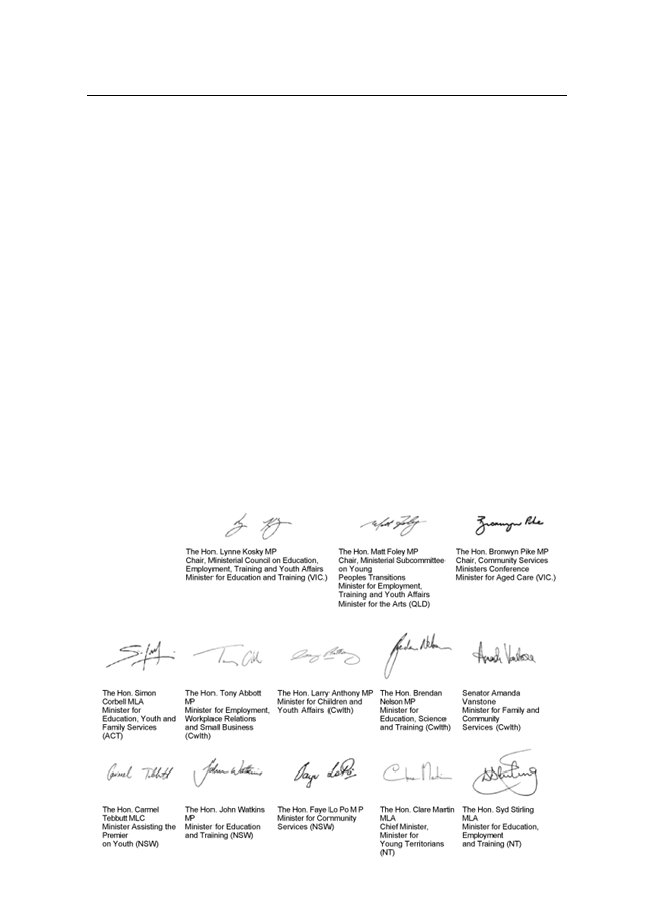
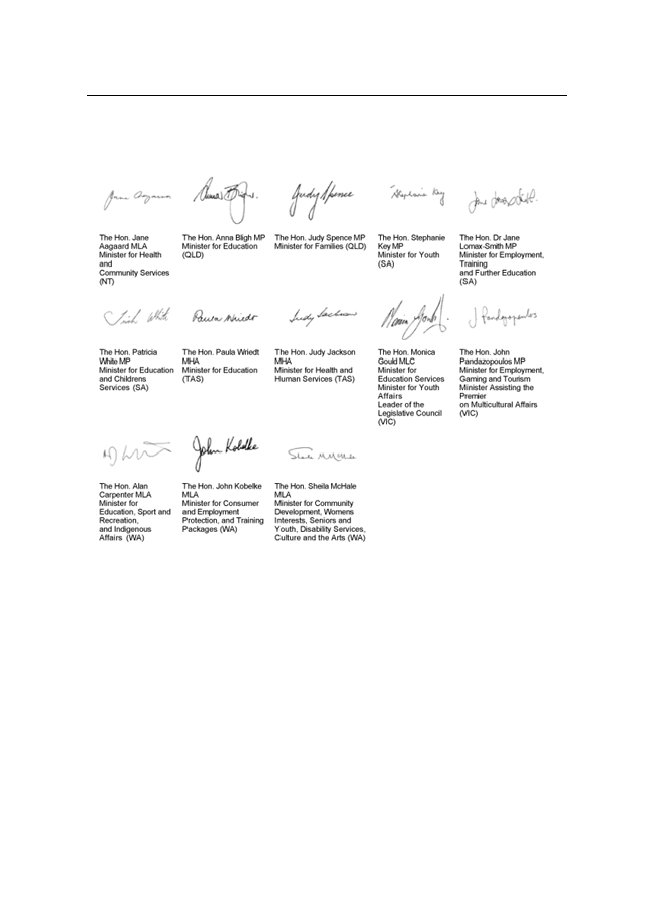
direction to make a realandlastingdifferencetothelivesofyoungpeople.Weareunitedbyasharedcommitmentandajointresponsibility.Weunanimouslyagreetowork in partnership towards
implementing a shared vision for all youngpeople.Australia’s Ministers for Education,
Employment, Training, Youth Affairsand Community
Services
33Agricultural Colleges Act 1994ENDNOTES1Index to endnotesPage2Date to which amendments incorporated
. . . . . . . . . . . . . . . . . . . . . . . . . . . . . . . .
.333Key . . . . . . . . . . . . . . . . .
. . . . . . . . . . . . . . . . . . . . . . . . . . . . . . . . . .
. . . . . . . . . . .334Table of reprints
. . . . . . . . . . . . . . . . . . . . . . . . . . . . . . . . . .
. . . . . . . . . . . . . . . . . .345List
of legislation . . . . . . . . . . . . . . . . . . . . . . . . . .
. . . . . . . . . . . . . . . . . . . . . . . . .346List of annotations . . . . . . . . .
. . . . . . . . . . . . . . . . . . . . . . . . . . . . . . . . . .
. . . . . . .352Date to which amendments
incorporatedThis is the reprint date mentioned in the
Reprints Act 1992, section 5(c). Accordingly, thisreprint includes all amendments that
commenced operation on or before 1 January 2004.Future
amendments of the Agricultural Colleges Act 1994 may be made in
accordancewith this reprint under the Reprints Act
1992, section 49.3KeyKey to
abbreviations in list of legislation and annotationsKeyAIAamdamdtchdefdivexpgazhdginslapnotfdo in comorigpparaprecpresprevExplanation=Acts
Interpretation Act 1954=amended=amendment=chapter=definition=division=expires/expired=gazette=heading=inserted=lapsed=notified=order
in council=omitted=original=page=paragraph=preceding=present=previousKey(prev)procprovptpubdR[X]RArelocrenumrep(retro)rvsschsdivSIASIRSLsubunnumExplanation=previously=proclamation=provision=part=published=Reprint No.[X]=Reprints Act 1992=relocated=renumbered=repealed=retrospectively=revised edition=section=schedule=subdivision=Statutory Instruments Act 1992=Statutory Instruments Regulation
2002=subordinate legislation=substituted=unnumbered
34Agricultural Colleges Act 19944Table of reprintsReprints are
issued for both future and past effective dates.For
the most up-to-date tableof reprints, see the reprint with the
latest effective date.Ifareprintnumberincludesaletterofthealphabet,thereprintwasreleasedinunauthorised, electronic form only.TABLE
OF REPRINTSReprintNo.11A1B1C22AAmendments includednoneto
1996 Act No. 54to 1999 Act No. 42to 2000 Act No.
26to 2000 Act No. 26to 2000 Act No.
26Effective3 February
19951 June 19971 December
199927 June 200027 June
200028 September 20002Bto
2002 Act No. 3216 August 20022Cto
2003 Act No. 631 January 2004Reprint
date3 March 199513 June
199721 January 200021 July
20001 September 200028 September
2000(Column discontinued)Notes5List of legislationAgricultural Colleges Act 1994 No. 58date
of assent 4 November 1994ss 1–2 commenced on date of
assentremaining provisions commenced 3 February
1995 (1995 SL No. 20)amending legislation—Statutory Bodies Financial Arrangements
Amendment Act 1996 No. 54 ss 1–2, 9 schdate of assent 20
November 1996ss 1–2 commenced on date of assentremaining provisions commenced 1 June 1997
(1997 SL No. 128)Road Transport Reform Act 1999 No. 42 ss
1–2(1), 54(3) sch pt 3date of assent 2 September 1999ss
1–2 commenced on date of assentremaining
provisions commenced 1 December 1999 (see s 2(1))Training and Employment Act 2000 No. 23 ss 1,
2(3), 293 sch 2date of assent 27 June 2000ss
1–2 commenced on date of assentremaining
provisions commenced 28 September 2000 (2000 SL No. 248)Primary Industries and Natural Resources
Legislation Amendment Act 2000 No. 26ss 1, 12 sch
1date of assent 27 June 2000commenced on date of assent
35Agricultural Colleges Act 1994Agricultural Colleges Amendment Act 2002 No.
32date of assent 16 August 2002commenced on date of assentTraining Reform Act 2003 No. 63 pts 1, 3 s 60
schdate of assent 13 October 2003ss
1–2 commenced on date of assents 57(3), (5)
commence 1 January 2006 (see s 2(1))remaining
provisions commenced 1 January 2004 (2003 SL No. 293)6List of annotationsDefinitionss 3def“accredited”amd 2000 No. 23 s
293 sch 2; 2003 No. 63 s 60 schdef“agricultural college”sub 2000 No. 23 s
293 sch 2def“pastoral care”ins 2002 No. 32 s
3(1)def“registered training
organisation”ins 2000 No. 23 s 293 sch 2sub
2003 No. 63 s 60 schdef“State college”om 2000 No. 23 s
293 sch 2def“State land”amd 2002 No. 32 s
3(2)def“TAFE institute”ins 2000 No. 23 s
293 sch 2amd 2003 No. 63 s 60 schDeclaration of
agricultural colleges 4amd 2000 No. 23 s 293 sch 2sub
2002 No. 32 s 4Ministerialdeclaration‘Steppingfor
all young people’s 4Ains 2003 No. 63 s 56forward:improvingpathwaysApplication of
Vocational Education, Training and Employment Act 1991s
5om 2000 No. 23 s 293 sch 2Board
of trusteess 6amd 2002 No. 32 s 5Functions of college boards
7amd 2002 No. 32 s 6; 2003 No. 63 s
57(1)–(2), (4)Powers of college boards 8amd
2000 No. 23 s 293 sch 2; 2002 No. 32 s 7College board is
subject to directions 10amd 2002 No. 32 s 8Reporting and accountabilitys
10Ains 2002 No. 32 s 9Official
memberss 13amd 2000 No. 23 s 293 sch 2sub
2002 No. 32 s 10amd 2003 No. 63 s 58
36Agricultural Colleges Act 1994Appointed memberss 14amd
2000 No. 26 s 12 sch 1; 2002 No. 32 s 11Term of
appointments 15amd 2002 No. 32 s 12Failure to nominates 16amd
2002 No. 32 s 13Chairpersons 19amd
2002 No. 32 s 14Quorums 22amd
2002 No. 32 s 15Votings 22Ains
2002 No. 32 s 16Conflict of interests 22Bins
2002 No. 32 s 16Conduct of meetings 23amd
2002 No. 32 s 17PART 2A—ADMINISTRATORpt 2A (ss
25A–25E)ins 2002 No. 32 s 18Directors
26amd 2002 No. 32 s 19PART 3A—STUDENT
ADVISORY COUNCILpt 3A (ss 27A–27E)ins 2002 No. 32 s
20Application of Land Act 1994prov
hdgamd 2002 No. 32 s 21(1)s 28amd
2002 No. 32 s 21(2)General funds 32amd
2002 No. 32 s 22Other fundss 33amd
2002 No. 32 s 23College board is statutory bodys
35amd 1996 No. 54 s 9 schPART
5—RULESpt hdgamd 2002 No. 32 s
24Division 1—College rulesdiv hdgins
2002 No. 32 s 25Division 2—Operational rulesdiv
2(s 37A)ins 2002 No. 32 s
26Driver trainings 38amd
1999 No. 42 s 54(3) sch pt 3
37Agricultural Colleges Act 1994What
happens to assets and liabilities on closure of colleges
39amd 2000 No. 23 s 293 sch 2; 2003 No. 63 s
60 schDelegation by Ministers 39Ains
2002 No. 32 s 27Numbering and renumbering of Acts
41prev s 41 exp 3 February 1996 (see s
50)pres s 41 ins 2002 No. 32 s 28PART
7—TRANSITIONAL PROVISIONSpt hdgamd R1 (see RA s
7(1)(k))sub 2002 No. 32 s 29Division
1—Transitional provision for Act No. 58 of 1994div hdgins
2002 No. 32 s 29Repeals 42om R1
(see RA s 40)Rural training schoolss 43exp 3
February 1996 (see s 50)Existing boards of trusteess
44exp 3 February 1996 (see s 50)Propertys 45exp 3
February 1996 (see s 50)Ruless 46exp 3
February 1996 (see s 50)Staffs 47exp 3
February 1996 (see s 50)Division 2—Transitional provisions for
Agricultural Colleges Amendment Act 2002div hdgins
2002 No. 32 s 30Existing agricultural collegess
49prev s 49 exp 3 February 1996 (see s
50)pres s 49 ins 2002 No. 32 s 30Official memberss 50prev
s 50 exp 3 February 1996 (see s 50)pres s 50 ins
2002 No. 32 s 30Appointed member who becomes official
members 51ins 2002 No. 32 s 30Change
in term of appointments 52ins 2002 No. 32 s
30